TTG Asia
Asia/Singapore Friday, 2nd January 2026
Page 433

Bali plans tourist fee from 2024

0

The Bali regional government has raised a proposal to implement a fee of 150,000 rupiah (US$10) for international travellers entering the destination from next year, with levies being directed to cultural preservation and tourist infrastructure development.

The proposal was presented by Bali governor I Wayan Koster in parliament earlier this month.
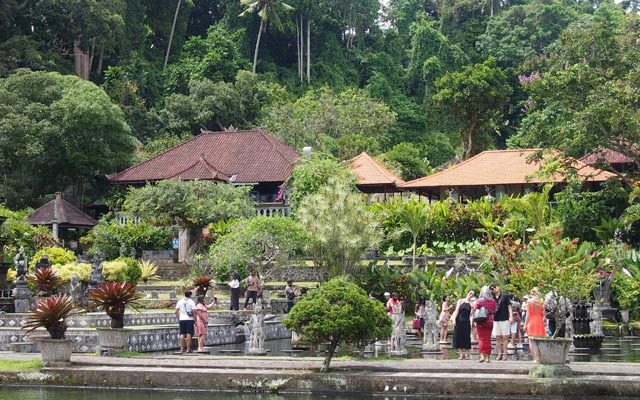
Tourists throng Tirta Gangga, Bali (Photo by Dhini Oktavianti)

Elaborating on the plan, Tjok Bagus Pemayun, head of the Bali Provincial Tourism Office, said the tourist fee was conceptualised to “maintain Bali’s nature, culture, and environment in a sustainable manner, ensuring that tourists can continue to enjoy Bali with a sense of security and comfort”.

While implementation details are still pending, the plan has attracted support from Bali tourism industry stakeholders.

Ida Bagus Agung Partha Adnyana, chairman of the Bali Tourism Board, told TTG Asia that the tourist fee is common in other countries and tourism players are unanimous about wanting the collection to support quality tourism development through improved infrastructure, raise service quality through training, and to promote sustainable tourism experiences.

He stressed the importance of transparency in money utilisation and the establishment of smooth collection procedures to avoid delays at airports.

When asked if the tourist fee would dampen travel interest, Hatta Pradhana, spokesperson of Dwidaya Tour, said: “Bali is one of the best tourist destinations in the world, so we believe the fee will not significantly impact arrivals to Bali.”

He quipped that the fee is equivalent to A$14 – the price of two cups of coffee in Australia. Australia is currently Bali’s biggest source market.

In response to concerns about other Indonesian destinations potentially adopting similar levies and resulting in various tourist fees across the country, Sandiaga Uno, minister of tourism and creative economy, said the government would look into regional regulation.

Sandiaga added: “Bali can pioneer this initiative because it is a top destination. If other destinations (achieve the same level of tourism success), we can consider (the application of a tourist fee). However, any tourism levy must be based on (thorough studies).”
Product enrichment planned for Norwegian Joy

0

Accor to convert Japan’s Daiwa properties

0

Accor has partnered with Ebisu Resort to expand its presence in Japan through the renovating and rebranding of the Daiwa portfolio into Grand Mercure and Mercure hotels.

This agreement will add 23 properties and over 6,000 rooms to Accor’s network across the country.

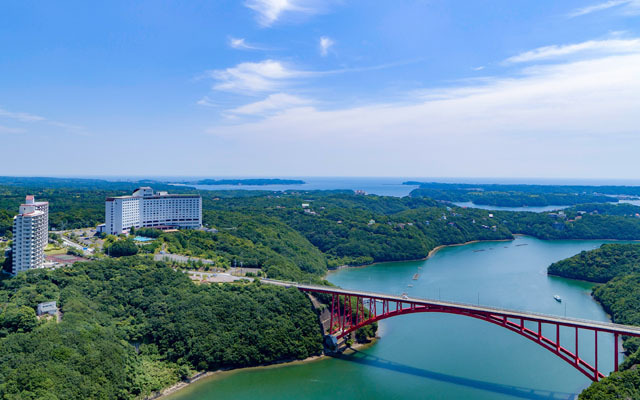
Hotel & Resorts Ise-shima will take on the Grand Mercure brand

Ranging in location from the northernmost prefecture of Hokkaido to the southernmost prefecture of Okinawa, the properties are located close to local hidden gems such as Cape Zanpa in Okinawa, Asuka village in Nara, Shiroi Koibito Park in Hokkaido and Senri Beach in Wakayama. Each property offers a range of guestrooms, restaurants and wellness facilities such as onsens (hot springs), saunas and swimming pools.

Garth Simmons, CEO, premium, midscale and economy division for Accor in Asia, said: “Popular destinations such as Tokyo, Osaka and Kyoto will always remain in high demand, however if you want to immerse yourself in the real authentic culture of a country, sometimes you need to escape the big cities and head off the beaten path.”

“By rebranding, we will be able to provide our customers with various allures and memorable travel memories. We would like to work together with the local community more than ever before and share the appeal of each region not only within Japan but also around the world,” shared Daiwa Resort Co.’s president & CEO, Koji Mayanagi.

Renovations of the properties will begin from 4Q2023 and are expected to be completed by 2Q2024, after which the properties will operate under the Grand Mercure and Mercure brands.

Daiwa Resort hotels to be converted into Grand Mercure hotels include Royal Hotel Okinawa Zanpamisaki, Royal Hotel Nasu, Royal Hotel Yatsugatake, The Hamanako, The Kashihara, Royton Sapporo, Hotel & Resorts Beppuwan, Hotel & Resorts Minamiawaji, Hotel & Resorts Ise-shima, Hotel & Resorts Nagahama, Hotel & Resorts Minamiboso, and Hotel & Resorts Wakayama-Minabe.

Meanwhile, Hotel & Resorts Kyoto-Miyazu, Hotel & Resorts Saga-Karatsu, Hotel & Resorts Wakayama-Kushimoto, Royal Hotel Nagano, Hotel Toyama Tonami, Royal Hotel Tosa, Royal Hotel Daisen, Royal Hotel Noto, Royal Hotel Munakata, Active Resorts Miyagi Zao, and Active Resorts Urabandai will be rebranded into Mercure hotels.

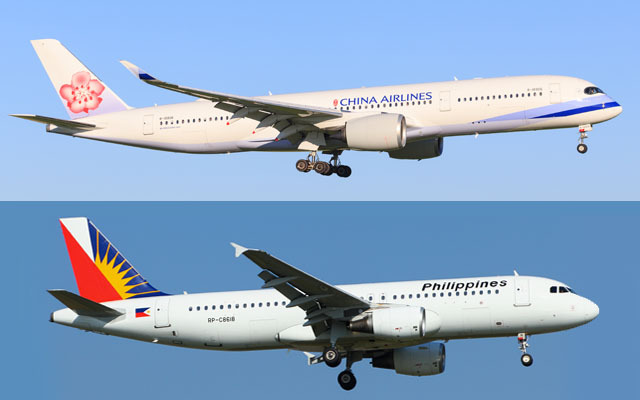
PAL adds new Taiwan routes via codeshare services with China Airlines

0

Marina Bay Sands revitalises attractions

0

Visitors to Marina Bay Sands can look forward to the introduction of three new programmes – Eye of the Waterfall Tour, Sampan Musical Voyage, and Sunset in the Sky.

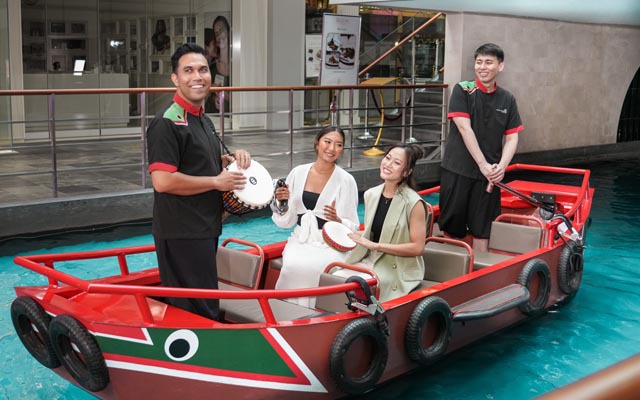
Sampan Musical Voyage is joined by Sampan singers

The Eye of the Waterfall guided tour on the Sampan Rides allows visitors to get a close-up view of the Rain Oculus and offers insight into the design and sustainability features the attraction. The tour is available every Tuesday at 17.00.

From now to August 2, the Sampan Musical Voyage welcomes visitors to embark on a leisurely ride while being serenaded by Sampan singers, and takes them on a musical voyage down the Canal at The Shoppes. Visitors are invited to learn to play simple percussive instruments and sing along to a song specially composed to pay homage to the Sampan boats’ role in Singapore’s rich history and culture. The Sampan Musical Voyage is available every Thursday to Saturday, at 14.00 and 18.00.

Sunset in the Sky at the SkyPark Observation Deck allows members of the public to indulge in chocolates and champagne while enjoying 360-degree panoramic views of the city skyline. This new programme starts from July 27 and is available every Thursday through Sunday from 18.00 to 21.00.

For more information, visit Marina Bay Sands.

China to resume visa-free entry for Singapore, Brunei citizens

0

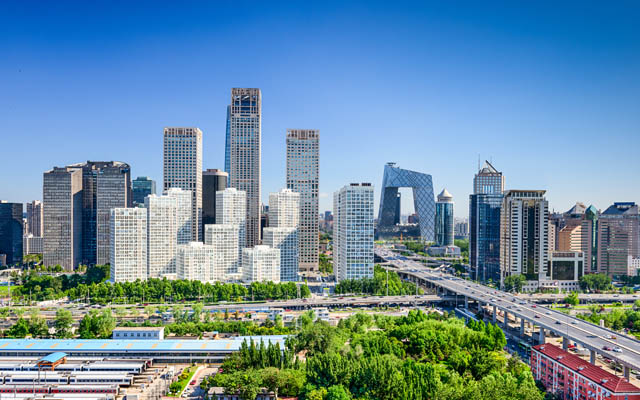
China will resume 15-day visa-free entry for citizens of Singapore and Brunei from July 26, after more than three years of the facility’s suspension due to the pandemic.

Singapore and Brunei citizens will be able to enter China visa-free come July 26; Beijing pictured

The facility is available to citizens of Singapore and Brunei with ordinary passports travelling for business, sightseeing, visiting relatives and friends, and in transit, according to notices put up by the Chinese Embassy in both countries.

This follows the removal of most zero-Covid measures in December.

Australia remains a top contender of travel demand in South-east Asia

0

The recovery for South-east Asian inbound into Australia (mainly Singapore, Indonesia and Malaysia markets) is slightly ahead of the curve, with Singapore almost back to pre-pandemic levels – but Tourism Australia has not taken its foot off the pedal.

Phillipa Harrison, managing director, Tourism Australia, stated: “When we look at these three markets, we don’t just look at the population, but we look at the population’s propensity to travel and the number of high-yielding travellers. High-yielding travellers are not high-net-worth individuals, but instead, people who spend a lot of their discretionary income on travel, and like what Australia offers in terms of nature, wildlife, and good food and wine.”

Tourism Australia is currently communicating to the market on how Muslim-friendly the destination is (Photo: Western Australia)

Prior to the pandemic, Tourism Australia focused its marketing activities and campaigns in 15 markets, where the 15 markets made up 80 per cent of inbound business into Australia. Within South-east Asia, the three standout markets are Singapore, Malaysia, and Indonesia.

One opportunity that Tourism Australia sees, and is currently focused on communicating to the market, is how Muslim-friendly Australia is, so as to provide another segment of travellers that Australian suppliers can tap into, Harrison said.

“We’ve partnered with the Australia Tourism Export Council, where they’ve put together a training programme to educate Australian tourism organisations on how to cater to Muslim travellers, and make them feel comfortable in terms of their requirements. In fact, Western Australia just put together a brochure (which features halal cuisine, prayer facilities, and suggested itineraries) for Muslim travellers planning a trip to Western Australia,” she elaborated.

In light of this and to continue its upwards recovery trajectory, Tourism Australia held the Australia Marketplace South East Asia 2023 in Singapore from July 19 to 21 to provide Australian suppliers with the opportunity to meet South-east Asian buyers. In attendance were 114 sellers, and 88 buyers from Indonesia, Malaysia, Singapore, Thailand and the Philippines.

When asked how this event differs from the Australia Tourism Exchange (ATE) held in April 2023, Harrison told TTG Asia: “A third of the buyers at Australia Marketplace South East Asia 2023 have never been to ATE. Also, our presence here does two things. It’s a good way to engage with our trade partners here, instead of having them to commit to taking a whole week to come down to Australia. It is also an opportunity to bring Australian suppliers up to these markets so that they can better immerse and understand the markets they are targeting. Hence, the events are complementary to each other.”‌

However, current skyrocketing airfares may deter some South-east Asian travellers from choosing to holiday in Australia.

As to whether Tourism Australia has a plan to help bring down current high airfares, its executive general manager of eastern markets and aviation, Andrew Hogg, said: “Like every industry, the global aviation industry has struggled to recover, and this is something out of our control. What we can do is to encourage capacity back to Australia, where the growth in capacity will help to normalise pricing.”

He predicted that the supply chain disruption will start to smoothen out over the next six months, as aircraft manufacturers get their delivery schedule back on track, airplanes are taken out of the desert, and rehiring of engineers, cabin crew and pilots are well underway. However, he cautioned that “airfares will never be the same as pre-Covid”.

Hogg noted: “There’s a lot of confidence in Australia from our aviation partners, and we’ve seen them keep capacity in the market. Our job is to make sure that the demand is there and work with airlines on the demand, so that they will commit to more capacity in the future.”

Currently, Australia’s inbound is sitting at around 77 per cent of pre-Covid levels, and once airlift is back on track, Harrison shared that Australia will see a full recovery “sometime in 2025”.

“In the longer term, our forecast is we’ll get to about 11 million inbound passengers by 2027, up from 9.4 million prior to the pandemic,” added Harrison.

Sri Lanka pushes for Indian rupee to be tradable in the country to boost tourism

0

Sri Lanka is proposing that the Indian rupee be made a tradable currency in the country which, if approved, would provide a huge boost to tourist arrivals from India.

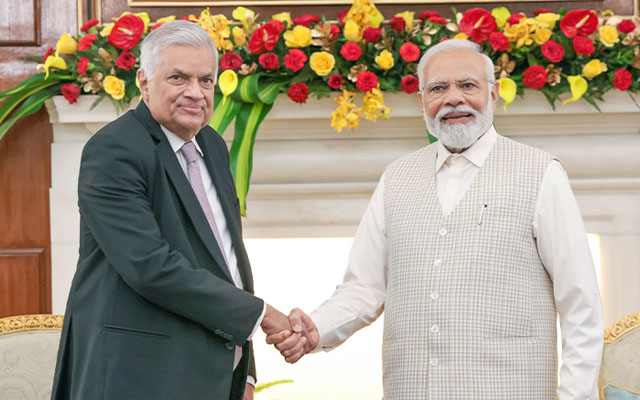
The proposal was mooted by Sri Lankan president Ranil Wickremesinghe in talks with Indian prime minister Narendra Modi during the former’s visit to India on July 20.

From left: Sri Lanka’s Ranil Wickremesinghe and India’s Narendra Modi meet this month

India is currently Sri Lanka’s biggest source market, with arrivals totalling 116,193 between January and June this year, up 68,761 from the same 2022 period.

An Indian External Affairs Ministry spokesperson said in a media briefing that Sri Lanka has identified the Indian rupee as “a designated foreign currency in their system”.

India is Sri Lanka’s neighbour and biggest trading partner, with one Indian rupee equivalent to four Sri Lankan rupees.

Currently, the US dollar is the only tradable currency in Sri Lanka for all transactions, including those made by tourists.

Sri Lankan foreign affairs minister Ali Sabri told reporters on Saturday that there was a strong possibility of adopting the Indian rupee as a valid currency in Sri Lanka, with anticipated arrangements to facilitate seamless business transactions for Indian tourists visiting the country – a move that was welcomed by the travel industry, albeit with some caution.

Sunil Dissanayake, chairman of the Northern Province Tourism Bureau, said the proposal would pave the way for more Indian tourists visiting the country, particularly to the north where most of the minority Tamil community live.

Northern Sri Lanka is connected with India via the latter’s Alliance Air airline, which started four weekly flights last December between Chennai in southern India and Jaffna in northern Sri Lanka. These services were boosted to daily operations since July 16 due to growing demand.

Dissanayake, who is also director and CEO of the Colombo-based Bandaranaike National Memorial Foundation (BMICH), the largest convention and exhibition centre in Sri Lanka, said plans were underway to extend Alliance Air flights to Colombo International Airport Ratmalana, in the outskirts of the capital city.

Ahintha Amerasinghe, managing director Worldlink Travels, said that while the move would boost Indian traffic to Colombo, it is vital to have a process to allow Indian rupees to be used in Sri Lanka.

“While we offer hotel rates in US dollars, that would have to change for Indian visitors. The process and infrastructure have to be developed before any decision is (made),” he noted, adding that this would benefit Indians, especially those who have found it difficult to secure dollars when travelling overseas.

A facelift for F&B

0

How do you work with the hospitality industry?
We are experienced F&B consultants with collectively 55 years’ experience in the service and hospitality industry. We consult on projects in the luxury segment and full-service segment hotels and deliver quality restaurant projects, working with leading individuals in the industry.

We additionally support owners by seeking out partnerships with other passionate leading F&B individuals, developing F&B strategies and coordinating development from the ground upwards to opening. Over the next five years, we are looking to expand from the Middle East further into South-east Asia and Vietnam as restaurant creators and strategists by working on hotel and restaurant projects that are signed and under development.

What trends have emerged in Vietnam’s F&B sector?
In my opinion, Vietnam is one of the top Asian destinations that will go through a fundamental change in F&B in the next few years due to rapid changing consumer trends and urbanisation in the country. The youth of Vietnam are pushing change here, especially in the F&B scene.

Cooking local is an emerging trend. Although this is quite prominent worldwide, I don’t feel historically restaurants in Vietnam have capitalised on the incredible produce that is available. I believe this will change as consumers demand to know the origins of produce. Since being in the country, I have discovered so many new local products that are incredible but quite unknown. I think Vietnam’s F&B industry should celebrate the incredibly diverse products available here.

Vegan dining is on the rise. In Ho Chi Minh City’s districts 7 and 2, you will find so many vegan restaurants. However, once you step out of these areas, it becomes bleak. Danang itself lacks strong, quality-driven vegan or healthy-dining restaurants. This will change as more people focus on health and sustainability, and demand grows.

Why is it important that hotels develop a strong F&B brand?
For decades hotels have felt a rise in guests exiting hotels to go to the street to find restaurants and bars. Hotels lack edge and modern character, which I call the “F&B Mojo” when it comes to dining. Hierarchy and red tape prevent hotel F&B teams from expanding and being creative.

I have worked on this question for years within corporate hospitality by changing the strategy and working on a more diverse street approach to F&B strategy within hotel public spaces. Partnering with local brands, or regional chefs who have succeeded in standalone restaurants, by working with them in hotels makes the overall in-house approach more appealing to guests externally and internally.

What projects are you working on?
Wafaifo Resort Hoi An is a 134-key hotel and we are in the process of design and build. The hotel will open in 2Q2024. B&B Ideas Group is responsible for the F&B strategy creation, supporting the design and build process, and helping launch the F&B strategy with the hotel operations team.

B&B Ideas Group is currently working on the 334-key Waldorf Astoria West Bay in Qatar, where we are the owner’s F&B representative and support. Additionally, funded by the owner of the Waldorf Astoria, we are creating a new luxury brand called Muru on the fifth floor with chef Mauro Calegreco and designer Lazaro.

What are some of the biggest challenges you see in Vietnam’s F&B sector?
Without a doubt, Covid-19 and lockdown. Vietnam, like all countries in the world, went through an incredibly tough time and I don’t think anyone was unaffected. The F&B and hospitality industry was hit hard. Many workers left the industry through lack of confidence and reliability of work. At present, finding quality F&B staff remains tough.

So many restaurants, bars and nightclubs closed permanently, and the industry suffered immense damage, with huge amounts of money wiped off. Rebuilding the industry and regaining confidence will take time.

What is your future vision for B&B Ideas Group?
To keep finding new opportunities in Vietnam and South-east Asia. I believe we are small, versatile and adaptable to what is happening in the scene here, and we can make a tremendous impact working with emerging hospitality companies, hotels, and restauranteurs.

I witnessed the creation of the F&B industry in Dubai. When I arrived in the city, it was pretty lacklustre and hotel restaurants and bars dominated the scene. Now, the change is incredible and Dubai is one of the leading F&B cities in the world.

I believe our experience working in the GCC (Gulf Cooperation Council), especially Dubai, allows us to bring this experience and dynamic approach to the region. One thing I learned in Dubai is that nothing is impossible through hard work, determination and a very open-minded approach to “you can build anything”.

Angsana debuts new Heritage Collection in Mexico and Morocco

0

Marking 23 years since its inception, Angsana by Banyan Tree Group has introduced Angsana Heritage Collection, a curated portfolio of properties, in Mexico and Morocco.

The recently expanded Hacienda Xcanatun, Angsana Heritage Collection in Mexico is located just 15 minutes away from downtown Merida, the capital city of the Yucatan region known for its tropical rainforests and the home of the ancient Mayans. Haciendas, named after the Mayan word for “tall stone house”, were the epicentre of the country’s economic and social life during Mexico’s colonial period.

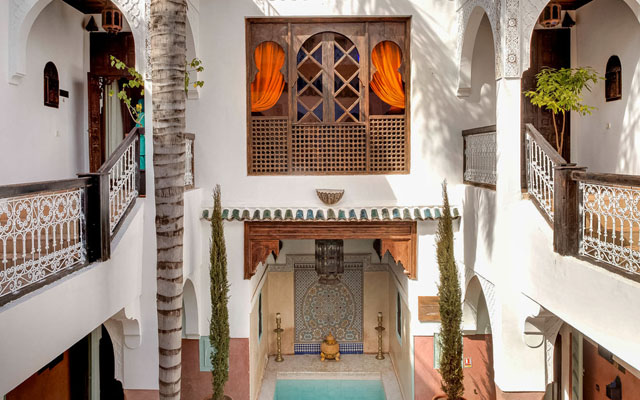
Riads Marrakech, Angsana Heritage Collection comprises six large traditional houses built around a central courtyard and features 42 rooms and suites

First built to house and operate livestock in 1789, Hacienda Xcanatun has been transformed into a hotel with 36 new suites, adding to the original 18 historic suites. Its expansion also includes new facilities such as an Olympic-length swimming pool, a solarium with a poolside snack bar, a fitness centre and a spa.

In Marrakech, Morocco, Riads Marrakech, Angsana Heritage Collection is minutes away from the landmark Jemaa el-Fna Square. The property comprises six riads – large traditional houses built around a central courtyard – totalling 42 rooms and suites.