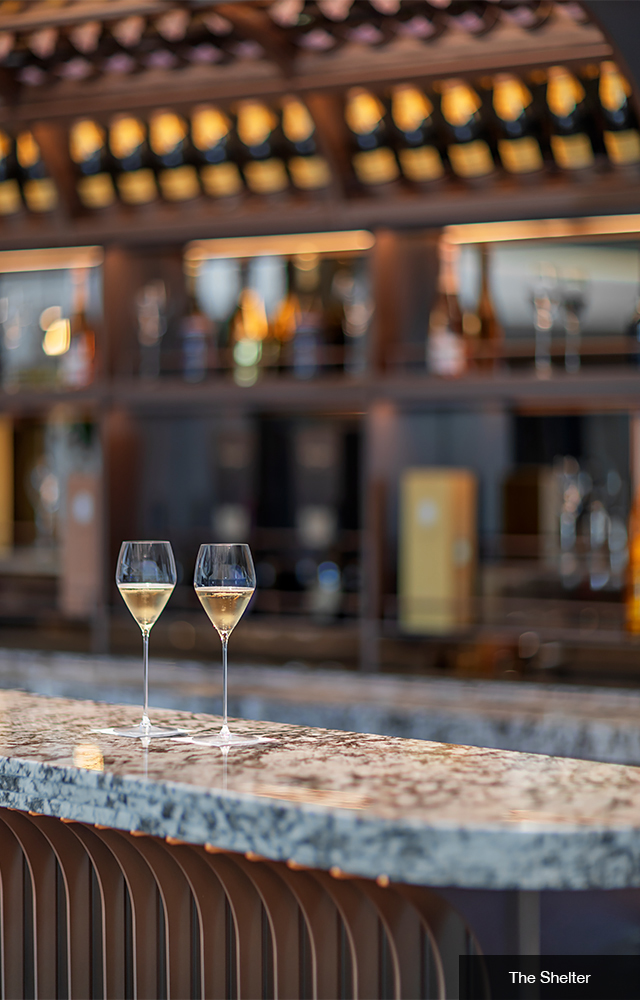
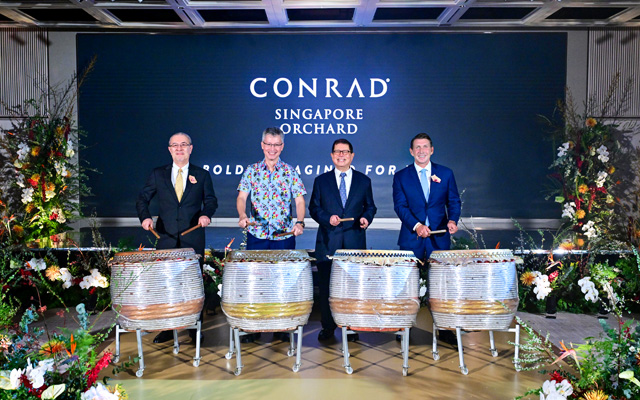
Conrad Singapore Orchard hosted its grand opening with an ‘Orchard Fusion’ cocktail celebration on January 31, 2024.
Media personality Anita Kapoor played host for the evening, introducing speeches from key figures such as Kwee Liong Keng, chairman of Pontiac Hotel Private Limited, and Alan Watts, Hilton’s president, Asia Pacific. The event was also graced by Olivier Lim, chairman of the Singapore Tourism Board, as the Guest of Honour.
Around 350 distinguished guests from the worlds of hospitality, fashion, culture, and culinary were in attendance.
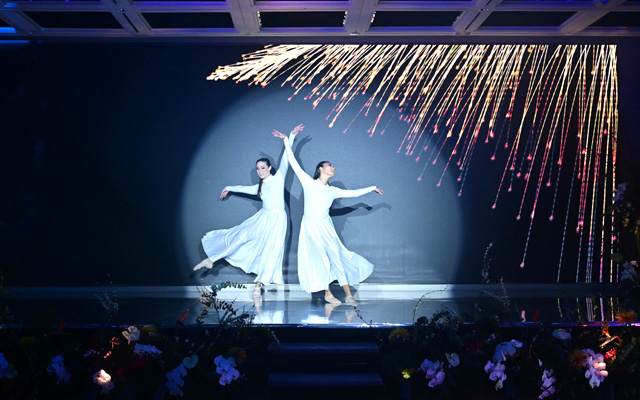
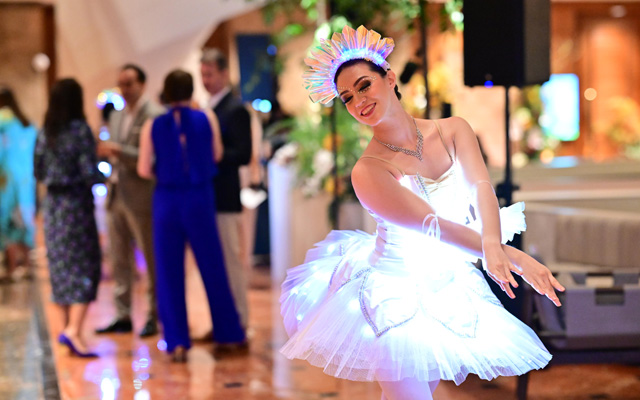
The night began with a ceremonial drumming led by Lim, Kwee, Watts, and Shuichi Oishi, CEO of Kajima Development, followed by a performance which blended visual art and modern ballet.
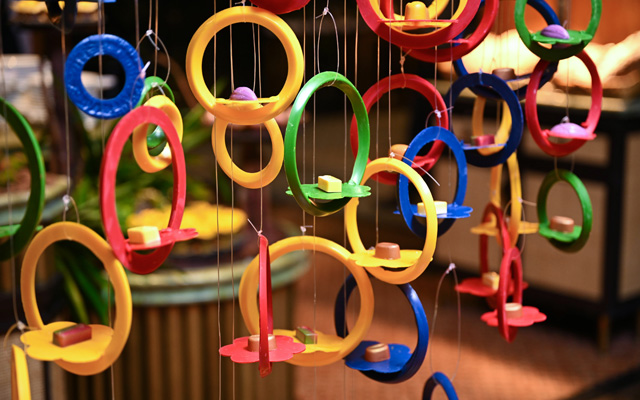
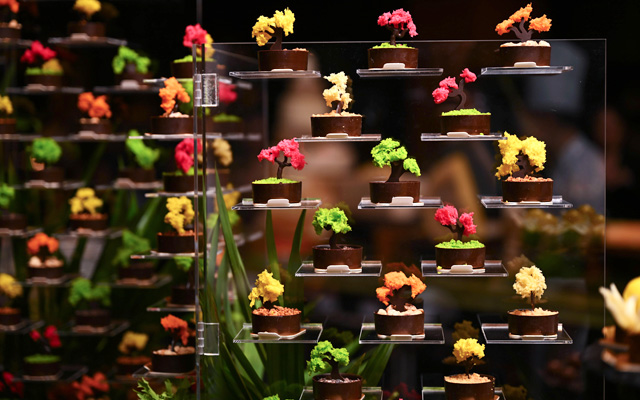
The cocktail reception featured imaginative edible art installations, and signature craft cocktails from the hotel’s Manhattan bar, while roving artists, hoop and stilt performers, and a modern jazz duet with ballerinas, enlivened the atmosphere.
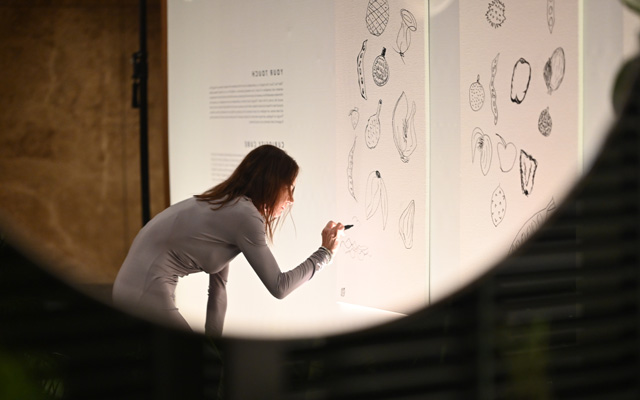
There was also Curiosity Cube, an art installation by local art collective GastroGeography of Singapore, which also presented each guest with a botanical illustration as a parting gift.
Location
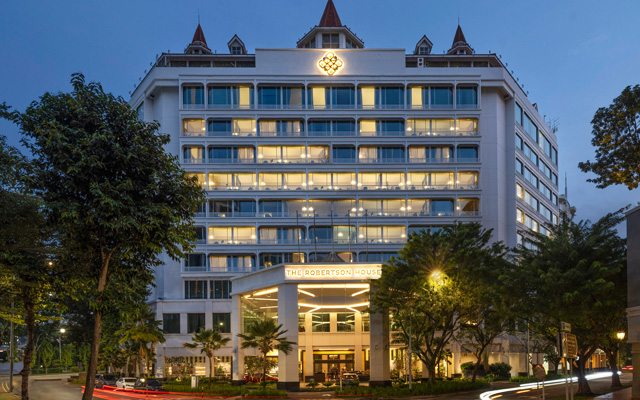
Step back in time at The Robertson House by The Crest Collection, a refurbishment and rebranding project from the previous Riverside Hotel Robertson Quay.
To set the ambience, an exclusive scent inspired by the spices and teas that were once traded along the flourishing quayside permeates the hotel. The hotel’s interiors offer a glimpse into Singapore’s colourful past as a bustling entrepôt trade hub through the eyes of Murray Robertson, a municipal councillor during British colonial Singapore.
Standing on the riverfront, the hotel is located a five-minute walk from the Fort Canning MRT station, and is surrounded by high-end residential properties, as well as many restaurants and bars.
Accommodation
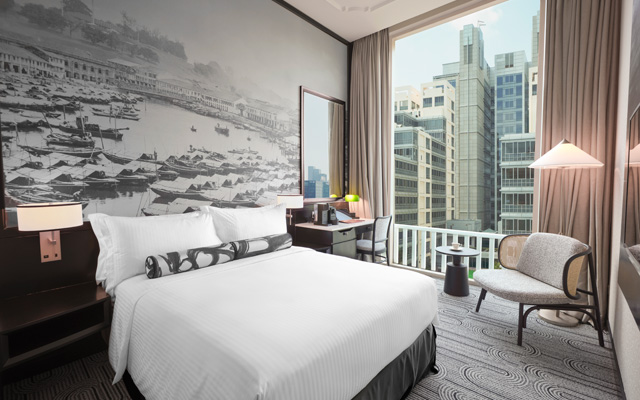
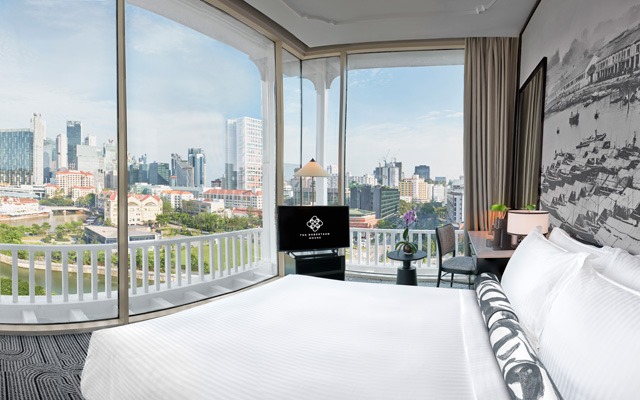
The hotel’s 336 rooms and suites are spread over 10 floors, many of which offer views of the city and river. Each room is adorned with a black and white backdrop print that sets the scene of the Singapore River in its early years. I also noticed there were many framed photos of spices on the walls, alluding to the spice trade.
I stayed in a 24m² Club Room on level 10, furnished with a comfortable queen-size bed, one armchair, a working desk, and coffee- and tea-making facilities. I was intrigued by the hot and cold water dispenser, which doubles up as a kettle. The only caveat is that it must be filled up with tap water from the bathroom, but the shape of the container and the positioning of the tap made this slightly challenging.
For club guests, all minibar drinks – curated in partnership with local beverage company East Imperial – are complimentary. There are also small bottles to make your own G&T, as well as snacks from homegrown snack brands Amazin’ Graze, and Fupi.
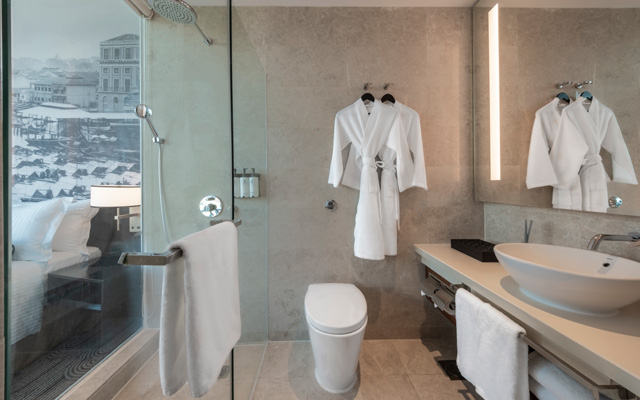
Meanwhile, Atkinsons features as the hotel’s brand of bathroom amenities. A fragrance house originating from England with over 200 years of history, Atkinsons is the official perfumer to the Royal Court of England. The Big Bad Cedar the hotel uses, smelled wonderful.
F&B
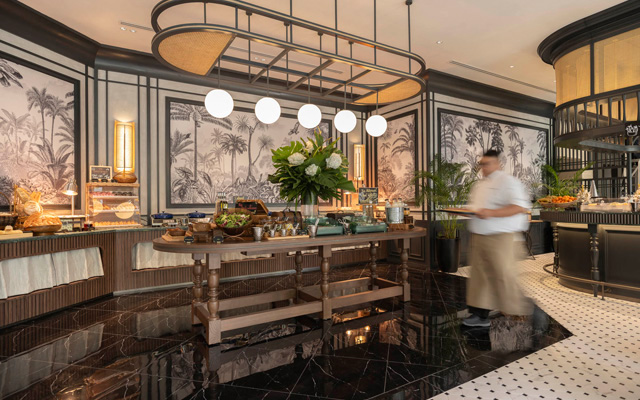
There are three F&B options: Entrepot all-day dining restaurant just beside the check-in area, Chandu Bar, and a pool bar.
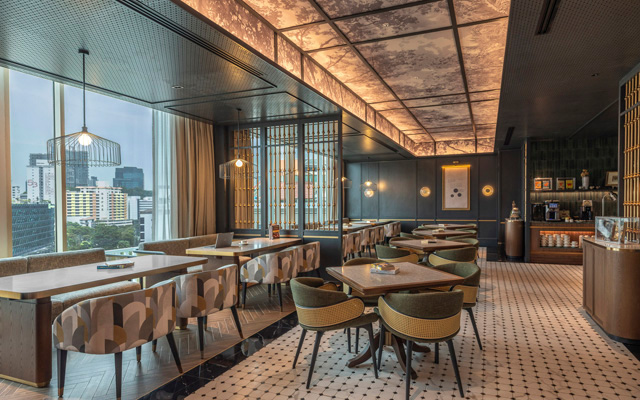
The food at Entrepot stole my heart, as I was impressed by chef Nixon Low’s skill at blending Western cooking styles with traditional Asian flavours. I enjoyed the Signature Chinese Terracotta Tea, where the theatrical affair included me pouring Chinese Dried Mushroom Tea into a tea cup bearing a single crustacean tortellini.
The Robertson House by The Crest Collection
1 of 8
Guestroom
View from guestroom
Bathroom
Evening facade
Pool
Entrepot
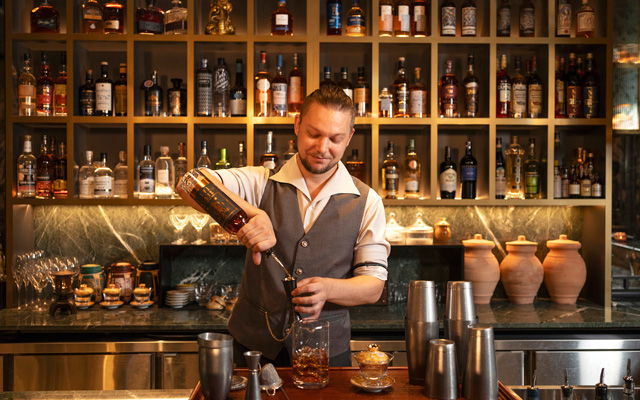
Chandu mixologist at work
Reading room
My ultimate favourite is, and still will be, his version of the roti john. For the uninitiated, roti johns are basically an omelette sandwich that is commonly eaten as street food in parts of South-east Asia. I had fond memories of their Christmas-version of the roti john (filled with a slab of ham and house-made slaw), and was looking forward to sinking my teeth into the Club Sandwich John with roasted chicken fillet and hickory-smoked bacon. It definitely did not disappoint.
The Dried Longan Peach Tart is a must-try, and digging into it – I finished every morsel – reminded me very much of eating a dry version of cheng tng, a refreshing sweet local dessert.
I also noticed how closely The Robertson House works with local brands. Aside from those provided in my room, the hotel’s exclusive gin, The Robertson House gin, is crafted with Tanglin Gin, Singapore’s pioneering gin distillery. Those who prefer beer can opt for Dr Robertson’s Lager, brewed in partnership with locally-owned RedDot Brewhouse.
Non-drinkers are not forgotten as the exclusive Robertson House coffee is made in a coffee programme with local roaster PYROAST, while tea blends, such as Dr Robertson’s Chai, are created by local tea specialist, Taverns Tea.
For cocktails, seek the round gold handle that symbolises Chandu Bar, where its name carries dual meanings, signifying opium in Malay and moon in Hindi.
The inconspicuous speakeasy bar is tucked behind the building, and stepping into its throes is akin to stepping back into a clandestine version of colonial-era Singapore. The intimate space draws inspiration from opium dens and clan associations, and is portrayed as a space where Murray Robertson hosted discreet, exclusive gatherings.
The beverage programme offers several cocktails with fancy names, such as Chasing The Dragon, Death & Taxes, and Self-Help Drink. Each tipple also has a tale to tell, if you listen hard enough.
Facilities
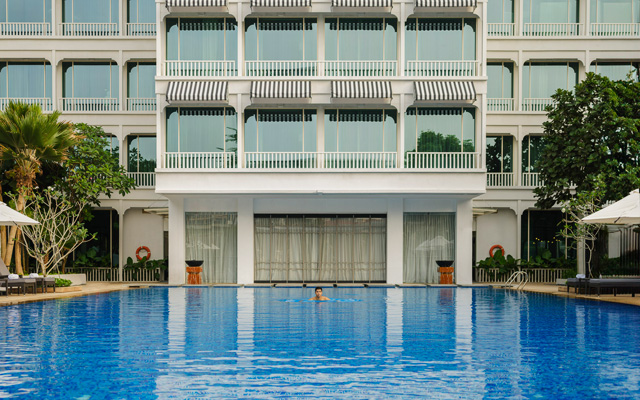
There is an outdoor 25m-long swimming pool, as well as a gym, on level two. On the same level are also four function rooms available for intimate events, where the largest space, Robertson 4, can hold up to 60 people banquet-style.
Club guests will have access to the 1823 Reading Room, filled with vintage books and titles. The space was named as such to symbolise the eager pursuit of education and knowledge when the history of libraries in Singapore began. Within the 1823 Read Room is also an eight-seater private meeting room that can be booked by club guests. Monthly programmes are also held within, such as cocktail-making and tea-blending workshops.
Service
The exceptional service I received seamlessly combined personalisation with discretion. The staff, consistently polite, warmly greeted me by name without being intrusive.
Verdict
My hotel stay was a charming experience; from delectable cuisine to cosy beds, the property’s commitment to supporting local businesses made it a top-notch choice for a memorable stay.
Staybridge Suites Bangkok Sukhumvit, Thailand
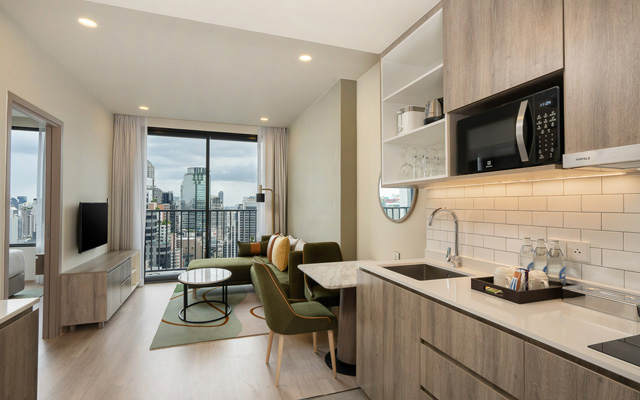
Designed to meet the needs of extended-stay travellers, the 411-suite Staybridge Suites Bangkok Sukhumvit offers communal areas for socialising and working, thrice-weekly social events, complimentary breakfast, as well as The Pantry that stocks a variety of food options and everyday essentials for purchase.
Facilities also include an on-property onsen and sauna.
Nearby are a host of shopping malls such as Emporium, Em Quartier and the new Marche, and lifestyle spaces such as 72 Courtyard and Benjasiri Park and entertainment options.
ibis PJCC Petaling Jaya
ibis PJCC Petaling Jaya, Malaysia
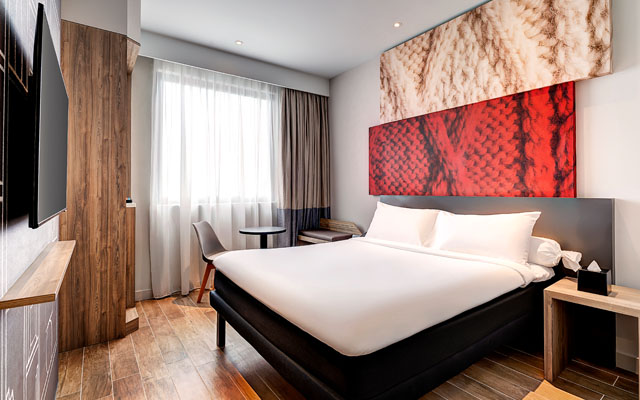
Accor’s newly-opened ibis PJCC Petaling Jaya offers 161 rooms and is located in the new urban landscape of Petaling Jaya Commercial Centre, with access to shopping destinations such as Sunway Pyramid and Kuala Lumpur City Centre.
Facilities include a gym, swimming pool, children’s playroom, all-day dining restaurant, lobby bar café, and meeting spaces.
In addition, ibis provides guests with specially curated playlists tailored to suit any mood, along with access to exclusive performances featuring emerging musicians.
Dusit Princess Phatthalung
Dusit Princess Phatthalung, Thailand
Dusit Princess Phatthalung comprises 132 guestrooms and suites, and features a wide range of family-friendly facilities.
There are dining venues, swimming pool with adjoining children’s pool, open spaces for yoga and Muay Thai classes, nature-inspired activities, ballroom, and more.
The property is just a one-hour drive from Trang Airport and a one-hour and forty-minute drive from Hat Yai International Airport, with attractions like Thale Noi Bird Sanctuary and Khao Pu-Khao Ya National Park, both just a 40-minute drive away.
Novotel Living Bangkok Sukhumvit Legacy
Novotel Living Bangkok Sukhumvit Legacy, Thailand
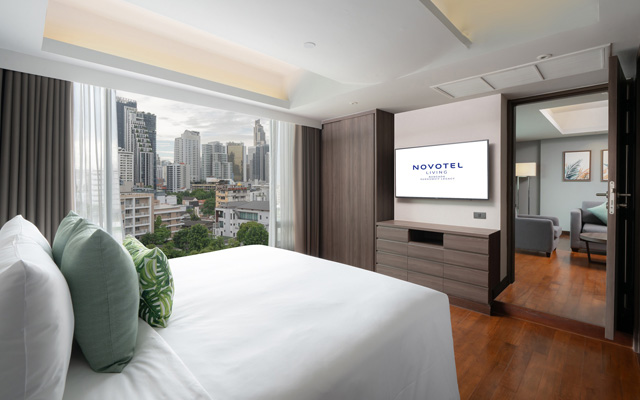
The new Novotel Living Bangkok Sukhumvit Legacy features 207 apartment-style rooms and suites which are equipped with a separate living area.
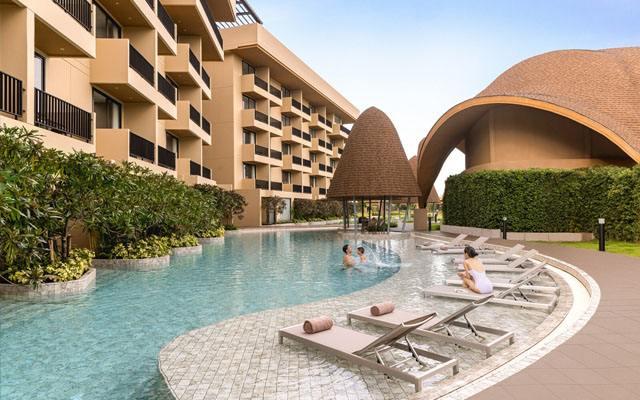
Onsite are a free-form swimming pool, fitness centre, Mexican restaurant and a kids’ club.
The property provides families, leisure travellers and corporate guests a relaxing stay with easy access to both Asok and Phrom Phong BTS Sky Train Stations, and the Sukhumvit MRT Station, as well as popular shopping complexes, a forest park, and the Queen Sirikit National Convention Center.
Regent Seven Seas Cruises has announced a collection of six unique Immersive Overnights voyages where each port of call features an overnight stay – allowing for deeper exploration and discovery in much-loved destinations.
These voyages, currently on board four of the six ships, will include special shoreside experiences crafted to make each overnight call a memorable part of the journey. Destinations featured in the Immersive Overnights collection are the Mediterranean, Northern Europe and Asia. All six sailings are included in Regent’s Upgrade Your Horizon offer where guests receive a free 2-Category Suite Upgrade and benefit from a reduced 7.5 per cent deposit.
Regent Seven Seas Cruises’ Immersive Overnights features an overnight stay and evening shore excursions
Immersive Overnights allows luxury cruisers to see another side of destinations with 26 evening shore excursions. These exciting evening shore excursions include an exploration of world-class art from the likes of Picasso, Rodin, and Munch in the home of a Swedish prince; sunset wine-tasting at a Tuscan villa; and a Michelin-star dinner in Athens. Additional evening shore excursions and multi-night overland tours in Italy, Croatia, France, Greece, Germany, and Finland will be announced soon.
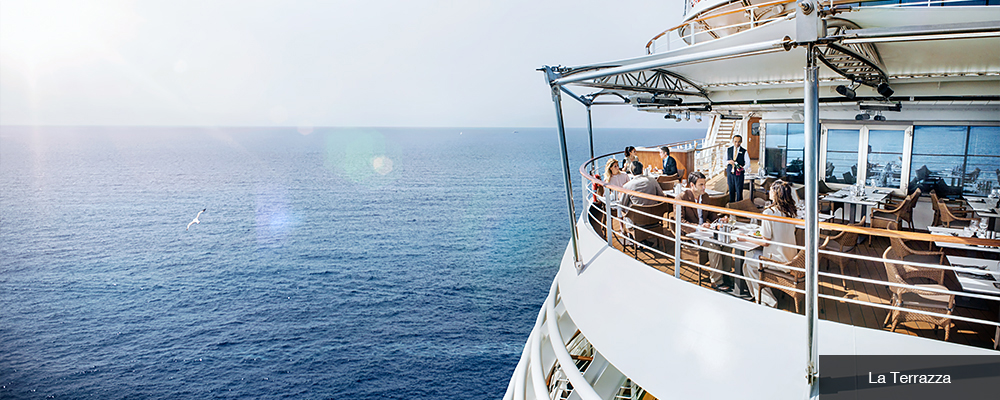
In addition to daytime and evening shore excursions – many of which are complimentary with Regent’s included unlimited shore excursion programme – as part of the voyage fare, guests will enjoy gourmet cuisine in a range of speciality restaurants and al fresco dining venues, fine wines and spirits, in-suite liquor and mini bar replenished daily, entertainment, unlimited internet access, valet laundry service, pre-paid gratuities onboard, and a one-night, pre-cruise hotel package for guests staying in Concierge-level suites and higher.
Designed with the concept of “Cabinet of Curiosity”, the newly-opened Maison Hotel Bangkok provides a quiet sanctuary of lush living conveniently located at the centre of the capital. From interesting culinary offerings, thoughtful modern amenities, to stylish décor flourishes, hotel guests’ interests will be piqued by the intriguing mix.
Hotel highlights
1 of 10
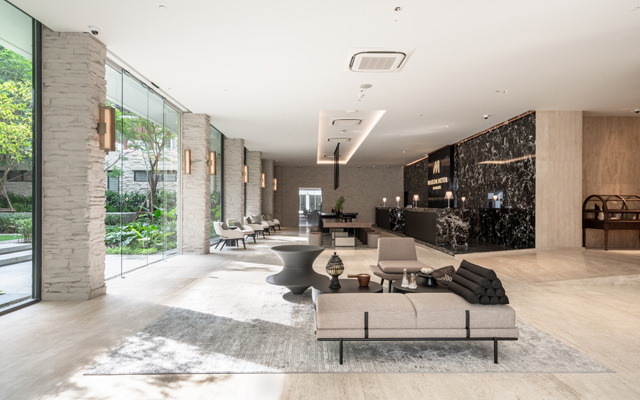
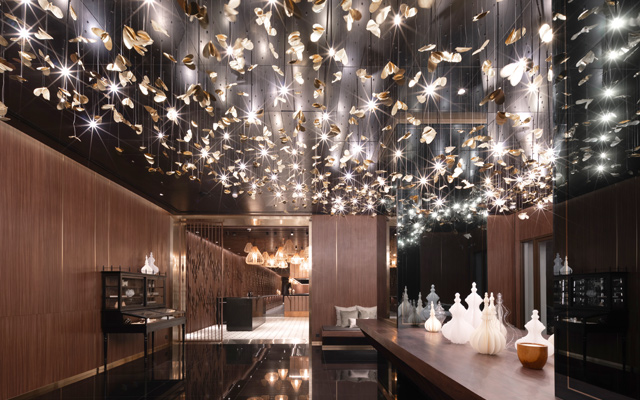
The 24-hour concierge at the hotel lobby will help hotel guests with requests
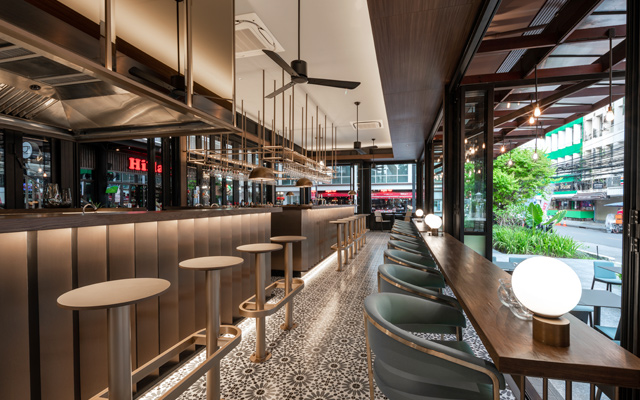
The Mani Bar & Grill offers comfort food with a new twist against a casual setting
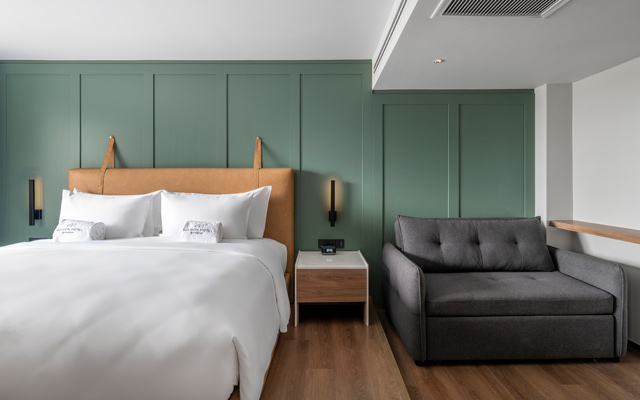
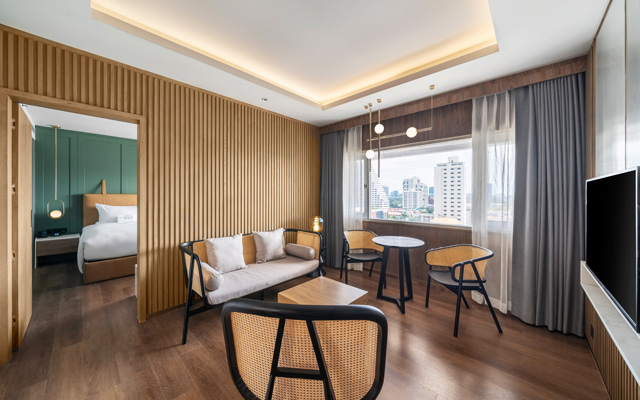
The 243 guestrooms spotlight a contemporary minimalist design approach with a neutral-coloured calming décor and sweeping city views
Some larger accommodation options come with split level layout to delineate different living spaces
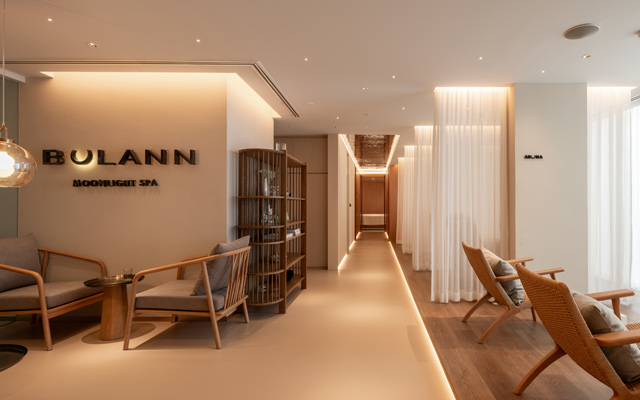
The Bulann Moonlight Spa combines Thai traditional wisdoms with modern sensibilities in spa therapy
The Kid’s Club is a dedicated playtime space with ball pits, slides and a separate waiting area for parents
NAA restaurant’s open plan design resembles the traditional Thai house on stilts
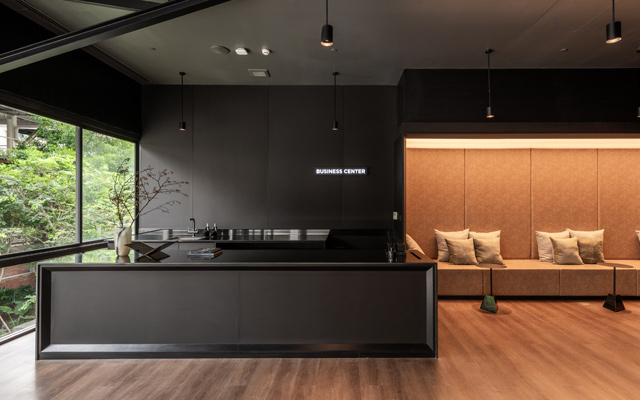
The business centre doubles up as a multi-functional office and co-working space
Saan Som Tum Bar features mouthwatering Thai street food in a family-friendly environment
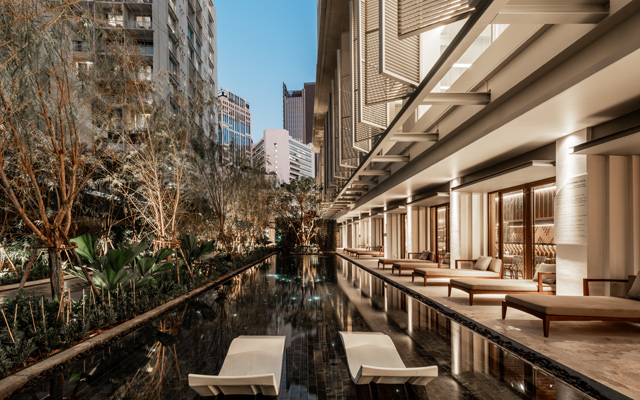
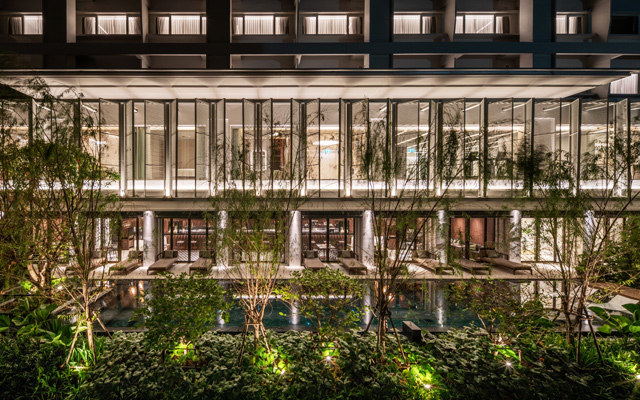
The colonial-inspired façade evokes nostalgia and the poolside terrace front with a tranquil garden on the other side is reminiscent of the Thai traditional lifestyle by the canals in the past
Blast from the past For a start, the urban oasis was configured to offer an invigorating stay experience inspired by the country life once found in this particular area of Bangkok from the past century.
The exterior of the 243-key hotel with the colonial-inspired façade evokes a sense of nostalgia and the poolside terrace front with a tranquil garden on the other side is reminiscent of the Thai traditional lifestyle by the canals during the bygone days.
The sprawl of scattering lights at the bottom of the pool that illuminates like a wake of stardust also reimagines the trails of fireflies often found by the fresh-water canals of the capital back in the past.
Contemporary design, thoughtful amenities A contemporary minimalist design approach was adopted for the four categories of room types where guests are greeted with a neutral-coloured calming décor and sweeping city views. Some larger accommodation options even come with split level layout to delineate different living spaces.
On-site amenities include the Bulann Moonlight Spa combining Thai traditional wisdoms with modern sensibilities in spa therapy to restore the body and spirit of weary guests. One unique menu offering is the signature moon bath spa and wellness series that enhances spiritual harmony as well.
There is also a well-equipped gym for guests who prefer to keep to their exercise regime away from home while the yoga studio offers sessions with a trainer for scheduled classes or private ones at the serene in-house sanctum.
Meanwhile at the lounge, travellers can relax in the main bar and choose from a wide selection of beverages, including fresh tropical juices, mocktails, cocktails, local and imported beers, taking their pick from one of the most extensive curated wine lists on the island.
For guests with young ones in tow, they will be delighted with the Kid’s Club, a dedicated playtime space, complete with ball pits, slides and a separate waiting area for the parents to chat, while maintaining a watchful eye over their children.
To cater to business travellers, the business centre within the premises doubles up as a multi-functional office and co-working space providing the essential support such as meetings rooms. The facility is also ideal for digital nomads and global trotters with work commitments during their stay.
Exciting culinary fare Hotel guests can satisfy their tastebuds at all times of the day with Maison Hotel Bangkok’s tantalising culinary offerings from the authentic flavours of E-Saan (Northeastern) cuisine to tasty donburi.
All-day eatery-cum-lounge, NAA – Thai twisted cuisine, situated on the ground floor, boasts a modern open plan design resembling the traditional Thai house on stilts. The Mani Bar & Grill offers comfort food with a new twist against a casual setting. Yardbird Café spotlights freshly-baked croissants and sweet pastries, while Saan Som Tum Bar is the place to be to savour mouthwatering Thai street food in a family-friendly environment.
Besides the scheduled private butler service, the 24-hour concierge will also assist hotel guests with required arrangements if they need to venture beyond Bangkok.
A few minutes to both the vibrant Nana district and the capital’s lush green space, Benjakitti Park, Maison Hotel Bangkok is located at Sukhumvit 2 and 4 Alley, only a five-minute walk from BTS Nana and Ploenchit Station, as well as within close proximity to shopping malls, hospitals tourist attractions and parks.
Interested to introduce the new Maison Hotel Bangkok to your clients? Don’t miss the special promotion of 22 per cent discount here.
Find out more about the new hotel here.
For more information, please call +66 (0) 2 255 0044 or +66 (0) 2 255 0040,
or email askme@maisonhotelbangkok.com.
To receive updates of new promotions, follow @maisonhotelbangkok on Facebook and Instagram.
Embark on a journey of unparalleled luxury and exploration with Silversea. Silversea introduces its ‘$2,000 Reasons to Sail with Silversea’ wave season offer, providing generous savings on a diverse range of voyages departing from January 1, 2024. This exclusive offer, available for new bookings made from now through February 29, 2024, presents a unique opportunity to experience the world in ultimate style.
Whether you dream of cruising through the rich history of southern Europe and North Africa or witnessing the breathtaking landscapes of Antarctica, Silversea has curated an array of exceptional journeys. Guests can save up to USD 2,000 per suite on Port-to-Port fares, making it the ideal time to plan a memorable adventure in 2024 and beyond.
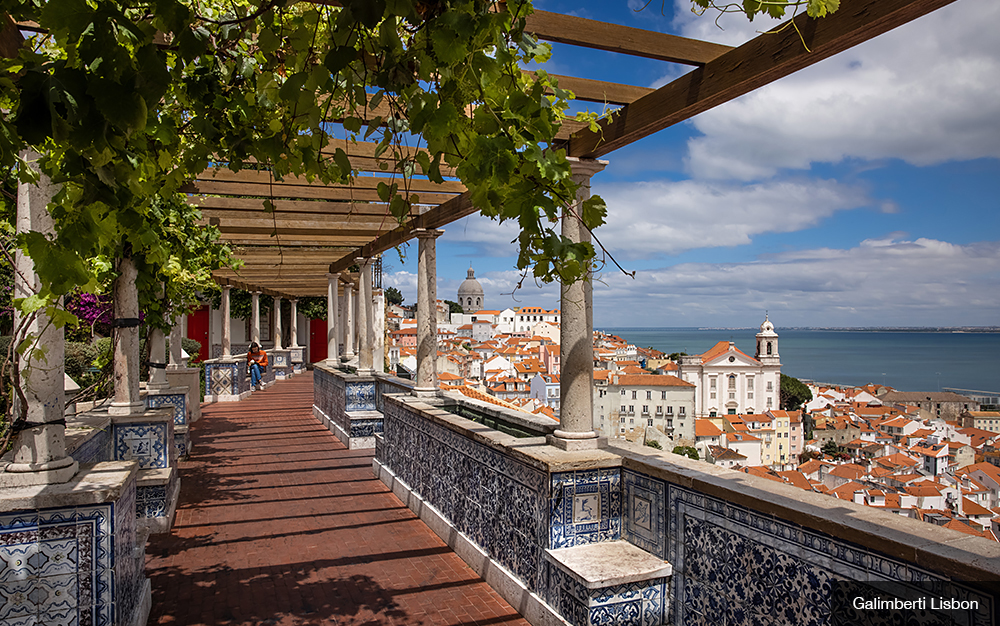
One highlight voyage included in the offer is the ‘Lisbon to Lisbon’ itinerary aboard the Silver Moon℠ from November 2-22, 2024. This three-week round-trip journey explores the Mediterranean, with stops in Tangier, Casablanca, Gibraltar, Palma de Mallorca, Tunisia, Malta, Sicily, Sardinia, and four Spanish ports, including an overnight stay in Cadiz. Inclusive of the offer, Port-to-Port fares for this Silver Moon voyage start from USD 12,150 per guest.
For those seeking an unparalleled Antarctica experience, the ‘King George Island to King George Island’ expedition voyage aboard Silver Endeavour℠ from December 1-7, 2024, is a unique opportunity. Skipping the Drake Passage, guests will fly in style from Punta Arenas to the White Continent, exploring the Antarctic Sound, Antarctic Peninsula, South Shetland Islands, and more. Inclusive of the offer, Port-to-Port fares for this fly-cruise sailing start from USD 15,950 per guest.
Sailing over the Holiday Season and New Year, the ‘Auckland to Sydney’ voyage aboard Silver Nova® from December 20, 2024, to January 5, 2025, promises a 16-day exploration of New Zealand and the Pacific’s iconic destinations. Silver Nova’s unprecedented use of glass ensures spectacular views, making it the perfect ship for this scenic itinerary. Inclusive of the offer, Port-to-Port fares for this voyage start from USD 8,350 per guest.
Aboard Silversea’s all-inclusive, ultra-luxury ships, guests benefit from such inclusions as butler service for every suite category; multiple restaurants serving diverse cuisine; in-suite 24-hour dining service; wines, spirits and beverages served throughout the ship; onboard gratuities; unlimited complimentary Wi-Fi; and more. Oceangoing voyages include one shore excursion per guest, per day, while all shore excursions are included on expedition voyages.
Don’t miss the chance to embark on a luxurious adventure with Silversea. Book now to enjoy up to $2,000 savings per suite and immerse yourself in an all-inclusive extraordinary on board experience. Limited time offer – book now!
Japan’s Sapporo Snow Festival will return to its pre-Covid glory this year, with all event sites in operation for the first time in four years, united under the theme “big snow sculpture.”
The international event on the northernmost main island of Hokkaido will be held at multiple venues across Sapporo and is expected to welcome more than two million visitors between February 4 and 11.
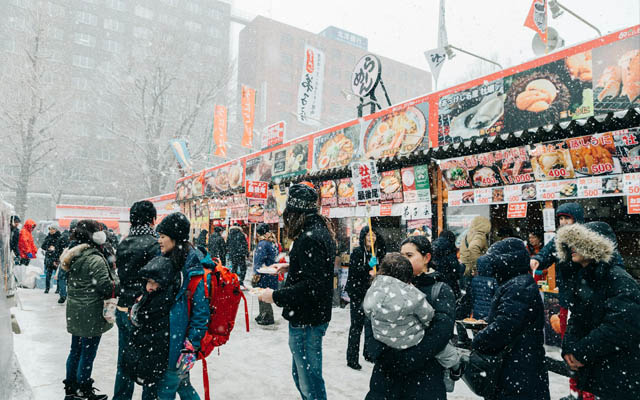
This year’s Sapporo Snow Festival will see all event sites in operation for the first time since Covid
The Tsudome site will be open for the first time since 2020, offering adults and children opportunities to play in the snow and learn about local culture. The returning venue is designed as the community hub of the event, featuring outdoor attractions including snow rafts and slides, a snow maze, stage events and Hokkaido-themed booths introducing the island’s food and drink.
At the city centre’s Odori venue, snow and ice sculptures of all sizes will cover about 1.5 kilometres. A curling experience will be offered for visitors in cooperation with the city’s curling association and Sapporo International Art Festival (which takes place every three years) will be held for the first time at the Odori venue. Its “snow town of the future” exhibit aims to offer insights on mobility and lifestyles in the years to come.
In expectation of more overseas travellers attending the festival this year, organisers are also rolling out events tailored for international visitors at Sapporo Hitsujigaka Observation Hill.
“The highlight of this site is the large snow-sculpture making activity, with sculptures of almost two metres a possibility,” said a spokesperson for the event.
The four-hour activity includes instruction from a snow sculpture-making expert, interpretation in English and a lamb BBQ lunch, at a cost of 154,600 yen (US$1,047) for a group of two to five people.
Visitors can also make mini sculptures, spot snow art in the Snow Art Forest and enjoy illuminations in the evening.
Tourism destinations in Asia have lined up a vibrant calendar of special events this Chinese New Year (CNY), starting February 10, to welcome holidaymakers during the main celebration days and beyond.
In Singapore, spring marks its arrival with the Dahlia Dream Chinese New Year floral display and River Hongbao carnival at Gardens by the Bay; Chingay Parade, which will put on the largest floor projection ever for a street parade on February 23 and 24; and various festive fun on Sentosa island, such as an underwater dragon dance at S.E.A. Aquarium every afternoon from now till February 25.
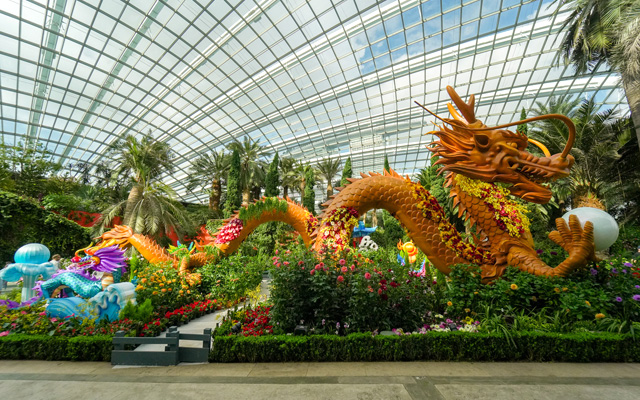
Dragon power comes alive at Gardens by the Bay’s Dahlia Dream Chinese New Year floral display
Hong Kong Tourism Board is set to ring in the Year of the Dragon with the Cathay International Chinese New Year Night Parade on February 10 in Tsim Sha Tsui. This head-turner will boast nine floats as well as 13 local and 16 international performing groups – the strongest line-up of performing groups ever. The floats will be stationed post-parade at The Urban Council Centenary Garden in Tsim Sha Tsui for public viewing from February 11 to 25.
Visitors can also catch the 2024 Lunar New Year Fireworks Display on February 11, and the popular and entertaining Chinese New Year Race Meeting 2024 at Sha Tin Racecourse on February 12.
Over in Macau, dual celebrations are in order – CNY will be honoured along with the 25th Anniversary of the Establishment of the Macao SAR. Parades have been planned, with the first taking place on February 12, running from the central district to Macau Fisherman’s Wharf; the second on February 17, covering the northern districts. A new aspect of the annual parade is the extension of the parade route to Macau Fisherman’s Wharf, where performances will be held to invigorate the night-time economy.
Macau’s signature Chinese New Year Fireworks Displays will return with three sessions this year, each lasting 15 minutes over the seafront of Macau Tower on February 12, 16 and 24.
In addition, visitors can look out for various activities, such as lion dances and zodiac mascot meet-and-greets, within community districts; an extended Light up Macao 2023 programme; and public exhibitions of the festive floats at Macau Fisherman’s Wharf from February 13 to 16 and Tap Seac Square from February 18 to 25.
While CNY is not a public holiday in Thailand, commercial players have stepped up to ensure the festive mood is palpable across capital city Bangkok. Entertainment destination IconSiam, in collaboration with the Ministry of Culture the Department of Cultural Promotion, the Thai Chamber of Commerce, the Board of Trade of Thailand, and various private sector partners, will throw a grand party from February 7 to 11. Locals and travellers can enjoy traditional rituals and performances along the Chao Phraya River.
Popular retail landmark Siam Paragon has lined up celebrities from China and Thailand to lead locals and visitors through the celebrations from February 8 to 11.
Chinese travel spike
These programmes will entertain holidaymakers from China, many of whom are looking to South-east Asia for their festive break. According to Trip.com data, outbound travel bookings from China for the upcoming holidays have surpassed last year’s figures by more than tenfold as of mid-January.
The OTA said destinations with friendly visa arrangements, such as Singapore, Thailand, and Malaysia, are favoured by Chinese tourists.
Most recently, Singapore and China agreed to a 30-day mutual visa-free entry for their citizens; this policy update will be implemented on February 9.
A surge in festive footfalls from China is expected in Hong Kong, and the authorities have made special crossing arrangements at the borders for the CNY holidays. The Shenzhen Bay Control Point, which usually closes at midnight, will operate round the clock from February 9 to 13; Lo Wu Control Point will remain open till 02.00 on February 9 and 11; and the MTR East Rail Line will be extended correspondingly.
Although Tourism Malaysia has not announced special events for CNY, inbound players are optimistic of a prosperous season. Chinese arrivals are anticipated to peak during the festival. As at press time, approximately 2,000 independent travellers in groups have been confirmed to arrive through major gateways, including Kuala Lumpur, Sabah, Penang, and Langkawi. Group sizes vary, and the numbers exclude FITs who have made their own travel arrangements, shared Mint Leong, president of the Malaysian Inbound Tourism Association (MITA).
Leong emphasised that the recent relaxation of visa requirements for Chinese tourists, allowing a stay of up to 30 days without a visa, along with the weakened ringgit, enhances Malaysia’s attractiveness as a destination.
MITA is actively monitoring Chinese arrivals in close collaboration with the Ministry of Tourism, Arts, and Culture Malaysia (MOTAC). Should there be last-minute demand spikes, a shortage of Mandarin-speaking tourist guides could set in. MOTAC would then issue temporary tourist guide licenses to cope with the situation.
According to Agoda, Malaysia is the third most favoured destination for Chinese tourists looking to celebrate the festivities overseas this year, surpassed only by Thailand and Japan. Chinese tourists particularly favour Kuala Lumpur, Johor Bahru, Kota Kinabalu, Melaka and Penang.
Also looking to make the most of the upcoming CNY travel season is Ant International, which has expanded its Alipay+ global merchant coverage to drive cross-border mobile payment for Chinese travellers, particularly in key destinations such as Thailand, Japan, and South Korea.
As of January 2024, Alipay+ partner wallets and bank apps include AlipayHK (Hong Kong), GCash (the Philippines), TrueMoney (Thailand), Touch ‘n Go eWallet (Malaysia), OCBC Digital (Singapore), and more.
“2024 will be an exciting year for Alipay+ to unlock many digital innovations in online and offline cross-border commerce,” said Douglas Feagin, president of Alipay+.
“As a global travel phenomenon, Chinese New Year is the perfect moment to kickstart our new range of partnerships, campaigns and product offerings to build a seamless and authentic travel experience and bring more business for merchants large and small,” added Feagin.
To encourage use of the Alipay app among Chinese holidaymakers, Alipay has invested in building market leadership with transparent and competitive exchange rates, free or discounted roaming data packages, and in-app ride-hailing convenience. It has also established special packages with merchants. In South-east Asia, special voucher bundles with up to 90 per cent savings have been prepared, while in Japan, deals with more than 500 street merchants around Mount Fuji in Fujiyoshida and Kawaguchi Lake have been created. – Additional reporting by Prudence Lui and S Puvaneswary
Accor has signed Adagio Chengdu Jianyang, marking the debut of Adagio, Europe’s leading long stay aparthotels brand, in China.
The 168-room midscale serviced residence hotel is slated to open by the end of 2025, in The Star Lane Urban Commercial Complex in Jianzhou New City, within the heart of Eastern New District of Chengdu.
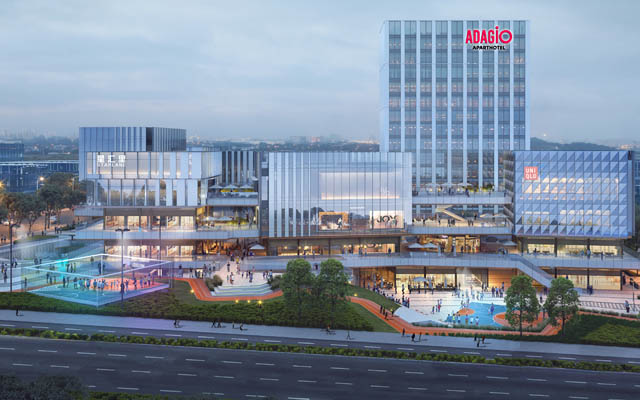
Accor will debut its Adagio brand in Chengdu, China
Family-friendly and pet-friendly, the apartments of Adagio will include the convenience of kitchen and laundry facilities, as well as a casual dining restaurant, lobby bar, meeting facilities, and fitness centre. The brand is committed to sustainability, and Adagio Chengdu Jianyang will have the advantage of being part of the Chengdu community that supports smart park city development.
The Star Lane Urban Commercial Complex will be a lively focal point of the community, offering entertainment, restaurants, shopping, and day-to-day conveniences. The complex is near Jili University and Tianfu International Circuit, while the neighbourhood connects to the central commercial and business area of Longma Lake Central Activity Zone, and the special commercial district of Linhe.


 Location