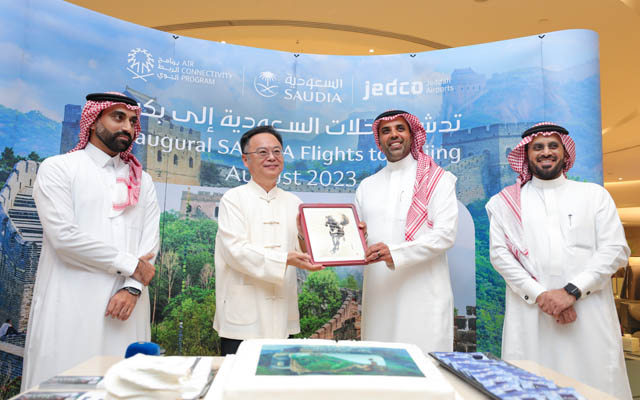
 AirAsia recently hosted its inaugural Sustainability Day on June 27, an event that highlighted the airline’s decarbonisation journey. What led to it?
We were getting a lot of enquiries from the government and business partners about what we are doing (for sustainability). I found that many people did not understand the intricacies of aviation sustainability, but once they hear from us, they often say we should tell more people about what we know and do.
So, Sustainabilty Day was created to bring everyone together to understand aviation sustainability. We also organised a visit to our engineering facility, so they could see that aviation sustainability is more than just carbon offsetting on flights; it is also a lot to do with our aircraft, fleet and waste management.
We cannot shy away from the fact that aviation is a hard to abate sector. A lot of people who don’t understand enough of aviation would expect airlines to do everything (in order to achieve aviation sustainability). It is not possible for airlines to go at this alone because many processes are beyond our control.
If we want to use sustainable aviation fuel (SAF), but it is not available or is sold by a few suppliers at 10 times the price, we just cannot do it. Government agencies and regulators need to come in. Banks too, to help finance the use of SAF because at this point, none are willing to give airlines a credit line for sourcing SAF.
There are many other bottlenecks when it comes to aviation sustainability, and Sustainability Day was created to bring everyone in the industry together to help them see where they fit into this jigsaw.
For those that missed the event, will you give us a snapshot of some of the key takeaways?
The first takeaway is this: we want policymakers to understand the challenges airlines face in aviation sustainability. They need to come up with policies that help us deal with structural challenges.
We are trying to mimic what Europe and the Americas are doing, but it is not possible because Europe has the European Union to fund many things. We don’t have this in Asia. The Americans have subsidies for fuel suppliers to produce SAF. Again, this is not available in Asia. Besides Singapore, no other government in Asia is subsidising SAF production.
So, we need policymakers in each country here in Asia to understand that they not only have to look into the stick that drives sustainable aviation, but also the carrot.
Do not forget that we just barely survived Covid, which brought three devastating years to the travel industry. It is no good coming in and telling airlines: “Hey, use SAF, it is good for the environment, but oh, it costs five times as much, by the way”.
Airlines still have a lot to pay (to get back on track). At AirAsia, we now have 70, 80 per cent of our fleet back in the skies, and about 20 per cent still on the ground because there is a global shortage of aircraft parts and maintenance hanger slots. The process of getting our fleet back in the air costs a lot of money. Each maintenance costs us a million US dollars, for example.
There are many demands on airline’s liquidity, so we have to prioritise what we can do at the moment.
The second takeaway is that there is pressure for capital to leave polluting industries, and there are deadlines for banks to divest from dirty industries. To do this, banks have to define the sustainability quotient for the aviation industry, such as the extent of decarbonisation and carbon intensity.
There are some green financing for us in Europe, Japan and Hong Kong, but nothing in South-east Asia.
So, part of our engagement is with the bankers and analysts, and we brought in experts to show them what the rest of the world is doing (with green financing) and industry trends.
The third takeaway is that we have to work with what we have. Everyone is talking about zero-emission aircraft that run on hydrogen. That is not going to happen for the next 15 years, by which time I might be retired. So, before we get to that point, what else can aircraft and parts manufacturers do to make aircraft lighter and more streamlined to reduce fuel consumption?
Where does the economic grouping ASEAN stand in this?
Unfortunately, there is no concerted voice on aviation sustainability. Each country here is pretty much going at sustainable aviation on its own.
Singapore is producing SAF, and Malaysia wants to do the same. Ultimately, in the long term, I think everybody needs to produce SAF on their own to ensure supply.
At this stage, however, would it be better for everybody to buy from a single source to help lower the cost of fuel for the whole South-east Asian aviation industry, or to buy from many small producers? Nobody has the answer – I think the governments will have to work this out themselves.
The thing is, some governments have decided to not even look into SAF production. This is not good in the long term because airlines would have to pay higher prices to access SAF.
Another cause of concern in the region is airspace management. The ASEAN airspace is extremely inefficient. People not in aviation would imagine that flying from one point to another takes a straight line, when in fact the aircraft could be flying a zigzag path mapped by legacy or in huge arcs to avoid military zones.
I’ll give you an example that isn’t in South-east Asia but it illustrates this challenge well: when we first started flying to Hainan, China (from Kuala Lumpur) a long time ago, we calculated a flight time of three hours and 20 minutes. The actual flight took 20 minutes more because at that time, China did not allow anyone to fly over the island where there is a military base. We had to fly around it. Imagine how much extra fuel we had to burn to make that roundabout?
Eventually, after much discussions with China, the government was able to create a new flight path that cuts across the island.
Now, ASEAN airspace is like that. There has been very little collaboration among countries to streamline these (flight paths).
I was in Hanoi (in June) to speak about what ASEAN nations can do together. AirAsia is unique because we are the only airline operating in four countries in South-east Asia. We found that, through a simple survey of flight paths, one of the most inefficient routes is Kuala Lumpur-Singapore; it causes aircraft to burn 16 per cent more fuel than necessary.
Kuala Lumpur-Manila is also very inefficient, although less so than Kuala Lumpur-Singapore. We are burning seven per cent more than we need to.
ASEAN regulators need to sit together and redesign flight paths so that everyone can benefit. The goal is to get airlines to emit less, regardless of the type of fuel we use.
ASEAN can certainly do a lot more, and this is the message we are conveying. We are talking more on a regional level now and encouraging different regulators to get moving on flight path reviews.
On my travels post-lockdown, I am experiencing a lot more airspace congestions at airports now, which require pilots to keep circling until they are cleared to land. That surely impacts fuel consumption.
This problem is related to flight path challenges. How you plan approaches to airports will affect aircraft fuel usage. The same regulators reviewing flight paths and airspace use will also determine flight approaches.
This issue can be harder to resolve at certain airports with only one runway. However, other inefficiencies are also a cause (of disrupted flight approaches to airports), such as shortage of manpower at airports or outdated software.
At the same time, you need to consider the size of airports and the impact this has on aircraft ground fuel consumption.
Singapore’s Changi Airport has just opened terminal four and will soon begin to build terminal five. If you have taken an AirAsia flight from Changi Airport, you will realise how much time we take to taxi on the ground. It is 15 minutes of taxiing, and that is fuel consumption that we have no control over.
Singapore’s terminal four alone is massive, and probably 30 per cent of that space is used to serve flight gates. The rest are retail and F&B space. Abu Dhabi International Airport and KLIA are massive too, and all that translates to greater distances an aircraft has to taxi on the ground to reach the runway and gates.
Hence, when one looks at aviation sustainability, one has to see the picture in totality and not expect airlines to take sole responsibility. Airports, aviation regulators, policymakers, etc all have a role to play.
Against these stumbling blocks, what critical milestones has AirAsia been able to achieve so far in its sustainability strategy?
For us to realise the whole picture was not easy. I took over the sustainability portfolio in 2020. Most people would think that the job is all about buying SAF and carbon offsets; it isn’t.
Ultimately, the question is: how efficiently are you running your business? Ninety per cent of our emissions come from aircraft fuel consumption. If we can reduce our fuel consumption, we will reduce our emissions and be consistent with our financial recovery as well.
Understanding what our options, strengths and net-zero pathways are very important.
At your Sustainability Day, you spoke of four pathways to airlines’ decarbonisation – fleet upgrade, step-up implementation of green operating procedures, switch to biofuels, and offset remaining emissions. Which of these four are the toughest to accomplish, and why?
This is a very good question, and you really get me thinking.
Within my team, some feel the switch to SAF is the most challenging because it is so expensive and it is so difficult to get shareholders’ buy-in especially since there is no regulation yet that demands SAF usage. Who will agree to spend three to five times more on SAF when the law does not demand it?
In my opinion, each of the four pathways comes with a unique set of challenges and we must go down all four pathways at the same time.
But, to answer your question, I think achieving operation efficiencies is the most difficult because money alone cannot accomplish this. With a lot of money, I can easily buy new aircraft, SAF supplies and carbon credits. To have better efficiency, a change in mindset is needed.
Regulators focus on safety. When they are asked to review anything, they are hesitant because sustainability has nothing to do with safety. They are worried that changing flight paths could impact safety. So, this is one set of people whose mindset has to be changed.
Airport managers focus on ancillary income. A huge airport brings in duty-free sales. Is that the real role of an airport though? Again, this is another set of people whose mindset has to be changed.
Airlines in general have stepped up their sustainability efforts over recent years. AirAsia, for instance is moving to fuel-efficient aircraft, with its A321neo fleet. However, some consumers still see airlines as a big polluter. What can the aviation industry do better to correct such public views?
I don’t agree with your observation of flight shaming. This is a very euro-centric view, and it does not exist in Asia. AirAsia does not get complaints about us flying.
Asia is not like Europe; we do not have the travel alternatives that Europe has. You cannot take a speed rail from Singapore to Penang in one hour. Driving from Johor to Singapore across the causeway takes three hours on a good day and seven hours on a bad day of traffic jams. If you live in Indonesia, you could travel from one island to another via an hour-long flight or a few hours on a ferry.
Asia is no comparison to Europe, but this question about flight shaming is very common on all the panels and conferences I’ve been at.
Having said that, consumers here in Asia have different sustainability concerns. They would be more concerned about plastic waste, for instance. We had customers writing to us about our use of plastics onboard, for example, and we adopted a trash segregation process. Unfortunately, this had to be put on hold because of the current industry manpower shortage. We will resume this process this year.
We have also been experimenting with various forms of environmentally-friendly food packaging. However, there aren’t many materials that are suitable for Asian cuisine. We experimented with a biodegradable packaging with corn starch content, but it does not heat rice well; the rice on top would be nice and hot but the bottom remained frozen. Complaints and food wastage shot right up. We are still trialling and talking to all sorts of packaging companies.
Will we have flight shaming in the future? Well, we might one day hear from the younger ones who are more environmentally conscious. If so, this segment of customers would want to consider buying carbon offset credits when they travel. A lot of airlines are already including offset options.
Can travel agents be a useful vehicle in conveying airlines’ decarbonisation journey? What is AirAsia doing to educate its distribution partners on its sustainability efforts?
We have yet this tackle this part. We will launch our decarbonisation programme towards the end of this year. I am preparing a board paper that will go to the board this month (August), and that will determine the extent of our decarbonisation efforts.
However, at our last board meeting, we discussed aviation sustainability through corporate travel. Some airlines have voluntary offset programmes to give corporate clients the option to fly sustainably. I think the message to offset flights will need to go from travel agents to corporate bookers. By having agencies work in carbon offset fees now, it will make it easier for airlines to implement the same eventually.
Companies will be required very soon to be accountable for their Scope 3 emissions (emissions produced by points in the value chain, not by the company’s direct activities). Scope 3 emissions would come from things like commute and travel. So, corporate travel agents will be key to developing a scheme with airline suppliers to offset travel emissions.
Therefore, one of the things we are looking to do at AirAsia, is to produce a report that tracks travel and resulting emissions, which will give corporate clients the option to decide if they want to offset their footprint. AirAsia will also offer the solutions – carbon credits or SAF purchase.
How is AirAsia communicating its decarbonisation efforts to the ultimate buyers – the travellers themselves?
While I get a lot of invitations to speak on sustainability and have spoken on it here and there, our Sustainability Day was the first time that AirAsia was able to take the topic to a wider audience. It gave us the chance to engage with industry stakeholders.
Our next step is to engage the public. Once we launch our decarbonisation programme, we will conduct a big campaign to educate the public and tell them what we are doing. People are supportive of sustainability, but they also want to know what you are doing with the money and be able to see how their contributions will make a difference to forest conservation, uplifting communities, etc.
You can look out for all these initiatives this year for sure.



 Having been with the company for 27 years, Toomey will oversee the consumer strategy for Marriott International in the region in his new role, which includes brand management, marketing, sales, distribution, revenue management, loyalty, customer experience, digital and communications.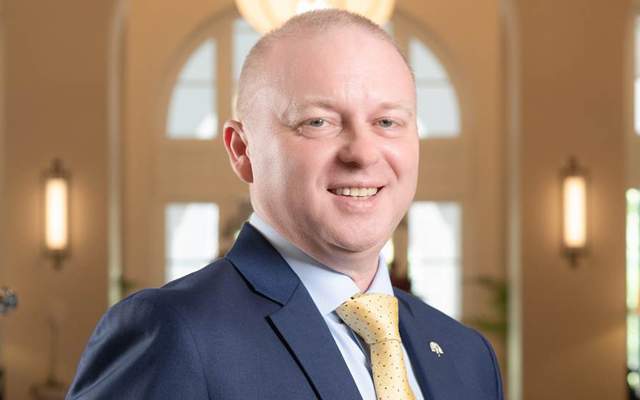
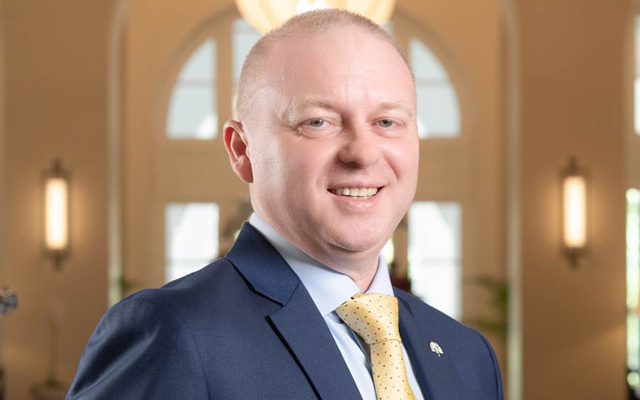 Based in Phnom Penh, Cambodia, Hartley brings more than 20 years of experience in luxury hotels around the world. He was most recently assistant vice president of strategic sales and marketing for Banyan Tree Hotels & Resorts in the Asia-Pacific based in Singapore.