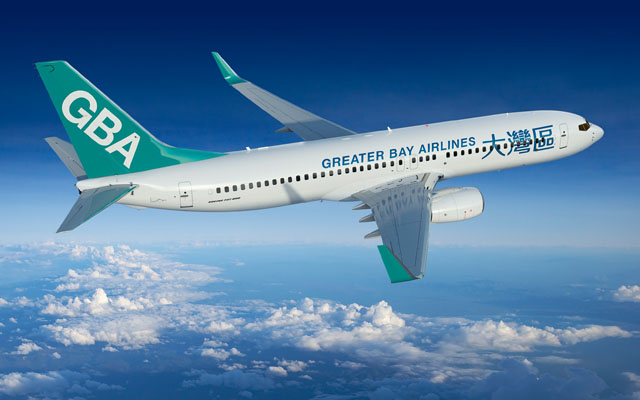
Greater Bay Airlines (GBA) will launch its Singapore-Hong Kong route from April 26, operating daily between Singapore Changi Airport and Hong Kong International Airport.
Greater Bay Airlines launches flights from Singapore to Hong Kong
Travellers can easily connect from Singapore to Greater Bay Area cities such as Shenzhen, Guangzhou, Dongguan, Macau upon arriving at Hong Kong International Airport with the available high-speed ferry services, or land transportation via the Hong Kong-Zhuhai-Macao Bridge.
Sri Lanka is planning to extend a free visa facility for visitors from some of its main source markets beyond March 2024 in order to boost tourist arrivals in the country as it embarks on record levels this year.
Officials said that the free visa facility for visitors from seven countries as a pilot project was introduced in November last year and set to end in March 2024. However, with promising arrivals in January and setting an ambitious target of 2.4 million arrivals for this year, higher than the record of 2.3 million achieved in 2018, the authorities were contemplating on extending this facility beyond March. The new date on when this facility will end is under discussion.
Sri Lanka hopes to attract more international visitors and may extend its free visa facility beyond March 2024; Nine Arch Bridge in Sri Lanka, pictured
The seven countries are India, China, Indonesia, Russia, Thailand, Malaysia and Japan. Indonesia and Japan are considered strong emerging markets while the rest are top source markets. The country fell short of the 2023 target of 1.5 million with arrivals at 1,487,303 in 2023, sharply up by 106.6 per cent from 719,978 in 2022.
January 2024 arrivals totalled 208,253, more than double the figures from the previous year. Provisional data showed that 60,122 travellers arrived in the first eight days of February 2024 alone with another promising month expected.
Along with this move, the authorities are also promoting a special visa for nomads who can work online from the country, said Harsha Ilukpitiya, immigration and emigration controller general. He added that this is to encourage work visas for this category of tourists. Nomad travellers are those who move from one country to another while working in remote locations.
Korean Air has appointed a new country manager in Cambodia who has unveiled grand plans to lure more South Koreans to the Kingdom of Wonder’s shores.
“Not many South Koreans know much about Cambodia, apart from Angkor Wat. Many have explored a lot of South-east Asia and are looking for new places to visit. They know Thailand and Vietnam, but not Cambodia, so I have to provide more information (for them),” said Hoyeon Chang.
Korean Air is looking to expand its network by launching more flights between South Korea and Cambodia
Chang has set his sights firmly on expanding the network to lure more South Koreans to the Cambodia’s shores. This includes plans to explore launching flights between South Korea and the recently opened Siem Reap-Angkor International Airport, as well as the coastal city of Sihanoukville.
“Cambodia is a very important destination for Korean Air because we have leisure demand and business demand too,” Chang said, adding that the airline currently operates daily flights between Seoul Incheon and Phnom Penh.
According to the latest figures from Cambodia’s Ministry of Tourism, South Korea ranks the nation’s sixth strongest source market. Between January and September, there were 125,732 arrivals. In addition, about 300 South Korean companies are based in Cambodia.
“We have a good mix of leisure and business traffic from South Korea but we can further build on the leisure market. South Koreans are searching for new places to visit, so we have to develop new destinations,” Chang noted.
He added that the route connecting South Korea with the Vietnamese island of Phu Quoc, which launched at the end of last year, has got off to a strong start due to the appeal of the beaches.
“Sihanoukville also has nice beaches and islands, which will make it attractive to South Koreans, and, of course, Siem Reap has a lot – but to make it viable very much depends on the support we get from travel agents and tour operators. It needs this support.”
Chang also noted that a strong part of Korean Air’s Cambodia traffic is outbound business, with many Cambodians travelling to the US. From Seoul Incheon, passengers can fly directly to 13 destinations in North America and Canada.
Since the airline reintroduced its direct connection from Phnom Penh to Japan in 2023, Chang said that the route has proved popular. “We’re seeing a lot of demand between Cambodia and Japan, especially to northern parts like Sapporo,” he said.
SITA’s 2023 Air Transport IT Insights report has revealed that both airports and airlines saw information technology (IT) spend increase year-on-year into 2023, reaching an estimated US$10.8 billion and US$34.5 billion respectively, with over two-thirds of airport and airline chief information officers (CIO) expecting continued growth into 2024.
Airports also boosted IT spend as a percentage of revenue in 2022 and 2023 even as business benefitted from an uptick in travel demand, signalling just how crucial a role technology will play in the next-generation travel experience.
Airports and airlines are spending more on IT solutions
Aviation CIOs’ key investment priorities include a biometrically enabled passenger journey, leveraging data to unlock operational efficiencies, and green solutions to optimise energy consumption and emissions.
From a seamless passenger experience to optimised operations
Airlines and airports have made strides in optimising the passenger experience, with over half having implemented IT to improve efficiency across check-in, bag tag, and boarding in 2023. Biometrics are becoming commonplace to help curb congestion, with 70 per cent of airlines expecting to have biometric ID management in place by 2026, and 90 per cent of airports investing in major programmes or R&D in this area.
CIOs are now looking to supplement passenger processing advancements with innovative solutions on the operations side. To boost efficiency, protect operations against disruption, and streamline processes for both passengers and staff, CIOs are embracing IT solutions for business intelligence (BI), artificial intelligence (AI), and data sharing.
BI is the biggest area of technology investment for airlines in the coming three years, with 73 per cent investing in major programmes. Nearly two-thirds of airports and airlines collect and integrate data, and with the rise of generative AI, they are now looking to AI and machine learning to leverage this data and generate insights. With most citing the “use of data to improve operational efficiency” as at least somewhat of a business challenge, it makes sense that 97 per cent of airlines and 82 per cent of airports are investing in AI by 2026.
David Lavorel, CEO of SITA, said: “As we approach a full recovery of passenger demand for air travel, with domestic travel even surpassing pre-pandemic levels in some regions, airlines and airports have learned from the congestion and disruptions seen in the past two years. Advanced data sharing and analytics tools will allow them to unite stakeholders and identify opportunities for greater efficiency and leaner operations. Solutions like total airport management and BI for passenger processing provide airports and airlines real-time insight into the management of assets and passenger flow, allowing for agile, collaborative responses to any disruptions.”
Smart IT to improve sustainability
Sustainability is also high on the agenda, with industry milestones for carbon reduction as well as regulations on emissions coming into view. CIOs are setting their sights on technology solutions that can deliver concrete emissions reductions.
By 2026, over 90 per cent of airlines plan to have IT in place to boost the efficiency of flight operations and aircraft turnaround. More than half have implemented IT to optimise both aircraft taxiing and the take-off/landing and cruise phases of flights, with nearly all expecting to have this in place by 2026.
On the airport side, building and energy management systems are a key priority for offering a unified view of emissions and opportunities to reduce them. Investment in energy management systems is expected to grow the most of any airport sustainability initiative, with over half of airports planning this by 2026.
“With industry ambitions to achieve net-zero CO2 emissions by 2050 in mind, airlines and airports are taking necessary steps towards reducing their carbon footprint, adopting digital tools for accurate monitoring and optimisation of energy consumption and emissions,” Lavorel added.
The SITA 2023 Air Transport IT Insights research was conducted from August to November 2023, and represents the views of over 250 senior airline and airport executives, covering a quarter of global passenger traffic.
Centara Hotels & Resorts is strengthening its footprint in Thailand and Vietnam with the addition of five properties to its portfolio to launch between 2024 and 2027.
The company has signed a strategic Hotel Management Agreement (HMA) with Phi Phi Paradise Company for its Villa 360 property, which will reopen as Centara Villas Phi Phi Island in October this year. The resort offers 40 villas, an all-day dining restaurant, sunset sky bar, outdoor swimming pool and pool bar, spa, fitness centre, and mini shop.
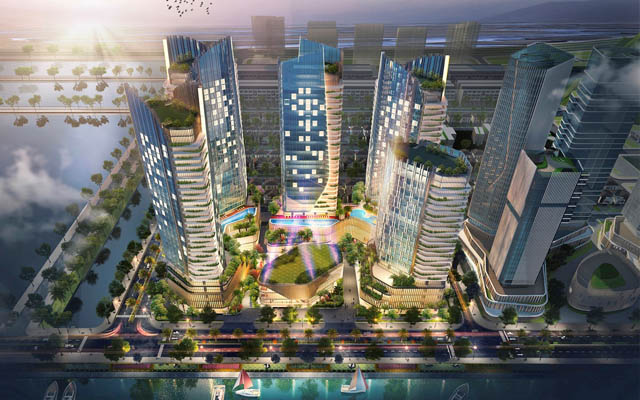
Crystal Holidays Harbor Van Don will launch a second tower in 2Q2025
Centara also signed a HMA with Kornsiri Hospitality Management for 68-key Tiva Ao Makham Resort Phuket, a greenfield project set to redefine health-focused travel with facilities including yoga, cycling, and a Pilates reformer studio, as well as a sauna, steam room, and onsen.
In Vietnam, Centara is set to open two properties in Vung Tau City in 1Q2027. The 261-room Centara Life Vung Tau will offer an all-day dining restaurant, modern meeting rooms, swimming pools, pool bar, fitness centre, spa, and kids’ club. Meanwhile, Centara Residence Dio Dua will offer 536 rooms, a fitness centre, swimming pool, and kids’ club.
Crystal Holidays Harbor Van Don will be opening a second tower in 2Q2025 as part of its plan to develop five hotel and resort apartment buildings within its five-star international standard resort and entertainment complex. Complementing the existing Centara-branded Tower A, which boasts a dedicated purpose-built convention centre, Tower B comprises 496 rooms along with a variety of dining options, a fitness centre, and swimming pools.
“These new signings represent significant milestones for Centara Hotels & Resorts, setting the stage to further pursue unique opportunities and partnerships around the world while fuelling our momentum to shape the future of hospitality,” said Andrew Langston, senior vice president – business development, Centara Hotels & Resorts.
Cocana Resort by Social Living Collection, Indonesia
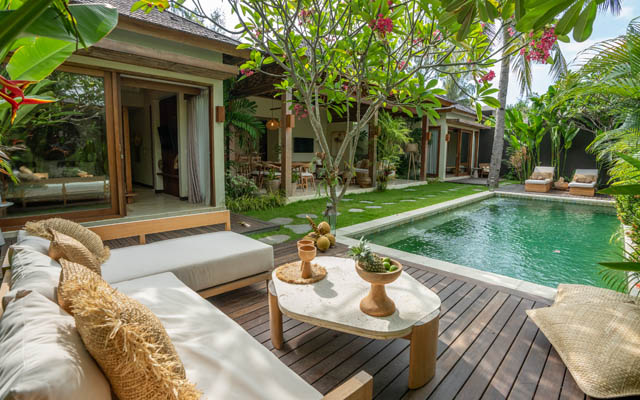
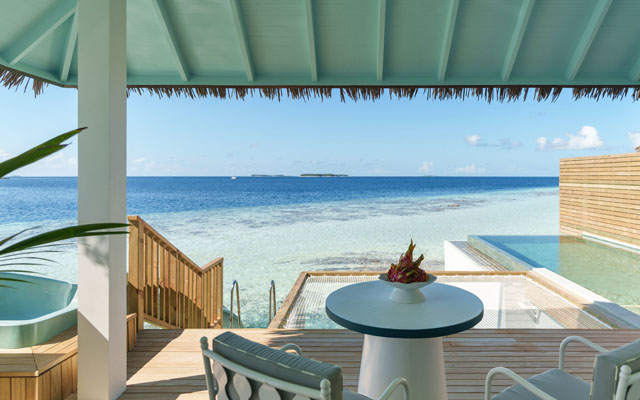
Situated on the shores of Gili Trawangan, Indonesia, Cocana Resort by Social Living Collection is a lifestyle resort that is eco-luxurious and offers five-star resort facilities and amenities.
The resort boasts 83 rooms, spread across 38 lagoon rooms with a variety of one-, two-, and three-bedroom private villas. Facilities include a spa, boutique, F&B, and beach bar.
The Danna Langkawi
The Danna Langkawi, Malaysia
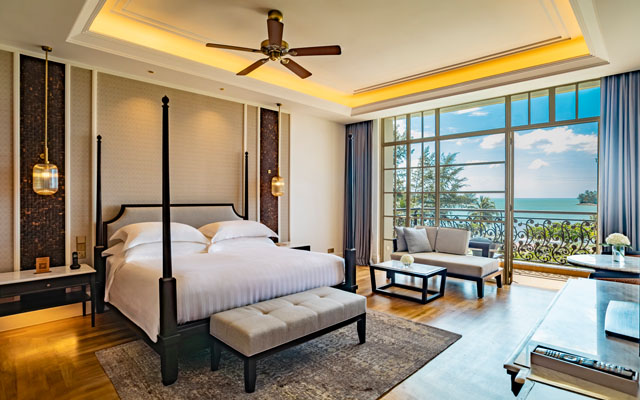
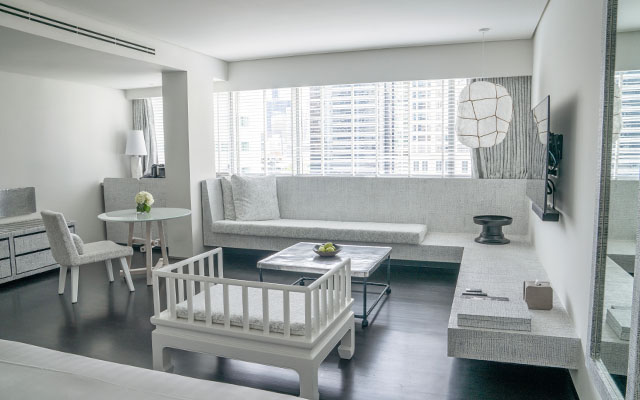
The Danna Langkawi has reopened its doors to guests after phase one of its room refurbishment exercise. It now offers 51 rooms and suites, an infinity pool, and a refreshed grand lobby. The second phase of refurbishment works for the remaining 74 rooms are expected to commence in April and completed by end of June.
Rooms are equipped with exclusive Jo Loves by Jo Malone bath amenities, private balconies, Nespresso coffee machines, TWG Tea and new upsized 55- and 65-inch TV sets.
The Danna Jr Club has also been revitalised and features a robust schedule of events and experiences such as supervised crafts, engaging sports activities, fish feeding sessions, interactive board games, and more.
Sofitel Legend Metropole Hanoi
Sofitel Legend Metropole Hanoi, Vietnam
Sofitel Legend Metropole Hanoi in Vietnam has relaunched its historic Heritage Wing following an extensive refurbishment.
The Heritage Wing comprises 54 Luxury rooms, 40 Grand Luxury rooms, six Metropole suites and three Legendary suites named after famous former guests of the hotel. Outfitted with elegant and sophisticated new furniture, these rooms and suites now offer bespoke comfort and advanced technology, with the floors refurbished or replaced, and bathrooms featuring all-new Italian marble surfaces and floors, as well as new bathtubs and showers.
The Heritage Wing is complemented by the hotel’s contemporary Opera Wing, with 236 guestrooms, 18 suites and one Grand Prestige Suite.
Citadines Science Park Singapore
Citadines Science Park Singapore, Singapore
Nestled in the heart of Singapore Science Park, Citadines Science Park Singapore offers 250 rooms spanning levels 10 to 15, a lounge, working spaces, meeting rooms, pool, fitness corner, outdoor barbecue area, and launderette.
There are also several low carbon mobility options that include 466 bicycle lots complemented with end-of-trip shower and locker facilities as well as 14 electric vehicle charging lots with options for alternating current and direct current chargers.
With the train station a mere five-minute walk away, this property is perfectly situated for both convenience and picturesque nature walks, including the Rail Corridor, Kent Ridge, and West Coast Parks.
Just a 25-minute drive from Changi Airport, the hotel is also nearby attractions like Universal Studios Singapore and Gardens by the Bay.
AAT Kings has launched two new Short Break tours for 2024, allowing travellers to enjoy time-efficient travel experiences in the Northern Territory.
AAT Kings Short Breaks range from two to five days, and provide a blend of iconic sights, local culture immersion as well as opportunities to forge new connections, all while being led by AAT Kings’ knowledgeable Driver Guides.
Explore Australia’s Northern territory with AAT Kings’ two new Short Break tours
The first new Short Break is the three-day Kings Canyon and Uluru tour, where guests embark on a journey to witness the vibrant colours of the outback sunset against the majestic backdrop of Uluru. They will delve into the rich red ochre landscape, home to unique flora, fauna, and ancient Aboriginal rock art, as well as experience the Kings Canyon Rim Walk, offering sweeping views and geological formations. The inaugural departure is scheduled for May 15.
Next, immerse in the wonders of the Australian outback with the comprehensive four-day Kings Canyon, Uluru and Kata Tjuta tour. Witness the sunset at Uluru while indulging in sparkling wine, followed by a sunrise experience at Kata Tjuta. Traverse valleys and canyons as guests uncover the geological marvels, rich history, and cultural significance of the region. This second Short Break will depart on its inaugural journey on May 7.
AAT Kings is now offering a five per cent discount for bookings by February 29.
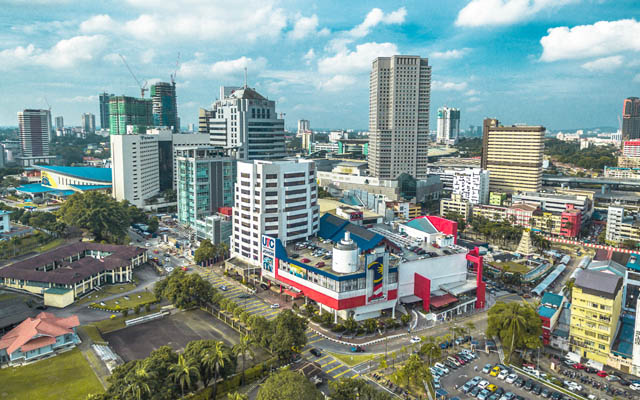
Johor is attracting heightened tourism interest since the crowning of its sultan as Malaysia’s new king, and being named the host city for the ASEAN Tourism Forum (ATF) in 2025.
Johor’s sultan Ibrahim Iskandar was sworn in as the new Malaysian king on January 31 and now holds the title of Yang di-Pertuan Agong. The sultan, of British-Malay descent, will reign for the next five years, and many in the tourism industry are expecting renewed interest in Malaysia and Johor with his appointment.
Many in the tourism industry are expecting renewed interest in Malaysia and Johor with the new king’s appointment
The king has extensive business interests and, no doubt, aims to see them prosper. He actively supported the recent establishment of the Johor-Singapore Special Economic Zone and is on record to rekindle interest in the stalled high-speed railway (HSR) between the two countries.
The Johor Bahru-Singapore Rapid Transit System Link (RTS Link) is currently under construction with a completion date of late 2026. Meanwhile, the luxurious Eastern & Oriental Express has recommenced services that will introduce Johor to high-end travellers, some of whom could also choose to holiday in Johor’s high-end resorts, such as those at the integrated tourism development at Desaru Coast.
For ATF 2025, Johor will be hosting the event next year. While the venues for the meetings and the travel exchange have yet to be finalised, general manager of Doubletree by Hilton Johor Bahru, Andreas Justkowiak, said: “We are excited with the outlook for tourism in Malaysia, especially with hosting ATF 2025 and Visit Malaysia Year 2026. In Johor, we are excited about the launch of the highly anticipated RTS Link, serving 10,000 passengers per hour each way.”
Chris Loo, managing director of Enjoy Holiday Tour, said: “The royal presence should lead to a surge in visitors eager to explore Johor’s cultural heritage and partake in related events associated with the new monarch, thereby positively impacting the state’s tourism industry.”
Arokia Das Anthony, executive director, The Essence of Asia Tours & Travel, shared that his company is coming up with new itineraries to include a photo stop of the royal palace in Johor as there is interest from the Indian market.
Christian Gerart, general manager of Anantara Desaru Coast, pointed out that the king is very progressive and cares deeply about development, and he is optimistic that investments will flow into Johor.
He said: “In anticipation of robust growth in Johor, we have just launched our three-bedroom residence after the success of our beach residence, and this latest package includes breakfast, spa, minibar and airport transfers. Being a part of the Anantara branding, sustainability is very important, and we support Rewild Desaru, a fund for establishing green corridors to ensure safe migration of animals within Desaru, and have developed guest-participation programmes.”
Many expect the new king to take an active, hands-on role in the nation’s governance. He has been quoted as saying that the economy must recover and Malaysia’s prosperity must be prioritised.
The Taiwan Tourism Administration is restarting its marketing and promotional activities in India after a three-year hiatus brought on by the Covid-19 pandemic.
The authority organised its destination seminars in New Delhi and Mumbai recently – the first of travel trade activities after the pandemic. Taiwan Tourism Administration has also opened its Taiwan Tourism Information Centre (TTIC) in Mumbai. The centre will act as a one-stop-point for information related to travel and hospitality in Taiwan.
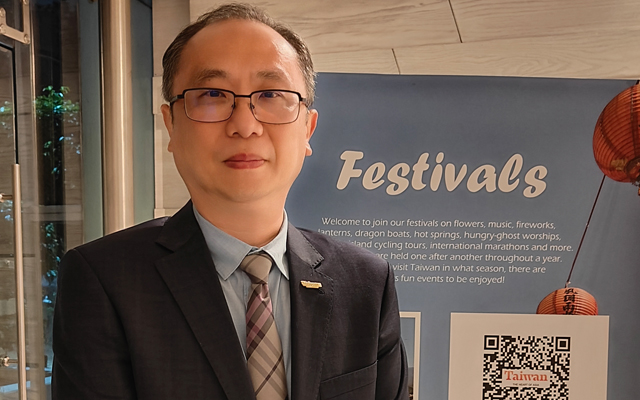
Cheng: our first focus is to reach pre-pandemic tourist arrival numbers in the Indian market
“Our first focus is to reach pre-pandemic tourist arrival numbers in the Indian market. Our promotional activities will focus on various products and experiences for both leisure and MICE segments. We are planning to organise fam trips for travel agents and media later this year. Also, a training programme for travel agents is in the pipeline,” shared Joseph Cheng, director, Taiwan Tourism Administration & Taiwan Visitors Association, Singapore office while speaking to TTG Asia at the New Delhi leg of destination seminars.
From January to November, the tourist arrivals from India to Taiwan stood around 30,000, a 70 per cent recovery compared to 2019. The Taiwan Tourism Administration is also in the process of hiring a PR agency in India to help grow outbound numbers from India, especially the MICE market.
“Metro cities like New Delhi, Mumbai and Chennai will be our focus for tapping the MICE segment. We are also in talks with China Airlines and EVA Air to begin direct flights between the two destinations,” added Cheng.
An official from China Airlines, who wished not to be named, told TTG Asia that the carrier may look to operate direct flights between New Delhi and Taipei once there is an availability of aircraft.
Some of the destinations Taiwan is looking to promote in India include Taipei, Taoyuan City, Kaohsiung and Tainan. Presently, the top inbound source markets for Taiwan are Hong Kong, Japan, South Korea, and Singapore.
Further East will return to Bali this year from November 4 to 7, gathering and connecting the very best figures in the industry to help shape the world’s most exciting market for luxury travel.
Further East will take place on a Bali beachfront in Seminyak, which has hosted every edition since 2018. It will also focus on how to use regenerative travel, rather than mere sustainability, to draw visitors and empower communities for decades to come.
Further East will once again be held in Bali this year from November 4 to 7
Featuring only exhibitors from the Asia-Pacific region, organisers This Is Beyond – curators of shows including PURE Life Experiences, L.E/Miami and We Are Africa – remind attendees of their regenerative potential. Serge Dive, This Is Beyond’s founder and CEO, said: “By connecting them with our top buyers and media attending from every corner of the planet, we can bring everyone to the Asia-Pacific region, capturing what’s so extraordinary about these cultures. Because that’s what they deserve.”
Over 50 per cent of exhibitor spaces have been confirmed for Further East 2024, and buyer and press applications will be opening very soon.
“We only select the risk-takers and change-makers,” Dive explained. “The Asia-Pacific region is home to more new luxury hotel openings, year on year, than anywhere else on earth. Many of them join us in Bali. Buyers know they are meeting true originals here.”
The show will retain its intimate sense of doing business differently with sunset drinks, five-star meals, pre-scheduled appointments, exclusive evening events and enough time to recharge in the tropical heat.
Dive shared: “We’re seeking to spark connections between our Further Easters that last for life. To inspire and immerse them in what’s possible. It’s part of the Eastern tradition – sharing ideas and moments that bring us closer, because everything changes constantly, and we need each other to keep up.”
Applications are officially open for Further East this year.















The Taiwan Tourism Administration is restarting its marketing and promotional activities in India after a three-year hiatus brought on by the Covid-19 pandemic.
The authority organised its destination seminars in New Delhi and Mumbai recently – the first of travel trade activities after the pandemic. Taiwan Tourism Administration has also opened its Taiwan Tourism Information Centre (TTIC) in Mumbai. The centre will act as a one-stop-point for information related to travel and hospitality in Taiwan.
“Our first focus is to reach pre-pandemic tourist arrival numbers in the Indian market. Our promotional activities will focus on various products and experiences for both leisure and MICE segments. We are planning to organise fam trips for travel agents and media later this year. Also, a training programme for travel agents is in the pipeline,” shared Joseph Cheng, director, Taiwan Tourism Administration & Taiwan Visitors Association, Singapore office while speaking to TTG Asia at the New Delhi leg of destination seminars.
From January to November, the tourist arrivals from India to Taiwan stood around 30,000, a 70 per cent recovery compared to 2019. The Taiwan Tourism Administration is also in the process of hiring a PR agency in India to help grow outbound numbers from India, especially the MICE market.
“Metro cities like New Delhi, Mumbai and Chennai will be our focus for tapping the MICE segment. We are also in talks with China Airlines and EVA Air to begin direct flights between the two destinations,” added Cheng.
An official from China Airlines, who wished not to be named, told TTG Asia that the carrier may look to operate direct flights between New Delhi and Taipei once there is an availability of aircraft.
Some of the destinations Taiwan is looking to promote in India include Taipei, Taoyuan City, Kaohsiung and Tainan. Presently, the top inbound source markets for Taiwan are Hong Kong, Japan, South Korea, and Singapore.