Accor has teamed up with Crowne Estate Malaysia to debut the Swissôtel Hotels & Resorts brand to Malaysia with Swissôtel Genting Highlands slated to open in 2028.
Boasting views of the mountains, the 300-room property will offer conference facilities, a grand ballroom, all-day dining options, executive lounges, and bars. Leisure amenities include a heated swimming pool, sundeck, fitness centre, spa, scenic jogging tracks, and a kids’ club.
The 300-key Swissôtel Genting Highlands will open in 2028
Just a 15-minute drive away to the Genting Highlands summit, guests will be able to venture beyond the Swissôtel Genting Highlands to discover Crowne Estate Malaysia with its villas and bungalows, as well as residences and serviced apartments.
Swissôtel Genting Highlands will be located close to King’s Park by Highlands ParkCity, which is home to a wide variety of shops, restaurants, and attractions, as well as several other hotels. Additional features comprise a neighbouring cable car service, Awana golf course, a high-end Genting Premium Outlet and amusement parks.
In addition, the sustainable and environmentally-friendly community will prioritise water conservation and use renewable energy sources.
Crowne Estate’s chief operating officer Sean Chen commented on the first strategic alliance with Accor: “It is a huge step forward for Highland ParkCity and Crowne Estate Malaysia in their goal to make the King’s Park in Genting Highlands into an eco-friendly tourist and destination hub for people all over the world.”
“The signing of Swissôtel Genting Highlands in one of the most popular destinations in the country for locals and tourists alike, further strengthens Accor’s leading position in Malaysia’s hospitality industry,” said Garth Simmons, CEO, Accor for South & Southeast Asia, Japan, South Korea and India.
This year’s Singapore Night Festival (SNF), which takes places from now till August 26 at the Bras Basah.Bugis (BBB) precinct, is lighting up the nights with over 50 that illuminate the BBB precinct and connects its history with contemporary experiences for all to enjoy.
Guided by the theme Singapore, the Great Port City, SNF 2023 sheds light on Singapore’s evolution from a vital port city to today’s dynamic modern metropolis.
Singapore Night Festival goers can enjoy live performances and food, such as indulging in kueh at the Festival Village @ Armenian Street, pictured
This year’s highlight act, Time is a Black Circle by Dawn Ng, transports festival-goers to the roaring sixties and seventies to experience the discothèques located in the BBB precinct, where they get to roller skate in a cylindrical “disco time portal” and relive a bygone era, or choose the non-skating option to enjoy an immersive multi-sensorial experience of psychedelic colours and nostalgic tunes of the discothèque era.
Festival-goers can also enjoy a six-minute theatrical experience that takes them on a journey through 700 years of Singapore’s port city history; a homage to Singapore’s cultural heritage and history of its flora and fauna motifs with the garden projection of traditional wood carvings; as well as SNF’s first dedicated family zone at Fort Canning.
There are also local delicacies like kueh to indulge in at the Festival Village @ Armenian Street organised by the Peranakan Museum, and the Main Festival Village @ SMU Campus Green features over 10 F&B stalls and SNF-exclusive tipples to enjoy.
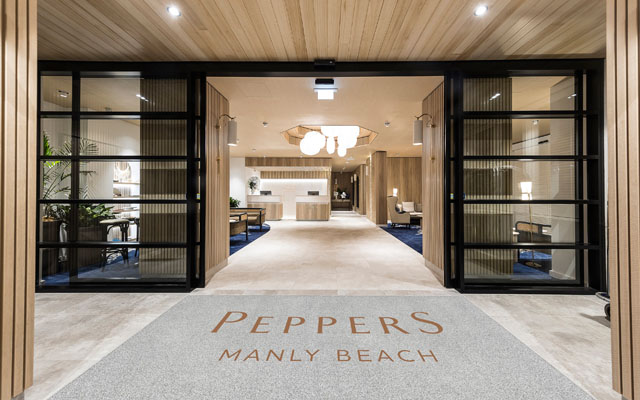
Nestled in the heart of Manly, Australia, Peppers Manly Beach is celebrating its opening on August 25 with a range of exclusive packages and special rates for guests when booking directly with Accor.
Previously known as the North Tower of The Sebel Sydney Manly Beach, Peppers Manly Beach boasts breathtaking coastal views and exceptional service. With an array of amenities like two swimming pools, three conference spaces, and personalised experiences, the hotel is a suitable getaway for romance, family vacations, or corporate retreats.
Peppers Manly Beach opens on August 25
Rates start from A$333 (US$214) per night in a Superior One Bedroom Apartment.
Industry leaders at the Global Gaming Expo Asia (G2E Asia), held July in Macau, expressed optimism in the region’s potential for casino and integrated resort (IR) development, but acknowledged that the inclusion of multiple non-gaming features is necessary for business advancement.
The number of IRs with gaming facilities in Asia is set to grow with new additions in Japan and South Korea.
Industry leaders are optimistic about the region’s potential for casino and integrated resort (IR) development
In April this year, the Japanese government approved a plan to open the nation’s first IR, to be developed by Osaka IR KK, a joint venture between MGM Resorts Japan and ORIX Corporation. The project, which is estimated to cost US$10 billion to develop, will be located on a reclaimed island in Osaka. In a joint press statement earlier on, Osaka IR KK said the IR will “transform the region into one of the world’s top entertainment and hospitality destinations and to serve as a hub for tourism across Japan”.
Speaking on a G2E Asia panel, MGM Japan’s president global development Ed Bowers said recruitment and training activities are now underway.
Over in South Korea, Inspire Entertainment Resort in Incheon is scheduled to soft-open in late 2023 and follow up with its casino launch in 1Q2024. Its COO Chen Si revealed that the company’s strategic vision, set a decade ago, was to develop the country’s airport hub into an international business and tourism centre.
To achieve a return on the company’s US$1.6 billion investment, Chen said diversity is key.
“This (ROI) can’t be achieved without non-gaming business,” he quipped, pointing to Inspire Entertainment Resort’s inclusion of a 15,000-seat arena, indoor water park, and various family-friendly facilities.
Chen said the arena aims to host 50 to 100 concerts each year, in support of the South Korean government’s aim to promote K-pop culture. The indoor water park is expected to attract the domestic family staycation market.
He expects a balanced 50:50 gaming and non-gaming business mix, with demand also streaming in from business event groups. “We already have regional events coming over from Singapore and the US next year,” he shared.
From left: Inspire Entertainment Resort’s Chen Si and MGM China’s Hubert Wang speaking at the Global Gaming Expo Asia held in Macau last month
Melco Resort and Entertainment, COO, David Sisk, agreed that a successful IR required “a collection of experiences to bring in (people), not just gaming”.
MGM China, president and COO, Hubert Wang, added that the early movers in Las Vegas and Macau have had to continuously reinvent and elevate their infrastructure for “relevance in the market”, starting with gaming first and adding on business events and sporting events capabilities, for example.
In Macau, MGM China is diversifying properties into arts and culture – MGM Macau is said to be a cultural tourism-first property while MGM Cotai features an art gallery housing 300 pieces of work.
“Entertainment wise, we have developed some signature events throughout the years,” added Wang.
Panellists at the conference agree that Macau has a success story in IR development, and that the government policy to step up non-gaming aspects in these properties will foster a sustainable future for the hospitality sector. Under their new 10-year concessions, which commenced January 1, 2023, the six major IR operators have pledged to invest a total of 108.7 billion patacas (US$13.4 billion) into developing non-gaming projects and exploring overseas customer markets. The immediate result is a wave of high-profile concerts being staged in Macau.
Macau current leads the Asia pack in terms of gross gaming revenue, valued at US$45 billion with Singapore (US$6 billion), the Philippines (US$3 billion), South Korea (US$3 billion), Malaysia (US$2 billion) and Vietnam (US$1 billion) trailing behind, according to gaming and IR specialist 2NT8.
2NT8 expects Macau’s gross gaming revenue to hit US$60-70 billion in a decade.
Some panellists say Thailand is one to watch, as gaming development there may soon be legalised. They expect Thailand’s gross gaming revenue to hit US$7 billion, and pose a threat to gaming neighbours Macau, Singapore, Vietnam and Cambodia.
Credit Suisse managing director Kenneth Fong said: “In Thailand, the local market will provide a very steady cashflow for IR operators, in addition to the inbound Chinese.”
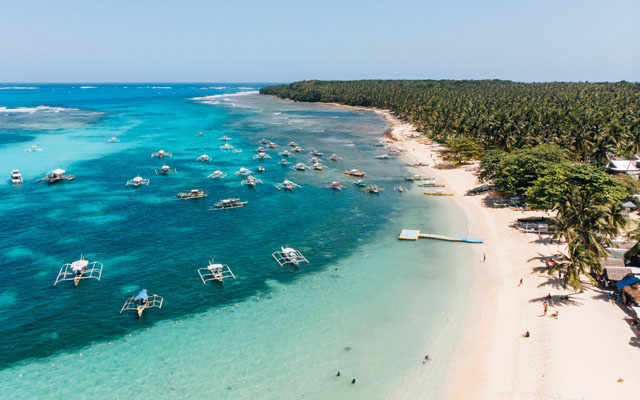
Efforts promoting Mindanao as a safe emerging destination is paying off, with travel consultants gaining newfound confidence in selling the destination and rolling out more tour packages to an increasingly receptive market.
Philippine Tour Operators Association (PHILTOA) president, Fe Abling-Yu, remarked that most travellers to Mindanao are locals who have “visited and continue to visit destinations in Mindanao” and that the island is “a beautiful, unspoiled and safe place contrary to their troubled image”.
More travellers are showing interest to visit Mindanao in the Philippines; Daku Island, pictured
She said the destination will continue to be promoted in PHILTOA’s Philippine Travel Mart (PTM) from September 1 to 3 this year even as its local government units (LGUs) continue to cooperate with tourism promotions and marketing. PHILTOA had sent travel caravans to Mindanao and got all of its five regions to join last year’s PTM.
In another development, an international cruise line is exploring the possibility of adding Zamboanga as a port of call in response to clamours for new port destinations in the Philippines.
“The fact that they came here to assess is already a fulfilment of my vision of putting Zamboanga back on the tourism map,” said Errold Lim Bayona, president, Tour Guides Association of Zamboanga.
Salvador Britanico Jr, vice president – sales, Philippine Airlines, agreed that demand for the carrier’s services to various parts of Mindanao are already back to normal except for flights to and from Cotabato, which has been temporarily halted until the repair of its airport’s runway is completed in September.
Abling-Yu noted that travellers are asking less questions about safety and security in Zamboanga, and added that they will be “bringing (more) tourists to Isabela de Basilan”.
In addition, with the increasing number of flights to Mindanao and cities like Zamboanga and Oroquieta, as well as the ferry services and buses plying the areas, more meaningful experiences and combining of destinations are in the works, she shared.
Pan Pacific Singapore, with its iconic atrium design created in the mid-1980s, unveiled its S$30 million (US$22.1 million) transformation last week to showcase Pan Pacific Hotels and Resorts’ new vision of graceful luxury.
The “Reimagined journey” of the Pan Pacific Hotels Group’s flagship includes the launch of new dining and retail space Pacific Emporium, featuring authentic local flavours, artisanal produce and specially curated gifting options from local brands and designers.
PLUME is a new destination bar with a bird and local botanicals theme
Also new is a bird- and local botanicals-themed destination bar PLUME, refreshed hotel rooms and the rejuvenated Ocean Ballroom.
Under the hotel’s Panache of Singapore offer, valid until September 30, prices for a minimum two-night stay start at S$580++ per night, inclusive of breakfast for two at Edge, cocktails at PLUME, a S$100 nett F&B dining credit per stay and other perks.
Room rates range from S$445 per night for the Deluxe Room, S$545 for the Executive Marina Bay Room and S$761 for the Premier Suite.
The Happy Sleepers Programme pampers suite guests with a pillow menu, in-room meditation and yoga, curated dining options and luxury bath products to deliver a rejuvenating sleep experience.
As part of its sustainability pledge, the hotel has installed water filters in guest rooms replacing plastic water bottles with refillable glass bottles, sourcing local and seasonal and offering F&B concepts to cater to vegan/vegetarian guests and those looking for plant-based protein alternatives.
Other green initiatives include test-bedding AI-powered smart food waste management to identify and reduce food wastage and implementing bio-digesters to convert food waste into nutrient water or sewage for responsible disposal.
Pan Pacific Singapore has also adopted eco-friendly options for pens, stirrers, takeaway coffee cups and boxes, and has removed plastic packaging for in-room slippers and plastic laundry protectors.
A spokesperson added that ongoing efforts to expand recycling extend to giving used soap and non-disposable plastics a second life.
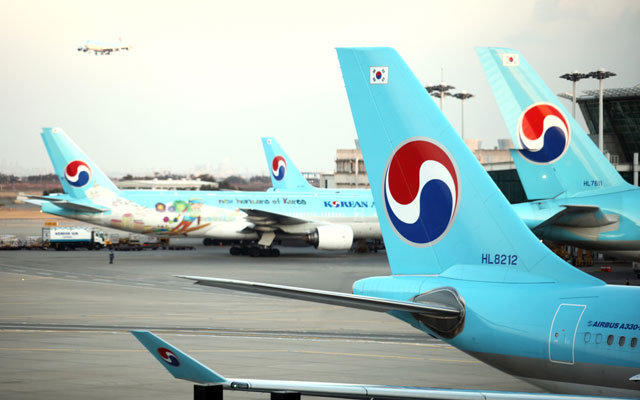
Korean Air will weigh its passengers and their carry-on baggage ahead of flights over the next two months, as it seeks to comply with aviation laws.
The move is in line with the country’s aviation regulations set by the Ministry of Land, Infrastructure and Transport. Air carriers are required to state the average weight of passengers on each aircraft at least once every five years, in order to provide data for the standard weight of an aircraft in flight. The data is also used to determine optimal weight distribution within an aircraft and fuel reduction measures.
Korean Air passengers and their carry-ons will be weighed before boarding during August and September flights
Measurements will be taken from August 28 to September 6 at Gimpo Airport for domestic passengers and from September 8 to 19 at Incheon Airport for passengers on international flights.
The process will take place at the boarding gates, and data will be collected anonymously. Passengers can choose to opt out of the process and board as usual.
Editor’s note: this article has been updated for clarity
Great Walks of Australia is celebrating 10 years of showcasing Australia’s best multi-day hiking experiences to international walkers with a 10 per cent discount on all new bookings.
Launched in 2013, Great Walks of Australia has grown to become one of Australia’s most trusted and loved walking experience brands for domestic and international hikers over the past decade.
Great Walks of Australia offers multi-day hiking experiences to international walkers
Great Walks are led by expert guides with a deep understanding of the environment, who help to bring to life the stories, culture, flora, fauna and history of each destination along the way. Small intimate groups, comfortable accommodation with a sense of exclusivity and outstanding gourmet food and wine, combine with remote locations for the ultimate in multi-day walking adventures.
As well as raising awareness for conservation, the Great Walks of Australia operators collectively partner with more than 400 businesses between them, mostly in regional communities, including food producers, tradespeople, transport operators, winemakers, craftspeople and more.
The discount is applicable for new bookings on any of the 12 walks between now and September 30 for travel until the end of 2024.
Japan braces ; A Chinese tour group visiting Takayama pictured
China’s addition of 78 more countries for outbound group travel on August 10 brings the number with approved destination status (ADS) to 138, and Trip.com Group is pulling out all the stops to launch some 1,000 products following the Ministry of Culture and Tourism’s announcement.
Destinations the Shanghai-based global travel company is eyeing include Japan, Australia, the UK, Germany, Israel, the US, Morocco and India. The first tour to Japan is scheduled for September, followed by the first tours to Australia, Morocco and Israel departing around the October National Day holiday.
China outbound travel demand has been picking up, with average weekly outbound flight volume recovered to over 50 per cent of pre-Covid levels; a Chinese tour group in Takayama, Japan, pictured
Demand has been picking up according to Trip.com Group, with outbound travel bookings by Chinese mainland users in July increased by 44 per cent compared to June – Hong Kong, Tokyo, Singapore, Macau, Bangkok, Osaka, Phuket, Seoul, Kuala Lumpur and London have been popular summer destinations.
As of August 7, the average weekly outbound flight volume had recovered to over 50 per cent of the same period in 2019, a Trip.com Group spokesperson said.
Its data shows the average price of cross-border flights had decreased by nearly 80 per cent compared to the same period last year, but was still higher than 2019 by between 10 and 20 per cent.
There is also uneven distribution of flight capacity and visa availability, with supply still lagging behind demand, according to Trip.com Group.
Alexander Glos, CEO, China i2i Group, noted that China’s outbound travel recovery has picked up: “In January, when the market officially reopened, international travel from China was merely two per cent of its 2019 volume. Presently, outbound has seen a rebound ranging from 40 to 60 per cent of pre-Covid numbers, a fairly commendable recovery within a couple of months.”
However, Wolfgang Georg Arlt, CEO, China Outbound Tourism Research Institute (COTRI) and Meaningful Tourism Center, observed first-half numbers were far below expectations after the reopening of borders was announced on December 26 last year.
COTRI’s data shows only about 26 million outbound trips from China were registered in 1H2023, with more than 17 million ending up in Hong Kong and Macau.
Arlt shared: “The restart was impacted by a lack of passports, a lack of air connections and high ticket prices and, for many destinations, by the very slow processing of visa applications.
“On top of this, Chinese consumers have become more careful with their spending, and many are waiting for lower prices, especially for air tickets.”
He said the August 10 news was less important as many Chinese want to travel as FITs and in small, self-organised groups, which they could do since January, if they could get a visa.
Arlt opined the Chinese had become less optimistic compared to the past and the more affluent were less secure about the future.
He predicted that once the main visa hurdle is resolved, 2024 will be back to 2019 levels.
Arlt: Chinese consumers have become more careful with their spending
Gary Bowerman, director, Check-in Asia, a travel and tourism research firm with bases in Hong Kong, Shanghai and Kuala Lumpur, explained the Chinese government made it clear that it would phase the return of group travel to give Chinese airlines, OTAs, travel agencies and tour operators time to scale up operations after three years of domestic-only focus.
Bowerman added the three lists of ADS countries for Chinese group travel issued at calibrated stages over the past eight months – January, March and August – had shaped Chinese airline capacity planning and traveller choice.
He commented: “Although regional destinations are noting comparatively low visitor volumes so far in 2023, this was to be expected because demand and supply are recalibrating across the Chinese outbound market.
“China is a huge, complex market which was heavily disrupted by the impacts of Covid-19. Some OTAs don’t expect international air capacity to reach the 2019 level until mid-2025, although capacity recovery to some key markets will be faster.”
Bowerman noted the expansion of group tour destinations should see increased air capacity for popular travel destinations, citing the US as a good example, and those flights would be filled by both package tour and FIT travellers.
The “four-hour flight radius” that Chinese OTAs refer to, he pointed out, would be a vital metric to watch, adding that “Chinese domestic destinations and the Asia-Pacific will drive China’s travel recovery this year for FIT and group travel”.
China i2i Group’s Glos believes China’s strategy of connecting second-tier cities with global hubs remains pivotal as these cities offer significant growth potential due to rising disposable incomes.
Glos continued: “Currently, business travel and higher-end FIT segments dominate Chinese outbound travel, a trend likely to persist through 2023 and the first-half of 2024. By mid-2024, larger-scale group travel is anticipated.
“It’s unlikely China will reach pre-Covid travel levels until 2H2024. The return of mass market group travel, along with total traveller numbers and spending, will dictate the pace of recovery.”
Sienna Parulis-Cook, director of marketing and communications, Dragon Trail International, a marketing solutions company, observed each time China’s National Immigration Authority released new border crossing data for certain dates or holiday periods, the number inched closer and closer to the 2019 baseline, reaching nearly 65 per cent recovery by June’s Dragon Boat Festival.
Parulis-Cook noted the August 10 news had the potential to stimulate and facilitate increased travel for a number of different demographics and market segments.
“The policy change allows for the resumption of group tours, but it also allows for the resumption of travel packages, which start from a minimum of a flight plus hotel booking together.
“That can significantly expand the volume of travel sales made to FITs as well as group tourists, and make the sale and purchase of outbound travel much simpler than a traveller needing to book each part of their trip separately,” she explained.
China-centric marketing solutions company Dragon Trail International (DTI), says destinations can confidently commit to Chinese tourism marketing plans now and reconnect with the Chinese travel trade, both offline and online.
DTI director of marketing and communications, Sienna Parulis-Cook, told TTG Asia a summer 2023 survey of Chinese travel agents selling outbound trips showed 61 per cent were especially keen to meet at in-person events.
Destinations can engage with the travel trade in China to attract more Chinese visitors; Chinese tourists at Wat Phra Kaew Grand Palace in Bangkok, Thailand, pictured
Major opportunities coming up include ITB in Shanghai in September, COTTM in Beijing in November and roadshows tourism boards host in China.
She added: “Some 56 per cent of China travel agents said online training courses and live webinars would help them to work with overseas suppliers, and digital initiatives – particularly WeChat – are a great way to engage with the Chinese travel trade.
Working with the Chinese travel trade, who speak directly to consumers and considered a trusted voice, can help to address any safety concerns that Chinese travellers might have about a destination.
They can also assure Chinese travellers and give them the information they need to confidently book outbound travel once again, she opined.
A tip by Wolfgang Georg Arlt, CEO, China Outbound Tourism Research Institute (COTRI) and Meaningful Tourism Center, is to provide quality products, produce special interest products for specific market segments and to use word-of-mouth marketing instead of supply-side produced social media content.
He pointed out: “There are more Christians in China than in Germany or Italy, more FC Barcelona fans than in Spain and more foodies than in France.
“Use the meaningful tourism approach to make sure that all stakeholders, including host communities and employees, get and see the benefits of hosting Chinese visitors.”
According to Gary Bowerman, director, Check-in Asia, a travel and tourism research firm with bases in Hong Kong, Shanghai and Kuala Lumpur, the industry had to consider two factors in terms of China’s outbound recovery: total outbound visitor numbers and tourism spending.
Bowerman noted: “It will take time for Chinese arrivals to reach pre-pandemic levels in most markets. In 2019 for example, China contributed 22.5 per cent of all visitors to South-east Asia.
“China will be the number one visitor market for many Asia-Pacific nations in 2023, but annual arrivals will be lower than anticipated.”
He added that Chinese spending will “increase on aggregate because inflation is making the cost of travel higher” thus “the relationship between total visitors and tourism spend is different than before”.