Japan’s Tokyo DisneySea is set to launch its eighth themed port, Fantasy Springs, on June 6 this year.
Fantasy Springs consists of three areas inspired by Walt Disney Animation Studios films: Frozen Kingdom, Rapunzel’s Forest and Peter Pan’s Never Land, as well as the latest Disney-themed hotel, Tokyo DisneySea Fantasy Springs Hotel.
Artist’s impression of Frozen Kingdom, one of the three areas within Fantasy Springs at Tokyo DisneySea Park
Fantasy Springs is nestled between Lost River Delta and Arabian Coast at Tokyo DisneySea. Guests will be welcomed at the Fantasy Springs entryway with an archway adorned with Disney Animation characters such as Peter Pan, Anna, Elsa and Rapunzel. The themed port also features motifs of a variety of other beloved characters.
The new area will comprise attractions, restaurants, a merchandise shop, and more.
To enter Fantasy Springs and enjoy its new attractions, a Standby Pass (available free of charge) or Disney Premier Access (available for a fee) for eligible attractions in Fantasy Springs will be required.
To celebrate Sunway Group’s 50th anniversary this year, Sunway City Kuala Lumpur Hotels is offering exclusive stay packages for a quick family getaway this March.
The Enjoy ‘March’ More stay packages feature discounts of more than 50 per cent off room rates at Sunway Resort Hotel, Sunway Pyramid Hotel and Sunway Lagoon Hotel, complimentary dining vouchers at Gordon Ramsay Street Pizza and Black Tap Craft Burgers & Shakes, spa vouchers, and more.
Families can enjoy fun this March at Sunway City Kuala Lumpur Hotels
Priced from 399 ringgit to 1,350 ringgit (US$84 to US$285), all packages include accommodation, complimentary breakfast buffet, and access to all of Sunway Resort Hotel’s leisure facilities – Waterventure, Wonderland Explorers, Health Club and swimming pool.
Hotels in the Philippines are bracing for the impact of the proposed 100 pesos (US$1.78) hike in the daily minimum wage of private sector workers, a bill unanimously approved by the Philippine Senate with a twin bill under consideration by the Congress.
Benito Bengzon Jr, executive director of the Philippine Hotel Owners Association – one of the many groups that formally oppose the legislated wake hike – said it will impact particularly the micro and small enterprises, with some people being displaced.
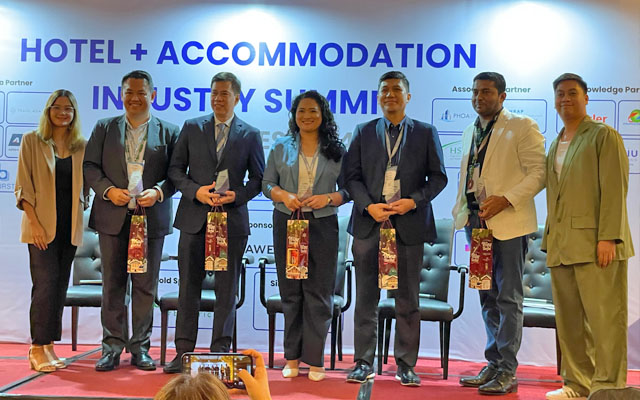
Benito Bengzon Jr, third from left, said the wage hike will have most impact on the micro and small enterprises
“(However) we really like to look at it from a legal perspective. There’s already a legal and working mechanism that has been in place for a very long time… that studies and recommends wage hikes for each and every region in the country,” he said at the recent Hotel + Accommodation Industry Summit Philippines.
Bengzon pointed out: “The Regional Tripartite Wages and Productivity Boards is under the law, and regional tripartite boards just recently granted wage hikes in different regions.”
Economists said the proposed hefty wage hike – an additional manpower cost to hotels to the tune of about US$600 per employee per year – will make businesses raise their prices or reduce manpower, causing higher inflation and interest rates that will penalise the poor that the proposed bill purports to help.
At the same Industry Summit, Eugene Yap, president of Hotel Restaurant Association of the Philippines and general manager of Bayview Park Hotel Manila, foresaw a “wage distortion” from the proposed wage hike as the salaries of employees receiving higher pay will have to be adjusted.
Saying that the 100 pesos wage hike is just applied to businesses “with no added value equivalent” to businesses and their clients, Yap said they will have to look at how to raise their prices without pricing themselves out of the market, turning to foreign and other markets capable of absorbing or covering up the legislated wage hike.
Saudi Arabia has received international recognition and applause from UN Tourism and the WTTC for welcoming over 100 million tourists in 2023, surpassing its previous target set for 2030.
Having achieved this milestone seven years ahead of the initial goal, the Ministry of Tourism has announced that the Kingdom has now set a new ambitious target of welcoming 150 million tourists by 2030.
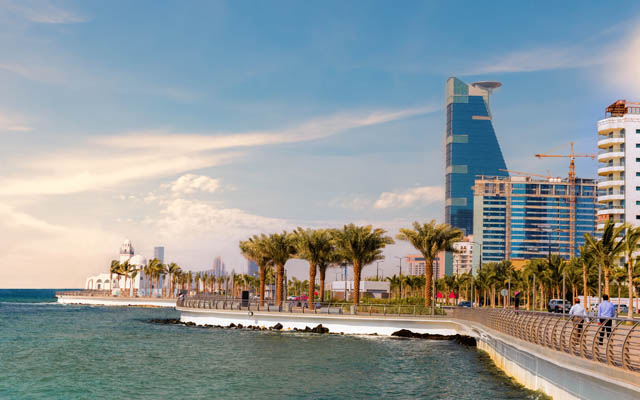
Saudi Arabia has set a new target of 150 million tourists by 2030 after surpassing its previous target last year; Jeddah, Saudi Arabia, pictured
Tourism has proven to be a significant contributor to the nation’s economy, with domestic and international tourists spending over 250 billion riyals (US$66.6 billion) in 2023. This expenditure represents over four per cent of GDP and seven per cent of the non-oil GDP reflecting the crucial role of tourism in diversifying Saudi Arabia’s economy.
The tourism sector in the Kingdom has marked significant qualitative leaps, with the total number of tourists, both domestic and international, reaching 106.2 million in 2023. This represents an increase of 56 per cent compared to 2019 and a substantial 12 per cent surge compared to 2022. Among these, the number of international tourists reached 27.4 million, showing a substantial 56 per cent increase from 2019 and a 65 per cent rise compared to 2022.
Minister Ahmed Al Khateeb commented: “Tourism is a key pillar in the nation’s economic transformation under Vision 2030, creating jobs and revenue for the Kingdom. The tourism ecosystem continues to operate in line with the national tourism strategy by developing diverse tourist destinations. Our aim is to enrich the experiences of tourists, diversify options for both local and international visitors, and enhance hospitality facilities along with other services provided.”
Budget airline Air India Express is planning to increase its flight operations by 40 per cent next year, thanks to the addition of new aircraft to its fleet.
The primary focus will be on strengthening domestic routes, although the airline will not add many new destinations – it will, however, launch flights to Nepal, Bangladesh, and Sri Lanka during the upcoming summer season.
Air India Express aims to strengthen its position in the domestic Indian aviation market by increasing the number of flights next year (Photo: alphonsusjimos)
There may also be some growth in the international network.
The airline currently operates 350 daily flights with 69 planes and has an additional 1,300 pilots, including those from the soon-to-be-merged AirAsia India.
Air India Express is on track to complete its acquisition of 50 Boeing 737 Max planes by December this year, with over a dozen already inducted.
Additionally, the merger with AirAsia India is expected to be finalised by 2Q2025, bringing AirAsia India’s fleet, including its three A320neo planes, under Air India Express’s operations.
Sabre Corporation is introducing two new cloud-based next-generation travel management solutions to accelerate digital transformation and New Distribution Capability (NDC) adoption for travel agents across Asia-Pacific.
Developed in partnership with Hong Kong-based Excellent Management Limited (XML), PowerSuite Cloud and PowerSuite Cloud Lite will enable agents of all sizes to elevate operational efficiencies, automate repetitive tasks and gain real-time business insights, ensuring they can meet the ever-increasing complexity of travel, including NDC orders.
Sabre’s PowerSuite Cloud and PowerSuite Cloud Lite will help accelerate digital transformation and NDC adoption for travel agents across Asia-Pacific
Building upon existing XML PowerSuite software, PowerSuite Cloud provides a refreshed and modernised user experience, offering a full-scale accounting solution for travel businesses of all sizes.
PowerSuite Cloud Lite will first be available in Malaysia, Singapore, and Hong Kong before rolling out to the rest of the region – it is an entirely new launch offering a front to mid-office integration best suited for smaller agencies, ensuring access to critical financial tools and NDC integration with many of the same advanced features as PowerSuite Cloud.
Both solutions offer a host of advantages for travel agencies, including full integration with Sabre’s intuitive booking platform Sabre Red 360; advanced automation capabilities to significantly reduce manual efforts in mid-to-back-end financial operations, allowing agencies to reallocate resources to more strategic tasks; cost efficiencies; real-time financial insights empowering agencies with data-driven decision-making capabilities; cloud-based flexibility to access financial data securely from anywhere; as well as compliance and security of which PowerSuite Cloud and PowerSuite Cloud Lite adhere to highest industry standards, enabling agencies to protect financial data and operate in accordance with regional regulations.
So far, travel agents have found the new PowerSuite Cloud and PowerSuite Cloud Lite beneficial for their business.
Tatang Tabrani, managing director, Global Travel in Singapore said: “Being one of the early adopters of PowerSuite Cloud in Singapore… we were pleasantly surprised by the completely new user experience and enhanced features, while reaping the business benefits from moving the infrastructure to the Cloud thus achieving our green objective.”
Peter Williams, managing director & CEO of Phil Hoffmann Travel in Australia, remarked: “Since moving to PowerSuite Cloud, we’ve been able to reduce costs and increase productivity through automation, while having easy access to comprehensive real-time insights needed to make informed decisions for revenue growth. We’ve been impressed by how intuitive and productive PowerSuite Cloud is, enabling our team to have greater control to elevate the entire client experience.”
“Sabre’s PowerSuite Cloud is already proving to be a game-changer for us,” added Choo Kok Leong, CEO of Boustead Travel Services in Malaysia. “PowerSuite has been a reliable tool for us for many years, helping us automate processes and streamlining our financial operations. We now have peace of mind that our business will not be disrupted by the increasing complexity of airline content.”
“Just as Sabre is accelerating our own digital transformation with our move to the Cloud, we know our travel agents need to make technological transformations of their own if they are to compete effectively in this rapidly-evolving travel industry landscape,” said Brett Thorstad, vice president of Sabre Travel Solutions, agency sales and airline distribution, Asia Pacific.
Accor has bagged the deal to manage and plant its upmarket Pullman brand in a 200-key hotel and 900 residences units to be built starting next year in a beachfront area in Mactan, Cebu.
When completed in three to five years, Pullman Mactan Cebu Hotel and Residences will have three tower residences – including one for long-stay guests – and like the hotel, each will have separate full-service facilities including a penthouse, restaurants, contemporary lounges, leisure zones, and corporate spaces.
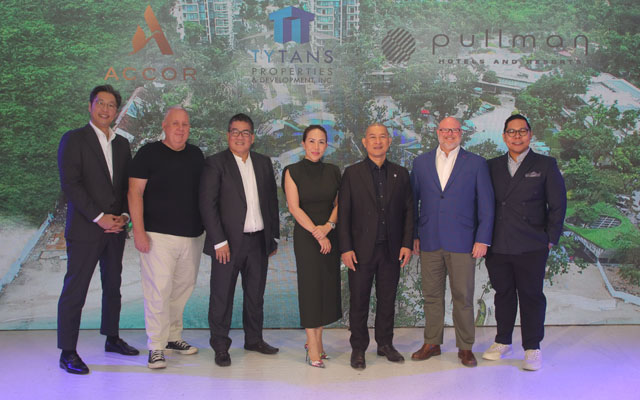
From left: Accor’s Chris Cho; C9 Hotelworks’ Bill Barnett; Tytans Properties Development’s Gerard Tan; Tytans’ Daphne Lagon and Sonny Lagon; and Accor’s Andrew Langdon and Kash Salvador
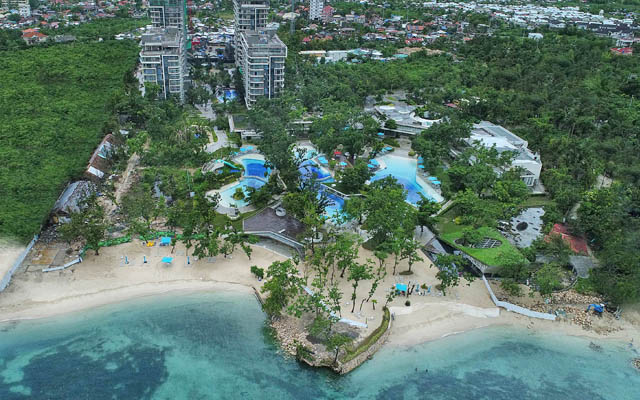
Pullman Hotel and Residences is going to be part of the 11-hectare site which houses the existing Tambuli Seaside Resort & Spa consisting of six condominium buildings with a total of 1,000 units and a vast common area for F&Bs, meeting spaces, huge swimming pools and beach facilities. Together, they will be called Tambuli Mactan Estates.
Gerard Yu, chairman of Tytans Property Development which owns the site, said Tambuli (Filipino horn or trumpet) will be retained as a heritage brand in the multi-billion peso development.
He said more facilities will be developed in the Tambuli common area, including a 20,000m² commercial boardwalk which will feature parlours, health care, children’s area, sports facilities and more F&B outlets.
The plan for an enlarged Tambuli Mactan Estates is to offer a different experience. “We would like to come up with a resort that has the fullness of the rainforest, (and) the beauty of the white sandy beach,” Yu explained.
Indeed, long before sustainability and trees preservation became fashionable, Tytans retained the numerous centuries-old trees in the area when it bought Tambuli in 2012 and “we worked around the trees in an altogether new resort although it was not an easy job”, Yu recalled.
Dusit Thani Bangkok hotel in Thailand will officially reopen later in September after undergoing reconstruction to offer its guests an opulent accommodation experience.
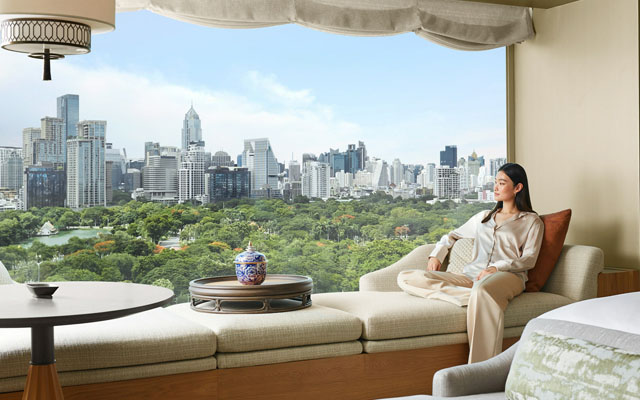
The newly-built 39-storey hotel will feature fewer rooms (257 versus the original’s 517) comprising deluxe rooms and suites, whereby a singular corridor floor plan ensures every room faces the green expanse of Lumpini Park for guests to enjoy uninterrupted scenic views through expansive floor-to-ceiling windows.
Caption: Dusit Thani Bangkok ensures every room faces Lumpini Park
The hotel will continue to boast one of the city’s largest, most elegant ballroom with banqueting and meeting facilities spanning over 5,000m².
Full details of the hotel’s wellness offerings and culinary concepts will be revealed closer to its reopening date.
The new Dusit Thani Bangkok is located at the heart of Dusit Central Park, a mixed-use development which also houses Dusit Residences and Dusit Parkside, an office tower, a high-end retail centre, and an 11,200m² Roof Park. These additional components are expected to open gradually in 2025.
Suphajee Suthumpun, group CEO, Dusit International, commented: “By blending tradition with innovation, the new Dusit Thani Bangkok has been carefully designed to surprise and delight long-time fans of the original hotel and new generations of travellers alike. This reimagined landmark also serves as a blueprint for exciting new services and experiences across Dusit Hotels and Resorts worldwide.”
Adrian Rudin, managing director, Dusit Thani Bangkok, said: “For nearly five decades, the original Dusit Thani Bangkok stood as a cornerstone of the community, crafting cherished moments and unforgettable memories for countless guests. This is a new chapter, where heritage seamlessly blends with modernity, ensuring every guest encounters the extraordinary.”
Bookings for the new Dusit Thani Bangkok will be available from May 1.
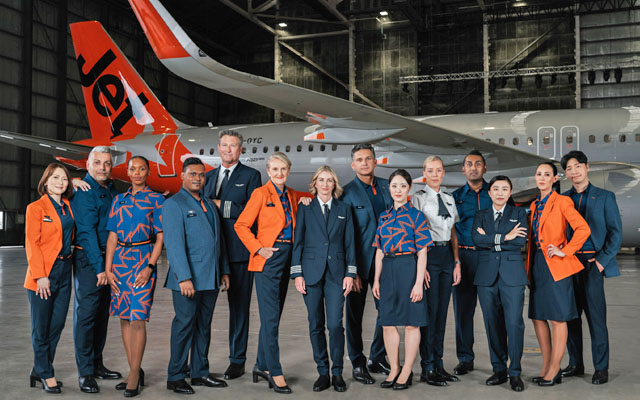
Celebrating 20 years in the air, Jetstar has unveiled its revamped uniform which will be worn by more than 5,000 of the airline’s frontline team members across Australia as well as at Jetstar airlines based in New Zealand, Japan and Singapore from late 2024.
Designed by renowned Australian fashion designer, Genevieve Smart, inspiration for the new uniforms came from the sunset as seen out of an aircraft window, a symbol of what Jetstar means to its customers and its people.
The new uniforms give the crew more freedom to choose what they would like to wear
The uniform comprises two sets: the first collection centres on the Jetstar star print where silhouettes are designed to radiate a holiday vibe while retaining a professional edge with a smart casual element; while the second collection focuses on creating an inspired travel look by the layering of textures and colours.
The pilot uniform stands out with a sleek new tailored suit, with a sharp modern cut in navy and a subtle star jacquard fabric design for the slimline tie.
Even the airline’s epaulettes, braids and wings badges have changed its look to ensure a consistently professional look.
The newly designed collection caters to everyone and gives the crew more freedom to choose what they would like to wear.
With sustainability is mind, Jetstar’s current uniforms will be repurposed into new products.
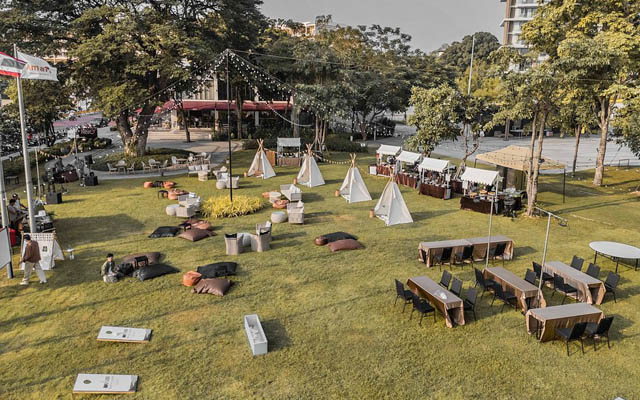
Amari Pattaya, nestled at the northern edge of Pattaya Bay, Thailand, has unveiled its new immersive Beach Lawn Glamping experience.
Tailored for families, couples, and groups of friends, this event takes place every Saturday on the resort’s lawn, set against the picturesque backdrop of Pattaya Bay’s sunset.
Families and friends are invited to join in Amari Pattaya’s lawn glamping weekends
With free entry, both resort guests and locals are invited to join in the fun with food and drink, arts and crafts, outdoor games, live music and more.
Amari Pattaya is also a family-friendly resort, with a Kids Club, large pool with fountains and slides, and play park to keep the little ones entertained.
Prices at Amari Pattaya start from 3,250 baht (US$122) per night for two. Stay before June 30 and receive a 20 per cent discount on F&B.