TTG Asia
Asia/Singapore Monday, 22nd December 2025
Page 411

Marriott International makes two DOSM appointments in the Maldives

0

Marriott International has made two new director of sales and marketing appointments, for The Westin Maldives Miriandhoo Resort and the JW Marriott Maldives Resort & Spa.

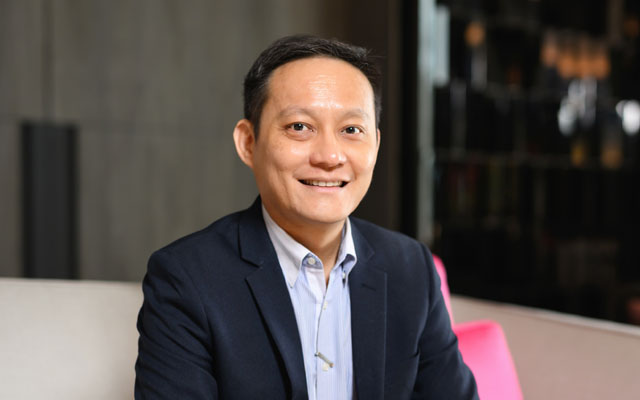
Debanjan Kundu joins The Westin Maldives Miriandhoo Resort from his previous position as senior director of sales – India at Amadeus.

However, Kundu is no stranger to Marriott International, as he has worked with various brands within the company including Sheraton, Westin, as well as The Ritz-Carlton in his career journey spanning almost two decades.

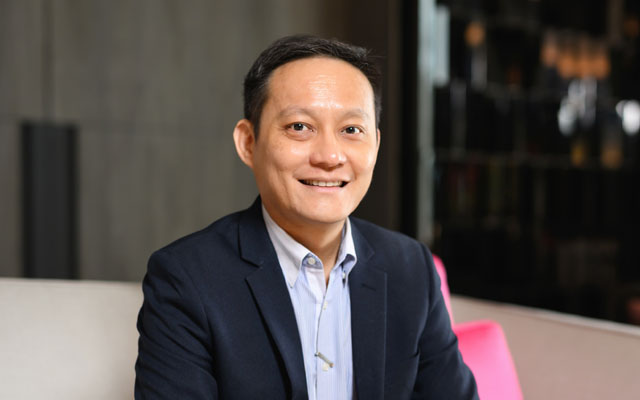
From left: Debanjan Kundu; and Srijith Ravindranath

He has also held several director of sales and marketing positions at luxury hotels across India, including hotels in Hyderabad and Bengaluru.

Over at the JW Marriott Maldives Resort & Spa, Srijith Ravindranath brings with him 15 years of experience in hotel sales and marketing.

Ravindranath first commenced his career with Ginger Hotels, and has since held significant roles at IHHR Hospitality, Leela Palaces, Hotels and Resorts, and the St. Regis Goa Resort.

Silversea Cruises opens exclusive pre-sale for summer voyages

0

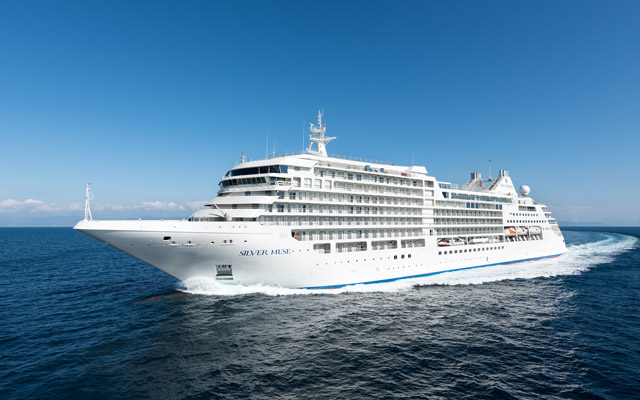
Silversea Cruises has launched an exclusive pre-sale on a new collection of 206 voyages for summer 2025, which are set to depart between March and November 2025.

These voyages, conducted by the company’s fleet of 12 ships, will unlock 409 destinations in 60 countries, including 24 maiden calls. Travellers can also expect to journey deeper ashore, thanks to 66 overnight calls and 421 late departures.

Silver Endeavour will make her first Northwest Passage crossing during the 2025 Arctic season

Highlights of Silversea Cruises’s summer 2025 itinerary collection include two new Grand Voyages that incorporate calls to iconic cities and off-the-beaten-path destinations – many of which are rarely visited and accessible only to smaller ships. Silver Spirit will undertake the Grand Mediterranean 2025 voyage, departing Fusina (Venice) on September 18 and arriving in Lisbon on November 11, and featuring 44 destinations in 12 countries. Silver Shadow will undertake the Grand North Atlantic & Northern Europe 2025 voyage, departing New York on June 11 for an 83-day coverage of 55 destinations and 16 countries.

The cruise line is also expanding its presence in the Mediterranean for summer 2025, offering 84 voyage aboard six ships, as well as enhancing the itineraries offered onboard Silver Origin, which will call at two new destinations – Isla Lobos, San Cristobal through the North Central Itinerary and Bahia Bowditch through the Western Itinerary.

Furthermore, Silver Endeavour will make her first Northwest Passage crossing during the 2025 Arctic season, allowing travelers to journey in the footsteps of many famous explorers over 24 days.

From May to August 2025, Silver Endeavour and Silver Wind will both undertake 14 voyages to rarely visited destinations, providing the chance to experience Inuit cultures, spot rare wildlife, and learn about some of the planet’s most remote environments through the enrichments of Silversea’s leading expedition experts.

Cambodia’s reportedly strong arrivals fail to impact tourism businesses

0

Official figures indicate Cambodia is in recovery mode, with the nation welcoming 3.03 million international visitors in the first seven months of 2023 – however, tourism players on the ground paint a different picture.

According to the Ministry of Tourism, arrivals mark a 308 per cent year-on-year increase, with Thailand topping the table, followed by Vietnam. Laos was fourth, while land and waterway arrivals accounted for 64.9 per cent of the total.

While Cambodia reported 3.03 million international visitors in the first seven months of 2023, only 498,513 visited the Angkor Wat heritage complex (pictured)

“Looking at the tourism figures, people working in travel should be happy,” said Steve Lidgey, general manager of Travel Asia a la Carte. “However, the reality on the ground shows many empty hotels, restaurants failing, and guides without work as there are few visitors and a very low low season.”

Of all the captured arrivals, only 498,513 visited Angkor Wat, according to figures from Angkor Enterprise. This has caused inbound agents to believe that the majority of the 3.03 million arrivals are people crossing the border for daily trade or to gamble in border casinos but ticking the “tourist” box.

“I have yet to see coach-loads of Laotian tourists checking in at Siem Reap hotels,” Lidgey remarked, adding while his FIT figures for the last high season were up on pre-pandemic numbers, GIT is down, and corporate groups are “extremely quiet”.

Sinan Thourn, CEO of B2B Cambodia (Travel/Tours) and chairman of PATA Cambodia Chapter, said while recovery on paper is a positive sign, it has yet to translate on the ground. He told TTG Asia that the global economic crisis and high airfares remain barriers for travel.

Additionally, Vannary San, owner of House Boutique Eco Hotel in Phnom Penh, noted that, in fact, bookings for the last few months have dropped “very badly”. “We are still very much in recovery,” she said, adding that she is continuing to foot the expenses for essential renovations to bring the property up to pre-pandemic standards.

IATA sees strong passenger demand continuing in July

0

Post-lockdown recovery momentum has continued for the passenger aviation sector, reported IATA, with total traffic in July 2023 rising 26.2% compared to July 2022 and global traffic standing at 95.6% of pre-pandemic levels.

Domestic traffic for July rose 21.5% versus July 2022, and was 8.3% above the July 2019 results. July RPKs are the highest ever recorded, strongly supported by surging demand in the China domestic market.

International traffic climbed 29.6% compared to the same month a year ago, with all markets showing robust growth. International RPKs reached 88.7% of July 2019 levels. The passenger load factor (PLF) for the industry reached 85.7%, which is the highest monthly international PLF ever recorded.

“Planes were full during July as people continue to travel in ever greater numbers. Importantly, forward ticket sales indicate that traveller confidence remains high. And there is every reason to be optimistic about the continuing recovery,” said Willie Walsh, IATA’s director general.

International Passenger Markets
Asia-Pacific airlines saw a 105.8% increase in July 2023 traffic compared to July 2022, continuing to lead the regions. Capacity climbed 96.2% and the load factor increased by 3.9 percentage points to 84.5%.

China’s domestic traffic jumped 71.9% in July compared to a year ago and is now 22.5% above July 2019 levels, which was the strongest gain against pre-pandemic levels among the domestic markets.

European carriers’ July traffic rose 13.8% versus July 2022. Capacity increased 13.6%, and load factor edged up 0.1 percentage points to 87.0%.

Middle Eastern airlines posted a 22.6% increase in July traffic compared to a year ago. Capacity rose 22.1% and load factor climbed 0.3 percentage points to 82.6%.

North American carriers had a 17.7% traffic rise in July 2023 versus the 2022 period. Capacity increased 17.2%, and load factor improved 0.3 percentage points to 90.3%, which was the highest among the regions for a second consecutive month.

US airlines’ domestic demand climbed 11.1% in July and was 3.0% above the July 2019 level.

Latin American airlines’ traffic rose 25.3% compared to the same month in 2022. July capacity climbed 21.2% and load factor rose 2.9 percentage points to 89.1%.

African airlines saw a 25.6% traffic increase in July 2023 versus a year ago, the second highest percentage gain among the regions. July capacity was up 27.4% and load factor fell 1.0 percentage point to 73.9%, the lowest among the regions. For a second month in a row, Africa was the only region to see capacity growth outrun traffic demand.

The detailed passenger market analysis is available here.

Booking.com calms hotels over delayed payments due to glitch

0

Booking.com confirms that a technical glitch that affected payments to hotel partners has been resolved, and that it is working urgently to process remaining transactions.

“We understand the frustration of the accommodation hosts and owners that have been unduly affected by an ongoing technical issue, and can confirm that the system errors that affected the payments have now been corrected and the transactions of most of our partners have been processed,” a spokesperson at Booking.com in Singapore told TTG Asia.

Booking.com’s technical glitch has affected payments to accommodation hosts and hotel owners

The online travel agency raised the ire of hosts and owners worldwide when weekly payouts stopped for thousands of them. A check on Booking.com’s Partner Hub shows some hosts and owners complained they had not received payment for end of June and July bookings. The payouts are payments guests made to Booking.com directly, minus the OTA’s commission.

Said a host/owner on Booking.com’s Partner Hub: “Absolute disgrace on payout delay. Endless phone calls and messages. No one replies. What a time to do maintenance on you (your) finance department in busiest month of July.”

In Asia, a September 5 article on Thaiger, which combed chat groups and Facebook pages, said for some, payments had stopped since as far back as April or earlier. Thaiger is a well-read English news and lifestyle platform in Thailand, a key market for Booking.com and the base of its sister OTA, Agoda.

According to the report, in a message in late June, Booking.com promised payouts for reservations checked out between June 28 and July 19, to be processed by July 24. However, as one host pointed out, the promised date came and went without any money transfer.

After a prolonged silence, the online travel agency sent a new message to hotels on August 1, pushing the payout deadline to August 4. A few properties started receiving payments but thousands are still in the dark and on the hook for big money, according to the report.

When contacted by TTG Asia, the spokesperson said, “We acknowledge that for some this has taken longer than it should have, and continue to work urgently to finalise the rest of the transactions. If any partner has an issue, they can contact us through the Partner Hub.”

“We always strive to support each of our accommodation partners in the best way possible, and fully understand the importance of processing payments on time,” she said.

New hotels: Madi Paidi Bangkok, Autograph Collection, Hotel Marvell, and more

0
Madi Paidi Bangkok, Autograph Collection’s signature restaurant, Ekkaluck

Madi Paidi Bangkok, Autograph Collection, Thailand
The new boutique hotel, Madi Paidi Bangkok, Autograph Collection, has opened in Thong Lor, Sukhumvit, one of the Thai capital city’s most vibrant districts.

It features an elegant, timber-clad exterior, tumbling foliage and verdant roofline that blend seamlessly with the natural surroundings in this leafy avenue. Inside, guests can take their pick of 56 guestrooms and suites; dine well at Ekkaluck, the hotel’s signature restaurant which promises uniquely creative cuisine; and seek wellness up at the rooftop gym and pool.

The hotel is a short distance from Thong Lor BTS skytrain station, while Suvarnabhumi International Airport and Don Mueang International Airport are a 30-minute and 40-minute drive away respectively.

Hotel Marvell

Hotel Marvell, Byron Bay, Australia
Byron Bay’s first and only five-star hotel has started to welcome guests. It offers a unique tropical setting, an array of luxurious accommodation, and attractive dining venues.

Designed by renowned architect Harley Graham of Harley Graham Architects, the Hotel Marvell captures the essence of Byron Bay’s eclectic, warm, and colourful atmosphere. An inviting pedestrian laneway, with lush greenery and a tropical jungle vibe, sets the tone for an enchanting stay.

Accommodation options include 16 hotel rooms, six suites, and two two-bedroom hotel rooms, all with private balconies.

Guests will dine well at Bonito restaurant and can enjoy a fine tipple up on the rooftop bar.

Hotel Marvell takes pride in supporting local businesses throughout Australia. Emphasising a local-first sourcing philosophy, the hotel prioritises suppliers and produce from the Byron and northern regions, extending its support to wider Australian operators when necessary. By promoting sustainability and reducing environmental impact, Hotel Marvell ensures its food and produce are sourced as locally as possible, providing guests with the freshest and highest-quality offerings.‌

ibis Yogyakarta International Airport Kulon Progo

ibis Yogyakarta International Airport Kulon Progo, Indonesia
The new-built 224-key ibis Yogyakarta International Airport Kulon Progo hotel stands five minutes from Yogyakarta International Airport by car, and offers travellers a convenient base from which to explore the region.

Within a short 40-minute drive, guests can take in the natural surroundings of Waduk Sermo and Kalibiru, or unwind on Glagah Beach.

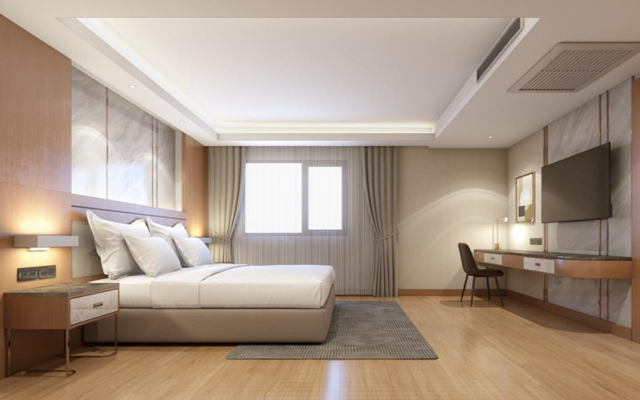
Accommodation, with options including Standard, Premium with sofa, and Premium family, is contemporary and comfortable, ideal for both leisure and business travellers. Facilities include alively social hub; all-day dining restaurant, ibis Kitchen; Grab&Go kiosk for quick bites; function rooms; kids’ corner; and web corner.‌

Moxy Sydney Airport

Moxy Sydney Airport, Australia
The 301-room Moxy Sydney Airport is 10 minutes from Sydney International Airport via the hotel’s shuttle service, and accessible from Sydney’s bustling CBD and iconic sites.

Inspired by the neighbourhood’s industrial and art-deco heritage, Moxy Sydney Airport features stylish interiors and a façade that is distinguished by a striking public art mural created by local artist Elliott Routledge. Routledge, renowned for his distinctive, abstract designs, has also created a sculpture that celebrates Moxy’s Play On spirit, rising from a podium on level four to catch the eyes of fun-hunting guests and locals.

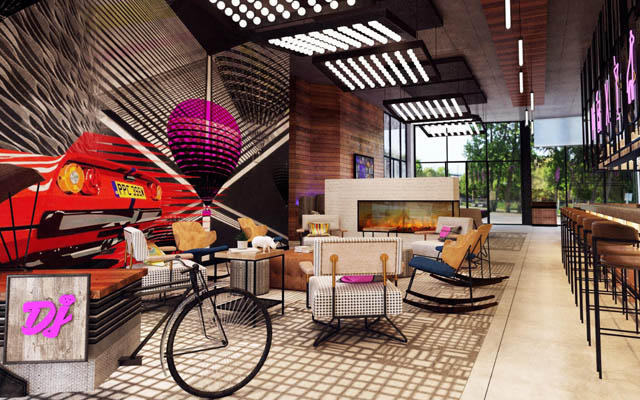
Guests can enjoy a complimentary Get Moxy signature cocktail in the lobby, which is a multi-functional work and interactive social space; lounge in the Living Room, a laid-back communal space that is filled with eclectic and nostalgic pieces, including a 1970s photo booth and reclaimed vintage lounge chairs; and refuel at Little Baxter streetside cafe or Bar Moxy.

The hotel is also equipped with five meeting studios.

Anantara Layan Phuket Resort

0
Two-bedroom Anantara Pool Villa

Location
Anantara Layan Phuket Resort is a 15- to 20-minute drive from Phuket International Airport – ideal in a world where time feels increasingly scarce and precious vacations need to begin as soon as one arrives at the destination.

After turning off the main road, one meanders down a quiet track and arrives through a lush tree-fringed avenue before sighting the Beach House, a stylish F&B enclave that is part of the resort. Another two minutes in the car brings one to the main reception, where a warm welcome awaits; three strikes on the gong signal your arrival.

Accommodation
I spent four nights in the Sala Pool Villa – one of 13 different accommodation categories offered in this resort.

Set across 220m2 of space, this villa features a decorated pond at the entrance, a hardwood sun deck with two sun lounges, a private lap pool, a traditional Thai sala (pavilion) where meals can be enjoyed, a landscaped outdoor shower area, and a spacious sleeping quarters with an equally spacious bathroom comprising two closets, two vanities, a calming bath corner (three complimentary bath salts and a scented oil burned ensure a proper wind-down), and a shower stall.

This set-up is ideal for couples, but also for when little ones tag along. There is enough space for my two little boys to sprawl out indoors (even with two extra beds added in) and outdoors. Furthermore, thanks to the functional layout of the pool and sala, we were able to have long hours in the pool that are interspersed with comfortable refreshment breaks.

I must also add that my unit, No. 22, enjoys possibly the best location on the resort. It is right next to the Beach House, giving me quick access to sustenance. The spa, gym and Chang Club (kids club) are all a stroll away – or a two-minute buggy ride when I am feeling particularly lazy.

Breeze bar at the Beach House

F&B
Beach House opened in February 2022, and takes in Breeze restaurant and bar on the ground floor, overlooking an enormous pool and sun deck as well as Layan’s shoreline; Dee Plee on the second level, where breakfast is served followed by fine Thai dishes after; and Roof Top on the third, where cocktails can be enjoyed as the sun sets and the stars come out to play.

Breeze, just like its name, is breezy. It is open on three sides, allowing air to circulate well. The abundant use of wood and rattan set against a palette of white and grey is both comforting and stylish, and beyond the aesthetics lies an extensive menu with many options marked as wellness options and locally sourced.

During my stay, Breeze served both lunch and dinner across Thai and Italian cuisines because operations at Dee Plee was paused as it transitioned from a pop-up restaurant back to its usual lunch and dinner service. Dee Plee often hosts pop-up restaurants, and a showcase had just concluded before my arrival. Usual service at Dee Plee resumed on September 4, the day of my departure from the resort, and I was told that a new Thai concept restaurant is currently in the works, with a view to launch at the end of this year.

But back to Breeze – we had a beautiful North to South Thai dinner on September 1. It was a limited edition two-day-only collaboration between the chefs of Dee Plee and Bodhi Terrace (of Anantara Chiang Mai Resort), which featured six courses with eight dishes in all because the team was determined to spoil guests with two main dishes and two sweet endings. Highlights for me had to be the refreshing yaam som o puu nihm pomelo salad with crunchy soft shelled crab; larb nuea wagyu, a spicy Thai equivalent of steak tartare; choo-chee, a lobster curry on a bed of red rice; and coconut brûlée, where the rich custard was cradled in a young coconut half-shell.

The Italian meals at Breeze were also beyond satisfying, with far more interesting sharing plates and appetiser options than our bellies could stomach. We just have to stay on longer to eat our way through the menu next time.

Elsewhere on resort grounds is grill house Age and Cocoon for healthy beverages and small bites.

It is worth noting that the resort has given extra consideration to young guests, with an option of three healthy purees for toddlers and an extensive Thai and Western menu for those a little older.

Facilities
Layan Active Zone, set amid Layan National Park and a 15-minute buggy ride from the heart of Anantara Layan, is my favourite facility during this stay. It is new, opened just January 2022, and packs in a 10.5m rock wall, an open-air gym with boxing ring, a free form pool that adjoins a kids water playground, tennis courts, archery lawn, and a well-equipped games room that will keep teenagers entertained for hours.

My eight-year-old was looking forward to the skate park, but some works were still being done to it.

I love that one could come empty-handed and enjoy all that Layan Active Zone has to offer. Muay Thai boxing gloves, hand wraps, shin guards, archery bows and arrows, tennis racquets and balls, skate boards, helmets, climbing gear are provided.

The shower facilities here are also well-equipped, so guests can easily transition from water play to dry activities throughout the day.

Beyond Layan Active Zone, Anantara Layan makes sure guests can be as occupied as they wished to. A series of free and supplementary activities is curated every month, with something to do from 07.30 to 16.30 daily. While I was there, I had the option of joining beach tennis, Thai boxing, a 10km trail run, rock climbing, mountain bike tour of Layan Soi, and many more. Wet weather back-ups are available too.

Young guests are not forgotten – there are arts and craft as well as fitness programmes at a supplementary charge, while Chang Club offers some complimentary options, like crafting bookmarks and notebooks, balloon art, and marshmallow toasting.

To escape the outdoors during downpours, head to the spa, where cannabis healing treatments are offered alongside the more familiar Thai stretches and and aromatic rituals. I enjoyed customising my session with my pick of massage oil and music. I made a mental note to treat myself to the in-villa Slumber Guru Experience the next time I return sans kids.

Service
Attentive staff all around, and most have a superb memory – breakfast service staff remembered our villa number and that my husband and I preferred to start with cappuccinos, so much so we did not have to identify ourselves and place our orders after the first morning.

Verdict
Anantara Layan is beautifully designed, and so very calming with its abundant landscaped greenery everywhere I turn. I could almost believe I was staying in the national botanic gardens. I was there right smack in the rainy season, but the rain only lent a mystical, rainforest vibe to resort surroundings. Despite the rain, I found many things to do and can only imagine how much more fun I could have during drier seasons. I have yet to enjoy the beach and water sports, or try the picnic baskets the resort can prepare for guests – these I will do next time.

Contact details
Website: www.anantara.com/en/layan-phuket

China eases international entry requirements but challenges dampen the country’s welcome

0
Tourists visiting ancient chinese architecture. historic buildings Imperial Palace, the forbidden city with blue sky in Beijing, China

China’s inbound travel industry welcomes the lifting of all pre-entry Covid-19 testing requirements, which came into effect on August 30, but the road to recovery remains challenging, they say.

Members of the industry told TTG Asia that China has become less attractive as it is now more expensive due to competition from a strong domestic market that is willing to pay.

Travellers to China now face higher prices, connectivity issues, cashless payment as priority, among other obstacles to a stress-free trip

In addition, tourism businesses are still grappling with reduced inventory, manpower issues and the aftermath of the pandemic.

Kin Qin, deputy general manager, Century Travel Holiday Group, which specialises in inbound from South-east Asia, said: “Costs have gone up because of higher air fares due to supply chain disruptions, shortage of inventory like coaches as well as manpower, where guide fees have increased from RMB600 (US$83) to RMB1,000.

“Domestic travel is very strong and a good number of Chinese travellers can and are willing to spend.”

A travel technology solutions provider commented that international leisure into China was “soft”, but corporate travel was doing well with C-suites wanting to “reconnect with teams and suppliers”.

He expects regional corporate meeting groups to return to China next year and is planning to capitalise on China reinstating its 15-day visa-free entry for citizens of Singapore, effective since July 26.

A corporate travel manager expressed the need for more clarity on China visa application and conditions.

He told TTG Asia on condition of anonymity: “A high-level leader from the US wanted to change his itinerary to include a trip to another province at the last minute. The travel team had to seek clarification if it was ok for him to change at will, or he absolutely needed to stick to the declared itinerary on his visa application.

“In the end we had to get in touch with China immigration to get guidance. So, for me, the expertise of visa agents is required. It is not just processing and reading of instructions.”

Another issue that came up was the requirement to declare job history on the visa application among other potentially sensitive information, he shared, and the traveller was unsure if he had to declare absolutely everything over the last 20 years.

The visa application process and flight availability “are better” now opined the general manager of a Beijing-based DMC, but longhaul Western travellers can expect to face a slew of digital issues when they arrive.

She said: “If travellers, whether on leisure or business, want mobile auto roaming access, they have to buy a China SIM card on arrival. However, many apps like Google, Instagram, etc are banned in China, limiting their connectivity.

“Attractions like museums also require pre-booking and the use of local payment platforms like WeChat Pay or AliPay. It is not uncommon to have to pay RMB1,500 (US$207) on the black market for a last-minute ticket to the Forbidden City compared to RMB60 if booked online in advance.”

She also highlighted commuting stress now in China. “Beijing is the size of Belgium and getting a taxi or a ride-hailing service requires a China app, and this makes it harder for older international travellers to get around.”

Cash can still be used in highly digitalised China, but European tourists, for example, can only withdraw up to 500 euros (US$542) a day from Chinese banks to convert into renminbi. This is inconvenient if they have to pay for big-ticket items, she said.

International corporate cards are accepted at fewer and fewer service points, she warned, and Chinese merchants who are used to cashless transactions often regard cash with suspicion.

She and Qin also observed that fewer and fewer hospitality employees were able to communicate effectively in English.

UNWTO, India’s G20 Presidency launch dashboard to support sustainable tourism

0

UNWTO and India’s G20 Presidency, through India’s Ministry of Tourism, have joined hands to launch a new tool that will advance the contribution of tourism policies and initiatives towards the Sustainable Development Goals (SDGs).

The G20 Tourism and SDGs Dashboard will help to promote the sector’s contribution to accelerating progress towards achieving the 17 SDGs ahead of the 2030 Agenda deadline.

The G20 Tourism and SDGs Dashboard will feature case studies to guide SDG-focused tourism policies and initiatives

The Dashboard showcases the pillars of the Goa Roadmap for Tourism as a Vehicle for Achieving the SDGs around the five priority areas set for the Tourism Working Group, which are: Green Tourism; Digitalisation; Skills; Tourism MSMEs; and Destination Management. It will feature over 20 case studies under these five areas, and content will be updated on a regular basis throughout 2023 and in the coming years. These will provide a unique reference for tourism policies and initiatives in their contribution to the SDGs.

The G20 Tourism and SDGs Dashboard is included in the UNWTO-led Tourism for SDGs Platform.

Secretary-general Zurab Pololikashvili said: “G20 countries represent over 70 per cent of tourism worldwide. Their leadership in the transformation of the sector is decisive. The G20 Tourism and SDGs Dashboard is a concrete outcome of G20 Tourism Working Group and a reference tool for all. UNWTO is very happy to have joined hands with the Ministry of Tourism of India to make this possible.”

Shri G Kishan Reddy, minister of tourism, culture and development of North Eastern Region, Government of India, said: “Prime minister Shri Narendra Modi has consistently championed the transformative power of digitalisation across all sectors, including tourism. Under his visionary leadership, India is transforming into a digitally empowered country. Inspired by his foresight and commitment, the G20 Tourism and SDGs Dashboard is a testament to our nation’s digital strides and serves as a beacon of knowledge for all the public and private stakeholders globally. It offers a wealth of knowledge and showcases best practices, all aimed at steering the tourism industry towards greater sustainability, resilience, and inclusivity”.

Transporting Singapore hospitality to London

0

You landed for yourself – some might say – the unenviable task of translating Singapore hospitality in London. How did that feel?
Scary. Until my final interview, I’ve never travelled to Singapore. Upon success in clinching the role, two other colleagues and I were sent to Singapore for a month (in May 2019) for our on-boarding.

You can’t know a country and a culture in a month, I won’t pretend to, but it was enough to make me realise what an enormous task it was to try and translate a style of service which, if you’re from South-east Asia, you take for granted. People talk a lot about it being service from the heart. The way I translate that is an innate kindness, a humility that you don’t often see in Europe, and a real passion and pride. And lastly, the attention to details, such as making us takeaway coffees when we are departing.

So, I was really quite scared, because I felt that it was just a completely different culture to London. I decided to try and hire for those four qualities as much as I possibly could, because what you don’t want to do is just go hire people who have worked or lived in Singapore.

The beauty of London is that it is the most cosmopolitan city on the planet and that makes it easier to implant something from the other side of the world.

How so?
London isn’t British, so if you’re ever trying to implant something from the other side of the world, it helps massively if you’re not in a diametrically-opposed environment, such as if we were opening in Manchester, or where I’m from, Yorkshire, a lovely culture, but completely different.

How do you hire for kindness and humility? Is there some kind of test, or is it all intuition?
I think you can just tell. Quite often when we asked people when was the last time you saw a true act of kindness, the really humble ones would always talk about a kind act they saw somebody else did. Whereas the people who might not be quite so humble would talk about how kind they were.

There are different scenarios, for example, you saw a colleague in distress and crying, what would you do? Or you saw a guest who’s normally chirpy looking so down, how would you approach that? You can sort of get a feel of the person (from how they respond), but it’s not foolproof. I wish it was.

Can you train for kindness and humility?
You probably need to do that at a very young age. It’s difficult if that hasn’t been your life experience.

At the beginning, I had chosen an all-female leadership team at the hotel. All the journalists wanted to make something of it, such as, ‘Oh, is this about empowering women?’ And I said, look, it’s honestly very simple. Females skew more towards kindness and humility more than males do. So, they are the best people for the job; they are the best fit for the brand. It’s not about me wanting an all-female or an all-male team.

You have to be stronger as a person to be kind. And people react to kindness. Sometimes we do something wrong, but usually the guests say the service recovery is so lovely. That’s because the staff genuinely feel disappointed with themselves that they’ve let someone down.

I often say to agents that when their clients come here, there will be times when we won’t get it right. But what I want to reassure you is that we care about those people and if we trip up, we will make it right for you. It’s not about perfection.

This is the first Pan Pacific hotel in Europe. Is that additional pressure and how far do you feel you’ve gone to establish the brand here in London since the hotel opened in 2021?
I would say not very far. London is the toughest market for hotels in the world. It has more five-star and luxury hotels than any other city on the planet. It is famously jaded when it comes to new concepts – you’re more likely going to get a (consumer) reaction of ‘well, why should we care‘ rather than ‘oh wow’.

We have a five-year plan. We knew this was going to be tough. So, we decided that we would need to pick up some kind of ‘badges of honour’, if you like, less of an ego booster but because this would push awareness of the brand and the hotel out there.

We knew we needed to get some traction in the US market, because it’s the single biggest market into London. We actually became the fastest hotel in the world to ever achieve a Forbes Travel Guide Five-Star Award, and we’ve retained it. That gave us a talking point in the US market, which is now our biggest source.

We’ve won many since opening, including Catey’s Hotel of the Year, Group 2023, and AA Hospitality’s Hotel of the Year, London 2022/23.

Does brand Singapore itself draw business to Pan Pacific London? Our airline is the best in the world.
People love the thought of Singapore. I’ve never heard anyone say they don’t love Singapore. But here, people tend to think of Qatar Airways as the best in the world! It’s all about perspectives and it actually has taught me not to make assumptions that just because people love Singapore, they would want to come and stay with us.

What would you like to see at the end of your five-year plan?
This is a beautiful hotel but there will always be a more beautiful hotel, like The Peninsula, London; they spent a billion pounds on it. But that doesn’t matter to me, because we can still be the best hotel in London based on kindness and service.

We aspire to be better at personalised service. We’ve had a good start but we’re nowhere near as good as we need to be. We’ve piqued people’s interest; we must get to the point where people do not literally want to stay anywhere else.

What’s your average occupancy and room rate so far?
We’ve had a busier August than we anticipated – huge amount of US business, and domestic business as well. We’re averaging 70 per cent occupancy. It’s a little lower than we hoped but our room rates are already almost double what they were when we opened. If you fast forward to September and October, you can see the rooms selling now upwards of 500 pounds (US$628.60), and 800-plus pounds for the suites.

But more than rates, it’s important to look at repeat guest ratio. You can sell low or high and it will attract different tribes. But if you offer an incredible experience, a memorable experience, people are going to be willing to pay whatever it is that you require them to pay. It costs so much money to acquire new guests. To have guests keep coming back, and us collecting some more of their preferences and customise their next visit further, what you’re doing is you’re actually making them feel safe, cared for and happy.

We have guests who have already passed their 50th stay here.

Your second biggest market is domestic. What accounts for this warm response?
The UK market is fairly well-travelled as a nation and love Asia as a whole. If we boil it down to the South-east Asian region alone, it’s multiple countries and cultures offering different experiences. They are great admirers of Asian culture and your food is the number one, be it Indian or Vietnamese. And they react to the warmth and kindness in the region.