Flights disruptions at Haneda Airport following airplane collision
About 100 flights flying into and out of Tokyo’s Haneda Airport are expected to be cancelled today as a result of an airplane collision on the runway on Jan 2 afternoon.

The accident between a Japan Airlines (JAL) passenger jet arriving from Hokkaido and a Japan Coast Guard aircraft left five coast guards dead and the JAL aircraft in raging flames. All 379 passengers onboard the JAL jet were able to escape to safety.
The flight cancellations are expected to affect 19,000 passengers, said an NHK report.
Central Japan Railway Company will provide additional bullet train services on Wednesday to support affected domestic connections.
Marriott presses ahead with sustainability in 2024
Marriott International is laying the groundwork for long-term sustainability, and has marked the new year as one of “activation”.
According to Neeraj Govil, senior vice president of operations, Asia Pacific (excluding China), “2024 is going to be the year of activation, where what gets measured gets done”.

He said: “We are building accountability into our systems this year (previously, Marriott’s hotels handled in their individual capacity), and have made sustainability a business imperative.”
To achieve this, Marriott has created a new role – director of sustainability, Asia Pacific excluding China – that will lead the company to a more positive impact.
Guided by Marriott International’s Serve 360 environmental goal – launched in 2017 – to achieve net-zero emissions by 2050, the company recently announced 10 initiatives. These include sourcing for renewable energy, the installation of EV chargers, serving responsibly-sourced seafood, tracking waste, and conducting energy audits.
“In every major market, our general managers come together for a Business Council, where they will discuss key issues. We have a Business Council focused on sustainability, as there is value in collaborating,” shared Govil.
However, the journey towards sustainability is unique for each hotel, be it a new establishment like The Singapore Edition, or a decade-old property like W Singapore – Sentosa Cove.
Ranim Ben Romdhane, general manager of The Singapore Edition, highlighted how the design of the hotel incorporated sustainable features from the outset. Aside from the harvesting of rainwater for plant irrigation to energy-efficient room systems, chef uniforms are also made from recycled plastic bottles.
“We also build partnerships, such as the one we have with chef Josh Niland, who has built his reputation around sustainable seafood. Our restaurant receives fish as a whole, and our team processes it and uses every part (95 per cent of the fish except the gallbladder),” he elaborated.
The Singapore Edition also boasts an Edition Lab, a space in the hotel’s underbelly which the F&B team uses, for example, to explore how the pulp of carrots can be used to make gin or carrot soda, to create new tipples for its zero-waste bar.
He added: “Technology can also help us run a more sustainable operation. We do not have a large breakfast buffet, we have a breakfast table (with a smaller selection), and we use technology to capture guest preferences, what dishes or items they are looking for.”
Meanwhile, Christian Metzner, general manager of W Singapore – Sentosa Cove, emphasised the importance of creating a clear roadmap for integrating sustainability into operations, and being receptive and learning from other hotels across the Marriott portfolio.
Metzner elaborated: “There are so many stakeholders and partners, we can’t just change everything in one day. What I’ve learnt is to focus on the low-hanging fruits, such as the procurement of our coffee beans (from sustainable sources), and the removal of single-use plastics across the hotel. Other changes include the replacement of more efficient chillers, but this is not something you can do overnight.
“Next year, fingers crossed, we will be going to change all our guestrooms. After this, we will work on water filtration and so on. We’re also exploring solar and wind energy.”
Similarly, Metzner has also established sustainable partnerships with One Marina, as well as the Sentosa Development Corporation.
The Singapore Edition
Location
Singapore is known as the Garden City, and this hotel opening certainly takes that description to heart. A collaboration between Marriott and renowned hotelier Ian Schrager, the 204-hotel along Orchard Road was created by Safdie Architects led by Moshe Safdie and local studio DP Architects.
The hotel’s main entrance and its cobbled-stone driveway can be accessed via Cuscaden Road.
Upon entering the doors, my eye was drawn to the domed ceiling covered in gold leaves, which was unmissable against a stark, white-marbled lobby. Framing this were floor-to-ceiling windows that allowed in natural light, helping to accentuate the many pots of indoor plants that filled the space. It was akin to walking into a conservatory.
Accommodation
Guestrooms are spread across six floors, and I was put up in a spacious Garden King Suite which offered calming views of a garden courtyard that wrapped around all four of its internal sides. With sustainability in mind, the room was kept cool with layers of curtain sheers, black-out shades, and white exterior louvres that could be electronically adjusted to filter out the sun while providing both views and privacy.
The room blended indulgent comfort with a modern flair. There was a 55-inch TV, a round table and two chairs for me to work from, and a single-seater sofa. The Wi-Fi was fantastic, and the Bang & Olufsen Bluetooth speaker provided some background music. The king-sized bed was comfortable, and offered the perfect balance of support and cushioning, helping me get a restful night’s sleep.
The bathroom boasted both a bathtub and a rain shower, as well as twin vanity basins with gold fittings. The black tea-infused toiletries are custom-ordered from Le Labo, which can be purchased from the hotel’s shop if so desired.
I was working from my comfortable bed when Pandian from in-room dining brought up three fluffy pandan doughnuts as a welcome snack. I enjoyed my interaction with the affable and welcoming Pandian, where we spoke briefly about the hotel’s recent opening and the rainy weather.
F&B
The Singapore Edition continues to push the sustainability envelope through its F&B offerings. The hotel’s restaurant is spearheaded by Australian chef Josh Niland. Named FYSH, this is Niland’s first restaurant outside of Australia, and features a sustainable seafood menu alongside responsibly sourced vegetables and meat. The main dining room seats 80, while a leafy conservatory has capacity for 22 and an outdoor area for a further 44 diners.
I was treated to a three-course dinner that featured a whole Aquna Murray cod. The starter was a bowl of cod bone noodles with clams, the main a charcoal-grilled slab of cod, and to finish, I had an eyebrow-raising cod eye ice cream in a chocolate macaron. Although dessert sounded dubious, I assure you it wasn’t fishy at all.
For breakfast at FYSH, a breakfast grazing table was heaped with cold cuts, cheeses, and pastries. Guests are also offered a hot made-to-order menu, with options ranging from comfortable bowls of congee and avocado toasts to buttermilk pancakes and the signature FYSH Royale (poached egg, hashbrown, smoked bacon, and seaweed hollandaise).
There are three other F&B venues, The Roof, The Lobby Bar, and the Punch Room – Edition’s signature bar concept.
The Roof is located by the pool, and offers freshly squeezed juices and South-east Asian light bites. The Lobby Bar is a buzzing, eye-popping space sheathed in sharp pink velvet, where a rose-coloured pool table is the centrepiece.
Channelling an intimate mood, the Punch Room boasts a handsome bronze bar, where a mixologist shakes up a unique punch cocktail menu inspired by South-east Asian spices and imaginative bar snacks. To get there, guest have to walk down the Venetian plaster staircase that spirals elegantly down to the garden courtyard level.
Facilities
There’s a spa on the second floor with seven treatment rooms, his-and-her changing suites that feature sunken vitality thermal pools, an ice fountain, relaxation lounge, sauna and steam room, next to a gym furnished with weights and exercise equipment.
The Singapore Edition also features a 43m-long pool and numerous day beds for guests to relax in. The centrepiece of the pool is, no doubt, the transparent acrylic oculus – done up by no other than renowned Safdie Architects – that provides guests with jaw-dropping views nine floors down into the garden courtyard.
Service
Every staff member I encountered was eager to assist with any query. However, I noticed several teething issues during breakfast service – staff were overwhelmed and brought out the occasional wrong order. Feedback was provided and I was assured that this would be fixed as the hotel was in the midst of ramping up its workforce.
Verdict
The one-night stay was a short respite from an incredibly busy but fulfilling year, and I was extremely reluctant to leave The Singapore Edition’s luxurious confines.
Contact details
www.marriott.com/en-us/hotels/sineb-the-singapore-edition/overview/
Taiwan to establish senior-friendly travel system
Following the launch of Taiwan’s Golden Years tourism brand in 2023, the tourism authority is now set to introduce a Golden Years Tour certification system that will guide travel agencies in crafting high-quality tour packages that are friendly for all ages, particularly senior travellers.
Golden Years Tour certifications will apply to various aspects of hospitality, including F&B, accommodation, sightseeing, shopping, and transportation. Itineraries are designed to meet the needs of senior citizens, featuring age-appropriate travel and an emphasis on slow travel.

The Tourism Administration, Ministry of Transportation and Communications (MOTC) has invited senior artists and internet celebrities to produce promotional videos and participate in demonstration itineraries.
Tourism Administration deputy director-general, Trust Lin, said at a December press conference on the initiative: “Seniors are a key market for us. They have both the time and desire to travel. Also, healthcare is a strength of Taiwan, and we want to build Taiwan into a top health tourism destination.”
For a start, eight travel agencies have prepared 11 Golden Years Tour model programmes. The Tourism Administration will help even more travel agencies to create similar certified tours this year.
Indian arrivals to Singapore approach pre-pandemic levels
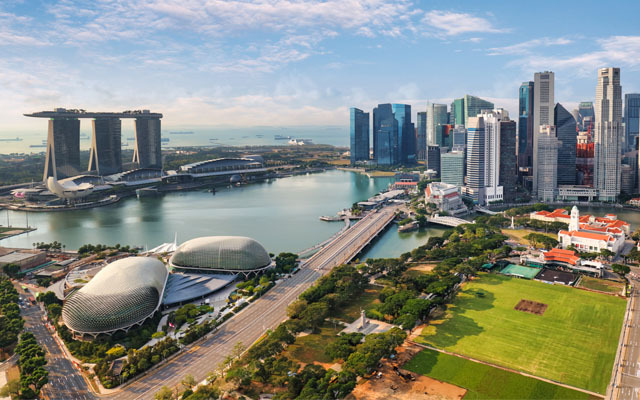
Singapore has witnessed a significant surge in inbound tourist arrivals from India, which is expected to be the city-state’s fourth largest tourism source market for 2023.
Latest statistics, as of November 2023, showed that 977,500 Indian tourists have visited Singapore last year. Numbers are expected to surpass one million at the year’s end, close to pre-pandemic arrivals of 1.41 million.

“We started off with a bit of a challenging time in 2023 when Singapore was among six countries requiring pre-arrival visitor testing. However, after that tourist arrivals from India have been increasing month-on-month,” said GB Srithar, the erstwhile regional director for India, Middle East, South Asia, and Africa (IMESA) at the Singapore Tourism Board (STB), while addressing reporters in New Delhi. Srithar has since passed on the baton to Markus Tan.
As per Srithar, a number of strategic initiatives targeted at the Indian market played a pivotal role in growing interest in Singapore as a preferred destination in 2023. Last year, STB partnered with Indian platform, MX Player, to unveil an interactive film titled, Lost and Found in Singapore. The initiative is said to be the first-of-its-kind by an NTO in India, and is aimed at capturing elements that define Singapore’s character, creating an immersive exploration.
Moreover, to amplify Singapore’s shopping appeal among Indian tourists, STB partnered with Nykaaland, pegged as India’s first beauty and lifestyle festival, where Singaporean labels like Sage & Ylang and Fawn Labs were prominently featured. Currently, shopping accounts for 26 per cent of the expenditure by Indian tourists in Singapore.
“Our focus segments in the new year in India are going to be families, young travellers under the age of 35, cruise, MICE and weddings. We are trying to work with Indian payment gateways like Unified Payments Interface to make it seamless for Indian travellers to spend in Singapore,” said Srithar.
Tan, the newly appointed official successor to Srithar, expressed plans for long-term engagement with travel trade partners.
“In the past our travel trade promotional campaigns have lasted for durations ranging from three to four months. We will now look at much bigger scale pan-India campaigns. In 2024 we will engage with airline partners to see how we can improve connectivity and provide better fares to Indian travellers,” he added.
Singapore welcomed 686,400 visitors from India in 2022.
Macau beckons tourists with free bus rides
Macao Government Tourism Office (MGTO) is handing out free tickets for direct bus rides from Hong Kong International Airport in a bid to encourage travellers to Hong Kong to extend their trip to Macau.
The promotion is aimed at international travellers, as well as those from Taiwan, and is expected to spur twin-city tourism to Hong Kong and Macau.

Upon arrival at Hong Kong International Airport, eligible visitors can proceed to the direct bus service counter, present their travel documents and boarding passes, and register for free bus tickets.
Tickets are limited in quantity and available on a first-come, first-served basis.
To communicate this offer, MGTO and its partner bus service operator will roll out a range of online and offline promotions on social media channels, such as Facebook, Instagram, Tiktok, Line and Kakao.
ESG goals on the rise in 2024: Amadeus study
An Amadeus research among 896 senior sustainability decision-makers across nine markets and seven segments of the travel industry to gain insight on ESG ambitions, priorities, and challenges, has revealed optimism towards net zero objectives.
89% of ESG decision-makers believe the industry can reach the UNWTO-proposed goal for net zero by 2050. Of that 89%, 36% believe it is possible to reach without any adjustments, while 53% believe it is possible, but progress needs to be accelerated urgently.

Key to this is a focus on action. 90% of those surveyed have a step-by-step strategy in place to help them achieve environmental sustainability objectives or are planning to implement one in 2024. 94% of respondents are either currently active or plan to be actively involved in social sustainability initiatives that impact beyond their organisation. This commitment was matched by increased investment, with 46% of respondents anticipating investing more in 2024 than last year.
Despite the optimism, the study identified barriers to delivering on environment, social and governance initiatives:
- 40% cited cost as the biggest barrier for environmental commitments, followed by lack of technology and knowledge (30%) as well as C-suite buy-in (25%).
- For social initiatives, the biggest barriers include lack of technology (32%), cost (31%), lack of knowledge (28%), and C-suite buy-in (27%).
- For governance initiatives, the barriers highlighted include lack of knowledge (31%), cost (31%), lack of technology (29%), and C-suite buy-in (25%).
Notably, the study highlighted a clear and recognised role for technology to help the industry reach its ambitions. 92% of respondents indicated technology is important to help organisations achieve environmental sustainability objectives, with 91% saying the same for social objectives.
Artificial Intelligence and Virtual Reality were particularly important:
- 33% of respondents highlighted generative AI initiatives as the technology with the highest potential to accelerate environmental sustainability as it can guide travellers to more sustainable options across the traveller journey.
- 31% said technologies that generate operational efficiency improvements as well as access to data for true personalisation would be important.
- 38% said they can help to drive social progress by improving access to travel through integrated accessibility technology on public transport, at the airport or on a flight.
Ultimately, there is work still to be done for the industry to deliver on its sustainability ambitions; 37% of ESG decision-makers recognised that more access to technological solutions is needed. Those that felt it was unlikely they would meet their targets within the timeframe set highlighted the need for further collaboration across the industry (33%).
Airlines
54% of airlines are increasing their investment in ESG initiatives. They recognise that technology can play an important role in reaching net zero goals. The top ESG priorities for airlines are:
- · Sustainability and social impact of the travel and tourism industry – 33%
- · Sustainability education and capacity-building of employees – 30%
- · Sustainable food sourcing and food waste – 27%
Technology could also help travellers make better social choices, by providing customers with tools and access to information related to the social impact when booking a flight. For airlines, virtual or augmented reality (37%) and generative AI interfaces (36%) are cited as technologies that could have the biggest impact on accelerating the achievement of environmental objectives. 47% believe technology will improve access to travel through integrated accessibility technology while traveling.
When investing, decarbonisation and reducing environmental impact is a key focus with airlines concentrating on the following areas:
- Operational efficiency improvements – 54%
- Development of new aircraft technology – 48%
- Improvements to existing aircraft technology – 44%
- Carbon offsetting and other climate solutions – 37%
- Carbon capture and storage technologies – 34%
- Sustainable aviation fuel – 28%
Corporations
43% of large companies plan to spend more on meeting ESG objectives than they did in 2022. The top ESG priorities for large companies are:
- Creating a sustainability plan / roadmap for the entire company – 22%
- Energy reduction – 21%
- Health, safety and wellbeing – 21%
- Reducing carbon emissions – 20%
Technology is seen by ESG decision makers to have the potential to help the industry meet sustainability targets, especially those that help to transition to low carbon energy (36%), generative AI interfaces that can guide travelers to more sustainable travel options at every stage of the journey (34%), and technologies that help develop more alternative sustainable fuels (30%).
Offering employees sustainable business travel options is an important objective for corporations, but respondents recognise there are obstacles to overcome, mainly the lack of transparency for employees around travel and expense policies (38%), lack of clarity on sustainability objectives (38%), and the increased costs that may come as a result (36%).
Hotels
52% of hotels have a step-by-step plan in place to achieve targets. The top ESG priorities for hotels:
- Energy reduction – 28%
- Health, safety and wellbeing – 28%
- Responsible water management – 26%
Technology that generates operational efficiencies (36% of respondents selected) and enables access to data to achieve personalisation (30% selected) have the biggest potential to impact environmental sustainability. 34% of ESG decision makers think technology that provides tools to offer travelers the option to make more conscious choices will have the biggest impact on social sustainability.
Hotels are optimistic, but 38% are concerned about meeting specific environmental standards of facilities, and 36% say they need support to meet energy efficiency improvements.
DMOs
For DMOs, 47% believe technology will improve access to travel through integrated accessibility technology while traveling.
The top ESG priorities for DMOs are:
- Creating a sustainability plan / roadmap for the entire company – 22%
- Energy reduction – 21%
- Health, safety and wellbeing – 21%
Two fifths (40%) of DMOs ESG decision-makers believe generative AI interfaces to guide travellers to more sustainable options will help to accelerate reaching environmental objectives. One third (33%) said more advanced search capabilities allowing travelers to understand the environmental impact of their travel also has potential to make an impact.
Mobility
84% of mobility providers have seen an increase in demand for more sustainability in their products and services since 2020.
The top ESG priorities for mobility providers are:
- Sustainability education and capacity-building of employees – 34%
- Sustainability and social impact of the travel and tourism industry – 31%
- Community engagement / corporate philanthropy / corporate volunteering – 26%
The key challenges faced by mobility providers include lack of collaboration with other industries to provide more sustainable travel options, and lack of awareness and evidence on environmental and social impact, alongside lack of financial resources and investment in sustainability initiatives.
Airports
Airports are increasing focus on ESG, as 47% plan on investing more in ESG initiatives in 2024 than they did in 2022, and a similar number (46%) plan to spend the same. Airports are taking concrete measures to address ESG with nearly half of airports stating they have a step-by-step plan in place with an additional 45% planning to implement one.
98% said technology will play an important role in helping the industry meet sustainability targets. Regarding the technologies that can have the biggest impact:
- 49% selected technologies that help with more sustainable procurement and sourcing. This is particularly relevant considering the diverse ecosystem in the airport space that ranges from aviation to retail and food and beverage providers.
- 36% said technologies that generate operational efficiency improvements, reflecting the central role airports play in aviation’s complex operations.
- 34% selected technologies that help develop more alternative sustainable fuels.
- 33% said generative AI interfaces that can help guide travelers to more sustainable travel options at every stage of the journey and in destination, reflecting the industry’s interest in innovative technologies.
When it comes to social sustainability, 40% said that travel technology will improve accessibility. Despite the positivity, 44% stated that clarity on financing and budgets as well as the same percentage for C-suite buy-in is needed for airports to meet targets.
Travel sellers
46% of travel sellers have a step-by-step plan in place and 39% plan to implement one. The top ESG priorities for travel sellers are:
- Sustainability and social impact of the travel and tourism industry (25%)
- Health, safety and wellbeing of employees (24%)
- Employee development, learning and growth (21%)
93% of travel seller ESG decision-makers believe technology will be important in achieving their goals.
Generative AI interfaces, access to data to personalise all stages of a journey and advanced search capabilities were selected by 33% as the technologies with the biggest potential to accelerate reaching targets toward environmental sustainability. Within this, business travel agencies were more receptive to generative AI (selected by 37%) than leisure travel agencies (28%). When it comes to social sustainability, 39% said technology will improve access to travel through integrated technology when travelling.
While travel sellers are optimistic, more guidance on standards across regions (selected by 45%), sustainability-related regulations (40%), and carbon emission calculation methodologies (39%) is needed.
Japan lowers tsunami alarm; extensive damage from New Year’s day quake
A high-level tsunami warning that was issued following a 7.6-magnitude quake that struck off the coast of Noto in Ishikawa, Japan in the afternoon of January 1, has been lowered.
Local news media said this was the first time that Japan had issued such a high-level tsunami alert since the 2011 earthquake.

While authorities warned that tsunami waves could reach heights of 5m, waves that eventually crashed into the Ishikawa coastline along the Sea of Japan that day were no more than a metre high.
However, major damage to infrastructure, including house, power poles and expressways, has been reported. The latest NHK news update stated that injuries were reported across multiple prefectures including Niigata, Fukui, Toyama, and Gifu.
The national meteorological agency has warned of continued aftershocks in affected areas for the coming days.


The welcome reception was hosted at Museum Siam in Bangkok and themed, A Picnic Celebration at the Museum. Food and drink from Michelin Bib Gourmand restaurants were dished out, and guests were entertained by contemporary Thai performances, live music, and other activities, including a test-ride on the Thai Tourist Police’s Segway, Thai massage, fortune telling, and lucky draw.


Tourism Australia is recording strong demand from the Indian market on the back of enhanced air capacity, a friendly visa regime, and growing interest from diverse segments like business events and young travellers.
Indian arrivals to Australia have reached 385,000 for the period between October 2022 and September 2023, and the market is now the fifth largest inbound market for Tourism Australia.
Nishant Kashikar, country manager, India & Gulf, Tourism Australia, told TTG Asia that India “has been the first market to bounce back to pre-Covid levels”. The market used to rank number seven.
Indian travellers are also spending more in Australia – up 24 per cent, reaching a substantial A$2.2 billion (US$1.5 billion) for the period from July 2022 to June 2023.
Improved flight connections play a pivotal role in fostering tourism growth, opined Kashikar. Capacity on the India-Australia route has increased from eight flights a week pre-Covid to 28 flights per week today. Most recently in December 2023, Air India commenced thrice weekly direct flights connecting Mumbai and Melbourne.
Said Kashikar: “We are seeing a lot of young Indians travelling to Australia. We are going to leverage the digital ecosystem to reach out to young Indian travellers and inspire them through our Come & Say G’day campaign that we launched a year ago. We are also noticing a growing demand for self-drive holidays from India.”
Tourism Australia also recorded overwhelming interest from the Indian corporate events segment last year – “a remarkable five-fold increase in MICE leads compared to 2019 levels”, shared Kashikar.
“This is primarily because of the faster turnaround time, and streamlined service offered for corporates by the Department of Home Affairs to process their visas. So, we have seen Australia’s attractiveness rise in terms of MICE in 2023. The Indian economy has done well and segments like banking, financial services, insurance, infrastructure and healthcare have helped in the growth of MICE demand for Australia,” he explained.
Guldeep Singh Sahni, managing director, Weldon Tours & Travels, commented that an easy visa application system is a strong motivation for travellers to pick a destination.
“Even though the average turnaround time for visa processing is four to five days, we have seen some applications being processed within 24 hours. As a result, many Indian travel agents are suggesting travel to Australia,” said Sahni.
In the new year, Tourism Australia will do more to promote destinations beyond well-known ones – the draws of Adelaide, Kangaroo Island, Canberra, Perth, Northern Territory, Daintree region in tropical North Queensland, and the Great Barrier Reef will be highlighted to the Indian market.