TTG Asia
Asia/Singapore Monday, 3rd August 2026
Page 4

Noto Peninsula tourism rebuild gathers pace

0

Facilities in Ishikawa Prefecture’s Noto Peninsula that were devastated by a 7.6 magnitude earthquake in January 2024 are gradually reopening to visitors.

In Nanao, a city that suffered extensive damage to infrastructure and historic buildings, two accommodation properties will start welcoming tourists again this month. One is the first property to be completely rebuilt in Wakura Onsen, an area known for its hot springs.

Trip.com Japan’s Hope Tourism Project brings together hotels and local businesses to support tourism recovery across the Noto Peninsula

“In Noto, businesses are working diligently to reopen and rebuild, and the environment is becoming more welcoming to tourists,” said Noto mayor Yoshinori Yoshida.

The Noto Peninsula Wide-Area Tourism Association said more developments are expected in 2027, including resumed operations for Wajima Morning Market and Hotel Mercato Wajima.

Until full recovery is achieved, OTA Trip.com Japan aims to support Noto via its Hope Tourism Project, launched on July 22 to bring together hotels and businesses.

The first tie-up, between Hotel Nikko Kanazawa, Matsunami Sake Brewery and Noto-based farmers, offers kaiseki (multi-course) meals featuring seasonal ingredients and sake from Noto at the hotel’s restaurant.

“We are promoting the planning and sale of travel products and tourism promotion in collaboration with local businesses, aiming to popularise a new tourism model where travelling contributes to recovery support,” said Tomoyuki Takada, president and CEO of Trip.com Japan.

In another boost for the area, Noto Satoyama Airport reopened on July 7 following a Pokémon-themed rebranding. The three-year initiative, which includes renaming the airport Noto Satoyama Pokémon with You Airport in partnership with the Pokémon with You Foundation, aims to boost local tourism and revitalise the community through themed exhibits, decorations, food, merchandise, photo booths and short films.

Cathay Pacific builds network for multi-city travel

0

Cathay Pacific is expanding its network to meet evolving travel patterns, enabling more complex, multi-city itineraries for leisure, corporate and MICE travellers across Asia-Pacific.

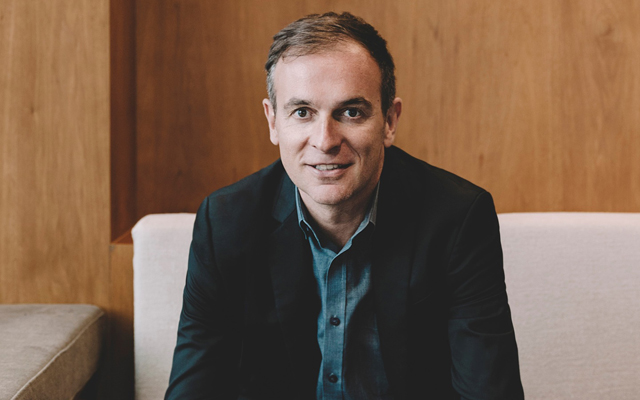
Rather than travelling to a single destination, business and MICE travellers are increasingly combining meetings, conferences and site visits across multiple cities, placing greater importance on connectivity, flexibility and efficient schedules, according to Nicolas Masse, area head of Singapore and Malaysia.

Masse: the strength of our network lies not just in the number of destinations served, but also in the connectivity it offers

He contended: “In this environment, schedule reliability is essential, as even a small disruption can have a knock-on effect across the entire itinerary. Network connectivity, frequency and hub efficiency will play an even greater role in enabling seamless multi-market travel. Our extensive network of over 100 destinations worldwide is well positioned to support this.”

Cathay’s 13 gateways in South-east Asia connect travellers through Hong Kong to the Chinese mainland, North Asia, Europe and North America.

Masse said Hong Kong’s strategic location, global connectivity and direct access to the Greater Bay Area (GBA) differentiate it from other regional hubs. The completion of Hong Kong International Airport’s Three-Runway System has increased long-term capacity, while Cathay’s intermodal network provides direct connections between the airport and seven ports across the GBA.

Cathay serves 24 passenger destinations in the Chinese mainland with more than 330 flights per week, alongside intermodal travel options between Hong Kong and other GBA cities.

The 2026 Middle East conflict has affected the GCC region’s hub status, with Cathay postponing the resumption of flights to Dubai and Riyadh from September 1 to October 25 and October 26, 2026, respectively. Meanwhile, stronger demand for Europe has prompted additional passenger services to London and increased capacity to Zurich, Manchester and Rome.

Looking ahead, Cathay has committed more than HK$100 billion (US$12.8 billion) to its fleet, cabin products, lounges and digital innovation over the next seven years. Alongside its Aria Suite Business class, new Premium Economy and refreshed Economy cabins on retrofitted Boeing 777-300ER aircraft, the airline will introduce Aria Studio, a fully lie-flat Business class seat, on selected regional Airbus A330-300 aircraft this year.

Cathay has also rolled out Wi-Fi across its fleet and is continuing its global lounge enhancement programme.

Qantas, Melbourne Airport agreement clears path for network growth

0

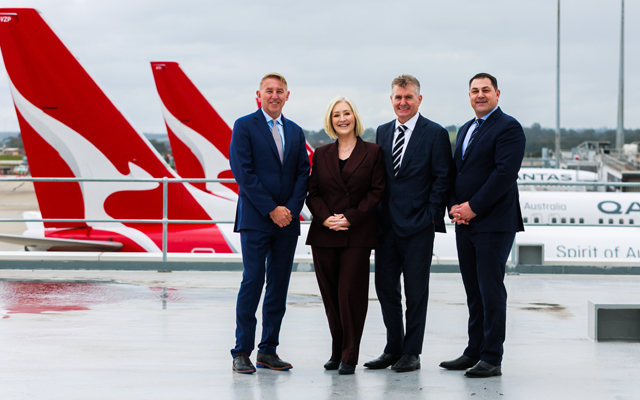
The Qantas Group and Melbourne Airport have reached a commercial agreement covering airport expansion, additional flights and passenger facilities, including a 15-year commitment supporting the airport’s third runway.

The agreement will support Melbourne Airport’s A$4.5 billion (US$3 billion) international terminal expansion, which will add five widebody gates. The third runway is scheduled to open in 2031.

Qantas plans to grow its Melbourne network, including basing some of its new Airbus A350-1000LR aircraft at the airport

Qantas also intends to base some of its Airbus A350-1000LR aircraft in Melbourne, allowing the airline to serve international destinations that are not currently within its network from the city. The aircraft are part of a 12-aircraft order separate from the A350-1000ULRs earmarked for Project Sunrise.

Qantas and Jetstar currently serve 17 international destinations from Melbourne. The plans also provide capacity for Jetstar to expand at the airport, where it operates almost 1,000 flights a week during peak periods and handles around 45 per cent of its domestic passengers.

Passenger facilities will also be upgraded. Qantas is planning a new International Business Lounge above Terminal 2, up to one-third larger than its existing facility and scheduled for completion by 2029.

Terminal improvements will include upgraded check-in areas, automated bag drops, an expanded baggage reclaim hall and additional space for Australian Border Force operations.

Final agreements between Qantas and Melbourne Airport are expected to be signed in the coming months.

Rob Marcolina, chief financial officer, Qantas Group, said: “Basing some of our new A350-1000LRs in Melbourne will unlock a range of new destinations that aren’t possible today.

“Qantas and Jetstar currently fly to 17 international destinations from Melbourne and we look forward to increasing that number, helping to connect more Australians with the world, and growing Victoria’s tourism economy.”

Lorie Argus, CEO, Melbourne Airport, added: “Our investment in a third runway opening in 2031, coupled with the Qantas Group’s 15-year agreement supporting its delivery, is a significant vote of confidence in Melbourne.”

Singapore retains world’s most powerful passport ranking

0

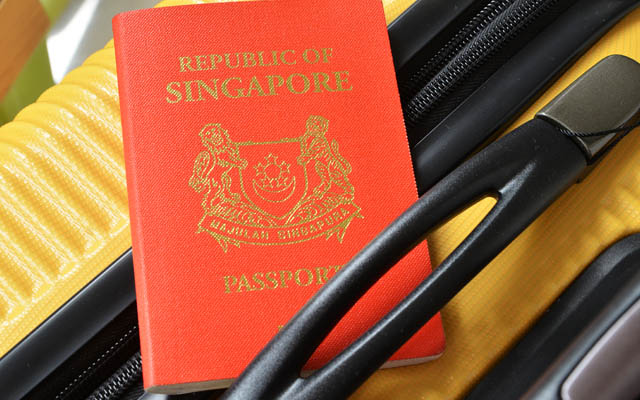
Singapore tops the latest Henley Passport Index, with visa-free or visa-on-arrival access to 192 destinations, according to the latest Henley Passport Index released on July 21.

The city-state held on to the top ranking from the previous index published in January. The UAE recorded the biggest improvement in the latest rankings, climbing three places to share second position with Japan and South Korea, with access to 188 destinations.

Singapore’s passport leads the latest global rankings, providing visa-free or visa-on-arrival access to 192 destinations

Sweden ranked third with access to 187 destinations, while Belgium, Denmark, Finland, France, Germany, Ireland, Italy, Luxembourg, the Netherlands, Norway and Spain were tied for fourth with 186 destinations. Austria, Greece, Malta, Portugal and Switzerland shared fifth place with access to 185 destinations, followed by Hungary, Poland and the UK in sixth. Malaysia, Australia, New Zealand, Canada and four European countries were jointly ranked seventh.

At the opposite end of the rankings, Afghanistan remained the world’s weakest passport, providing access to just 22 destinations. That is two fewer than in January, widening the mobility gap with Singapore to a record 170 destinations.

Henley & Partners said the long-term growth in global travel freedom has come despite a 12th consecutive year of declining global peacefulness, according to the latest Global Peace Index by the Institute for Economics & Peace.

Singapore ranks eighth on the Global Peace Index while topping the Henley Passport Index. Japan, Switzerland, Ireland, Austria, Portugal, Finland, Denmark, New Zealand, Canada, Czechia and Malaysia also perform strongly on both measures. By contrast, Afghanistan, Syria and Yemen rank among the world’s least peaceful countries and have the weakest passports, while Israel, the US, South Korea, Ukraine and Russia are notable exceptions, ranking higher for passport strength than for peacefulness.

Christian H Kaelin, chairman of Henley & Partners and creator of the Henley Passport Index, said: “The world’s strongest passports belong to nations that other countries want as partners – for trade, investment, security or cooperation. Mobility is ultimately a measure of the value other countries place on their relationship with you.”

The Henley Passport Index is published twice a year and ranks 199 passports based on the number of destinations their holders can enter without obtaining a visa in advance. It uses official travel data maintained by the International Air Transport Association to assess global visa requirements.

Polar Latitudes charts Arctic adventures for 2028

0

Polar Latitudes Expeditions has released its Arctic 2028 season, featuring small-ship expedition voyages across Svalbard, Greenland, Iceland, Jan Mayen and Arctic Norway.

The programme includes itineraries aboard the company’s purpose-built polar fleet, ranging from week-long Svalbard voyages to longer crossings spanning several Arctic islands.

Polar Latitudes Expeditions’ 2028 programme spans Svalbard, Greenland, Iceland, Jan Mayen and Arctic Norway, with voyages ranging from eight to 13 days

In Svalbard, the eight-day North to the Midnight Sun itinerary focuses on polar bears, walruses and seabirds, while the 10-day Svalbard Circumnavigation circles the archipelago, taking in southern fjords and the landscapes of Hinlopen Strait.

A new itinerary, Norway’s Wild North: Lofoten to Svalbard, will connect the Lofoten Islands with Svalbard, combining Norway’s mountain landscapes with High Arctic wildlife.

Greenland itineraries include the 12-day Greenland Explorer, which follows the Norse Sea route across East, South and West Greenland. The eight-day Disko Bay & Beyond includes the UNESCO-listed Ilulissat Icefjord.

The 13-day Four Arctic Islands itinerary links Iceland, Greenland, Jan Mayen and Svalbard, operating northbound and southbound between Reykjavík and Longyearbyen.

Voyages will operate aboard the X-BOW vessels Ocean Albatros and Ocean Victory, with dates and itineraries aboard Discoverer to be released later. Kayaking, photography and citizen science programmes will also be offered during expeditions.

For more information, visit Polar Latitudes Expeditions.

Langham Hospitality Group names new COO

0

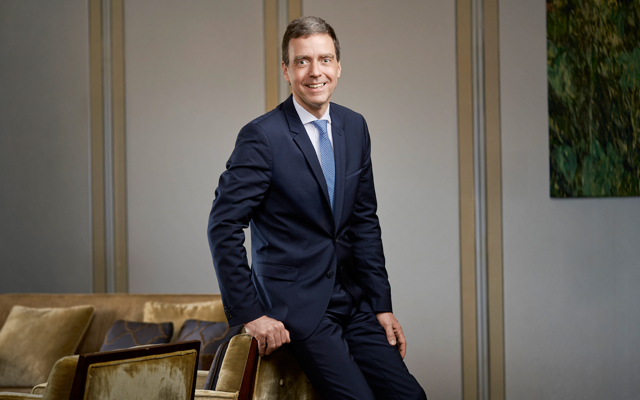
Nils-Arne Schroeder has been appointed COO of Langham Hospitality Group, overseeing operations across its global portfolio of more than 30 hotels and residences.

He joins from Raffles and Fairmont Hotels & Resorts, where he most recently served as senior vice president, operations – Europe and Africa.

Schroeder brings more than 30 years of hospitality experience across Asia-Pacific, the Middle East, Europe and Africa.

Pascal Bélanger leads global development at Plaza Premium Group

0

Pascal Bélanger has been appointed chief development officer of Plaza Premium Group, based in Singapore.

He will oversee the group’s global development strategy, strategic partnerships, investment evaluation and development pipeline.

Bélanger joined the group in 2022 and has served as senior vice president, Americas since March 2023, overseeing operations across Canada, the US, Brazil, Colombia and other markets in the region.

Mindful growth

0

SLH crossed its 35th anniversary last year. What are some interesting milestone achievements that will define the company’s growth in the years forward?
We hit a couple of interesting milestones along the way, and one of them is our achievement of more than 700 member hotels across over 100 countries. We are really proud to be going into very new destinations as a result of this membership growth.

It is clear that the pie of independent hotels has grown – there are more boutique hotels coming into the marketplace, better products are being built, and people are increasingly interested in staying in such properties all over the world.

This has resulted in us getting a lot of good leads (for potential new members), but we remain very strict on our membership and have had to turn away a lot of hotels.

The thing is, there are also more boutique hotels turning up in certain destinations, resulting in a saturation of lodging. For such destinations, we will not accept any new members until one leaves. We are accountable to our owners. Bringing on too many hotel members in a single destination means slicing the pie thinly for our owners.

So, SLH continues to be very conscious about growth.

Another milestone is our distribution partnership with Hilton, forged two years ago. We are aware of our limitations as a small company, so we have to look for the right partners to help us grow and better support our hotels commercially. We now have over 500 hotels listed on the Hilton platform.

Well, it isn’t just Hilton; we are partners also with Capital One (which allows cardholders to book SLH properties through its travel portal) and American Express (which allows cardholders access to exclusive property perks), and they help us to fill up our hotels.

We will continue to look at ways to support our owners. Happy owners, happy life!

In our conversations years ago, you spoke passionately about responsible development and wellness tourism, and then both became crucial product segments that hotels and resorts went on to invest in. What’s next in luxury tourism that will influence how people travel?
Well, I think luxury travel is coming back to prioritising things that are small and personalised. And when you take this approach, you have to consider all the different segments of guests that you may serve.

For this reason, inclusivity is especially close to my heart. Inclusivity in this context refers to offering a warm welcome to everyone, from travellers with special needs to solo female travellers to faith-based travellers.

Take our approach to faith-based travel as an example. We are going into the GCC (Gulf Cooperation Council) market and need to be conscious when selling and serving this market. We need to know if our hotels are able to provide halal menus, spaces for privacy, and other amenities that faith-based travellers expect.

This is where SLH’s Private Collection becomes our strength because every property, from Africa to Australia, promises utmost privacy. Our GCC guests get their own accommodation, private pool, private kitchen, and have the choice of spacious units for the whole family.

We recognise that not all hotels fit everyone. So, if we are lacking in a certain area and that justifies bringing in another new hotel because it serves a particular segment, we will do it.

Is it easy to find hotels that check all the right boxes for SLH?
My development team and I go into every destination and property to vet their potential. This is something we do not compromise on.

When assessing the potential of a hotel, we send a mystery inspector to conduct an inspection and produce a report to the owner that outlines areas of improvement. The feedback is science-based and aligned with our quality assurance programme, which is applied to all SLH member hotels.

This reality check is important for both SLH and the owner because some owners may feel that their property is good enough and they are reluctant to make changes. It is wiser to be clear with quality alignment before the hotel joins the network, than to have to end the relationship down the road.

This year, we signed on 17 new hotels in Asia-Pacific. One of them is Dolkhar Ladakh in India. This is a fantastic place on the Indian border, rather unexplored and very nature-driven.

We are also expanding in Japan, going into places outside of the typical Tokyo, Kyoto and Osaka. Our latest addition is The Pasona, located on the coast of Awaji Island.

In China, which is gaining popularity as a tourism destination, we are joined by Longting Vineyard Hotel in Penglai. It stands up in the halls, with a vineyard that looks very much like a French Chateau. This hotel produces award-winning wines that compete in international competitions.

SLH’s sustainability efforts include being conscious about where we add new member hotels. We want to spread the tourism load while inspiring travellers to consider places they may never have thought of before.

That’s the exciting part of travel, don’t you think?

Affluent travellers are becoming increasingly reliant on travel advisors for various reasons, one of which is the growing complexity of travel arrangements and the overload of travel information. Is SLH seeing this trend too? Does it translate into more bookings through travel advisors?
Well, yes. Travel advisors are always an integral part of our booking ecosystem. They contribute 80 per cent of our bookings. And that is why SLH continues to be present at travel tradeshows, like the ILTM series.

One reason for the strong travel advisor contribution is that not all our destinations are point-to-point, and that makes it hard for guests to get to certain places. Travel advisors ensure that everything is planned ahead for the guest.

Two, high-net-worth customers don’t really want to do their own planning. They have no time to consult AI and look into suggestions. They have their secretary or travel advisor to do all that. They simply pass on instructions that they want to go to this place this weekend, and the secretary or travel advisor will have to make it happen.

Third, with all that is happening around the world, especially coming out of the pandemic, a lot of people are unsure about flight schedules and if certain places are still in operation. Travel advisors have proven to be more reliable than information available online. Furthermore, if something were to happen during the journey, customers can rely on a human to get them out of the situation.

What is SLH doing to ensure travel advisors are well supported and able to drive bookings for your hotels?
We have a pre-qualified, by-invitation-only preferred partner programme that is designed for top-tier luxury travel advisors and agencies. This is called SLH withIN, and to qualify, they have to book a minimum of US$25,000 with us. SLH withIN travel advisors can access various inclusions and benefits for their guests.


India hotel sector calls for policy reforms to boost supply

0

India’s hospitality industry has renewed its call for policy reforms to accelerate the development of branded hotels, highlighting that the country’s accommodation capacity is falling short of demand at a time when domestic tourism is witnessing strong growth.

Speaking during a hospitality-focused session at the Federation of Associations in Indian Tourism & Hospitality’s (FAITH) conclave, held in New Delhi from July 16 to 17, industry leaders said granting industry status, extending infrastructure lending benefits and improving the ease of doing business are critical to unlocking investment and expanding branded hotel inventory across the country.

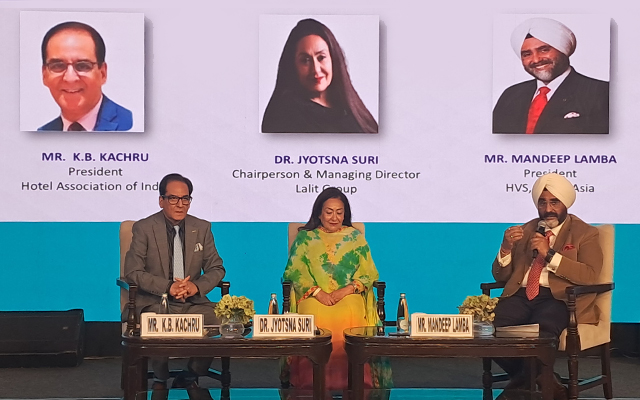
India’s hospitality industry is seeking policy and financing reforms to boost hotel supply as domestic tourism drives demand; photo by Rohit Kaul

K B Kachru, president of the Hotel Association of India (HAI), said: “The number of branded hotels in India falls far below what is required. India today has close to 200,000 branded rooms whereas a single US state has more branded hotel rooms than the whole of India combined. That is deeply concerning.”

He stressed that developing the required hotel capacity would require substantial domestic and foreign investment, which in turn depends on policy support.

“To attract large-scale capital, investors must be incentivised through policy measures and the ease of doing business needs to be improved. The government must eliminate any friction or bottlenecks preventing or delaying capital infusion into the hotel sector, treating it as vital infrastructure,” he highlighted.

Industry experts noted that India’s rapidly growing tourism market, fuelled by the domestic segment, requires accommodation across every category rather than only luxury hotels.

Mandeep Lamba, president and CEO, South Asia, HVS Anarock, stated: “We have low penetration of branded hotel rooms in the country and investment is also limited at this point. The biggest issue we have been lobbying with the government is to bring hospitality sector lending under infrastructure lending. This will provide access to affordable long-term financing which is essential for expanding supply for a capital-intensive activity like building hotels.”

“It is not just five-star hotels that we build as an industry but also guest houses and economy hotels. Domestic tourism including the religious segment is booming and all these travellers do not stay in luxury hotels. We need branded hotels across every category,” added Lamba.

Beyond infrastructure and financing, industry leaders also highlighted the need to address structural challenges related to workforce development.

Jyotsna Suri, chairperson and managing director of The LaLiT Suri Hospitality Group, said: “Looking ahead, I hope to see a narrower gap between branded and non-branded hotel inventory in India. Attracting the right talent into the hospitality sector is another key challenge that the industry is grappling with.”

Omio lands US$10 million backing for Asia growth

0

Omio has secured a US$10 million strategic investment from Granite-Integral to support its expansion in Japan and strengthen its presence across South-east Asia.

The funding will be used to grow Omio’s transport network across the region, expand local partnerships, enhance its customer offering and increase its teams in Japan and at its AI-focused technology hub in Singapore.

Omio plans to expand its transport network in Japan and South-east Asia following the investment

The investment comes as Asia-Pacific is forecast to be the world’s fastest-growing travel region over the next five years. Omio said demand for multimodal travel is also increasing, with more travellers combining rail, coach and other transport options within a single trip.

The company launched in Japan earlier this year and has since seen strong demand from international travellers booking journeys along the country’s Golden Route, as well as to regional destinations including mountain areas, pilgrimage routes and coastal communities. Omio has also expanded its transport inventory through partnerships with operators such as Japan Railways and Willer Express.

Omio currently offers bookable transport services across 48 countries and plans to expand into more than 70 markets by 2028, with Japan and South-east Asia identified as priority growth markets.

Naren Shaam, founder and CEO, Omio, said: “Japan is one of the most exciting travel markets in the world today. Millions of travellers visit every year, but planning journeys across different operators and transport modes can still be complex, particularly beyond the major cities. With Granite-Integral’s regional expertise, we intend to accelerate a new era of connected travel in Japan, expand our presence across South-east Asia and continue building a more connected future for travel across Asia.”

CK Choun, co-head, Granite-Integral, added: “Japan and South-east Asia represent some of the most important long-term opportunities in global travel, with growing demand for more connected journeys across the region. We’re excited to support Omio as it continues expanding across Asia.”