The EXO Foundation, a non-profit organisation supporting sustainable tourism initiatives, held its first-ever Sustainability Awards on September 28, with more than twenty projects awarded prizes totalling US$40,000 in value.
Collaborating with LightBlue Consulting and Considerate Group, the awards aim to identify, support and promote exemplary projects that seek to innovate sustainability in Asia. From an initial fifty applicants, it was narrowed down to twenty nominees across five categories – Climate Action, Circular Economy, Regenerating Nature, Empowering Communities and Protecting Cultural Heritage.
The EXO Foundation’s inaugural Sustainability Awards aim to identify, support and promote projects that seek to innovate sustainability in Asia
A panel of internationally-recognised sustainable tourism professionals was enlisted to evaluate each nominee and vote according to its merits, with a sixth People’s Choice Award granted based on a month-long public vote.
In addition to the awards ceremony, EXO Foundation also hosted a panel discussion to further explore the role of sustainable practices in the tourism sector.
Alexandra Michat, chief purpose officer of EXO, said: “Through the organisation of these awards, we are aiming to enhance collaboration among responsible tourism stakeholders in our destinations and to ensure that people and nature will continue to be preserved, protected and cared for.”
Global travel distribution platform TBO.com has partnered with WebEngage, a leading marketing automation company, to empower travel agents to serve their customers effectively.
TBO.com’s Business to Agents (B2A) global travel distribution platform will harness WebEngage’s marketing automation stack to consolidate data, derive valuable insights, and enable travel agents to hyper-personalise customer engagement.
The partnership will benefit travellers returning to agents for customised, hassle-free, and convenience-oriented tourism services
Known for its B2A strategy in the tourism industry, this strategy aims to meaningfully cater to travellers returning to agents for customised, hassle-free, and convenience-oriented tourism services. Such B2B strategies, coupled with round-the-clock agent support and acceptance of over 55 currencies, have enabled TBO to expand its purview to over a million hotels and 120 countries globally.
Gaurav Bhatnagar, co-founder and managing director, TBO.com, shared: “Travel distribution platforms such as ours are ripe for technological adoption aimed at higher conversions and insights-led engagement. The partnership will enable us to deliver personalised services to our agents and partners and, through them, a multitude of travellers across the glove.”
Reiterating the need for marketing automation in tourism distribution, Hetarth Patel, vice president, MEA and managing director – UAE of WebEngage, remarked that business-facing companies must engage like they are dealing directly with customers.
“The next phase of B2B growth will hinge on superior customer experiences. Therefore, in tourism distribution, a unified view of agents, dynamic segmentation, and the ability to automate and orchestrate cross-channel communications at scale will constitute a competitive edge. Our partnership with TBO is built on that objective,” said Patel.
Air Canada is launching a new global route connecting Singapore and Vancouver starting from April 4, 2024. This will be the airline’s second non-stop route between South-east Asia and Canada.
Air Canada will fly direct from Singapore to Vancouver four times weekly from April next year
Air Canada will fly non-stop from Singapore to Vancouver four times weekly year-round onboard its flagship Boeing 787 Dreamliner fleet which offers three cabins of service for customers to choose from, including Signature Class with 29 lie-flat seats, Premium Economy with 21 spacious seats and Economy class with 247 seats.
Family-owned Amora Group is ramping up hotel investments in Thailand and Australia with the refurbishment of Amora Beach Resort Phuket and Amora Hotel Brisbane.
Its flagship property Amora Beach Resort Phuket, first opened in 1999, will undergo an extensive refurbishment costing 500 million baht (US$14 million), while the newly-purchased Amora Hotel Brisbane will be transformed into a five-star hotel.
Amora Group is aiming to cement its footprint as a five-star hospitality group in Australia and Thailand
As tourism demand returns, Amora Group is also gearing up to cement its footprint as a five-star hospitality group in Australia and Thailand, with a longer-term goal of expansion in key cities in Asia-Pacific and developing properties in South-east Asia.
With Phuket expecting more than 14 million international and domestic arrivals by end 2023 as stated by the Phuket Tourist Association, the reopening of Amora Beach Resort Phuket, scheduled for December 2023, will help meet this demand.
Key highlights of the flagship’s transformation include newly-built facilities such as a new-concept beach club, a wellness and fitness centre, two pools, a kids’ club, a restaurant, a beachfront event lawn, a grand ballroom and four meeting rooms.
Amora Hotels & Resorts’ owner and director Earp Siriphatrawan said: “The group is confident that Amora Beach Resort Phuket will offer a distinctive guest experience that honours over 20 years of tradition in hospitality and yet adapts to the future with a young and innovative approach.”
As for manpower, he shared that each property is operated by the company and “remains very autonomous in their management, while adhering to guidelines”.
He explained: “General managers have the flexibility to adapt protocols in such a way that they are able to provide unique, unscripted and even spontaneous service that creates memorable moments for our guests.
“At Amora, we have many long-serving staff who are passionate about what they do, and have established a warm rapport with returning guests – a key factor that translates into brand loyalty and differentiation.”
The latest international YouGov survey showed that tourists are less likely to consider exploring unfamiliar tourist destinations, opting to travel to locations that they are more familiar with.
The survey of over 17,500 people, commissioned by the Saudi Tourism Authority and published ahead of this year’s World Tourism Day in Riyadh, was carried out in 15 countries across Asia, Africa, America, Europe and the Middle East. While results vary between geographies, the study reveals that 66% of tourists prefer traveling to countries that provide familiarity, while 67% tend to travel to destinations that they have previously visited or have heard about through their network, such as family and friends.
YouGov’s survey showed that more tourists are opting to travel to locations that they are familiar with
There are some global differences in the findings with 90% of tourists from Middle Eastern countries seeing familiarity with the destination as a key factor in making travel decisions, while British (62%), French (75%), Chinese (68%) and Japanese (74%) tourists feel more comfortable travelling to places that they know less about.
The implication for those destinations that have a developing tourism sector with less spending power for international promotional efforts is that they lack the ability to generate the familiarity which is clearly an important factor for people when choosing where to travel. On the other hand, the challenge for more mature tourism destinations is to encourage tourists away from the hotspot locations and into their lesser-known regions.
Resonating with previous studies which found that 80% of tourists visit just 10% of the world’s tourism destinations, the stark findings of this survey not only emphasise tourists’ preference for familiar destinations but also shed light on the need for more sustainable tourism practices worldwide.
Fahd Hamidaddin, CEO and board member of Saudi Tourism Authority, said: “The findings of this international survey give us great insight into the trends and habits of global tourists and how important a sense of familiarity is to them when choosing destinations.
“However, familiarity does not mean that destinations need to compromise their authenticity as the research also supports the notion that visiting new places deepens our appreciation of diverse cultures and fosters mutual understanding. When we travel, we are agents of good – we export our own cultures and return home with new discoveries, new ideas and new perspectives.”
The results support recent news reports from nations, such as Croatia and France, who have implemented measures to better control high volumes of tourists in their most popular destinations. The city of Dubrovnik, Croatia, has implemented a Respect the City campaign to manage tourism and minimise its impacts, while French Tourism Minister Olivia Gregoire asserted that France needed to better manage influxes during peak season that threatened “the environment, the quality of life for locals, and the experiences of its visitors”.
Of tourists that have ventured to new destinations, 83% report that the experience changed or broadened their perspective providing compelling evidence of the profound impact of tourism in connecting people and enhancing mutual understanding.
Sabre Corporation has launched its newest AI-powered retailing solution for airlines – Sabre Upgrade IQ – which can help airlines generate incremental and diversified revenue by optimising the available inventory in their premium cabins, while elevating and streamlining the customer experience.
Upgrade IQ is a PSS-agnostic solution which allows airlines to give travellers the opportunity to bid for a seat upgrade at any stage during the pre-travel timeframe – throughout the booking flow, at check-in, in the airline’s mobile app or via email communication.
Sabre’s Upgrade IQ allows airlines to give travellers the opportunity to bid for a seat upgrade at any stage during the pre-travel timeframe
Using the advanced AI and machine-learning models powered by Sabre Travel AI, Upgrade IQ streamlines the management of seat upgrades for airlines with an intuitive and automated interface that can automatically accept traveller bids, change the flight itinerary cabins, re-issue and revalidate the tickets, process payments and send receipts and confirmation information to the traveller. It also supports instant upgrades, where the traveller chooses to pay full price for a guaranteed upgrade.
During beta testing, Upgrade IQ demonstrated the ability to deliver up to 20 per cent uplift in incremental upgrade revenue by filling empty seats in premium cabins.
In addition to leveraging AI capabilities from Google, Sabre integrated with Hopper’s platform to create a frictionless and streamlined customer experience. The new Sabre solution incorporates Hopper’s advanced bidding platform which facilitates the bidding process and enables airlines to communicate with travellers in multiple languages and in-real time.
“By collaborating with Google and Hopper on some of the core technical capabilities, we have delivered a modern retailing solution to help airlines better manage seat upgrades and create differentiated customer experiences,” said Garry Wiseman, chief product officer, Sabre Travel Solutions.
Hotel Indigo, part of IHG’s Luxury & Lifestyle portfolio, is debuting its largest marketing campaign this month, and will rolls out in phases around the world.
Titled The World’s Neighborhood Hotel, the campaign aims to inspire travellers to explore by unearthing the hidden gems that can only be found in a neighbourhood. It is designed to celebrate how guests can discover, or rediscover, some of the most inspiring and culturally rich neighbourhoods in and outside the hotel.
Hotel Indigo’s latest campaign spotlights neighbourhoods at its properties around the globe
In a global survey from Hotel Indigo, the brand reveals 73 per cent of respondents feel it is important for the hotel they stay in to be connected to the local neighbourhood as it may inspire more adventurous activities, the desire to try new things, and meet new people.
The campaign builds on the fact that when you stay at a Hotel Indigo, you not only visit a place, but fully immerse in it and take a little bit of it home with you.
Each individual property is inspired by local neighbourhood cues, with highlights ranging from a unique selection of vinyl Shibuya-Kei records in each guestroom at Hotel Indigo Tokyo Shibuya and infused elements reminiscent of Old Hollywood at Hotel Indigo Los Angeles Downtown, to Hotel Indigo Brussels – City only using locally-sourced ingredients in its restaurant, and every floor of Hotel Indigo Dubai Downtown featuring local artwork.
Carol Hoeller, vice president global brand management, Hotel Indigo, said: “For our guests, Hotel Indigo isn’t just a place to stay – it’s a reason to travel. It’s a destination all on its own, and The World’s Neighborhood Hotel embodies that. The campaign beautifully juxtaposes the inside and outside, and how our brand and the communities in which we exist are inseparable.”
Chloe Banicevic, creative director at Anomaly, shared: “We wanted this campaign to be a journey of discovery and wonderment. The creative captures the real culture and emotion behind the neighbourhoods featured in a soul-stirring way. We wove in iconic sights and sounds as well as people living, connecting, and seeking out incredible things and hidden gems. We wanted it to be more than just a homage to the neighbourhood – we wanted it to be an invitation to come and experience it for yourself.”
The international campaign will feature images and videos personalised for the next-gen explorer through a variety of media and social media channels worldwide.
Anantara Hotels and Resorts is rolling out its CSR programme at all of its properties worldwide, including the brand’s recently launched hotels in Europe.
Designed as an opt-in programme for guests, the Dollar for Deeds initiative encourages travellers to give back to the community by donating to a range of worthy causes. Guests can choose to donate one dollar per night of their stay, and Minor Hotels will match their contribution dollar for dollar and donate to CSR partners internationally.
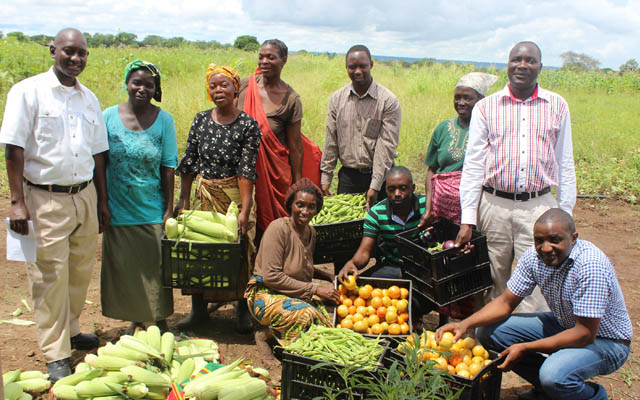
Anantara gives back to the community, such as The Royal Livingstone Hotel’s Nsongwe Women Farm in Zambia, Africa, pictured
Dollar for Deeds was first introduced nearly a decade ago at select hotels in Thailand and has been integrated into the growth strategies of the brand globally.
In Thailand, funds raised are dispersed equally between three chosen and vetted causes: The Princess Sirindhorn Craniofacial Centre at Chulalongkorn Hospital in Bangkok, which provides comprehensive care for children with craniofacial abnormalities; The Mai Khao Marine Turtle Foundation that looks after all turtles that nest in Phuket including the critically endangered giant leatherback; and The Golden Triangle Asian Elephant Foundation where rescued street elephants enjoy a peaceful life in Northern Thailand and wild elephants and their habitat are protected.
Other projects around the world include holistic coral reef protection in the Maldives; vulture nest monitoring, raptor protection and humpback whale monitoring in Oman; gibbon, peacock and otter releases in Cambodia; providing care and vocational training for disabled children in Vietnam and Indonesia; supporting local farmers and local fishing communities in Africa and reforestation projects in China and Malaysia.
John Roberts, group director of sustainability & conservation for Minor Hotels, Anantara’s parent company, said: “By making Dollar for Deeds accessible globally, we can support more worthy causes around the world while encouraging individual sustainability journeys and changing the definition of purposeful travel in our neighbouring communities and ecosystems.”
Seminyak, Bali will once again host Further East, This is Beyond, this year from November 6 to 9. This four-day event will gather stakeholders in the region to redefine luxury travel, spark transformational discussions, and pave the way for interactions that will shape the future of Asia-Pacific.
Kicking off on the November 6 is the Open House – Further East’s exclusive un-conference – hosted at the Potato Head Beach Club, where the Further East community will reunite.
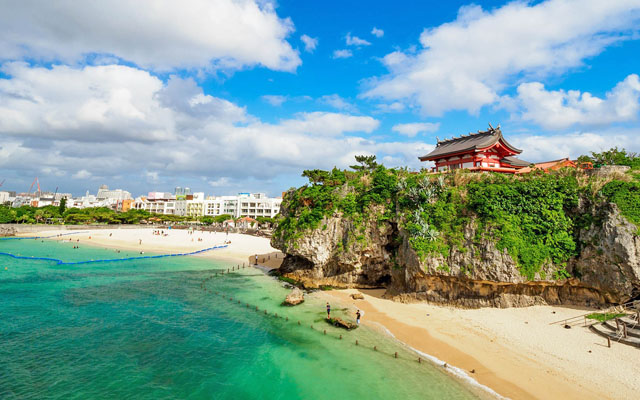
Further East 2023 will be held at Seminyak, Bali from November 6 to 9 this year (Photo: Further East)
Further East is centred on three stages: Inspire, Spark, and Progress.
The Inspire stage will see visionaries including Desa Potato Head’s Ronald Akili, a panel discussion led by Design Hotels to explore the art of Creating Spaces for Spiritual and Physical Healing, and a panel hosted by W Hotel’s Carly Van Sickle, who will examine the impact of travel influencers on the industry and how businesses can best collaborate with and benefit from social media influencers.
The Spark stage brings together game-changers to ignite innovation and explore fresh perspectives – speakers include Melita Koulmandas, CEO and founder of Song Saa Collective, and Sanjay Choegyal, principal of Advant Labs, among other experts.
For Progress, there will be a panel led by Viceroy Bali’s Matt Brazier to explore how partnerships can elevate the guest experience; and GHC Asia’s founder & CEO Paul Hicks will lead the Reverse Press Conference which will see delegates turn the tables and ask questions to a specially-selected panel of media.
Activity highlights comprise a diverse range of workshops and activities – exploring age-old crafts and weaving techniques, an eco-conscious retreat, and sessions that intertwine creativity, art and sustainability.
Lacol Khao Yai – A Chatrium Collection has announced a special introductory Discover More offer for travellers who seek an elevated retreat surrounded by the lush landscape of Khaoyai National Park.
Starting at just 3,300 baht (US$89) per room per night, this offer is valid for stays with a minimum of three consecutive nights from now to October 31.
Guests at Lacol Khaoyai – A Chatrium Collection can enjoy the lush landscape of Khaoyai National Park
The package includes daily breakfast for two, welcome minibar, and complimentary in-room Wi-Fi.