


Asia-Pacific travel gains momentum: ForwardKeys

Asia-Pacific has made a remarkable recovery after the pandemic, as highlighted by ForwardKeys’ director of intelligence & marketing, Olivier Ponti, at the recent PATA Annual Summit 2024 held in Macau.
During his presentation, Ponti unveiled insights into Asia-Pacific travel trends and stressed the pivotal role of increased flight connectivity, innovative marketing strategies, and relaxed visa requirements.

Steady recovery in flight connectivity
Connectivity in the Asia-Pacific region, which has faced significant challenges, is rebounding swiftly. As of the 1Q2024, the region’s seat capacity recovery is just 13% shy of 2019 levels. Notably, the Asia-Pacific outpaced global seat capacity growth, registering a seven-percentage point increase compared to the global average of three percentage points between 4Q2023 and 1Q2024.
Declining airfares amid growing demand
As seat capacity gradually rebounds, airfares have shown a consistent downward trend since 2023, despite remaining higher than 2019 levels due to limited capacity and strong demand. This trend was particularly evident during significant events such as Chinese New Year and major concerts in Singapore. For example, Taylor Swift’s concert in Singapore in early March led to a 17% increase in travel from South-east Asia, contrasting with a 27% decline in the rest of the month.
Visa facilitation draws in Chinese travellers
Chinese outbound travel during the recent Labour Day holiday indicates a mere 16% decrease compared to the levels recorded in 2019. The relaxation of visa policies has notably enhanced Chinese travel to numerous destinations. Data revealed a 212% surge in travel from China to Kazakhstan, with notable increases to Singapore, Azerbaijan, Malaysia, and the Maldives. However, Thailand’s slower recovery is attributed to ongoing safety concerns.
Innovative marketing strategies stimulate demand
Air Macao’s pandemic-era promotions, such as buy-one-get-one-free tickets, successfully attracted mainland Chinese couples and continue to do so post-lockdown. Their new Travel Pass offer for affordable travel from specific cities to Macau has further increased couple bookings by four percentage points compared to 2019 levels.
A positive outlook for summer 2024 travel
The forward-looking travel outlook for the region remains positive, although recovery is still ongoing. As of April 27, summer travel bookings to Asia-Pacific are down by only 12% compared to 2019 levels. In contrast, travel to Europe and the Americas has fully rebounded, and travel to Africa and the Middle East is down by just 5%.
PATA’s CEO, Noor Ahmad Hamid commented: “The travel industry can effectively attract tourism by harnessing the power of visa facilitation, strategic marketing, and leveraging major events. These elements are crucial in driving the recovery and growth of tourism in the Asia-Pacific region.”
SIA Group’s new foundation to support Singapore’s youth community

The Singapore Airlines (SIA) Group is launching the Singapore Airlines Foundation, which will serve as a platform to support individuals and communities in need within Singapore, as well as contribute to the growth of the country’s aviation industry.
The foundation, funded from income earned on an endowment of S$30 million (US$22.18 million) contributed by SIA, is expected to launch two programmes that aim to provide financial aid to students in need and inspire them through immersive experiences in the aviation industry and mentorship schemes.
The Youth Uplift Programme is designed to empower students from families in need, where eligible students at Singapore’s Institute of Technical Education (ITE) colleges, polytechnics, or universities will receive financial assistance by the foundation. Participants will also get industry experience through a three- to six-month traineeship with the SIA Group, courses from the Singapore Airlines Academy to enhance their personal and professional skills, and mentorship from SIA employees. Applications are expected to open in July 2024.
The Youth Outreach Programme is designed to ignite a passion in the aviation industry among upper secondary school and junior college students – the five-day hands-on, behind-the-scenes experience with the SIA Group during their school holidays will provide the students with an exclusive look at the group’s operations, and insights from the teams behind its success.
Singapore Airlines CEO Goh Choon Phong said: “Establishing the Singapore Airlines Foundation represents a significant milestone in the SIA Group’s long tradition of service and contribution to communities worldwide. Its programmes will support those in need, inspire and empower the next generation of aviation professionals, and help catalyse the long-term growth of Singapore’s air hub.”
The SIA Group and its employees continue to support various community activities, both in Singapore and across the global markets served by SIA and Scoot. These currently include initiatives that nurture sporting talent, promote the arts, encourage environmental stewardship, and assist those in need including children, youth, senior citizens, and people with disabilities.
IHG Hotels & Resorts unveils new properties in Japan, Nepal

IHG Hotels & Resorts has signed two new hotels to be launched in Japan and Nepal – ANA Holiday Inn Resort Karuizawa is slated to open in 2025, while Crowne Plaza Resort Nepalgunj, Nepal will open its doors early 2028.
In its first management agreement with Kajima Corporation, IHG is targeting a mid- to long-term mutual development partnership in Japan with the leading Japanese construction, civil engineering, and real estate development company.

The 100-key ANA Holiday Inn Resort Karuizawa will be an all-season resort situated in the majestic Asama wilderness, and is an hour and a half away from Tokyo Station.
The resort will also offer two pet-friendly villas, a restaurant, natural hot spring, gym, indoor swimming pool and other facilities. The grounds adjacent to the hotel will feature a ski slope for children and adults, as well as an 18-hole golf course.
Currently operating as President Resort Karuizawa, the property will undergo an extensive renovation and reopen as ANA Holiday Inn Resort Karuizawa in 1Q2025.
IHG has also partnered with Mansarovar Amusement Park & Resort to open Crowne Plaza Resort Nepalgunj, Nepal, which will boast over 100 guestrooms. Facilities will include multi-functional spaces, three F&B venues, fitness centre, club lounge, spa, and a retail store. For events, two meeting rooms and a ballroom will be available.
The hotel is located in Nepalgunj, the sub-metropolitan city of Banke District, which serves as a major transport hub for many of the western regions of Nepal. The city is famous for its treks to the Dolpo Plateau and Jumla region, and offers a strategic stopover spot on the pathway to the Himalayas.
The new resort will be easily accessible from the Nepalgunj Airport and the India-Nepal border.
Millennium Hotels & Resorts MEA joins World Sustainable Hospitality Alliance

Millennium Hotels and Resorts Middle East & Africa has joined the World Sustainable Hospitality Alliance (WSHA) as a member, reaffirming the brand’s commitment to fostering sustainability across the region’s vibrant hospitality industry.
As a new affiliate member, Millennium Hotels & Resorts Middle East & Africa aligns with nearly 50 global members, collectively addressing critical challenges affecting the planet, communities, and the hospitality industry. Committed to instigating sustainable change, WSHA offers invaluable resources and programmes, empowering the hospitality sector to create a future that prioritises prosperity and responsibility.

Millennium Hotels & Resorts MEA’s ESG goals are in alignment with the region’s evolving priorities, and through its sustainability programme, Millennium’s Green Path Brand Playbook, the brand has set ambitious targets, including a 27 per cent reduction in greenhouse gas emissions by 2030.
Fahad Abdulrahim Kazim, CEO of Millennium Hotels and Resorts MEA and Lakhraim Group, said: “We are committed to environmental responsibility and believe that WSHA’s collaborative approach and resources will be instrumental in achieving our sustainability goals. Together with like-minded global leaders, we aim to spearhead positive change in the hospitality industry, driving towards a more sustainable future for our planet, people, and businesses.”
Glenn Mandziuk, CEO of WSHA commented: “As a truly global organisation, we are increasing our reach across the Middle East and Africa, and Millennium Hotels is integral to moving the region towards Net Positive Hospitality. Collectively, we will lead the global hospitality industry towards a sustainable, prosperous future that thrives by giving back more than it takes.”
Cheers to us

We have just published a special issue, one that marks the 50th anniversary of both TTG Asia Media as a company and the well-known travel trade title TTG Asia. This milestone is not easy to come by when you consider how vulnerable the travel and tourism industry is to macroeconomic ebb and flow.
Yet, TTG Asia Media and its flagship title have continued to serve Asia-Pacific’s community of industry professionals uninterrupted, even through various crises that impacted travel and tourism. Along the way, the company has expanded its stable of travel trade titles, and established and grown other business divisions to support a wider range of industry organisations and functions.

I like to think that TTG Asia Media’s success is the sum of its people’s contribution. I am so proud to count many brilliant and resilient people as colleagues past and present. In developing this commemorative issue, I gave myself the fun assignment of interviewing some colleagues who play critical functions in the company. I hope their stories will allow you to better know TTG Asia Media and the work we collectively do.
And as we celebrate our Golden Jubilee, we also look ahead to the next decades through the projection of industry leaders and brave imagination of how travel and tourism should and could be.
Plaza Premium Group names new global head of ESG & Sustainability
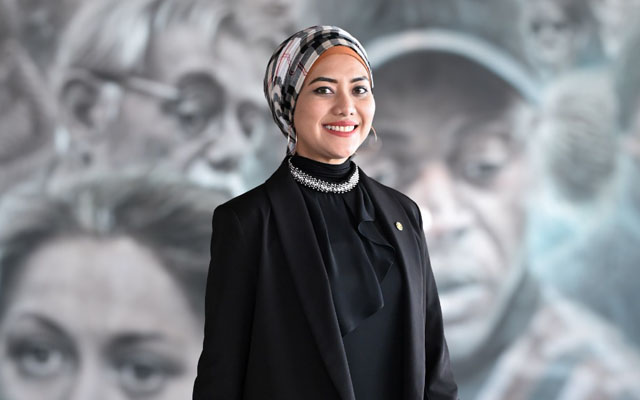
Plaza Premium Group has appointed Syafrina Sharif as the global head of ESG & Sustainability, effective immediately.
An international sustainability expert with a proven track record of formulating and implementing impactful sustainability strategies and communications, training programmes, outreach initiatives as well as commercial engagements, Sharif has been actively promoting and leading the corporate sustainability agenda at engineering, construction and biotechnology multinational companies over the past decade.
 Based in Kuala Lumpur, she has also been supporting the development of Malaysia’s National Planetary Health Action Plan.
PATA inks MoUs with Sarawak Tourism Board, EATOF

The Pacific Asia Travel Association (PATA) has signed new partnerships with Sarawak Tourism Board (STB) – to build closer cooperation and jointly promote sustainable tourism and resilience efforts in Sarawak – as well as with East Asia Inter-Regional Tourism Federation (EATOF) to establish an alliance for the activation of tourism in Asia-Pacific.
Both Memoranda of Understanding (MoU) were signed during the PATA Annual Summit 2024 (PAS 2024) on May 16 in Macao, China.

To ensure the success of sustainable tourism initiatives in Sarawak, PATA and STB will work together to enhance tourism resilience and sustainable tourism practices, introduce carbon offset projects in Sarawak, engage in joint advocacy and policy development activities, jointly organise events, and collaborate on green hospitality, urban sustainability and biodiversity conservation initiatives.
The first activity outlined in the MoU between STB and PATA is the Tourism Destination Resilience (TDR) capacity building programme, which took place in Kuching on May 20 and 21. Tourism officials received training on core modules of the TDR Programme, which covered topics such as risk assessment and management, crisis communication, adaptive capacity improvement, and diversification strategies, among others.
Following this, on May 23 and 24, small and medium-sized enterprises (SMEs) in the tourism sector will join a workshop on financial and digital skills, aiming to empower them with greater financial literacy and leverage digitalisation to enhance competitiveness.
Following the TDR Programme, PATA and STB will engage in further activities including a new series of workshops focused on ecotourism and community-based tourism development, waste management and reduction, and the implementation of sustainability certifications and carbon neutrality activities.
EATOF, an international tourism association that strives to develop a tourism community across the East Asia region and provide a solid forum to come together in unity, will join forces with PATA to boost local tourism through various businesses, including mutual collaboration in tourism, youth engagement, big data analysis, and more.
The MoU outlines the target of fostering mutual participation in significant events hosted by each association (namely the EATOF General Assembly and the PATA Annual Summit), sharing exemplary sustainable practices, and facilitating collaborative initiatives spanning from educational endeavours to regional tourism programmes.
Formed in 2000, EATOF currently has 10 member provinces in 10 countries participating, with the EATOF Secretariat located in Gangwon State, South Korea.
Go City, Merlin Entertainments to showcase the best of Sydney

Go City customers can now access all the Merlin attractions in Sydney thanks to the strategic partnership between Merlin Entertainments and Go City.
The Sydney Pass now includes Merlin’s iconic Sydney attractions – Sea Life Sydney Aquarium, Sydney Tower Eye, Madame Tussauds Sydney and Wild Life Sydney Zoo.

The collaboration recently expanded its London offerings for the London Pass as well.
Go City has focused on developing Asian markets in the recent years, targeting key markets like China, South Korea, as well as travellers from North America, the UK and Europe.
Tokyo’s former Tsukiji Fish Market to be transformed into mixed-use hub

The site of Tokyo’s former Tsukiji fish market is set to undergo a massive 900 billion yen (US$5.8 billion) redevelopment that will transform it into a commercial, leisure, hospitality, and transport hub.
A consortium led by real estate company Mitsui Fudosan will transform the 20-hectare vacant plot into a slew of hotels, residences, offices and business events facilities in a bid to create a “gateway to Tokyo”. The first amenity is scheduled to open by 2026, with the rest to gradually follow over the next decade. Most facilities are expected to be operational in fiscal year 2032.
The complex’s business events facilities will include a theatre with space for conferences and exhibitions, a ballroom for 1,200 pax, and a 50,000-pax stadium with a retractable roof for live performances, tradeshows, and international sports games.
A culinary zone, featuring stores and a food research hub, will be set up in collaboration with the nearby Tsukiji Outer Market, which has continued to sell seafood, vegetables and traditional food items since the main market was relocated in 2018. Its aim is to promote the area’s traditional food culture to domestic and international visitors.
“Utilising the rich history of Tsukiji, we would like to enhance Tokyo’s international competitiveness and create facilities that will be loved by the people of Tokyo and attract people from around the world,” said Takashi Ueda, president of Mitsui Fudosan, at a press conference announcing the development.
The site will also boost extensive transportation links via helipads, access points for buses and self-driving cars, as well as a ferry port for electric vehicles that can be used by commuters and tourists due to the site’s location on Tokyo Bay and the Sumida River.
Plans are also underway to link the site to the subway system and the metropolitan expressway by 2040.
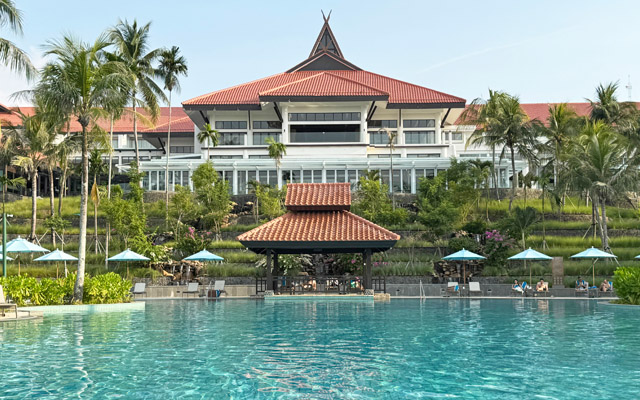







Tourism Malaysia and AXN Asia, an English-language general entertainment channel owned by KC Global Media, have teamed up to present Unfading Memoirs, an exploration production showcasing Malaysia’s rich cultural tapestry and breath-taking landscapes.
This pioneering collaboration between AXN Asia and Tourism Malaysia will premiere on AXN’s channel in July across Asia, featuring curated experiences from different travellers’ perspectives.
Inviting viewers to discover Malaysia’s culinary delights, cultural heritage, and outdoor adventures are travel-savvy hosts Justin Bratton and Selina Lo, alongside food and travel enthusiast Erwan Heussaff. The mini-series will feature an immersive exploration of Kuala Lumpur, Penang, Sabah and Sarawak.
Through a series of user-generated content initiatives, viewers will also be empowered to share their own travel experiences, further enriching the narrative of the unique destinations while having the opportunity to win exclusive trips.
George Chien, co-founder, CEO, and president of KC Global Media, shared: “This collaboration perfectly aligns with our mission to inspire wanderlust and cultural exploration – exemplifying our dedication to producing meaningful and engaging content that resonates with viewers across the region. We are excited to embark on this journey with Tourism Malaysia and look forward to creating more impactful projects together in the future.”
“Malaysia is a treasure trove of cultural diversity, natural beauty, and captivating experiences – for which we’re eager to showcase Malaysia’s unique charm to a wider audience, inviting travellers from around the globe to discover the wonders of our country,” remarked Manoharan Periasamy, director general, Tourism Malaysia.