United Airlines will operate the Manila-San Francisco route with 16 weekly flights, starting with a direct, non-stop service on October 29.
United Airlines will fly between Manila and San Francisco from October 29 (Photo: Markus Mainka)
The airline currently flies to Manila from Guam and Palau, and the new service will be the United Airlines’ first trans-Pacific route since starting operations in Manila in 1982.
Travel trade historian Imtiaz Muqbil is poised to launch a 55-module course in 2024 that will unravel the history of Thai tourism.
The course casts a wide net, offering an unfiltered narrative of the sector’s tumultuous journey over the past seven decades, from the history of leisure tourism to the annals of business meetings and associations. Each module spans three hours, and will cover two topics, allowing ample time for questions and discussions.
Muqbil: future generations may learn from our own rich history and heritage
The course is designed to cater to a diverse audience – from destination planners and business development professionals to CEOs, government officials, academics, consultants, investors, and civil society groups.
Muqbil underscores the course’s importance in preserving Thailand’s rich tourism heritage for future generations: “It is important to have such a course available so that future generations may learn from our own rich history and heritage. Thailand has been a tourism pioneer, both respected and envied. No country in the world has faced so many back-to-back crises and bounced back so rapidly.”
Muqbil is actively seeking partnerships with academic institutions, both in Thailand and abroad, to host the course.
Seatrade Cruise Asia Pacific has announced its 2023 State of the Asia Pacific Cruise industry keynote panel, set to kick off two days of robust programming featuring leading voices in the industry.
Following a four-year hiatus, the conference, supported by the Hong Kong Tourism Board, will welcome the cruise community from October 24 to 26, and will be held at the JW Marriott Hong Kong. The keynote panel will take place from 09.00 to 10.30 on the second day.
From left: Ponant’s Hervé Gastinel, Resorts World Cruises’ Michael Goh, and Royal Caribbean International’s Bert Hernandez
With this year’s theme on Rebuilding Asia Cruising Together, the keynote panel will kick off with a dialogue by Mary Bond, group portfolio director for Seatrade Cruise, who will engage with international and regional cruise industry leaders to delve into the revival of Asian Cruising.
Featured panellists include Hervé Gastinel, CEO of Ponant; Michael Goh, president of Resorts World Cruises; Bert Hernandez, senior vice president international of Royal Caribbean International; and Shoichiro Yamashita, head of cruise business unit, Mitsui OSK Lines.
“Collaboration plays a key role in continuing the cruise momentum in the Asia region, and Seatrade is excited to be back in Hong Kong with dedicated programming and networking opportunities designed to spark ideas and create new synergies,” sais Chiara Giorgi, global brand and event director for Seatrade Cruise.
“From discussing lessons learnt from the restart, sustainable infrastructure, and talent recruitment to overall strategies for getting Asia back on the map for international cruisers, our robust programme offers much to learn, share and discover.”
Conrad Singapore Orchard is now accepting guest stay reservations beginning January 1, 2024.
Members of the loyalty programme Hilton Honors, who book a minimum of two nights’ stay at Conrad Singapore Orchard, will receive complimentary breakfast for two and 5,000 additional Hilton Honors bonus points per night.
Conrad Singapore Orchard has an opening promotion for stays from January 1 next year
Nestled in a coveted enclave along Orchard Road, Conrad Singapore Orchard will feature 445 guestrooms, a 12-storey atrium, executive lounge, fitness centre, outdoor pool and over 1,500m2 of event spaces and dining experiences.
Conveniently located within a half-hour’s drive from Singapore Changi Airport, the hotel also provides easy access to the Singapore Botanic Gardens, a UNESCO World Heritage Site.
The Visama Mae Chan luxury tented camp in the mountains of Chiang Rai, northern Thailand, will open November 1.
The new property will boast 10 luxurious tents, with amenities such as air conditioning, phone, espresso machine, French press coffee pots, Wi-Fi, rain showers, safety deposit box, refrigerator, bathrobes and slippers, bathtub, 24-hour concierge, and more.
Visama Mae Chan features 10 luxurious tents with amenities
An additional 12 luxury tents will be added in 2024.
Guests can choose either a two-day or four-day stay, where each journey will be created around themes such as farm-to-table dining, Lanna cultural appreciation, artistic engagement, outdoor adventure and sightseeing experiences.
One highlight will be The Ambalama, a gathering place for storytelling and talks by guest speakers such as authors and historians. Guests can also sample the best of Lanna fare, local farm-to-table organic options and international favourites at the Reu Doo Gaan restaurant.
In addition, the camp is a project running on not-for-profit principles to benefit the neighbouring Friends of Thai Daughters foundation, which seeks to prevent child trafficking by empowering girls from hill tribe communities.
Booking and sales for Visama Mae Chan are now open for stays commencing November 1 onwards.
With swathes of sun-drenched coastline and thousands of enchanting islands, Asia is home to many of the world’s most sought-after vacation spots for sun-seekers.
With an extensive collection of hotels and resorts in many of the region’s most enticing beachfront destinations, including Phuket, Pattaya and Hua Hin in Thailand; Phu Quoc, Nha Trang and Ha Long Bay in Vietnam; Bali, Batam and Manado in Indonesia; Puerto Princesa and Panglao in the Philippines, and Okinawa in Japan, BWH Hotels is your client’s perfect partner for a seaside holiday in Asia.
BWH Hotels’ top picks for beach lovers
1 of 6
Hon Gai Beach at Ha Long Bay blends the beauty of a tropical beach with views of the iconic island-studded seascape and many visitor activities
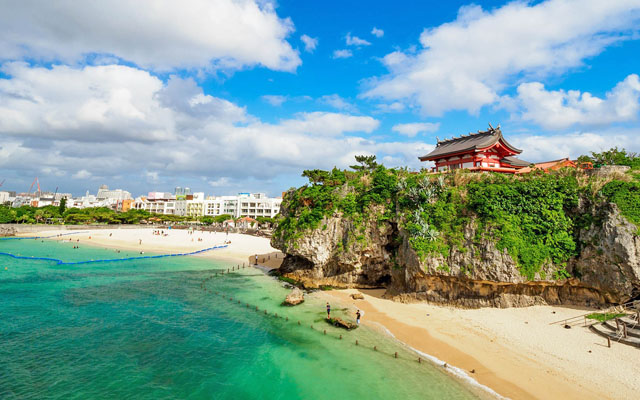
Located on the west side of Okinawa, Onna Beach is a stunning stretch of shoreline, famous for its soft sand, shallow seas and spectacular sunsets
A short drive-up to Okinawa’s sun-soaked coast in Nago, Kouki Beach is a breathtaking bay that arcs gently and is lapped by bright aquamarine sea
Concealed behind imposing cliffs on Bali’s southern peninsula, Pandawa Beach is one of the island’s hidden gems
The liveliest section of Bali’s captivating coastline, Kuta Beach is a magnet for fun seekers, sun worshipers and surfers alike
On Panglao’s south coast, Alona Beach combines pristine natural beauty with plenty of amenities, including local restaurants and bars
THAILAND Khao Tao Beach, Hua Hin: Nestled on Thailand’s glistening gulf coast, just a short distance from the popular seaside town of Hua Hin, Khao Tao Beach is a secluded sandy shoreline that lets explorers uncover the authentic coastal culture of Thailand. Paddle in the sea and watch as local fishermen haul in their fresh catch.
Stay at Best Western Plus Carapace Hotel Hua Hin
Set around freeform pools just steps from the gulf, the hotel is a great base from which to explore the beach and soak up Khao Tao’s charming Thai ambience.
Patong Beach, Phuket: Patong Beach is one of Asia’s most famous stretches of sand – a captivating crescent-shaped bay that attracts thousands of international visitors each year. Unwind during the day and enjoy the vibrant buzz, with plenty of activities and water sports, then take a short stroll into Patong’s town centre where an amazing array of restaurants, bars and shops await.
Stay at Best Western Patong Beach Perfectly positioned close to the centre of Patong and just moments from the beach, the rooftop pool terrace provides an exceptional setting to chill out with uninterrupted ocean vistas.
VIETNAM Long Beach, Phu Quoc: Also known as the “Pearl Island”, Phu Quoc is a jewel-like destination that is rapidly becoming one of South-east Asia’s most popular places for sun, sea and sand. Running along the island’s west coast, Long Beach is a stunning stretch of soft, golden sand that sets the stage for daytime relaxation, exhilarating water sports, family activities and much more.
Stay at Best Western Premier Sonasea Phu Quoc Set directly on Long Beach, guests can spend endless days relaxing in the lush gardens and cooling off in the 300-metre-long lagoon pool, and then sipping sunset drinks at the sky bar.
Hon Gai Beach,Ha Long Bay: Vietnam’s most famous UNESCO World Heritage Site is home to a fascinating array of islands, blissful beaches and plenty of opportunities for swimming and snorkelling. Hon Gai Beach blends the beauty of a tropical beach with views of the iconic island-studded seascape and plenty of visitor activities, all just steps from the local shops and restaurants.
Stay at Best Western Premier Sapphire Ha Long The landmark waterfront hotel overlooks the famous islands of Ha Long Bay. Choose from a selection of rooms with panoramic views and enjoy world-class facilities.
JAPAN Onna Beach, Okinawa: With a series of beautiful bays strung along the coast, Onna is a beach lover’s paradise. Located on the west side of Okinawa, this stunning stretch of shoreline is famous for its soft sand, shallow seas and spectacular sunsets. This creates perfect conditions for all ages to play, while intriguing rock formations at areas such as Cape Maeda ensure excellent conditions for snorkelling.
Stay atBest Western Okinawa Onna Beach Nestled directly on the bay, the hotel boasts uninterrupted views of the Pacific Ocean from every room. Guests can chill out in style and watch the sunset from their private balcony.
Kouki Beach, Okinawa: A short drive-up to Okinawa’s sun-soaked coast in Nago, Kouki Beach is a breathtaking bay that arcs gently and is lapped by bright aquamarine seas. Stroll along the sand, splash in the pure water or simply sit back and read a book. Nearby, Busena Marine Park is a protected underwater area and observatory that teems with colourful coral and tropical fish.
Stay at Best Western Resort Okinawa Kouki Beach Just steps from the turquoise sea, every room has a private balcony with views of the ocean and offshore islands, and the restaurant is ideal for alfresco dinners.
INDONESIA Pandawa Beach, Bali: Concealed behind imposing cliffs on Bali’s southern peninsula, Pandawa Beach is one of the island’s hidden gems. A vibrant blue-green lagoon extends out towards a natural reef, where surf breaks create superb conditions for advanced water sports. For families, the shallow water closer to shore is outstanding for young explorers who want to paddle and splash.
Stay at Best Western Kamala Jimbaran Surrounded by breathtaking beaches, guests can stay in modern rooms and suites with panoramic vistas, unwind in the pool or spa, and savour Balinese cuisine at the hotel restaurant.
Kuta Beach, Bali: The liveliest section of Bali’s captivating coastline, Kuta Beach is a magnet for fun seekers, sun worshipers and surfers alike. During the day, this 2.5km band of sand is a sensational spot to chill out and socialise with friends and family. Then, as day turns to night, this is the ultimate location to sip sundowners at trendy beach clubs and dine in style at oceanfront eateries.
Stay at Best Western Kuta Villa A chic boutique retreat in a quiet corner of Kuta, yet only moments from the shops, bars and sea, the villas feature private plunge pools and in-room dining is available 24/7.
PHILIPPINES Alona Beach, Panglao: The Philippine island of Panglao is a paradise on earth, where turquoise seas lap against powder-soft sands, and coconut palms provide shade from the tropical sun. On Panglao’s serene south coast, Alona Beach blends pristine natural beauty with plenty of amenities, including local restaurants and bars. This is also a wonderfully safe spot for kids to snorkel.
Stay at Best Western Plus The Ivywall Resort-Panglao A bright and colourful resort nestled directly on the white sands of Alona Beach, the pool, playground, restaurant and rooftop deck offer plenty of ways to unwind.
To start planning your client’s next Asian vacation with BWH Hotels, visit www.bestwesternasia.com.
As Thailand looks forward to a 140 billion-baht (US$3.8 billion) surge in revenue from Chinese tourists looking to benefit from relaxed entry regulations, there are calls from Koh Samui to extend the campaign to visitors from other regions.
As of September 25, and running until February 2024, Chinese tourists are encouraged to visit without a visa, reducing the financial burden and need for fiddly paperwork to experience an extended five-month stay in the country.
Koh Samui hopes the visa exemption will be extended to visitors from other regions, namely Europe
The scheme was introduced to boost arrivals from the Chinese mainland, the leading tourist source market before the Covid-19 pandemic, to previous levels and increase GDP.
However, on Koh Samui, where Chinese travellers only make up 10 per cent of arrivals, there are calls for a similar scheme to be rolled out to Europeans.
Susan Field, owner of Tembo Beach Club & Resort and former PR agency owner in Hong Kong, pointed out the country’s appeal for European digital nomads and remote workers.
“Tembo absolutely supports longer-term visas for Europeans 100 per cent. In general, the one-month Visa +1 month extension is fine for many, but the appeal of working virtually continues to grow, and the many benefits of Thailand, such as climate, good quality/value accommodation, and low cost of living, are appealing,” she shared.
“Flights are expensive these days, so attracting tourists to stay longer makes sense, especially if they don’t need to be in an office. Even the UK government allows its staff to work from overseas. It’s a trend we see growing.”
Jane Soergel, general manager for InterContinental Koh Samui, cited the success of previous schemes to encourage European travellers as a reason to reintroduce extended stays to other citizens from other countries: “This could greatly benefit both Thailand and Koh Samui in terms of boosting tourism, particularly during the winter months. This initiative was (first) introduced in 2022 as a means to aid tourism recovery, but unfortunately, it hasn’t seen an extension.”
Soergel also pointed out the differing entry requirements for Chinese and European tourists: “It’s important to note the difference between the newly implemented visa exemption for Chinese tourists and the current request for extended stay tourist visas for European visitors. Prior to this exemption, Chinese tourists were required to apply for a visa, whereas European Tourists are allowed to enter Thailand without applying for a visa.”
Another general manager from one of Koh Samui’s leading five-star luxury hotels, who chose to remain anonymous, noted that existing visa rules discourage long stays from all tourists, whatever their nationality.
“If visas are extended from 30 to 90 days to European countries, it will definitively help Samui as a destination. Samui is a destination where travellers return to and stay for a long time,” shared the general manager.
“The procedure of the tourist visa extension is annoying, time-consuming and puts travellers off. Instead, they may move on to another South-east Asian country instead of staying longer in Thailand. Especially with today’s travel habits and digital nomads, travellers will stay longer in Samui (and in Thailand).”
Last month at Phuket Hotels for Islands Sustaining Tourism (PHIST) 2023, Greenview CEO and founder Eric Ricaurte urged Phuket hotels to unite in benchmarking themselves against existing data to measure where they stand in terms of climate impact.
In an analysis by Greenview, Phuket’s hotels emerged as the third-lowest consumers of water among nine surveyed South-east Asian cities, and also showed promising restraint in energy consumption, ranking second least. The cities considered for this comparative study included major hubs like Kuala Lumpur, Bangkok, Singapore, and Jakarta.
Phuket emerged as the third-lowest consumer of water among nine surveyed in South-east Asia
Phuket’s resorts were not included in the study.
Recently released findings from the Office of the National Water Resources show the resort island is already facing water shortage issues. The office recently called on Phuket hospitality to reduce water consumption, as demand for water supply is predicted to intensify progressively with tourist growth.
Ricaurte has said that the island’s resort-centric composition contributes to high water usage overall.
“Resorts typically consume a lot more water, with bigger swimming pools, more towels to wash, more amenities, and more expansive landscapes and gardens,” he explained.
Ricaurte lauded resorts for incorporating sustainable practices more thoroughly despite their increased resource intensities, saying that resorts also tend to do more to incorporate the best practices of sustainability.
In praising Thai hotels and resorts for their widespread adoption of glass water bottles, a rarity in South-east Asia, Ricaurte highlighted the disparity in sustainability performances across the country.
He emphasised the imperative need for a local industry standard, asserting that “out of 100 Thai hotels, the worst 25 can be very poor-performing”, thus pulling down the collective sustainability performance.
“The opportunity in Phuket is to collaborate through initiatives like PHIST or the Phuket Hotels Association to encourage the more poor-performing hotels to improve,” stressed Ricaurte.
He urged Phuket hotels to unite in benchmarking themselves to uplift the industry standard by adopting robust tools such as Greenview’s Hotel Footprinting Tool.
The tool has been updated to provide more accurate calculations of hotel stay footprints using the results of the latest Cornell Hotel Sustainability Benchmarking Index 2023 which references a dataset of over 27,000 hotels.
It can be used to calculate the carbon footprint of hotel stays or meetings anywhere in the world, and also enables hotels to discern their standings and identify improvement areas in energy, water, and carbon metrics.
Editor’s note: A correction has been made to this article. The previous version incorrectly stated that Phuket’s hotels emerged as the third-highestconsumers of water among nine surveyed South-east Asian cities.
Hotel occupancy levels in Asia-Pacific continue to rise steadily following the reopening of all key markets, the ramping up of air capacity, and a strong pick up in conferences and events around the region.
According to JLL’s Hotel Operators’ Sentiment Survey 2023, conducted with over 360 hotel operators across Asia-Pacific to gather the sentiment of hotel owners and operators, there remains an industry disconnect and uncertainty amid strong tourism demand and macro-economic headwinds.
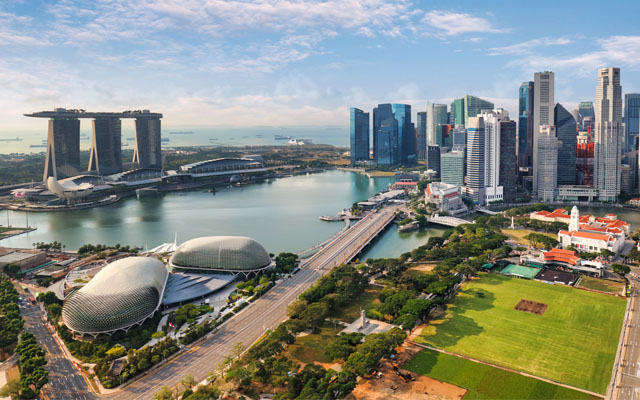
Singapore’s average daily rates have surpassed pre-pandemic levels by over 20 per cent
In markets such as Bali, Phuket, and Singapore, average daily rates (ADR) have surpassed pre-pandemic levels by over 20%, primarily driven by leisure tourists. The survey indicates that 77% of hotels in Asia-Pacific anticipate a further rise in occupancy levels in 2024, particularly in the upper upscale and luxury segments. Furthermore, 73% of hotels in the Asia-Pacific region expect ADR to rise. Among the sub-regions, South-east Asia exhibits the most optimistic outlook, attributed to strong tourist arrival growth momentum in most countries.
Most respondents (66%) are optimistic about total revenue exceeding pre-pandemic levels in 2024, while sentiment in the economy segment remains lower (33%). Economy hotels are less optimistic due to reliance on tourist groups and the increased cost of travel. However, the recent expansion of group tours destinations from China from August 2023, including Australia, South Korea, and Japan, is expected to bring positive prospects for economy hotels in the next six to 12 months.
“Leisure travel continued to drive demand in Asia-Pacific in 1H2023. Concurrently, corporate spending has been under pressure, but we’re witnessing a steady increase in bookings from both leisure and business, supported by a growing number of major sporting and business events,” said Nihat Ercan, CEO, Asia Pacific, JLL Hotels & Hospitality Group.
The labour shortage in the region has led to increasing associated costs since 2022, and by 2024, labour costs are expected to have increased by 10% to 20% compared to 2019. In many cases, this has been somewhat mitigated by redefining job roles, reducing service standards, and reducing maximum occupancy.
While adoption of technological advancements such as mobile check-in, cleaning robots, and guest request tools, could help mitigate some of this labour constraint, the hospitality sector, known for its higher level of service touch points, has been relatively slower in adopting technology.
Energy prices in the region have also been rising due to ongoing political unrest and post-lockdown challenges. Looking forward to 2024, 32% of the respondents expect to see energy costs increase by more than 10%, which is down significantly from the 51% currently experiencing 10% or more in 2023 compared to 2022. This indicates that energy costs will be a reduced concern for hotels in 2024 compared to this year, attributed to energy-saving measures implemented by hotels who have adopted sustainability initiatives, positively impacting their cost base.
Stakeholders in the hotel sector are becoming increasingly aware of the need to embrace sustainability and broader Environmental, Social, and Governance (ESG) principals. Some 65% of respondents have now implemented a carbon emission reduction plan. Notably, a higher proportion of hotels in the higher-end segments have embraced this initiative.
As investors and guests favour ESG supportive hotels, the inclusion of green terms and incentives into hotel management agreements may align the interest between owners and operators around sustainability measures. However, hotels in the region continue to face challenges in their sustainability journey, including the lack of funds, lack of in-house expertise and technology.
In 2022, the main challenge faced by hotel operators was the difficulty in measuring sustainability goals. To spur positive change in the region, the Uniform System of Accounts for the Lodging Industry (USALI) will be updated by early 2025 to incorporate sustainability metrics and various reporting guidelines.
By obtaining a sustainability rating, hotels can demonstrate their commitment to environmental standards, energy efficiency, waste management, water conservation, and other sustainable initiatives. The majority of hotels in Asia-Pacific intend to get their ratings by 2024, an increase from the 38% who are already rated.
“The hotel sector has seen a remarkable comeback after the pandemic, yet there are headwinds which need to be navigated in the medium term and continued profit growth will take more active management. With changing guest preferences and increased competition, owners should take the opportunity to critically look at their concept and positioning, rethink their market segmentation, evolve their approach to attracting and retaining talent, and commit to a clear sustainability pathway,” says Xander Nijnens, head of advisory & asset management, Asia-Pacific, JLL.
The Philippines’ Department of Tourism (DoT) is optimistic about the Philippine tourism industry’s continuing resurgence post-lockdown, with visitor arrivals to the country breaching the four million mark on September 29.
Tourism secretary Christina Garcia Frasco announced that the DoT recorded a total of 4,005,465 visitor arrivals to the country from January 1 to September 29, 2023, bringing the country’s economy to over 316 billion pesos (US$5.5 billion).
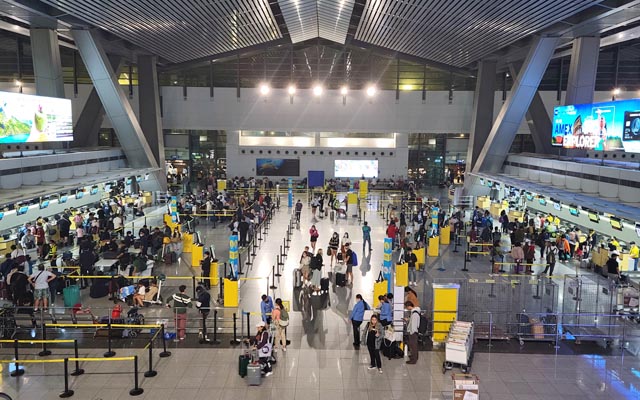
Foreign visitor arrivals to the Philippines has breached the four million mark; Ninoy Aquino Airport, pictured (Photo: Nate Hovee)
The recovery of the tourism industry has not only contributed 6.2 per cent to the country’s GDP, but also resulted in the employment of Filipinos in 5.35 million tourism-related jobs, she pointed out.
Furthermore, the DoT is vigorously carrying out initiatives under the National Tourism Development Plan 2023-2028 that would sustain this growth and allow the industry to meet its target of 4.8 million arrivals this year.
Of the total arrivals for the period, 91.58 per cent are foreign visitors, while 8.42 per cent are Filipinos living overseas.
South Korea ranked first in terms of the country’s top source markets, delivering more than a quarter of the total international arrivals to the Philippines with 1,046,176, followed by the US with 679,090; Japan with 221,671; China with 194,258; and Australia with 187,143.
Other visitors came from Canada with 164,168; Taiwan with 146,396; the UK with 114,096; Singapore with 107,674; and Malaysia with 72,008.