TTG Asia
Asia/Singapore Wednesday, 31st December 2025
Page 396

Phuket launches sustainable strategies for a diversified future

0

This month, in a collaboration between the private sector and local government, Phuket province is launching its Phuket Sustainable Strategies 2030, a 10-pillar framework designed to propel the province towards global Sustainable Development Goals (SDGs).

The freshly-minted framework refines the 10+ pillars strategy, notably merging Fisheries & Farms into a singular Value-Based Agriculture pillar for greater clarity. Additionally, while gastronomy once spearheaded the plan, the baton has now been passed to education, reflecting a strategic shift in priorities.

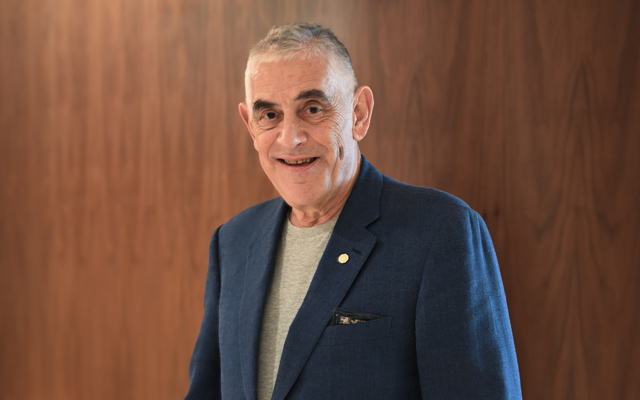
Bhummikitti: tourism and the environment are two sides of the same coin

The plan is designed to recalibrate Phuket’s predominant reliance on leisure tourism, historically accounting for 95 per cent of its income. Three of the pillars will help the province in diversifying its tourism focus to MICE, becoming a Medical and Wellness Tourism hub, and transforming into a centre for Sports Tourism & Training Camps.

Deputy governor Amnuay Pinsuwan notes the strategic move towards a “new economy”, lessening tourism dependence and delving into varied sectors. Other pillars include becoming the education hub of Asia, a maritime industry centre, the smart city initiative sandbox, an SME-focused ecosystem, and further emphasising its culinary side as a creative gastronomy city.

Bhummikitti Ruktaengam, president of the Sustainable Tourism Development Foundation (STDF) and key advisor to the Phuket Tourism Association, stressed the integral role of tourism in Phuket’s socio-economic fabric: “Tourism and the environment are two sides of the same coin. Beyond environmental sustainability, our vision encompasses broader ESG goals. To make Phuket’s tourism truly sustainable, we’re laying down strategies that foster a ‘Better Phuket’ for future generations.”

The STDF has launched four pivotal projects that are key to the Better Phuket initiative.

The Food (Before) Waste project seeks to utilise unused food from hotel buffets and surplus stock from supermarkets at the foundation’s Metta Kitchen, where culinary students from local universities transform the leftovers into hygienic dishes. At the Kitchen, customers can pay what they feel is appropriate.

“We don’t believe in giving away things for free, but with the ‘pay as you wish’ model, we hope to increase accessibility to good food and lessen the societal gap,” commented Ruktaengam.

Additionally, Phuket Tourism Carbon Learning Center is a research-centric endeavour aiming to transform Phuket’s Old Town. In this collaborative hub, agencies can converge to champion low-carbon tourism and mitigate the carbon footprint. In line with this, the STDF is also collaborating with Phuket Old Town to pioneer research on low carbon tourism, underscoring the importance of carbon-free walking tours, waste reduction in the Sunday Market and wastewater management.

A new board of directors dedicated to the preservation of Phuket’s largest timbers has been established with the Phuket Big Trees initiative, coupled with programmes to educate on holistic tree maintenance and pruning for optimal shade.

The fourth initiative focuses on the inception of green financing tailored for SMEs, which extends to small businesses in every sector including hospitality.

Ruktaengam noted that for it takes financial support for businesses to become energy-conscious, and with no such financial initiatives presently available, it is “something we want to instigate”.

All four initiatives are being operated with the support of significant stakeholders, including the Phuket Chamber of Commerce, the Phuket Tourism Association, the Thai Hotels Association’s Southern Chapter, and the Phuket Hotels Association.

Tourism has an opportunity to change the world: PATA chair

0

PATA chair Peter Semone delivered a sobering message in his opening keynote at PTM Forum, held on October 4 in conjunction with PATA Travel Mart 2023 in New Delhi: the joint existential threats of climate change and socio-political and geopolitical unrest could destabilise global well-being and devastate the travel and tourism industry.

“The world is entering a critical time. We are living in a time where opportunities are boundless. However, risks of devastating crises that can destabilise global well-being are at an all-time high,” he stated.

Semone: without nature, there is no tourism; without peace, there is no tourism

“I don’t have to explain to you the pain Covid brought across the globe, but that could turn out to be nothing compared to what we have to deal with going forward,” he added.

Semone was quick to point out that his address was not meant to be a “doomsday” warning; instead, he hoped to inspire members of the travel and tourism industry to be “a little more proactive because we – the travel and tourism industry – can be the solution to these problems”.

“Think about this: without nature, there is no tourism; without peace, there is no tourism,” said Semone.

He noted that the absence of tourism would leave a trail of disrupted jobs and damaged economies, especially in less developed countries – as the Covid pandemic disruption had shown.

Furthermore, without tourism, it would be even harder to achieve the United Nations Sustainable Development Goals (UNSDGs).

He warned against thinking that the implementation of UNSDGs should be someone else’s job.

“According to the United Nations, failure to achieve the UNSDGs may fuel greater political instability, upend economies, and lead to irreversible damage to the natural environment. If that happens, travel and tourism will be decimated,” he said, urging a change in mindset that recognises sustainability as a responsibility for all and one that is “imperative of our times”.

He also referenced the recent UNWTO’s World Tourism Day as an example of the industry’s ability to inspire world peace. He noted that the event, hosted in Saudi Arabia’s Riyadh, was attended by 500,000 public and private officials, including an Israeli delegation. The Saudi Arabia tourism ministry pushed messages of tourism and peace.

“I have been in tourism for a long time, and I recognise this as a watershed moment. Our industry is super important for mitigating socio-political and geopolitical unrest,” he reflected.

“As members of PATA, we can be a catalyst for (positive) change,” he said, adding that the diverse Asia-Pacific region could set the ideal example for the world in the areas of sustainability as well as socio-political and geopolitical stability.

“Our region is like a living museum, with an emporium of natural and culture assets that is unlike any other place on Earth. If our part of the world – where we have a mix of religions, cultures and people – can show peace, we can set an example for the rest of the world.”

Concluding his keynote, Semone suggested making 2026 the Year of Peace Tourism, and to show that tourism could well be part of the solution for world peace.

The year will coincide with PATA’s 75th anniversary.

“PATA could partner with UN members and alliances of civilisations to organise events aimed at reducing cross cultural tensions and build bridges between communities globally,” he said.

South Koreans sweep into Danang

0

The Central Vietnamese coastal destination of Danang is enjoying a huge increase in visitors from South Korea, and tourism players are tapping into the surge.

According to figures from Vietnam National Authority of Tourism, Vietnam welcomed more than 2.274 million South Korean visitors in the first eight months of 2023 – making it the country’s top source market. This is about 16 times the growth of the same period in 2022.

More South Koreans are flocking to the Central Vietnamese coastal destination of Danang

Dinh Quoc Thich, founder of Thich Tours, said many South Koreans are now flying directly to Danang, drawn to its coastal location and cooler climate, combined with a strong shopping scene, integrated resorts, food and proximity to cultural sites such as Marble Mountains and Hoi An.

This is in addition to a flight time of about five hours, and up to 20 direct flights a day connecting major cities Seoul and Busan being offered by several airlines.

Pham Ha, founder and CEO of LuxGroup, noted a “significant” increase in interest from the South Korean market.

“Eight years ago, along with Japanese and Chinese tourists, South Koreans knew Danang for its golf tourism. Now, South Korean tourists also love many other experiences, such as culinary, variety of entertainments, luxury resorts, clean beaches and culture,” he said.

“It’s also easy to take direct flights connecting major Korean cities with Danang, which make access more seamless.”

Noting the potential the market holds, LuxGroup is adjusting its marketing strategy. This includes offering more content in the Korean language, partnering with South Korean travel agencies, and creating packages that suit South Korean travel preferences.

Guilhem Cavaille, general manager at Diethelm Travel Vietnam, said: “South Koreans coming to Danang is supported by an impressive number of daily direct flights at very interesting rates. They come for the beach, the golf, and ease and accessibility of many diverse activities. In the region, there are not so many other destinations gathering all these advantages.”

Dispersed tourism trends on the rise

0

Dispersed tourism is gaining strength as travellers seek out more meaningful experiences in off-the-beaten-track destinations.

Willem Niemeijer, CEO of YAANA Ventures, said he was among the trendsetters with Tad Fane Resort in Paksong, Laos, which opened in 1999.

Niemeijer: it is very important to stay on the cutting edge of new experiences

“It took another two decades or so for visitor dispersion to take off, but we’re seeing this becoming a trend,” he shared.

Niemeijer attributed this to demand, environmental awareness, and lower investment costs, in addition to improved infrastructure, including the high-speed railway in Laos and the expressway that connects Phnom Penh in Cambodia with the coast.

Examples of rising destinations with strong tourism dispersal ability include Champasak in Laos, Guilin in Guangxi, China, and Kep in Cambodia.

Catherine Germier-Hamel, chief executive officer at Destination Mekong, said while countries in the Greater Mekong Subregion have become increasingly popular, they have yet to tap into their full tourism potential, especially with regards to diverse culture and natural resources.

“As a result, many destinations and sites have been overcrowded, while others remained untapped,” she observed. “Dispersed tourism can be part of a development and diversification strategy to meet new needs and interests for unique, off-the-beaten-track untapped destinations and experiences.”

Germier-Hamel noted that while dispersed tourism remains limited to niche experiences and remote destinations, there is growing interest in tourism forms that require smaller groups and take place in less visited areas.

She cited ecotourism, community-based tourism, and agritourism as
examples.

“In that case, dispersed tourism can bring additional and complementary income to local communities and help reduce disparities,” she stated.

Niemeijer added that offering these experiences forms a key part of YAANA Ventures’ business model. “For our companies, it is very important to stay on the cutting edge of new experiences, and we’re putting this into action with our lodge developments and travel products,” he told TTG Asia.

Dusit Hospitality Academy programme to elevate service industry standards

0

Dusit Thani College has unveiled an ambitious skills development initiative called the Dusit Hospitality Academy (DHA) at its Bangkok and Pattaya campuses aimed at raising the bar for excellence in the service industry.

“As the oldest and largest (hotel) school in Thailand, we have produced over 10,000 hospitality and culinary graduates who have gone on to work in hotels in Thailand and all around the world. Being owned by Dusit Thani hotels, we are uniquely influenced by the needs of the industry. That means from a top-down approach, our curriculum is often dictated by industry requirements,” shared John Lohr, executive director, external affairs, Dusit Thani College.

Dusit Hospitality Academy is suited for individuals from varied backgrounds

Although previously focusing on traditional formats like Bachelor’s and Master’s degrees, he shared that the college has responded to industry needs by creating, under the DHA, “new programmes that are designed to give short bite-sized knowledge and training in skills development to deliver talents faster” to hospitality businesses.

Currently offering four courses – Culinary Arts, Pastry Arts, Restaurant Service, and Hotel Service – the academy is suited for individuals from varied backgrounds, including those who aspire to enter the service industry or those already in hospitality seeking career advancement opportunities.

Furthermore, DHA offers a licensing model that empowers hospitality companies and employers to develop their own continuous professional development programs on Lobster Ink.

They can adopt DHA’s proven curriculum and receive comprehensive train-the-trainer services from the Dusit Thani College team. This innovative approach ensures that organisations can attract and retain top-tier talents while nurturing their professional growth.

At present, the DHA is operated on Dusit Thani College premises in the Srinakarin area. However, a dedicated facility for the DHA is in the works, which will be situated in the heart of Bangkok.

Established in 1993 under the leadership of Thanpuying Chanut, Dusit Hospitality Education (DHE), the educational arm of the Dusit Thani Group, was founded with the mission of delivering top-tier hospitality education to contribute significantly to the broader industry.

Presently, DHE oversees various scholastic institutions, including Dusit Thani College with campuses in Bangkok and Pattaya, Le Cordon Bleu Dusit Culinary School in Bangkok, and The Food School based in Bangkok.

Western Australia beckons Singaporeans with new road trip campaign

0

Tourism Western Australia (TWA) has launched its Drive The Dream road trips campaign, which aims to inspire more Singapore residents to hit the open road and discover the freedom and fun of a road trip in Australia’s largest and most diverse state.

The campaign highlights the rich history, hidden gems and spectacular coastline of Western Australia and its many offerings – from wine regions to coastal adventures, and art trails to ancient Aboriginal experiences.

F1 driver Daniel Ricciardo swimming with whale sharks at Heritage-listed Ningaloo/Nyinggulu during his dream road trip

Drive The Dream also features an eight-minute short film of Perth-born Formula 1 legend Daniel Ricciardo and his best friend Blake, who share their road trip adventure along the iconic Coral Coast Highway from Perth (Boorloo) to Exmouth.

Ricciardo shared: “You have this crazy vast, open outback that’s dry and a little rough, but then a hundred metres later you come across these pristine beaches that are unlike anything else. You’ve then got towering forests and world-class wineries in the south of the state – everything you see just seems unique and untouched, I love it.”

TWA managing director Carolyn Turnbull said the new campaign creative echoes elements of Western Australia’s global brand Walking On A Dream, in that it neatly encapsulates all of the state’s awe-inspiring attributes.

“An overarching objective of TWA’s brand platform is to provoke the spirit of adventure in every traveller – and there’s no better way to do that than through the lens of Daniel Ricciardo and the Drive the Dream campaign,” she said.

“This new campaign will ultimately entice visitors from all over the world to come to Western Australia and enjoy a road trip like they’ve ever experienced, and provide a boost to the state’s economy.”

Ava Ang, country manager, TWA Singapore/Malaysia, noted that Singapore is a key source market for road trip vacations because it is something locals are not able to do at home.

“Singaporeans are increasingly craving the opportunity to get off the beaten track and reconnect with nature. Just over four hours away and on the same time zone, Western Australia is the perfect backdrop for an incredible road trip that will allow you to connect with yourself, your loved ones and with the destination.”

The new Road Trips Guide will provide all the best itineraries, maps and recommendations for a seamless and easy road trip. TWA will also be working with several global partners including Trip.com to launch road trip cooperative campaigns in next few months.

Some highlights of itineraries include the Coral Coast Highway road trip – connecting two UNESCO World Heritage-listed regions: Ningaloo Marine Park and Shark Bay – where adventurers can explore ocean wonders, otherworldly landscapes, and World Heritage-listed treasures; the 4WD adventure, Gibb River Road, where travellers hit the open road in a true outback adventure through the heart of the Kimberley; a journey of adventure and indulgence with the South West Wine & Nature Drive to enjoy premium wines and local produce; and an epic coastal adventure on the South West Edge route featuring a blend of nature, wildlife, coastlines, and culture.

New hotels: Dusit Thani Mogan Mountain, Huzhou, ZANA Forest Resort, Ranthambore and more

0
Dusit Thani Mogan Mountain, Huzhou

Dusit Thani Mogan Mountain, Huzhou, China
The eco-friendly Dusit Thani Mogan Mountain boasts 22 guestrooms and three villas with views of Lion Lake and the adjacent tea plantations. The next phase of the property development will include 100 guestrooms and nine villas.

Located at Ying Valley Resort (the east foothills of Mogan Mountain) in the heart of Zhejiang, Jiangsu, the hotel is a short 20-minute drive to Huzhou city centre, and is accessible to the high-speed railway station.

Onsite facilities include a wellness centre, spa, hot water pools, outdoor swimming pool, and event venues.

ZANA Forest Resort, Ranthambore

ZANA Forest Resort, Ranthambore, India
Immerse in nature at ZANA Forest Resort, Ranthambore, which boasts 20 cottages and rooms, and offers a variety of activities like golf putting, tennis, badminton, velcro football, football billiards, karaoke, movie under the stars, yoga, cycling and more.

Guests can indulge at the all-day multi-cuisine diner Mayfair or have their meals at the outdoor dining spaces. The resort also has an outdoor swimming pool, a kid’s play area, an in-house ‘Gaming Arena’, and event spaces.

Close to the Ranthambore National Park and Tiger Reserve, ZANA Forest Resort, Ranthambore is situated three hours by car from Delhi NCR.

La Quinta by Wyndham Ellerslie Auckland

La Quinta by Wyndham Ellerslie Auckland, New Zealand
La Quinta by Wyndham Ellerslie Auckland has opened in New Zealand’s largest city with 246 rooms, and features a variety of amenities for guests including a gym and conference facilities.

Nestled in the quiet suburb of Greenlane, the hotel offers convenient access to Auckland’s city centre’s attractions, dining and shopping. Nature lovers can also take relaxing strolls in Auckland Domain and Cornwall Park, as well as visit Auckland Showgrounds.

DoubleTree by Hilton Varanasi

DoubleTree by Hilton Varanasi, India
Located just 25 minutes away from both the city centre and the airport, the 144-key DoubleTree by Hilton Varanasi offers facilities such as an outdoor pool, EV charging points, ballroom, fitness centre, spa and meeting venues.

Accommodation ranges from standard to spacious suites, including a grand presidential suite. The hotel also has an all-day diner and a bar lounge.

Lighting an auspicious path for tourism

0

Leadership officials from India’s Ministry of Tourism and PATA chair Peter Semone (second from right) light a ceremonial lamp together to mark the opening of this year’s PATA Travel Mart, an annual gathering of Asia-Pacific’s travel and tourism industry leaders, business owners and media. The celebration dinner was hosted at The Ashok in New Delhi on October 4.

PATA Travel Mart 2023 comprises a full-day conference, PTM Forum, on October 4 as well as a B2B meeting and exhibition on October 5 and 6.

Boom time for India’s hotel sector

0

After dusting off its pandemic-induced woes, hotel chains have stepped up their expansion plans in India with 93 hotels opened as well as 157 signings, according to a HVS Anarock Hotels & Hospitality Overview for January to July 2023.

International hotel chains are leading the charge – Radisson Hotel Group (RHG) signed 11 new hotels in Hyderabad, Bengaluru, Ujjain, Raipur, Sonamarg, Manali, Kerala, and Visakhapatnam between January and April 2023, all scheduled to open between 2023 to 2026.

Radisson Hotel Group has signed 11 new hotels in India; Radisson Hotel Jaipur City Center, pictured

Ramzy Fenianos, chief development officer Asia-Pacific, RHG said: “India is an important market and solidifying our footprint here is our long-term goal. Strong wins in 2022 established a robust path for growth this year. We are focused on doubling our footprint by 2025 and remain invested in identifying the right partners for signing and opening brand-defining hotels.”

Similarly, for Marriott International, a total of 10 properties were launched in India between January and August 2023, such as the Coorg Marriott Resort & Spa, Fairfield by Marriott Jaipur, and Westin Hyderabad Hitec City. Another two hotels, The Artiste Kochi – A Tribute Portfolio Hotel, and Courtyard by Marriott Gorakhpur, are also on track to open by end 2023.

In 1Q2024, there are plans to introduce the Moxy brand to gateway cities such as Mumbai, Chennai, and Bengaluru, shared Ranju Alex, area vice president South Asia, Marriott International.

She told TTG Asia: “Marriott currently operates 145 hotels in over 40 cities in India. We plan to expand to at least 10 new cities with over 100 properties in the country by 2025. This is also part of our target to have 250 hotels in India by 2025, including those already open and in the pipeline.”

Domestic hotel companies like Cygnett Hotels & Resorts have also opened new properties in Haryana, Rajasthan, Uttarakhand, and Odisha.

“We hope to add about 15 hotels to our portfolio by the end of the current financial year. Our expansion plans are focused on serving markets where there is a lack of branded hotels in the mid-segment hospitality space,” said Sarbendra Sarkar, managing director of Cygnett Hotels and Resorts.

Other local hospitality chains like ITC Hotels, and Renest Hotels & Resorts, have also strengthened their presence in the mid-segment space in 2023 with openings in non-metro cities like Hoshiarpur, Amritsar and Goa.

Alex: we plan to expand to at least 10 new cities with over 100 properties in the country by 2025

These expansions seem to be fuelled by exceptionally strong demand from the domestic market.

Alex said: “Our guest profile exhibits a composition of 70 per cent domestic patrons. The domestic segment has transcended the benchmarks set before the pandemic, and the forthcoming years are projected to witness a two-fold surge in international travel.”

Jyotsna Suri, chairperson and managing director, Lalit Suri Hospitality, agreed: “Domestic tourism has helped hotels to bounce back after the slowdown caused by the pandemic. G20 has also been a huge boost for the hospitality industry because we had an influx of visitors from all over the world. The high growth in the hospitality sector has created a demand for new properties to be opened across the segments.”

“We have also witnessed an increase in both average occupancies and average room rate in 2023. The future looks promising for the Indian hospitality industry,” added Sarkar. – Additional reporting by Rachel AJ Lee

Boom time for India’s hotel sector

0

After dusting off its pandemic-induced woes, hotel chains have stepped up their expansion plans in India with 93 hotels opened as well as 157 signings, according to a HVS Anarock Hotels & Hospitality Overview for January to July 2023.

International hotel chains are leading the charge – Radisson Hotel Group (RHG) signed 11 new hotels in Hyderabad, Bengaluru, Ujjain, Raipur, Sonamarg, Manali, Kerala, and Visakhapatnam between January and April 2023, all scheduled to open between 2023 to 2026.

Radisson Hotel Group has signed 11 new hotels in India; Radisson Hotel Jaipur City Center, pictured

Ramzy Fenianos, chief development officer Asia-Pacific, RHG said: “India is an important market and solidifying our footprint here is our long-term goal. Strong wins in 2022 established a robust path for growth this year. We are focused on doubling our footprint by 2025 and remain invested in identifying the right partners for signing and opening brand-defining hotels.”

Similarly, for Marriott International, a total of 10 properties were launched in India between January and August 2023, such as the Coorg Marriott Resort & Spa, Fairfield by Marriott Jaipur, and Westin Hyderabad Hitec City. Another two hotels, The Artiste Kochi – A Tribute Portfolio Hotel, and Courtyard by Marriott Gorakhpur, are also on track to open by end 2023.

In 1Q2024, there are plans to introduce the Moxy brand to gateway cities such as Mumbai, Chennai, and Bengaluru, shared Ranju Alex, area vice president South Asia, Marriott International.

She told TTG Asia: “Marriott currently operates 145 hotels in over 40 cities in India. We plan to expand to at least 10 new cities with over 100 properties in the country by 2025. This is also part of our target to have 250 hotels in India by 2025, including those already open and in the pipeline.”

Domestic hotel companies like Cygnett Hotels & Resorts have also opened new properties in Haryana, Rajasthan, Uttarakhand, and Odisha.

“We hope to add about 15 hotels to our portfolio by the end of the current financial year. Our expansion plans are focused on serving markets where there is a lack of branded hotels in the mid-segment hospitality space,” said Sarbendra Sarkar, managing director of Cygnett Hotels and Resorts.

Other local hospitality chains like ITC Hotels, and Renest Hotels & Resorts, have also strengthened their presence in the mid-segment space in 2023 with openings in non-metro cities like Hoshiarpur, Amritsar and Goa.

Alex: we plan to expand to at least 10 new cities with over 100 properties in the country by 2025

These expansions seem to be fuelled by exceptionally strong demand from the domestic market.

Alex said: “Our guest profile exhibits a composition of 70 per cent domestic patrons. The domestic segment has transcended the benchmarks set before the pandemic, and the forthcoming years are projected to witness a two-fold surge in international travel.”

Jyotsna Suri, chairperson and managing director, Lalit Suri Hospitality, agreed: “Domestic tourism has helped hotels to bounce back after the slowdown caused by the pandemic. G20 has also been a huge boost for the hospitality industry because we had an influx of visitors from all over the world. The high growth in the hospitality sector has created a demand for new properties to be opened across the segments.”

“We have also witnessed an increase in both average occupancies and average room rate in 2023. The future looks promising for the Indian hospitality industry,” added Sarkar. – Additional reporting by Rachel AJ Lee