


New Greater Bay Airlines Singapore flight spurs sale of Hong Kong

A new daily service between Singapore and Hong Kong operated by Greater Bay Airlines (GBA) is expected to make selling destination Hong Kong easier to leisure travellers and school groups, say Singapore-based agents attending a fam trip this week co-hosted by the carrier and Regal Hotels International.
Fourteen travel agents along with two journalists flew on GBA’s second flight out of Singapore on April 27 for a three-day destination showcase, which featured site inspections of Hong Kong Disneyland; guided tours of Sky100 and Hong Kong Palace Museum; accommodation at Regala SkyCity Hotel and iClub To Kwa Wan Hotel; and a Hong Kong Tourism Board-hosted dinner reception at Mondrian Hong Kong’s Avoca.
Elizabeth Chuan, director of Pac-West Travel, an agency that specialises in school groups, said the new service would provide budget conscious clients an additional flight option.
Described as a “value airline” by Linda Ong, sales & marketing manager of Deks Air (Singapore), GBA’s appointed GSSA, the aviation company pledges to “provide service that customers want”.
The airline offers a single Economy class, with options to add on baggage allowance, seat selection, and inflight meals.
Currently, other airlines serving the route are low cost carriers Scoot and AirAsia, as well as full-service Singapore Airlines and Cathay Pacific.
“Some clients prefer affordable flights so as to be able to spend more on destination experiences,” said Chuan.
The new GBA service also facilitates flight arrangements for larger groups that may not be able to secure enough seats on other airlines, remarked Kim Travel Services’ general manager, Vivien Lim, who added that legroom, seat comfort and inflight service levels onboard are commendable for an LCC option.
Agents told TTG Asia that Hong Kong remains an attractive destination for their clients, due mostly to the city’s gourmet and shopping draws.
Nam Ho Travel Service’s product manager, Sam Lee, said Hong Kong Disneyland’s World of Frozen attraction, which opened in November last year, is a novelty for Singaporean holidaymakers, while shopping and dining are evergreen favourites.
Among school groups, Hong Kong is appealing because it shares “similar culture values” with Singapore and offers opportunities for students to experience the city’s “pace of life and working styles”, so as to inspire ideas that could be applied back home, according to Chuan. When in Hong Kong, school groups would visit local academic institutions, take on industrial visits, such as to the Stock Exchange of Hong Kong and the Legislative Council Complex, and participate in cultural immersion activities. For leisure, Hong Kong’s theme parks are often favoured.
Renee Kim, general manager of Regala SkyCity Hotel, expects the new GBA flights – and any new air access into Hong Kong – to lift leisure and business travel demand for the special administrative region of China.
“Especially with Hong Kong being positioned as the central business district of the Greater Bay Area (comprising Hong Kong, Macau, and the nine municipalities in Guangdong Province), GBA’s new Singapore-Hong Kong flights will make it even easier for travellers to come by Hong Kong for work and leisure, and extend onwards to the other cities,” said Kim.
She predicts interest in Hong Kong and the new SkyCity integrated development district, where the hotel is located, will spike come mid-2024, when phase one entertainment facilities are launched. The new openings include KidZania within the 11Skies retail, dining and entertainment hub. 11Skies straddles Hong Kong International Airport and the Hong Kong-Zhuhai-Macao Bridge.
High ambitions
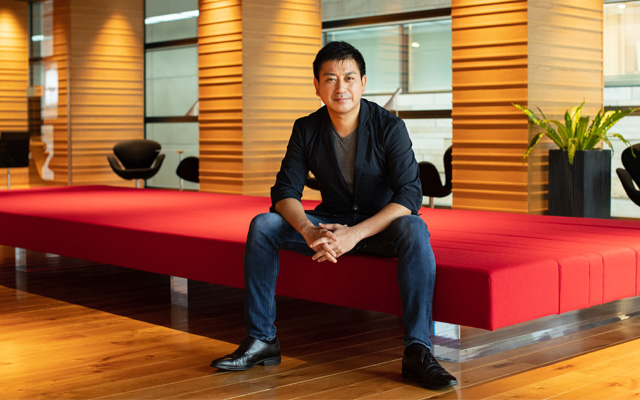
 What should our readers in the region, outside of Japan, know about RTX and RS?
RTX started as a B2B wholesales business in Singapore four years ago providing hotel, ryokan and vacation rental inventory to more than 1,000 OTA clients in 90 countries, primarily in China, South-east Asia, Australia and the US.
Within the Rakuten ecosystem, RTX serves as a global inventory platform for hotels and vacation rentals, playing a pivotal role in enhancing global transactions for Rakuten Travel (RT).
The primary focus of RTX is to boost inbound and outbound travel and global transactions, supporting RT’s operations in and outside Japan.
RS is a new type of real estate accommodation model featuring large spaces, designed by and owned by Rakuten. It is fully unmanned, using technology, and suitable for groups of between eight and 10 people. The idea was conceptualised during the pandemic lockdown.
There are around 600 RS accommodation and the aim is to grow to 10,000, mainly in Japan, but also in Hawaii, Singapore, Thailand, Vietnam and other parts of South-east Asia – we are preparing a private fund and inviting investors.
In addition, Rakuten Travel Experiences (RTE) is a concierge service providing sightseeing, exercise, activity and restaurant recommendation content and the next step is to create a seamless RS and RTE connection by next year.
What is the role of data and technology in RTX?
Data accuracy is fundamental to RTX’s operations, and artificial intelligence (AI) integration has played a significant role in boosting efficiency. Leveraging AI for mapping and best-rate search accuracy, RTX has simplified the process of finding the best prices.
However, it is important to understand the nuts and bolts of operations before shifting to AI for greater efficiency.
The global wholesale inventory comprises more than 700,000 properties and units on platform technology developed by Rakuten’s quality API (application programming interface) and data.
The single API connection through RTX eliminates multiple integrations and is open to small, medium and big B2B buyers where the accumulation of sales opportunities is very important for cooperation and partnerships.
The wealth of data amassed by RTX is a precious asset that benefits the Rakuten Group and our diverse customer base. It extends beyond profit generation; it’s about nurturing data-driven wealth to propel growth across the entire ecosystem.
My goal is to offer products and services that are more personalised and match the changing needs of our customers.
What do you want to achieve in 2024?
My vision is “connecting travel”. AI and data are very important for recommending not only hotel and transport options, and my plan is to distribute travel experience content to travel agents through RTX and through OTAs.
Amazon and Trip.com are bigger but the Rakuten Group is a very unique e-commerce ecosystem because of the number of its data sets* and the 100 million members in Japan is a very important asset to expand the business.
I’m very positive about RS and the low Japanese yen is helping inbound travel where the average daily rate is increasing, and where the occupancy rate during the pandemic lockdown was 70 per cent.
If the Japanese yen strengthens, we will take steps to enhance brand recognition and outbound travel.
What are your sustainability commitments as RS expands?
RS is based on “passive design” to maximise the use of natural sources of heating, cooling and ventilation to create comfortable conditions inside buildings.
Upcoming properties in Kinugawa Onsen, a popular hot spring resort town along the Kinugawa River in Tochigi Prefecture, for example, are designed with innovative principles tailored to the local climate to ensure a consistently comfortable environment.
Key features include a continuous 45-degree gable roof to blend seamlessly into the natural landscape, optimising solar exposure during winter while providing effective shading in summer, reducing reliance on artificial heating and cooling.
Spatial dynamics like skipping floors promote natural ventilation, encourage passive airflow and minimises the need for mechanical ventilation. The interconnected layout also enhances penetration of natural light.
The use of sustainable sunlight-produced cedar boards offer thermal insulation and humidity regulation, contributing to a comfortable indoor environment without additional heating or cooling.
Another example is the harnessing of renewable energy with the installation of solar panels at facilities in Rakuten Stay Villa Fuji Yamanakako.
*Ota oversees a group of businesses that comprise RTX, RS, RTE and Rakuten Healthcare. Rakuten provides more than 70 services including: internet services, fin-tech services, mobile services and professional sports; and aims to expand its global membership of more than 1.8 billion.
Philippines tourism recovery continues to peak with over two million arrivals

The Philippines has already received over two million international visitors this month, the Department of Tourism (DoT) reported on April 24.
The country’s tourism receipts from January 1 to March 31 also reached around 157.62 billion pesos (US$2.73 billion), an estimated 120.70 per cent recovery rate from the 130.59 billion pesos revenue gained from the same period in 2019 or the milestone year for Philippine tourism before the global lockdowns and industry standstill.

Based on DoT’s monitoring data, as of April 24, 2024, a total of 2,010,522 international visitors entered the country, with 94.21 per cent (1,894,076) of the country’s total international arrivals delivered by foreign tourists, while 5.79 per cent (116,446) are overseas Filipinos. This is 15.11 per cent higher than the international arrivals recorded in the same period last year pegged at 1,746,630.
South Korea maintains its spot as the Philippines’ top source market in terms of inbound visitor arrivals with 27.19 per cent (546,726), followed by the US at 15.71 per cent (315,816), China with 6.49 per cent (130,574), Japan with 6.13 per cent (123,204), and Australia with 4.38 per cent (88,048). Ranking from sixth to tenth are Canada, Taiwan, the UK, Singapore, and Germany, respectively.
The country is targeting to welcome 7.7 million international visitors this year, near its pre-pandemic record-breaking achievement in 2019 which ended with an estimated 8.26 million inbound visitor arrivals.
“The Department of Tourism sees a positive trajectory for the country’s international tourist arrivals this year. We are hopeful that with more investments in tourism infrastructure as well as much needed increase in connectivity as well as improvements in air, land, and sea infrastructure and accessibility, the numbers can further increase,” commented tourism secretary Christina Garcia Frasco.
Chinese outbound travel surges in 1Q, approaches pre-pandemic levels for Labour Day: ForwardKeys

Fresh data from ForwardKeys indicates a remarkable resurgence in Chinese flight bookings, signalling a robust recovery for the country’s outbound tourism industry in 1Q2024.
Nancy Dai, China market expert at ForwardKeys, underscores this progress: “So far, there are no signs of stagnation. In 1Q2024, outbound travel was just 32 per cent down on 2019 levels, cementing China as a top market for global air travel.”

For May Labour Day holiday period of April 27 to May 5, ForwardKeys sees international travel departures at only 13 per cent below 2019 levels, with several key regional destinations even expected to surpass pre-pandemic levels – the highest being Malaysia with 42 per cent growth, South Korea at 37 per cent and Singapore at nine per cent. Additionally, the UAE, Turkey and Italy all show double-digit growth compared to the same period in 2019, backed by increased seat capacity.
Chinese travel agencies have also witnessed a surge in bookings: Ctrip’s visa services saw a 30 per cent spike year-on-year, surpassing 2019 levels, with top destinations including Japan, South Korea, the US, Australia, the UK, Vietnam, Canada, and New Zealand. Spring Travel’s doubling of group travel bookings against last year’s, especially to Europe, nears 2019 levels, while TIC Travel forecasts a staggering 400 per cent year-on-year increase in outbound travellers.
The recovery is driven by rising demand from second-tier Chinese cities, outpacing larger counterparts like Beijing and Shanghai.
“Tier one cities are recovering at a much slower pace compared to smaller, second-tier origin cities,” stated Dai, noting that smaller cities like Hangzhou, Xi’an, and Shenzhen are already exceeding 2019 levels in outbound travel, while larger cities like Beijing and Shanghai lag behind.
Furthermore, Dai pointed out the impact of visa-free travel policies, citing new additions such as Thailand, Malaysia, and Singapore, who have joined the list of countries offering visa-free or visa-on-arrival access to Chinese citizens.
“Examining the destinations that have laid back visa requirements for Chinese travellers since 2023, it’s clear that relaxed visa requirements play a significant role in attracting Chinese tourists. This is evident in the 115 per cent increase in travel from China to Kazakhstan, 18 per cent growth to Singapore, and near complete recovery in travel to Russia in the first quarter of 2024,” shared Dai.
However, she was quick to quantify that Kazakhstan’s success is also due to a 23 per cent increase in flight availability and its location as a country nearby with affordable winter travel packages. Thailand’s performance, on the other hand, has performed below average for Chinese outbound travel, likely due to the negative impact of the shooting incident in October last year.
“This suggests that while visa waivers are a major draw for Chinese travellers, other factors like safety concerns and threat connectivity also play a crucial role when they are choosing holiday destinations,” she concluded.
Saudia unveils AI-powered digital platform
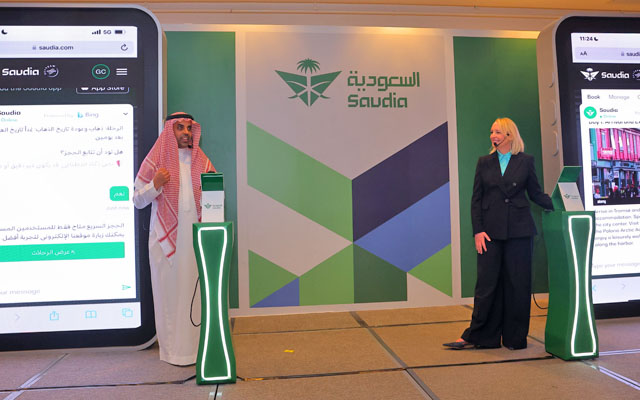
Saudia, the national flag carrier of Saudi Arabia, has launched its innovative digital platform, the Travel Companion, powered by advanced artificial intelligence, as part of a two-year plan to revolutionise the travel industry by embracing digital innovations.
In collaboration with global professional services firm Accenture, Saudia’s Travel Companion is set to change how travellers interact with the airline and redefine the standards of digital travel.
With the goal of becoming the go-to platform for various services beyond flight bookings, the Travel Companion offers personalised and tailored solutions to meet individual preferences and needs, providing search results from trusted and authenticated sources and utilises image-supported responses.
The platform is intended to be a comprehensive, one-stop solution that allows users to book concierge services such as hotels, transportation, restaurants, activities, and attractions, eliminating the need to switch between multiple platforms. Additionally, it establishes seamless connections with transportation platforms and various train companies, ensuring a smooth and uninterrupted journey.
Currently in its beta version, Saudia will introduce additional features, such as voice command and digital payment solutions in the next stages. Through an always-on Travel Companion accessible via an e-SIM card enabled by Saudia, users can enjoy global access without relying on other internet providers.
Furthermore, users can purchase data packages for additional applications, ensuring continuous access to the platform’s services.
Onyx strengthens travel industry partnerships with UK sales mission

Onyx Hospitality Group has recently completed a dedicated UK sales mission, aiming to foster strong relationships with key tour operators in the UK travel industry.
Further building on key relationships with companies such as Kuoni, Best at Travel, Southall Travel, TUI, Destination2 and BA Holidays, the mission’s aim was to educate the trade on Onyx’s varied hotels and resorts across the diverse brand portfolio, and to announce upcoming goals and new openings.

The UK is a key market for Onyx, with this year’s arrivals to all Onyx resorts from the UK up 56.9 per cent in January and February as compared with arrivals in 2023.
In addition, the group aims to surpass 50 properties by 2025, setting a target of reaching 70 by 2028.
Upcoming openings include Shama Rayong in Thailand; Shama Suasana Johor Bahru and OZO Medini in Malaysia; Shama Hub Metro South Hong Kong; and Shama Hub Qiantang Hangzhou in China. An opening in Laos, Amari Vientiane, is also in the pipeline.
New Mandarin Oriental to open in Philippines’ Makati City in 2026
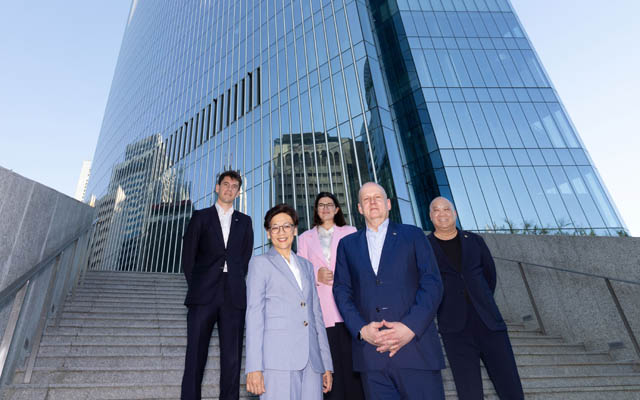
Ayala Land and Mandarin Oriental Hotel Group (MOHG) have teamed up to bring back the hospitality brand to Makati City, the commercial heart of the Philippines, with the unveiling of the new Mandarin Oriental, slated to open in 2026.
The new hotel, located in Ayala Triangle Gardens at the corner of Paseo de Roxas and Makati Avenue, will have 276 rooms with a range of amenities including restaurants and spa.
The original Mandarin Oriental was a defining part of the Makati City skyline from 1976 through 2014. The new property will be at the forefront of the evolving landscape of Makati City, with the city’s new 25-year plan geared at enhancing its liveability, diversity and sustainability.
Christoph Mares, chief operating officer, MOHG, said: “As a brand that was born in Asia, Mandarin Oriental has always been at the heart of the region’s development and evolving culture. We’re optimistic about the future prospects of the Philippines, and are happy to be returning to the country now.”
“We’re excited to welcome Mandarin Oriental back to the Philippines, and to Makati City specifically. More than just a physical landmark, the brand was also a cultural landmark, with the hotel hosting celebrations and special events,” added Mariana Zobel de Ayala, senior vice-president, leasing and hospitality head, Ayala.
Air Astana resumes flights to Seoul
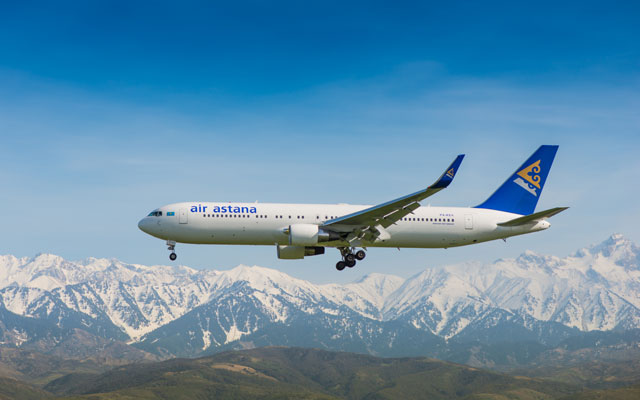
Air Astana will restart its services from Astana, Kazakhstan to Seoul, South Korea on June 15, flying twice weekly on the Airbus A321LR.
The new services from Astana to Seoul will be in addition to the daily flights from Almaty to Seoul, with all services operated on a codeshare basis with Asiana Airlines.
Positive outlook for Wyndham Hotels & Resorts buoyed by APAC growth
Brought to you by Wyndham Hotels & Resorts
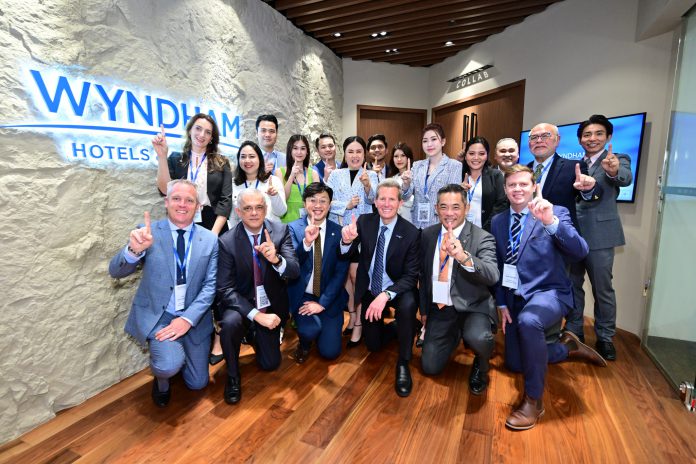
 Buoyed by a strong 2023, Wyndham Hotels & Resorts, the world’s largest hotel franchising company, looks forward to continued growth across Asia-Pacific for the year ahead.
It recently signed a new strategic franchise agreement with The Ozone Group Phuket in March, which brought its 16th brand in Asia Pacific. This will see the launch of The Ozone Signature, A Registry Collection Hotel, the first Registry Collection Hotels in this part of the region in 2027.
“This year, we aim to strengthen our leadership position in the hotel franchising space. Wyndham is strategically expanding our presence across the Asia-Pacific region with an ambitious pipeline of new hotel signings and openings, aiming to cater to a diverse range of travellers’ needs and preferences,” said Joon Aun Ooi, president, Asia Pacific, Wyndham Hotels & Resorts.
Record year
The agreement follows a record 2023 for the world’s largest hotel franchising company where Wyndham Hotels & Resorts launched nine brands in eight new markets, signed 222 hotels and opened 158 new hotels.
These nine brands include Wyndham Grand, Wyndham, Wyndham Garden, Hawthorn by Wyndham, TRYP by Wyndham, Trademark Collection by Wyndham, Ramada Encore by Wyndham, and Howard Johnson by Wyndham.
This contributed to a 7.4 per cent year-on-year net room growth for the group, equivalent to 14,200+ rooms, according to its financial report.
In the popular island destination of Phu Quoc, Vietnam, the group debuted the largest of its two brands — the 1,399-room Wyndham Grand Phu Quoc and the 921-room Wyndham Garden Grandworld Phu Quoc.
The flagship Wyndham brand will make its debut in Singapore, taking over the 591-room Peninsula Excelsior Singapore. Currently undergoing refurbishment, it will be known as Wyndham Singapore.
The group also opened new brands in new markets such as the 163-room Hawthorn by Wyndham Dali Erhai Park in China’s Yunnan province, 271-room Wyndham Grand Busan Ijin by Songdo Beach, and 77-room TRYP by Wyndham Wellington in the business district of New Zealand’s capital.
“Every brand offers a distinctly different experience and is tailored to meet the dynamic and growing demand for experiential travel. At Wyndham, we have a global portfolio of 25 brands with 15 brands at play in Asia-Pacific region, this aligns perfectly with our mission statement of making hotel travel possible for all, our vision of expanding into new cities, introducing quality brands, and catering to the diverse needs of travelers in Asia-Pacific region,” said Ooi.
Looking ahead
This year, Wyndham Hotels & Resorts is continuing its focus on franchising to cater to the diverse needs and preferences of global travellers.
Its growing portfolio in the region also allows it to offer more options for the more than 106 million members of its Wyndham Rewards loyalty programme.
“The strong growth of our capillarity of hotel network coverage ensures that wherever our guests are going and whatever their trip objectives are, we will have a Wyndham-branded hotel waiting for them to either earn or burn their loyalty points,” said Ooi.
He added that the group maintains a “cautiously optimistic outlook on the travel and hospitality sector in the Asia-Pacific region” and that changing demographics and travel patterns such as an expanding middle class and increased digital engagement across all age groups will continue to contribute to demand for travel in the region.

Looking for a place to stay for your next trip? Book a Wyndham hotel on www.wyndhamhotels.com.








SkyTeam and Scandinavian Airlines (SAS) have signed an Alliance Adherence Agreement, serving as an important step toward SAS’ official entry into the global airline alliance.
From September 1, SAS will officially become a part of SkyTeam, enriching the alliance with the best access to Scandinavian key hubs. This collaboration will bolster SkyTeam’s global network, offering new destinations, enhanced connectivity and a more seamless, elevated customer journey for all travellers.
SkyTeam members serving SAS’ hubs include Air France, KLM, Delta Air Lines and Middle East Airlines.
SkyTeam and SAS are committed to ensuring a seamless transition for all customers.
From the moment SAS joins SkyTeam, EuroBonus members will enjoy benefits from frequent flyer reciprocity across most SkyTeam airlines. EuroBonus Silver members will be recognised as SkyTeam Elite level, while Gold and Diamond members will be recognised as Elite Plus. This will offer them access to a network of more than 750 airport lounges and SkyPriority services at eight airport touchpoints including priority check-in, boarding and baggage handling.
SAS customers will benefit from easy connectivity across SkyTeam’s network of over 1,060 destinations, which includes their favourites as well as previously unserved cities – particularly across Africa, Latin America and the Caribbean.
Patrick Roux, SkyTeam CEO, commented: “With its global reputation for reliability, quality and service, SAS is a great fit for SkyTeam and, as we continue to strengthen our customer proposition, we look forward to being part of their future journey.”
“SAS customers will benefit from SkyTeam’s strong global presence in many of the world’s major aviation hubs and from its focus on strategic partnerships and innovative sustainability initiatives,” said Anko van der Werff, president and CEO, SAS.