TTG Asia
Asia/Singapore Sunday, 14th December 2025
Page 378

NDC: Bridging the gap between buyers and sellers

0

The industry’s been talking about New Distribution Capability (NDC) for more than a decade; and, despite the recent focus and headlines about it, there hasn’t been nearly enough progress towards making NDC truly consumable by mainstream travellers.

Sure, that may be an unpopular opinion. There are a few carriers out there that are actively live with NDC and making a lot of noise about it – but with that noise, many in the industry are forgetting why NDC was created in the first place.

Just another source of content
NDC was created to give airlines the opportunity to create distinctive and unique air offers that are personalised and customised for the individual traveller. This is essential to modern retailing as we know it, because as consumers, we want to be able to easily find and purchase the products we want. With so many options available to travellers today, from extra legroom and early boarding privileges to pre-ordered meals and lounge access, agents need to be able to easily consume the plethora of data at their fingertips and quickly search and compare options. Despite all the expectations and opportunities to modernise travel retailing, we must not forget that at the end of the day, NDC is, at its core, an opportunity to deliver truly differentiated content to travellers – in a way customised to their unique needs.

Even though NDC was created as an industry standard for distributing air content, the industry’s obsession with NDC is morphing it into anything but a “standard” ­ and it’s getting increasingly complicated. Having access to NDC content and being able to book an NDC offer is not enough for our modern travel retailers of today. There’s a servicing aspect for NDC-sourced content that seems to be de-prioritised or overlooked entirely, despite the growing need for agents to be able to easily manage a return or exchange when the unexpected happens. The only alternative to easy servicing is time-consuming and inefficient calls to airline systems – something no consumer wants or understands.

The importance of normalisation and standardisation
Let’s talk about another elephant in the room: widespread adoption of NDC makes content aggregation more important than it ever has been. Over the last two years, the volume of trip searches has grown five times – and we expect to see trip search volumes double their pre-pandemic peaks next year. Very few retailers or agencies can deal with the complexity of dozens (or even hundreds) of simultaneous connections to assemble the best possible itinerary.

Aggregators are critical to quickly (we’re talking milliseconds) and economically (lower cost per transaction) sort through an increasing volume of supplier options that are extremely similar, deciphering these incredibly nuanced options to curate and elevate those that are most relevant. Where we are seeing the aggregation role evolve even more from a “dumb” content pipe to a fully dedicated travel retailing platform (like Travelport+), is the use of artificial intelligence (AI) and machine-learning (ML) to eliminate manual tasks and provide faster search responses, more relevant results, and greater accuracy.

Suppliers will benefit from intelligent content aggregators as well. Think about it: airlines are able to expand their reach to travel retailers all over the world through a single system that also normalises and enriches their content for those retailers that are selling on their behalf. Airlines cannot take on this tremendous feat themselves. Travel retailing platforms today are now needed to manage the infinite options from suppliers, making sense of those options and making them retail-ready for agencies and travellers. And, with its tremendous growth in the number of offers, NDC has only amplified the need to help simplify and manage these complexities for retailers.

Without seamless servicing, NDC is stuck on the tarmac
In a multi-source content world, what’s equally as important as connecting to new content sources is how that content is aggregated and presented. Supplier content should be normalised and enriched for travel retailers in a way that simplifies the ability to compare, sell and service – because travellers themselves will not necessarily know (or care) if their flight was an NDC-sourced booking or from another content source. They will, however, want to be able to make changes quickly and easily when needed – even if it means switching from an NDC-sourced ticket to an EDIFACT-sourced ticket. Unfortunately, NDC-obsessed companies are focusing so heavily on being the first to deliver access to NDC content that they are forgetting the crucial post-booking servicing aspect that agents and travellers need.

A modern retailing experience in travel will only work when an agent or traveller can easily search, compare, book and service an offer from any source of content, anywhere, and at any time. Business travellers expect the same seamless experience as leisure travellers, and delivering content that agents can book, but not service, can ultimately create more of the frustration that NDC was intended to eliminate. Agents are the true retailers for travel, which – among many things – means they need to be able to quickly process a refund or exchange without having to point customers to the airline to manage changes. Effective NDC solutions need to be built for agencies, and not just the airline community. That is why at Travelport, we’re laser focused on delivering complete, end-to-end retailing solutions, rather than interim NDC solutions that restrict agents from being able to fully service their travellers post-booking.

Rather than obsessing about ‘being the first’ in the NDC race, the industry needs to focus on making all types of content retail ready. Our role at Travelport is to integrate and normalise content from any source, including NDC, so that agencies can easily consume, sell and service that content in a modern way. By putting the agency channel first when it comes to NDC solutions or making any source of content accessible, we make it easy for travel retailers to deliver modern, seamless experiences.

Live in the moment with JW Marriott

0

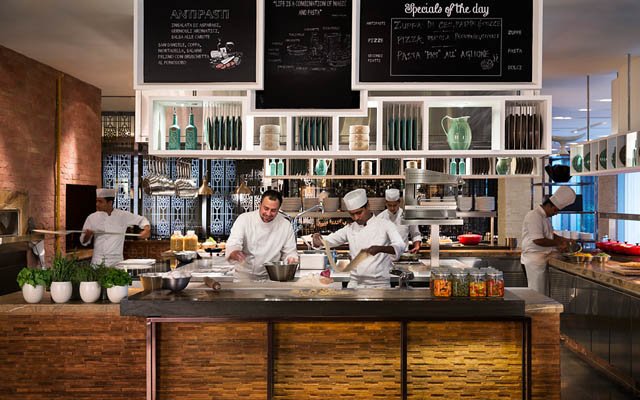
JW Marriott Hotel New Delhi Aerocity has launched the Stay in the Moment package which has been designed for guests to be mindful and present in the moment. It also aims to nourish guests mentally, physically and spiritually.

The package is part of JW Marriott’s Stay in the Moment campaign in Asia-Pacific, which invites and empowers guests to embrace fleeting yet profoundly meaningful moments in life with inspiring surroundings, mindful experiences, culinary artistry and inspired service.

Guests can enjoy breakfast at K3, the all-day dining restaurant featuring three live kitchens

Available for booking till December 31, the package comprises one night’s stay in a Luxury Suite, daily buffet breakfast at K3 for two, three-course dinner at JW Tranquility, and 15 per cent discount on any spa treatment.

For more information, visit JW Marriott Hotel New Delhi Aerocity.

DidaTravel achieves extraordinary sales growth across European source markets ahead of WTM

0

Brought to you by DidaTravel

  • DidaTravel, the global B2B travel distributor, has achieved rapid growth rates in its European source markets with Europe now representing over 20% of its total business.
  • DidaTravel’s sales acquisition team, including Frank Wöller, Patrice Vales, Paul Riches, and Jessica Cifuentes provide Dida with a breadth of experience in this market and have been instrumental in driving DidaTravel’s growth across Europe.
  • DidaTravel’s Flight business is also rapidly growing, serving 500+ global airlines and 20,000+ routes, with substantial growth across Asia, Europe, Americas and the UK.

02 November 2023 – Shenzhen, China: DidaTravel – a tech-driven global travel distribution company, is pleased to announce remarkable sales growth across key European source markets as part of its highly effective global expansion strategy first launched in 2018.

DidaTravel, a leader in China and Asia Pacific source markets embarked on its global expansion strategy in 2018, and the results since have been exceptional with year-to-date 2023 sales significantly outperforming the same period comparing both 2019 and 2022. This growth highlights Europe’s increasing significance in the companies’ business which now represents over 20% of its total revenue and continues to grow in significance. The top four European source markets for the company are Spain, UK, Italy, and France.

  • Spain: In the Spanish market, DidaTravel has witnessed an extraordinary surge in growth. Comparing year-to-date (YTD) 2023 sales figures with YTD 2019, the growth rate stands at an astounding 358%. Even comparing the same period of the previous year (2022), the growth rate is still a remarkable 182%. The top five destinations for the Spanish market booked via DidaTravel’s platform are the USA, Japan, Thailand, Italy and UAE.
  • United Kingdom: The UK is another source market where DidaTravel is making a big impact. Its YTD 2023 sales growth rate versus 2019 stands at an impressive 341%, indicating a steady ascent in its influence in this important market. Even comparing to the year prior (2022), Dida has achieved a remarkable growth rate of 224%. The top five destinations for the UK market, include the USA, Italy, UK, Thailand and Turkey, highlighting the global appeal of DidaTravel’s portfolio.
  • Italy: Italy has also witnessed a steady upward trajectory within DidaTravel’s portfolio. YTD 2023, the growth rate versus 2019 hit 312%. And comparing 2022, DidaTravel posted a sales growth rate of 97%. The top five destinations for the Italian market, include Italy itself, USA, France, Spain and UK.
  • France: DidaTravel’s entry into the French market (which commenced after 2019), has been nothing short of remarkable with the growth rate comparing YTD 2022 standing at an impressive 356%. This rapid rise highlights the company’s ability to establish a strong presence in new markets quickly. The top five destinations for French travellers are: France, USA, Italy, Spain and the UK.

DidaTravel’s growth rates across top European markets reflects not only the quality of Dida’s technology and product portfolio but also its client acquisition team which includes the following industry veterans:

  • Frank Wöller, VP of Business Development, EMEA leads the EMEA client acquisition team. Frank joined DidaTravel in April, focusing on new API client acquisition, with a special emphasis on the UK, Germany, France, Spain, and Italy.
  • Patrice Vales, Sales Director South Europe. With over 30 years of experience in the tourism and tech industries, Patrice brings a wealth of knowledge to DidaTravel, having held key roles in various prestigious industry companies.
  • Paul Riches: Serving as a sales consultant, Paul’s experience is helping to develop DidaTravel’s client acquisition efforts across the UK and Ireland.
  • Jessica Cifuentes: Jessica plays a key role as a Sales Development Representative for EMEA, contributing to the company’s new client acquisition approach across the region.

DidaTravel’s flight business is also experiencing rapid growth. The company’s product portfolio includes 500+ global airlines and 20,000+ routes. In the first nine months of 2023, the airline ticketing business saw remarkable growth, especially in its Asia, Europe, North America, and the UK markets with growth rates respectively of 388%, 195%, 188% and 174% quarter-on-quarter in Q3.

DidaTravel is thrilled to showcase this outstanding growth at WTM, underscoring its commitment to be a leading B2B travel distributor across Europe and worldwide. The company’s dedication to leading technology, global expansion and customer satisfaction continues to drive its success.

Visit DidaTravel at WTM London, stand N10-311, from November 6th to November 9th, hosted at the ExCeL centre in London.

Thailand gets closer to legalised gambling

0

Thailand’s long-standing resistance to the legalisation of gambling and casinos looks like it will be consigned to the past after a proposal to create a review committee to look into reforming existing policy passed with no objections from Members of Parliament.

Currently, Thailand legislation prohibits ‘land-based’ casinos under the Gambling Act 1935, limiting betting to horse racing and government-sanctioned lotteries.

Gambling may soon be legalised in Thailand

The 60-strong committee will investigate existing policies and evaluate the potential of entertainment complexes with integrated casinos to boost the economy and tourism with a suggested 30 per cent tax on licensed premises, which could raise up to 100 billion baht (US$3 billion) per year.

The new legislation would also permit sports betting, online gambling and speculation on the Stock Exchange of Thailand.

According to the Bangkok Post, the complexes would be located in five possible spots drawing from either Pattaya and Bangkok in central Thailand; Chiang Mai and Chiang Rai in the north; Udon Thani, Ubon Ratchathani or Khon Kaen in north-east Thailand; and Krabi or Phuket in southern Thailand.

However, there has been some pushback from the travel and tourism industry.

Association of Thai Travel Agents president, Sisdivachr Cheewarattanaporn, through the Bangkok Post, expressed his concerns about the corruption that often comes with legalising gambling and that the entertainment complexes would be the preserve of only small groups of operators.

Bhummikitti Ruktaengam, the Phuket Tourist Association’s advisory chairman, also commented that the island does not need to add casinos to its infrastructure because it is already well-positioned as a popular destination for international tourists, with plenty of unique selling points.

Bhummikitti, instead, suggested that entertainment complexes should be limited to second-tier cities to drive up tourism for the rest of the country.

The development shows the urgency of Thailand’s need to rebuild its economy as it flip-flops between the goal of becoming a high-end luxury destination for affluent travellers and focusing away from backpackers and economy tourists – and comes hot on the heels of last year’s controversial relaxation of cannabis laws and the recent announcement of permanently extended opening hours for bars and clubs.

Move aside revenge travel, it’s all about passion now

0

As 2024 rolls around, the concept of revenge travel that emerged as a result of the lockdowns and the pandemic has given way to a more meaningful and purpose-driven approach when it comes to exploring the world.

Jarrod Kris, head of partnerships APAC, Skyscanner, told TTG Asia: “Travellers are no longer just searching for the cheapest flights; they are seeking meaningful experiences, cultural immersion, and personal fulfilment through their journeys.”

Kris: travellers are seeking meaningful experiences, cultural immersion, and personal fulfilment through their journeys

He shared an example of how several individuals he knew were unable to obtain Taylor Swift tickets for the concert in Singapore in March 2024. Instead, these individuals purchased flights tickets to Canada to watch her live, combining it with a holiday at the same time.

“For them, travel needs to align with their interests and passion points (Taylor Swift). Aside from immersive experiences allowing travellers to connect with locals, celebratory vacations, centred around milestones and significant life events, are gaining traction,” Kris added.

To no one’s surprise, Japan is leading the way as the hot favourite destination for travellers in 2024, thanks to its blend of tradition and modernity.

Kris stated: “But with many people comes overtourism. (We help spread tourists out) by promoting secondary or regional destinations in Japan. There are many regional tourism operators that need support, be it hotel or experience operators; they too, need to be included in the marketing plan. We then work with DMOs to encourage education of diversification of interests within those destinations.”

On the flipside, Skyscanner also partnered with Tourism Australia to drive outbound Japanese travellers to consider Australia, in particular Sydney. Kris shared that the campaign was a “big success”, which involved the creation of “bespoke content” by Destination New South Wales and Tourism Australia to cater specifically to the interests of Japanese travellers.

As to how Skyscanner works with DMOs to target potential travellers, Kris said: “The campaign started with placements on social media like Facebook and Instagram, which in turn led users to the Skyscanner homepage, which redirected them to a Sydney City Guide with tailored content (that we developed specifically for the campaign).”

He pointed out that over 90 days, the data points and study of user interactions with the campaign and their subsequent bookings, helped to shape marketing strategies for the Tourism Australia partnership.

“We work with DMOs because we can influence from the start, as flights are the first thing that travellers research,” said Kris.

This comes as Kris noted that the OTA wants to be more than a flight aggregator, and instead as a “platform for inspiring and aiding travellers in making informed decisions about their trips”.

Recently, Skyscanner rolled out an AI tool utilising ChatGPT, to offer personalised recommendations based on a traveller’s interest and desires.

“We also have an ‘Everywhere’ search, which allows travellers to explore potential destinations based on their departure location, budgets, and travel period, encouraging travellers to explore lesser-known places,” he said.

Overall, Kris is optimistic about travel, with 2024 shaping up to a “really good year”, despite inflation and economic uncertainty as travellers “want to get out there now that everything is open”.

Vistara launches Delhi-Hong Kong direct service

0

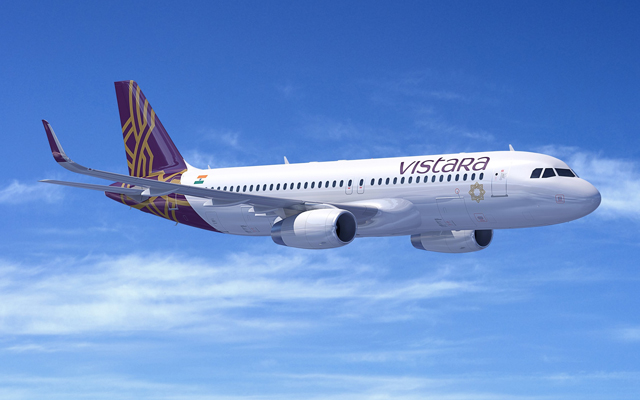
Vistara has introduced daily, non-stop flights between Delhi and Hong Kong.

The inaugural service, operated on Vistara’s A321neo aircraft, took off from Indira Gandhi International Airport, Delhi in the night on October 29, and arrived at Hong Kong International Airport in the early morning on October 30.

Vistara has commenced direct Delhi-Hong Kong services

The Delhi-Hong Kong route will depart from Delhi at 21.05 and arrive Hong Kong at 05.55, while the return service will depart Hong Kong at 08.55 and reach Delhi at 13.10. Timings are in local time zones.

Pemako Punakha, Bhutan

0
Luxury tented villa bedroom

Location
Inspired by the legendary Himalayan sanctuary of Pemako, the Pemako Punakha resort rises up the valley on the east bank of the Mo Chhu river and is only accessible by walking across a bridge adorned with traditional Bhutanese prayer flags.

Accommodation
The 21 luxurious tented pool villas are well spaced out across the wooded hillside and each has a private heated pool and a spacious deck area. The interior decorations are purely Bhutanese, with fabrics in traditional colours and designs. The bathroom has a separate shower and a deep copper tub that is perfect for relaxing in.

F&B
Authentic Bhutanese cuisine is served at the Alchemy House, a restored building that long pre-dates the hotel and retains all its local character and time-honoured features. Soma serves local dishes as well as a range of Indian and Western-style dishes, all of which make good use of locally-grown ingredients. This all-day dining venue takes advantage of a broad deck overlooking the river.

Facilities
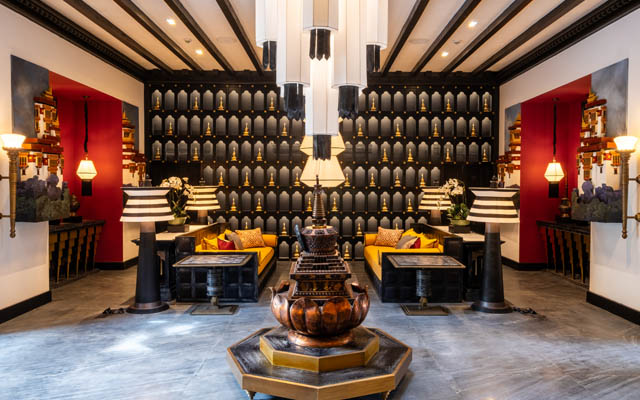
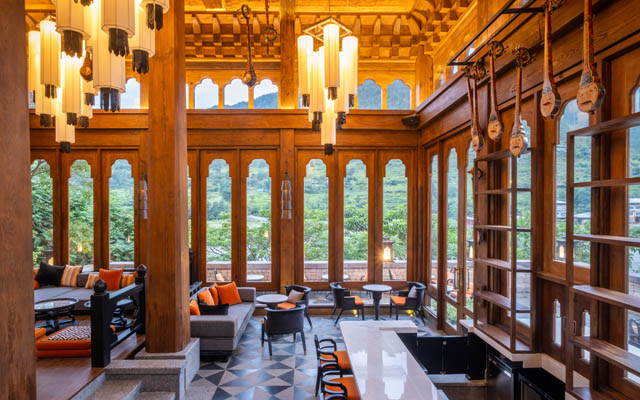
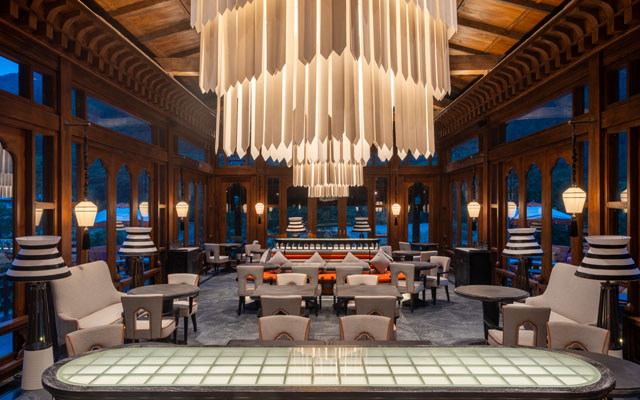
The Five Nectars Bar is within an elevated pagoda-style building overlooking the river, with an extensive wine cellar and private dining below. The Lotus Realm Spa applies sowa-rigpa Bhutanese medicinal therapies, based on the principles of restoring balance and harmony to mind and body. As well as infrared and steam rooms, the spa enjoys a traditional hot stone bath. The front desk is also able to arrange guided excursions to local attractions, including to villages where little has changed in millennia, Buddhist festivals, nearby religious sites and the stunning Punakha Dzong, or fortress.

Service
The service here is impeccable – a private butler was on hand 24 hours a day and no request was too much trouble. Restaurant and front desk staff were swift and happy to share local insight.

Verdict
Bhutan is relatively early in its journey to deliver five-star tourist accommodation and experiences, but Pemako Punakha is a home-grown brand that is setting a high standard for others to follow.

Contact details
Website: https://www.pemakohotels.com/punakha/

New hotels: Hilton Yokohama, Garrya Bianti Yogyakarta and more

0
Hilton Yokohama

Hilton Yokohama, Japan
Hilton Yokohama boasts 339 guestrooms offering views of the city, and guests staying in suites and executive rooms can enjoy access to the hotel’s executive lounge which offers exclusive check-in, personalised service during breakfast and cocktail hours, and a library area with scenic views.

The hotel has three dining options: a bar and lounge, fine-dining restaurant, and an all-day dining restaurant. There are also meeting venues available.

Located just 20km away from Haneda airport, Hilton Yokohama can be easily accessed via a 30-minute train ride to Yokohama Station and an 11-minute walk from the station’s East Exit. The hotel is also just five minutes from Shin-Takashima train station, providing easy access to the city’s attractions.

Garrya Bianti Yogyakarta

Garrya Bianti Yogyakarta, Indonesia
Located on the banks of Denggung River in Gabugan Village, a serene village located in Yogyakarta’s Sleman Region, Garrya Bianti Yogyakarta features 24 villas, a two-bedroom villa with a pool, gazebo, jacuzzi and living room, as well as a signature Wellbeing Sanctuary Villa.

Its 8lements Spa specialises in indigenous wellness therapies rooted in Asian wisdom, and guests can join group wellbeing activities ranging from poolside yoga to dance workshops or workouts in the gym.

Onsite, there is an all-day dining venue, lounge and bar, private dining room, arts and crafts shop, and a dedicated event space.

InterContinental Jaipur Tonk Road

InterContinental Jaipur Tonk Road, India
InterContinental Jaipur Tonk Road, previously Crowne Plaza, has undergone transformation and boasts 218 guestrooms and 20 bespoke suites.

The property has a diverse array of restaurants, lounge, spa, pool, fitness centre and kids’ play areas. It also features banquet spaces as well as open-air venues and extensive lawns with the capacity to cater to up to 2,000 guests at a time.

During their stay, guests can approach the hotel concierge for personalised recommendations and assistance, such as organising champagne breakfasts with a hot air balloon to picnics at Jhalana Leopard Safari.

Sheraton Kuching Hotel

Sheraton Kuching Hotel, Malaysia
Just 15 minutes’ drive from Kuching International Airport, Sheraton Hotels & Resorts offers easy access to the CBD, public transport, and cultural and leisure attractions in this UNESCO City of Gastronomy.

‌Sheraton Kuching features 378 guestrooms and 38 suites, comprising a Presidential Suite, as well as Executive, Club and Junior Suites.

The hotel offers several F&B options, fitness centre, kids’ club, infinity pool, ballroom and meeting venues.

Indian outbound on a roll

0

The Indian outbound market has grown strongly since international borders have reopened. How do you view the present growth of the market and are there any interesting trends?

We have noticed revenge travel. Indians are looking for opportunities to travel, be it shorthaul or longhaul destinations. So, the demand has been overwhelming.

In fact, there is a tremendous increase in demand compared to pre-pandemic times. Outbound is at an all-time high and can go further up if there is sufficient air capacity.

Indian travellers are looking at visa availability, airline capacity as well as the ability of the destination to handle the needs of Indian tourists when deciding where to go.

Demand is not restricted to a few destinations – if someone is looking to travel longhaul, Europe is not the only considered region.

Also, when it comes to longhaul trips, Indian travellers are not just looking to cover one or two destinations as part of a short holiday. There’s a very clear change where they now want holidays that span eight to 10 nights. They want to make the most of the high airfares they are paying and the pain they are going through to obtain visas.

Airfares are at an all-time high, a hike of 40 to 60 per cent compared to pre-pandemic levels. So, when they are paying a premium for a holiday in destinations like London, Barcelona or Munich, they are not looking at a short holiday of four to six nights.

We are also noticing a demand for immersive experiences, be it culture, cuisine or art. Gone are the days when we could prepare plain vanilla products for a few nights and get them sold. It is no longer a half-day guided city tour and lunch or dinner in a restaurant.

Indian travellers want the option of experiencing different things across various segments.

Millennial travel is on the rise, and this segment wants to do many things on their own. In terms of accommodation, many millennials opt for B&Bs and hostels.

Family travel is another segment growing big time. Senior citizens and solo female travellers are some other segments generating demand for outbound travel.

Earlier, some of the longhaul destinations had visa processing challenges, resulting in Indian travellers opting for more accessible destinations in South-east Asia. What’s the scenario now?
As far as European visas are concerned, nothing has changed. We have been told by the foreign missions that they are trying to rope in more manpower, and it is likely that next year the visa situation will be far better compared to 2022 and 2023.

So, destinations that are open (and coping well with) air connectivity and visa processes are finding many takers in the Indian outbound market. Asian destinations like Vietnam and Indonesia are getting popular because of new flights. Similarly, CIS (Commonwealth of Independent States) countries like Azerbaijan and Georgia have also become good options because of new flights.

How is Thomas Cook India coping with these visa challenges then?
In summer 2023, we managed the situation by encouraging our customers to plan their travel in advance. Many Indian travellers make their travel plans at the last minute, so we keep them informed about the visa situation. In addition, we launched our products in advance.

We also suggested alternative destinations like Egypt and Turkey. In fact, we witnessed a great season for Turkey where we noticed Indian travellers initially keen on a short three- to four-night itinerary opting for 10 to 11 nights covering different parts of Turkey.

People are also showing interest in cruises across the Mediterranean and the Far East.

I think India’s G20 Presidency has dramatically changed the outlook of foreign countries towards India, and I expect that we will become visa-free for many markets in the months to come. This will further boost India’s outbound tourism market.

Has the slow Chinese outbound recovery allowed the importance of the Indian outbound market to shine?
The entire world is now looking at India. Tourism boards that were previously not present in India are now trying many ways to lure Indian travellers.

We are witnessing aggressive stances by overseas NTOs keen to attract more Indian tourists.

What do you think destination marketers and other suppliers need to do to attract quality Indian outbound travellers?
It is not just about marketing a destination. An entire ecosystem comprising aspects like consulates, airline connectivity, and visa centres across the country are required to create a demand. These things need time to come about.

You also require products that can cater to the needs of Indian travellers, like Indian restaurants.

A strong social media presence can help a long way in attracting Indian travellers. Destination marketers and other suppliers need to tell their stories on Instagram.

Shopping is another aspect that Indians are keeping in mind when finalising a destination. On average, every Indian traveller has a specific shopping agenda.

How do you view the present scenario in terms of international flight connectivity?
I expect more connections out of India. Indian carriers like Vistara and IndiGo are expanding their presence. Even Air India is stepping up its international operations.

International carriers, too, are improving their connectivity to India.

I think the entire flight network to and from India will be much improved in the next one year.

New head in town

0

What are your immediate plans in this new role?
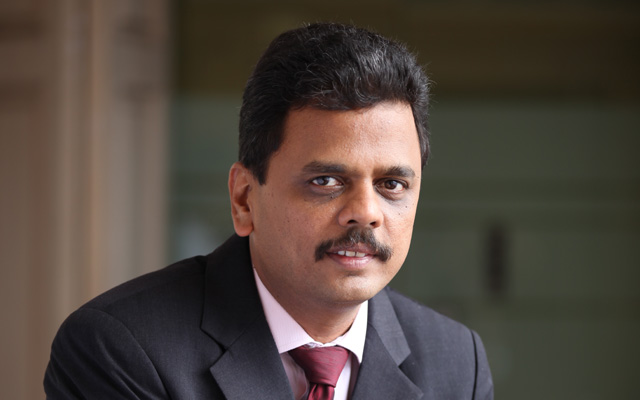
My immediate plan is to bring greater stability to the organisation, as 2020-2022 has been a transitional period after Covid-19. In this regard, I look forward to working with the PATA Executive Board on the critical areas for the association to achieve this in the short and medium term. Meanwhile, my 100-days goal will be around the five topics from the Expert Task Forces’ (ETFs) recommended by the PATA Executive Board covering Digitalisation & Technology Adoption, Events & PATA Travel Mart, Organisational Design, Voice & Brand Image and Membership Engagement.

How do you intend to amplify the voices of Asia-Pacific members and the broader travel community?
Over the first week of my appointment, I was able to meet the membership and industry leaders from around the region. The engagement with the Executive Board, Board Members, Life Members, members from all sectors and regions, as well as partners and media members, are crucial for me to understand the key issues for the travel and tourism industry. In the coming months, I look forward to meeting more people, especially the broader travel and tourism industry fraternity. I need to understand the challenges that they are facing and what their primary focus areas are – only then will we be able to serve them better. Our PATA team in the head office in Bangkok can play a huge role in advocacy through our events and through all media channels available. It is my aim to give back the voice to the Asia-Pacific region and PATA will be the champion to do just this.

What are the primary challenges confronting the Asia-Pacific travel community, and how can PATA offer support and assistance?
In terms of recovery, the Asia-Pacific travel and tourism industry is a bit lagging behind its counterparts in the west, namely Europe and the Americas. This is due to various factors including a softening global economic outlook with rising inflation and the increased costs of international travel, as well as human capital development and the shortage of labour and talent in the region.

Therefore, PATA is committed to helping our members addresses these various issues by providing research and insights from our network of experts, partners and members, as well as providing opportunities for knowledge sharing through case studies and dialogue.

This region is known for its diversity in terms of cultures, economies, and tourism offerings. How will you work to ensure that PATA’s initiatives and strategies are inclusive and adaptable to the varying needs and market conditions across different countries in the region?
PATA is unique in that our membership spans the entire spectrum of the travel and tourism industry, including governments (national, state/province, and city), hotels, airlines and airports, tour agencies and advisors, tour operators and DMCs, educational institutions and students. In addition, the PATA network also embraces the grassroots activism of the PATA Chapters and Student Chapters across the world.

By working closely and regularly engaging with all of our members, partners, chapter members and student chapters, we can ensure that our initiatives are inclusive and adaptable across all regions.

What strategies is PATA implementing to promote sustainable and responsible tourism in the Asia-Pacific region, and what impact do you foresee these efforts having on the future of travel and tourism in the region?
In 2021, PATA launched the Tourism Destination Resilience (TDR) Programme to provide a pathway for tourism destinations to build resilience and increase their adaptive capacity.

At PATA we believe that resilience is essential for moving towards the achievement of the United Nations Sustainable Development Goals. Without resilience, a destination would never be able to maintain its sustainability efforts. Years of progress on regenerating an ecosystem or eliminating poverty, for example, could be lost in one disaster or financial crisis. This is why we advocate that for a tourism destination to be sustainable, it must first be resilient.

This year, with the support of our key partner, Visa, we have expanded the Tourism Destination Resilience (TDR) Programme to continue to help build a more resilient and sustainable tourism industry. The partnership with Visa focuses specifically on building the capacity of small- and medium-sized enterprises (SMEs).

In addition to the online modules, PATA and Visa also conducted in-person trainings for SMEs, which took place in Cambodia, Indonesia, Vietnam, and the Philippines.

So far, the programme has been well received, and PATA will continue to expand this programme in both scope, region and outreach.

With the ongoing digital transformation in the travel industry, what role does PATA envision technology playing in enhancing the overall travel experience for both travellers and businesses in the Asia-Pacific region?
At PATA, we continually highlight the importance of a seamless travel experience and believe that technology can play a huge role towards this goal, from digital passports to cashless payments. Not only do they help provide a more user-friendly experience, but it also creates greater efficiency for businesses in the Asia-Pacific region. For this, the expertise of PATA members is abundant and we believe they will be able to transform the travel and tourism industry with the leadership of PATA.

In light of the recent pandemic, what measures has PATA taken to ensure the resilience and recovery of the Asia-Pacific travel and tourism sector, and what lessons have been learned from this challenging period for the future of the industry?
Our TDR Programme is an important part of our sustainability activities. Even before the pandemic, we saw that many businesses and organisations were more reactive when it came to crises and disasters as opposed to being proactive to these unforeseen incidents.

The pandemic only highlighted the need for more education and work towards a more resilient industry, particularly as we face more severe and frequent natural disasters due to climate change.

Therefore, the PATA TDR programme will continue with new modules in keeping up with the post-lockdown situation. We believe such a programme can help our members and especially destination to move into the growth zone faster.