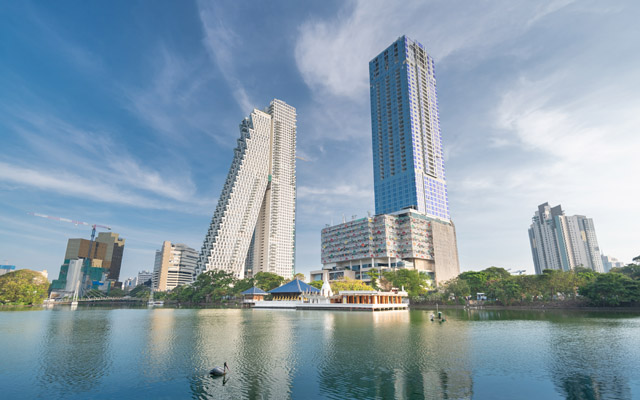
The pricing policy for Colombo hotels effective since August 2023 to upgrade city room rates will be terminated on May 31, 2024, now that its objectives have been met.
Tourism minister Harin Fernando told reporters that the Minimum Room Rate (MRR) for hotels in Sri Lanka’s capital has successfully raised room rates by 33 per cent.
The pricing policy to increase room rates at Colombo hotels will be terminated end-May
“Occupancy levels have also increased from 46 per cent to near 70 per cent, hence it is believed the industry is now mature enough to continue (business based on market forces) from this stage,” he explained.
The MRR, which drew widespread protests from travel agents and event promoters last year, was promoted by the Hotels Association of Sri Lanka.
Trip.com Group is stepping up its activities in the Middle East and North Africa (MENA) region, with the opening of its new regional office in Dubai last Saturday as well as participating at the Arabian Travel Mart (ATM) 2024 for the first time.
The company is also tying up with local companies to create cross-selling opportunities by working closely with tourism boards in the region.
Chai: looking to forge similar partnerships with other tourism boards in the region
“We have just done the localisation of our sites in the Middle Eastern languages which we feel is critical to tap this market. We are also focusing on forging local partnerships like the recent one with Saudi Arabia’s Seera Group where we are talking about hotels, flights and even car rental integration. In the next one or two months, we are expecting to sell each other’s inventories,” said Boon Sian Chai, managing director and vice president of international markets at Trip.com Group while speaking to TTG Asia at ATM 2024 currently taking place in Dubai.
The company has also signed Memorandum of Understandings (MoUs) with regional tourism boards like Qatar and Saudi Arabia to expand its collaboration in the Middle East.
“We recently had a joint promotion with the Saudi Tourism Authority and SAUDIA airlines where we bundled air tickets with hotels to attract Chinese travellers – it recorded an overwhelming response. We are looking to forge similar partnerships with other tourism boards in the region,” he added.
In North Africa, Trip.com Group is mainly focusing on Egypt and Morocco primarily. Chai noted: “We are still small in the North African markets and are open to collaborating with tourism boards in the region too.”
Trip.com Group has observed an increase in travel interest to key destinations in the Middle East such as the UAE and Saudi Arabia, with a triple-digit growth in bookings in 1Q2024 compared to the same period in 2023, demonstrating the region’s growing appeal.
Hotel Woolstore 1888, one of Sydney’s finest heritage hotels, will be joining Accor’s portfolio of Handwritten Collection hotels in May under a hotel management agreement with the hotel’s new owners Shakespeare Property Group.
The iconic Darling Harbour property was originally built in 1888 and is the fourth oldest of 21 surviving wool stores in Sydney. First opening as a hotel in 2013, this four-level sandstone and brick building boasts 90 guestrooms, neighbourhood restaurant and wine bar, private dining room and meeting space.
The 90-key Hotel Woolstore 1888 first opened as a hotel in 2013
The property is located in a prominent inner-city location on the corner of Pyrmont and Murray Streets in Darling Harbour, just behind the Novotel Sydney on Darling Harbour and the soon-to-be redeveloped Harbourside Shopping Centre.
Hotel Woolstore 1888 is the fifth hotel that Shakespeare Property Group has partnered with Accor on in Australia, following the success of Pullman Cairns International, Novotel Cairns Oasis Resort, Novotel Sunshine Coast Resort and Peppers Marysville.
Accor Pacific COO PM&E, Adrian Williams, commented: “We’re seeing rapidly increasing popularity and demand in the boutique accommodation market, and Hotel Woolstore 1888 is well placed to capture this growth as a Handwritten Collection hotel.
“Partnering with Accor to operate Hotel Woolstore 1888 under its Handwritten Collection brand was an ideal choice for us as we really want the original character of the hotel to shine. (The) Handwritten Collection offers flexible brand standards, which is perfect for boutique hotel owners,” said Richard Saab, vice president hospitality assets and investments, Shakespeare Property Group.
Meliá Hotels International has added The Grand Luang Prabang to its portfolio, making the one-time palace of a Lao prince the first member of the Melia Collection in South-east Asia.
Under Meliá’s umbrella the Luang Prabang property will undergo a renovation and refurbishment over the next year, remaining operational throughout.
The Grand Luang Prabang is the first member of the Melia Collection in South-east Asia
Meliá Collection hotels were launched in 2022 to bring together some of the group’s most distinctive and one-of-a-kind properties. With its rich culture and architecture, the destination of Luang Prabang has held UNESCO World Heritage status for two decades.
Situated on lush riverside in Luang Prabang, The Grand Luang Prabang is a 75-key property spread out over eight buildings, comprising of a 1920-built palace and a collection of annexes. The property commands the high ground of a six-hectare bluff on a bend of the Mekong with sweeping views of mountains and river, as well as sunsets.
Balconies from guest rooms overlook manicured gardens and lotus ponds, and the property also features an expansive swimming pool in the gardens. Meliá plans to add Spanish hospitality to the mix, while ensuring the hotel retains its distinct character.
Gabriel Escarrer, chairman and CEO of Meliá Hotels International, remarked: “We expect destinations like Luang Prabang to become more popular with modern travellers who are seeking new and unique experiences, and I’m sure that this hotel, with its unmistakable sense of place, will enable guests to fully enjoy the destination.”
Australia’s largest independent five-star sustainably-led hospitality company, Crystalbrook Collection, is set to launch a new-build hotel in Australia’s capital, Canberra, slated to open in 1Q2027.
The new hotel is in collaboration with developer TP Dynamics, who has secured building approval and the construction site is currently being prepared to commence the build.
A rendering of the new Crystalbrook Collection hotel in Canberra, slated to open in 2027
The hotel will be located on Bunda Street, strategically positioned between Garema Place and Bunda Street, opposite the Canberra Centre. The 10-storey mixed-use commercial and hotel development, covering 1500m², features 238 hotel rooms, multiple restaurants and bars, a central skylight atrium and gardens, swimming pool, wellness centre, function rooms, and ballroom.
The first hospitality group in Australia to achieve 100 per cent waste-free bathrooms, Crystalbrook’s Canberra hotel will continue the brand’s commitment to responsible luxury, with initiatives including 100 per cent recycled coat hangers and key cards, zero-waste coffee capsules from TerraCycle, and the labelling of ‘Climate Calories’ across all of their restaurants, allowing customers to feel comfortable that they are mitigating their environmental impact.
As part of the city’s revitalisation efforts, the Australian Capital Territory Government’s City Renewal Authority will upgrade the Garema Place Public Realm. This enhancement will create a modern and lively dining and retail precinct, offering increased green space, improved pedestrian flow, better accessibility, enhanced lighting, and more outdoor dining opportunities.
Crystalbrook Collection founder Ghassan Aboud commented: “With the announcement of our new Canberra property and the continued expansion of the group across Australia with recent expansion into Adelaide and the acquisition of a second property in Sydney, my vision for Crystalbrook Collection as a truly national hotel group is coming to fruition. This growth of our brand across Australia is delivering a strong base for a future expansion of Crystalbrook Collection into overseas markets.”
Walk Japan has introduced its Kyoto: Mountains to the Sea tour which explores Kyoto Prefecture, a bucolic rural region, famed for the sublime foods and crafts.
Kyoto: Mountains to the Sea is a fully-guided, eight-day walking tour that ventures through Kyoto’s backcountry; a lovely countryside where the pace of life is still measured by seasons and a multitude of colourful festivals throughout the year.
Walk Japan’s new eight-day tour explores Kyoto’s backcountry
The 12-pax tour follows ancient trails, once vital for commerce and communication, that weave their way through valleys and over high passes until culminating on the Sea of Japan coast at Amanohashidate, rightly considered one of Japan’s three classic vistas. En route, it passes through little-known villages and aside historic temples and shrines, some grand and some rustic.
Night accommodation is in Japanese inns, where friendly hosts provide warm welcomes and meals composed of locally-sourced and grown ingredients.
Prices start from 430,000 yen (US$2,796) based on double occupancy.
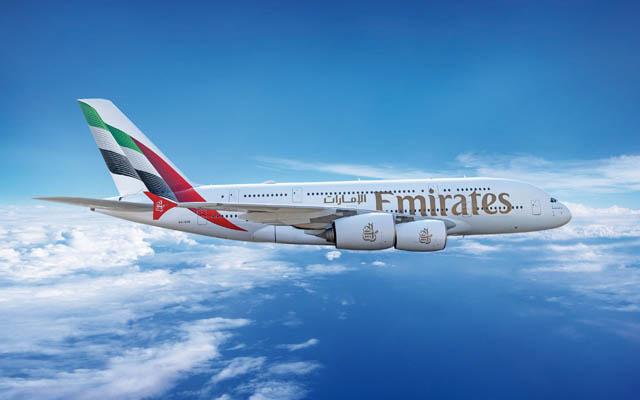
Emirates has relaunched its daily Phnom Penh service via Singapore, marking the airline’s first direct link between Singapore and Phnom Penh.
Emirates will fly four times daily to Phnom Penh via Singapore
The four daily services will operate on Emirates’ Boeing 777-300ER aircraft in a three-class configuration on flights to Phnom Penh, offering eight private suites in First Class, 42 lie flat seats in Business Class and 304 seats in Economy Class.
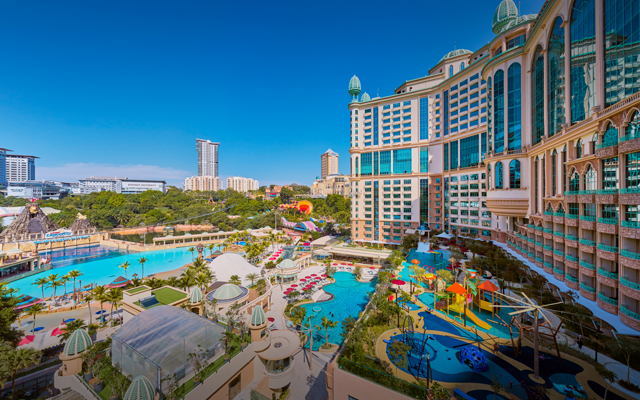
The story of Sunway Group begins at Sunway City Kuala Lumpur, Malaysia’s first fully integrated green township. This 323 hectares of lush land packs in over 5.5 million square metres of excitement, and is just a breezy 20-minute jaunt from the heart of Kuala Lumpur.
Here, every guest’s whim is catered to – from top-notch hospitality to fantastic shopping sprees, thrilling leisure activities, quality healthcare, stellar education opportunities, and a bustling community of over 200,000 residents, all nestled in a safe, healthy, and connected environment.
Sunway City Kuala Lumpur was Malaysia’s first fully integrated green township; Sunway Resort, pictured
But wait, there’s more to this story.
Sunway City Kuala Lumpur was not always the vibrant metropolis it is today. Once upon a time, it was a barren tin mining wasteland. Thanks to the vision of its founder and chairman, Jeffrey Cheah, it blossomed into the breathtaking city today.
The success story of Sunway City Kuala Lumpur has inspired Sunway Group to replicate its model in other townships across Malaysia. Two notable examples include Sunway City Ipoh, nestled in the northern state of Perak, and Sunway City Iskandar Puteri, situated in the southern state of Johor.
At Sunway City Ipoh, the focus revolves around biodiversity conservation and environmental preservation, embracing the lush rainforests, geothermal hotsprings, and ancient limestone hills and caves that characterise the area.
Sunway City Iskandar Puteri, which is positioned as Nature’s Capital City, is situated against the Johor Strait, the pristine Pendas River, and thriving mangrove forests. The property is committed to safeguarding these natural gems throughout development, with the goal of fusing urban living seamlessly with the unspoiled magnificence of the environment, delivering a balanced blend of contemporary conveniences and natural marvels for both residents and visitors to enjoy.
To mark their 50th anniversary this year, Sunway Group threw a Golden Jubilee Mega Roadshow in 1Q2024, packed with family-friendly fun, limited-time offers, and tempting prizes across four states: Penang, Perak, Selangor, and Johor.
Cheah: our vision for Sunway is to be Asia’s model corporation in sustainable development
In the spirit of its milestone, the group has also initiated several corporate social responsibility initiatives, embodying its commitment to “do well by doing good” and “ensuring no one is left behind”.
For example, during the Muslim fasting month of Ramadan in March, Sunway Group collaborated with various non-governmental organisations, including its long-term partners, Malaysian AIDS Foundation and National Welfare Foundation, to spread festive cheer to underserved communities nationwide.
Come July, Sunway-Rapid KL Good Run 2024 will welcome over 10,000 runners to participate in a fundraising event where all proceeds will be distributed to 50 charity homes nationwide.
The goodness continues with the Meal Pack-a-thon drive in September, which aims to pack over 500,000 meals for underprivileged communities at home and abroad. This is part of Sunway’s overarching goal to provide two million meals by 2024, addressing hunger and food security issues across the region.
All these initiatives fall under the #SunwayforGood corporate responsibility umbrella, which is focused on promoting sustainability and social inclusion through education, healthcare, and community enrichment.
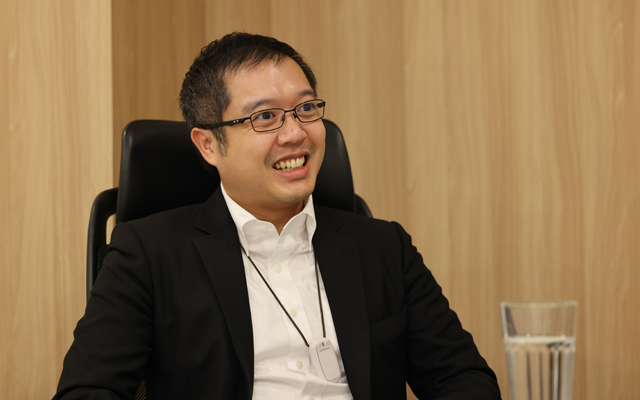
Evan Cheah, group CEO for digital and strategic investments at Sunway Group, is thrilled about the progress. He said: “Our vision for Sunway is to be Asia’s model corporation in sustainable development, innovating to enrich the lives for a better tomorrow. In line with that, we will remain committed to advancing the sustainable development agenda and continue to innovate for future generations to come.”
Cheah, with over two decades of experience at Sunway Group, cherishes his journey with the company, particularly the thrill of setting up operations in China and expanding globally through new business ventures.
He is especially proud of the Sunway Super App, launched last year, which offers users seamless access to Sunway’s wide ecosystem of offerings, including property, education, healthcare, malls, theme parks, hotels, and resorts.
The six Gulf Cooperation Council (GCC) countries – Bahrain, Kuwait, Oman, Qatar, Saudi Arabia, and the UAE – are making swift progress in their joint efforts to promote regional tourism, with plans to implement a unified Gulf tourist visa regime.
Speaking on the opening day of the Arabian Travel Market (ATM) on Monday, Abdulla Bin Touq Al Marri, UAE’s minister of economy, said the unified Gulf tourist visa would be named, GCC Grand Tours.
The GCC plans to implement a unified Gulf tourist visa regime (Photo: Rohit Kaul)
“With the introduction of GCC Grand Tours, we anticipate that tourists will stay in the region for over 30 days,” he said.
The new visa regime is expected to be introduced by the end of 2024 or early 2025.
The private sector is also urged to create tours that would entice tourists to explore multiple destinations within the region.
“Working in collaboration with other GCC states allows us to tap into a larger market and offer a more diverse product that would definitely keep this region in a better competitive position. We have started working with a number of GCC countries on either joint packages or joint marketing campaigns,” revealed Azzan Al Busaidi, undersecretary of tourism, Oman Ministry of Heritage and Tourism.
Saudi Arabia has announced cooperation with Qatar, Oman and Bahrain on joint marketing campaigns and packages. Other GCC destinations will follow suit.
Khalid Jasim Al Midfa, chairman of Sharjah Commerce and Tourism Development Authority, said travellers today desire “a variety of products”, and noted that the GCC region would benefit from targeting both leisure and business event travellers. Work is underway with “the biggest tour operators” to push regional travel packages.
The GCC nations are also improving infrastructure to enhance the traveller experience, such as establishing a rail network.
Fahd Hamidaddin, CEO, Saudi Tourism Authority, said “having a railway system that connects the GCC countries will be a game changer” in facilitating intra-regional tourism.
“However, we should not look at the rail network from just a point-to-point connectivity perspective. The focus should be on creating an experience that is entertaining and gives a feel of a desert cruise (on rails),” he added.

















Australia’s largest independent five-star sustainably-led hospitality company, Crystalbrook Collection, is set to launch a new-build hotel in Australia’s capital, Canberra, slated to open in 1Q2027.
The new hotel is in collaboration with developer TP Dynamics, who has secured building approval and the construction site is currently being prepared to commence the build.
The hotel will be located on Bunda Street, strategically positioned between Garema Place and Bunda Street, opposite the Canberra Centre. The 10-storey mixed-use commercial and hotel development, covering 1500m², features 238 hotel rooms, multiple restaurants and bars, a central skylight atrium and gardens, swimming pool, wellness centre, function rooms, and ballroom.
The first hospitality group in Australia to achieve 100 per cent waste-free bathrooms, Crystalbrook’s Canberra hotel will continue the brand’s commitment to responsible luxury, with initiatives including 100 per cent recycled coat hangers and key cards, zero-waste coffee capsules from TerraCycle, and the labelling of ‘Climate Calories’ across all of their restaurants, allowing customers to feel comfortable that they are mitigating their environmental impact.
As part of the city’s revitalisation efforts, the Australian Capital Territory Government’s City Renewal Authority will upgrade the Garema Place Public Realm. This enhancement will create a modern and lively dining and retail precinct, offering increased green space, improved pedestrian flow, better accessibility, enhanced lighting, and more outdoor dining opportunities.
Crystalbrook Collection founder Ghassan Aboud commented: “With the announcement of our new Canberra property and the continued expansion of the group across Australia with recent expansion into Adelaide and the acquisition of a second property in Sydney, my vision for Crystalbrook Collection as a truly national hotel group is coming to fruition. This growth of our brand across Australia is delivering a strong base for a future expansion of Crystalbrook Collection into overseas markets.”