TTG Asia
Asia/Singapore Sunday, 14th December 2025
Page 375

Hyatt reaches higher

0

What is Hyatt’s ambitions and priorities for 2024 and beyond, and what factors have shaped these priorities?
Growth is first and foremost. We compete in the top half of lodging, from upper-mid to luxury. We want to build a presence in places where we are not, increase our presence in markets where we are under-represented even though we have hotels there already, and be in locations where our customers want to be.

A lot of that, over the last several years, has been focused on the luxury leisure market. A good example of what we have achieved in this aspect is our all-inclusive business, which we call The Inclusive Collection. This started in 2017 when we launched Hyatt Ziva and Hyatt Zilara, and then in late-2021 we bought Apple Leisure Group, which was a terrific acquisition that solidified Hyatt as the largest luxury all-inclusive company and brand globally.

Leisure travel has really grown exponentially during Covid, and continues to be a very popular motive for travel and a reason for our company’s growth. While business and events travel have started to pick up speed now, leisure travel demand has not abated.

Through 3Q2023, 72 new hotels joined the Hyatt portfolio this year. Notable openings in 3Q2023 (in Asia) included seven UrCove by Hyatt properties and Andaz Macau.

As of September 30, Hyatt has a pipeline of executed management or franchise contracts for approximately 600 hotels with approximately 123,000 rooms.

Last year, our focus was on bringing the luxury all-inclusive concept into Asia-Pacific – and we are still working on it. We’ve done a lot of work and identified the markets for us – Thailand, Vietnam, China, Japan, the Maldives and Australia, just to name a few.

We know where there are a lot of leisure traffic but not a lot of all-inclusive resorts, especially luxury all-inclusive resorts.

It is very surprising to me to see that this part of the world does not have many luxury all-inclusive products because the customer base here will love this concept. It is so easy to understand, and we do it so well (that customer satisfaction ratings are high).

Our all-inclusive resorts have the highest customer service scores among all of our hotels. This just shows how much the concept resonates with customers.

We will also focus on growing our select service through brands like Hyatt Place, Hyatt House, Caption by Hyatt, and UrCove by Hyatt. Select service properties allow Hyatt to go into tertiary markets or small markets.

Another thing we started in 2023, which we absolutely will continue to focus on in 2024, is new platforms. We acquired Dream Hotel Group, a US-based luxury lifestyle group with a huge focus on restaurants and bars. It further exemplifies our commitment to the lifestyle space. After that, we acquired Mr & Mrs Smith, a distribution platform with 1,500 hotels, mostly in the upscale and luxury space. Both give World of Hyatt loyalists a lot more experiences to choose from.

Third, we are focusing a lot more on wellness. This started some years ago, with the acquisition of Miraval, but further enhanced by our work on developing our spa and wellness programmes across our hotels and resorts. The focus spreads across physical and mental well-being, which people greatly value post-Covid.

Just this month we launched Wellbeing Collective, a collection of Hyatt properties around the globe that offer tailored well-being experiences to meet the specific needs of travellers. For a start, the Wellbeing Collective has 30-plus properties and we will keep adding to it. There are several properties in Asia-Pacific that are part of this collection, such as Grand Hyatt Bali and Hyatt Regency Bali in Indonesia; Grand Hyatt Goa in India; Hyatt Regency Danang in Vietnam; Hyatt Regency Hua Hin/The Barai in Thailand; and Park Hyatt Sanya in China.

What does Hyatt’s expanded portfolio of brands mean for Asian real estate developers and owners?
I’ve been with the company for almost 20 years now, and I started off when it had five brands all aggregated at the top. When you have five brands, you don’t have much opportunities to work with your developers and owners, and to really broaden your footprint.

Now, with 29 brands, we can have an all-inclusive offering and a luxury offering at the same beach, or a Hyatt Regency, Grand Hyatt and Hyatt Place in the same city. We can better fit a price point and development budget, and offer travel experiences across different markets based on a type of travel, like MICE, and reason for travel, like visiting family.

You spoke of the company wanting to further grow its upper-mid to luxury portfolio while expanding the select service brands in tertiary cities. Are your Asian developers and owners also keen on having projects in these hotel categories?
Well, yes. I’ll take UrCove by Hyatt as a good example. It is a growing upper-mid-scale brand unique to China, created to cater to the Chinese traveller in China. It was a joint venture with BTG Homeinns, and it allowed us to enter primary and tertiary cities, as well as into the ring roads where we did not have a product.

The brand was created specifically to the type of owner.

Hyatt Place and Hyatt House are other examples, both developed with regional or local developers and/or owners.

What new brands is Hyatt bringing into Asia-Pacific, and why will they be exciting for the travel marketplace?
Atona, a brand of modern hot springs ryokans, will see its first property open in 2025. It will be a Japanese-inspired, contemporary but also traditional experience just for Japan – very local, very authentic, very updated.

We have also done a terrific job with our soft brands – Unbound by Hyatt, JdV by Hyatt, and Destination by Hyatt – particularly in this region. They allow us to bring great local hotels with very regional experiences into Asia-Pacific at a time when travellers want tailored experiences that are not too scripted. An example is our Fuji Speedway Hotel, located on the grounds of the iconic Fuji Speedway race circuit in Japan.

Let’s talk a little more about Hyatt’s all-inclusive hotel development in this region. Club Med still dominates when travellers think about all-inclusive resort options. How will Hyatt change market sentiments?
Club Med is one of the frontrunners of the all-inclusive hotel concept and has done a nice job, but we are taking a different approach. We are focused on delivering a luxury experience with large rooms; we are focused on gastronomy through different types of restaurants and bars that will impress our guests throughout the long course of their stay; we are focused on programming from an activity and entertainment perspective, from day to night.

Hyatt’s all-inclusive approach also promises a larger destination experience.

Is this making cruise companies worried?
(Laughs) We get asked that a lot – what’s our biggest competitor. You could say it is cruising, but there are people who don’t want to be embedded on the ship even though cruises are a great way to see many destinations in a single trip.

With all that talk about travellers prioritising impactful experiences post-lockdown, what is Hyatt doing to cater to such desires?
It is intended that our hotels are programmed with some sort of local experiences. If you were to go the gallery hosts at this hotel (Andaz Singapore – a Concept by Hyatt), they would have a well thought-out schedule of daily or weekly events and activities available around the area and native to the destination.

When people recall their favourite travel experience, it is rare that they would say, wow that was a really, really nice guestroom. People remember what they did, whether they did it alone, with friends or family.

Japan exceeds tourist spend target

0

Consumption by international tourists to Japan has exceeded 200,000 yen (US$1,336) per capita, the goal the country aimed to reach by 2025 under its New Tourism Nation Promotion Basic Plan rolled out in April.

According to a study by the Japan Tourism Agency, inbound visitors to Japan between July 1 and September 30 spent a total of 1.39 trillion yen (US$9.24 billion), 17.7 per cent more than the same period in 2019. This equates to 211,000 yen per person, up from 159,000 yen per person in 2019.

The top consumption in Japan was generated by Chinese visitors, followed by Taiwan then South Korea

A total of 33,840 people from around the world were surveyed about their spending habits during their trip at national and regional airports throughout the country, as well as five harbours serving cruise liners.

By country, most consumption was generated by Chinese visitors who spent 2.83 trillion yen (20.3 per cent more than in 2019), despite the market having yet to rebound fully. Visitors from mainland China totalled 364,100 in August, only 36.4 per cent of the 2019 level.

The second-biggest country market was Taiwan at 2.05 trillion yen (14.7 per cent more than in 2019), followed by South Korea, at 1.96 trillion (14.1 per cent more). Rounding out the top five highest spenders were the US at 1.44 trillion yen (an increase of 10.4 per cent) and Hong Kong at 1.34 trillion yen (an increase of 9.7 per cent).

Per capita, though, French visitors spent the most, at 358,000 yen per person, followed by Spain (350,000 yen) and Italy (342,000 yen).

In general, visitors spent more on accommodation (34.2 per cent of total spend) compared to 29.9 per cent in 2019 and entertainment, which rose from 4.1 per cent in 2019 to 5.3 per cent of total spend in 2023. Consumption on shopping, meanwhile, declined from 33.2 per cent of total spend in 2019 to 26.1 per cent of total spend in 2023.

Italians spent the most on accommodation and F&B, while Spaniards splurged most on transport to travel around the country. Entertainment was Australians’ biggest expense, while Chinese visitors consumed the most on shopping.

Private-public collaboration needed to improve fragmented visa conditions in Asia: cruise industry leaders

0

Cruise industry players are calling for greater and deeper collaboration among private and public sectors to speed up cruise development in Asia.

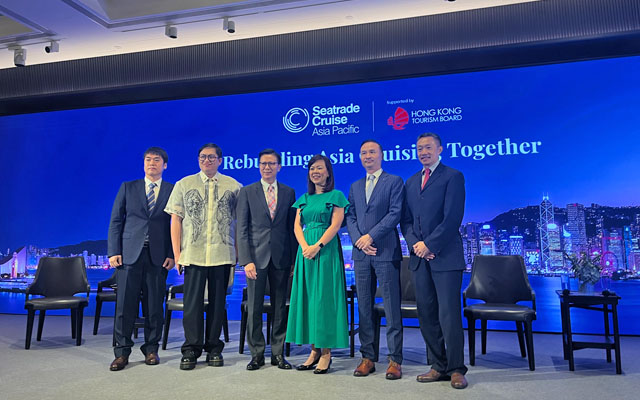
Speaking at the recent Seatrade Cruise Asia Pacific 2023, panellists say dissimilar visa and immigration procedures remain the major challenge faced by cruise liners in the region.

Panellists urge for standardisation and uniformity in visa and immigration procedures in Asia (Photo: Prudence Lui)

For example, visa-free access for international cruise travellers to China is only available at the port of Shanghai while in South Korea visa policy rotations, done so to prevent corruption, are disruptive to travel plans.

Panellists urge for standardisation and uniformity in visa and immigration procedures.

Royal Caribbean Group, regional vice president, government relations for Asia, Wendy Yamazaki, contended that such a complete change would probably take years.

“The Schengen visa (equivalent in Asia) would be the more ideal scenario that we can dream of, but in transition period what would be useful is transparency, consistence and predictability, not just across the region, but even within a country,” said Yamazaki, adding that it has been time-consuming to “deal with issues in just one country” due to differing regulations from port to port.

Ministry of Oceans and Fisheries, Marine Leisure Tourism Division, deputy director, Hwang In-seong, believes that relevant events will bring about mindset changes and lead to the standardised visa and immigration scenario cruise liners desire.

“Our Asia Jeju Cruise Forum held last July attracted discussions between port of calls and cruise liners in East Asia. We need to think how to promote standardisation and accessible visa and CIQ (customs, immigration and quarantine) policies so that cruise liners can easily come to our region,” Hwang said.

As an unofficial affiliation established to drive tourism and cooperation with cruise destinations a decade ago, the Asia Cruise Cooperation (ACC) believes it can help to take top-level conversations forward to achieve improved visa and immigration procedures.

The ACC comprises six members – Hong Kong, Hainan and Xiamen in Greater China, Taiwan, the Philippines, and South Korea. Its secretariat Kenneth Wong, who is also general manager for MICE & cruise at Hong Kong Tourism Board, said one of ACC’s directions is to have members come together at the government-to-government level, and exert influence on visa decision-makers.

Wong added that the group can also connect with relevant agencies and stakeholders in the Greater Bay Area (GBA) to jointly advance cruise tourism development.

Noting that the GBA is a huge source market and attractive destination for cruising, Wong said: “We see so much possibility in the GBA recently. China Merchants Viking Cruises, for example, recently launched a new cruise itinerary for Shenzhen, Vietnam and Hong Kong. We are happy to receive their very high-end Mainland Chinese clients.”

He sees collaboration possibilities with Hong Kong tourism players too. In the case of China Merchants Viking Cruises, Hong Kong could feature its Wine & Dine Festival in the shore excursion programming so that cruise clients could come ashore for a “total experience”.

New hotels: Anantara Mina Al Arab Ras Al Khaimah Resort, 21 Carpenter and more

0
Anantara Mina Al Arab Ras Al Khaimah Resort

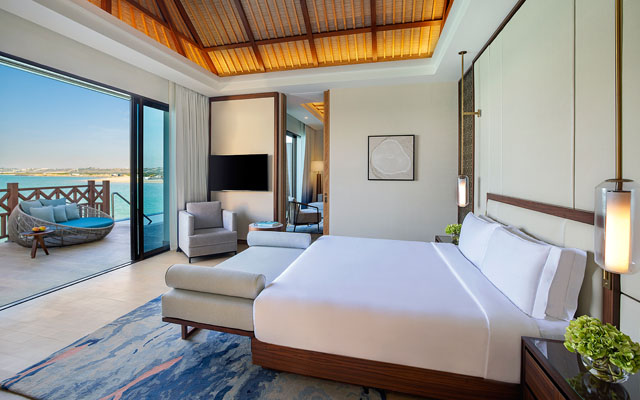
Anantara Mina Al Arab Ras Al Khaimah Resort, the UAE
Anantara Mina Al Arab Ras Al Khaimah Resort is set along the Arabian Gulf coastline on Mina Al Arab Island in Ras Al Khaimah. It is a 45-minute drive from Dubai International Airport, and 15 minutes from Ras Al Khaimah International Airport.

The new-build resort features 174 guestrooms, suites and villas, including the first over-water villas in the emirate. All over-water villas will have access to a secluded private beach, each with its own private beach cabana.

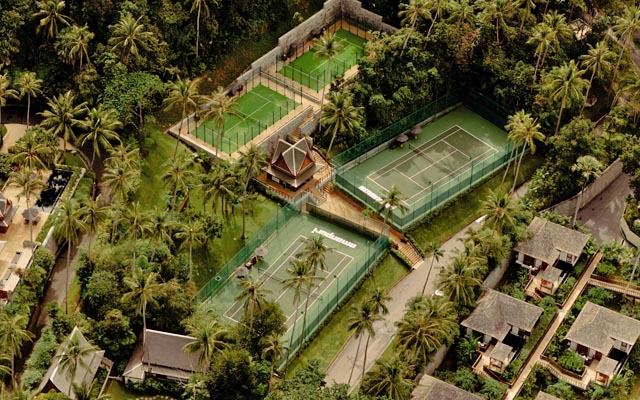
Facilities comprise a spa, fitness centre, tennis courts, outdoor pool and bar, kids’ club, F&B, and event spaces. Water sports such as paddle boarding and kayaking are also available.

All accommodation has been built sustainably, with furniture and fittings using eco-friendly materials. The resort will also feature a range of sustainable initiatives including greywater waste recycling, thermodynamics and solar panels for water heating and a water bottling plant.

21 Carpenter

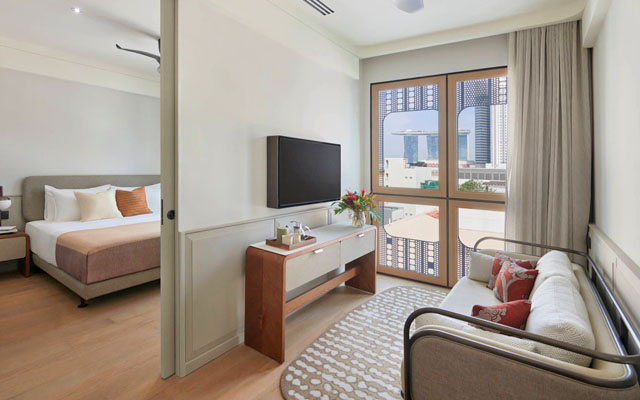
21 Carpenter, Singapore
Nestled between the vibrant nightlife of Clarke Quay and the old-world charm of Chinatown, 21 Carpenter is a heritage boutique hotel showcasing the architectural expertise of WOHA in restoring the historic building.

Steeped in history and architectural significance, the 48-room property comprises two wings: The Heritage Wing, features 26 rooms in the conserved building and The Urban Wing, a contemporary five-story extension has an additional 22 rooms.

Onsite facilities include a neo-bistro and bar (opening 1Q2024), rooftop infinity pool, lounge and garden terrace.

TRYP by Wyndham New Taipei Linkou

TRYP by Wyndham New Taipei Linkou, Taiwan
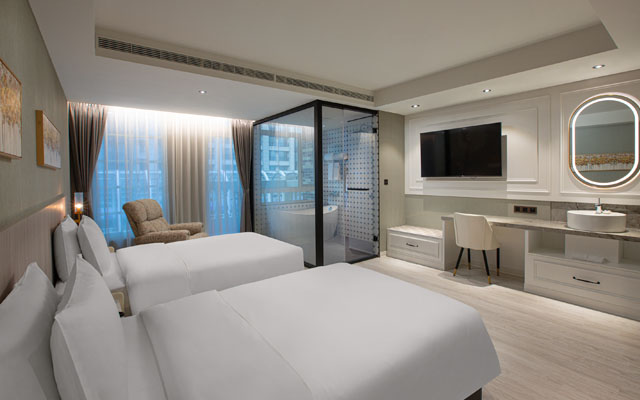
TRYP by Wyndham New Taipei Linkou is located in the city of Taipei, just a 20-minute drive from Taoyuan International Airport.

The 85-key hotel offers several dining options, fitness centre as well as meeting rooms and free parking on the property. It provides easy access to the downtown area and attractions such as Zhulin Mountain Buddhist Temple, Mitsui Outlet Park Linkou, Taiwan Socks Museum and A9 Global Mall.

Novotel Singapore on Kitchener

Novotel Singapore on Kitchener, Singapore
Novotel Singapore on Kitchener boasts 543 guestrooms and is centrally located in the precinct of Little India. An all-day dining restaurant, pool, and gym are available at the hotel.

Nearby the property is the famed Mustafa Centre for 24-hour shopping, and City Square Mall.

The hotel is just five minutes from the nearest train station, and 20 minutes by car to Changi Airport.

Stay connected with friends and family at The Standard, Hua Hin

0

The Standard, Hua Hin has unveiled its new connecting rooms for guests who want to enjoy the best of both worlds – staying close to their loved ones while having their own space.

The connecting rooms offer a convenient and comfortable option for a fun-filled getaway at Thailand’s bohemian beach destination.

Travellers can now request for connecting rooms at The Standard, Hua Hin

The newly-renovated connecting sets pair 35m² Standard King and Standard Twin rooms, each featuring a private balcony, bathroom with a rain shower, and an interconnecting door that can be locked or unlocked from both sides, allowing guests to easily access each other’s room or keep it private as they wish.

Travellers can request connecting rooms for free at the time of booking, subject to availability upon check-in. To secure their connecting rooms in advance, they can pay a small supplement of 300 baht (US$8.45) per night from Sunday to Thursday, and 500 baht per night on Fridays, Saturdays and public holidays.

For more information, visit The Standard, Hua Hin.

Aviation sustainability and recovery in focus at airline leadership meeting

0

Cruising back to Asia-Pacific

0
  • Major cruise lines are intensifying deployment in the region
  • Home-grown cruise lines are emerging
  • India shows stronger potential as a cruise region and source market
Cruise recovery in Asia-Pacific is going strong, and continued demand is expected in 2024

Asia-Pacific’s cruise industry is enjoying a strong revival in 2022-2023, and will likely welcome an upbeat 2024, given the gradual return of cruise lines to the region, according to Chart Management Consultants’ research findings that were shared during the recent Seatrade Cruise Asia Pacific conference in Hong Kong.

Chart Management Consultants is a specialist business consulting firm serving the global cruise shipping industry.

Principal of Chart, Ted Blamey, said cruise recovery in South-east Asia has been “building well, principally out of Singapore”, while East Asia still has a way to go, with Japan being the only country with “real cruise activity”.

He noted that Japan’s Yokohama had the most calls in East Asia – 66 turnarounds – while 72 Japanese ports had transit calls.

Over in South Asia, there has been a “real boost” in cruising, thanks to home-grown operations by Cordelia Cruises in India.

Asia for Asians
Ponant, a French-flagged luxury cruise line, is seeing strong interest coming out of Asian markets. CEO Herve Gastinel said passengers are now “eager to sail closer to home, so intra-Asia (sailings) are growing in interest”.

“Asia-Pacific is our key priority as business revenue grew from zero to 20 per cent within a decade, and the current size of business is 80 per cent above 2019. We currently have four ships sailing in Asia, and have just acquired another ship to fuel future growth,” shared Gastinel.

Ponant’s 30-guest boutique motor yacht, Paspaley Pearl, is set to commence her inaugural Kimberley season in June 2024, offering year-round operations through Australia’s Kimberley region, Indonesia’s Raja Ampat and Spice Islands, and Papua New Guinea. Reservations open this month.

Ponant is not the only cruise line to build an Asia-Pacific-centric programme. With the reopening of China, South Korea and Japan, major international cruise lines have announced deployment in this region from 2023 to 2025.

Costa Serena will offer 23 sailings from India this November to January 2024; Holland America’s Noordam will sail East and South-east Asia with nine different 14-day itineraries between September 2024 and April 2025; MSC Cruises’ MSC Splendida will sail from Shenzhen for the winter of 2024; Royal Caribbean Group will deploy Celebrity Cruises’ Solstice and Millennium to Asia in 2024, calling at Singapore, Vietnam, Malaysia, Thailand, Indonesia and India.

Gastinel: passengers are now eager to sail closer to home, so intra-Asia (sailings) are growing in interest (Photo: Prudence Lui)

More to join the high seas
Fans of cruise tourism keen to try something new may be spoilt for choice.

China’s Adora Cruises, a new brand developed in a partnership between Carnival Corporation and China State Shipbuilding Corporation, formally received Adora Magic City on November 4. It is said to be China’s first domestically-made large cruise ship. Adora Magic City will commence cruising from Shanghai in January 2024 while the cruise line’s second new-build undergoes design and construction.

In Japan, local firm Mitsui OSK Lines has a new ship in its fleet – Mitsui Ocean Fuji, which was the former Seabourne Odyssey purchased from Seabourn Cruises in March 2023. Mitsui Ocean Fuji will join Mitsui OSK’s Nippon Maru.

Head of cruise business unit, Shoichiro Yamashita, told TTG Asia, that the new ship will “capture international traffic” initially and has a goal of establishing 30 per cent of business from foreign passengers. It will set sail in late-2024, going “around the world at the beginning” before calling at regional Asian ports eventually.

“Cruising is not well recognised in Japan yet, and overall passenger volume in Japan is only around 300,000 per year,” remarked Yamashita, who quickly added that the company is confident of growth. Mitsui OSK has ordered two new ships to fuel its expansion.

Indian premium cruise liner, Cordelia Cruises, will sail to Dubai next summer.

Lion Travel, general manager, cruise development, Sally Riu, said home-grown cruising in Taiwan is still at its infancy, although cruise tourism adoption among Taiwanese consumers is advancing, with more young patrons and greater interest in seasonal charters.

“Home-grown cruise brands will take 10 to 20 years to build know-how. Perhaps the industry can start by engaging ferry operators serving offshore islands within Taiwan,” Riu suggested.

Strong Indian cruise potential
Cruise agent GAC Group’s marketing manager, Jasem Zaiton, observes a wind of change sweeping through India’s cruise tourism. While there used to be limited activity in India prior to 2019, the rise of home-grown cruising, led by Jalesh Cruises and then the entry of Cordelia Cruises, has sparked off interest in cruise holidays.

“It is predicted that India’s cruise passenger volume (covering river cruises, local cruises and ocean cruises) will hit 50 million by 2047, and it is not surprising for India to reach one million by 2027,” said Zaiton.

He added: “Government’s ambition to bring back cruise tourism is obvious. It has rationalised the rate of port, making India possibly the cheapest and most cost-effective port for domestic cruise operations.”

Indian travellers are also becoming a more attractive source market for cruise lines. Resorts World Cruises’ president Michael Goh said high-end cruising demand out of India is on the rise post-lockdown. Indian guests are “looking for private space” while on a cruise, feeding demand for top-end suites onboard.

There are also more business events being hosted on cruises, with planners “specifically hungry for theming”. A party onboard was designed for about 600 Indian passengers recently.

Goh said: “It is vital for us to understand consumer behaviour. If we were to only go the conventional way, we’d never be able to expand the cruise market.”

Diethelm launches major rebrand at WTM 2023

0

Diethelm Travel launched a full-scale rebrand as DTH, including a refocused vision, yesterday at World Travel Market 2023.

After nearly seven decades of operating in the region, new CEO Stephan Roemer cited the rebrand as a way to refresh the organisation for a new era of travel.

Roemer: we have reinvented ourselves and reignited our passion for adventure and exploration

“For 66 remarkable years, DTH Travel has been on an extraordinary voyage, mastering 13 diverse countries within Asia and connecting travellers with unforgettable journeys.

Throughout our own incredible journey, we have witnessed continuous changes as horizons expanded and the world evolved. Today marks a defining moment for us: our rebrand signals a transformative shift, breathing new life into our identity and purpose, ensuring we remain relevant in these ever-evolving times. It’s a profound reflection of the changes in our world, industry, and communities, that have reshaped our ethos and equipped us to step confidently into the 21st century,” he explained.

The major transformation is not just a facelift but includes a new vision for the company built on a desire to reflect the values and needs of a rapidly evolving market based on four operational pillars: Industry Experts, Tailor-made Experiences, Community Experts and Progressive Vision.

“We have reinvented ourselves and reignited our passion for adventure and exploration. Our affection for crafting journeys that stir the soul and create unforgettable memories for all who travel with us remains unchanged, as is our commitment to clients. We are proud to offer them our best service and products yet,” continued Roemer.

The new CEO went on to applaud DTH’s new generation, who helped fuel the brand’s transformation: “Their fresh perspectives have invigorated our company culture, and with this newfound focus and digitalisation of our service, we have propelled towards new successes and profitability again. As we embark on this exciting new chapter, I want to extend my sincere gratitude to our incredible team and our loyal clients who have supported us thus far.”

Kertajati International Airport to make West Java more accessible

0

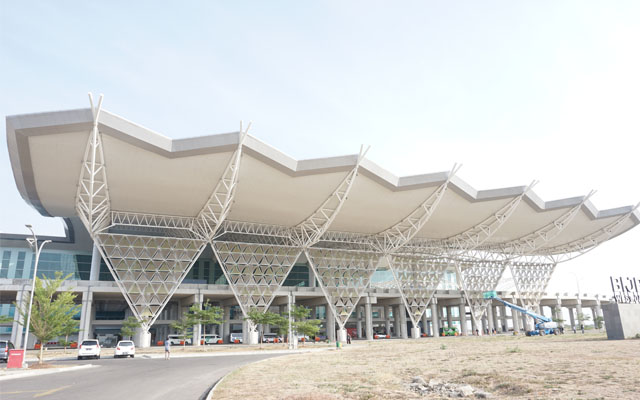
Kertajati International Airport (KJT) is now fully operational as the entry point to Indonesia’s West Java, with all commercial airlines having moved operations from Husein Sastranegara Airport in Bandung.

Located in Majalengka, about 90-minute drive away from Bandung, KJT is the second biggest airport in Indonesia, after Jakarta’s Soekarno-Hatta International Airport, with 26 aircraft parking stands and a capacity of 5.6 million passengers a year.

Kertajati International Airport is expected to help speed up economic development in eastern West Java and northern Java (Photo: dendrobium.laboratory)

The airport supports 16 daily domestic flights by Super Airjet, Citilink, and Indonesia AirAsia, regional flights to Kuala Lumpur by Malaysia Airlines and AirAsia, and Umrah and Haj services.

With the ability to accommodate larger, wide-bodied aircraft, the new airport is expected to help speed up economic development in eastern West Java and northern Java. Local travel trade also anticipates a boost to tourism for Bandung and the surrounding areas.

Budijanto Ardiansjah, chairman of the Association of the Indonesian Tours and Travel Agencies (ASITA) West Java Chapter, said KJT will help to spread travel demand beyond Greater Bandung and encourage the “development of areas like Cirebon, Indramayu and Majalengka, which have (tourism) potential”.

Exotic Java Trails’ owner Daniel Nugraha added that AirAsia’s twice weekly flights will enable the creation of four- or five-night packages that take guests to Cirebon and Kuningan before entering Bandung from Majalengka.

Daniel said: “With the government’s plans to attract international direct flights, including from Singapore and the Middle East, the opening of the airport is expected to attract traffic to and from places like Semarang and Pekalongan in the north cost of Java (belonging to the Central Java province).”

However, more efforts to promote the gateway are needed, as Whoosh, the new Jakarta-Bandung speed rail service, offers a quick alternative; the latter is able to cut travel time from three hours to less than an hour.

Daniel said: “The West Java government have never conducted any (tourism) promotions. It is crucial to do a roadshow in the target markets together with the regency governments around the area and industry players, because (very few) people know about Kertajati and Majalengka.”

He added that promotions are even more crucial since Whoosh has made Jakarta a more appealing gateway to Bandung and West Java. Whoosh could be a “new attraction that (tourists) want to try”.

Exotic Java Trails has a couple of groups from Malaysia taking at least a one-way trip on Whoosh, with more booking up to February 2024.

Budijanto, who expressed concerns that the new airport was still lacking in facilities, such as restaurants and hotels, also urged “the regency governments and travel related industries in the surrounding areas to be active in developing and grabbing the markets”.

Really Cool Airlines to redefine airline experience

0

Thai-owned start-up carrier Really Cool Airlines (RCA) has announced a series of significant milestones towards its planned inauguration as early as the first quarter of 2024.

RCA founder and CEO Patee Sarasin reaffirmed that the complex elements needed for the successful launch of the ‘lifestyle full service’ airline have shifted into top gear.

Patee: we may see the RCA brand being carried over to a variety of exciting ventures

“All kinds of preparations, including regulatory requirements, operational support, aircraft procurement, technological backup and talent recruitment and training, have been falling into place to allow us to realise the planned take-off date,” he said.

RCA, whose ambition is to set new benchmarks in Thai aviation by deeply embracing technology to streamline operations and enhance the passenger experience, is expecting to obtain the Air Operator’s Certificate, the permit to use aircraft for commercial purposes, from the Civil Aviation Authority of Thailand (CAAT), by January next year. RCA also recently secured the Air Operating Licence, the initial requisite to run air services, from CAAT in July.

Patee remarked that RCA’s launch is timed to capitalise on the sharp recovery in global air travel, with airline revenue and profits soaring as travel bounces back after the pandemic.

“Demand for air travel has bounced back to the scale that airlines around the world are now grappling with the resurgence,” he said, adding the situation also bodes well for start-up carriers like RCA.

During March and May next year, RCA will operate as a charter flight provider on medium to longhaul international routes from its base at Suvarnabhumi Airport before gearing up to scheduled services. The carrier will be using leased A330-300 wide-body jet aircraft, and discussions are ongoing about securing more fuel-efficient and modern twin-aisle jets later on.

RCA will serve Japan initially, especially Tokyo’s Narita airport – the airline is eyeing additional Asian routes in its first two years, such as Hong Kong, Singapore and Shanghai. Once RCA receives more aircraft, it will then plan 2025 routes to Europe.

In addition, the airline will feature innovations like door-to-door luggage delivery, a loyalty programme, and has recently launched its app, ReallyCool US Digital Membership.

Patee noted that RCA aims to differentiate itself from other airlines by placing innovation and creativeness at the heart of its business structure. He added that once RCA is well-established, “we may see the RCA brand being carried over to a variety of exciting ventures”. These include alliances with global partners for products and services that will help create other income streams to supplement the airline business and mitigate risks typically associated with airline operations.