


Collinson rolls out LoungeKey Pass Storefront
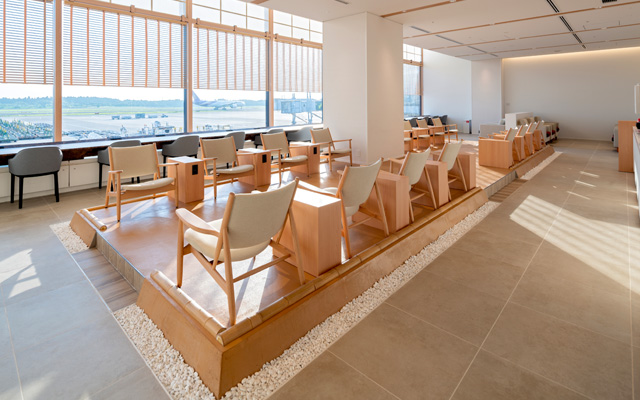
Collinson has launched LoungeKey Pass Storefront, a new channel that enables businesses to increase ancillary revenue.
LoungeKey Pass Storefront is a B2B tool that extends from LoungeKey Pass, a digital voucher that enables users to visit an airport lounge without the need for registration, physical cards or membership. Businesses can now offer direct purchase of LoungeKey Pass to their customers by linking to the co-branded user interface via their existing booking channels or customer journeys; in turn providing their business with immediate ancillary revenue.
Besides boosting ancillary revenue, LoungeKey Pass Storefront offers businesses cost-effective brand differentiation through the ability to personalise the user interface with their logo and accessibility to the Storefront via their own ecosystem.
Brands can further enhance their customer engagement proposition by incorporating LoungeKey Pass Storefront as part of their spend-based rewards or point redemption programmes.
Japan Airlines is the first brand globally to partner with Collinson to offer LoungeKey Pass to its customers, where JAL’s customers are now able to purchase LoungeKey Pass directly via JAL’s website.
Customers with a LoungeKey Pass can access over 1,500 airport lounges and travel experiences – dining not included – in over 700 airports in 145 countries.
According to Collinson’s The New Rules of Engagement: Customer Expectations Revealed research report, while most consumers in Asia-Pacific (60 per cent) cite rewards, such as points or cashback, as preferred ways to engage with them, experiential benefits continue to increase in significance. Consumers, particularly millennials and Gen Zs, seek non-financial, experiential-driven rewards, such as airport lounge access, sleeping pods and gaming lounges; with these generational cohorts revealing that having access to airport lounges makes them feel valued and rewarded.
Todd Handcock, global chief commercial officer and Asia Pacific president, Collinson said: “Customer engagement and loyalty programmes that have travel-related benefits are highly popular among consumers of today. Almost half of the Asia-Pacific-based respondents to our recent research survey said that brands who offer such rewards are highly effective in influencing their spending behaviour.
“By leveraging LoungeKey Pass Storefront, businesses can deepen their engagement with their consumers through making highly-valued experiences more easily accessible, while driving better commercial returns.”
Maldives keen to woo back Indian tourists

Roadshows in three Indian cities, influencer and media familiarisation trips to the Maldives are on the cards as Maldives travel authorities ramp up promotions to woo back Indians following a political spat in January.
Soured relations between India and the Maldives resulted in a slowdown in Indian arrivals in the Maldives, dropping to sixth place as a source market from being the topmost market in 2023.
“We are confident with the support from the industry and the Government agencies, Maldives can regain the current decline in Indian tourists,” said the Maldives Association of Travel Agents and Tour Operators (MATATO) earlier this month in a statement after a meeting with the Indian Ambassador in Male to revitalise this source market.
Maldives’ economy depends largely on tourism, and has been caught in between political rivalry with its two main markets – India and China – after the recently-elected president Mohamed Muizzu won based on a pro-China stance compared to his predecessor favouring India.
In January, after Indian prime minister Narendra Modi sought to promote a series of Indian islands as a tourist destination, his move was criticised by three Maldives’ deputy ministers who were quickly suspended in an attempt by Maldivian authorities to settle the row.
MATATO president Abdullah Ghiyas told TTG Asia that they have finalised one roadshow to be held in Bangalore while the other two will be finalised at meetings with Indian authorities attending the ATM 2024 in Dubai next month.
He said plans are underway to facilitate influencer and media fam trips to the Maldives in the forthcoming months.
MATATO said India remains a vital market for Maldivian tourism, and it looked forward to partnering with prominent travel associations and industry stakeholders across India to further promote the Maldives as a premier travel destination.
Despite the slowdown from India, tourist arrivals in the Maldives overall rose in the period January to March 27, 2024 to 576,952 from 505,083 in the same 2023 period. The main source markers were China, Russia and the UK, Italy, Germany and India.
The Maldives attracted 1,842,169 visitors last year, slightly higher than the target of 1.8 million while this year’s target is set at two million arrivals.
Travelport, Tourism Malaysia expand destination marketing collaboration

Travelport and Tourism Malaysia have expanded their strategic destination marketing collaboration following the successful campaign and data analysis work that has accelerated the campaign conversion growth for the Malaysian DMO during the past year.
Travelport will continue to provide Tourism Malaysia with meaningful data and market intelligence used to drive destination marketing campaign decisions. The DMO will use insights from Travelport to educate and engage travel retailers about Malaysia, focusing on continuous growth in visitor arrivals, longer stays and higher spending from tourism.
“Travelport provides the meaningful data analysis that we need to effectively educate tourism players about our unique and diversified experiences for travellers so they can promote Malaysia as a top destination for their customers,” said Manoharan Periasamy, director general of the Malaysia Tourism Promotion Board. “Through this collaboration, we have achieved a 50 per cent uplift in campaign conversions compared to 2019.”
Travelport global head of destination marketing Anna Au-Yeung shared: “As we expand our strategic collaboration, Travelport’s data insights will continue to empower Tourism Malaysia with setting the right strategic focus, resource allocation and market priorities as traveller preferences and market conditions continue to evolve.”
This year’s tourism scene in Malaysia is packed with State Visit Year from four states: Melaka, Kelantan, Perak, and Perlis. The country will also host the ASEAN Tourism Forum (ATF) 2025 and the upcoming Visit Malaysia Year that will take place in 2026.
Periasamy said: “We expect that this collaboration will continue to maximise our promotional efforts which will focus on placing Malaysia as the top-of-mind ecotourism destination of the world, through the country’s diverse ecosystems and natural wonders.”
Accor receives recognition as choice employer for two years running

Accor has once again been named as one of the best companies to work for in Australia having been recognised as a 2024 5-Star Employer of Choice (500+ employees) by HRD Australia for the second consecutive year.
This coveted accolade was achieved through a rigorous two–part selection process, consisting of a detailed submission on Accor’s team offerings and practices, followed by an anonymous employee survey to gauge employee satisfaction across multiple metrics.

Accor operates more than 400 hotels, resorts and apartments across the Pacific region, employing more than 21,500 people.
Commenting on the recognition, Accor Pacific COO PM&E, Adrian Williams, said: “It reinforces that we have a committed and caring team, who are passionate about supporting and developing people, and creating career pathways. Our teams bring diversity, experiences and stories to our culture, which makes Accor a community for all to excel. Our people are integral to our success and growth and I could not be prouder of them.”
Accor has implemented a number of initiatives to attract, retain and develop talent. Example programmes include Accor’s revolutionary Work Your Way initiative, which offers increased flexibility and a range of personalised benefits, to create a fulfilling and inclusive team member experience.
Accor also has a nation-leading Indigenous Careers Program, which has placed more than 2,500 Aboriginal and/or Torres Strait Islander team members into positions since its inception in 2015. Plus, with a growing desire among its Indigenous team members for leadership roles, Accor has facilitated numerous scholarships for tertiary education, leadership programmes, and the appointment of Indigenous hotel general managers.
Furthermore, Accor is steadfast about setting team members on the path to sustainable transformation and recently launched its ‘School For Change’ training programme, which aims to improve individuals’ understanding of the causes of climate change and its impact on biodiversity and communities.
“It’s an exciting time to work in hospitality as the travel industry continues to evolve and expand. What I love most about our industry is that it gives you the chance to learn and grow, which opens doors to the world,” added Williams.
La Vie Hotels & Resorts launches new tower at ADGE Hotels & Residences
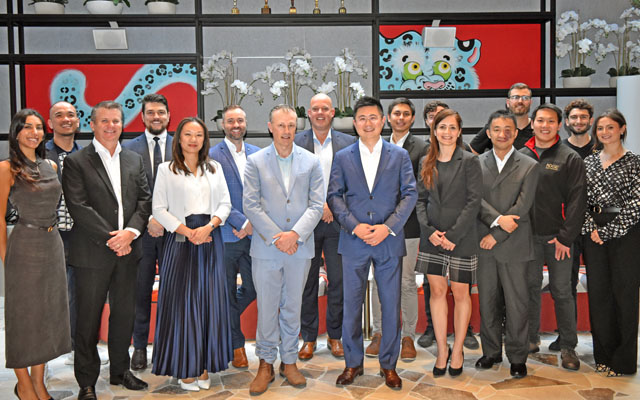
ADGE Hotel & Residences in New South Wales, Australia – managed by La Vie Hotels & Resorts – is launching a second designer hotel tower on the former site of the Cambridge Hotel, adding an additional 149 guestrooms to the property, making 254 rooms in total.
This decision was due to ADGE Hotel & Residences having exceeded occupancy targets since opening last August, regularly selling out during key events.
ADGE Hotel & Residences general manager, Paul Cundy, said: “Adding 149 extra rooms to our inventory means we can better cater to demand surges over busy event periods, which will only add to the colour and life that keeps this hotel buzzing.”
“We understand that today’s travellers want more than just a place to rest and ADGE has been a great example of how we’ve been able to deliver a fun, vibrant and sociable place for locals, interstate and international travellers to stay,” said Jerry Xu, CEO, La Vie Hotels & Resorts.
“Travellers are looking for hotels with personality, flair and a unique point of difference that creates a truly one-of-a-kind stay close to city hubs, and we’re thrilled with what we’ve been able to achieve with ADGE, with the support of our trusted owners.”
Maldives promotes destination at ADEX Ocean Mission 2024
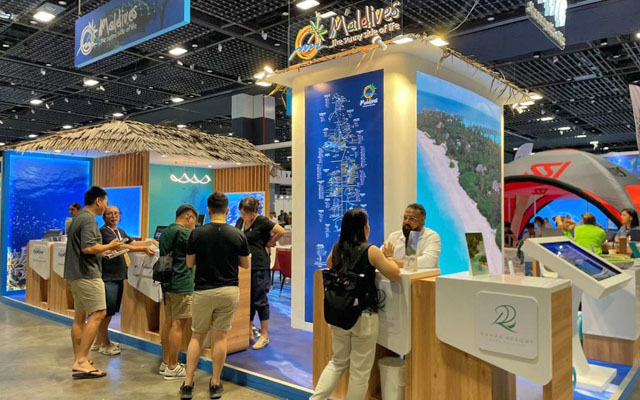
Maldives Marketing & Public Relations Corporation (MMPRC/Visit Maldives) participated at the ADEX Ocean Mission 2024 held in Singapore from April 12 to 14 at the Suntec Singapore Exhibition and Convention Centre.
Along with six industry partners, MMPRC utilised this event to showcase the diving and underwater experiences available in the Maldives at the largest dive fair in the South-east Asia market, as well as to provide the latest destination information to interested visitors and create awareness for the Maldives as a preferred dive destination.
A total of 58,947 visitors dropped by the Visit Maldives booth at the fair – some of the activities included a consumer survey, distribution of informative flash cards about Maldivian marine life, and artworks displaying the different dive locations in the Maldives.
In addition, MMPRC has planned several activities targeting the South-east Asian market, to increase travellers and maintain destination presence. These activities include joint-marketing campaigns with major stakeholders, outdoor advertising campaigns, participation in fairs, hosting webinars, E-Learning programmes and other events.
With a history spanning 26 years, ADEX is the biggest and longest-running dive expo in Asia, bringing together VIPs and speakers from across the globe and provides a platform for various exhibitors such as dive operators, equipment manufacturers, and national tourism boards of countries.
Leading Hotels’ Sustainability Leaders collection sees healthy growth

The Leading Hotels of the World (LHW) has revealed that the Sustainability Leaders collection that launched in October 2023 has since grown by more than 50 per cent.
LHW has more than 400 independent luxury hotels in over 80 countries, and created the Sustainability Leaders collection to recognise Leading Hotels that are committed to preserving the environment and the cherished values and cultural heritage of their destinations.
A Leading Hotel with the Sustainability Leader recognition has been rigorously evaluated and has received at least one, or more, GSTC-accredited certification or certification to a GSTC-recognised standard.
In addition, LHW has partnered with Vireo Srl (GSTC-Accredited Certification Body) as well as Green Globe, Green Key Global, and Travelife (all use a GSTC-recognised standard) to offer its hotels resources and tools to advance their sustainability strategies.
Over the last year, the collection has completed approximately 10K community service hours, and in 2024 alone, Leading Hotels have committed to nearly US$10M investments in renewable energy and waste reduction around the world.
Lauren Alba, vice president, global marketing & communications, LHW commented: “Travellers are placing far more emphasis on companies that value and demonstrate sustainable practices. LHW recognises its role in reshaping the world through responsible travel as we work to seamlessly integrate our three pillars of the Sustainability Leaders program into every stay: Community Champions, Culture Guardians and Environmental Protectors.”
One of the Community Champions is The Datai Langkawi in Malaysia which has projects offering educational classes for locals, reforesting the surrounding woodland and an extensive coral restoration programme. For Environmental Protectors, Constance Halaveli Resort Maldives has invested in Manta Ray awareness for all team members and guests to protect these highly threatened marine creatures; while an example of Cultural Guardians is Royal Palm Beachcomber Luxury in Mauritius, which has an initiative that helps local hand-craft creatives by giving them the opportunity to develop their skills and sell their products to the tourist market.
“LHW’s Sustainability Leaders are committed to being environmental stewards and good global citizens that are dedicated to creating a better world for generations to come,” said Alba.
Developing people power

 Most people in Singapore are familiar with NTUC LearningHub. For the benefit of our Asia-Pacific-wide audience, how would you describe the organisation’s raison d’être?
NTUC LearningHub is one of the largest continuing education and training centres in Singapore. It is set up to help adult learners upskill and re-skill, particularly for emerging or in-demand job roles and functions.
Our team at NTUC LearningHub creates the courses and helps adult learners to get the necessary skills or certifications that enable them to do their job better and advance in their career.
Over the years, we have moved in line with the government’s direction for training outcomes. We have starting to move into job placement, as well as to assist with job redesign and provide business transformation advisory.
In order to know what to train, we need to understand how businesses need to transform and how job roles need to be redesigned. Once we figure out what the skill gaps are, we can embark on necessary training.
From job-seekers’ point of view, understanding what jobs are in demand and their own skill gaps will enable them to decide on the certificates they should obtain.
We get support from our sister organisation, NTUC (National Trades Union Congress), and we plug ourselves into NTUC’s e2i (Employment and Employability Institute) ecosystem to facilitate job search and employment.
One of the common things I hear from department leaders is that companies must match productivity-driven job restructure with better wages. How do you approach such conversations about job redesign with equitable wage changes?
Businesses are all about revenue and cost. When a company develops the capability of its people, it is with the intention for employees to grow revenue.
The purpose of optimisation, digitisation and automation is easy to communicate to business leaders, but this may not be easy to execute because the process comes with many other considerations, like investment and people management.
I will say that the new conversation about job restructure is built upon the shortage of talent. Businesses are starting to understand and appreciate the fact that to attract talent, they must position themselves as a progressive organisation.
We have customers who, after going through basic training, come back to ask us about drawing a career journey for their people. Business leaders know that people seek employers who will invest in them.
Obviously, larger enterprises have more resources and are better able to answer to this call. It is generally tougher for SMEs (to adjust wages upwards with job restructure), but there are some very progressive SMEs setting great examples in multi-skilling and growing their talents.
There is also more talk about helping companies with implementation-led training, where talent development efforts are not limited to training the individual, but expanded to include mentors who will help staff implement new projects. This is very much like capstone projects in school, with the professor mentoring and guiding students.
How does NTUC LearningHub’s work fit into Singapore’s travel and tourism workforce?
The travel and tourism sector was hit hard by the Covid pandemic. Companies working to recover also had to cope with changing traveller demands and requirements. They had to recruit people all over again while updating their training programme and learning how to adapt to a new world of travel and tourism.
NTUC LearningHub works with the Singapore Tourism Board (STB) and the travel and tourism sector to identify emerging skills and jobs. NTUC LearningHub offers the most number of courses in the city centre across many disciplines. Our technology team, hospitality team, and tourism team allow us to bring together all the necessary skills and knowledge across the spectrum and curate courses based on needs of the travel and tourism sector.
As jobs change post-lockdown, is the human resource (HR) function changing as well?
HR is seen to play a more critical function now. HR officers not only need to meet the emerging demands of their company and the workforce, they also have to address the norms of remote work – such as managing staff who work from home, ensuring their mental wellness, etc.
If you think about it, the HR function is a big anchor in business transformation.
So, two things are happening on the national level. One, we are working with the Institute of Human Resource Professionals to get HR practitioners to upskill themselves.
Another initiative is related to career health, where we not only work with individuals but also through the HR function to help individuals take charge of their own career development. We’re providing toolkits to facilitate conversations with individual staff, so that they know where to look for information, what their options are, and how they can upskill themselves towards a better career.
You said companies are a lot more aware of the importance of training. But where difficulties still exist in convincing business leaders of the need to invest in talent development, what are the common causes of concern?
The challenge of SMEs is that they are resource-tight, so the issue is not about convincing them of the need to upskill their people. They face constraints in meeting everyone’s needs in time – the customers’ need to be attended to and employees’ need to be trained. SMEs will have to decide which business need is more important. If a customer says the company must have a certain certification to do business with them, then the company has no choice but to set aside time for staff training and certification.
Obviously, money is also an issue and that’s where NTUC LearningHub can help. We should be able to find some ways to get training programmes funded. Most of our programmes, if not all, are funded in one way or another. We have the NTUC Education and Training Fund for NTUC members to defray part of their expenses, as well as other programmes on the national level. For example, there are schemes that subsidise salaries of employees who are sent for training.
Does training resistance exist among employees?
It is not so much resistance towards training, but the lack of understanding and awareness.
If we were able to have a conversation with individuals for them to understand how changes were impacting the business and their role, most would have no issues with embarking on training.
However, training follows the 70-20-10 model, where 10 per cent of one’s learning comes from classroom-based training; 20 per cent of retention is through group sharing and experiential learning; and 70 per cent is from on-the-job training, subject to the culture and leadership of the line manager.
Hence, the real retention and positive habit-forming can only take place in the office and at work. The culture of the company and peer support is important.
Let’s talk more about the hiring landscape in Singapore. What roles and skill sets are most in demand among local travel and tourism businesses, and do we have enough locals wanting and able to meet that demand?
Based on our recent Tourism Industry Insights report, digitalisation and sustainability are the two big skill sets needed today and going forward. About four out of five employers say they need or are looking for people with digital skills. About 50 per cent of employers say they are looking for people with sustainability knowledge and skills.
As the society gets more productive, you can see that there is greater interest in how to do things better with technology and to do things more sustainably.
You also asked if Singaporeans have these needed skill sets. There are huge offerings in the training landscape (to teach emerging skill sets), so there are certainly many opportunities to upskill oneself. The challenge with training is that the business environment will keep evolving, so people must not only learn new skills but also how to keep expanding their sources of information, build their network, and cope with changes that come their way.
How successful has NTUC LearningHub been with its continuing education push and job placement efforts?
NTUC LearningHub has always been supporting the travel and tourism sector, however we started focusing on in-demand and emerging skills specifically for this industry last year. Between then and now, the number of supported organisations has grown by several folds. These organisations include SMEs.
NTUC LearningHub is able to get many organisations on the training bandwagon because the team works closely with the unions, associations, and industry partners. Moreover, being part of the labour movement, we are able to reach out to companies to raise awareness on training and available schemes to help business owners.
At the same time, we also work closely with funding agencies to provide optimal funding to such in-demand and relevant training programmes.
While travel and tourism companies used to just send their people for mandatory courses, more are recognising the need to upskill their team on emerging skills to respond to the changing demand of the customers. We therefore see increasing frequency of training and wider variety of courses subscribed by their staff.
I spoke earlier about implementation-led training. In our work with travel and tourism customers, we also introduce implementation-led training programmes that include developing implementation plans that address a practical problem statement with actions plus a follow-up three months on so that we can review progress. This approach has its merits, as organisations often worry that training investment is lost once trained employees leave the company. However, corporate implementation plans will not be lost with staff attrition.
Looking through the newly published Tourism Industry Insights, I cannot help but notice that more than half of surveyed tourism leaders (52 per cent) consider customer service to be only average or below. What are the issues and can training alone resolve this?
Covid created a gap of three to four years when many people had to stay at home, thus reducing interaction between human beings and impacting the art of serving people.
Furthermore, as the Singapore society gets more affluent, it has also become harder to understand how to serve others.
Customer service concerns also stem from the whole host of new visitors that are coming into Singapore post-lockdown. There is a shift in major tourist markets, moving from China to India and Vietnam. Hence, there is a need for travel and tourism organisations to understand the different cultures of our visitorship and how these new visitor segments wish to be served.
Hospitality is complex. Organisations have to consider how the world is changing, customers’ expectations around digitalisation and sustainability, and the many emerging needs of customers and the workforce.
Can training improve customer service standards? Well, my answer goes back to the 70-20-10 training model. Training can solve 30 per cent of the problem, but the real test is in the environment the staff has outside of the classroom. Is there a supportive work culture of continuous learning and mentorship? Is there a feedback mechanism? Organisations must not only teach skills but facilitate mindset and habit changes.
Travel and tourism businesses beyond Singapore often turn to academic institutions here for educational support. Does NTUC LearningHub provide any learning support for foreign firms?
NTUC LearningHub’s courses are offered in partnership with local and overseas professional associations, so the approach is global in nature. However, these courses are conducted in Singapore, and attendees need to be here to undergo them.
Both local and overseas travel and tourism organisations are welcome. We have had travel and tourism professionals from Hong Kong, the Philippines and Malaysia attending our courses.
So, the short answer to your question is yes, NTUC LearningHub does support foreigners and foreign firms that want to partake in our training programmes.
There are also occasions where NTUC LearningHub brought certain programmes overseas for specific organisations, but such arrangements are not something that we actively pursue.
Vietjet rolls out ticket deals to Vietnam and beyond

Vietjet has launched its Real Deal to New Me event featuring a million Eco tickets and up to 50 per cent discount on Business tickets for all domestic and international routes.
From now till April 21, travellers can secure millions of Eco tickets starting from S$80 (US$58)/one-way for the following services: Singapore-Ho Chi Minh City, Singapore-Hanoi, and Singapore-Danang, as well as other Vietnam domestic and international routes. Travel dates are from September 1 to October 31 (excluding holidays and peak periods).
Book Business tickets and receive half off by using the BU50 code for direct flights between Vietnam, India, and Australia from now to April 30. For other direct and connecting flights covering Vietnam and international destinations, apply the BU30 code to enjoy a 30 per cent discount. Travel for this promotion is valid from May 1 to June 30.
For more information, visit Vietjet.








A new sightseeing train is set to launch in the southern-island of Japan on April 26 this year.
Named Kanpachi Ichiroku, this new D&S (Design & Story) train is designed to immerse passengers in the ambiance of the Yufu Kogen Line, where passengers can embrace the essence of the region, including its climate, terrain, local cuisine, customs, and picturesque landscapes.
The name of the train is derived from the names of two historically significant figures, Aso Kanpachi and Eto Ichiroku who played pivotal roles in both the realisation of the full opening and formation of the current Kyudai Main Line.
In conjunction with the Fukuoka and Oita Destination Campaign (April to June 2024), JR Kyushu will launch this new Limited Express D&S train on April 26.
The train will depart from Hakata Station on the once daily trip (except Thursdays) on the Yufu Kogen Line via Yufuin to Beppu Station, taking around five hours. The fare includes the one-way ticket on the train and a bento box meal.
Visitors can book tickets online or through a travel agent. The JR Kyushu rail pass, however, cannot be used for Kanpachi Ichiroku.