


A city blossoms
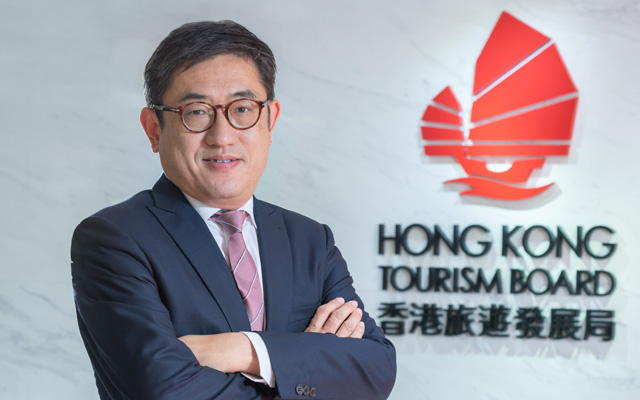
 We have just a little more than a month before 2024 comes along. How do you expect Hong Kong’s travel and tourism community to start off in the new year?
I am very optimistic.
People have accumulated a lot of savings from not travelling over the long Covid years, and many are still waiting for the opportunity to make up for lost time. Within Asia, Hong Kong is among the very last destinations to reopen without test requirements and quarantine, so the destination still has some way to go (in terms of recovery).
We have seen how the lack of air capacity, particularly on long-haul routes, has made travel more expensive. So, for many Americans and Europeans, domestic and regional trips are favoured. The time has come for them to head to Asia, as flights to Asia are building up. Last week (US president Joe) Biden and president Xi (Jinping of China) met in the US and spoke about committing to increasing scheduled passenger flights between the two lands. That’s very good news.
However, we have to take currency exchanges into consideration. Hong Kong has became more expensive than four years before, and there is also the added strain of inflation. While Hong Kong is not a cheap place to be, it offers big value which is most important.
Another challenge comes in the form of manpower constraints – this is an issue shared by many other destinations that have reopened. Our hotels are running at about 75 per cent of full operational capacity, so there’s still room for us to open up. Hong Kong International Airport, one of the busiest in the region, also needs time to rebuild staff and bring back more air services. Flights are resuming close to 100 per cent (of pre-pandemic levels) by the end of next year.
I’d say that things are ramping up for us progressively.
What are some changes in the travel and tourism landscape that you’d want Hong Kong’s industry players to take note of?
One obvious change is the rise in people going online for travel stories and ideas, for flights and other transactions. As such, social media is getting very important. As a tourism board, we need to adapt. We no longer just put out ads; we need to have good, genuine and authentic stories. We could hire a KOL (key opinion leader or influencer) or invite a reporter over, but the message has to be authentic. Consumers can tell if the story was genuine or just an official message.
Two, the Chinese travel market is no longer the sort that spends lavishly on travel. It is not that they don’t have money to spend; they do, but they want to spend on the things that they feel is of value. For instance, younger Chinese travellers want experiences that are cool. There is a MacDonnell Road in Hong Kong, somewhere in the expensive Mid-Levels area. This road became an Internet sensation of sorts in China for sharing the name (homophonic) with fast food chain McDonald’s but not having a single McDonald’s restaurant there. Someone posted on social media in China about this, and it went viral. A lot of young Chinese would go to MacDonnell Road with a McDonald’s paper bag just to take a photograph with the road sign.
For the young Chinese, it is not about going to a Michelin three-star restaurant and boasting about it. They are more keen to try out a top local eatery with a two-hour queue line, and then posting a photo of their food on social media.
Three, there is a lot more solo travel or smaller leisure group travel.
HKTB launched a very successful Hello Hong Kong campaign when Hong Kong reopened, and most recently it rolled out Night Vibes Hong Kong. What new initiatives will there be in 2024?
This year is all about reopening, recovery, and reconnecting. Our initiatives are all to make sure that the whole world knows that we are open.
Next year, we’re moving on to conversion. We want people to not just say, oh Hong Kong is nice and interesting, but also make the move to book and come. We will give them reasons to book their trip to Hong Kong; we will go tactical with offerings and packages to drive booking numbers.
We will also be connecting with people who have been to Hong Kong and know about Hong Kong, and have them tell the Hong Kong story.
You spoke about the rise of social media in destination marketing. Where does the travel trade media, like TTG Asia Media, fit in? Is the trade media channel still relevant?
Oh yes, trade media is important because you need businesses to deliver tourism outcomes. There are consumers who want to travel, truly travel, and not just go shopping in the destination. We want to be able to connect such visitors with expert travel and tourism businesses, especially the SMES – most tour operators are SMEs. These SMEs will be able to provide value to travellers.
In the last two or three years during the lockdown, Hong Kong people could not go out and overseas travellers could not come in. So, we encouraged Hong Kong people to be tourists, and that led to some very interesting developments. They explored local neighbourhoods, spent at local shops, and discovered hidden gems. That generated a lot of story ideas that we were able to use in our international destination marketing through the travel trade channel.
The travel and tourism industry continues to use 2019 as a benchmark of business rebound. But with so many changes in the marketplace, such as in terms of travel habits, major source markets, and travel conditions, should different key performance indicators be considered?
In 2018, we had record high number of arrivals, hotels were doing 90-plus per cent (in terms of room occupancy), and flights were all very full. Well, when Covid came, everything slowed down.
I would not want to compare our recovery now with the peak we experienced in 2018. We must remember that while we did so well in 2018, the whole experience wasn’t all that good for our tourists and our residents. Hong Kong was overcrowded that year.
So, I am quite clear about this – I do not wish to pursue 100 per cent of (what we got in) 2018. Instead, I want Hong Kong to recover on the back of high-end travellers who appreciate the value of Hong Kong. To attract these people, we need high quality offerings.
I also want to see Hong Kong being regarded as the perfect gateway to the whole of Asia, to China, and to the Greater Bay Area. I think we have a fantastic opportunity to do this because of the accessibility of this area. The Hong Kong West Kowloon railway station, which connects to the high-speed Guangzhou-Shenzhen-Hong Express Rail Link, runs 180 services every day. It brings travellers from Hong Kong to so many Chinese provinces and cities in quick time. Shenzhen is just 30 minutes away. Guangzhou East is less than an hour from Hong Kong.
The high-speed rail is just one mode of transport – there is also the Hong Kong–Zhuhai–Macau Bridge.
Furthermore, Hong Kong International Airport is transforming into an airport city. There is a lot of construction now, and eventually the whole area will be integrated and easy for people to move around.
This ambition is ideal because people now want to do more on a single trip, and this approach benefits not just Hong Kong alone.
Perhaps another tourism key performance indicator could be travellers’ satisfaction level and strength of desire to revisit.
I know that the media tend to look at the numbers and the economic benefits, but if we want sustainable tourism performance, we should not just milk the cow and get everyone to come into Hong Kong. Measurement of tourism performance should not just solely be tourism spend and duration.
Hong Kong’s ongoing transformation is amazing – the massive SkyCity development and the West Kowloon Culture District for instance. As someone living in Hong Kong and seeing these urban developments over the years, what are you most proud of?
Hong Kong has blossomed. We now have a much better story to tell people who have never been to Hong Kong as well as those who have been to Hong Kong years ago.
The whole art and cultural scene in Hong Kong is thriving. The new Hong Kong Palace Museum, for example, is outstanding because it offers a whole different experience from Beijing’s Palace Museum. The Hong Kong Palace Museum exhibits many antiques and artefacts that are uniquely on loan from The Palace Museum in the Forbidden City.
We are also doing great with our wellness promotion. While we used to promote Hong Kong’s outdoor draws, it was never this strongly. Hong Kong’s great outdoors is a huge advantage – travellers can easily go from the shiny city centre to a laid-back outlying island within 20 or 30 minutes, or mix city outings with a hike or cycling activity.
All these new developments are enriching Hong Kong’s positioning as Asia’s entertainment and business capital.
I’m also so proud of Hong Kong’s culinary strength, which continues to impress locals and visitors. F&B business is very competitive in Hong Kong, which means operators have to be excellent in order to survive. Furthermore, Hong Kong people are very demanding – yes, unforgiving diners (laughs) – so culinary quality here is very high.
South-east Asia as a region has been doing particularly well for Hong Kong this year – collective arrivals are only second to massive China. Are there certain source markets in South-east Asia that HKTB would like to invest in more?
Arrivals from Thailand and the Philippines are doing extremely well, and numbers for October may have exceeded pre-pandemic levels.
We’re excited to see that the government is relaxing entry visa rules for Vietnamese passport holders. Vietnam is a very important source market, as outbound traffic has been doing rather well for several destinations including Japan and South Korea. Vietnam is a market that Hong Kong was not able to capture in the past, so we will be investing more in that.
Hong Kong has always been a very popular destination for the regional market. These days we are seeing multi-generation family groups coming in from South-east Asia, and the richer ones can be seen having breakfast here at The Peninsula Hong Kong. I feel that The Lobby (the hotel’s restaurant popular for its lavish breakfast and afternoon tea) is a barometer for Hong Kong’s tourism performance, and this morning this place is buzzing.
Malaysia’s open-door visa-free initiative fuels tourism rebound confidence
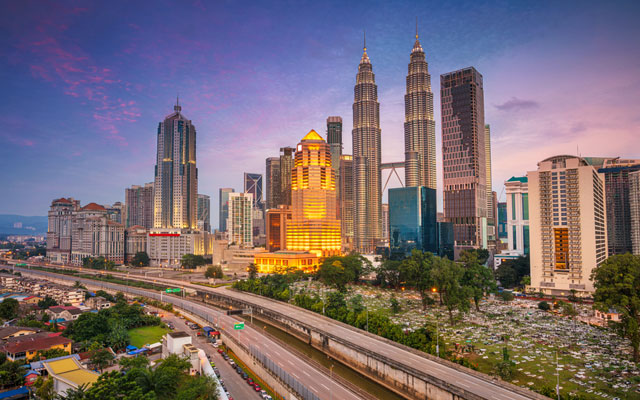
The Malaysian travel and tourism community is hailing the government’s latest 30-day visa-free decision for a swathe of nationalities as the catalyst for the country’s tourism recovery.
The Malaysian government announced this week that 30-day visa-free entry will be granted from December 1 to visitors from China, India, Turkiye, Jordan, Saudi Arabia, Qatar, the UAE, Bahrain, Kuwait, Iran, and Iraq.
AirAsia has been swift to announce a substantial expansion of its services connecting China and Malaysia, as well as India and Malaysia throughout 1Q2024.
Parent company Capital A CEO Tony Fernandes described the visa-free move as a “forward-thinking initiative” by the Malaysian leadership.
Shaharuddin M Saaid, executive director, Malaysian Association of Hotel Owners, emphasised the significance of the government’s “open-door” policy for countries that are identified as key tourist markets for Malaysia.
However, he underscored the importance of ensuring an adequate number of flights and available seats to facilitate the influx of tourists into the country. This is especially crucial in building momentum for the upcoming Visit Malaysia Year 2026.
Shaharuddin opined that the success of this endeavour hinges on the seamless coordination of travel infrastructure to accommodate the anticipated surge in tourist arrivals.
Sabah’s chief minister, Hajiji Noor, is hopeful that the 30-day visa-free entry policy for visitors from China and India would assist in the tourism recovery of the state, which year-to-date had achieved 85.6 per cent of its tourism target.
AirAsia plumps up 2024 seat inventory in support of Malaysia’s visa-free move
In response to the Malaysian government’s move to offer 30-day visa-free entry for travellers from China and India starting December 1, 2023, AirAsia will increase services between China-Malaysia and India-Malaysia starting in the first quarter of 2024. The change will result in 230 weekly flights with up to 5.2 million seats per year.
The announcement coincides with the recent announcement of the easing of travel restrictions for Malaysians to China, from December 1.
Parent company Capital A CEO Tony Fernandes said: “This is a huge, much-anticipated news not only for AirAsia but for the country, and we truly thank the Malaysian government, particularly prime minister Anwar Ibrahim, for this forward-thinking initiative.
“AirAsia has been at the forefront of trying to make visiting Malaysia easier. The 30-day visa-free entry for the citizens of China and India will surely provide a welcome boost for Malaysia’s tourism and its economy ahead of the upcoming peak travel season while boosting economic bonds between these great nations. As a vital player in the aviation sector, we stand ready to add capacity to support the demand for affordable and accessible air travel in the region.”
AirAsia Aviation Group’s group CEO, Bo Lingam, added: “We see this as an opportunity not only to enhance regional connectivity in two of our largest markets, but also to act as a catalyst for significant economic growth. With an estimated 4.6 million guests expected to travel on our extensive network of 26 routes in China and India in 2024 alone, we are ready to play a pivotal role in achieving Malaysia’s ambitious tourism targets of 25 million international tourists annually.”
Both AirAsia Malaysia and AirAsia X Malaysia fly 17 routes into the country with a total of 156 flights weekly. AirAsia Malaysia and AirAsia X Malaysia fly from Kuala Lumpur to Guangzhou, Quanzhou, Kunming, Guilin, Nanning, Shantou, Shenzhen, Chengdu, Beijing, Hangzhou, and Shanghai. AirAsia Malaysia also flies from Kota Kinabalu to Guangzhou, Hangzhou, Shenzhen, Beijing and Wuhan, as well as from Johor Bahru to Guangzhou.
Both airlines have also increased frequencies to nine routes into India with a total of 74 flights weekly. AirAsia Malaysia flies from Kuala Lumpur to Bengaluru, Kolkata, Cochin, Hyderabad, Chennai, Trichy, and Trivandrum – a new destination starting in February 2024. AirAsia X Malaysia flies from Kuala Lumpur to New Delhi and Amritsar.
Marriott, USAID to lift economic conditions for Maldivian islands
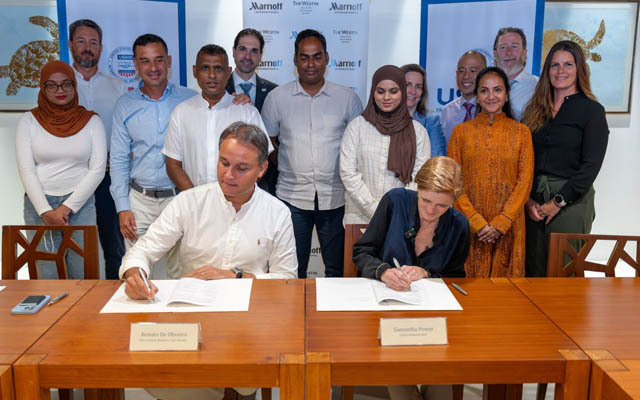
Seven Marriott International resorts in Maldives and The United States Agency for International Development (USAID) recently came together to look into collaboration with local islands that will expand economic opportunities for their residents.
The seven Marriott International resorts are represented by Marriott Maldives Business Council’s chairman Renato De Oliveira.
The partnership is aligned with Marriott International’s Take Care culture, a commitment to promote opportunity, community and purpose for all.
Possible outcomes from the partnership include tourism excursions on nearby inhabited islands, increased resort employment of local island residents, joint waste recycling efforts, locally sourced agriculture products, and more.
“Together we are paving the way for thriving communities and building a future where everyone’s potential is unleashed,” said De Oliveira, who is also general manager of The Ritz-Carlton Maldives, Fari Islands.
“We will continue to build deeper connections in local communities which are aimed to sustainable and mutually beneficial cooperation,” he added.
Batik Air connects Dubai and Kuala Lumpur
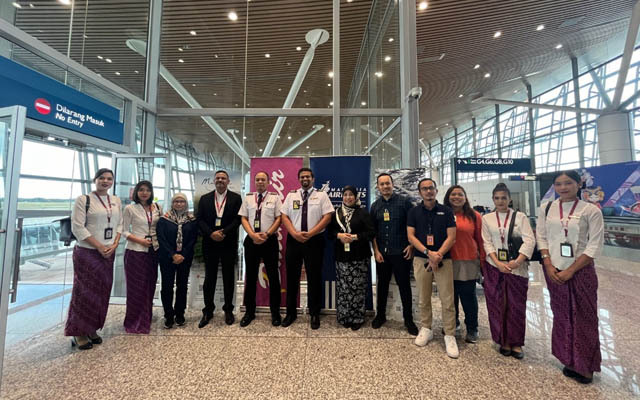
Batik Air has commenced direct flights between Dubai and Kuala Lumpur, which is expected to fuel both leisure and business traffic between the two destinations.
Flight OD714 departs from Dubai every Monday, Tuesday, Thursday and Saturday at 04.05, arriving in Kuala Lumpur at 15.35 local time. The return flight, OD713, operates on Monday, Wednesday, Friday and Sunday, departing at 23.05 local time and arriving in Dubai at 02.25. The flight is operated using a new Boeing 737-8 aircraft, with 12 business class and 150 economy class seats.
This follows the airline’s Jeddah-Kuala Lumpur service launched on August 15.
Ammar Abd Ghapar, director general of Tourism Malaysia, said the new service will support destination promotions in the lead up to Visit Malaysia Year 2026.
He added: “This will further boost the growth of traffic flow via Kuala Lumpur International Airport, opening up Malaysia more broadly to travellers from other international destinations and thus accelerating Malaysia’s tourism recovery.”
Meanwhile, group strategy director of Batik Air and Lion Group, Chandran Rama Muthy, said: “The new Dubai-Kuala Lumpur route expands Batik Air’s reach, seamlessly connecting (South-east Asia) and Asia-Pacific markets with the Middle East.”
Chinese carriers give up extra flight slots as travel demand takes a hit

The campaign to entice more long-stay tourists to Thailand has not been as effective as government projections hoped, with the disappointing numbers of arrivals leading Chinese carriers to readjust operational requirements for flights into Thailand for the near future.
The knock-on effect comes from less-than-successful attempts to inspire Chinese tourists with reduced admin and costs for long-term visas to stay in the country. The launch of the campaign meant that several Chinese airlines requested extra flight slots into Suvarnabhumi International Airport, alongside additional ground crew to cope with increased operations.

At the time of launch (during Golden Week), numbers in arrivals went up to approximately 18,000 passengers per day. However, once Golden Week concluded, the figures slumped down to just 8,000, before rising slightly to 10,000 – but these numbers have not been enough to impact the economy in real terms.
When the drive for more Chinese arrivals failed to inspire tourists to come to Thailand in anywhere near the numbers expected, the airlines did not sell enough tickets to make the additional flights profitable, and they had to give up the extra staffing requirements and additional flight windows.
The scheme for reducing red tape and fees for long-term visas has been a key component of prime minister Srettha Thavisin’s strategy for reinvigorating the economy, and he was keen to defend its potential, laying the blame for the shortfall on a stagnant Chinese economy and China’s promotion of domestic travel. It is also impossible to ignore the impact the Bangkok mall shooting in October has had on a source market that places a premium on safety and security.
However, Srettha remains confident in the allure of the visa exemption campaign and there are plans to roll out similar terms in other territories, including India, Taiwan, and potentially Europe.
Onyx Hospitality Group witnesses soaring demand from Indian market
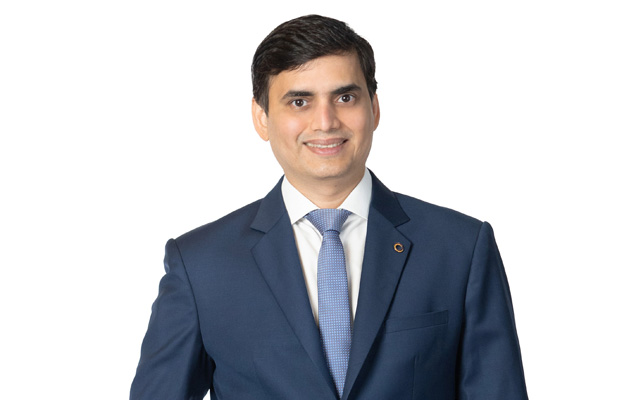
Thailand-based hospitality management company, Onyx Hospitality Group is witnessing strong growth numbers from the Indian market.
Kashyap Vora, vice president – corporate finance, investments & development of Onyx Hospitality Group, shared with TTG Asia that properties in Thailand, Malaysia and Maldives are leading in terms of the demand generation from India.
“The demand from the Indian market is at an all-time high and growing rapidly. Comparatively, the Indian market has exhibited the highest growth base among other markets. The buoyant Indian economy and digitisation in the country are helping to grow the numbers from the Indian market,” said Vora.
Detailing the impressive growth statistics, Vora noted the phenomenal rise in Indian outbound marketing for properties like Amari Bangkok, Amari Pattaya, and Amari Phuket, boasting an approximate 108 per cent growth rate this year. Additionally, the newly-opened property, Amari Raya, in the Maldives has experienced a rapid surge in Indian arrivals.
Highlighting the growth in Malaysia, where the group operates four properties including Amari Penang, Amari Kuala Lumpur, Amari Johor Bahru, and Ozo in Penang, Vora remarked: “Two properties, Amari Penang and Amari Kuala Lumpur, have witnessed a 58 per cent increase in arrivals from India this year.”
Apart from higher occupancy from the Indian market, the group is also witnessing an increase in the average length of stay for Indian travellers. “Sharing an example, the average length of stay of India travellers visiting our Thailand properties used to be four to five nights. Now we have seen it increased to six to seven nights,” he said.
To tap the Indian market, the group with 55 years of operating history is also introducing India specific products in its properties like Nila, which offers Indian coastal cuisine apart from organising trade road shows in India.
As part of its expansion plans, Onyx Hospitality Group is gearing up to unveil new properties in the coming months, including Amari properties in Colombo and Laos, along with three additional properties in Malaysia under the Shama portfolio.
IHG signs InterContinental Sabah Kota Kinabalu Resort
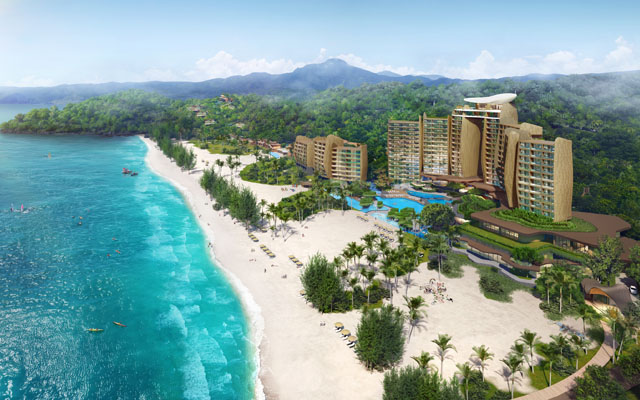
IHG Hotels & Resorts and Taipei real estate broker Zhancheng Tourism Development have partnered to introduce the eco-friendly InterContinental Sabah Kota Kinabalu Resort.
The 450-room new-build beachfront resort located in the capital of Sabah is scheduled to open in 2027. It will be IHG’s third hotel in Kota Kinabalu together with Holiday Inn Express Kota Kinabalu City Centre and the upcoming Crowne Plaza Kota Kinabalu Waterfront.
InterContinental Sabah Kota Kinabalu Resort will adopt environmentally-friendly practices throughout its design, construction and operations, and provide guests with immersive, close-to-nature stays through experiences that value, protect and care for the biodiversity of its location. All rooms, suites and villas will offer a strong “back-to-nature” theme steeped in Borneo culture, and feature a full range of modern creature comforts.
Some sustainability-based initiatives will include the resort using recycled water via a rainwater filtration system, local sourcing of goods and materials, an on-site food garden, and the use of low carbon materials from the local area.
Just a 25-minute drive from Kota Kinabalu International Airport, InterContinental Sabah Kota Kinabalu Resort will feature a 600m-long beach, with facilities such as four restaurants and bars, 2,400m2 of meeting space, fitness centre, spa, kids club, three outdoor pools and the Club InterContinental Lounge. Activities offered comprise island hopping, snorkelling, forest walks, mangrove kayaking expeditions, and firefly and proboscis monkey cruises.
Rajit Sukumaran, managing director, South East Asia and Korea, IHG Hotels & Resorts, said: “Kota Kinabalu is one of the leading leisure destinations in Malaysia and an eco-tourism hub renowned for its nature-based attractions and rich cultural heritage… we’re invested in bringing new and unique experiences to a range of city and resort destinations.”
Jetstar Asia restarts Singapore-Osaka services
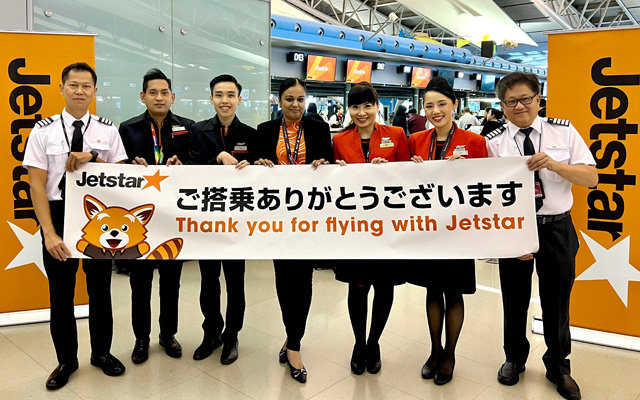
Jetstar Asia has relaunched its service from Singapore to Osaka via Manila on November 24.
The low-cost carrier will operate five services a week between Singapore and Osaka, increasing to daily from December 30 to meet the pent-up demand for the service.







Emirates has become the world’s first airline to operate an A380 demonstration flight using 100 per cent Sustainable Aviation Fuel (SAF). The flight took off from Dubai International Airport with one of four engines powered on 100 per cent SAF, helping to demonstrate its potential as a drop-in replacement that matches jet fuel’s technical and chemical requirements, while being a more sustainable alternative.
The A380 demonstration flight underlines the performance and compatibility of SAF, and contributes to the growing body of research carried out by the industry to evaluate the beneficial effects of 100 per cent SAF on aircraft performance. SAF is currently capped at a 50 per cent blend limit in engines for commercial flights.
The 100 per cent drop-in SAF used on the demonstration flight includes renewable aromatics and closely mimics the characteristics of conventional jet fuel. This is the first time that drop-in SAF has been used on an A380 aircraft, with the expectation of full compatibility across the aircraft’s existing systems.
Last week, robust engine testing for one A380 Engine Alliance GP7200 engine using 100 per cent SAF was carried out, with the objective of validating the engine’s capability to run on the specially blended 100 per cent drop-in SAF without affecting its performance or requiring any modifications. Ground engine testing took place at the Emirates Engineering Centre in Dubai.
Earlier this year, Emirates successfully completed the first 100 per cent SAF-powered demonstration flight in the region on a GE90-powered Boeing 777-300ER. Last month, the first Emirates flights operating with SAF provided by Shell Aviation took off from Dubai International Airport (DXB). Shell supplied 315,000 gallons of blended SAF for use at the airline’s hub in Dubai.
Adel Al Redha, chief operating officer, Emirates Airline, said: “The growing global demand for lower-emission jet fuel alternatives is there, and the work of producers and suppliers to commercialise SAF and make it available will be critical in the coming years to help Emirates and the wider industry advance our path to lower carbon emissions.”
“Seeing Emirates flying an A380, the world’s largest airliner, powered by an engine running on 100 per cent SAF is a symbolic moment. These fuels are the most effective way to address CO2 emissions in the aviation industry today and that they are supported increasingly by the world’s leading airlines. SAF is vital to meeting the sector’s target of net-zero emissions in 2050, but needs the backing of the whole industry,” commented Julie Kitcher, executive vice president communications and corporate affairs, Airbus.
The airline also recently expanded its partnership with Neste for the supply of over three million gallons of blended SAF in 2024 and 2025 for flights departing from Amsterdam Schiphol and Singapore Changi airports.
In addition, Emirates currently uplifts SAF in Norway and France and the airline continues to seek opportunities to use SAF at various airports as supply becomes available.