

TTG Asia’s online news bulletin will take a break on May 1, 2024 in observance of Labour Day.
 The online news bulletin will resume on May 2, 2024.

TTG Asia’s online news bulletin will take a break on May 1, 2024 in observance of Labour Day.
The online news bulletin will resume on May 2, 2024.

The Peninsula Excelsior Singapore, a Wyndham Hotel, has named Juliana Yeo as the new director of sales and marketing.
Leading the sales and marketing team, she has also been tasked to rebrand and reposition the four-star Peninsula Excelsior Singapore to an international upscale Wyndham Singapore.
 She has over 19 years of experience as a director of sales and marketing, and was part of the team to relaunch and rebrand the renovated Mandarin Oriental Singapore.

Tourism facilities in earthquake-hit Ishikawa Prefecture are gearing up for more visitors following the success of government subsidies to attract tourists to the region.
Since March 8, the Japan Tourism Agency has offered discounted rates to domestic and international travellers in Ishikawa and neighbouring Toyama, Fukui and Niigata prefectures, whose tourism industries suffered due to the 7.6 magnitude earthquake that struck Ishikawa Prefecture’s Noto Peninsula on January 1.

The campaign offers 50 per cent discount per person on accommodation or a travel package, ranging from 20,000 yen (US$129) for accommodation only to 30,000 yen for a three-day-two-night package, as well as 35,000 yen for packages covering at least two of the four prefectures. It ended on April 26 due to Golden Week, a series of national holidays running from April 29 to May 5, but will restart on May 7 and run until July 31.
So far, the campaign has produced mixed results.
In Kanazawa, Kenrokuen, a nationally important garden and one of Ishikawa’s top attractions, welcomed 486,600 people during the cherry blossom period (April 5-14), an 8.6 per cent increase on the same period in 2023, according to the prefectural government’s tourism planning division.
The number of tourists visiting Yamanaka-za Theatre in Kaga, southern Ishikawa Prefecture, since the earthquake, however, is about 20 per cent fewer than over the same period in 2023, according to staff.
Still, tourism businesses are encouraged by progress and some plan to open during Golden Week for the first time since the earthquake. These include Aerial Observatory Sky Bird in Suzu City, and sightseeing boats in Shika, both on the Noto Peninsula.
“While many tourist areas remain significantly affected and still in the initial stages of reconstruction, those with less or no damage are keen to help support the region’s economic recovery,” said a Japanese government representative.

Cebu Pacific (CEB) has made a strategic push to enhance its market presence and appeal to Australian residents eager to discover new and exciting destinations.
Launched to capitalise on the surge in international travel, the airline’s latest campaign, Fly to Happy, Fly to the Philippines with Cebu Pacific, promotes limited-time bargain airfares to encourage bookings, plus a catchy tune promoting the country as a happy destination.
The airline recently ran a promotion till April 30 offering some of its lowest fares ever from A$289 (US$188) on its Melbourne or Sydney routes for travel between May 1 and September 30 this year.
CEB already has a healthy customer base among Filipinos, who ranked number five for the most common overseas country of birth at the last Australian census in 2021, but it is believed there is an untapped market among leisure-seeking Australian travellers.
“(The campaign) is targeted to entice non-Filipino travellers to visit the Philippines and make Cebu Pacific their airline of choice,” said CEB spokesperson Carmina Romero.
“Our internal (research) has indicated that Australia would be a promising market. In 2023 alone, Cebu Pacific carried more than 100,000 inbound passengers from Melbourne and Sydney to Manila. This significant volume of passengers reflects a growing interest in air travel between Australia and the Philippines.
“We see great potential for further growth and development in serving the Australian market and are confident that these travellers can discover a variety of unique attractions and thrilling adventures here in the Philippines,” she told TTG Asia.
Romero continued to say there’s been significant positive feedback to the campaign so far, following events with stakeholders and influencers in Melbourne.
Although the campaign signals a new chapter, remnants of frustration from flight cancellations could temper some customers’ responses.
The airline’s last campaign ended with the cancellation of all Melbourne to Manila flights between October 30, 2022 and March 25, 2023, leaving many frustrated customers scrambling to rebook with other airlines or deal with the company’s help bots to try and claim refunds. The cancellations were blamed on network-related schedule changes.
“I had booked my tickets in March that year for Christmas and was looking forward to being able to fly directly from Melbourne with my young family. So to have my tickets cancelled two months before without any explanation was upsetting, and I eventually got my refund from my bank rather than the airline,” confided an impacted customer, who chose to remain anonymous for this article.
“I do find the current promotion attractive because it’s a really good price – but I would love some assurance that the previous cancellations won’t happen again and that they will improve customer relations because we have high expectations here in Melbourne,” the customer added.
Invited to respond, Romero said CEB has since achieved stronger resiliency in the face of global supply challenges.
“Ahead of the fourth quarter 2023 peak, we had already (arranged) precautionary allocation of spare aircraft on standby to be utilised for disruptions. Taking delivery of new aircraft is also one of the proactive steps we’ve made to boost our operational resiliency,” she said.
“We have also made significant improvements in our customer policies to adapt our services to our customers’ evolving needs,” she added.
This includes extending the validity of CEB’s travel vouchers to 18 months, previously six months. An “elevated digital experience” has also been introduced with a “new and improved” 24/7 virtual assistant that is better connected with CEB’s help centre and its live agents.
CEB’s Fly to Happy, Fly to the Philippines with Cebu Pacific campaign will involve other activities this year to strengthen brand awareness and is run across other markets within the airline’s international network.
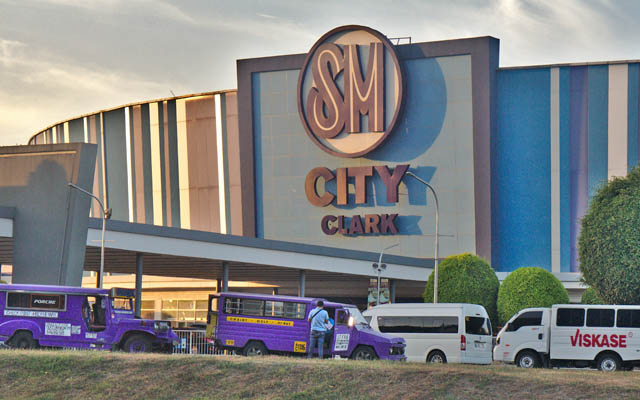
Travellers in Clark, the Philippines, can now enjoy the convenience of checking in their luggage in the city before heading to Clark International Airport (CRK) for their flight.
The City Check-In Facility at the SM City Clark mall was a recent move by the Philippine Department of Transportation as part of the government’s efforts to make air travel as safe and comfortable as possible for the flying public.
“With the added convenience of checking in prior to reaching the airport, this will truly enhance CRK’s appeal as an airport of choice while showcasing Clark’s vibrant location,” said Noel Manankil, president and CEO, Luzon International Premier Airport Development Corp., which is the manager and operator of CRK.
Commenting that the establishment of the City Check-In Facility is an additional assistance to passengers departing through the CRK, Clark International Airport Corporation president and CEO, Arrey Perez, shared: “The check-in facility inside a popular mall will definitely have a positive impact because, more than just an additional service, it will add to the convenience of CRK passengers.”

Hilton has signed with SC Asset Corporation to introduce Kromo, Curio Collection by Hilton, marking the lifestyle brand’s debut in Thailand and the brand’s growing presence in South-east Asia.
Scheduled to open at the end of 2024, the new-build hotel will join Hilton’s expanding portfolio of hotels in Thailand, where it currently operates 13 properties across five brands, with nine more in the pipeline.

Kromo, Curio Collection by Hilton will feature 306 rooms and suites, an all-day dining restaurant, a creative social dining space, bar, fitness centre, as well as indoor and outdoor pools when it opens.
Situated along Sukhumvit’s vibrant shopping belt, the hotel enjoys a prime location close to prominent retail destinations including Emporium, EmQuartier, and the recently unveiled EmSphere. Shopping malls and department stores such as Terminal 21 Bangkok, Times Square Building Mall and Robinson Department Store are also a stone’s throw away.
In addition to being conveniently located near Bangkok’s Skytrain stations, Phrom Phong and Asoke, the hotel is also a short walk from Benchasiri Park, ideal for travellers who wish to unwind in nature.
Launched a decade ago, Curio Collection by Hilton currently has over 150 hotels in operation, with more than 20 new properties to open in 2024. Recent additions in South-east Asia include La Festa Phu Quoc, Curio Collection by Hilton in Vietnam.
“Each Curio Collection by Hilton has its own story to tell, and we are delighted to now offer guests in Thailand the ability to experience independent hotels that are destinations unto themselves,” said Alexandra Jaritz, senior vice president, brand management, Asia Pacific, Hilton.
“We are confident that Kromo, Curio Collection by Hilton will enhance Bangkok’s appeal as a lifestyle destination and set new standards of hospitality in Thailand when the hotel opens,” remarked Nuttaphong Kunakornwon, CEO, SC Asset Corporation.

Max-Matching Entertainments Co. has signed an investment of over 2.4 billion yuan (US$331 million) with Hasbro for the world’s largest stand-alone Peppa Pig outdoor theme park in Asia.
Slated to open in 2027, the mega-theme park will cover approximately 19.42 hectares in China’s third largest island Changxing Island in Chongming, Shanghai, which is an hour and a half drive from Shanghai city centre.

A key island for sight-seeing and tourism, the Peppa Pig outdoor theme park will be Changxing Island’s first global IP themed entertainment offering.
The new Peppa Pig theme park will boast innovative features, new themed areas, rides, an immersive show, and a themed hotel specifically designed for the China market.
The project will feature Peppa Pig, which has gained strong momentum in China since it first aired in the region in 2015 with over 10 billion views and wide range of products available across major Chinese retailers.
“Construction of the Peppa Pig outdoor theme park in Changxing Island in Chongming marks a significant milestone for Hasbro in China and a natural evolution for the Peppa Pig brand, reflecting the scale of opportunity in the country and our commitment to developing our business with the support of strategic licensing partner Max-Matching Entertainments in China,” said Matt Proulx, senior vice president, global experiences, partnerships and music at Hasbro.
Changxing Island Administrative Committee deputy director Cai Xiaofei added: “The Peppa Pig outdoor theme park will further enhance Shanghai as a global tourism destination and propel its economy. We believe this theme park can serve as a flagship attraction for the island, helping to establish its own unique brand identity and will have a positive long-term effect to promote the island’s reputation.”

SkyTeam and Scandinavian Airlines (SAS) have signed an Alliance Adherence Agreement, serving as an important step toward SAS’ official entry into the global airline alliance.
From September 1, SAS will officially become a part of SkyTeam, enriching the alliance with the best access to Scandinavian key hubs. This collaboration will bolster SkyTeam’s global network, offering new destinations, enhanced connectivity and a more seamless, elevated customer journey for all travellers.

SkyTeam members serving SAS’ hubs include Air France, KLM, Delta Air Lines and Middle East Airlines.
SkyTeam and SAS are committed to ensuring a seamless transition for all customers.
From the moment SAS joins SkyTeam, EuroBonus members will enjoy benefits from frequent flyer reciprocity across most SkyTeam airlines. EuroBonus Silver members will be recognised as SkyTeam Elite level, while Gold and Diamond members will be recognised as Elite Plus. This will offer them access to a network of more than 750 airport lounges and SkyPriority services at eight airport touchpoints including priority check-in, boarding and baggage handling.
SAS customers will benefit from easy connectivity across SkyTeam’s network of over 1,060 destinations, which includes their favourites as well as previously unserved cities – particularly across Africa, Latin America and the Caribbean.
Patrick Roux, SkyTeam CEO, commented: “With its global reputation for reliability, quality and service, SAS is a great fit for SkyTeam and, as we continue to strengthen our customer proposition, we look forward to being part of their future journey.”
“SAS customers will benefit from SkyTeam’s strong global presence in many of the world’s major aviation hubs and from its focus on strategic partnerships and innovative sustainability initiatives,” said Anko van der Werff, president and CEO, SAS.

A new daily service between Singapore and Hong Kong operated by Greater Bay Airlines (GBA) is expected to make selling destination Hong Kong easier to leisure travellers and school groups, say Singapore-based agents attending a fam trip this week co-hosted by the carrier and Regal Hotels International.
Fourteen travel agents along with two journalists flew on GBA’s second flight out of Singapore on April 27 for a three-day destination showcase, which featured site inspections of Hong Kong Disneyland; guided tours of Sky100 and Hong Kong Palace Museum; accommodation at Regala SkyCity Hotel and iClub To Kwa Wan Hotel; and a Hong Kong Tourism Board-hosted dinner reception at Mondrian Hong Kong’s Avoca.
Elizabeth Chuan, director of Pac-West Travel, an agency that specialises in school groups, said the new service would provide budget conscious clients an additional flight option.
Described as a “value airline” by Linda Ong, sales & marketing manager of Deks Air (Singapore), GBA’s appointed GSSA, the aviation company pledges to “provide service that customers want”.
The airline offers a single Economy class, with options to add on baggage allowance, seat selection, and inflight meals.
Currently, other airlines serving the route are low cost carriers Scoot and AirAsia, as well as full-service Singapore Airlines and Cathay Pacific.
“Some clients prefer affordable flights so as to be able to spend more on destination experiences,” said Chuan.
The new GBA service also facilitates flight arrangements for larger groups that may not be able to secure enough seats on other airlines, remarked Kim Travel Services’ general manager, Vivien Lim, who added that legroom, seat comfort and inflight service levels onboard are commendable for an LCC option.
Agents told TTG Asia that Hong Kong remains an attractive destination for their clients, due mostly to the city’s gourmet and shopping draws.
Nam Ho Travel Service’s product manager, Sam Lee, said Hong Kong Disneyland’s World of Frozen attraction, which opened in November last year, is a novelty for Singaporean holidaymakers, while shopping and dining are evergreen favourites.
Among school groups, Hong Kong is appealing because it shares “similar culture values” with Singapore and offers opportunities for students to experience the city’s “pace of life and working styles”, so as to inspire ideas that could be applied back home, according to Chuan. When in Hong Kong, school groups would visit local academic institutions, take on industrial visits, such as to the Stock Exchange of Hong Kong and the Legislative Council Complex, and participate in cultural immersion activities. For leisure, Hong Kong’s theme parks are often favoured.
Renee Kim, general manager of Regala SkyCity Hotel, expects the new GBA flights – and any new air access into Hong Kong – to lift leisure and business travel demand for the special administrative region of China.
“Especially with Hong Kong being positioned as the central business district of the Greater Bay Area (comprising Hong Kong, Macau, and the nine municipalities in Guangdong Province), GBA’s new Singapore-Hong Kong flights will make it even easier for travellers to come by Hong Kong for work and leisure, and extend onwards to the other cities,” said Kim.
She predicts interest in Hong Kong and the new SkyCity integrated development district, where the hotel is located, will spike come mid-2024, when phase one entertainment facilities are launched. The new openings include KidZania within the 11Skies retail, dining and entertainment hub. 11Skies straddles Hong Kong International Airport and the Hong Kong-Zhuhai-Macao Bridge.



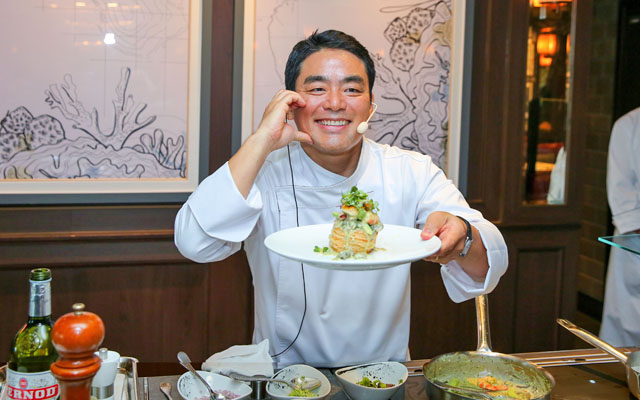
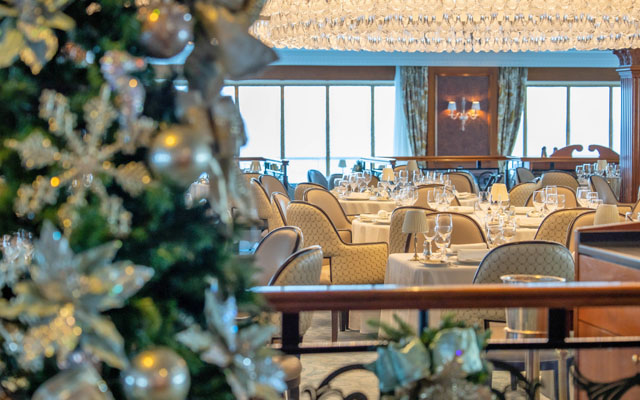




The Japan Tourism Agency (JTA) is stepping up efforts to expand gastronomy tourism in a bid to combat overtourism, cater to the high-end market and boost inbound tourism consumption in rural areas.
JTA will provide financial subsidies in fiscal 2024 (April 2024 to March 2025) for the development and promotion of programmes focusing on regional culinary cultures.
The Japanese government considers food and drink an industry with high potential for growth given that inbound visitors spent 1.2 trillion yen (US$7.8 billion), on food and drink in 2023, equating to almost one quarter of their total consumption, according to JTA.
Support includes up to 50 million yen per successful applicant to cover the establishment of bases for collecting ingredients, such as wild plants, and for carrying out local cultural experiences. Advertising, meanwhile, can be carried out overseas, such as on travel websites.
As part of the plan, luxury packages that combine culinary and cultural experiences will also be developed to expand options for “high-value travellers,” categorised by the Japan National Tourism Organization (JNTO) as those who spend one million yen or more per visit to Japan.
Among the regions that could benefit from the subsidies is Nara Prefecture, which trialled six gastronomy tours from October 2023 to January 2024 with support from JTA as part of a project designed to attract 51 million tourists annually by 2025. The tours introduce Nara as the heartland of sake and matcha, as well as the prefecture that produces the most persimmons.
“The bounty of the nation’s mountains, valleys, rivers and seas differs from region to region, giving tourists myriad opportunities to get to the heart of Japan through their stomachs,” said a JNTO representative. “That’s the essence of gastronomy tourism, a form of travel focused on food nurtured by local ingredients, customs and traditions.”