Hotel 101 targets 25-country expansion with standardised room model
Hotel 101 recently set up its global headquarters in Singapore, on the back of its new land acquisitions in Niseko, Madrid, and Los Angeles over the past few months.
The hospitality company – a subsidiary of Filipino company DoubleDragon founded by fast food tycoons Tony Tan Caktiong and Edgar Injap Sia II – currently has 11 Hotel 101s in the Philippines. Two are operational, while the rest are under construction or in the pipeline.

As to why Singapore was chosen for its headquarters, Hotel 101’s CEO Hannah Yulo-Luccini explained: “In addition to Singapore being one of the 25 countries that Hotel 101 aims to be in within the next three years, the major financial and economic hub in Asia has a growing pool of experienced international talent that we need to develop the ideal management team to help us achieve Hotel 101’s expansion plans.
“Its location and world-renowned airport also make it an extremely convenient hub for our team to fly out of to oversee our various developments and sales hubs globally.”
Travel is very much on the cards, because in addition to Singapore, Hotel 101 ambitious plan is to plant a flag in 25 countries over the next three years. Target locations in Asia-Pacific include India, China, Thailand, Malaysia, Vietnam, Indonesia, Cambodia, Bangladesh, South Korea and Australia. Further afield, Hotel 101 is targeting to open in the UK, the UAE, Canada, Turkey, Italy, Germany, France, and Switzerland. The global vision is to accumulate a portfolio of one million Hotel 101 rooms in 101 countries before 2050.
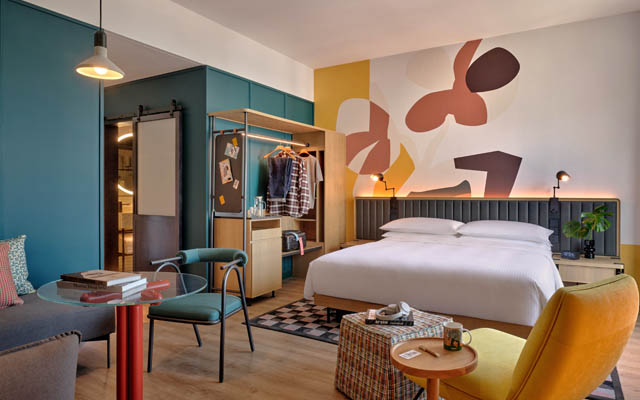
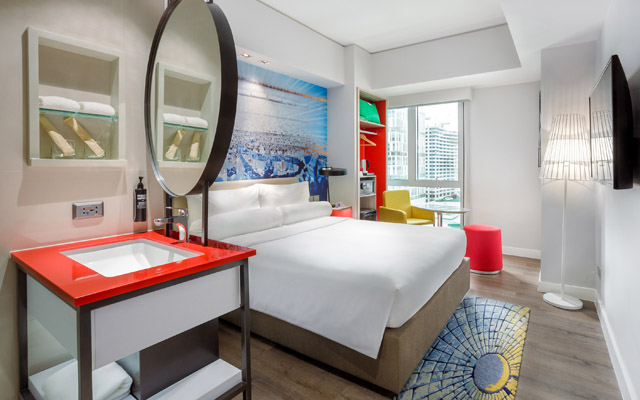
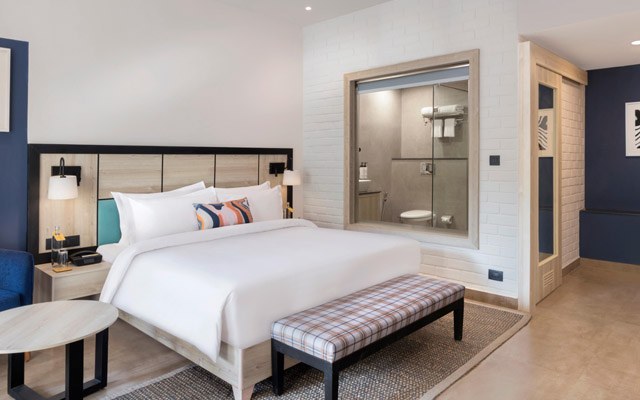
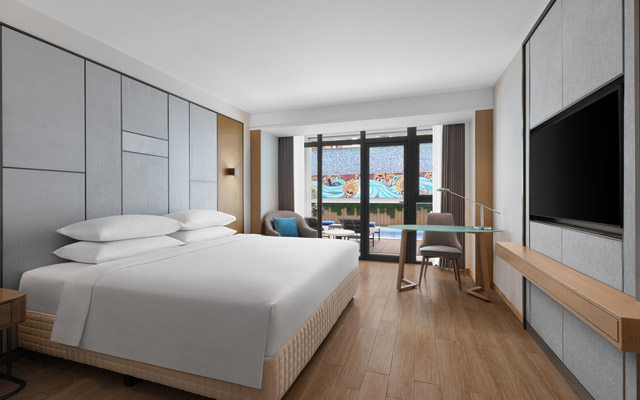
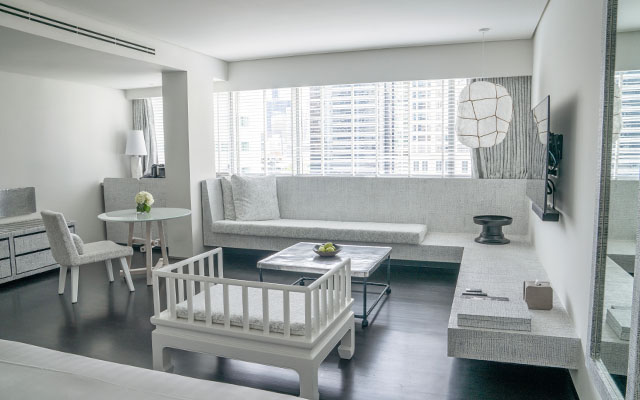
This ambitious plan is possible, only because all Hotel 101s around the world will be three-star, have around 500 keys each, and feature a standard 21m2 room, making it easily exportable, described Yulo-Luccini to TTG Asia during a networking dinner in Singapore earlier in March. She likened the room standardisation to the same way that fast food chains standardise their one iconic burger, and how budget airlines sell the same standard economy seat.
By having that many keys, it also allows Hotel 101 to price its rooms lower than its three-star competitors, yet be able to offer typical four-star amenities such as a restaurant, swimming pool, and gym.
The property’s first Hotel 101 location in Niseko, Japan, came about as the company acquired a 1.1-hectare prime property in the heart of Hirafu during the pandemic. Currently under construction is a 482-key property, where facilities will include an all-day diner, convenience store, fitness centre, business centre, and function rooms. Being in Niseko, it will also have a ski locker, sauna, hot mineral water bath and indoor swimming pools.
Yulo-Luccini elaborated: “A typical room will come with prefabricated toilets, and standardised flat pack furniture and a single type of bulb in the whole building. Our guests will know what to expect wherever they may be. For hotel owners, Hotel 101 will be efficient to build, maintain, and operate, which will result in room rates up to 30 per cent cheaper versus any other hotel chain in its category in any country.”
Besides the templated approach, the hotel chain prides itself on its micro-owner approach, where an individual can own a hotel room, or several, akin to a condo-hotel. The fragmentising of ownership generates the first round of revenue to fund Hotel 101’s rapid expansion plans.
For now, most of the global expansion plans are expected to be via joint ventures with developers abroad, or through licensing or franchising.
“Each unit that is sold will bring (initial) revenue to Hotel 101. Once the hotel is completed, the hotel unit will generate recurring revenues. Rising interest rates globally have opened up a lot of opportunities for expansion in prime locations across popular destinations that would have previously not been accessible to a new hotel developer,” she noted.
Radisson Red hotel to open in Laos capital
Radisson Hotel Group (RHG) has signed with La Vie Hotels & Resorts to introduce its Radisson Red brand in Vientiane, Laos.
The new hotel expands upon the signing of a Master Collaboration Agreement with La Vie Hotels & Resorts to incorporate over 30 hotels into RHG’s portfolio over the next 10 years.

Projected to open its doors in 4Q2024, Radisson Red Vientiane is a new-build property in the heart of the city, surrounded by government offices, shops, markets and restaurants, and just a short distance from the Mekong River waterfront.
This upper upscale lifestyle hotel will offer 145 rooms and suites, including a collection of Pool Access Rooms. Facilities comprise a swimming pool, pool bar, restaurant, fitness centre, business lounge, two ballrooms and meeting venues.
Vientiane’s Wattay International Airport is just 15 minutes’ drive from Radisson Red Vientiane, and the city’s rail terminal offers high-speed train services to China and, in future, to Thailand.
David Nguyen, managing director, Indochina and strategic partnerships, RHG, said: “Radisson Hotel Group’s entry into another South-east Asian capital city is an important moment for our company, as we accelerate our expansion strategy in Asia-Pacific. Our contemporary Radisson Red brand is the perfect fit for this up-and-coming destination, which is attracting a rising number of business and leisure travellers.”
La Vie Hotels and Resorts’ head of South and South-east Asia, Shankar Sreekumar, added: “We are thrilled to build on our partnership to launch the first Radisson Red hotel in Laos. The investment going into Laos at the moment is impressive and Radisson Red will be a welcome addition to the city, bringing an internationally recognised brand to the centre of town. We’re confident Radisson Red Vientiane will become a new icon and leading destination for guests when they travel to Laos.”
Strong earthquake hits Taiwan’s coast
Taiwan has been hit with a 7.4 earthquake just off its shore this morning – the strongest quake to hit the island in 25 years.
The quake hit at 07.58 at a depth of 15.5km just off the eastern coast of Taiwan, according to Taiwan’s Central Weather Administration, knocking out power in several parts of the city. Tsunami warnings issued earlier for the islands of southern Japan and the Philippines have also been lifted.

The Taipei city government has not received any reports of damage, and the city’s MRT was up and running soon after.
Taiwan’s high speed rail operator said no damage or injuries were reported on its trains, but added that trains will be delayed while it carries out inspections; while Taipei residents have been advised to check for any gas leaks.
Taipei’s Central Weather Administration’s Seismology Centre has warned that earthquakes with magnitude of 6.5 to 7 may still occur in three days.
Meanwhile, neighbouring countries Japan and the Philippines have also been affected.
Japan issued an evacuation advisory for the coastal areas of the southern prefecture of Okinawa. The Japan Meteorological Agency placed the quake magnitude at 7.5, with reports of a 30cm tsunami that reached Yonaguni island under two hours after the quake hit Taiwan’s coast.
At press time, no casualties or damage have been reported in Japan and the tsunami warnings for Japan have been downgraded to an advisory. Flights, which were temporarily suspended at Okinawa’s main airport, have now resumed.
Philippine residents across the provinces of Batanes Group of Islands, Cagayan, Ilocos Norte and Isabela have been urged to evacuate to higher ground; while in mainland China, it was reported that the quake was felt in Shanghai, Fuzhou, Xiamen, Quanzhou and Ningde in China’s Fujian province.
Korean Air to operate seasonal charter to Taichung
Korean Air will operate seasonal charter services between Seoul Incheon and Taichung, Taiwan from May 2 to June 29.
Flights on the Seoul Incheon-Taichung route will operate three times a week, on Tuesdays, Thursdays and Saturdays.

The route will be served by a Boeing 737-8, configured with 146 seats, eight in Prestige class and 138 in Economy class.
Sichuan Airlines, China Southern Airlines fly to Kuala Lumpur
Both Sichuan Airlines and China Southern Airlines now operate direct flights to Kuala Lumpur in Malaysia.
Sichuan Airlines will depart from Chengdu to Kuala Lumpur, while China Southern Airlines flies from Shenzhen to Kuala Lumpur.

Both new routes from Chengdu and Shenzhen operate daily on Airbus A321 at a seating capacity of 192 and Airbus A320neo at a seating capacity of 165 respectively.
Megaworld Hotels and Resorts announces new appointments
Megaworld Hotels and Resorts has named Art Boncato Jr as group general manager. Boncato used to be executive vice president and chief operating officer of World Trade Center Metro Manila.
Joe Fijardo is now general manager of 1,500-key Grand Westside Hotel Manila which is opening in June. Oliver Esguerra replaced Fijardo as general manager of Kingsford Hotel Manila.

Maia Israel has taken over from Elmar Lima as general manager of Belmont Boracay. She worked under various capacities in Song Saa Private Island in Cambodia, Courtyard by Marriott Philippines, Laucala Island in Fiji and Radisson Blu Fiji.
Development on track for Indonesia’s new capital city
The first phase development of Indonesia’s new National Capital City (IKN) is on target and president Joko Widodo is expected to inaugurate it on August 17, which is also Indonesia’s independence day, according to IKN Authority.
IKN’s phase one comprises basic infrastructure, the presidential palace and various buildings, which are now 75 per cent completed at an investment of 49.6 trillion rupiah (US$3.2 billion).

Speaking at the Development of Tourism and Creative Economic Sector at IKN media briefing, Sandiaga Uno, minister of tourism and creative economy, said six hotels were currently under construction, including a mid-scale property, The Vasanta Hotel by Sirius Surya Sentosa (Vasanta Group), and an upscale Nusantara Hotel by the Nusantara Consortium, with an investment value of 20 trillion rupiah. Both are scheduled to open later in August.
Pakuwon Nusantara Abadi is developing Pakuwon Nusantara Area, a super-block project comprising a shopping centre, condominium, and three hotels, with an investment of five trillion rupiah. The hotels, which will open in stages, will bear The Westin, Four Points, and Tribute Portfolio brands.
In the meantime, ARCS House Wisata Indonesia is investing around 300 billion rupiah in the development of an upscale Jambuluwuk Nusantara Hotel, which will have around 200 rooms.
Sandiaga expected more investments to come for economy and budget properties.
He added that tourism and creative economic development at IKN will be sustainable.
He remarked: “We will encourage accommodation developments to blend more with (the surrounding) tropical forest. Later, there will be more glamping facilities, cabins, and facilities related to ecotourism.”
The ecotourism concept is suitable for IKN in maintaining the environment and protecting forested areas, of which 75 per cent will remain and the rest cleared for facilities, he explained.
“There are interesting tourist villages and attractions to be developed around IKN, such as Mentawir Tourism Village, Pampang Cultural Village, Balikpapan Botanical Gardens, Tanah Merah Beach, and Bangkirai Hill,” he shared, adding that a tourism information centre, food kiosks, plazas and other supporting facilities will also be built with the government’s Special Allocation Fund.
“We want to strengthen the tourism destination governance network involving the city of Balikpapan and Kutai Kertanegara Regency.”
Friendly visa policy for the Chinese key to recovery: Philippine tourism officer
Liberalising visa policy, like what many destinations have done, will help the Philippines bring back the Chinese market which had reduced sharply in recent years, opined Rene Reyes, tourism attaché at the Philippine Tourism Office Shanghai, adding that a visa upon arrival “will surely help us to attract more Chinese visitors”.
Destinations that reinstated friendly visa policies, including e-visa and visa-on-arrival, have benefitted from a faster tourism recovery rate compared to others.

Reyes pointed out that countries like Singapore, Malaysia and Thailand had already offered visa-free entry for Chinese tourists, while the Chinese government had eased up flight permits.
In mid-2023, the Philippines trialled an e-visa facility for Chinese nationals and had plans to implement it for the Indian market later that year. However, the latter is now halted for improvements and no date has been set for its resumption.
China is the Philippines’ second top tourist market, with a record 1.7 million visitors in 2019, dropping to 263,836 in 2023 according to the Department of Tourism statistics.
In the first two months of this year, tourists from China reached 85,876 or 6.99 per cent of the total foreign arrivals, a far third from top source market South Korea with 28.50 per cent market share and the US with 15.93 per cent.
Last year, the Philippines hosted certain business events with a delegation from China among them: World Food Expo in Manila, Cebu and Davao; Silkroad Philippines 2023: The Best of China at the World Trade Center Metro Manila; PackPrintPlas Philippines 2023 at SMX Convention Center; Philippines Apparel and Textile Show, Philippines Sports Show and The Asia International E-commerce Expo at SMX Convention Center Manila.
Reyes said: “(The) China market will remain the biggest outbound market in the world and this will also be true for the MICE industry. (Recovery) may be slow now – especially for the incentive travel, which was big before – but this will soon pick up and we need to prepare for this.”
Marriott sees growth in Malaysia and Indonesia
The Marriott portfolio of hotels and resorts is witnessing an increase in leisure segment bookings across its properties in Malaysia and Indonesia.
Ramesh Jackson, area vice president for Indonesia and Malaysia at Marriott International, expressed optimism about the growth prospects in 2024, noting that 1Q2024 outperformed the same period in 2019 for both countries. The surge in demand is driven by both domestic and international markets.

Jackson highlighted the preferences of young holidaymakers, emphasising their desire for authentic and meaningful experiences, stating “they are willing to dedicate their time to support causes they believe in”.
In response to this trend, Marriott Bonvoy offers the Good Travel programme, which enables guests to make a positive impact on the destinations they visit through environmental protection, community engagement, and marine conservation initiatives.
One notable initiative is the partnership between Marriott International, Sungai Watch, Bali NextGen Business Council, and the local community for the Big Clean Up project in the Baturiti area of North Bali on March 15. Over 100 volunteers participated in clearing plastics and other debris from Bali’s forests, preventing potential pollution of nearby Beratan Lake.
With the rise of millennial and Gen Z travellers, Jackson stressed the growing importance of digital and social media marketing to directly target these demographics.
He also noted the increasing popularity of bleisure travel among visitors to Malaysia and Indonesia.
Jackson explained: “While these travellers extend their stays to experience local culture, they are also mindful of their environmental impact and seek properties that prioritise sustainability.”
Moreover, Ramesh observed a shift in priorities among intra-ASEAN and Chinese business travellers towards sustainability. They now enquire about the carbon footprint of properties and their sourcing of locally produced food, reflecting a heightened awareness of environmental concerns compared to pre-pandemic times.


Singapore’s growing popularity as a concert destination among music promotors is expected to level up with the opening of Arena@Expo, a new 6,700-seat multipurpose, ready-to-use concert hall that joins Singapore Expo’s cluster of event venues.
Soft-launched in January this year and presented to an exclusive group of music promotors and producers last week, Arena@Expo has already worked up strong interest in the marketplace, thanks to its capacity and plug-and-play capability filling a sweet spot in Singapore’s concert infrastructure.
Arena@Expo packs in a Grand Stage, a production console, and a flexible space that can be configured for up to 6,700 seats or a blended setup with standing pen for 2,500 tiered seats and 4,200 standing. It can also cater to smaller shows with hundreds of people in the audience.
Concert producers are supported by high-quality basic audio and visual technology on site, which are included in the flat-fee venue rental, with half-hall and full-hall options. They are free to supplement their production and event management needs through either Arena@Expo’s partner vendors, or their own preferred ones.
Quality back-of-house infrastructure is also provided, such as comfortable and well-designed hospitality suites for artists. Come May, Arena@Expo will unveil new ticketing and merchandise booths at the front of the venue.
According to Ng Sim Lim, vice president, sales with Constellar, the organisation that manages Singapore Expo, Arena@Expo is now almost half-way to its 2024 target of 25 to 30 shows. These concerts are scheduled to perform throughout the year, and are from a variety of music promoters, across different genres of music and languages.
“Music promotors liked what they saw, and that sparked off positive word-of-mouth,” said Ng, who pointed out that prior to Arena@Expo, Singapore did not have a suitable venue for concerts attracting 5,000 to 7,000 attendees.
“We are able to attract regional artists who have good fan base and are still building up their following,” said Ng.
The new venue has so far welcomed concerts by American singer-songwriter, Melanie Martinez; Lebanese-Swedish singer-songwriter and music producer, Maher Zain; and South Korean idol, Kyuhyun. Come May 11, the venue will host Japanese rock band Radwimps.
As most of these concerts are planned for weekends, Arena@Expo intends to build up weekday content through smaller music promoters and associations that support local artists looking for an opportunity to perform.
Ng believes that Arena@Expo is a valuable addition to Singapore’s venue offerings, especially as the country grows its reputation as a “mecca for artists (and) a destination that (music promotors) must include as a stop in Asia”.
Recent A-lister concerts, such as those put up by Taylor Swift and Coldplay, have positively impacted Singapore’s concert and music industry, and highlighted the city-state’s hardware and supporting functions necessary for high quality performances, opined Ng.
“Singapore Expo works with the hospitality industry to position Singapore as an ideal destination for hosting and attending concerts. We are not just a space for rental; we have a partnership programme with many commercial entities, from production companies to hotels. This partnership programme brings convenience and preferential rates to music promotors, and help them recognise that Singapore is a supportive destination with lots of options,” he elaborated.
Ng has observed a trend among artists to avoid “multiple stops” in a single region, preferring instead “a location that they are very comfortable with and can attract their fans from around the region”.
“They make their (concert tour) decision based on more than just the venue; other supporting functions must be in place. For example, Singapore’s accessibility from anywhere in the world certainly helps promotors to pick Singapore as a destination for regional or world tours,” he noted.