Hotel Groove Shinjuku, A Parkroyal Hotel
Location
Opened on May 19, 2023, Hotel Groove Shinjuku, A Parkroyal Hotel occupies levels 18 and 20 through 38 of the new 48-storey high Tokyu Kabukicho Tower in Tokyo’s lively Shinjuku district.
Tokyu Kabukicho Tower was developed with a grand plan to be the upmarket hub of arts and entertainment in the Kabukicho party central, and therefore packs in a cinema, a threatre and a live event venue besides two hotels – Hotel Groove Shinjuku, A Parkroyal Hotel and the ultra-luxurious Bellustar Tokyo, A Pan Pacific Hotel.
For the uninitiated, Kabukicho is a rather exciting aspect of Tokyo. Its name translates to kabuki street, and is a reference to what the area was meant to serve – a kabuki theatre for traditional dance that was planned for in the 1940s. Although that theatre did not materialise, many other entertainment facilities did, from movie theatres and night clubs to restaurants and bars.
Hence, even though Kabukicho has a notorious side (it is regarded as a red-light district), it is also a treasure trove for travellers in search of great food in lively environs. Young social rebels and homeless folks may sit side by side on the streets, some chatting, some singing, some drunk and dancing, some simply watching the world go by, but Kabukicho feels absolutely safe and my little boys had fun walking around to marvel at countless bright lights past their usual bedtime.
The hotel is within walking distance of four stations – Shinjuku, Seibu-Shinjuku, Shinjuku Sanchome, and Shinjuku-nishiguchi – which grants guests easy access to several train lines that weave through Tokyo.
Occupying the upper floors of the building, Hotel Groove Shinjuku, A Parkroyal Hotel affords guests unblocked views of the wider Shinjuku area as well as the landmark Tokyo Skytree. On a clear day and in the right position, one can even glimpse Mount Fuji.
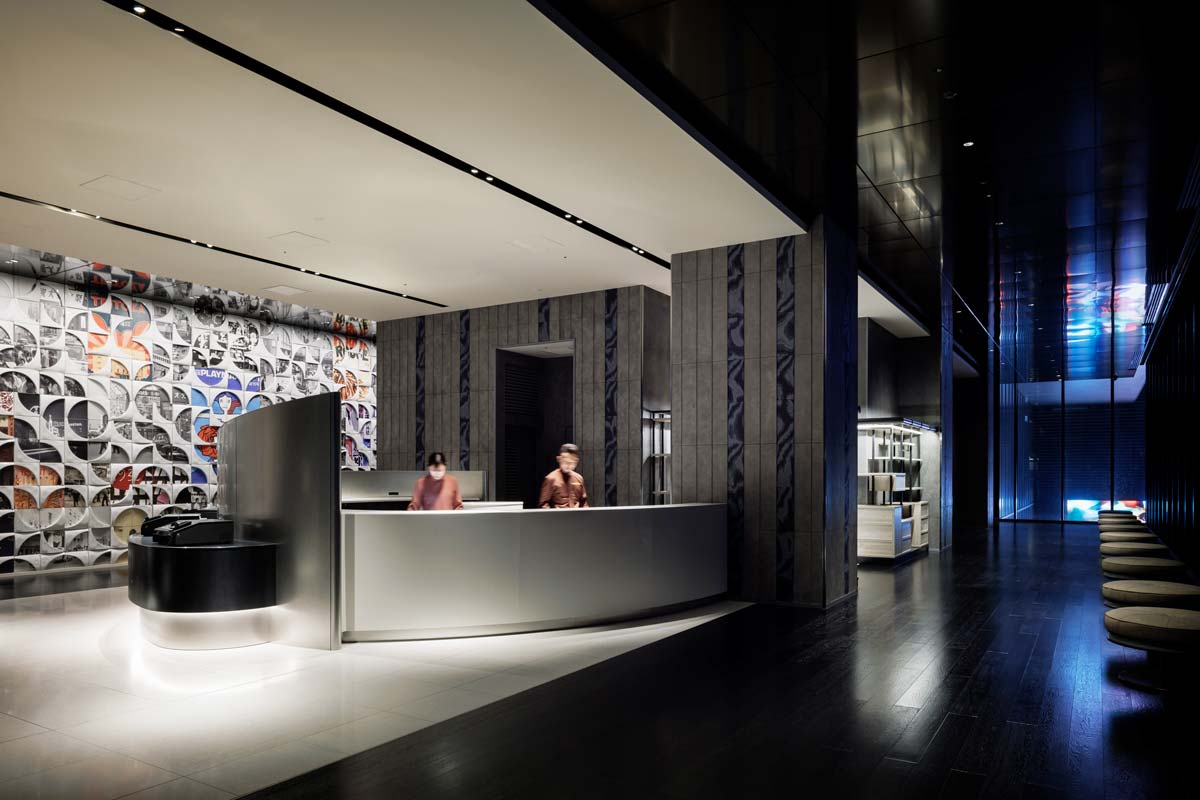
Reflecting Kabukicho’s entertainment background, the hotel’s interior design adopts a certain 1970s vibe, with colourful splashes, nostalgic pieces of furniture turned into art pieces, and a massive wall containing pieces of vinyl records and record covers from a bygone era.
Accommodation
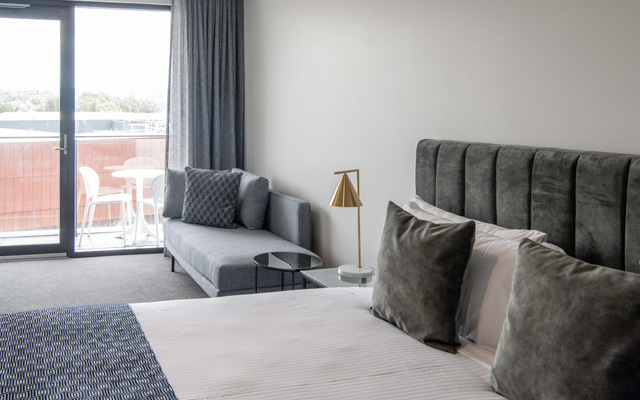
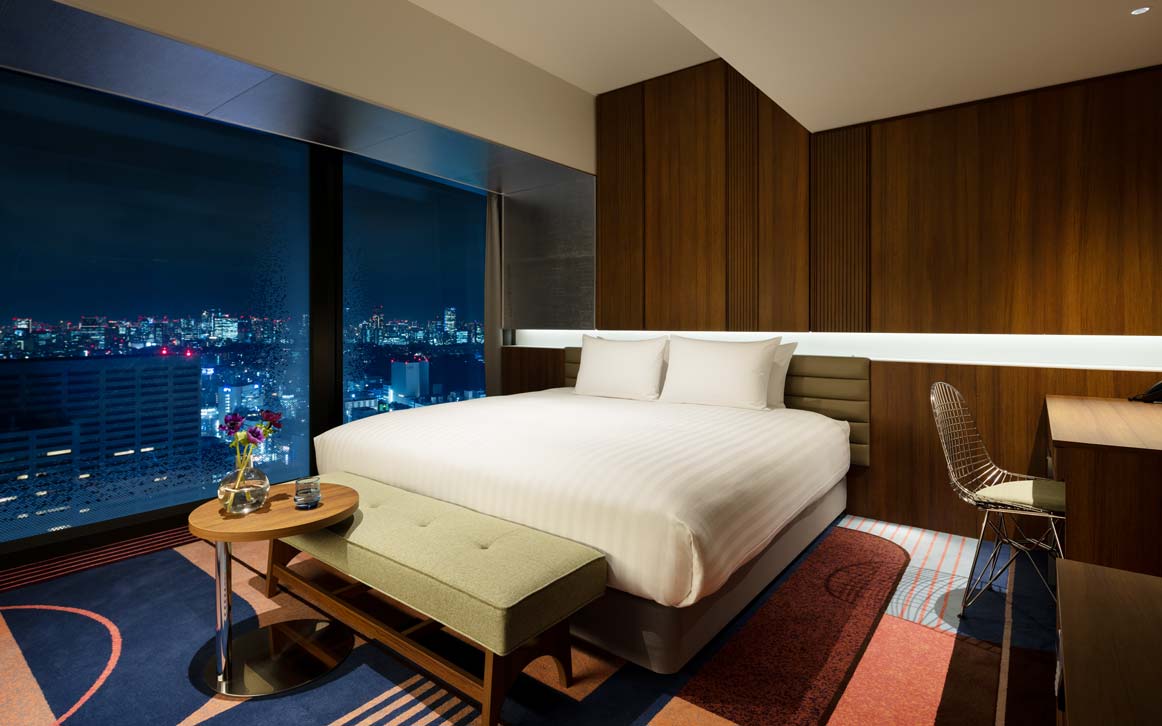
There are 538 guestrooms spread across levels 20 to 38, and every one of them boast city views.
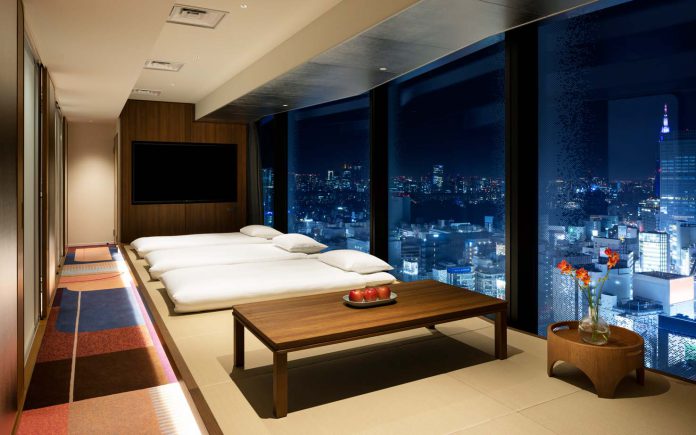
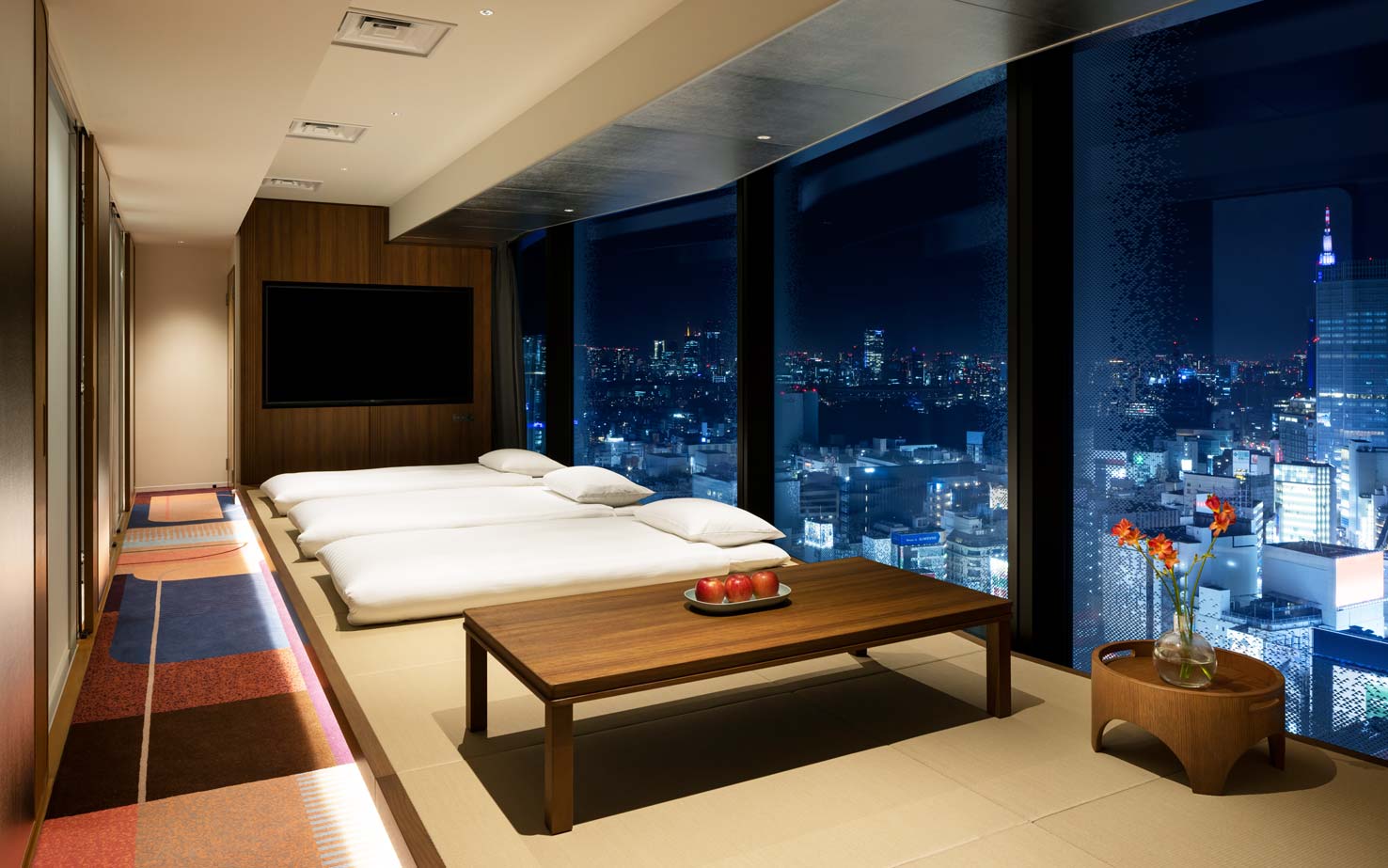
Like the rest of the hotel, guestroom design also adopts an arty vibe. Our room – a 61m2 Japanese suite – blends traditional design with vibrant shades. A tatami-mat platform in neutral colours is set against a carpet of pink, blue and mauve geometric prints that reminds me of costumes donned by Abba and Boney M; magnetic Do Not Disturb signs resemble vinyl records.
The suite is elongated, taking in a spacious lounge, a minimalist wardrobe space, a tatami-mat platform that doubles up for tea and sleep (futons are laid out in the evening), and a plush King bed. Floor-to-ceiling windows run the entire length of the room on one side, and dual toilets and shower areas occupy the other.
The suite is practical, pretty and very comfortable.
Travellers who prefer unusual accommodation should ask for one of nine Art Rooms in the hotel. These are designed in collaboration with three Japanese artists – Yoshiaki Kaihatsu, Takuro Tamayama, and Tomoyuki Washio – and every one is different and absolutely photogenic.
F&B
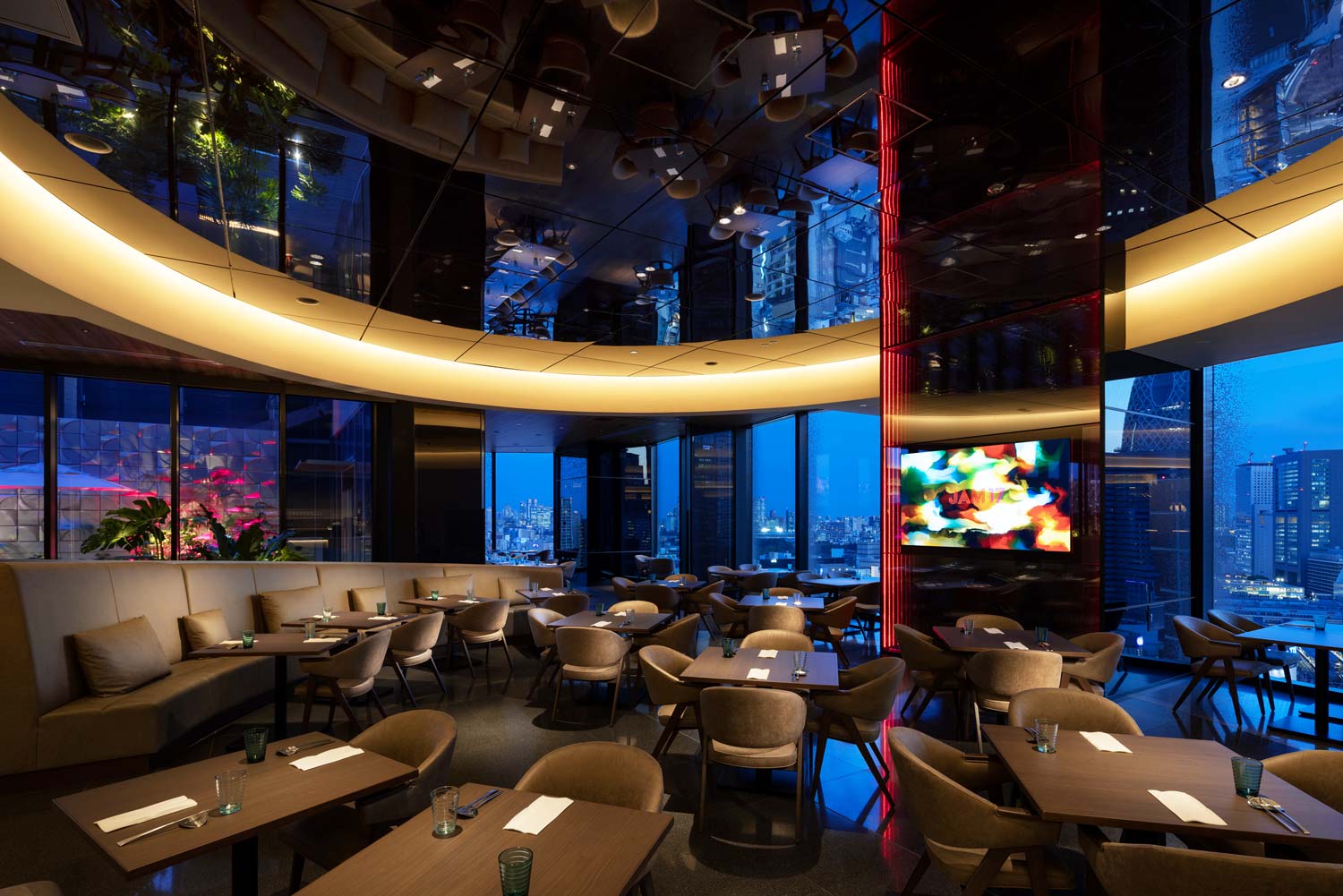
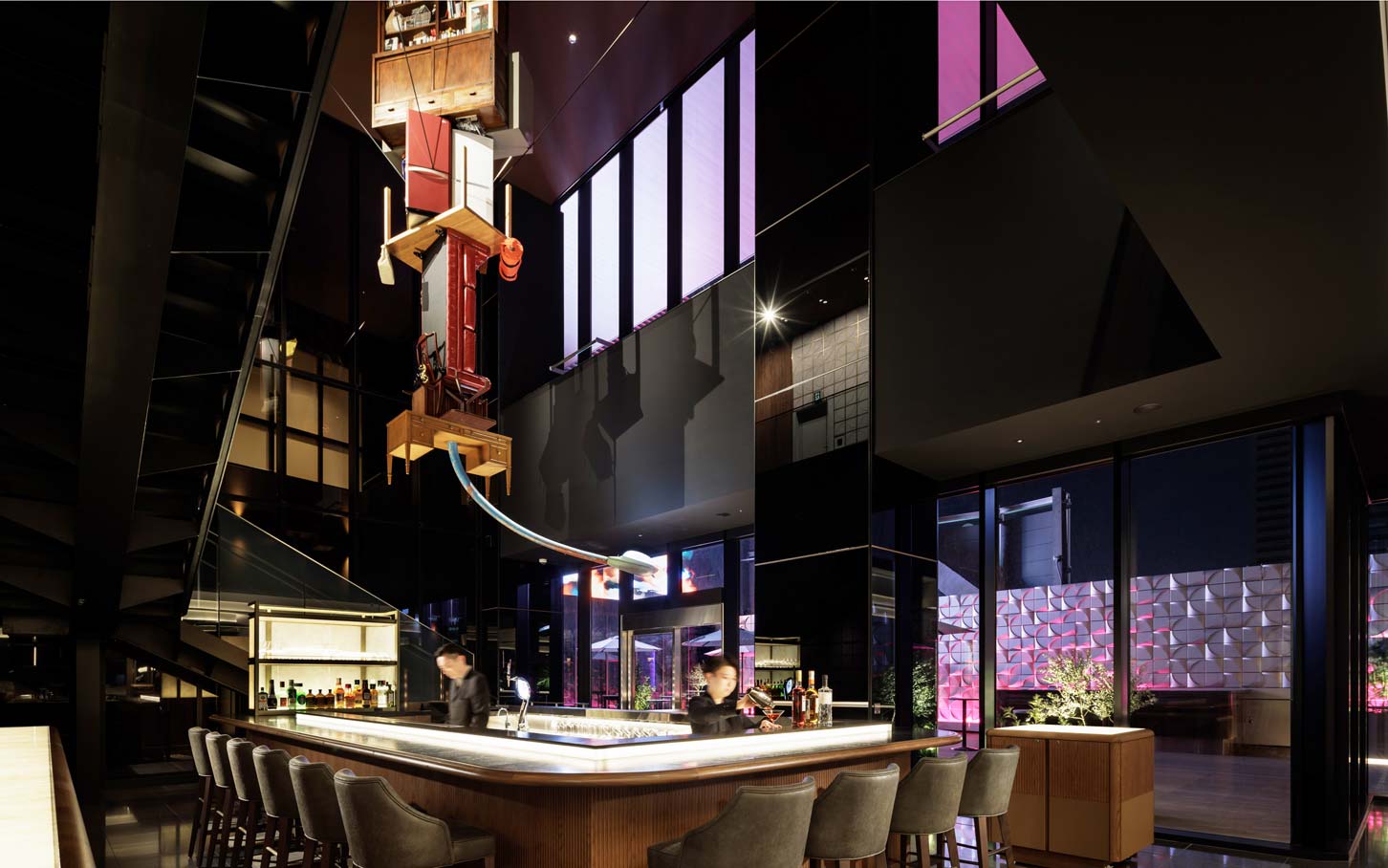
Level 17 is the hotel’s social central, housing Jam17 Dining, Jam17 Bar and Jam17 Gelateria. Jam17 Dining is the main restaurant where a buffet is laid out for breakfast and Italian meals are served for lunch and dinner. Jam17 is an artistic watering hole, with Tatzu Nishi’s enormous art piece made up of old furniture, books, clothes, bags and a street lamp collected from around Shinjuku all sewn together, hanging overhead.
For sweet, icy treats, Jam17 Gelateria satisfies and draws even non-hotel guests.
Breakfast at Jam17 Dining comprises a mix of western and Japanese morning staples, plus a main course from an a la carte menu. There were four options on the morning I dined, and my selection – stone oven-baked eggs – was memorable; cream, tender spinach, gooey yolk and melty mozzarella made a divine combination.
Facilities
As a practical traveller who likes to pack light, my favourite facility in this hotel is the laundry room on level 20. But halt – this is no regular laundry room; this space, styled like a bowling alley from the 80s, packs in four washer/dryer sets, multiple vending machines that dispense drinks and snacks, and a seating area. Along with free and strong Wi-Fi plus gorgeous city views, one can easily Netflix and chill with their device while outfits are being washed.
Verdict
Excellent hardware and spacious rooms that families will appreciate. Superb location gives travellers a different view of Japan alongside excellent access to all the fun and beautiful attractions across Tokyo.
Contact details
Website: www.panpacific.com/en/hotels-and-resorts/hotel-groove-shinjuku.html
Email: enquiry.prgtk@parkroyalhotels.com





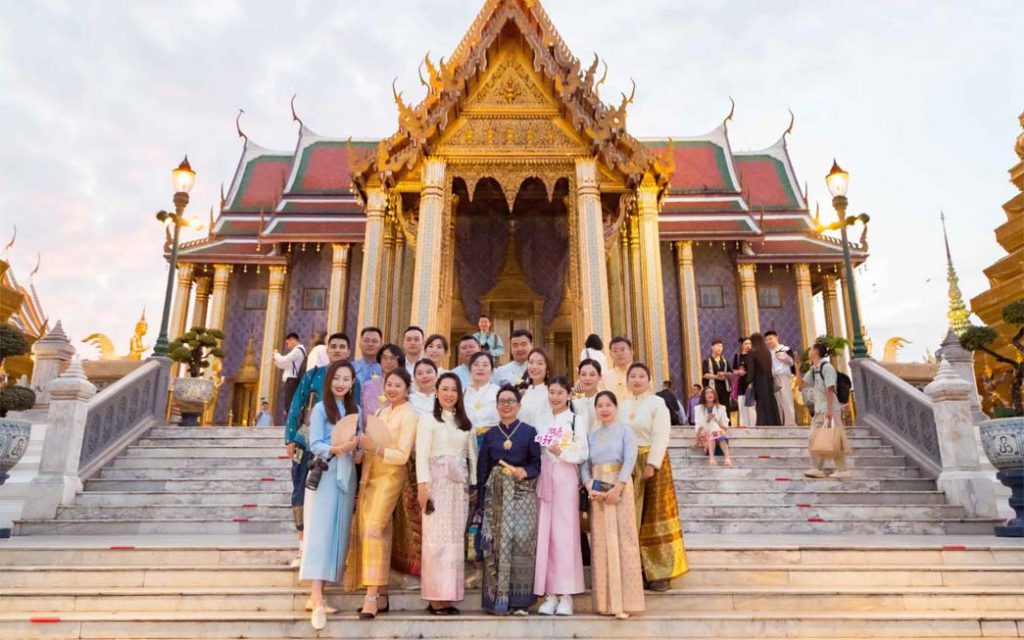 The welcome reception was hosted at Museum Siam in Bangkok and themed, A Picnic Celebration at the Museum. Food and drink from Michelin Bib Gourmand restaurants were dished out, and guests were entertained by contemporary Thai performances, live music, and other activities, including a test-ride on the Thai Tourist Police’s Segway, Thai massage, fortune telling, and lucky draw.







Tourism Australia is recording strong demand from the Indian market on the back of enhanced air capacity, a friendly visa regime, and growing interest from diverse segments like business events and young travellers.
Indian arrivals to Australia have reached 385,000 for the period between October 2022 and September 2023, and the market is now the fifth largest inbound market for Tourism Australia.
Nishant Kashikar, country manager, India & Gulf, Tourism Australia, told TTG Asia that India “has been the first market to bounce back to pre-Covid levels”. The market used to rank number seven.
Indian travellers are also spending more in Australia – up 24 per cent, reaching a substantial A$2.2 billion (US$1.5 billion) for the period from July 2022 to June 2023.
Improved flight connections play a pivotal role in fostering tourism growth, opined Kashikar. Capacity on the India-Australia route has increased from eight flights a week pre-Covid to 28 flights per week today. Most recently in December 2023, Air India commenced thrice weekly direct flights connecting Mumbai and Melbourne.
Said Kashikar: “We are seeing a lot of young Indians travelling to Australia. We are going to leverage the digital ecosystem to reach out to young Indian travellers and inspire them through our Come & Say G’day campaign that we launched a year ago. We are also noticing a growing demand for self-drive holidays from India.”
Tourism Australia also recorded overwhelming interest from the Indian corporate events segment last year – “a remarkable five-fold increase in MICE leads compared to 2019 levels”, shared Kashikar.
“This is primarily because of the faster turnaround time, and streamlined service offered for corporates by the Department of Home Affairs to process their visas. So, we have seen Australia’s attractiveness rise in terms of MICE in 2023. The Indian economy has done well and segments like banking, financial services, insurance, infrastructure and healthcare have helped in the growth of MICE demand for Australia,” he explained.
Guldeep Singh Sahni, managing director, Weldon Tours & Travels, commented that an easy visa application system is a strong motivation for travellers to pick a destination.
“Even though the average turnaround time for visa processing is four to five days, we have seen some applications being processed within 24 hours. As a result, many Indian travel agents are suggesting travel to Australia,” said Sahni.
In the new year, Tourism Australia will do more to promote destinations beyond well-known ones – the draws of Adelaide, Kangaroo Island, Canberra, Perth, Northern Territory, Daintree region in tropical North Queensland, and the Great Barrier Reef will be highlighted to the Indian market.