


New Indonesian company sets eyes on hotel development in West Java

Laska Hotels & Resorts, a new hotel management company in Indonesia, recently held a celebration for the opening for the Laska Hotel & Resort Ciletuh, as well as for the rebranded Laska Hotel Sukabumi, both located in the West Java province.
The company also unveiled plans for expansion in other cities in the coming years.

The 60-room Laska Hotel & Resort Ciletuh is the first three-star property within the Ciletuh-Sukabumi Geopark area, a UNESCO Global Geopark, with facilities including a restaurant, swimming pool, kids’ pool, gym, tracking area, four meeting rooms and a convenient store.
Meanwhile, the former Santika Sukabumi has been rebranded as Laska Hotel Sukabumi, offering 88 rooms, a restaurant, swimming pool, kids’ pool, gym, pool lounge and five meeting rooms.
Guido Andriano, director of Laska Hotel Management, said Ciletuh needed an international-standard hotel.
“A number of tour operators have shown interest in visiting the area, to see the turtles at Ujung Genteng for example, but they feel there’s a shortage of accommodation suitable for their international clients,” he said.
Marwan Hamami, the regent of Sukabumi, expressed his confidence that the new hotel would boost tourism to the area and spur more investments in other facilities.
He highlighted Ciletuh’s appeal as a tectonic geopark, which differed from the other volcanic geoparks in Indonesia. Ciletuh-Sukabumi Geopark also has more than 10 waterfalls, some of which are easily accessible.
“The area has potential for different activities, such as game fishing, hunting, off-road adventure, and yachting, just to name some,” Marwan added.
According to Guido, Laska Hotel & Resort Ciletuh targets the leisure market, and is open to welcoming small corporate meetings.
At the same time, he is confident that Laska Hotel Sukabumi will benefit from its location in Sukabumi city, which is close to a police school, factories and government offices. It could potentially attract events.
Both properties join the Laska portfolio, which currently comprises the 108-key Laska Hotel Subang near Bandung. Laska Hotel Subang opened last January, marking the launch of the company.
The three hotels belong to the Sejahtera Group, which also owns a travel agency.
Didin Nurhadi, director of Graha Prima Sejahtera, the owning company of Laska Hotel & Resort Ciletuh, revealed plans for a three-star Laska Hotel Ciater, which is now under construction. Leveraging its proximity to hot springs and tea plantations in Bandung, the new hotel will target holidaymakers.
The company also has plans to develop Laska Premiera Bogor, which will offer 145 rooms, nine meeting rooms, and a ballroom for up to 600 pax. This will be the group’s first four-star property.
Furthermore, an accommodation project has been earmarked for Sadang, where F&B outlets and communal spaces would be created to attract young guests.
Airports Council International World ranks busiest airports in 2023
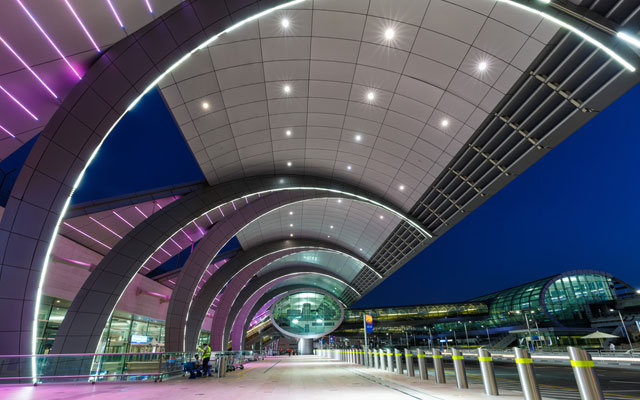
Airports Council International (ACI) World’s latest ACI World Airport Traffic Dataset has ranked the airports of Dubai in the UAE, Guangzhou in China, and Incheon in South Korea among the world’s top 20 busiest airports.
Hartsfield-Jackson Atlanta International Airport in the US takes top spot, and is followed by Dubai International Airport in second place, and Dallas Forth Worth in the US in third.
After reaching the top of the rankings in 2020, Guangzhou Baiyun International Airport went down to 58th position in 2022. It takes 12th spot in 2023.
The biggest jump in the top 20 rankings is recorded by Incheon International Airport. The airport takes the 20th spot in 2023, up from its 99th position in 2022.
ACI World director general and CEO Luis Felipe de Oliveira said: “International passenger traffic has now almost fully recovered from the pandemic, and the regional disparities are gone. China’s reopening fuelled much of 2023’s strong growth and has propelled Guangzhou Baiyun International Airport back into the Top 20. Hartsfield-Jackson Atlanta International Airport continues to lead the way, but the revival of Middle East and Asia-Pacific hubs is the standout takeaway from 2023 figures.”
Total global passenger traffic for 2023 was close to 8.7 billion, representing an increase of 30.5 per cent from 2022 or a recovery of 94.2 per cent from 2019. Performance was propelled by several factors, including the anticipated benefits from the reopening of Asian markets and a growing inclination towards travel despite macroeconomic conditions.
The top 20 airports processed 16 per cent of global traffic (1.41 billion passengers) in 2023.
De Oliveira added: “However, whatever position in the rankings an airport occupies, each is integral to the communities it serves. Airports are resilient, adaptable and support social and economic development. ACI World continues to advocate for airports worldwide to ensure their societal benefits are enjoyed by as many people as possible.”
NewJeans lends power to South Korea tourism

South Korea has appointed K-pop girl group NewJeans as the country’s latest honorary ambassadors as part of its tourism drive, riding on the enduring Korean wave that has drawn many tourists to its shores.
Band member Minji told the press that her group finds “great joy” to be able to promote South Korean charms.
Culture minister Yoo In-chon said that with NewJeans as tourism ambassadors, international arrivals will soar further. Currently, tourist arrivals are close to 90 per cent of 2019 levels.
Like other honorary ambassadors before, NewJeans will not bear actual diplomatic responsibilities. Band members will leverage their reach and recommend their favourite things to do in South Korea.
Past honorary ambassadors for tourism include BTS. Last year, singer/actor Cha Eun-woo was appointed as the honorary ambassador for Visit Korea Year 2023-2024.
Meliá Chiang Mai offers long-stay perks

Meliá Chiang Mai is offering a host of benefits ranging from discounts on spa and dining to access to its executive lounge for guests who stay for seven days or more.
The hotel’s Travel Slow in Chiang Mai package affords guests daily 20 per cent discounts on spa treatments, minibar items, laundry, and F&B at the hotel’s two restaurants, two bars, lobby lounge and in-room dining.

Guests staying in The Level Room categories also enjoy exclusive access to The Level Lounge on the 21st floor, which offers all-day snacks and beverages accompanied by panoramic vistas of the city and famed Doi Suthep Temple on the mountaintop to the west.
The executive lounge’s amenities and experiences include a private breakfast service, and cocktails and canapés for adults in the evening.
Fresh complimentary fruits in the room on arrival and a late check-out until 14.00 are also among long-stay benefits.
Meliá Chiang Mai is located on the Charoen Prathet Road by the River Ping and Night Bazaar, and is located six kilometres from the Chiang Mai International Airport.
For more information, visit Meliá Chiang Mai.
Tragic poisoning incident claims six lives in central Bangkok hotel
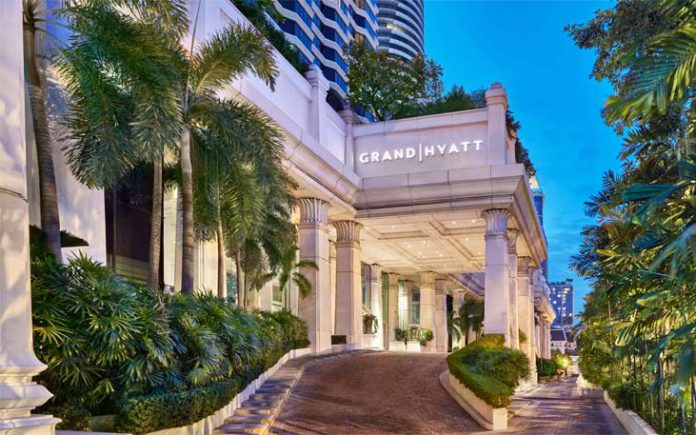
Numerous Thai media sources have reported a poisoning incident at the Grand Hyatt Erawan Bangkok hotel this evening in Bangkok, Thailand.
Six foreign individuals were allegedly found dead via ingestion of a toxic substance a hotel room. Police discovered the bodies of three men and three women, identified as two Vietnamese-Americans and four Vietnamese nationals.

Lumpini police were alerted to the incident at around 17.30.
Initial local media reports earlier in the evening incorrectly described the incident as a shootout, but investigators confirmed there were no signs of struggle or bruises on the victims, and their luggage was found near the door.
The victims had arrived at the hotel in two separate groups – one on July 13, and another the next day. They were due to check out today and had their bags already packed.
The case drew significant attention, with both Thai and foreign media converging on the scene.
Thai prime minister Srettha Thavisin arrived at the hotel around 21.00, and hosted a press briefing with national police chief Torsak Sukvimol and Bangkok police commissioner Thiti Saengsawang.
Thiti revealed that suicide has been ruled out as a cause, and that the investigation is focusing on murderous intent.
Srettha said he had met with the Vietnamese ambassador.
“There shouldn’t be an impact on the tourism sector,” he stated at the briefing, reassuring the public that the incident was not related to robbery or assault.
Government spokesman Chai Wacharonke emphasised that steps are being taken to contain public panic and to prevent this incident from impacting tourism.
Previous incidents, including the Erawan bombing in 2015 and Paragon shooting in October 2024, damaged Thailand’s tourism figures and targets.
Tourism New Zealand targets off-peak growth

Tourism New Zealand (TNZ) is focused on growing year-round tourist arrivals for New Zealand, particularly by encouraging visitation during the off-peak seasons from March to November.
Gregg Wafelbakker, general manager Asia, TNZ, shared: “We aim to increase the value of tourism in New Zealand by US$5 billion over the next four years, with 70 per cent of that growth coming from off-peak arrivals.

“By encouraging arrivals during the off-peak season, we support the tourism industry and economy while providing an exceptional experience for travellers, with fewer crowds and attractive offers.”
He highlighted that South-east Asian markets play a crucial role in this strategy, as visitors from these countries often travel during school holidays and festive breaks, which align with New Zealand’s off-peak season.
“We have more arrivals from South-east Asia visiting during the off-peak season than our global average from all markets.
“Off-peak consideration among active considerers living in South-east Asia – people who are thinking about a holiday in New Zealand – is at an average of 85 per cent. They are drawn to New Zealand’s landscapes, nature, wildlife, and local cuisine. They also find New Zealand an appealing road trip destination, with self-drive and campervan holidays becoming more popular. Off-peak seasons offer less busy roads and stunning scenery as they travel throughout the country.”
While Singapore is a mature market, new potential markets in South-east Asia include Malaysia, Thailand and Indonesia.
Wafelbakker recently led a delegation of 39 exhibitors from New Zealand to Kiwi Link Southeast Asia 2024, held in Kuala Lumpur from July 15-16. The New Zealand exhibitors met with 36 travel trade buyers from Singapore, Malaysia, Thailand, and Indonesia over the two-day event.
The event showcased New Zealand as a great off-peak destination for international visitors, and aimed to build strong selling capability of product managers and increase New Zealand’s share of voice among travel trade across South-east Asia.
Krissy Griggs, visitor markets manager for ChristchurchNZ, noted that Singapore Airlines’ direct daily flights from Singapore to Christchurch have boosted arrivals from Singapore and Malaysia to the South Island.
She said: “Singapore Airlines is currently the only airline from South-east Asia flying directly to Christchurch. Typically, visitors from Singapore spend two or three days in Christchurch before exploring other destinations in the South Island.”
Thailand welcomes Laotian tourists with new Vientiane-Bangkok train service
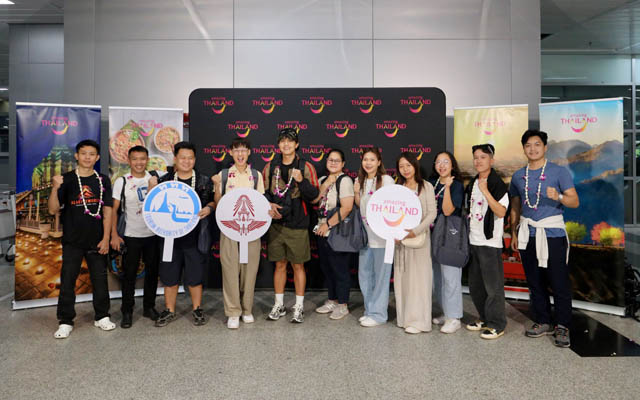
The Tourism Authority of Thailand (TAT) and State Railway of Thailand (SRT) welcomed the first group of passengers on the full trial train travelling from Laos to Bangkok on July 14.
The train departed from Lao PDR’s Vientiane Train Station (Khamsavath) and arrived at Bangkok’s Krung Thep Aphiwat Central Station. This new train service is scheduled to officially begin operations this Friday, July 19.
The Bangkok-Vientiane (Khamsavath) train service is an extension of the current Bangkok-Nong Khai route, and is a project between the Thai and Laotian governments to better connect the two countries’ rail systems.
The outgoing train, Rapid No. 133, will depart Bangkok in the evening and arrive in Vientiane the next morning and vice versa for the returning train, Rapid No. 134.
Both trains comprise 30 seats in the second-class air-conditioned sleeper carriage, 64 seats in the second-class air-conditioned carriage, and 152 seats in two of the third-class ordinary carriages with fans.
SRT also operates Rapid No. 147/148 between Udon Thani and Khamsavath Station.
TAT governor Thapanee Kiatphaibool said: “The extended train route will enhance cross-border tourism and economic activities and strengthen relations between the two nations. It also aligns with TAT’s strategy to boost cross-border tourism and intra-ASEAN travel.”
“We hope to welcome more Laotian tourists and maintain Thailand’s well-established position as the preferred travel destination among the Laotians.”
Resorts World Cruises introduces new boutique cruise vacations in the Arabian Gulf

Resorts World Cruises (RWC) will expand its global footprint to the Arabian Gulf and Gulf of Oman with the upcoming homeport deployment of Resorts World One in Dubai from October 18, 2024 to April 13, 2025.
Resorts World One is expected to make 75 calls in the region with 150,000 passengers over the six-month period, which will significantly contribute to the growth of cruise tourism in the Arabian Gulf and Gulf of Oman. The ship will attract a new segment of Fly-Cruise passengers from India, increasing diversity to the Arabian Gulf cruise market.

Resorts World One will sail from Dubai from October 18 onwards, offering itineraries that include the two-night Sir Baniyas Weekend Cruise with departures on Fridays; a three-night Oman Cruise to Khasab and Muscat departing on Sundays; and a two-night Doha Cruise departing on Wednesdays.
Guests will have the flexibility to combine two or all three of the itineraries to increase the cruise length to a four-, five- or a seven-night cruise.
Shore excursions and onboard activities will allow passengers to immerse themselves in the rich cultural tapestry of Dubai and the surrounding region especially Muscat, Khasab and Sir Baniyas Island. Visits to iconic landmarks, heritage sites, and shopping destinations will be part of the itinerary for tourists while Bollywood DJ parties and music bands, pyjama and foam parties, movies, will be among other attractions onboard.
To cater to a diverse target audience, certified vegetarian and Jain cuisine will also be available to cater to travellers from India and others who prefer specialised vegetarian selections. With the ship’s deployment in the Arabian Gulf, Resorts World One will provide regional Muslim travellers with the convenience and access to certified halal-friendly offerings onboard the ship. Guests can also make pre-advanced appointments to have the crew of the same gender attend to the guests for selected onboard services such as the spa.
“With easy access and regular flight connectivity from India to Dubai, Indian travellers will also have more travel and vacation options to explore multiple destinations with a cruise vacation, paving the way for a new and exciting era of Fly-Cruise exploration,” said Naresh Rawal, vice president – sales (South Asia and Middle East), RWC.
World Express Malaysia to reveal refreshed look and offerings

Following the April brand refresh of World Express Singapore (WES), marking its 55th anniversary, World Express Malaysia (WEM) will unveil its new website together with the new logo on name cards and other collaterals by the end of July.
WEM is part of Melewar Group’s travel and tourism-related companies and group president Seri Iskandar Bin Tunku Abdullah, known in the industry as TI, said the new branding “reflects the new and fresh vibrancy that World Express now stands for”.

TI and WES chairman Tan Chee Chye became business partners through their PATA affiliation.
WEM executive director Cherry Lee and WES managing director Darren Tan have been working closely on the “new look” and team members from both sides attended an operations retreat and product refresher in Penang last week.
Lee told TTG Asia that she will work with Tan to co-sell both countries and leverage on WEM’s offices in Kuala Lumpur, Penang and Kota Kinabalu as the Local Insider for Peninsular Malaysia and Borneo.
The pair will be co-sellers at the upcoming PATA Travel Mart taking place in Bangkok at the end of August focusing on the UK, the US and English-speaking markets.
Despite the rise in transport costs and guide fees, Malaysia still offers value for money due to the currency exchange, Lee noted.
She welcomed the increase in air capacity with the return of daily British Airways flights between London and Kuala Lumpur on November 10 to tap leisure and meetings and incentive clients.
Commenting on new WEM products and services, she shared: “We are looking to promote Singapore-Malaysia self-drive holidays and increase the length of overland coach tours.
“For example, coach tours will feature two nights in Malacca instead of one, and three instead of two in Kuala Lumpur to allow more time for market visits and cooking programmes in Malacca; and longer walking tours in Kuala Lumpur and Penang beyond the current four hours for more in-depth discovery of heritage, natural habitats, etc.”
WEM will also be stepping up its handling of shore excursions for WES’s cruise clients from Singapore, she added.

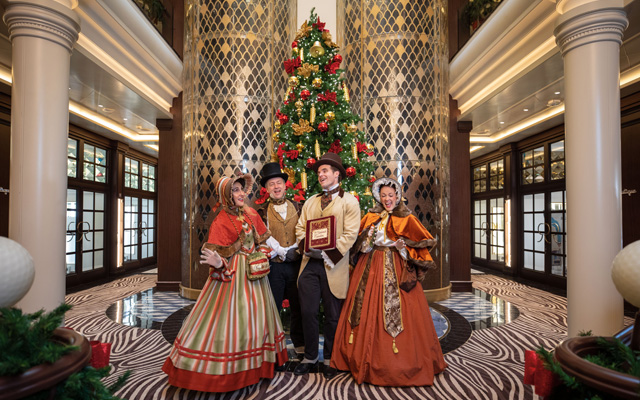






The history of Siam Bayshore Resort Pattaya intertwines threads of theatricality, musicality, and the rich heritage of both Pattaya and the Sukosol family.
Established in 1974, it was one of just six hotels in Pattaya at the time.
The journey into hospitality for the Sukosol family began with Kamol Sukosol, who recognised Pattaya’s potential over Phuket due to its proximity to Bangkok and vibrant atmosphere during the Vietnam War era. His vision led to the establishment of Siam Bayshore Resort Pattaya, followed soon after by sister property Siam Bayview Hotel.
“My grandfather was a very astute businessman who was able to see the future,” shared Marisa Sukosol Nunbhakdi, executive vice president of Sukosol Hotels and Sukosol Group regarding the choice of location.
Today, Siam Bayshore continues to thrive, being just 90 minutes’ drive from Suvarnabhumi International Airport.
Kamala Sukosol, Marisa’s mother, played a pivotal role in marketing the resort. Drawing on her love for Broadway and musicals from her time studying in the US during the 1950s, Hollywood’s Golden Age, Kamala implemented innovative marketing strategies that included live performances and international roadshows.
“While my father had a hand in setting up the hotel, it was my mother who was a marketing guru who really put the property on the map,” Marisa noted.
“Back then, my mom was my age, maybe younger, and I often think of the hardship that she went through to build the hotel. What would we have (as a group) without these hotels? Though it was hard to sell Pattaya – because nobody knew of the place at the time – credit goes to my mom for all those trips she made all over the world selling Pattaya.”
The resort became renowned for its Broadway-style musical nights and cultural events, including the memorable Broadway Comes to Pattaya gala co-hosted with TTG Asia during the ASEAN Tourism Forum in 1990.
Marisa, who is also a well-known singer in Thailand, grew up immersed in this world, dancing in musical nights featuring songs from shows like Oliver Twist and The Flower Drum Song to participating in family roadshows. One time, Kamala – a talented singer and dancer herself – even took her children traipsing across Australia, performing, Von-Trapp family style, to promote the hotels and Pattaya as a destination.
Even the famed Bali Hai Pier in Pattaya has its roots in Broadway, being named after the hotel’s restaurant located across from the pier back then – whose name Kamala Sukosol chose 50 years ago, inspired by the musical South Pacific.
The hotel was a holiday home for the Sukosol family, who travelled to Siam Bayshore from Bangkok every week.
Marisa also stated that Pattaya’s vibrant drag show culture had already taken roots as early as in the 1970s. She said: “Today, Tiffany and Miss Tiffany Universe are world famous – but back then, it was a cabaret right around the corner from the Bayshore. My mom would take me and my brothers and sisters to watch the cabaret. At the time, drag shows didn’t exist anywhere else, and it was incredible to see the talent back then. Those were the early days of drag shows in Pattaya, long before they started trending globally,” she reminisced.
Over the years, Siam Bayshore has hosted numerous celebrities and remains a favourite among loyal guests and staff members, many of whom have been with the resort for decades.
Marisa shared: “When the hotel first opened, my father was very keen on having tennis courts, following the advice of an agent from Australia. So, he built several courts, and we’ve been organising tournaments ever since. Thailand’s tennis stars Paradorn Srichaphan and Tamarine Tanasugarn have played here, as well as other international players who became top-ranked later in their careers.”
The Siam Bayshore continues to host numerous celebrities who appreciate its low-profile yet high-quality service.
The hotel enjoys a loyal following – among both guests and staff. Some 30 staff members have been there for over three decades; a chef at Bali Hai has been with the hotel for over 40 years. Among repeat guests is a German who has been visiting for the past 30 years and, in a recent stint, stayed for a remarkable 137 days.
Despite numerous challenges, such as economic downturns and the 1992 coup, the hotel has maintained its allure and profitability over five decades.
Marisa emphasised: “When I give my sustainability speeches, I always bring up Bayshore as a sustainable hotel, having been around 50 years and still operating under the same brand and ownership. This, I think, is very unusual nowadays.
“If you ask any hotel owner, it’s very hard to keep up a hotel, particularly in Asia where many hotels are bought and sold constantly. So, if you ask me and my mom what our legacy is, it would be the longevity.”