Hurtigruten Group has made new key appointments across its sales, marketing, PR and customer service teams.
Kirsty Fruin joins the Asia-Pacific commercial team as regional sales manager of Queensland, Western Australia and South Australia. Based in Brisbane, she has accrued a wealth of cruise and travel knowledge through her previous roles, including in the UK at Fred Olsen Travel.
From left: Kirsty Fruin and Christina Koullas
Christina Koullas is the new PR & communications manager – APAC at Hurtigruten Group’s Melbourne office, bringing with her 20 over years of travel PR experience include working with Spirit of Tasmania, DMCs in Europe and running her own PR agency.
Ascott is expanding its European portfolio with six new properties, with five located in cities new to its network – Colmar in France, as well as Edinburgh, Glasgow, Leicester and Manchester in the UK. The sixth will be in London, where the lodging company already has six operating properties.
The signings in Edinburgh and Leicester will mark the European debut of The Unlimited Collection brand, a selection of independent upscale hotels with exquisite designs in vibrant neighbourhoods that cater to travellers’ demand for authenticity and immersive local cultural experiences. Originating from Singapore, The Unlimited Collection is a soft brand that enables Ascott to partner with independent owners who want to preserve the unique identities of their properties while leveraging Ascott’s expertise in hospitality management, global distribution system, and loyalty network.
The Cavendish London will undergo renovation and be rebranded in 2026 as the first property in the UK under The Crest Collection
The Colmar property will bear the Citadines flag while those in Glasgow, London and Manchester will carry the lyf brand.
This brings Ascott’s presence in Europe to 29 cities from 24 and room inventory in the region to about 8,000 units – up 14 per cent – across six brands and 60 operating and pipeline properties.
Fronting the press conference in London on July 8, Kevin Goh, CEO for Ascott and CLI Lodging, said: “As a global tourism and business hub, Europe plays a key role in Ascott’s expansion plans. The diverse and dynamic nature of its hospitality sector offers plenty of scope for Ascott to drive more successful partnerships with owners.
“We will achieve this by leveraging Ascott’s flex-hybrid hotel-in-residence model, which is designed to meet the varying needs of owners and guests through a wide selection of brands and customised solutions, backed by experienced teams with deep local knowledge.”
Five of the six new signings in Europe are conversion projects, allowing both Ascott and owners to bring their assets to market more swiftly than a new-build would.
“Ascott’s established conversion capabilities has already been proven as effective in gaining the confidence of property owners. We expect franchise management to be our next pillar of growth in Europe, where market conditions are conducive for this business segment,” Goh added.
The new signings join recent fresh openings in the region. lyf Schönbrunn Vienna, Somerset Schönbrunn Vienna, and Citadines Danube Vienna opened at the end of 2023, marking the debut of both brands in Europe. Citadines Canal Amsterdam opened earlier this year while lyf East Frankfurt welcomed first guests in early July.
lyf Gambetta Paris will open as the first lyf branded property in France later this year. Ascott’s newly signed The Unlimited Collection branded property in Edinburgh will also open before end of the year.
Goh said Ascott’s expansion strategy in Europe will benefit the company’s Asian properties. Europe is regarded as “a very important source market” for Ascott, as it contributes “a lot of guests” to its properties in Asia. Having more property options in Europe will strengthen the presence of its brands among Europeans, thus raising the chances of European travellers choosing to stay with such familiar brands when they head to Asia.
When asked which of Ascott’s brands would attract owners most, Serena Lim, chief growth officer, told TTG Asia that Europe is diverse and its destinations attract travellers of all intentions while Ascott is an accommodation provider with brands that cater to different customer segments – from families through the Somerset brand to corporate groups through the Oakwood brand.
As Ascott piles on new signings and openings, efforts are also made to raise the appeal of existing properties and optimise asset value for existing owners, shared Frédéric Carre, regional general manager, Europe operations and operations excellence, Ascott.
A robust Asset Enhancement Initiatives exercise is now underway for several European properties. Works not only deliver heightened comfort for guests, they may also update properties to latest brand standards and raise sustainability capabilities to both local and global standards where necessary, Leong Teng Wui, chief design and technical officer at Ascott, told TTG Asia.
In Ireland, Temple Bar Hotel Dublin will be rebranded under The Unlimited Collection by end-2024. The Cavendish London will undergo renovation and be rebranded in 2026 as the first property in the UK under The Crest Collection, while Citadines Holborn-Covent Garden is expected to unveil new spaces following the completion of renovation works by mid-September. In France, Citadines Les Halles Paris has just completed renovation works while Citadines Saint-Germain-des-Prés Paris will be transformed into a property under The Crest Collection by 2H2026, with a target opening in 2028.
Underlining the commercial importance of Europe, Carre said Ascott’s European portfolio has been driving average daily rates of almost 30 per cent higher than pre-pandemic levels while properties far exceeded all other markets in terms of revenue per available unit in 2023.
“Our properties in Europe contributed to almost 16 per cent of Ascott’s global revenue,” he said, adding that the company aims to have Europe contribute 30 per cent of global revenue by 2028.
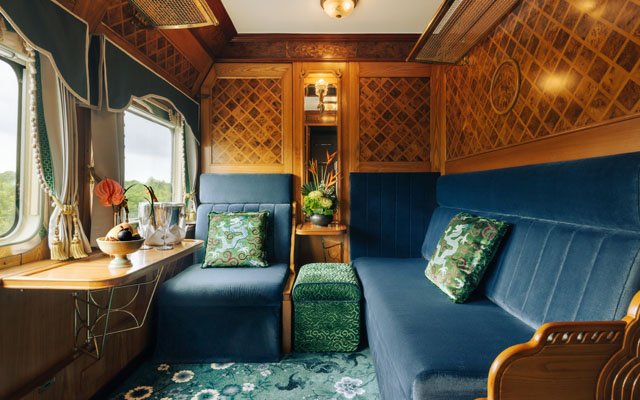
The Eastern & Oriental Express, A Belmond Train, one of six luxury trains operated by Belmond, a specialist in slow travel, has sold out most of its cabins on most voyages since its relaunch in March this year.
Nicolas Streff, vice president of strategy and corporate communications, Belmond, told TTG Asia during his participation in ILTM Asia Pacific 2024, that a series of pre-launch events in February had successfully intrigued the marketplace while the product concept – one that enables guests to appreciate the value of personal time – appealed to today’s oft-hurried travellers.
The Eastern & Oriental Express has attracted guests such as solo travellers, couples, extended families and groups
“It ticks all the boxes of what we call slow luxury travel, which is all about taking the time to explore, immerse yourself in the destination, and really understand the landscape, culture, etc,” he explained.
The Eastern & Oriental Express offers two different three-night voyages from Singapore through Malaysia: The Essence of Malaysia is conducted from November to February while Wild Malaysia runs from March to October.
Guests enjoy all-inclusive voyages, giving them access to wining, dining and entertainment onboard as well as off-board excursions led by expert guides at no additional charges.
The Essence of Malaysia travels through Kuala Lumpur to Penang and Langkawi, and features activities such as snorkelling in Langkawi. Wild Malaysia travels through the lush jungles and Penang, offering guests a chance to see the wildlife in Taman Negara National Park and discovering Penang’s famous Chinese temples.
Off-board excursions are curated by both Belmond teams and in-destination experts, in partnership with the local community. They typically take months to research and establish routes to the best experiences for their guests.
The train comprises eight sleeping carriages, two restaurants that serve up gourmet gems crafted by world-renowned chef André Chiang, a Piano Bar, and an open-air Observation Car. Accommodation cabins cut across categories – Pullman, State, and Presidential – all with air-conditioning, en-suite showers, and bathrooms.
“Our guests not only have an amazing way to travel to and through a destination, they can also hop off to experience villages, explore a jungle, and relax on a beach. They get to savour the different facets of a country while having time to take care of themselves. Belmond’s luxury train travels are an excellent way for travellers to disconnect from their usual fast-paced world and reconnect with themselves and the people they are with,” Streff added.
The Eastern & Oriental Express has so far attracted a diverse profile of guests, from solo travellers and couples to extended families and small groups of friends on a celebratory trip.
“People used to think that such luxury trains are for retirees. It is not the case; our voyages get a melting pot of demographic. We have seen young couples in their 20s on our voyages as well as a rise in solo travellers on all our trains, not just The Eastern & Oriental Express here in South-east Asia,” he said.
“We are pleased that The Eastern & Oriental Express has been really popular since its relaunch. Guests from all over the region and beyond are booking three months and more out. They regard the train as a renewed door to Malaysia.”
Singapore Airport Terminal Services (SATS) has unveiled its upgraded SATS Premier Lounge at Changi Airport Terminal 3 (T3) on July 3, with plans to continue enhancing its network of airport lounges in Singapore and improving the pre-flight and transit travel experience for its airline customers.
The improved T3 lounge will showcase Singapore dishes like laksa, chicken rice, prawn noodles and other beloved hawker fare in a setting that incorporates interior design elements from local artists and students, including a new flagship Executive space which features private pods, dining service, family and dining seating and travel-friendly amenities. Over the next few years, SATS will extend the lounge refurbishment to the other Premier Lounges in Terminals 1 and 2.
SATS will continue to enhance its network of airport lounges in Singapore; SATS Premier Lounge at Changi Airport Terminal 3, pictured
Other than serving up traditional local favourites, SATS will also feature pastas prepared by robot chefs from the menu of Twyst restaurants, with SATS Gourmet Solutions food products also available at the lounge.
In addition, SATS has collaborated with six renowned local hawker, food and beverage brands which will also be showcased at the SATS Premier Lounge at Terminal 3.
SATS group president and CEO Kerry Mok said: “Millions of people visit the SATS lounges in Changi each year. With inputs from airlines and passengers, we were able to reimagine the lounge as a space for travellers where food, culture and hospitality experiences converge and enrich their experience of Singapore.”
Location
The hotel is located at the Lagoi Bay area, a 12-minute drive from Bandar Bentan Telani Ferry international port and about 45 minutes from Raja Haji Fisabilillah Airport of Tanjung Pinang. It is also close to Lake Lagoi, a 2.5-hectare freshwater lake, where guests can jog or walk along the pavement. There are also pedal boats for guests to try out, and golfers will be pleased to know that the Ria Binta Golf Club is just six kilometres away.
Accommodation
The hotel offers 308 rooms and villas, with some still under construction during my stay in May. Room sizes start from 35m², and each has a balcony except for the Cabana category, which features a terrace.
The eight units of one-bedroom pool villas come with a patio, plunge pool, dining and living areas, bathtub and jacuzzi, as well as a single spa bed. They also have access to the garden where private events can be arranged..
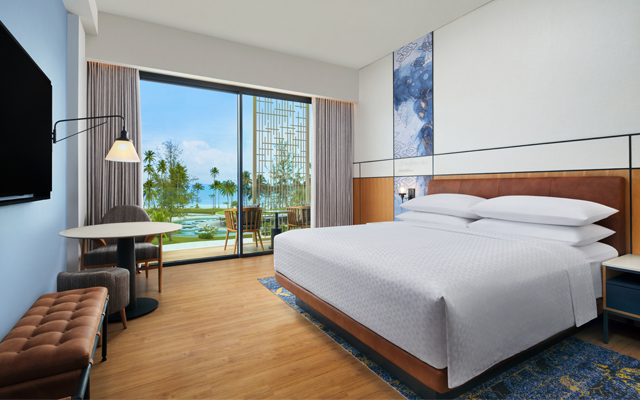
My Deluxe Pool View room was located at the centre of the building offering an uninterrupted view with the floor-to ceiling glass windows. The resort’s lush garden, the swimming pools, the El Lagoi Beach Club and the one-km long beach unfolded before me.
An ocean-hued wall across the bed contrasted nicely with the natural wood flooring. Pops of blue appeared on the bedside table and the soft, blue-grey striped cushion on the wooden chair, all echoing the colours of the sea and the surrounding greenery.
The king-sized, signature Four Comfort Bed was something I really enjoyed. The multi-layered, luxurious bedding was comfortably firm, providing a great balance of comfort and support, and together with the down pillows that supported my head and neck nicely, I slept like a baby.
The bathroom is quite spacious – while there was no bathtub, the water pressure in the shower was powerful. I liked the huge mirror with an integrated magnifying section, too.
F&B
Rempah Kitchen is the hotel’s signature all-day dining outlet. The restaurant highlights the diversity of Indonesian cuisine, along with some Asian and international dishes on its menu.
The breakfast buffet had a wide spread – from the eggs station and pancake and waffles selection to the instant noodles corner and popcorn machine. The laksa was perfect, I could taste the wok-hey in the fried rice, but my favourite was the omelette in curry sauce – it was savoury, creamy, albeit a little bit spicy.
The chef prepared a special lunch menu for me and my travel companions, comprising of dishes from Sumatra, Java and some other parts of the country. The restaurant is also famous for its Salmon Lodeh – traditionally a vegetable dish cooked in a slow-simmering coconut milk, this one has salmon added to the soupy dish.
Four Points by Sheraton Bintan, Lagoi Bay
1 of 7
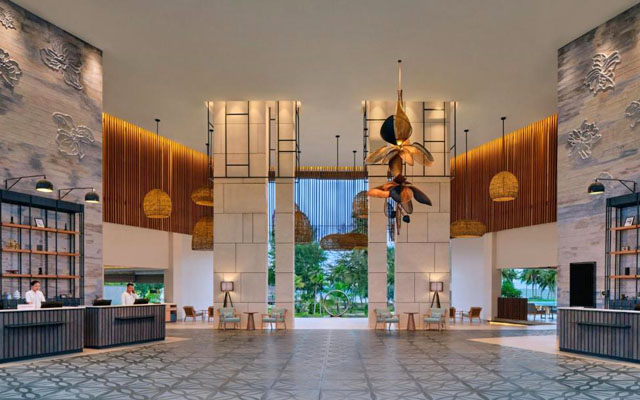
Hotel lobby
Deluxe King Ocean View room
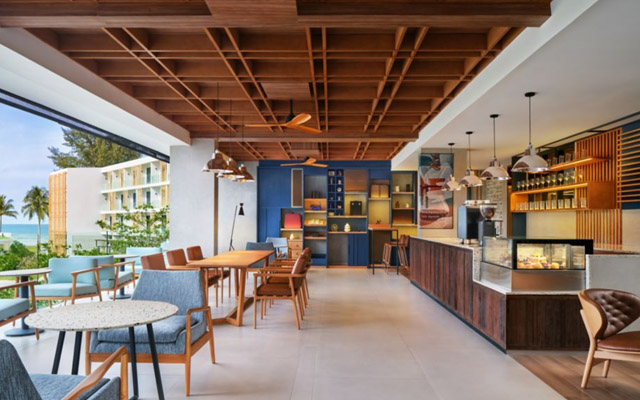
Ararinda Lounge
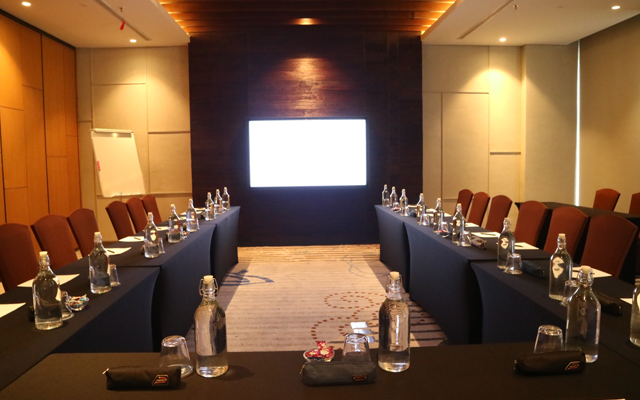
Meeting room
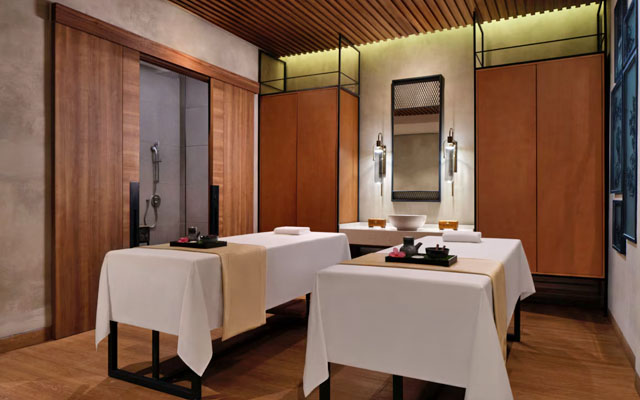
Spa treatment room
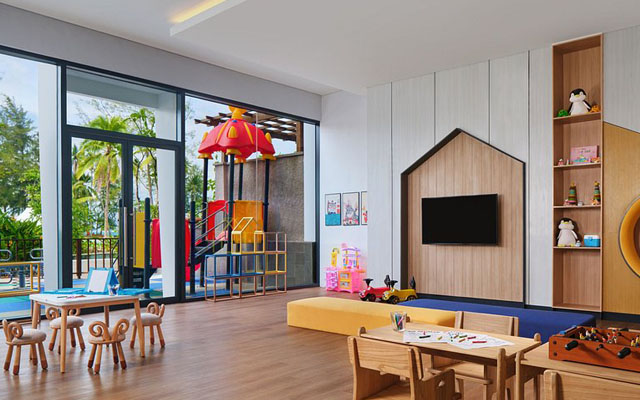
Kids' club
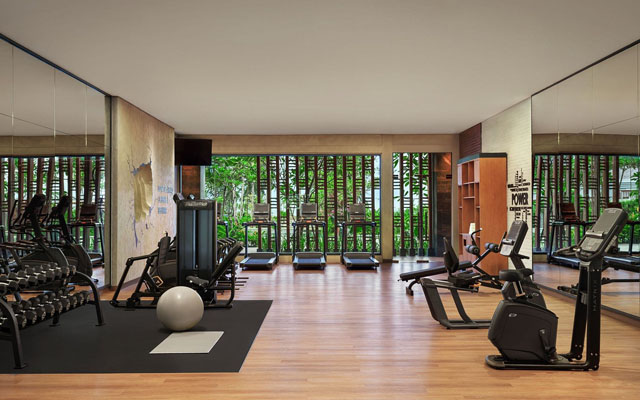
Fitness centre
For those looking for light snacks and beverages, Ararinda Lounge is a good choice, with its healthy juices and traditional kuehs (bite-sized desserts).
El Lagoi Beach Club, a trendy and vibrant beach club, is the spot to relax with live DJ sets, fresh seafood, grilled favourites, and signature drinks including Indonesian craft beer on tap as part of Four Points’ signature craft beer programme, Best Brews.
We had a cocktail making session there in the afternoon, one of the by-request programmes that the hotel offers to their guests. Our hope to watch the sunset while sipping the drink we mixed at the lounge was dampened by the heavy rain, but the drink was refreshing. The barbecue dinner that we had here was also available for groups upon request.
Facilities
The hotel has a blend of timeless classic and modern design, where the multiculturality of regions such as Borneo, Sumatra, Java, South East Islands, Papua, and Sulawesi are reflected in the hotel’s design. Subtle touches, such as batik artwork and paintings in the corridors, add to the overall aesthetic appeal of the hotel.
Since its opening, the hotel has hosted a number of business and social events in its 800m² flexible function space, six meeting rooms and an outdoor events space. The El Lagoi Beach Club is also available for buy-outs for social events.
A family-friendly property, the hotel provides a variety of pools, including an adult pool, a children’s pool, and a dedicated toddler’s pool. Additionally, the kids’ club activities will keep the younger guests entertained.
For those seeking wellness, the fitness centre is open 24/7, while the Sa’Kai Spa offers a menu of traditional Indonesian treatments. My 60-minute Signature Massage was wonderfully effective in melting away the tension from my tired muscles. One thing to note, foot washing was not included before the treatment began.
Service
The check-in and check-out processes were swift, the hotel staff were friendly, and my requests were attended to promptly.
Indonesian hospitality is renowned for pampering guests through culinary delights, and this hotel certainly lived up to that reputation. Throughout our stay, the hotel continuously provided delicious food and snacks.
Verdict
The entire hotel experience, from the welcoming hotel layout to the friendly and capable staff, instilled a sense of warmth and belonging. I felt right at home.
Singapore Zoo gives visitors more reasons to explore with its latest behind-the-scenes tour, Backstage Pass: Elephant Encounters that launches on August 9, as well as an enhanced edition of Breakfast in the Wild that started on July 5.
Delve behind-the-scenes to learn more about the zoo’s five female Asian elephants and how they are cared for at the Singapore Zoo with The Backstage Pass: Elephant Encounters. Led by a knowledgeable guide, guests will be introduced to characteristics of elephants, and come face-to-trunk with the elephants while getting a first-hand glimpse into the care routines that help ensure the well-being of these gentle giants.
Meet majestic elephants and learn all about the dedicated care they receive (Photo: Mandai Wildlife Group)
Guided by the expert keepers, selected participants can get the opportunity to make contact with an elephant, feed them their favourite treats such as carrots and bananas, and learn facts about the herd, plus more.
The Backstage Pass: Elephant Encounters tour will be available daily from August 9, 14.00 to 15.00. Tickets are priced at S$118.40 (US$87) per person on weekdays and S$148 on weekends.
Meanwhile, the latest iteration of Singapore Zoo’s iconic dining programme introduces two new animal ambassadors, the Californian sea lion and African penguins, which will take turns to make an appearance during the 45-minute interactive sessions conducted from 09.15.
Breakfast in the Wild runs daily from 09.00 to 10.30, and are priced at S$47 for adults and S$37 for children aged six to 12.
High energy and star power of tennis, football and car racing are being harnessed by Ascott, the lodging business unit wholly owned by CapitaLand Investment, to charm its loyal, top-spending guests through offerings of exclusive and memorable experiences in destinations they visit.
Ascott’s partnership with Chelsea Football Club follows hot on the heels of the hospitality firm’s debut of the Ascott Privilege Signatures programme, a by-invite subset of the Ascott Star Rewards loyalty programme for the crème de la crème of its top-spending loyalty members.
Ascott Privilege Signatures programme invited over 80 guests from across its platinum tier of ASR members and owners for a day out at The Championships, Wimbledon 2024 in London (photo by Karen Yue)
The Ascott Privilege Signatures programme made an impression on July 6, when over 80 guests from across Ascott’s platinum tier of ASR members and esteemed owners were brought to London for a day out at The Championships, Wimbledon 2024.
Guests were hosted at a luxurious hospitality suite on games ground, with lunch and afternoon tea crafted by celebrity chef Michel Roux Jr and his Le Gavroche team. They also enjoyed access to the Centre Court where matches were played that afternoon by UK’s Cameron Norrie and Serbia’s Novak Djokovic.
Tan Bee Leng, chief commercial officer, Ascott, noted that unique and impactful experiences were highly appreciated by loyal ASR members, and being able to cater to their travel desires were crucial since “loyalty is a key driver of growth”.
“Offering exclusive opportunities to attend coveted events like Premier League football matches, major tennis tournaments, and other high-profile activities not only enhances travel experiences, but also deepens guests’ connection with our brands. In line with the brand promise of ASR to ‘Stay Rewarded’, these extraordinary experiences represent Ascott’s commitment to foster a sense of belonging and appreciation that is inherently rewarding for our guests,” she added.
Tan acknowledged Ascott’s strong interest in sport tourism and in leveraging sporting events to grow its pool of customers and deepen its engagement with loyal guests.
“Just this month alone, Europe has The Championships, Wimbledon 2024 in London while the 2024 Summer Olympics is coming up in Paris from July 26. In August, the Premier League will kick off in the UK. The sporting culture is super vibrant in this part of the world, and there are passionate sporting fans all over the world. Sporting fans are not traditionally the Ascott customer profile, but we do want to reach out to them and can do it through sports-related experiences,” she said.
Ascott’s efforts to connect with travellers through sporting events can also benefit the sport and related organisations, according to Casper Stylsvig, chief revenue officer with Chelsea Football Club.
Stylsvig said the partnership with Ascott would help the club to “amplify our messages in global markets and convert Ascott’s audience into our fans”.
He said: “While we have over 600 million fans worldwide, less than one per cent have the opportunity to come to Stamford Bridge stadium, home of Chelsea Football Club. Hence, we are talking to Ascott about how we can take the Chelsea Football Club experience beyond the local (UK) market, particularly to Asia, where Ascott is extremely strong. These engagements could see Ascott guests winning some game tickets or joining a special football school led by our coaches.”
At the same time, such partnerships would intensify attention on the entire Premier League and English football.
Up next on the Ascott Privilege Signatures programme is another sports event activation at the Formula 1 Singapore Grand Prix 2024 this September.
Splash Carnival has returned to Legoland Malaysia Resort from now to August 4, where guests can join in the fun water games and unforgettable experiences at South-east Asia’s largest Legoland Water Park.
The Splash Carnival offers activities for all ages, including balancing on a giant inflatable banana boat, creating and racing Lego boats, and enjoying water volleyball and beach soccer penalty challenges.
Guests can join in the fun water games and experiences at Legoland Malaysia Resort’s Splash Carnival
Tickets to this incredible event can be secured exclusively on the Legoland Malaysia Resort website. In addition, Singaporean guests enjoy a special perk: purchasing a full-priced one-day Triple Park Pass to unlock a free upgrade to an annual pass.
Legoland Malaysia is also offering a one-day Water Park Ticket, perfect for those who prefer a one-time visit.
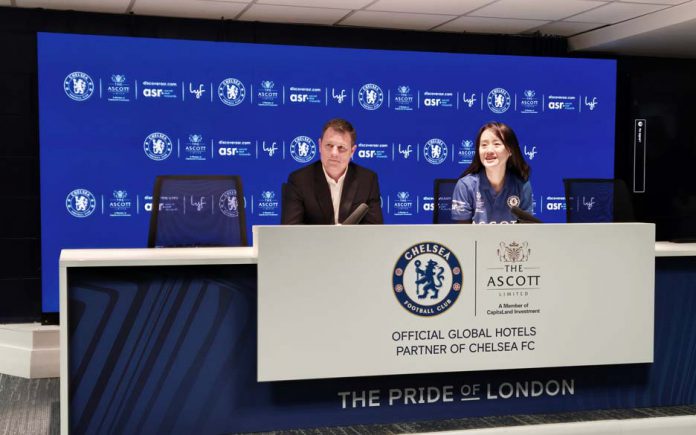
Building on its promise to deliver elevated experiences for its guests and top-tier loyalty members, Ascott, the lodging business unit of Singapore-listed CapitaLand Investment, has signed with Chelsea Football Club (Chelsea FC) as its new official global hotels partner for the next four seasons starting this month.
The partnership will enable Chelsea and Ascott to collaborate on providing “money can’t buy” experiences for Ascott Star Rewards (ASR) members around the world, including exclusive access to matches at Stamford Bridge stadium, home of Chelsea FC, as well as VIP visits to The Blues Cobham Training Ground and use of a charming villa close by, built by former club owner Roman Abramovich.
From left: Chelsea Football Club’s Casper Stylsvig and Ascott’s Tan Bee Leng make public their partnership that is the first between an Asian hospitality firm and the club (Photo: Karen Yue)
The Ascott brand will benefit from expanded exposure within Chelsea FC’s sphere of supporters, which currently number over 600 million worldwide. The brand will be displayed prominently around the stadium for both Men’s and Women’s matches, as well as across Chelsea FC’s social and digital channels with engaging content for fans to enjoy. The hospitality firm will also become the presenting partner of Chelsea’s flagship international fan engagement event, the Famous CFC, in two international markets – one of which will likely be in Asia where Chelsea FC hopes to engage more fans.
Another advantage of this new partnership is the appointment of Ascott to manage the twin-tower hotel located on the site of Stamford Bridge. The hotel is owned by BlueCo, a consortium that also owns the Premier League football club. Ascott will assume management from 2H2024, and the 232-key hotel will begin to fly the lyf flag in 2H2025.
lyf Stamford Bridge London is Ascott’s first stadium hotel. At the point of signing, it is also the largest lyf property in terms of room keys.
Tan Bee Leng, chief commercial officer, Ascott, told TTG Asia that the lyf Stamford Bridge London will undergo renovations – mostly to its furnishings – to align its hardware to lyf brand standards.
She shared that hotel operations would not be affected, and new parts of the hotel would be unveiled progressively.
Casper Stylsvig, chief revenue officer with Chelsea FC, described the partnership as a “great brand fit”, as Ascott’s push for impressive customer experiences was “something we also intend to achieve”.
Stylsvig believes that Ascott’s extensive reach in the travel and tourism community will allow the football club to engage with a “younger, energetic and innovative” set of audience.
“We have a very engaged fan base across the globe, especially in Asia. This is a region where Ascott is very strong in,” he remarked, adding that Ascott’s ambitions to grow its portfolio globally also “resonated” with the club.
Tan said opportunities would be created to bring together the worlds of hospitality and football through memorable fan engagement activities, exclusive offers for Chelsea supporters, and bespoke stay experiences at Ascott properties.
Some of the unique Chelsea FC experiences reserved for ASR members include stays paired with guided stadium tours, access to limited edition co-branded merchandise and signed memorabilia, VIP meet-and-greet with football stars, and intimate tours of Chelsea’s private training grounds. Matchday access will also come more easily into the hands of ASR members through limited sets of guaranteed tickets to designated home matches alongside pre-game refreshments.
As part of the media debut event on July 8, journalists participated in a training session with Chelsea FC’s senior programme manager, Chris Woodward, and met with former club goalkeeper Carlo Cudicini to hear about his football career.
The first engagement opportunities will begin with the kick-off of the 38-game Premier League 2024/2025 season on August 18. Although lyf Stamford Bridge London will be in the midst of handover when the Premier League 2024/2025 begins, Ascott has many other hotels in London to facilitate event activations.
“The Premier League is an international event and our partnership with Chelsea FC is on a global scale. There is a lot we can do around the world. We can already begin our global marketing campaigns to get people excited about our partnership,” she added.
Minor Hotels has appointed Syahreza Ishwara as general manager of the newly opened Anantara Koh Yao Yai Resort & Villas in Thailand.
Ishwara started his career with Minor Hotels in 2014 at Anantara Chiang Mai Resort, and has since served as general manager at Anantara Ubud Bali and Rayavadee Resort Krabi, as well as held key positions at Four Seasons Resort Langkawi in Malaysia.










 Ishwara started his career with Minor Hotels in 2014 at Anantara Chiang Mai Resort, and has since served as general manager at Anantara Ubud Bali and Rayavadee Resort Krabi, as well as held key positions at Four Seasons Resort Langkawi in Malaysia.






Ascott is expanding its European portfolio with six new properties, with five located in cities new to its network – Colmar in France, as well as Edinburgh, Glasgow, Leicester and Manchester in the UK. The sixth will be in London, where the lodging company already has six operating properties.
The signings in Edinburgh and Leicester will mark the European debut of The Unlimited Collection brand, a selection of independent upscale hotels with exquisite designs in vibrant neighbourhoods that cater to travellers’ demand for authenticity and immersive local cultural experiences. Originating from Singapore, The Unlimited Collection is a soft brand that enables Ascott to partner with independent owners who want to preserve the unique identities of their properties while leveraging Ascott’s expertise in hospitality management, global distribution system, and loyalty network.
The Colmar property will bear the Citadines flag while those in Glasgow, London and Manchester will carry the lyf brand.
This brings Ascott’s presence in Europe to 29 cities from 24 and room inventory in the region to about 8,000 units – up 14 per cent – across six brands and 60 operating and pipeline properties.
Fronting the press conference in London on July 8, Kevin Goh, CEO for Ascott and CLI Lodging, said: “As a global tourism and business hub, Europe plays a key role in Ascott’s expansion plans. The diverse and dynamic nature of its hospitality sector offers plenty of scope for Ascott to drive more successful partnerships with owners.
“We will achieve this by leveraging Ascott’s flex-hybrid hotel-in-residence model, which is designed to meet the varying needs of owners and guests through a wide selection of brands and customised solutions, backed by experienced teams with deep local knowledge.”
Five of the six new signings in Europe are conversion projects, allowing both Ascott and owners to bring their assets to market more swiftly than a new-build would.
“Ascott’s established conversion capabilities has already been proven as effective in gaining the confidence of property owners. We expect franchise management to be our next pillar of growth in Europe, where market conditions are conducive for this business segment,” Goh added.
The new signings join recent fresh openings in the region. lyf Schönbrunn Vienna, Somerset Schönbrunn Vienna, and Citadines Danube Vienna opened at the end of 2023, marking the debut of both brands in Europe. Citadines Canal Amsterdam opened earlier this year while lyf East Frankfurt welcomed first guests in early July.
lyf Gambetta Paris will open as the first lyf branded property in France later this year. Ascott’s newly signed The Unlimited Collection branded property in Edinburgh will also open before end of the year.
Goh said Ascott’s expansion strategy in Europe will benefit the company’s Asian properties. Europe is regarded as “a very important source market” for Ascott, as it contributes “a lot of guests” to its properties in Asia. Having more property options in Europe will strengthen the presence of its brands among Europeans, thus raising the chances of European travellers choosing to stay with such familiar brands when they head to Asia.
When asked which of Ascott’s brands would attract owners most, Serena Lim, chief growth officer, told TTG Asia that Europe is diverse and its destinations attract travellers of all intentions while Ascott is an accommodation provider with brands that cater to different customer segments – from families through the Somerset brand to corporate groups through the Oakwood brand.
As Ascott piles on new signings and openings, efforts are also made to raise the appeal of existing properties and optimise asset value for existing owners, shared Frédéric Carre, regional general manager, Europe operations and operations excellence, Ascott.
A robust Asset Enhancement Initiatives exercise is now underway for several European properties. Works not only deliver heightened comfort for guests, they may also update properties to latest brand standards and raise sustainability capabilities to both local and global standards where necessary, Leong Teng Wui, chief design and technical officer at Ascott, told TTG Asia.
In Ireland, Temple Bar Hotel Dublin will be rebranded under The Unlimited Collection by end-2024. The Cavendish London will undergo renovation and be rebranded in 2026 as the first property in the UK under The Crest Collection, while Citadines Holborn-Covent Garden is expected to unveil new spaces following the completion of renovation works by mid-September. In France, Citadines Les Halles Paris has just completed renovation works while Citadines Saint-Germain-des-Prés Paris will be transformed into a property under The Crest Collection by 2H2026, with a target opening in 2028.
Underlining the commercial importance of Europe, Carre said Ascott’s European portfolio has been driving average daily rates of almost 30 per cent higher than pre-pandemic levels while properties far exceeded all other markets in terms of revenue per available unit in 2023.
“Our properties in Europe contributed to almost 16 per cent of Ascott’s global revenue,” he said, adding that the company aims to have Europe contribute 30 per cent of global revenue by 2028.