TTG Asia
Asia/Singapore Sunday, 21st December 2025
Page 343

Japan’s Select Hotels Group expands to Indonesia

0

Select Hotels Group has marked out Indonesia as its first market expansion beyond its home base Japan, through a management takeover of 192-room Enso Hotel by Celecton in the industrial area of Cikarang, West Java.

The Japanese hotel company, which was founded in 2005, has 50 hotels in various cities across Japan, ranging from business to luxury categories.

Select Hotels Group’s Hiroshi Nakamura and Andhy Irawan

“We are excited to expand to Indonesia, which is a rapidly growing tourism market with a rich culture and history. We believe that our Japanese hospitality and expertise can make a positive contribution to the Indonesian tourism industry,” shared Hiroshi Nakamura, president and CEO, Select Hotels Group.

Nakamura added that the group has currently signed four Memoranda of Understanding for hotel management in Jakarta and Bali, with several others still under discussion.

Select Hotels Group is working with its hotel development advisor, Andhy Irawan, to lead its expansion in the country – Andhy, previously CEO of Dafam Hotels & Resorts, has had success developing hotels in Indonesia.

Expecting good business from the domestic market, Andhy told TTG Asia that the company aims to flag 50 hotels within three years, not only to manage, but as investments.

“We are looking at having properties not only in major destinations but also second-tier cities in the country, mostly in (mid-scale) categories,” he noted.

Nakamura said: “We believe that our presence in Indonesia will help to attract more Japanese tourists to the country, and we are also excited to welcome Indonesian guests to our hotels in Japan.”

Malaysia to host ATF 2025

0

Malaysia has been announced as the host for the ASEAN Tourism Forum (ATF) 2025 following a recent handover at Landmark Hotel, Vientiane, Laos, in conjunction with ATF 2024.

The last ATF in Malaysia was hosted in Kuching, Sarawak in 2014.

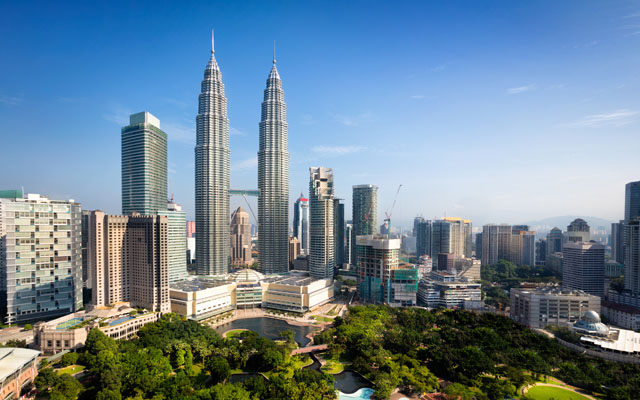
Malaysia will host ATF 2025; Kuala Lumpur, pictured

ATF rotates among the 10 ASEAN member countries.

Minister of tourism, arts and culture Malaysia, Tiong King Sing, received the handover baton alongside key figures, including Roslan Abdul Rahman, secretary-general of the Ministry of Tourism, Arts & Culture Malaysia (MOTAC); Ammar Abd Ghapar, director-general of Tourism Malaysia; and Edi Irwan bin Mahmud, Malaysian ambassador to Laos.

Expressing his enthusiasm, Tiong said: “We warmly welcome all of you to our country as we foresee this is an important and timely event for Malaysia, especially as we gear up for the upcoming Visit Malaysia Year set to take place in 2026. It is our hope that Malaysia will be your next destination to explore as we have a bit of everything for everyone.”

He highlighted the collaborative efforts of the Malaysian government, particularly MOTAC and the state government, to bolster the tourism industry. This includes enhancing tourism infrastructure, increasing direct flights to Malaysia, implementing visa-on-arrival, and fostering Muslim-friendly tourism.

The significance of Malaysia hosting ATF 2025 is amplified as the country will also assume the chairmanship of ASEAN in the same year.

Lionel Messi brings star power to Saudi Tourism’s new campaign

0

Saudi’s national tourism brand Saudi Welcome To Arabia has kicked off another global marketing campaign featuring football legend and Saudi Tourism Ambassador, Lionel Messi.

The Go Beyond What You Think campaign will launch across key target markets in Europe, India and China.

Lionel Messi and his family with Arabian horses in Diriyah, Saudi Arabia

The campaign is anchored on consumer insights, which revealed there are still common misconceptions about the destination – it invites audiences to experience the vibrant cultural transformation taking place across Saudi and share their experiences on social media.

The campaign brings to life the UN Tourism Tourism Opens Minds initiative that launched on World Tourism Day in Riyadh in September 2023.

As one of many leading international figures who took that pledge, Messi has a fond connection with Saudi having visited the country frequently, and most recently with his wife and two children. Both Messi and his family have expressed delight in their Saudi experiences and a desire to continue visiting the country.

Boldly addressing these misconceptions head-on, the campaign’s powerful call-to-action encourages visitors to discover the unexpected beyond outdated stereotypes, with a video featuring Messi breaking down metaphorical ‘walls’ of various misconceptions about the country.

The video showcases Saudi’s diverse locations, weather and terrain, as well as highlights attractions such as the Diriyah E-Prix, Riyadh Season’s theme park rides, AlUla’s hot air balloon flights and MDL Beast music events.

The campaign also places a spotlight on Saudi’s open and welcoming culture and the importance of inspiring young Saudi women to reach their full potential.

During its sunny winter season, the country is host to ongoing events like Riyadh Season, Jeddah Season and Diriyah Season, with notable events coming up including the Saudi Cup in February, Saudi Arabian Grand Prix in March, AlUla Arts Festival in February/March, AlUla skies festival in April, and more.

Saudi’s eVisa programme now includes 63 countries and special administrative regions, the GCC residents visa, and the free 96-hour Stopover Visa, making it easier for travellers to visit the destination.

Hong Kong PolyU develops platform to forecast tourism demand across the Greater Bay Area

0

The Hong Kong Polytechnic University (PolyU) has unveiled a new forecasting platform that will serve as a valuable tool for industry professionals, policy makers and academics to adapt and generate forecasts of visitor arrivals to the Greater Bay Area (GBA) in different economic scenarios.

Titled The Development of an Automated and Self-Adaptive Tourism Demand Forecasting Platform for the Greater Bay Area (GBA-TDFP), the project adopts an interdisciplinary approach to integrate well-established theories in economics, tourism management and computer science. It features key functions such as big data visualisation, market sensitivity analysis, short-, medium- and long-term forecasting, sentiment analysis, and interactive scenario forecasting.

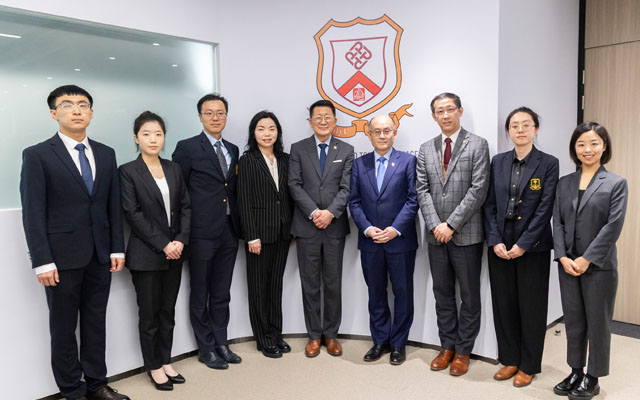
PolyU’s new forecasting platform helps adapt and generate forecasts of visitor arrivals to the Greater Bay Area

While the economy has now largely recovered from the shocks caused by travel restrictions and public health measures taken during the pandemic, there are still challenges to overcome, including labour shortage, supply constraints, changing economic conditions, and shifts in consumer behaviour.

To facilitate accurate forecasting, the project has collected macroeconomic data such as GDPs, CPIs and exchange rates of the GBA cities and their key source markets from statistical departments and international organisations such as the International Monetary Fund. For short-term tourism demand forecasting, the project has leveraged big data collected from popular online and social media platforms such as Google, Ctrip and Baidu.

The GBA-TDFP serves to simplify the process for policy makers and industry leaders to conduct what-if scenario analyses on tourism demand forecasts. Users can input hypothetical values for determinant variables (such as GDP and price levels) through web browsers, which are then incorporated into the estimated econometric models to generate scenario forecasts.

With advances in technology, destinations and visitors are increasingly dependent on information and communications technologies. By integrating cloud computing, big data and artificial intelligence techniques with advanced forecasting methods, the GBA-TDFP offers innovative insights and valuable guidance for both industry professionals and academics, effectively transforming vast amounts of data into actionable information, enabling stakeholders to make informed decisions and maximise the value derived from it.

“It all points to the fact that in order to sustain ongoing recovery, accurate forecasts of tourism demand recovery are crucial for policy makers and practitioners to be able to develop sustainable tourism strategies that foster long-term economic growth in the region,” remarked Haiyan Song, principal investigator and associate dean of the School of Hotel and Tourism Management at PolyU.

Air India unveils new in-flight entertainment and luxury amenities

0

Air India has elevated its in-flight offerings with luxe amenities and the introduction of its new in-flight entertainment (IFE) system, providing an immersive entertainment experience to travellers on its longhaul flights.

The full suite of the new IFE content features over 2,200 hours of entertainment content across formats and genres, including 1,000 hours of movies, 600 hours of TV, and 600 hours of audio, for today’s discerning travellers. It features Hollywood blockbusters, international films, digital content, TV shows from the platforms like Paramount, HBO, Prime, Sony Liv, Hulu, etc, as well as the exclusively programmed Air India Radio. Even young flyers can enjoy an extensive selection of curated audio and video content.

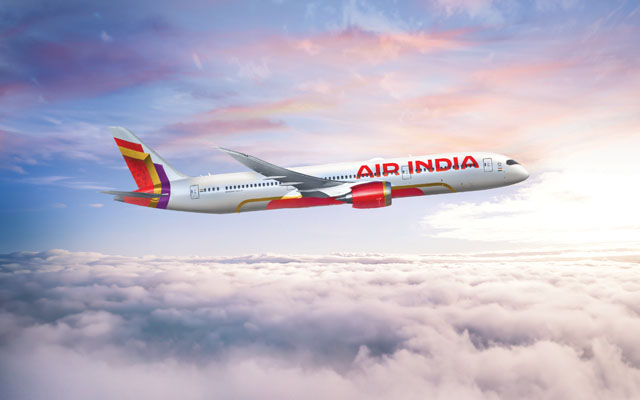
Air India elevates its passengers’ flight experience with new in-flight entertainment and luxury amenities

The IFE features capacitive touchscreens and handsets, USB and AC power, and personalised user interfaces, and together with new headsets in all cabins.

Arc, a new, immersive in-flight map experience from Panasonic Avionics Corporation, will also debut aboard Air India’s A350 fleet, where passengers can explore the world’s geography, read curated city guides, and zoom in to street map views of select cities, and up dated in real-time about the flight and world clock time zones.

Available on Air India’s A350, B777-200LR, the IFE content will also be offered on incoming new widebody aircraft. Its existing widebody fleet is scheduled to undergo complete refurbishment of all interiors starting 2H2024 in a US$400 million retrofit programme, and will subsequently feature the new IFE system and expanded content offering as well.

Campbell Wilson, CEO & managing director, Air India, said: “As Air India takes flight into a new era with the arrival of our A350 aircraft, so does our guests’ entertainment experience. This complete overhaul in our in-flight entertainment offering mirrors the dynamic transformation underway at Air India.”

A host of guest enhancements across cabin classes on international longhaul flights are also being introduced – from new amenity kits by Ferragamo and Verso, sustainable bedding, as well as new Chinaware, cutlery, and glassware, these new luxe offerings will roll out on medium and longhaul international flights, starting mid-2024.

First class and Business class passengers will continue to enjoy Air India’s loungewear by TUMI, which are made from recycled materials blended with cotton for extra softness and breathability, and plush velour slippers. They will also rest on comfortable, sustainable, and luxe bed linen, mattress toppers, and blankets made of premium wool blend, as well as dine on fine chinaware and glassware.

Premium Economy and Economy guests will also dine on new tableware, and keep warm with the twill weave cabin blanket provided.

Air Japan to launch services between Tokyo and Singapore

0

Air Japan, ANA Groups’ newest airline brand, is set to commence operations on the Tokyo (Narita)-Singapore route on April 26.

The Tokyo-Singapore service will operate every Monday, Thursday, Friday, Saturday and Sunday, while the Singapore-Tokyo flights are on every Monday, Tuesday, Friday, Saturday and Sunday.

Air Japan will soon fly between Tokyo and Singapore from April

Singapore will become the third destination served by Air Japan, adding to its other two routes from Tokyo to Bangkok, Thailand and Seoul (Incheon) South Korea.

Agoda to launch third edition of its Eco Deals Program

0

Agoda recently announced at the ASEAN Tourism Forum (ATF) that it has broadened its collaboration with World Wide Fund for Nature (WWF), expanding its Eco Deals Program to support eight conservation projects across South-east Asia.

The Eco Deals Program, which is actively onboarding accommodation partners, will go live to consumers on March 3 and run till December 3. The programme also showcases an example of private-public partnership in support of ATF’s theme Quality and responsible tourism – Sustaining ASEAN Future.

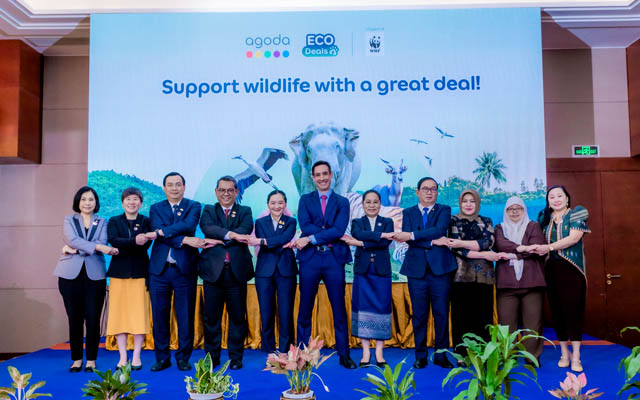
Agoda’s Omri Morgenshtern (middle) with the ASEAN delegation

Agoda will increase its donation to WWF-Singapore four-fold to US$1 million as part of this year’s Eco Deals Program, supporting the conservation efforts of local WWF offices in eight markets, including ATF host Laos, as well as Cambodia, Indonesia, Malaysia, the Philippines, Singapore, Thailand, and Vietnam.

As per the previous editions of the programme, Agoda will donate US$1 for each hotel booking made on hotels participating in the initiative. These funds will support WWF’s diverse conservation projects, spanning marine, forest, and wildlife preservation, including the protection of tigers in Malaysia, whale sharks in the Philippines, and elephants in Thailand. The other projects receiving support this year focus on the conservation of Saolas in Vietnam, ecosystem restoration in Indonesia, ranger support in Cambodia, and improvement of urban wetlands in Laos.

Agoda’s CEO Omri Morgenshtern commented: “As a company that aims to make travel possible for more people, we recognise we have a responsibility to contribute to the preservation of destinations. Through our longstanding partnership with WWF under the Eco Deals Program and the collaborative support of our hotel partners, we aspire to proactively champion initiatives that contribute to the further preservation and protection of the world, ensuring that it remains an environment for future generations to explore and enjoy.

“As an international hub, WWF-Singapore is well-positioned to continue driving positive change in South-east Asia. The conservation impact we have achieved over the last two years showcases the tangible effect our collaboration has on the environment,” said Vivek Kumar, CEO, WWF-Singapore.

“As we embark on our third year of partnership with Agoda, we look forward to expanding projects for marine, forest, and wildlife conservation.”

7th Hospitality Indonesia Conference opens this week

0

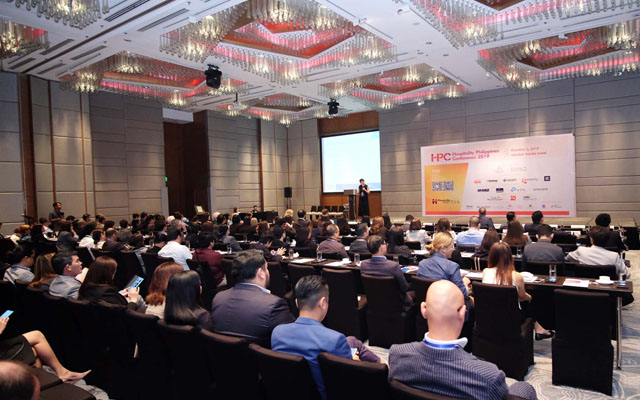
The 7th Hospitality Indonesia Conference, organised by Hospitality Asia Media, will open on January 30 to 400 delegates and 80 visionary speakers for two days at Le Meridien Jakarta.

The event will feature four curated summits: Hotel Investment Summit Indonesia, Hotel Design Summit Indonesia, Travel Byte Indonesia, and Hotel Revenue Summit Indonesia.

The 7th Hospitality Indonesia Conference opens tomorrow for two days at Le Meridien Jakarta

The Hotel Investment Summit Indonesia will offer dialogue among hotel owners, investors, hotel chains, sustainability experts, and legal professionals, with sessions delving into the prosperous yet intricate landscape of hotel investments in Indonesia.

The design-centric dialogue at Hotel Design Summit Indonesia appeals to interior designers, architects, hotel operators, and industry pioneers, and aims to sculpt a narrative around biophilic aesthetics, interactive technologies, and the quintessence of holistic wellness in design.

Travel Byte Indonesia explores the digital and sustainable facades of travel through insightful discussions among industry leaders, OTAs, airlines, car rental companies, cruises, and travel tech vendors.

Hotel Revenue Summit Indonesia focused on operational ingenuity, revenue management, and marketing innovation, and is tailored to the unique market dynamics of Indonesia.

The 7th Hospitality Indonesia Conference is expected to be attended by a broad spectrum of attendees, from financial institutions and property investors to consultants and destination marketing mavens.

Woman in power

0

Worldwide Hotels consolidated its six brands under one group back in 2018, and started to lay claims to being Singapore’s “largest homegrown tourist class hotel group”. What would you say are the most impressive milestones for Worldwide Hotels since 2018?
We incorporated Worldwide Hotels in 2018 so that we could hold our brands together and give our group an identity. Back then, all our hotels were under different entities even though we were all part of the same group. We knew we needed to start focusing on our brands.

Hence, I think our most important milestone was when we corporatised our organisation. I brought in an external team of professionals with extensive industry experience; before, the business was very much led by myself and my cousin, Chu Poh Yong (chief operating officer at Worldwide Hotels).

Right after we launched Worldwide Hotels, Covid hit. Yet, we stuck to what we believed in for the long-term, kept every staff, refused pay cuts, and even paid out bonuses after the first year. All that really kept our staff very committed and engaged during the tough period when there were many uncertainties.

It is easy to now say that we have survived and thrived despite of Covid, but back then those were really challenging days. The pandemic lasted longer than SARS, longer than what most of us had thought. It was a real challenge to keep the faith. So, I also think that retaining the support of our people was another milestone for the company.

Another important outcome of our efforts during the pandemic was improved processes. We used that downtime to digitalise and establish cross-functional roles.

Besides all that, we have been able to continue with our (property) acquisitions after the height of Covid. In fact, we were able to purchase four hotels after Covid, including the high-profile acquisition of Parkroyal on Kitchener for S$525 million (US$394.9 million).

You now have six brands under one Worldwide Hotels banner, and they are described as offering “comfort, convenience and value for money”. Why has the company chosen to focus on this segment of accommodation?
We’re always focused on economy mid-tier because we feel that this is the segment that we can create the most value. Furthermore, we have a competitive advantage in this space – we have 41 hotels in Singapore, including the upcoming 989-key Mercure Icon City Centre (located in Singapore’s central business district and scheduled to open in 1Q2024). We are able to centralise all our functions, such as payroll, marketing, sales, revenue management, HR, and legal. This creates strong economies of scale and operating efficiencies for our group. This is something that a single owner of multiple hotels can achieve.

Is there a desire to get into the luxury hotel space one day?
We are very tempted, but that’s not where our competitive advantage lies at the moment. If we were to branch into luxury accommodation, our functions would not be as centralised as they are now.

We still have a long way to go before we become an international brand.

Your overseas assets are all bearing other brands, and are placed under external management. Are you looking at bringing your own brands overseas?
That is in our third phase of growth; our second was to build our asset base. We need to ensure that our asset base is sufficient and we have economies of scale.

If you look at all our investments, you will see they are strategically located in key cities. When we have sufficient numbers of owned hotels and can manage well with economies of scale, we can then replicate what we have in Singapore and leverage our strength. With that, we can convince external hotel owners to let us manage their properties. We cannot grow overseas by being asset-heavy.

Of course, our investment horizon is very, very long-term. We are family-owned and I do not have a KPI to show within the next few years. But that is intentional – we will only do something when we are ready and have a competitive advantage.

When the time is right for bringing your brands beyond Singapore, which brand would it be and which destinations are you mostly likely to establish it in?
Well, that would be the Hotel Mi brand. It is a fun, mid-tier brand that targets the young, confident and social generation of travellers who will pay for luxury that they value. We are not targeting the five-star type of travellers – we are not competing in that market space. We are very focused on hospitality that matters, and to provide a level of luxury that the guests value.

Now, Worldwide Hotels are already present in key cities across Asia-Pacific. So, we will be keen to bring Hotel Mi to places like Bangkok in Thailand as well as Melbourne, Sydney, Perth and Brisbane in Australia. We are interested in key cities that attract both corporate and leisure travellers, so as to provide us with a broad base of customers and more consistent demand.

Hotel Mi is also a brand that we are working to build in (home base) Singapore. Our second Hotel Mi opened in Singapore’s Short Street (surrounded by both cultural enclaves and the CBD).

You have given your high-profile Kitchener Road acquisition to Accor’s Novotel brand. Why did you choose to do this, instead of managing it yourself and giving it one of your own labels?
That was under a franchise agreement that allows us to work with Accor and use the Novotel brand. We are able to leverage on Accor’s marketing and distribution channels, and command a higher ADR and RevPAR, while at the same time manage the property ourselves.

This is just us choosing to leverage on the economies of scale that we have.

Our rooms at Novotel Singapore on Kitchener (opened November 1, 2023) are larger than the rooms we normally have – the smallest room types are an average of 28m² compared to 14.5m² to 17m² elsewhere at our other hotels. Hence, we believe that the Novotel brand, being an upper-four-star label, can do more justice to the asset.

We took the same approach with the new Mercure Icon City Centre. We wanted this asset to be the landmark hotel for Worldwide Hotels. We looked at the strong partnership that we have with Accor and saw the advantages of having the Mercure naming rights for this property. Again, the benefits of this arrangement is our ability to drive higher ADR and RevPAR, while at the same time maintain independence in operations.

You have assets overseas that are managed by Accor. Why did you not enter into a similar franchise agreement for those properties?
We will only do something when we are very ready. In Australia, we have Novotel Melbourne Central, Ibis Melbourne Central, and Ibis Styles Brisbane Elizabeth Street that are managed by Accor. Worldwide Hotels does not have the economies of scale to manage properties in Australia ourselves. Accor is established in Australia and has a cost advantage. It has local support and a dedicated Australian country head. At this moment, Accor serves us better than we can ourselves.

Are you also looking at franchise agreements with other hotel companies? As an asset owner, what sort of characteristics do you look for in a franchise partner?
We have requests for proposal from a few international hotel firms, and we have approached a few. So far, we have determined that Accor’s commercial terms and the potential benefits to Worldwide Hotels and the hotel assets are the most attractive.

As an asset owner, we want a partner that is positioned strongly in the world and has a massive loyalty membership base. It is also important that the partner has a brand that suits our product.

What else is on the horizon for the company, especially in the new year?
We are constantly excited these days, as we have many projects. The team is now busy driving business into Novotel Singapore on Kitchener, which is still in its initial months of operations. The first year is crucial, and we must stabilise business by mid-2024.

Hotel Mi Rocher is also new, and we will soon be rolling out our own press initiatives to launch Mercure Icon City Centre.

So, these projects are keeping our core teams very busy. The new year will certainly be very exciting for them.

Worldwide Hotels has so many properties in Singapore. What role do you play in supporting the destination’s inbound tourism efforts?
We participate in almost all of Singapore Tourism Board’s (STB) international fam trips, and have a representative that attends all STB-led initiatives overseas. STB is doing a great job promoting Singapore and building an exciting calendar of events for 2024. That helps a lot to catalyse hotel business.

The challenge for Singapore is that it is deemed a tad too expensive for regional markets. Last year, hotels rates here rose 25 to 26 per cent over pre-Covid. With the appreciation of the Singapore dollar, Singapore may price itself out of reach for some aspiring travellers.

We are in the mid-tier category. The ADR is around S$200 for most of our hotels and even around S$100 for some. It is important that we continue to deliver consistent service and bring value to (price-conscious) travellers who visit Singapore.

How do you balance that though? You are maintaining this affordable price range against rising cost of operations.
Yes, the cost pressure is intense. Utilities have risen by more than 30, 40 per cent. Labour cost is also much higher compared to pre-pandemic. A lot of hotels are curtailing occupancy because there is not enough supporting labour. It is a general trend in the market.

So, what we have done is to adopt cross functions and equip our staff with the ability to multi-task. I mentioned this earlier on, that we used the pandemic period to upskill our staff. There is a movement across Singapore’s travel industry to redesign jobs, so that we can pay our people better but also have them perform a bigger range of work.

How do you get your staff to recognise that expanded job functions is the norm now?
Well, higher pay is a motivator, but staff communication is most crucial. Post-Covid, we are very focused on engaging our staff. We run a quarterly newsletter in multiple languages that shares company-wide updates. We want our staff to feel like they are part of a bigger community.

We set minimum training hours that every department needs to fulfil, and that is part of their appraisal.

Does Worldwide Hotels contribute to nation-wide hospitality talent investment?
For many years before the pandemic, we worked with local institutions to provide internship programmes. We are working with Republic Polytechnic and Temasek Polytechnic in Singapore to provide internship placements this year, and will have four students joining us from March till August.

As a group, we are also very much inspired by the efforts of our founder in supporting local education. He established the Worldwide Hotels Choo Chong Ngen Foundation. Today, the foundation has a continuous relationship with Singapore’s Metta School (which supports students with mild intellectual disability and/or mild autism spectrum disorder) to take in one student yearly. We have so far hired one staff with disability.

Additionally, there will be 10 APSN Delta Senior School (a social service agency that provides special education, vocational training and employment support services for individuals with mild intellectual disability) interns for on-site training from January to May 2024.

We also worked with Yellow Ribbon Singapore (which supports ex-offenders) to employ two staff.

We want to give a lot of support to our society, and are committed to doing even more.

JLL report shows confidence in Japan’s hotel recovery

0
Cityscape of Japan

Japan’s key hotel markets are showing strong signs of recovery led by growth in the high-end segment, according to a new report from global real estate service provider JLL.

In its 2023 report, JLL said the weak yen has particularly benefitted Japan, which has recorded a “significant resurgence of international and domestic tourists”.

JLL predicts Kyoto, pictured, will continue to grow in international visitation

Tokyo recorded 20.3 million international visitor nights over January to October 2023, representing a RevPAR of 109 per cent relative to 2019. Kyoto and Osaka performed similarly, showing a RevPAR of 107 per cent and 106 per cent respectively.

Kyoto, which has historically seen a higher ratio of international visitors than the national average of 20 per cent of total visitors, saw 2.6 million international visitor nights from January to August 2023, 13 per cent more than over the same period in 2019. Domestic visitor nights also exceeded the 2019 figure by 16 per cent.

JLL predicts Kyoto will enjoy “continued growth in international visitation coupled with rising domestic demand”, due to the opening of many luxury brands including Six Senses, Kyoto, Banyan Tree Kyoto Higashiyama and Regent Kyoto, as well as renovations at Kansai International Airport that will see annual international passenger capacity increase from 23 million to 40 million in 2025.

In Tokyo, the total number of international visitor nights over the period reached 20.3 million, 26 per cent more than pre-pandemic. And, although occupancy had decreased by nine per cent relative to 2019, it was still higher than Beijing, Shanghai, Hong Kong and Seoul, at 77.8 per cent. Tokyo’s market therefore has room to grow across all segments, for both leisure and business travellers, according to JLL.

Hotel recovery in Osaka, meanwhile, was driven by “the full recovery in domestic demand”, with international visitor nights from January to August 2023 reaching only 86 per cent of 2019 levels.

The trend reflects the city’s hotel market slowdown before the pandemic but an 11.7 per cent increase in total room inventory this year; the city’s hosting of the Expo 2025 Osaka, Kansai; and the opening of an integrated report in 2030 should attract more international visitors, said the report.