South Korea has appointed K-pop girl group NewJeans as the country’s latest honorary ambassadors as part of its tourism drive, riding on the enduring Korean wave that has drawn many tourists to its shores.
Band member Minji told the press that her group finds “great joy” to be able to promote South Korean charms.
NewJeans have been named as South Korea’s honorary ambassadors (Photo: Korea.net)
Culture minister Yoo In-chon said that with NewJeans as tourism ambassadors, international arrivals will soar further. Currently, tourist arrivals are close to 90 per cent of 2019 levels.
Like other honorary ambassadors before, NewJeans will not bear actual diplomatic responsibilities. Band members will leverage their reach and recommend their favourite things to do in South Korea.
Past honorary ambassadors for tourism include BTS. Last year, singer/actor Cha Eun-woo was appointed as the honorary ambassador for Visit Korea Year 2023-2024.
Meliá Chiang Mai is offering a host of benefits ranging from discounts on spa and dining to access to its executive lounge for guests who stay for seven days or more.
The hotel’s Travel Slow in Chiang Mai package affords guests daily 20 per cent discounts on spa treatments, minibar items, laundry, and F&B at the hotel’s two restaurants, two bars, lobby lounge and in-room dining.
The 360-degree rooftop bar on the hotel’s 22nd floor, Mai The Sky Bar, is the highest bar in Chiang Mai
Guests staying in The Level Room categories also enjoy exclusive access to The Level Lounge on the 21st floor, which offers all-day snacks and beverages accompanied by panoramic vistas of the city and famed Doi Suthep Temple on the mountaintop to the west.
The executive lounge’s amenities and experiences include a private breakfast service, and cocktails and canapés for adults in the evening.
Fresh complimentary fruits in the room on arrival and a late check-out until 14.00 are also among long-stay benefits.
Meliá Chiang Mai is located on the Charoen Prathet Road by the River Ping and Night Bazaar, and is located six kilometres from the Chiang Mai International Airport.
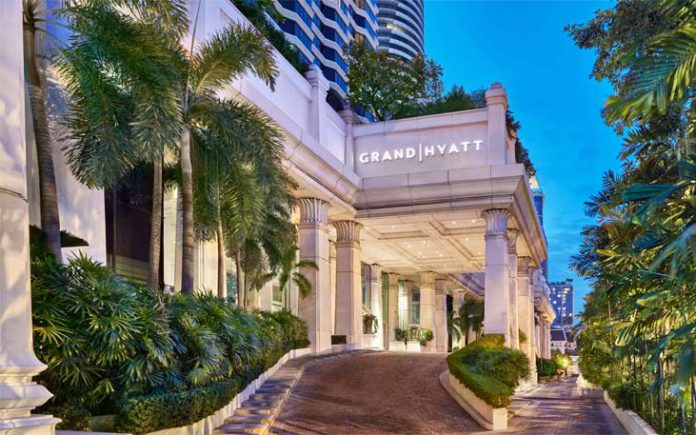
Numerous Thai media sources have reported a poisoning incident at the Grand Hyatt Erawan Bangkok hotel this evening in Bangkok, Thailand.
Six foreign individuals were allegedly found dead via ingestion of a toxic substance a hotel room. Police discovered the bodies of three men and three women, identified as two Vietnamese-Americans and four Vietnamese nationals.
Poisoning incident at Grand Hyatt Erawan Bangkok is being investigated
Lumpini police were alerted to the incident at around 17.30.
Initial local media reports earlier in the evening incorrectly described the incident as a shootout, but investigators confirmed there were no signs of struggle or bruises on the victims, and their luggage was found near the door.
The victims had arrived at the hotel in two separate groups – one on July 13, and another the next day. They were due to check out today and had their bags already packed.
The case drew significant attention, with both Thai and foreign media converging on the scene.
Thai prime minister Srettha Thavisin arrived at the hotel around 21.00, and hosted a press briefing with national police chief Torsak Sukvimol and Bangkok police commissioner Thiti Saengsawang.
Thiti revealed that suicide has been ruled out as a cause, and that the investigation is focusing on murderous intent.
Srettha said he had met with the Vietnamese ambassador.
“There shouldn’t be an impact on the tourism sector,” he stated at the briefing, reassuring the public that the incident was not related to robbery or assault.
Government spokesman Chai Wacharonke emphasised that steps are being taken to contain public panic and to prevent this incident from impacting tourism.
Previous incidents, including the Erawan bombing in 2015 and Paragon shooting in October 2024, damaged Thailand’s tourism figures and targets.
Tourism New Zealand (TNZ) is focused on growing year-round tourist arrivals for New Zealand, particularly by encouraging visitation during the off-peak seasons from March to November.
Gregg Wafelbakker, general manager Asia, TNZ, shared: “We aim to increase the value of tourism in New Zealand by US$5 billion over the next four years, with 70 per cent of that growth coming from off-peak arrivals.
TNZ hopes to attract more visitors during the off-peak periods; Lake Matheson in South Island, New Zealand, pictured
“By encouraging arrivals during the off-peak season, we support the tourism industry and economy while providing an exceptional experience for travellers, with fewer crowds and attractive offers.”
He highlighted that South-east Asian markets play a crucial role in this strategy, as visitors from these countries often travel during school holidays and festive breaks, which align with New Zealand’s off-peak season.
“We have more arrivals from South-east Asia visiting during the off-peak season than our global average from all markets.
“Off-peak consideration among active considerers living in South-east Asia – people who are thinking about a holiday in New Zealand – is at an average of 85 per cent. They are drawn to New Zealand’s landscapes, nature, wildlife, and local cuisine. They also find New Zealand an appealing road trip destination, with self-drive and campervan holidays becoming more popular. Off-peak seasons offer less busy roads and stunning scenery as they travel throughout the country.”
While Singapore is a mature market, new potential markets in South-east Asia include Malaysia, Thailand and Indonesia.
Wafelbakker recently led a delegation of 39 exhibitors from New Zealand to Kiwi Link Southeast Asia 2024, held in Kuala Lumpur from July 15-16. The New Zealand exhibitors met with 36 travel trade buyers from Singapore, Malaysia, Thailand, and Indonesia over the two-day event.
The event showcased New Zealand as a great off-peak destination for international visitors, and aimed to build strong selling capability of product managers and increase New Zealand’s share of voice among travel trade across South-east Asia.
Krissy Griggs, visitor markets manager for ChristchurchNZ, noted that Singapore Airlines’ direct daily flights from Singapore to Christchurch have boosted arrivals from Singapore and Malaysia to the South Island.
She said: “Singapore Airlines is currently the only airline from South-east Asia flying directly to Christchurch. Typically, visitors from Singapore spend two or three days in Christchurch before exploring other destinations in the South Island.”
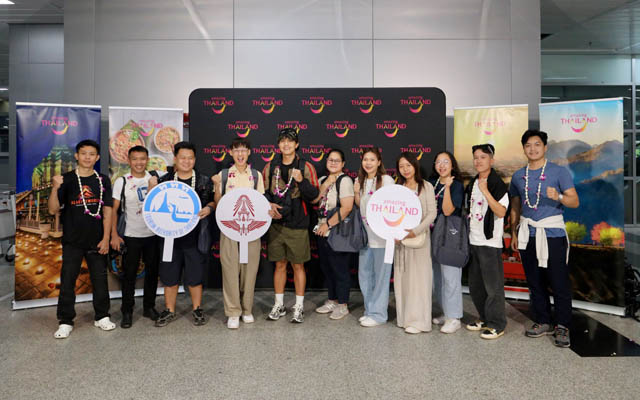
The Tourism Authority of Thailand (TAT) and State Railway of Thailand (SRT) welcomed the first group of passengers on the full trial train travelling from Laos to Bangkok on July 14.
The train departed from Lao PDR’s Vientiane Train Station (Khamsavath) and arrived at Bangkok’s Krung Thep Aphiwat Central Station. This new train service is scheduled to officially begin operations this Friday, July 19.
The Bangkok-Vientiane (Khamsavath) train service aims to boost connections between Laos and Thailand
The Bangkok-Vientiane (Khamsavath) train service is an extension of the current Bangkok-Nong Khai route, and is a project between the Thai and Laotian governments to better connect the two countries’ rail systems.
The outgoing train, Rapid No. 133, will depart Bangkok in the evening and arrive in Vientiane the next morning and vice versa for the returning train, Rapid No. 134.
Both trains comprise 30 seats in the second-class air-conditioned sleeper carriage, 64 seats in the second-class air-conditioned carriage, and 152 seats in two of the third-class ordinary carriages with fans.
SRT also operates Rapid No. 147/148 between Udon Thani and Khamsavath Station.
TAT governor Thapanee Kiatphaibool said: “The extended train route will enhance cross-border tourism and economic activities and strengthen relations between the two nations. It also aligns with TAT’s strategy to boost cross-border tourism and intra-ASEAN travel.”
“We hope to welcome more Laotian tourists and maintain Thailand’s well-established position as the preferred travel destination among the Laotians.”
Resorts World Cruises (RWC) will expand its global footprint to the Arabian Gulf and Gulf of Oman with the upcoming homeport deployment of Resorts World One in Dubai from October 18, 2024 to April 13, 2025.
Resorts World One is expected to make 75 calls in the region with 150,000 passengers over the six-month period, which will significantly contribute to the growth of cruise tourism in the Arabian Gulf and Gulf of Oman. The ship will attract a new segment of Fly-Cruise passengers from India, increasing diversity to the Arabian Gulf cruise market.
Resorts World One combines premium amenities with diverse culinary options, ensuring a boutique lifestyle and entertainment voyage through the Arabian Gulf and beyond
Resorts World One will sail from Dubai from October 18 onwards, offering itineraries that include the two-night Sir Baniyas Weekend Cruise with departures on Fridays; a three-night Oman Cruise to Khasab and Muscat departing on Sundays; and a two-night Doha Cruise departing on Wednesdays.
Guests will have the flexibility to combine two or all three of the itineraries to increase the cruise length to a four-, five- or a seven-night cruise.
Shore excursions and onboard activities will allow passengers to immerse themselves in the rich cultural tapestry of Dubai and the surrounding region especially Muscat, Khasab and Sir Baniyas Island. Visits to iconic landmarks, heritage sites, and shopping destinations will be part of the itinerary for tourists while Bollywood DJ parties and music bands, pyjama and foam parties, movies, will be among other attractions onboard.
To cater to a diverse target audience, certified vegetarian and Jain cuisine will also be available to cater to travellers from India and others who prefer specialised vegetarian selections. With the ship’s deployment in the Arabian Gulf, Resorts World One will provide regional Muslim travellers with the convenience and access to certified halal-friendly offerings onboard the ship. Guests can also make pre-advanced appointments to have the crew of the same gender attend to the guests for selected onboard services such as the spa.
“With easy access and regular flight connectivity from India to Dubai, Indian travellers will also have more travel and vacation options to explore multiple destinations with a cruise vacation, paving the way for a new and exciting era of Fly-Cruise exploration,” said Naresh Rawal, vice president – sales (South Asia and Middle East), RWC.
Following the April brand refresh of World Express Singapore (WES), marking its 55th anniversary, World Express Malaysia (WEM) will unveil its new website together with the new logo on name cards and other collaterals by the end of July.
WEM is part of Melewar Group’s travel and tourism-related companies and group president Seri Iskandar Bin Tunku Abdullah, known in the industry as TI, said the new branding “reflects the new and fresh vibrancy that World Express now stands for”.
World Express Malaysia will unveil its new website and logo by end-July
TI and WES chairman Tan Chee Chye became business partners through their PATA affiliation.
WEM executive director Cherry Lee and WES managing director Darren Tan have been working closely on the “new look” and team members from both sides attended an operations retreat and product refresher in Penang last week.
Lee told TTG Asia that she will work with Tan to co-sell both countries and leverage on WEM’s offices in Kuala Lumpur, Penang and Kota Kinabalu as the Local Insider for Peninsular Malaysia and Borneo.
The pair will be co-sellers at the upcoming PATA Travel Mart taking place in Bangkok at the end of August focusing on the UK, the US and English-speaking markets.
Despite the rise in transport costs and guide fees, Malaysia still offers value for money due to the currency exchange, Lee noted.
She welcomed the increase in air capacity with the return of daily British Airways flights between London and Kuala Lumpur on November 10 to tap leisure and meetings and incentive clients.
Commenting on new WEM products and services, she shared: “We are looking to promote Singapore-Malaysia self-drive holidays and increase the length of overland coach tours.
“For example, coach tours will feature two nights in Malacca instead of one, and three instead of two in Kuala Lumpur to allow more time for market visits and cooking programmes in Malacca; and longer walking tours in Kuala Lumpur and Penang beyond the current four hours for more in-depth discovery of heritage, natural habitats, etc.”
WEM will also be stepping up its handling of shore excursions for WES’s cruise clients from Singapore, she added.
The Manila International Airport Authority (MIAA) and flag carrier Philippine Airlines (PAL) have officially opened the new Passenger Transit Lounge at the Ninoy Aquino International Airport (NAIA) Terminal 1.
The transit lounge – located at the pre-departure area – is open 24 hours daily and is adjacent to the OFW Lounge.
The new PAL-MIAA Transit lounge at NAIA Terminal 1 opened on July 10
The lounge provides a comfortable and relaxing space for passengers with connecting flights as well as a suitable holding area for inadmissible passengers excluded by the Bureau of Immigration.
Amenities at the lounge includes comfortable seats, charging stations, and shower facilities.
Hoiana Resort & Golf will launch the inaugural International Kite Festival in Vietnam this July to showcase the craftsmanship and beauty of kite making and performing.
This four-day festival will run from July 25 to 28, and is an integral element of Hoiana’s Summer Vibes campaign.
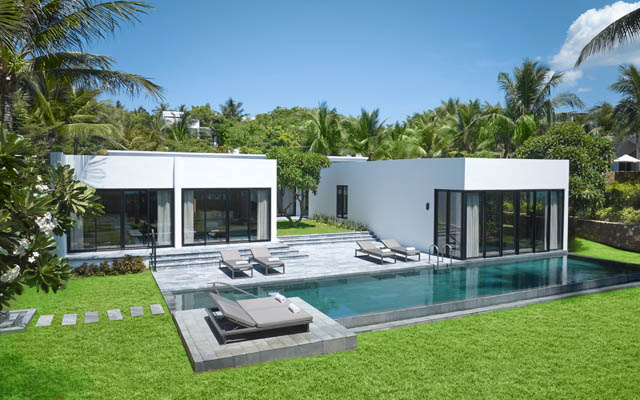
Hoiana Resort & Golf will host the inaugural International Kite Festival in July; New World Hoiana Beach Resort, pictured
Guests can look forward to an array of activities, including kite-flying performances by teams from 12 different countries and regions, including Mainland China, Hong Kong, Taiwan, South Korea, Japan, Thailand, Indonesia, the Philippines, Malaysia, Australia, India and Vietnam.
The festival will feature a diverse range of kites and a colourful display area, along with the LED kite flying programme, which will illuminate the night sky on July 26, 27 and 28, as well as a music night featuring talented young performers on July 27.
In addition, guests can immerse themselves in kite making workshops, enjoy a variety of international cuisines, witness magic shows, experience fire dance performances, create memories in a photo booth, and partake in a myriad of other entertainment activities.
A Stay & Kite package is available, where guests will receive a 250,000 dong (US$9.90) food and beverage voucher, plus unlimited access to the kite festival area. For outside guests, complimentary kite festival area access is available once they register for Hoiana Premium Rewards or purchase a food and beverage voucher.
A new mixed-use development in Osaka that promises to facilitate innovation, well-being and a challenge-mindset for residents, visitors and businesses is set to partially open within weeks.
Grand Green Osaka aims to transform the north part of the city into a contemporary district with a wide range of facilities, improved transport links and 45,000m² of green space. Facilities will include shops, restaurants, a spa, a museum, sports and edutainment cubes, an information centre and a 120m-long canopy-covered event space.
Grand Green Osaka will feature lush greenery spaces and lifestyle facilities when opened (Photo: Grand Green Osaka)
It will also house three hotels catering to different markets: the luxury Waldorf Astoria Osaka with 252 rooms, the upscale Hotel Hankyu Gran Respire Osaka with 482 rooms and Canopy Osaka Umeda, a lifestyle property with 308 rooms.
The complex will be opened in full within fiscal year 2027 and a new train station under the development with a direct connection to Kansai International Airport will be opened by JR West in 2023. By 2031, this new train line will extend to Shin-Osaka Station, a gateway to the Shinkansen lines, thereby boosting access to other parts of Japan.
Designed to improve the quality of life of residents and visitors alike, Grand Green Osaka will centre around the new Umekita Park (a tentative name). It will feature abundant spaces for visitors to relax and interact with nature, such as the Reflection Lawn, which will host various activities and events for up to 10,000 people.
The park will also act as an a sustainable ecosystem to support biodiversity and an evacuation space to boost the city’s disaster resilience.















Numerous Thai media sources have reported a poisoning incident at the Grand Hyatt Erawan Bangkok hotel this evening in Bangkok, Thailand.
Six foreign individuals were allegedly found dead via ingestion of a toxic substance a hotel room. Police discovered the bodies of three men and three women, identified as two Vietnamese-Americans and four Vietnamese nationals.
Lumpini police were alerted to the incident at around 17.30.
Initial local media reports earlier in the evening incorrectly described the incident as a shootout, but investigators confirmed there were no signs of struggle or bruises on the victims, and their luggage was found near the door.
The victims had arrived at the hotel in two separate groups – one on July 13, and another the next day. They were due to check out today and had their bags already packed.
The case drew significant attention, with both Thai and foreign media converging on the scene.
Thai prime minister Srettha Thavisin arrived at the hotel around 21.00, and hosted a press briefing with national police chief Torsak Sukvimol and Bangkok police commissioner Thiti Saengsawang.
Thiti revealed that suicide has been ruled out as a cause, and that the investigation is focusing on murderous intent.
Srettha said he had met with the Vietnamese ambassador.
“There shouldn’t be an impact on the tourism sector,” he stated at the briefing, reassuring the public that the incident was not related to robbery or assault.
Government spokesman Chai Wacharonke emphasised that steps are being taken to contain public panic and to prevent this incident from impacting tourism.
Previous incidents, including the Erawan bombing in 2015 and Paragon shooting in October 2024, damaged Thailand’s tourism figures and targets.