Australia’s SeaLink Whitsundays is introducing a new premium offering for the Whitsundays region onboard Reef Quest III with a new full-day cruise taking guests on a journey through the Whitsunday Islands.
Officially joining the SeaLink Whitsundays fleet at the Shute Harbour Marine Terminal, fresh from a complete vessel fit out in Brisbane, Reef Quest III boasts plush seating in air-conditioned comfort across two decks, expansive open spaces, and a 360-degree top deck for unspoiled panoramic views, and can accommodate up to 125 guests and five crew members.
SeaLink Whitsundays introduces a new full-day cruise onboard Reef Quest III
Guests on the SeaLink Big Island Day Tour to Whitehaven Beach can look forward to a scenic cruise on Reef Quest III through the Whitsunday Islands, with leisurely stops at Whitehaven Beach and Hill Inlet Lookout, fully guided tours of the Hill Inlet and Whitehaven Beach lookouts, full bar service throughout the duration of the tour, a buffet lunch, morning and afternoon teas, and complimentary bus pick-up and drop-off service from multiple transfer points.
This unique tour is capped at 84 pax and provides access to exclusive spots not featured on other Whitsunday Islands tours. SeaLink Whitsundays is also currently offering special rates for family and senior bookings.
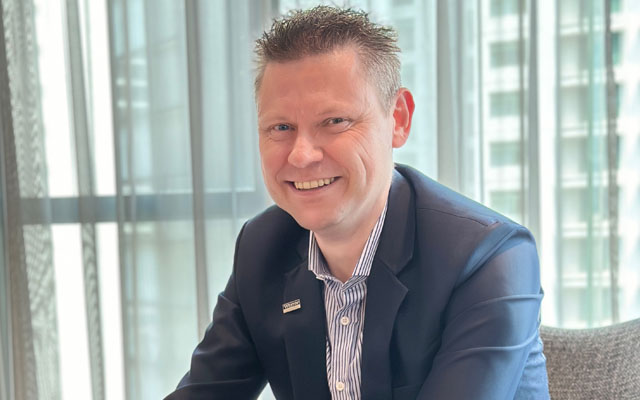
The Westin Kuala Lumpur has named Daniel Burstein as its new general manager, where he will oversee all aspects of operations and management of the hotel.
Prior to joining The Westin Kuala Lumpur, he was general manager at the Four Points by Sheraton, Kuala Lumpur Chinatown, earning numerous awards and accolades during his tenure.
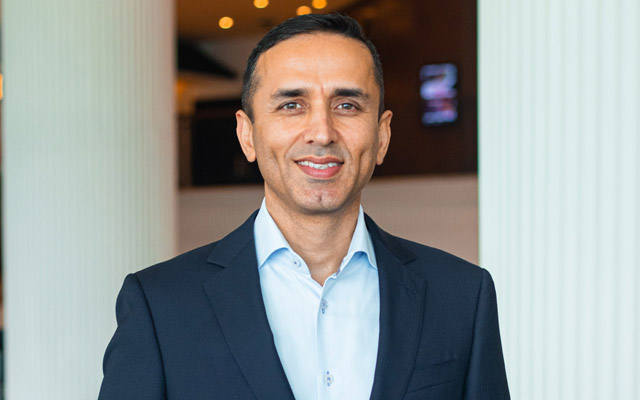
Minor Hotels has appointed Richard Beh as vice president commercial – Asia.
Based at the company headquarters in Bangkok, Thailand, he will spearhead the overall regional strategy, adopting a holistic approach to sales, marketing, e-commerce, revenue and distribution across all Minor Hotels brands in Asia, including Anantara, Avani, Oaks, Tivoli, NH and NH Collection.
Before joining Minor Hotels, Beh served as global vice president, hotel chains at Trip.com.
Urban resort La Miniera Pool Villas in Thailand’s Pattaya is taking firm steps to provide a warmer welcome to guests with health and physical issues and to achieve a more positive environmental impact.
Pongwit Ngamjarukit, general manager of the all-villa property, told TTG Asia that the team is now working with IncluCare, a UK-based organisation that offers inclusive and accessible travel training, assessment and accreditation for the tourism industry, to perfect its journey towards inclusivity and universal accessibility.
La Miniera Pool Villas is working with IncluCare to ensure the resort is on the right track in its journey towards inclusivity and universal accessibility
“They have identified a few things we must do at the resort to be more welcoming to guests in wheelchairs, guests who are deaf, guests with autism and ADHD (Attention-deficit/hyperactivity disorder), etc,” shared Pongwit.
Chanisorn Mongkollapkij, chief marketing officer at La Miniera Pool Villas added that the new kids’ club on property – now in construction – is also designed for children with autism and ADHD in mind.
“Richard Thompson, the CEO of IncluCare, Pongwit, and I are working together to make this new kids’ club as accessible and inclusive as possible. There will be an outdoor calming zone for neurodivergent kids to connect with nature, touch some water from a fountain, and play with sensory toys while improving their emotional regulation skills,” detailed Chanisorn.
At press time, 40 per cent of villas are wheelchair-accessible and adaptable, but “that’s not good enough”, remarked Chanisorn.
Additionally, the resort is making changes to achieve better green goals. According to Pongwit, the property is already certified with the Department of Climate Change and Environment of Thailand’s Green Hotel Plus programme.
New hardware and improved operations in support of inclusivity, universal accessibility and sustainability are expected to be ready by the fourth quarter.
La Miniera Pool Villas hopes to qualify for Small Luxury Hotels of the World’s Considerate Collection once these improvements are complete. The Considerate Collection, launched in 2021, is a portfolio of properties that pass strict assessment across three levels – Environmentally Conscious, Cultural Custodians and Community Minded – by the Global Sustainable Tourism Council. There are now 61 properties in the collection.
The Ascott Limited (Ascott) kicked off a global marketing campaign on August 12, launching a brand refresh of The Unlimited Collection to accentuate its focus on cultural charms and reinforce the global positioning of the brand as a curated selection of independent upscale hotels in vibrant neighbourhoods that feature authentic and immersive local cultural experiences.
Tapping the popularity of experiential travel, Ascott has more than tripled its portfolio under The Unlimited Collection to 11 properties across Asia, Europe and the Middle East. The Unlimited Collection now comprises more than 900 units, both operating and in the pipeline, spanning eight cities globally.
The Unlimited Collection debuted in 2020 with three properties in Singapore; Ann Siang House by The Unlimited Collection, pictured
The brand refresh is a continuation of Ascott’s Brand360 strategy, a group-wide initiative to strengthen its brand portfolio through sharpened brand stories and the introduction of signature experiences and programmes unique to each brand.
Focused on delivering unscripted, unchartered, unconventional and unforgettable experiences, The Unlimited Collection accentuates the charm of cultural enclaves, bringing guests on an adventure in lively neighbourhoods filled with colourful sights, sounds, tastes and personalities, where they will be treated to a kaleidoscope of festivals, art, music, craft, food and language steeped in local culture.
The Unlimited Collection’s brand signatures comprise Unique Design, The U Shop, and The U Bar, and Gen-U. Unique Design features a strong design intent inspired by each neighbourhood’s culture, elevating the authentic to the extraordinary with this approach. The U Shop is a retail concept unique to The Unlimited Collection properties, offering an array of property merchandise created in collaboration with local artists and crafters, while The U Bar at The Unlimited Collection properties invite guests to experience a fusion of classic and creativity, while sharing passions with fellow travellers.
Associates of The Unlimited Collection are known as Gen-Us, trendsetters who are always in the know of the latest happenings in town, are unconventional and always there to delight guests with thoughtfully unique surprises, and passionate about bringing remarkable and undiscovered cultural experiences to everyone.
A brand film titled Be a Gen-U: A Generation for Unlimited Experiences will roll out on various digital and social channels as part of the brand refresh of The Unlimited Collection, which follows a Gen-U’s journey all while highlighting The Unlimited Collection’s refreshed brand story and signatures.
The Unlimited Collection debuted in 2020 with three properties in Singapore – Ann Siang House by The Unlimited Collection, KēSa House by The Unlimited Collection and Wanderlust by The Unlimited Collection – all of which are located within conserved buildings in cultural districts but each with its own design and character.
Following the launch of The Unlimited Collection in Singapore, the brand took root in Vietnam in December 2023 with the opening of the 100-unit Anmira Resort & Spa Hoi An by The Unlimited Collection.
Poised for further expansion into Malaysia and Indonesia, The brand will also expand into Malaysia and Indonesia with the addition of more than 200 units across three properties by end-2025. These properties are Macalister Hotel Penang by The Unlimited Collection, Amatonn Hotel & Residence by The Unlimited Collection and Costaluna Batam by The Unlimited Collection.
In Europe, The Unlimited Collection will welcome its first two properties in the UK, namely Mount Royal Hotel Edinburgh by The Unlimited Collection before the end of 2024 and The Grand Hotel Leicester by The Unlimited Collection by 2Q2025. In addition, Temple Bar Hotel Dublin, a 136-room hotel in Ireland owned by CapitaLand Ascott Trust, will be rebranded under The Unlimited Collection by end 2024.
Over in the Middle East, the 90-unit The Unlimited Collection Hotel Marrakech paves the way for Ascott’s entry into the city of Marrakech in Morocco come 2026.
Serena Lim, chief growth officer, Ascott, said: “Our collection brands form a key pillar of Ascott’s growth plans as they enable us to partner with independent owners who wish to preserve the unique identities of their properties while leveraging Ascott’s expertise in hospitality management, supported by our global distribution system and loyalty network. We see potential in further scaling The Unlimited Collection through offering customised support to owners who seek to capitalise on growing guest demand for authentic local experiences.”
“As more travellers aspire to embrace the local way of life, The Unlimited Collection rises to the occasion with curated experiential stays that appeal to this emerging breed of travellers who seeks an immersive sense of place,” added Tan Bee Leng, chief commercial officer, Ascott.
“With its refreshed brand focus on the charm of culture, we are confident The Unlimited Collection will foster a deeper connection between our guests and the destinations they visit, making every stay memorable and unique.”
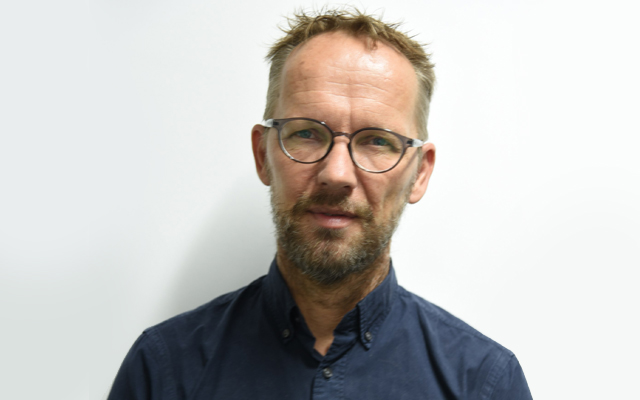
What does your role as an advisor to UNWTO on sustainable tourism involve?
Cambodia will be the world’s second most affected country by climate change and, according to the United Nations (UN), will see more poverty, diseases, floods, droughts and deaths. You only have to look at the temperature in April – it was hotter than ever before. So, it’s time we all take responsibility.
For some, that might mean planting some trees in their garden. In my case, I run a hotel, so I could take that further by making the hotel single-use plastic free, which we’ve done. We’ve also planted 3,500 trees along the river in Siem Reap, but I wanted to take that even further.
During Covid, the UN started an initiative. I wrote to them and they asked if I would be interested in being an advisor and show how ‘single-use plastic free’ could be achieved around the world. I try to explain how easy it is, and how a lot of hotels are hiding behind the fact that guests insist on hygiene and using plastic bottles.
I want to show this isn’t the case. Guests want a sincere approach. Guests want to see action. Guests have no issues with being given anything else other than plastic bottles, as long as they’re a viable alternative. That’s what I’ve done for the UN in Seoul, Nairobi, the speech at the General Assembly, and I hope in other places in the future.
What does sustainable tourism mean to you?
Guests, consumers and travellers want something that’s sustainable. Hotels and tour companies all know that now. This means, for a lot of people, if you simply add the word “sustainable” somewhere then it’s good. That’s a complete greenwashing lie.
If we look at certain hotels in Siem Reap, for example, it’s not sustainable for a local person who’s a waiter to lose their job in April and be hired back in October. It’s not sustainable for that waiter to be on an eight-month contract because low season starts.
The word sustainable needs to be checked. Sustainable should mean full-time employment. Sustainable should mean reducing your flights where possible and proper working conditions for everyone, including health care. Sustainable should mean eliminating single-use plastic from operations. If you’ve done all of that, then you can call yourself sustainable. If not, use a different word.
What initiatives have you implemented at Jaya House and how can they be adapted by other tourism-related businesses?
We employ 100 per cent Cambodians – I’m the only non-Khmer. Why do certain hotels still have expats in high positions? It’s not 2012 anymore, it’s 2024. When I arrived here 17 years ago, all of the good jobs were done by Westerners because there were no skills – that’s changed. There are now Khmers with an unbelievable skillset who are enormously good at their job, if given the chance. That’s what needs to happen.
The tourism industry also needs to change. We cannot keep working the same way we used to in the 80s, 90s and early 2000s. Certain hotels are still charging for the minibar, charging for early check-in and late check-out. They’re working the old-fashioned way and not really adapting to the changing world.
What steps are needed to have a single-use plastic-free tourism industry and what challenges did you face?
My personal mindset was the main challenge; it was me who needed to change. I remember years ago in my previous hotel, I would stand at the entrance and actively give guests plastic water bottles until one said, “Really? Do you need to do that?” She had her own refillable bottle and that made me think, because I would easily give away 30 or 40 bottles in an hour and not think about it.
So, the change was me. The people in charge of hotels, tour companies, DMCs, travel agencies need to make the change. When we started Jaya House in 2016, one of the pillars was I wanted to be plastic-free because if I want Cambodia (and my area) to be clean, and reduce dengue and other things, that starts with me. I should stop moaning about others – I’m the one who needs to do it.
What role do governments have to play?
Legislation should start in the West. If single-use plastic is banned in France, for example, it should be valid for French companies working overseas. If single-use plastic is banned in the UK, that should also be valid for British tour operators working overseas.
Once Europe and the US have fallen into place, then the rest of the world will follow. I find it enormously frustrating how certain countries are banning single-use plastic, but then a tour operator or hotel from that same country is allowed to use plastic in Cambodia, or wherever. That’s wrong, and that’s where legislation should come in.
Dusit International has signed a property management agreement with King Square Development Co., a Bangkok-based real estate company established by Saha Group and Tokyu Corporation and King Square Suites Co., to manage Dusit Suites Kingsquare, Bangkok and KingsQuare Residence – an upscale hotel and luxury residential project slated to open in 2026.
Dusit Suites Kingsquare, Bangkok will be the ninth hotel in Bangkok to be managed by Dusit, and the company’s second in the city to combine a hotel and serviced suites (following Dusit Suites Hotel Ratchadamri, Bangkok).
Dusit International will manage Dusit Suites Kingsquare, Bangkok and KingsQuare Residence
Located on Rama 3 Road next to the international school, King’s College International School Bangkok, Dusit Suites Kingsquare, Bangkok and KingsQuare Residence are part of a brand-new lifestyle complex that will also include a community mall.
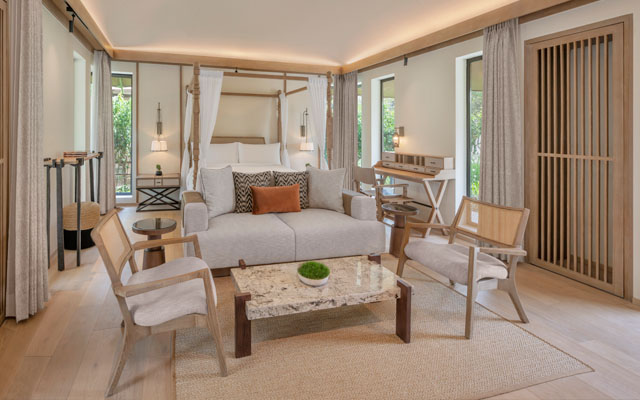
Serving as both a serviced apartment and hotel, Dusit Suites Kingsquare, Bangkok will comprise 60 hotel rooms and 49 serviced suites, ranging from twin rooms to two-bedroom suites.
Each fully furnished serviced suite will feature a range of home amenities, such as widescreen TVs and kitchenettes, while facilities will include a swimming pool, kids’ club, all-day dining restaurant, co-working space, meeting room and private lounge.
Alongside the hotel, Dusit will also manage KingsQuare Residence, a 52-storey tower boasting 222 residences ranging from one-bedroom units to three-bedroom homes, as well as penthouse and duplex penthouse options.
Communal facilities include a swimming pool and barbecue terrace, a co-kitchen and private dining space, kids’ playroom, basketball court, and meeting space. On-demand Dusit services, including housekeeping, laundry and 24-hour concierge, will also be available.
Guests and residents at Dusit Suites Kingsquare, Bangkok and KingsQuare Residence will also benefit from easy access to the entertainment, dining, shopping, and business centres of the neighbouring Sathorn district, as well as nearby expressways.
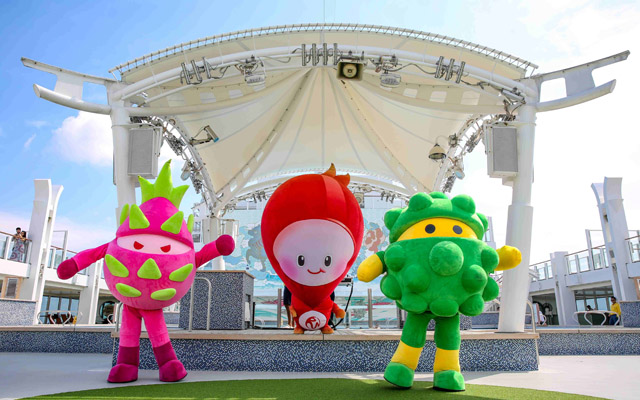
Resorts World Cruises (RWC) is inviting durian lovers for a special one-of-a-kind Durian Party on Genting Dream with special sailings from Singapore on August 25 and September 1 for the two-night Kuala Lumpur (via Port Klang) cruise departing on Sundays.
The Durian Party Cruise Packages will include exclusive access to an all-out durian buffet at Port Klang. Passengers with access to the buffet will get to enjoy a wide selection of some of the best and popular durians, including Musang King, Tan Sri XO, Black Thorn, and Sweetie, as well as a variety of tropical fruits.
The Durian Party Cruise Packages include exclusive access to an all-out durian buffet and fun activities
On board, there are activities, entertainment and workshops all dedicated to the King of Fruits, such as masterclasses to learn how to select the perfect durian, as well as appearances and meet-and-greet sessions with the ship’s new mascot Pin Pin, together with DurianBB and friends.
There will also be various fun games and quizzes inspired by the durian and tropical fruits, arts and craft inspired by DurianBB & Friends, and exclusive souvenirs and special mascot merchandise available.
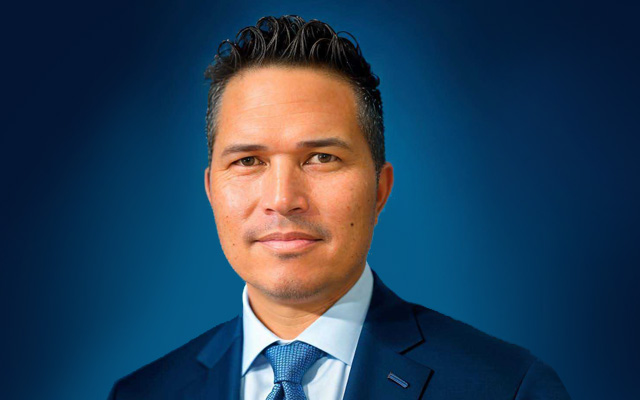
Chad Grospe has been appointed as vice president and managing director, Asia-Pacific for Royal Caribbean International (RCI).
He has been with RCI since 2017 and most recently led the international marketing team, supporting efforts across the Asia-Pacific, Australia and New Zealand, Europe, the Middle East and Africa, Latin America, and the Caribbean.
With his vision, deep industry knowledge, and proven experience working across international markets at RCI, Grospe will lead the team to continue the growth and success of the company.




 Prior to joining The Westin Kuala Lumpur, he was general manager at the Four Points by Sheraton, Kuala Lumpur Chinatown, earning numerous awards and accolades during his tenure.
 Before joining Grand Hyatt Jakarta, Kumar was the hotel manager at Grand Hyatt Singapore.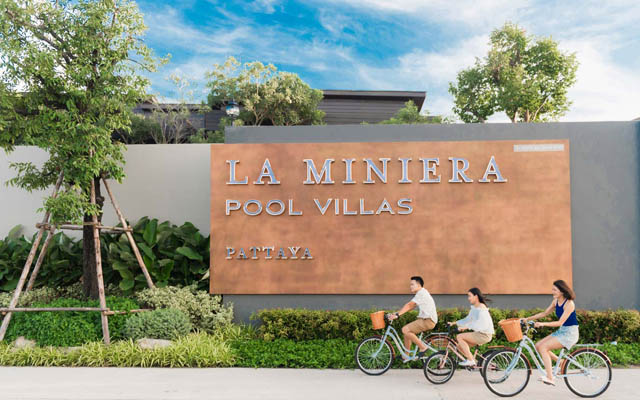


 What does your role as an advisor to UNWTO on sustainable tourism involve?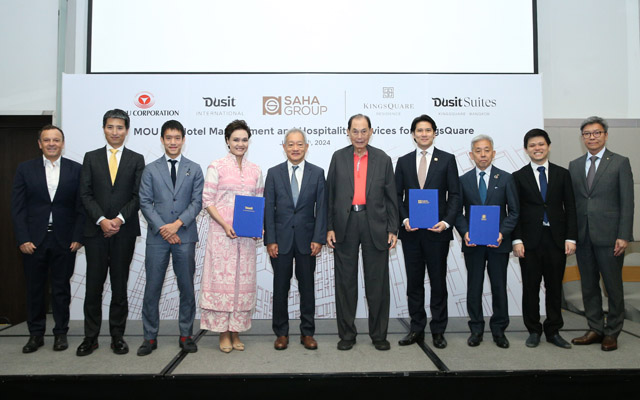
 With his vision, deep industry knowledge, and proven experience working across international markets at RCI, Grospe will lead the team to continue the growth and success of the company.






Minor Hotels has appointed Richard Beh as vice president commercial – Asia.
Based at the company headquarters in Bangkok, Thailand, he will spearhead the overall regional strategy, adopting a holistic approach to sales, marketing, e-commerce, revenue and distribution across all Minor Hotels brands in Asia, including Anantara, Avani, Oaks, Tivoli, NH and NH Collection.