The Hospitality Asia Event Series, managed by Hospitality Asia Media, will be heading to the Philippines and Japan in the following months.
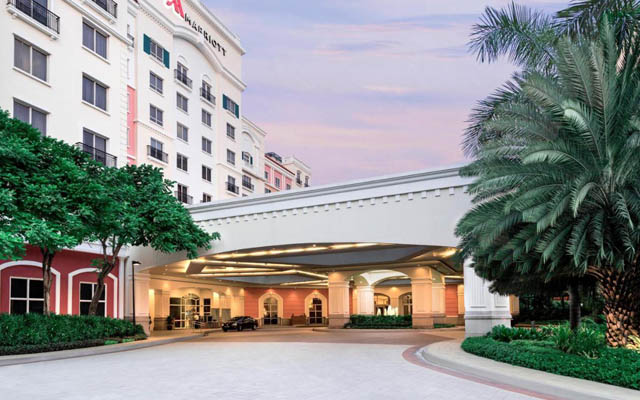
The 7th Hospitality Philippines Conference will be held from September 11 to 12 at Marriott Manila in Philippines’ capital city, while the 3rd Hospitality Japan Conference will be hosted at The Capitol Hotel Tokyu in Tokyo from October 8 to 9.
The 7th Hospitality Philippines Conference will be held at Marriott Manila from September 11 to 12
In the Philippines, key event highlights will be Hotel Investment Landscape, Capital Markets, Debt & Equity, Risk Management, Contracts & Agreements, and Brand DNA.
For the Japan conference, it will comprise three summits – Hotel Investment Summit Japan; Hotel Design Summit Japan; and Hotel Revenue Summit Japan.
Far East Hospitality (FEH), Singapore’s home-grown hospitality management company with an international presence, has announced that all 16 of its hotels in the country have achieved the Global Sustainable Tourism Council (GSTC) Industry Criteria for Hotels Certification.
With this accreditation, FEH is now the hospitality group with the largest number of GSTC-certified sites in Singapore.
Village Hotel Sentosa is one of Far East Hospitality’s 16 sites that have received GSTC certification
This certification, recognised globally as a benchmark in sustainability, underscores FEH’s dedication to environmental stewardship and aligns with its mission to uphold the highest sustainable hospitality standards.
FEH has conscientiously pursued sustainability initiatives, achieving this certification ahead of the 2025 target set by the Singapore Hotel Association and the Singapore Tourism Board.
This journey includes the annual tracking and monitoring of energy, water, waste, and carbon emissions data, which contribute to Far East Hospitality Trust and Far East Orchard annual Sustainability Reports.
Far East Hospitality has also created the Far More Sustainable framework, which encompasses initiatives to raise awareness about sustainability across its operations. These initiatives include actively encouraging guests to reuse towels and linens, implementing a carbon offset platform, eliminating single-use plastic water bottles, and switching to large amenity dispensers.
FEH also engages with suppliers and local communities to support children/youth beneficiaries and local businesses.
Arthur Kiong, CEO of Far East Hospitality, stated: “Achieving the GSTC certification is a significant milestone for our company. It reinforces our dedication to sustainability and demonstrates to our guests and clients that we are committed to upholding the highest standards of environmental stewardship and positive social impact. This certification is a testament to our current practices and a pledge to continue our journey towards a more sustainable future.”
Kempinski Central Avenue Dubai, formerly known as Address Dubai Mall, and Kempinski The Boulevard Dubai previously known as Address Boulevard, have unveiled a range of staycation offers for families this summer.
With direct access to the Dubai Mall at both hotels, families can beat the heat with the escape of their own choosing, as each property are conveniently located next to one of the world’s premier shopping destinations.
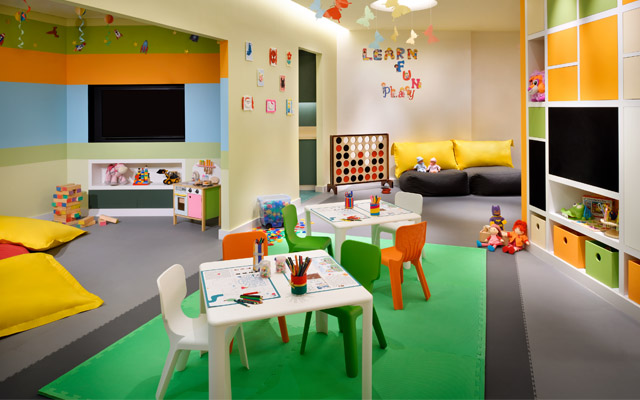
Little ones enjoy access to the kids’ club with Kempinski’s stay offers in Dubai
From now to September 20, the Dubai Summer Surprises Kids Go Free offer, where children aged 12 years and below are invited to stay and dine for free, complemented by an additional 10 per cent off the best available rate.
The offer includes access to amenities at both properties such as the spa, outdoor pool, and kids club; and at Kempinski The Boulevard Dubai, there is even a family pool equipped with a slide and waterfall.
Guests can also enjoy the Travel Pulse offer where they get 20 per cent off the best available rate for stays of three to four nights, or 25 per cent off for stays of five nights or more. They also benefit from early check-in and late check-out, when booking for stays until September 30.
A luxury option for families is the Suite Escape where guests can save 15 per cent on the best fully flexible rate and receive hotel credits to enhance the experience across dining, spa services, and more.
Thailand’s Constitutional Court has dismissed prime minister Srettha Thavisin for appointing ex-convict Pichit Chuenban as a cabinet minister. It ruled Srettha guilty of a gross violation of ethics. The move has also resulted in the dismissal of all positions in the cabinet.
Ministers will stay on in a caretaker capacity, with deputy prime minister Phumtham Wechayachai serving as acting prime minister until a new premier can be selected by the House of Representatives.
Srettha Thavisin has been dismissed as prime minister for violating the code of ethics; Sappaya-Sapasathan – The New Parliament house of Thailand, pictured (Photo: Silapavet Konthikamee)
During his tenure as prime minister, Srettha, who found his fortune in real estate, was a strong supporter of the tourism industry. Recognising the contribution travel and tourism makes to the national economy, he championed various initiatives, including Ignite Tourism Thailand. Announced in April, Ignite Tourism Thailand is focused on elevating the tourist experience, promoting must-do activities, raising awareness of hidden-gem destinations, developing intra-regional travel linkage with neighbouring countries, and hosting more world-class events.
IHG Hotels & Resorts is expanding its portfolio in Indonesia with eight properties launching in four cities this year, following the opening of the 144-room Holiday Inn Resort Canggu, Bali in December 2023.
This announcement was made by Andreas Bergel, area general manager of IHG Indonesia, at Meet and Mingle in Jakarta – the company’s first media event in Indonesia since the pandemic.
General managers of IHG hotels meet with press representatives
Earlier in March, Holiday Inn Lampung Bukit Randu in Lampung Province unveiled its first phase opening with 155 rooms. It targets to finalise the remaining 84 rooms by December. Following that, the 277-key Indigo Bandung Dago Pakar opened its doors on July 6.
Pascal Caubo, general manager of Hotel Indigo Bandung Dago Pakar, told TTG Asia that the Indigo brand hotel captures the spirit of the city. Located at the stylish Dago neighbourhood, its design is influenced by Bandung’s cultural traditions and folklore, where guests can enjoy local coffee in the café and authentic delicacies in the restaurant. The hotel also offers two infinity pools and a rooftop bar that frames stunning city views.
Opening in 3Q2024 are the 72-room Holiday Inn Express Sunset Road and the 162-room voco Bali Seminyak – the latter will mark the entry of the voco brand into Indonesia.
The Rumah Luwih Bali, a Vignette Collection, will open later in the year with 72 keys. It will be joined by the 150-suite Regent Bali Canggu.
IHG said in a media statement that, with the introduction of these new brands, it is “ushering in a new era of experience-seeking travellers”.
“This includes couples, friends, and families, all drawn to the continued growth of mainstream brands such as Holiday Inn and Holiday Inn Express,” it cited.
IHG will also open two properties in Bintan in 4Q2024 – the 258-room Holiday Inn Resort Bintan Lagoi Beach and the 122-room Hotel Indigo Bintan Lagoi Beach.
Michael Beechey, cluster general manager of the two Bintan hotels, said they would be differentiated by customer segments. “Hotel Indigo is for experienced travellers; when they have (a) family and want to stay in Bintan, they can come to Holiday Inn Bintan.”
Agents are preparing new products for Japan’s off season (December to February) to maximise on the rapid recovery of the country’s inbound tourism market and ease operational challenges caused by extremes of high and low numbers of visitors throughout the year.
In addition to promoting snow sports, which the Japan Tourism Agency has named a “key tourism activity” that can increase spending and time spent in regional areas, tourism stakeholders are developing other outdoor activities and experiences.
Discova is creating new winter attractions in destinations like Nagano and Niigata; Lake Shirakaba in Nagano, pictured
DMC Discova is creating new sake brewery tours and local food excursions for winter in Shinkansen-accessible snow destinations such as Nagano and Niigata prefectures.
“As Japan’s inbound tourism business has been densely populated in the peak cherry blossom and fall foliage seasons, it has been causing some operational burdens for our partner agencies and internal operations. Discova Japan is trying to spread demand throughout the four seasons by developing and providing low season products,” said Olivia Yeji Jeung, country manager, Japan for Discova.
The company is “expecting a new product line-up for winter to bridge until next year’s cherry blossoms pop up”, she said, adding that “diversification in areas and activities is the key to success for 2024 and even upcoming 2025”.
Meanwhile, Tokyo Convention & Visitors Bureau is inviting inbound travellers to “venture beyond the city to the resort area of eternal springtime” on the Izu archipelago, which is part of Tokyo but typically enjoys temperature of 12-14 degrees Celsius from December to February.
Rakuten Travel Experiences is offering two experiences on Kozushima island – stargazing with a high-tech telescope and hiking on Mount Tenjo.
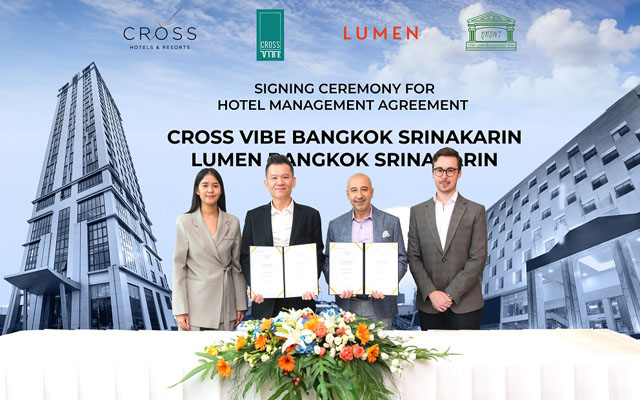
Cross Hotels & Resorts has signed a hotel management agreement (HMA) with Yutthaporn Development for two properties: Cross Vibe Bangkok Srinakarin and Lumen Bangkok Srinakarin in Thailand.
Located in Bangkok’s eastern suburbs, both hotels are a 20-minute taxi ride from Suvarnabhumi International Airport and connected by the new MRT Yellow Line monorail.
Cross Hotels & Resorts will manage both Cross Vibe Bangkok Srinakarin and Lumen Bangkok Srinakarin properties
The area is a treasure trove of shopping, entertainment, and relaxation. Guests can explore Seacon Square, one of South-east Asia’s largest shopping malls, or unwind in Suan Luang Rama IX Park.
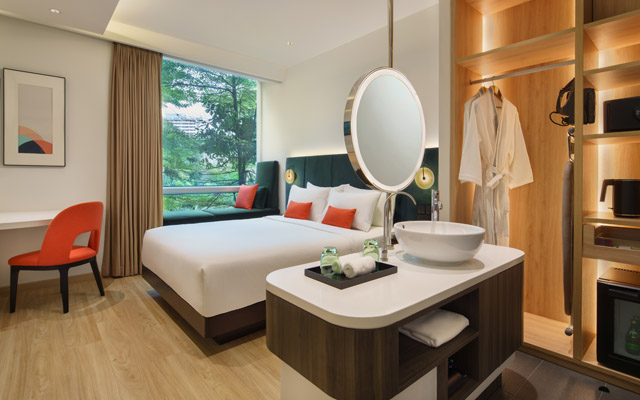
The 221-room Cross Vibe Bangkok Srinakarin will feature an outdoor pool, health club, spa, and restaurant, as well as eight creative spaces and meeting rooms, while Lumen Bangkok Srinakarin offers 64 suites that come with private balconies, fully-equipped kitchens, and facilities such as a fitness centre, sauna, steam room, jacuzzi, swimming pool, and spa.
Harry Thaliwal, CEO of Cross Hotels & Resorts, said: “This agreement for Cross Vibe Bangkok Srinakarin and Lumen Bangkok Srinakarin aligns perfectly with our vision to expand our footprint in key markets. We are excited to bring our unique hospitality offerings to the dynamic district of Srinakarin, enhancing guest experiences and delivering exceptional value to both parties.”
Park Regis by Prince Singapore has unveiled its rebranding and extensive room refurbishment to align with Seibu Prince Hotels & Resorts’ vision of ‘A Guest-Centric Future’.
The rebrand will also introduce innovative technologies, upgraded accommodation features, and a unified loyalty programme.
Park Regis by Prince Singapore will complete refurbishment of its 203 rooms by end-August
Park Regis by Prince Singapore will retain its iconic Fleur-de-lys logo, a symbol of the brand’s heritage – the three petals represent the brand’s Australian roots, its partnership with Japan, and its respect for local cultures and customs.
With 203 newly refurbished guestrooms, the seven-story hotel’s extensive room refurbishment is nearing completion and is expected to be fully finalised by the end of August. Guests can immerse themselves in lush greenery and a serene, minimalistic Japanese-inspired environment, reflecting the elegance of Australian heritage and the vibrant nature of Singapore. Technology enhancements include contactless check-in with mobile room key lock and casting capabilities.
Situated along Merchant Road, Park Regis by Prince Singapore is surrounded by the bustling city nightlife in Clarke Quay and the cultural streets of Chinatown, while within walking distance to Clarke Quay MRT station.
In addition, Park Regis by Prince Singapore leverages Seibu Prince Global Rewards, a free loyalty programme with over two million members across the region. The programme features four tiers of rewards – Diamond, Platinum, Gold, and Blue – offering members exclusive discounts and rewards across Seibu Prince Hotels & Resorts properties.
“This landmark addition to the Seibu Prince Hotels & Resorts portfolio embodies our commitment to offering a sophisticated, yet warm and familiar experience, where impeccable service is paramount. This rebranding marks a new era of hospitality excellence, as we dedicate ourselves to upholding the highest standards of service in the world’s most thoughtful hotels,” said Yoshiki Kaneda, president and CEO of Seibu Prince Hotels Worldwide.
Jeju Air has signed a new technology agreement with Amadeus in its efforts to enhance cost competitiveness.
The partnership will see the South Korean low-cost carrier deploy Amadeus Segment Revenue Management Flex (Amadeus SRM Flex) which will provide Jeju Air with more sophisticated intelligence allowing them to streamline their workflows and improve their data-driven decision-making process. The solution is designed to enable the airline to better anticipate and deliver on customer demand to better maximise revenues.
Jeju Air will adopt Amadeus SRM Flex to streamline and improve their workflows
In 2022, Amadeus acquired Kambr, a US-based start-up that specialises in providing revenue management solutions and advisory for airlines. This strategic move has resulted in SRM Flex being fully integrated as part of the Amadeus Revenue Management Portfolio.
Jaepil Jung, chief commercial officer, Jeju Air, said: “Amadeus SRM Flex will help us understand exactly how the Jeju Air routes are performing, allowing our team to easily find revenue opportunities from the information at their fingertips. As we grow our tour operator business, we are working with Amadeus to develop the solution to accurately manage and forecast bookings, creating a solution to perform total revenue optimisation.”
“Amadeus has worked closely with Jeju Air over the last few years, most recently during its adoption of the New Skies PSS, and now we look forward to further innovating with the airline in the revenue management space,” added Javier Laforgue, executive vice president, travel unit & managing director, Asia Pacific, Amadeus.






 With more than 25 years of experience in the travel industry, Lowe previously held senior roles at Flight Centre Travel Group.



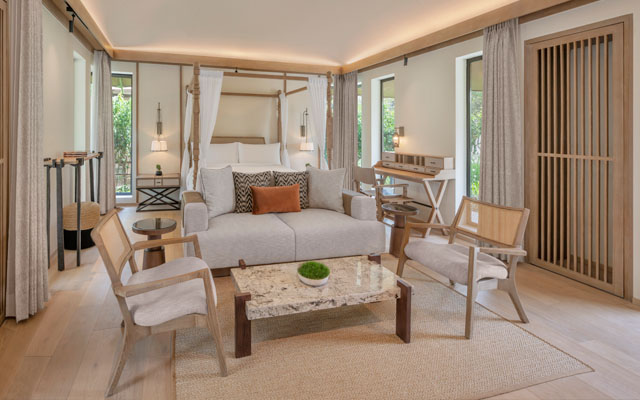






IHG Hotels & Resorts is expanding its portfolio in Indonesia with eight properties launching in four cities this year, following the opening of the 144-room Holiday Inn Resort Canggu, Bali in December 2023.
This announcement was made by Andreas Bergel, area general manager of IHG Indonesia, at Meet and Mingle in Jakarta – the company’s first media event in Indonesia since the pandemic.
Earlier in March, Holiday Inn Lampung Bukit Randu in Lampung Province unveiled its first phase opening with 155 rooms. It targets to finalise the remaining 84 rooms by December. Following that, the 277-key Indigo Bandung Dago Pakar opened its doors on July 6.
Pascal Caubo, general manager of Hotel Indigo Bandung Dago Pakar, told TTG Asia that the Indigo brand hotel captures the spirit of the city. Located at the stylish Dago neighbourhood, its design is influenced by Bandung’s cultural traditions and folklore, where guests can enjoy local coffee in the café and authentic delicacies in the restaurant. The hotel also offers two infinity pools and a rooftop bar that frames stunning city views.
Opening in 3Q2024 are the 72-room Holiday Inn Express Sunset Road and the 162-room voco Bali Seminyak – the latter will mark the entry of the voco brand into Indonesia.
The Rumah Luwih Bali, a Vignette Collection, will open later in the year with 72 keys. It will be joined by the 150-suite Regent Bali Canggu.
IHG said in a media statement that, with the introduction of these new brands, it is “ushering in a new era of experience-seeking travellers”.
“This includes couples, friends, and families, all drawn to the continued growth of mainstream brands such as Holiday Inn and Holiday Inn Express,” it cited.
IHG will also open two properties in Bintan in 4Q2024 – the 258-room Holiday Inn Resort Bintan Lagoi Beach and the 122-room Hotel Indigo Bintan Lagoi Beach.
Michael Beechey, cluster general manager of the two Bintan hotels, said they would be differentiated by customer segments. “Hotel Indigo is for experienced travellers; when they have (a) family and want to stay in Bintan, they can come to Holiday Inn Bintan.”