Minor Hotels has appointed Ammarawadee Cheowit as the general manager of NH Boat Lagoon Phuket Resort, the first NH Hotel brand in Thailand and Asia.
Previously general manager at OZO Chaweng Samui, she brings over 13 years of hotel management experience to her new role, having effectively led teams in various hotel types, including boutique hotels and luxury properties, across Thailand’s prime tourist destinations such as Koh Samui, Koh Phangan, Phuket, and Hua Hin.
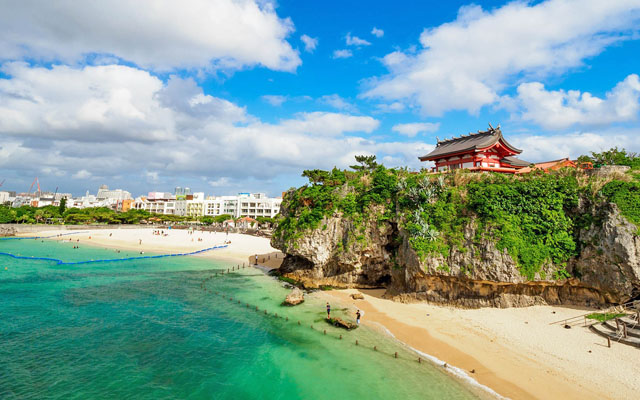
Japan is eyeing digital nomads as a way to increase the number of wealthy inbound travellers and tackle overtourism, but challenges, such as visa criteria and stiff competition from neighbouring destinations, remain.
The Immigration Services Agency will offer a six-month visa for digital nomads from the end of March. Digital nomads from 49 countries will be eligible to apply at their nearest Japanese consulate or embassy provided they earn 10 million yen (US$68,300) annually and have private health insurance coverage during their stay. Their spouse and children will also be granted entry.
Japan is offering a six-month visa for digital nomads as a way to increase annual tourism consumption
Although the visa is not eligible for renewal, it may be applied for again six months after the digital nomad leaves the country.
The visa is part of Japanese government efforts to boost economic growth and consumption, particularly through attracting travellers with higher incomes. The Japan Tourism Agency’s Basic Plan for the Promotion of a Tourism Nation, which was launched in April 2023, aims to increase annual tourism consumption, particularly in the regions, to 22 trillion yen annually by 2025.
In recent years, workations and digital nomads have been considered an increasingly important component of this work. In 2023, the Japan National Tourism Organization classified workations as a priority tourism type and the Japan Tourism Agency established the Telework Workation Public-Private Promotion Council.
The council has been supporting telework nationwide via collaboration between public and private sectors, resulting in the proliferation of co-working spaces and high-speed Wi-Fi as well as more accommodation offering dedicated working spaces. Even national parks have workstations and Wi-Fi through recent government initiatives.
With Japan’s domestic workation market expected to be worth 108.4 billion yen by the end of March, up from 69.9 billion yen in 2021, according to Statista, Japan is seeing the potential of welcoming digital nomads from overseas. More than 35 million people are working as digital nomads globally, according to The Japan Digital Nomads Association, and by 2030, the number is expected to reach one billion.
In practical terms, Japan has never been more equipped to cater for remote workers, but experts point to the limitations of its digital nomad visa compared to the offerings of other countries in the region.
South Korea’s digital nomad visa, which became available on January 1 this year, requires applicants to have had a minimum income of 85 million won (US$64,000) in 2023 and hold personal medical coverage. These terms are similar to that of Japan’s but successful applicants can stay for up to one year with the possibility of a one-year extension.
Malaysia’s digital nomad visa also allows remote workers to stay for up to one year, provided they work in a digital domain, such as IT or content creation, and show proof of annual income of at least US$24,000 — much lower than Japan’s level — and private health insurance. The same requirements and offer apply to the Philippines’ digital nomad visa, launched in 2023.
Still, Japan remains hopeful that strong pent-up demand for its tourism offering will entice digital nomads wishing to experience its off-the-beaten-track destinations that can be appreciated with more time.
In October 2023, Fukuoka’s local government invited 50 digital nomads from 24 countries to experience what it would be like to work in and explore the city. Trip participants stayed in hotels equipped with co-working spaces, ate in restaurants serving local dishes, and joined cultural activities such as watching a Bon Odori dance.
Kagoshima Prefecture has unveiled a range of workations promoting wellness, creativity and inspiration in a bid to attract digital nomads. In addition to high-grade working facilities at resort hotels, ryokan inns and co-working spaces, offerings include forest bathing on the World Heritage Site of Yakushima, well-being experiences with horses, matcha tasting among green tea fields, and watching traditional samurai armour being made.
In Nagano Prefecture, the Karuizawa Report Telework Committee, a private sector group composed of tourism and business groups, is working to attract digital nomads interested in spending time in nature and taking part in activities such as hiking, skiing and stargazing.
Although Japan has stricter digital nomad visa criteria than nearby destinations, public and private organisations are working to make every region of the country as appealing as possible, to create a strong selling point amid this competitive market.
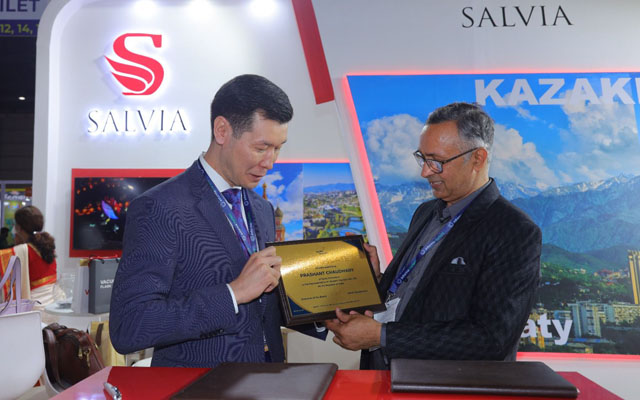
Kazakhstan has appointed its first international tourism representation office globally with the signing of a memorandum of understanding (MoU) with India’s Salvia Promoters.
Kazakh Tourism is expecting to double its tourist arrivals from India in 2024 compared to the last year with the appointment of its representation office in the country.
The MoU signing aims to attract more Indian travellers to Kazakhstan
“India is one of our main source markets from where we are looking to double tourist arrivals in 2024. We tripled tourist arrivals from India last year after introducing a visa waiver programme for the Indian market. Our target is to welcome half a million tourist arrivals from India by 2026,” said Kairat Sadvakassov, chairman of the board, Kazakh Tourism National Company during the MoU signing ceremony that took place on the sidelines of SATTE 2024 in Greater Noida last week.
“Our target is to make Kazakhstan one of the preferred tourist destinations in India. We will be engaging with travel trade and media partners besides stepping on our participation in travel exhibitions to promote various destinations across Kazakhstan in India,” said Prashant Chaudhary, managing director of Salvia Promoters.
Kazakhstan introduced a visa-free entry regime for Indian travellers in 2022. The country recorded about 100,000 Indian tourists in 2023.
“Our focus is on FIT and MICE segments in India. We plan to organise a roadshow in Mumbai later this year to offer a platform for our DMCs to network with Indian travel agents. We will be hosting a media familiarisation trip too,” said Sadvakassov.
The tourism board is at present also negotiating with the Travel Agents Federation of India for hosting its annual convention in Kazakhstan this or next year.
Apart from India, Kazakh Tourism plans to open representation offices in China, Germany, the UK, Russia and GCC countries – half of these representation offices are expected to be opened by the end of 2024.
The Mekong Tourism Forum (MTF) 2024 will be held in the city of Lijiang, China from April 23 to 25 this year.
Themed Visionary Journeys Redefining Tomorrow’s Travel, MTF invites travel professionals and stakeholders from the Greater Mekong Subregion (GMS) to engage in a collaborative platform dedicated to reshaping the future of GMS tourism.
This year’s Mekong Tourism Forum will be held in Lijiang, China, pictured
MTF 2024 is expected to welcome 200 tourism professionals and stakeholders, comprising tourism ministers, leaders, NTOs, NGOs, and private sector representatives. This year’s forum will emphasise collaboration, innovation, and forward-thinking strategies, and aims to inspire delegates to explore new forms of tourism that deliver economic benefits, environmental consciousness and cultural enrichment.
Focusing on maximising tourism’s potential in the Asia-Pacific region, MTF 2024 will feature the latest trends, destination marketing and management innovations, cultural highlights, sustainable practices, inclusive practices, and the benefits of the latest technology in travel.
The keynote speech entitled Visionary Journeys Redefining Tomorrow’s Travel will offer a glimpse into the future of GMS travel, spotlighting the shift towards sustainable and conscious tourism in a post-lockdown era.
A panel session on Unleashing Potential: Enhancing International Cooperation to Propel Tourism Growth will address strategies for strengthening cooperation and fostering a unified, prosperous, and responsible future for GMS tourism.
Delegates will get a chance to join a field study, an on-site exploration of Lijiang’s Old Town, and see an exhibition at the museum showcasing Lijiang’s cultural heritage.
MTF2024 is hosted by the Bureau of International Exchanges and Cooperation of the Ministry of Culture and Tourism of China, Yunnan Provincial Culture and Tourism Department, the People’s Government of Lijiang City, and the Mekong Tourism Coordinating Office. It is co-organised by Lijiang Municipal Administration of Culture and Tourism and Network International Culturalink Entities.
Registration closes at 23.59 (GMT+7) on April 8, or when all spots are filled.
Minor Hotels and Funyard Minor JV Co. (China) have partnered to introduce the Avani Hotels & Resorts brand in Guangdong, China.
Avani Huajian Xinyi Guangdong Resort and Avani+ Xinyi Guangdong Resort will be one of the first international upscale hotel brands in Xinyi when they open in the first half of the year.
Avani Huajian Xinyi Guangdong Resort, pictured, will launch in 1H2024
Located in the foothills of Shuanghe Village beside the River Huanghua, Avani Huajian Xinyi Guangdong Resort will feature 86 rooms and suites, themed family rooms, an all-day dining restaurant offering authentic Gaoliang cuisine, gym and Xinyi’s first infinity sky pool.
Surrounded by bamboo forest, Avani+ Xinyi Guangdong Resort will take its perch in the mountains above Ma’an Village. In addition to 96 guestrooms and suites, some with private balconies and pools, the resort will feature a contemporary all-day dining restaurant, bar, infinity pool, gym, kids’ club, and more.
Xinyi, an up-and-coming ecotourism destination, is rich in ecological resources and boasts numerous natural attractions, including an alpine meadow, the largest bamboo forest in western Guangdong, a mountain lake, hot springs, and award-winning ecotourism areas. Additionally, holidaymakers can tour the 300-year-old Shiyin Ancestral Temple with a grove counting over 30,000 century-old olive trees or attend the popular Fruit Festival that celebrates locally grown Sanhua plum and attracts over one million visitors annually.
“We are thrilled to introduce our first two Avani properties in Greater China,” said Eddy Tiftik, vice president of development & operations, Minor Hotels, Greater China. “Embedded in nature, both properties offer a peaceful setting and a sense of escape. They align with the preferences of our target audience, who seek a hotel that is a destination in itself. We believe that when the Avani properties open, they will create a new and exciting holiday option.”
Singapore-based travel specialist SoulTrips has teamed up with Europamundo Vacations to create over 600 flexible travel itineraries, allowing travellers to choose where they want to start and stop on their tour.
Alongside promoting established European and Latin American destinations, the partnership will introduce tailor-made itineraries catering to the unique preferences and interests of travellers from Singapore, Vietnam, and Indonesia.
The collaboration will see tailor-made itineraries for South-east Asian travellers to European and Latin American destinations; National Capitol of Cuba, pictured
The flex-scape itineraries make it easier for moving across multiple cities, and Europamundo coach tours prices do not include flight booking. Without a fixed flight departure, anyone seeking to extend their holiday after they finish their trip can request assistance for additional nights to be added, or switch midway to hop onto another Europamundo tour.
With coach tours operating every week, travellers can also take a pause during the tour and continue with the next departure group afterwards for a small additional fee.
In addition, a private transfer is included to take them from the airport to the hotel where their trip starts.
Itineraries include Madrid, Seville, and Cordoba; Lisbon, Madrid and Barcelona; Marrakesh, Fez, Meknes, Rabat and Casablanca in Morocco; capitals like Vienna, Budapest and Prague; Denmark, Norway, Sweden, and Finland; as well as exploration of destinations like Ireland, Saudi Arabia, Japan, Mexico, and more.
SoulTrips director Joni Herison shared: “The flex-scapes itineraries are great for travellers who want to be in control of their travel plans and enjoy the convenience and value of group travel. Clients can choose from curated flex-scapes or Trip Styles for a holiday without the hassle of having to plan for their trip. These options will also appeal to those travelling overseas to visit relatives or have a business conference to attend and want to squeeze in a bleisure trip.”
SoulTrips was conceived in 2021 by Bhutan specialist Druk Asia as a new brand to deliver “new ways to travel” in a post-lockdown world. The firm works with travel agencies around the world to curate the holidays for the modern independent traveller who wants to design their itineraries according to their specific needs.
Collinson has partnered with global travel technology company utu to enable Priority Pass Members to access utu’s tax refunds rewards system in 50 countries.
utu enables eligible Priority Pass Members globally to upsize the VAT and GST refunds from any refund operator participating in the tax-free overseas shopping scheme, opening-up new benefits such as bonus miles to supercharge travel rewards, instant-spend privileges, and additional cashback. The system is currently available in English, Japanese and Korean, with additional languages to be added in the future.
Eligible Priority Pass Members will receive an upsized cashback or airline miles for their tax refund
Eligible Priority Pass Members only need to log in the Priority Pass app and navigate to the Travel Services Section to unlock this benefit. They can then proceed to generate utu Tax Free Card details directly from the Priority Pass app. Then, using the utu virtual card details, retail members can fill out a refund form and select their preferred method of refund. Once the tax refund operators process the refund, eligible Priority Pass Members will receive an upsized cashback or airline miles for their VAT/GST refund.
This collaboration is currently only available to Priority Pass retail members who have directly purchased Priority Pass via Priority Pass’ website. Other Priority Pass Members, including eligible credit card cardholders, will be able to access this benefit in the coming months.
Resorts World Genting and Singaporean music entrepreneur Parthiban Murugaiyan have teamed up to launch a new music festival brand – the Supalapa Festival.
Set against the backdrop of the idyllic Resorts World Awana, Genting Highlands, the inaugural Supalapa Festival is poised to captivate music enthusiasts from all walks of life, and will be held from March 2 to 3.
Supalapa Festival will feature an eclectic mix of genres and K-pop performances by international artistes
The festival will feature an eclectic mix of genres and K-pop performances, with a line-up boasting an array of international headliners, rising stars, and local talent, comprising Tiësto, The Kid Laroi, EAJ, Somi, XG, Ali Gatie, Armani White, Tones and I, Ian Asher, Keemokazi, Paul Van Dyk, Rave Republic, and Ckay.
During the festival, visitors will be able to enjoy three different music genres – EDM, Pop and K-pop.
There are also resort accommodation packages available for fans who want to stay over and enjoy the festival over the two days.
Open to all patrons aged 18 and above, tickets for Supalapa with special curated packages are priced from 318 ringgit (US$66) to 1,988 ringgit, now available via Ticketmelon, Ticket2u, and SISTIC.
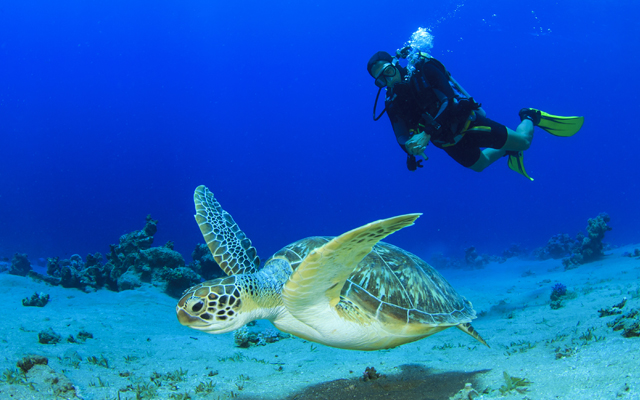
The Philippine Department of Tourism (DoT) reaffirmed its commitment towards sustainable tourism development initiatives in the Philippines, particularly in the development and promotion of the country’s dive tourism.
The DoT’s Philippine International Dive Expo (PHIDEX) 2024 was held on February 23 to 25, offering expansive networking prospects for dive decision-makers, communities, and individuals through value-added components, including the Dive Travel Exchange business-to-business meetings, Dive Conference, and Dive Exhibit featuring the country’s best dive offerings.
The Philippine International Dive Expo (PHIDEX) 2024 was held on February 23 to 25
Post-PHIDEX fam tours for international dive operators and invited media were also organised by the DoT.
Tourism secretary Christina Garcia Frasco noted that dive tourism in 2023 contributed more than 73 billion pesos (US$1.3 billion) to the country’s economy, almost twice the 37 billion pesos revenue generated from the industry in 2022.
She also delivered president Ferdinand R Marcos, Jr’s message citing the private sector’s pivotal role in the government’s sustainable tourism development initiatives to ensure that “the Philippines remains a premier destination for diving enthusiasts and professionals from around the globe”. Marcos added that through “strategic investments in infrastructure and sustainable tourism initiatives, the government will continue to elevate our country’s standing as a hotspot of biodiversity and underwater adventure”.
In addition to organising the PHIDEX, the DoT introduced various dive festivals and programmes in several regions across the country, including the successful Philippine Tourism Dive Dialogue that debuted last September 2023 in Cebu.
“We have also expanded our dive tourism offerings to emerging and lesser-known destinations, bringing our total to approximately 120 dive destinations across the Philippines today,” Frasco added.
To prioritise a safe and enjoyable experience for divers, the DoT through its Dive Committee and infrastructure arm, the Tourism Infrastructure and Enterprise Zone Authority, has committed to providing additional hyperbaric chambers in strategic locations across the country, including Boracay Island, Camiguin, Daanbantayan in Cebu, Dumaguete, and Puerto Galera.
The DoT has also signed a Memorandum of Agreement (MoA) with the Asian Conservation Foundation, Blue Alliance Philippines, and Large Marine Vertebrates Research Institute to foster a public-private approach in protecting the environment and promoting the country’s economic growth through tourism. The MoA covers areas of collaboration between the DoT and the NGOs, including the development of programmes for environmental sustainability, as well as conducting joint activities for marine environmental protection and conservation, supporting and participating in the parties’ promotional events and marketing activities, and designating a focal person or specific office to handle smooth coordination on all matters arising from the agreement.
Qantas has introduced a price guarantee of up to five days when agents shop and book using the Qantas Distribution Platform.
Called the Price Guarantee Ticketing Time Limit, this capability will give agents confidence that the price of their booking will not change as well as to streamline the ticketing process.
Qantas is one of the first airlines globally to offer a price guarantee
Qantas is one of the first airlines globally to offer a price guarantee, inclusive of the fare, taxes and surcharges, and is the only carrier in Australia and New Zealand to offer a price guarantee for NDC content.
The Price Guarantee is up to five days after the order is created and is subject to change. If an agents’ ticketing time limit is less than five days, the Price Guarantee will be made to match this.
Price Guarantees are an emerging capability for agency bookings and are unique to New Distribution Capability. They can only be accessed on Qantas indirect bookings via the Qantas Distribution Platform.



 Previously general manager at OZO Chaweng Samui, she brings over 13 years of hotel management experience to her new role, having effectively led teams in various hotel types, including boutique hotels and luxury properties, across Thailand’s prime tourist destinations such as Koh Samui, Koh Phangan, Phuket, and Hua Hin.














Japan is eyeing digital nomads as a way to increase the number of wealthy inbound travellers and tackle overtourism, but challenges, such as visa criteria and stiff competition from neighbouring destinations, remain.
The Immigration Services Agency will offer a six-month visa for digital nomads from the end of March. Digital nomads from 49 countries will be eligible to apply at their nearest Japanese consulate or embassy provided they earn 10 million yen (US$68,300) annually and have private health insurance coverage during their stay. Their spouse and children will also be granted entry.
Although the visa is not eligible for renewal, it may be applied for again six months after the digital nomad leaves the country.
The visa is part of Japanese government efforts to boost economic growth and consumption, particularly through attracting travellers with higher incomes. The Japan Tourism Agency’s Basic Plan for the Promotion of a Tourism Nation, which was launched in April 2023, aims to increase annual tourism consumption, particularly in the regions, to 22 trillion yen annually by 2025.
In recent years, workations and digital nomads have been considered an increasingly important component of this work. In 2023, the Japan National Tourism Organization classified workations as a priority tourism type and the Japan Tourism Agency established the Telework Workation Public-Private Promotion Council.
The council has been supporting telework nationwide via collaboration between public and private sectors, resulting in the proliferation of co-working spaces and high-speed Wi-Fi as well as more accommodation offering dedicated working spaces. Even national parks have workstations and Wi-Fi through recent government initiatives.
With Japan’s domestic workation market expected to be worth 108.4 billion yen by the end of March, up from 69.9 billion yen in 2021, according to Statista, Japan is seeing the potential of welcoming digital nomads from overseas. More than 35 million people are working as digital nomads globally, according to The Japan Digital Nomads Association, and by 2030, the number is expected to reach one billion.
In practical terms, Japan has never been more equipped to cater for remote workers, but experts point to the limitations of its digital nomad visa compared to the offerings of other countries in the region.
South Korea’s digital nomad visa, which became available on January 1 this year, requires applicants to have had a minimum income of 85 million won (US$64,000) in 2023 and hold personal medical coverage. These terms are similar to that of Japan’s but successful applicants can stay for up to one year with the possibility of a one-year extension.
Malaysia’s digital nomad visa also allows remote workers to stay for up to one year, provided they work in a digital domain, such as IT or content creation, and show proof of annual income of at least US$24,000 — much lower than Japan’s level — and private health insurance. The same requirements and offer apply to the Philippines’ digital nomad visa, launched in 2023.
Still, Japan remains hopeful that strong pent-up demand for its tourism offering will entice digital nomads wishing to experience its off-the-beaten-track destinations that can be appreciated with more time.
In October 2023, Fukuoka’s local government invited 50 digital nomads from 24 countries to experience what it would be like to work in and explore the city. Trip participants stayed in hotels equipped with co-working spaces, ate in restaurants serving local dishes, and joined cultural activities such as watching a Bon Odori dance.
Kagoshima Prefecture has unveiled a range of workations promoting wellness, creativity and inspiration in a bid to attract digital nomads. In addition to high-grade working facilities at resort hotels, ryokan inns and co-working spaces, offerings include forest bathing on the World Heritage Site of Yakushima, well-being experiences with horses, matcha tasting among green tea fields, and watching traditional samurai armour being made.
In Nagano Prefecture, the Karuizawa Report Telework Committee, a private sector group composed of tourism and business groups, is working to attract digital nomads interested in spending time in nature and taking part in activities such as hiking, skiing and stargazing.
Although Japan has stricter digital nomad visa criteria than nearby destinations, public and private organisations are working to make every region of the country as appealing as possible, to create a strong selling point amid this competitive market.