


Royal Caribbean Group, Meyer Turku ink agreement for next three Icon Class ships
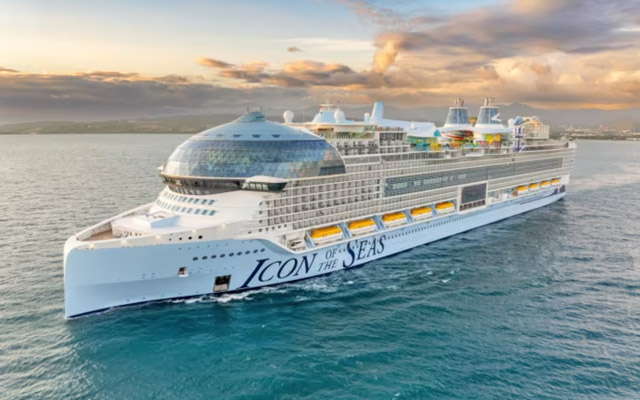
Royal Caribbean Group (RCL) has signed an agreement with Finnish shipbuilder Meyer Turku to order a fourth Icon Class ship for delivery to Royal Caribbean International in 2027.
The agreement also includes options to build a fifth and sixth Icon Class ship. With this order, Meyer Turku will have built 21 ships for Royal Caribbean Group over 28 years.
The first ship in the Icon Class launched in January 2024, with Star of the Seas and the yet-to-be-named third Icon Class ship launching in 2025 and 2026, respectively.
RCG welcomed four new industry-leading ships this year, including Royal Caribbean International’s Icon of the Seas and Utopia of the Seas, Silversea’s Silver Ray and TUI Cruises’ Mein Schiff 7. This order also comes on the heels of the company’s announcement for a seventh Oasis Class ship, set to debut for Royal Caribbean International in 2028.
Jason Liberty, president and CEO, RCG, commented: “Since its debut, Icon has changed the game in vacation experiences and exceeded our expectations in both guest satisfaction and financial performance.”
“This order is an important milestone for the future of shipbuilding in the maritime network in Finland,” added Tim Meyer, CEO of Meyer Turku. “With Icon of the Seas, our team, consisting of the shipyard and partners, have built an extraordinary ship in respect of naval architecture, energy efficiency and customer experience. This is yet another recognition of the professionalism of our personnel and of our leadership in the maritime industry’s innovation and green transition. The options underline the strong outlook of our order book.”
“This is great news for Finland. Royal Caribbean Group’s long-term partnership will continue to have a positive impact on our employment and economy,” said Petteri Orpo, prime minister of Finland. “Their commitment and investment in Finland speaks volumes about the strength of our maritime cluster and our world class shipyards.”
New culinary landmark EA Rooftop to elevate Bangkok’s dining scene
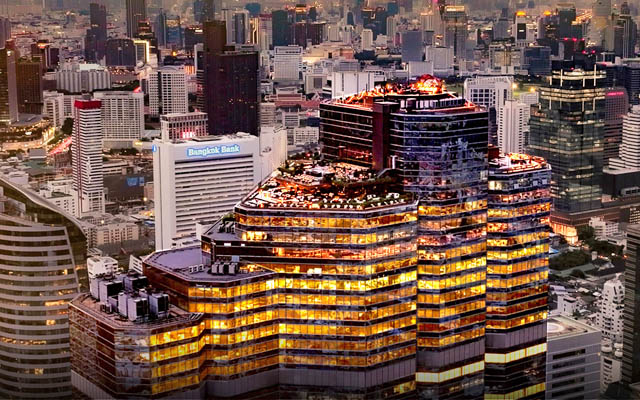
EA Rooftop, an integrated culinary lifestyle complex by Asset World Corporation (AWC) atop the Empire Tower in Sathorn’s CBD is set to launch on September 18. The project, spearheaded by AWC CEO and president Wallapa Traisorat, aims to tap into the growing bleisure trend.
With an investment of over one billion baht (US$29.3 million), the EA Rooftop project is expected to elevate The Empire into a global lifestyle destination.
The 10,000m² EA Rooftop, pronounced “ey-ah”, is a multi-level culinary haven featuring 2,500m² of outdoor dining and entertainment spaces. A unique lift, dubbed the Aya Experience, will transport guests between the various levels, enhancing the overall atmosphere.
The complex, spanning more than six-storeys, offers a diverse range of dining options. EA Gallery on the 55th floor houses casual dining options while a level up, EA Chef’s Table floor features Michelin-starred chefs and experiences such as competitions and collaborations between high-end chefs. Highlights on the 56th floor include Le Du Kaan, the first rooftop Thai restaurant by chef Thitid Tassanakajohn; K by Vicky Cheng, the first overseas venture by chef Vicky Cheng; and Sartoria by two-star Michelin chef Paulo Airaudo.
The experience culminates on the top four floors with Nobu Bangkok and its open-air Nobu Rooftop Bar on the 60th floor.
EA Rooftop will also offer some of the highest and most spacious high-end culinary and event spaces in Thailand, capable of accommodating large groups and events.
By end-2024, AWC will partially open a floor devoted to wellness cuisine.
Wallapa said: “Globally, high-end travellers are seeking new highlights, and places for their culinary bookings and dining programmes. EA Rooftop will offer a diverse selection of choices right in the city centre. We see immense potential in the Sathorn CBD, particularly in attracting MICE travellers who are increasingly merging leisure with business.”
Agoda reveals Asia’s top 10 beach destinations

Agoda has unveiled the top beach destinations in Asia, ahead of International Beach Day celebrated on September 1.
The list, based on accommodation searches made on Agoda for September and October, highlights the most sought-after coastal getaways, with Indonesia’s Bali taking the top spot.
The island’s popularity continues to grow as Agoda recorded an 11% increase in Bali-related accommodation searches compared to the same period last year. Other beach hotspots in Asia include Okinawa in Japan and Danang in Vietnam, with both making it into the top three.
The Agoda rankings showcase a diverse array of beach destinations that cater to various preferences, from serene retreats to vibrant beach parties. Thailand, Vietnam, and the Philippines each boast two destinations in the top ten, underscoring their popularity among beachgoers.
The top 10 most searched beach destinations in Asia according to Agoda are Bali, Indonesia; Okinawa, Japan; Danang, Vietnam; Pattaya, Thailand; Phuket, Thailand; Nha Trang, Vietnam; Jeju, South Korea; Penang, Malaysia; Boracay Island, the Philippines; and Cebu, the Philippines.
These destinations offer a mix of activities, from water sports and nightlife to cultural experiences and relaxation.
Andrew Smith, senior vice president supply at Agoda shared: “With the monsoon season drawing to a close in many parts of Asia, travellers are eagerly anticipating the sun, sand, and sea. Asia boasts some of the world’s most stunning beaches, and International Beach Day is the perfect time to celebrate these coastal treasures.”
New hotels: The Osaka Station Hotel, Autograph Collection, Best Western Sagita Hotel Jayapura and more


The Osaka Station Hotel, Autograph Collection, Japan
The Osaka Station Hotel, Autograph Collection in Osaka features 418 rooms and is located in JP Tower Osaka, with each room arranged in an L-shape along the perimeter of the building, allowing guests to enjoy different views from the east, west, north and south.
The hotel’s Specialty Suites comes with check-in and check-out assistance, breakfast, snacks, afternoon tea, cocktails and nightcaps served in the Specialty Salon on the 38th floor.
For F&B, there is seasonal Afternoon Tea at the lobby bar, a Farm to Table & Charcoal Grill buffet, as well as a teppanyaki restaurant. Facilities include a fitness centre and events spaces.

Best Western Sagita Hotel Jayapura, Indonesia
Best Western Sagita Hotel Jayapura is nestled in the centre of Jayapura, the province’s largest city which lies on the north coast of the island of Papua.
Offering 72 rooms and suites, hotel facilities comprise a social lobby lounge, all-day dining restaurant, and six meeting rooms.
Nearby attractions include Hamadi Beach, mangrove forests, and Jayapura City Tower’s viewing platform, while the Sentani International Airport is just 30km away.

Marriott Executive Apartments Bangkok, Sukhumvit 101, Thailand
Situated in the South Sukhumvit district of Bangkok, Marriott Executive Apartments Bangkok, Sukhumvit 101 puts guests on the doorstep of the Bangkok International Trade & Exhibition Center, True Digital Park and Mega Bangna, one of the country’s biggest shopping complexes.
The serviced residence is just a 40-minute drive away from Suvarnabhumi International Airport and nearby BTS Punnawithi Station.
It has a selection of 140 serviced apartments, ranging from studios to two-bedroom suites, with most units including a private balcony. Onsite are also an all-day dining bistro, fitness centre, swimming pool and meeting spaces.

The StandardX, Melbourne, Australia
The StandardX, Melbourne boasts 125 rooms across eight floors, from a Cozy King to a Suite Spot that offer views of Fitzroy and the city skyline.
The hotel offers three dining venues: the all-day Thai restaurant that draws influence from Asian flavours to redefine street food; The Roof, a secret hideaway accessible exclusively to hotel guests; and The Box in the lobby that includes everyday essentials, lifestyle items, as well as snacks and beverages to be enjoyed on-the-go or in room.
Stay longer and save with IHG Hotels & Resorts

IHG Hotels & Resorts is launching its exclusive tropical resort offer where IHG One Rewards Members receive up to 20 per cent off when booking the Stay Longer & Save rate on stays of three nights or more at participating IHG resorts in Thailand, Indonesia, Vietnam, Maldives, South Korea, Japan, Australia, Fiji, French Polynesia, Saipan, Guam, Hong Kong, and Taiwan.
The Stay Longer Pay Less rate gives members flexibility with no payment needed until 21 days prior to their stay. It also includes complimentary daily breakfast for two.

Available for bookings made from now to September 11, 2024 for stays from August 30, 2024 to June 30, 2025.
For more information, visit IHG Hotels & Resorts.
TTG scores at PATA Gold Awards 2024
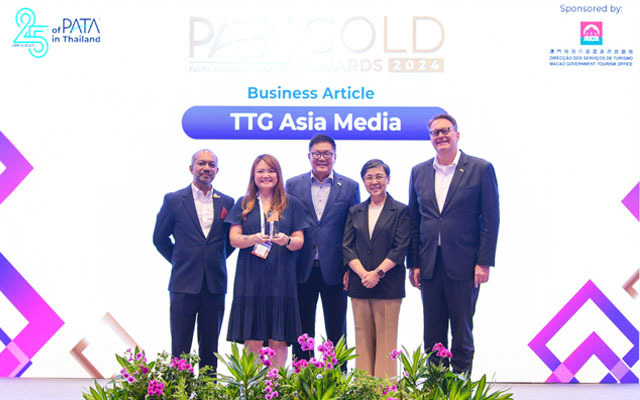
The 29th edition of the PATA Gold Awards brings yet another triumphant moment to the editorial team at TTG Asia Media. TTGmice’s Going green story, authored by Caroline Boey and Karen Yue, was named the Business Article winner.
 The winning feature looked into what convention centres in the region are doing to make a significant impact on net zero carbon goals set by the business events industry and their national government.
TTG Asia Media’s managing director Darren Ng and group editor Karen Yue received the award on behalf of their team.
This is TTG Asia Media’s 11th PATA Gold Award recognition. TTG Asia and TTG Asia Luxury were also recipients of past Business Article awards.
Busy months ahead for Malaysian, Indonesian inbound players; end of travel revenge not yet in sight

While some travel and tourism companies have recently put forth subdued business outlook, citing slowing demand and shorter booking lead times from their major US source markets, Malaysian and Indonesian inbound travel players are still basking in brisk business across the remaining months of 2024.
Inbound specialists in Malaysia told TTG Asia that the boost in bookings this year was partly due to tourism-friendly policies, such as visa exemptions for the country’s top two medium-haul source markets – China and India – and the extension of auto-gate facilities at entry points for travellers from 63 countries. The latter benefits travellers from several of Malaysia’s key source markets, such as Singapore, Brunei, South Korea, China, Saudi Arabia, and the UAE.

Anthony Wong, managing director of The Frangipani Langkawi Resort and Spa, reported that RevPAR for 1H2024 increased by 15 per cent year-on-year. Forward bookings for 2H2024 are promising, with occupancies nearing pre-pandemic levels of 2019.
However, high airfares for both domestic and international flights remain a significant stumbling block, reflected Wong.
To grow business, The Frangipani is working to recover bookings from Eastern European and Central Asian markets through collaboration with OTAs and traditional travel agents. Pre-pandemic, these markets were strong for the Malaysian island of Langkawi.
For Essence of Asia Tours & Travel in Malaysia, markets in the Middle East and North Africa region and India subcontinent have contributed strong bookings for 2H2024.
Executive director Arokia Das Anthony said visa-free entry for Indian passport holders, valid for up to 30 days from December 1, 2023 to December 30, 2024, fired up Indian arrivals during the recent summer peak season. Forward bookings for 2H2024 from India, the Middle East and regional South-east Asia markets have also been strong, driven by Tourism Malaysia’s promotions and gradual improvements in air connectivity, especially those linking secondary overseas markets to Malaysia.
Indonesian travel specialists also shared optimism for the coming months.
Major travel company Pacto has reported outstanding performance that is aligned with the surge in air capacity into Indonesia.
Umberto Cadamuro, COO inbound for Pacto, said: “All markets for us were over-performing compared to the previous year, both in arrivals and revenue. Notably, the lion’s share of the business came from GITs.”
He observed that the Indian travel market was back in full swing while good traffic from Italy in 2Q2024 would spill into 2H2024. The Spanish market has, however, been underperforming along with the US East Coast. The latter was likely due to flying concerns over or near the Middle East “given the situation”.
Cadamuro noted that Bali, Yogyakarta and Komodo Island remained popular among travellers, while Sumba, which has good access, new properties and unique culture, could shine next. Sumatra was also regaining popularity.
Hospitality firm Archipelago International said India and Australia markets are its enduring top performers, while China has started to rise in value, surpassing Russia. International guests accounted for 40 to 43 per cent of the company’s total business in 1H2024.
There has also been a “notable increase” in bookings from North America as a result of intensified promotional efforts in the region.
John Flood, CEO of Archipelago International, said the company’s expanding portfolio of hotels overseas is helping to spotlight properties in home base Indonesia.
Besides Bali and Lombok, Archipelago’s properties in Sorong (West Papua), Surabaya, Bandung and Yogyakarta are heating up among holidaymakers. Meanwhile, Jakarta continues to be a key destination for corporate clients.
Flood is confident of good performance the rest of the year, with business from both longhaul and Asian markets. Travellers from North America and Europe would be strong, “driven by ongoing promotional efforts and brand expansion” while robust performance was expected from Australia, India, China, and the Philippines, where the company is expanding its footprint through its Powered by Archipelago connectivity and distribution service. – Additional reporting by Mimi Hudoyo
PATA, Sanya collaborate on tourism development
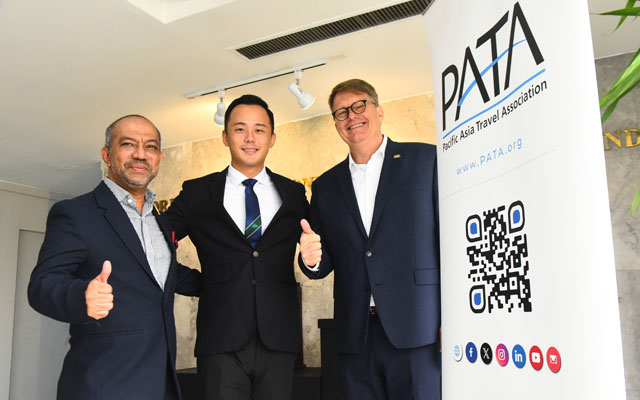
PATA and the Sanya Tourism Board signed an MoU on August 27 to collaborate on tourism research, capacity development, and tourism development within Sanya and the broader Hainan region, among other activities.
One of the key components in the partnership is to co-host the Tropical Coastal City Tourism Event over three years, including 2024. The debut edition is set for September 4 and 5 at the Hyatt Regency Sanya Tianli Bay. It will bring together thought leaders from tropical coastal and island resort destinations.
Sanya Tourism Board director general Albert Yip emphasised that the event will feature many noteworthy destinations, among them Thailand’s Phuket and Samui, the Philippines, the Solomon Islands, Fiji, Papua New Guinea, and Mauritius.
“PATA is an influential platform for tourism. This collaboration kickstarts a unique event for Sanya, which is also particularly meaningful for other coastal cities. (We) share challenges, such as generating traffic and travel community integration. We aim to learn from each other on how we can do better,” Yip stated.
PATA CEO Noor Ahmad Hamid said: “PATA’s first collaboration with the Sanya Tourism Board is an important occasion. The partnership seeks to redefine tourism marketing in tropical coastal cities. By sharing insights between cities and promoting Sanya as a premier destination, we aim to set new benchmarks for tourism marketing strategies in coastal destinations.”
According to Yip, the event will help Sanya establish the Tropical Coastal Cities Tourism Alliance, which aims to connect tropical coastal cities worldwide and allow for the exchange of best practices and solutions among coastal cities.
It will also highlight Sanya’s recent shift towards international tourism development and efforts to boost consumption levels and establish the Sanya International Tourism Consumption Center. These improvements are part of the Sanya Plan for Building an International Tourism Resort (2022-2035).
Yip underscored Sanya’s positive destination reputation, as it has been recognised twice by the New York Times as one of the most popular destinations and ranked first in China in terms of yacht registration numbers.
He said the city’s main draws are its “exceptional natural ecology” and a well-established culture of Chinese traditional medicine that benefits wellness tourism.
Future leaders debate AI’s role in travel personalisation

At the PATA Youth Symposium 2024 on August 27 at Dusit Thani College, the impacts of artificial intelligence (AI) and how it is shifting the landscape of the travel and hospitality industries were key topics of discussion.
Sonal Patel, vice president of APAC at Quantcast and a PATA Gold award winner, emphasised in her keynote the transformative power of data and AI, highlighting its role in personalising consumer experiences.

Patel, drawing parallels to the film Minority Report, discussed how AI is evolving from basic segmentation to hyper-segmentation, allowing marketers to connect with their ideal audience in real-time. She predicted that by 2028, virtual reality would revolutionise travel, with autonomous travel planning becoming a reality by 2030.
TTG Asia also surveyed students on their perspectives regarding AI’s impact on the travel and hospitality sectors.
Their feedback revealed the many angles from which hyper-personalisation from AI could be considered – from cultural nuances to birthday wishes, and from enhancing connectivity in crises to alleviating burden on operators.
Mimi and Min, third-year tourism business and event management students from Mae Fah Luang University, highlighted AI’s critical role in addressing unplanned infrastructure gaps during crises.
They noted that AI’s capabilities are especially valuable in promoting connectivity and managing disruptions, drawing from experiences during the Covid-19 pandemic.
“In the past, we chose travel packages and destinations through traditional means (such as in-person interactions) with tour operators. Post-pandemic, we’ve increasingly relied on online agents due to restrictions on travel. This shift has significantly improved how we promote tourism destinations,” Mimi explained.
Min added that “without AI, we’re going to struggle a lot” when facing future disruptions and uncertainties.
Linh Nhan Aung, a foreign student from Bangkok University International, noted AI’s role in making travel more accessible and efficient.
He pointed out: “AI can help travellers follow automatically-generated plans, alleviating the burden on tour operators. It also aids in providing cultural insights to avoid faux pas.”
Linh further illustrated AI’s potential in helping travellers to integrate cultural nuances: “AI can be very useful for understanding cultural specifics. For instance, if you’re travelling to China and want to avoid cultural misunderstandings, AI can offer insights. AI could also aid travellers with integrating cultural preferences into their bookings during travels away from their home countries, such as the Chinese preference to avoid corner rooms in hotels due to inauspiciousness.”
While appreciating AI’s efficiency and potential for personalisation, students like Coco – a hospitality management student from Dusit Thani College – underscored the irreplaceable value of human interaction, which extends to all generations.
Sharing a simple, yet meaningful example, she asked: “Do you really want AI to sing you a happy birthday song? Or do you want the staff to sing it to you?“







As the tourism industry evolves in response to technological advancements and changing consumer preferences, new career opportunities are being carved out, expanding professional roles beyond the more visible ones like tour guides or hotel managers.
Experts speaking at the PATA Youth Symposium at Dusit Thani College on August 27 shed light on how youths can navigate their way into fulfilling roles within the industry.
Nerea Caldes, senior software developer at Travel Compositor, emphasised the growing importance of technology in tourism, highlighting the need for tech-savvy professionals who can bridge the gap between traditional tourism practices and innovative digital solutions.
She said: “We have developed a new search box powered by AI (artificial intelligence), where you can type in your holiday preferences in natural language, and it will filter the best options for you. This machine learning-driven approach is something that will become increasingly powerful in the coming years. The future will see even more integration of AI, making tech roles in tourism increasingly vital.”
She noted that youth entering the field should consider careers in software development, data analysis, and AI implementation.
Mike Stewart, general manager for Thailand and Laos at Intrepid Travel, noted opportunities for environmental sustainability experts.
For young professionals passionate about environmental issues, careers in sustainability management, eco-tourism consulting, and environmental impact assessment offer promising prospects.
He said: “The marketplace is changing; 10 years ago, sustainability was just talked about. Now, it’s gone into hyperdrive. True sustainability is being demanded and recognised, and it’s only going to grow.”
Andrew Jones, who holds the role of guardian at Sanctuary Resorts, shared his unique career path that led him to merge hospitality with community service.
“Tourism can be a force for good in the community. I’ve found a way to balance my career in hospitality with my passion for community service,” he reflected.
Speakers also underscored the growing importance of human resources (HR) and diversity, equity, and inclusion (DEI) roles as businesses strive to create inclusive environments and manage diverse teams.
Jones highlighted opportunities in often-overlooked roles within the various industry sectors.
“The airline industry offers more than just pilot and cabin crew positions. There are opportunities in aircraft maintenance, engineering, and even AI-driven loyalty programmes. Similarly, resort management encompasses roles in community development and sustainability, not just front-line positions,” he explained.
There are also opportunities to work in museum event management or as a mystery shopper for hotel chains.
“As the industry continues to adapt, there is a wealth of opportunities for young professionals to explore,” he concluded.
Niramol Jindanuwat, chief people officer at Dusit International, also pointed to the top ten “power skills” and attributes for a hospitality career in the modern era: detail orientation, the ability to be high-touch and high-tech, collaboration and teamwork, multi-tasking, global citizenship, and more.