

Big concerts, big lessons: how hotels can win over music fans

 Singapore’s music scene is booming! With chart-topping artists drawing in record-breaking crowds, the city is becoming a magnet for music fans across South-east Asia. This surge in concertgoers presents a golden opportunity for hotels to transform themselves into more than just a place to sleep. By creating immersive experiences that cater directly to the concert buzz, hotels can not only fill rooms but also turn these temporary guests into lifelong fans of their brand.
Coldplay’s six sold-out shows in January at Singapore’s National Stadium was the first major music event of 2024, drawing thousands of fans across the region. The concert series is the start of what is expected to be an incredibly strong year for international arrivals to Singapore. International arrivals in January 2024 were 1.44 million people, a 54.2 per cent increase from last January (0.93 million); however, it is still down from the pre-pandemic high in January 2020 by 14.79 per cent (1.69 million).
While Coldplay set records for the number of tickets sold in a single day and was the first to play six nights at the National Stadium, Taylor Swift’s sold-out shows in March took the city-state by storm, as 22 million people vied for the 300,000 available tickets.
These performances are massive opportunities for hotels to shine, as the occupancy rates reached 72.8 per cent during the Coldplay performance dates and 88.7 per cent during Taylor Swift’s Eras Tour, the highest level since mid-June 2023. When musical events come to Singapore, it is not only the fans that benefit but the entire hospitality sector.
With more A-list artists, including Bruno Mars, scheduled to come in 2024, hotels and restaurants cannot be passive in their approach but must capitalise on the opportunity to create unique experiences, special packages, or collaborations.
Creating experiences that resonate with music fans
Hotels should curate immersive branded hotel rooms that stream the performer’s music and have specialised lighting, wall art, pillows, throws, amenities, and other items unique to the event and transportation to the venue. Ideally, this would also include tickets to the concert, access to exclusive events, meet-and-greets, backstage tours, or the ability to listen to new musical tracks before public release.
Outside of the guestroom, hotels need to create specialised events and spaces throughout the property. The lobby should offer themed drinks, including non-alcoholic and alcoholic versions named to either the tour or popular tracks, and merchandise tables with posters, shirts, and albums. The restaurant should have specials catering to the fans and the dietary restrictions of those flying in for the event.
The pool should include themed pool towels and music; the bar should include either a cover band or karaoke; the spa should have packages including glittery nail polish for younger fans and themed manicures for everyone else. The hotel must create the feeling that the musical event is happening at their hotel at every turn.
Go beyond the hotel room
Off-property, the hotel should partner with other companies to create unique experiences, as the guest spending outside of the price of the concert ranges between four to five times what they paid for the ticket; there are ample opportunities for shared revenue partnerships.
Hotels could work with Universal Studios Singapore to provide Universal Express and branded event merchandise and get up and close with the animals at the Singapore Zoo; themed night safaris or aquarium tickets can increase sales, bring together like-minded individuals in town for the performance, and create a lasting memorable experience.
Capitalising on the significant music events playing in Singapore can boost the hotel’s bottom line and create lifelong memories that the guest will look to recreate when their favourite musician plays on the subsequent tour. It is not enough to only increase the room prices to match demand; it must include value-added products, services, and even bespoke packages they could only get if they stay at the property.
Crafting different levels of packages and external partners that can be easily modified for the specific group or performer will ensure that hotels can launch the package immediately when a particular tour is announced. Hotels must diversify their packages and rooms to become the ideal location for those flying in for the event.
AirAsia X launches direct services to Kazakhstan
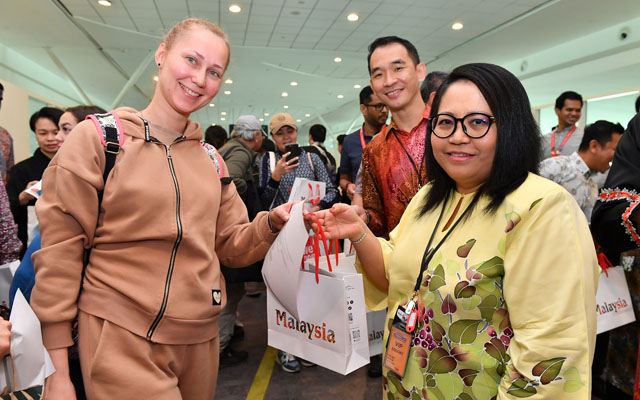
AirAsia X has commenced its Kuala Lumpur-Kazakhstan service, offering four-times-weekly flights between both destinations.
The new direct service is operated on an Airbus A330-300 with a seating capacity of 285, and departs every Tuesday, Thursday, Saturday, and Sunday.
Families enjoy free perks to explore Australia’s Queensland

Families are being lured to Queensland with the launch of Tourism and Events Queensland’s latest campaign in partnership with My Queensland.
Titled Festival of Free, this campaign offers a range of holiday packages, including free flights for kids, free tours and experiences for kids, and kids stay free inclusions across a range of hotels and resorts, from now till May 31.
Outstanding packages include five-night stays at Peppers Blue on Blue Resort at Magnetic Island, Freestyle Resort Port Douglas, and Novotel Surfers Paradise.
At Peppers Blue on Blue Resort Magnetic Island, families stay in a Studio Room inclusive of return flights with Virgin Australia (first kid flies free), a lunch time sailing cruise, daily breakfast for two, and more.
For Freestyle Resort Port Douglas, families fly on Virgin Australia (first kid flies free) with airport transfers, full-day Quicksilver Outer Barrier Reef Cruise (free for kid), entry to Wildlife Habitat, and more.
Lastly, the Novotel Surfers Paradise package comes with return flights (First kid flies free), and comprises daily buffet breakfast and a choice of experience such as unlimited entry to Dreamworld, White Water World and SkyPoint.
There are also deals available for those without children.
For more information, visit Festival of Free.
Hong Kong’s textile heritage museum celebrates anniversary with Factory of Tomorrow
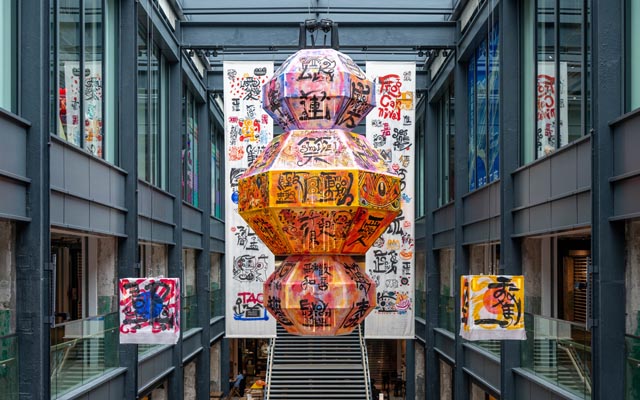
The Centre for Heritage, Arts and Textile (CHAT) in Hong Kong has unveiled its Spring Programme 2024, Factory of Tomorrow ahead of its fifth anniversary.
The group exhibition, curated by CHAT’s curatorial team, will open to the public from now till July 14 and feature CHAT’s contemporary art collection as well as newly commissioned works.
Factory of Tomorrow aims to articulate the unique artistic character and vision of CHAT, which is housed in a prime example of Hong Kong’s industrial heritage – a former cotton spinning factory. From Hong Kong’s urban development to global climate change, 19 Asian artists interpret the past, present and future through unique lenses and textile.
Roughly divided into two parts, Factory of Tomorrow first reflects on the role textile played in Hong Kong’s industrial past before shifting the focus to the present and the future. Ranging from textile works and sculptures to immersive installations and videos, the artworks reflect the artists’ perspectives on textile technology and materials, diversity, climate change and the future.
In addition, CHAT highlights several new elements such as the new special display Misfitted: Unspoken Stories of Tailoring at the D. H. Chen Foundation Gallery, and a new interactive experience, Illumin-Loom, which will invite visitors to operate a virtual loom and create their own illuminated textile patterns. The CHAT Lounge will also reopen with curtains designed based on artworks by local students, the interactive art piece DEMOS, and the display Artefacts of Labour contextualising art through heritage, textile and CHAT’s collection.
In addition, there is also a Birthday Bash giveaway, during which the fifth, 55th, 555th, and 5,555th visitors of CHAT will each receive a surprise gift.
For more information, visit CHAT.
Myanmar recovery still a long way
- Tourism dented by Covid-19 and the coup
- Travel advisories issued by Western countries still stand
- Tours have been redirected towards locals
After more than three years since Myanmar experienced the coup d’état, four since Covid-19 hit, the country’s tourism sector is nearly wiped out.
“Many tour operators are gone for good, others are hibernating, only very few are still active in one way or another,” said Jochen Meissner, managing director of Uncharted Horizons Myanmar.
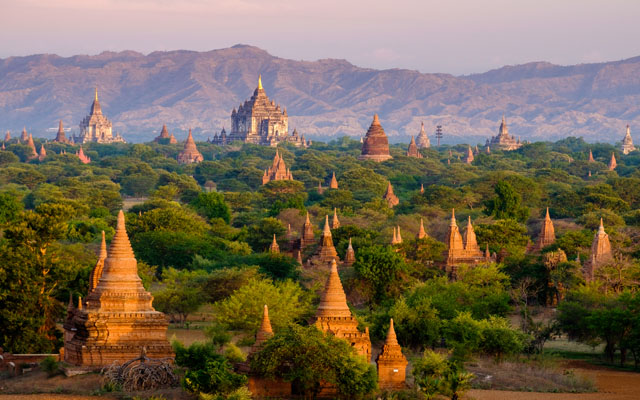
Domestic tourism forms only a fraction of what it was prior to the pandemic and military coup, mainly comprising group bus tours to Bagan and Inle Lake, and Yangon city tours. Many tourist destinations remain severely restricted, especially in border regions, including Chin, northern Shan, Kayah and Kayin states, while the entire north is a war zone and off limits.
Uncharted Horizon Myanmar’s guest numbers and income are down to 10 to 15 per cent of pre-coup and Covid times, with only two freelance guides left out of the previous seven full-time staff.
Meissner noted that Western visitors have slumped to a few thousand annually, with no more group bookings. Russian, Chinese and Thai tourists form the majority of the small number of arrivals.
According to the Ministry of Hotels and Tourism, in 2023, there were 240,219 arrivals at Yangon International Airport, of which 88 per cent were from China and Asia. “It can be assumed that most are business travellers, while a very small percentage are tourists,” said May Myat Mon Win, general manager at Chatrium Hotel Royal Lake Yangon.
Despite dwindling expatriate numbers, today they form a large part of Uncharted Horizon’s business, along with local day tour group bookings for Yangon. These mainly comprise friends, company outings and team building trips.
Phyoe Wai Yar Zar, managing director at DTH Travel Myanmar, said currently a trimmed team of 12 are employed to deal with “day-to-day matters”. This includes a “few” monthly bookings, predominantly to Yangon and Bagan.
“Western governments continue to urge against travel to Myanmar due to the ongoing political and security instability,” he said, adding they “strongly advise against trips to most tourist areas throughout the country”.
Meissner said he also, as a tour operator, no longer encourages international tourists. “As long as the political situation doesn’t change and the armed conflict doesn’t stop, the situation in the tourism sector will definitely not improve.”
Edwin Briels, founder of Exploration Travel Myanmar, which recently expanded operations to Thailand to curate boutique tours in secondary segments, told TTG Asia: “Everyone is in survival mode.”
He added he received about one booking a month at his Lalay Lodge in Ngapali Beach, but since December 2023, it has become virtually impossible to access the area.
Local focus
Adaption has been key and, like Meissner, most have tapped into the domestic market.
Meisser said Uncharted Horizons is proactively targeting locals. “Our tours were originally designed for foreign visitors. We only later realised that they’re also a great experience for locals, most of whom have never been to areas we visit right across the river from downtown Yangon.”
Mon Win said the majority of hotels are now dependent on local demand in the form of leisure, events and wedding, mostly in Yangon and Mandalay. Kalaw, Ngwesaung and Chaugtha beach enjoy high occupancy rates during public and school holidays.
“The pandemic has changed the game for hoteliers,” she said, adding Chatrium’s traditional core market is Europe, America, Japan and Asia. Today, it mainly serves domestic clientele in the local business and leisure segments.
While DTH Myanmar welcomes a handful of foreign guests, the rest of the team is engaged with data loading for other DTH destinations. “We prioritise providing jobs for our team, primarily through outsourced work within our group’s international locations,” Wai Yar Zar said.
He added that while DTH has supported staff to find employment in other industries, “this has become increasingly difficult due to the growing number of people impacted by the country’s struggling economy”.
However, Briels believes that the industry can quickly rebound. “It’s been interesting to see how resilient Myanmar people are, and, when possible, the tourism industry will also show this resilience,” he told TTG Asia.
Meisser added: “Only with change on a political level will the situation improve. I know of many Myanmar fans waiting for this to happen and return as soon as the situation allows. Tourism will also play an important role in the rebuilding of the country.”
Indian hospitality players commit to sustainable practices

More and more Indian hospitality players are waking up to the idea of integrating sustainable practices into their daily operations.
A recent report by advisory firm KPMG in India titled Sustainability in Tourism: Reimagining India’s Sustainable Tourism Evolution highlighted that the sustainable tourism market in India was valued at US$26.01 million in 2022 and is projected to reach US$151.88 million by 2032, with a rapid CAGR of 19.3 per cent from 2022 to 2032.
The Federation of Hotels and Restaurant Associations of India (FHRAI), earlier this month partnered with the Sustainable Hospitality Alliance to work on joint projects and share knowledge, leveraging each other’s tools and programmes to promote best practices within India’s hospitality sector.
“This collaboration demonstrates our strong commitment to reducing our environmental impact while optimising our beneficial influence on the communities we serve,” said FHRAI president Pradeep Shetty.
As per the KPMG in India report, innovative and eco-friendly accommodations, such as solar-powered hotels, bamboo cottages, and zero-waste guesthouses, will become the norm rather than the exception in the country.
“All our produce is 100 per cent organic and comes from our farms, which include leafy greens, vegetables, fruits, and herbs. We grow our own green salad leaves using hydroponic farming, which involves growing plants without soil, using water-based mineral nutrient solutions. Our hotels use solar energy for heating hot water, and 80 per cent of our lighting fixtures are energy-conserving LED. We are converting our fleet of vehicles to hybrid to reduce our dependence on fossil fuels. Our goal is to be paperless in most of our key departments and to introduce an e-ordering and billing system,” shared Kush Kapoor, CEO, Roseate Hotels & Resorts.
“We prioritise eco-friendly materials in the construction and maintenance of our luxury tents. This includes using recycled and biodegradable materials wherever possible, as well as reducing energy and water consumption through efficient systems and practices. Additionally, we actively engage with local communities to ensure that our operations have a positive impact on their livelihoods and cultural heritage. We source local produce and employ local staff, providing economic opportunities and fostering a sense of pride and ownership among community members,” said Bhavik Sheth, COO, Evoke Experiences – the company operates glamping sites across India.
However, implementing sustainable practices is challenging for Indian hospitality players.
Kapoor noted the need for upfront investments into technology, infrastructure, and materials, which can strain financial resources.
“Additionally, training staff to embrace and execute these new practices effectively demands time and resources,” he added.
Sheth said the need to balance environmental conservation with the luxury experience that guests expect required “careful planning and innovation”.
He added: “Operating in remote and culturally-rich areas also presents logistical challenges in terms of waste management, transportation, and access to resources.”
However, Indian hotels remain positive about adhering to sustainable tourism practices. “The long-term benefits of sustainability, both in terms of cost savings and environmental impact, make it a worthwhile endeavour for any forward-thinking hotelier,” concluded Kapoor.
AirAsia Cambodia readies for take-off in May
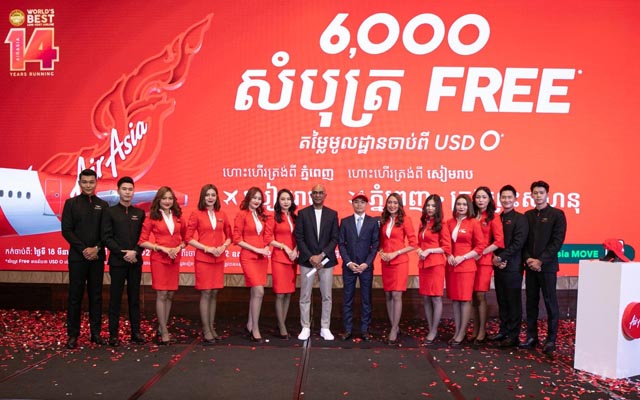
AirAsia Cambodia will commence operations from May 2, flying to three domestic destinations – Phnom Penh, Siem Reap, and Sihanoukville.
The airline will utilise two A320 aircraft based at Phnom Penh International Airport.
Flights to all three destinations, with daily frequencies, are now available for booking on the AirAsia website and the AirAsia MOVE app.
To celebrate this launch, AirAsia Cambodia is currently having a 6,000 FREE Seats promotion for those travelling between May 2, 2024 and March 29, 2025. All flight bookings can also be paid through its main payment processing service provider – Oriental Bank’s payment gateway service which covers a wide range of payment options, from all card schemes to KHQR tailored to Cambodian guests.
AirAsia Cambodia CEO, Vissoth Nam said: “As a truly local airline, we are proud to introduce affordable fares to the Kingdom. This will not only improve connectivity but also encourage travellers to stay longer in the country. Our vision is to transform the way people travel in Cambodia and make air travel an integral part of the country’s transportation network by offering great value fares, exceptional service, and strong connectivity starting with these three destinations.”
Korean Air to expand international services for summer 2024
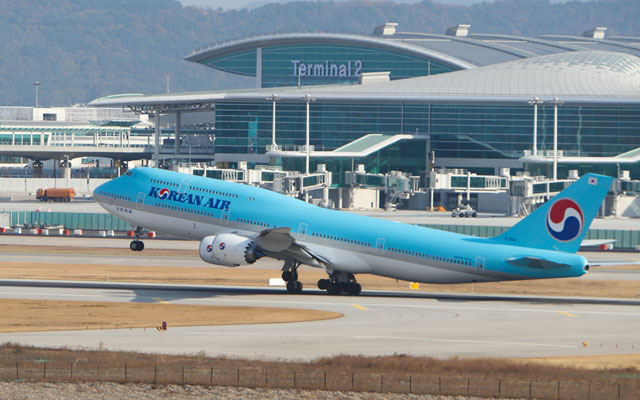
Korean Air will resume services to four cities in China, Europe and South-east Asia, and increase flight frequencies on major routes, for the upcoming summer season.
On April 2, the airline will restart its three weekly flights between Seoul Incheon and Zurich, while its Seoul Incheon-Zhangjiajie route will resume from April 23.
In addition, on April 24, Korean Air will resume its Seoul Incheon-Zhengzhou services, to operate four flights per week, as well as restart daily flights on the Busan-Bangkok route on April 25.
Korean Air will also increase flight frequencies on the Seoul Incheon-Budapest from three to four weekly flights, the Seoul Incheon-Bangkok route from three to four daily flights, and the Seoul Incheon-Manila route from two to three daily flights.
Since January, the airline has also added two additional frequencies on the Seoul Incheon-Bali route to offer eleven weekly flights.
In North America, the airline will increase services on the Seoul Incheon-Dallas route from four flights per week to daily flights.
A thousand feathers now in IHG’s Asia-Pacific cap
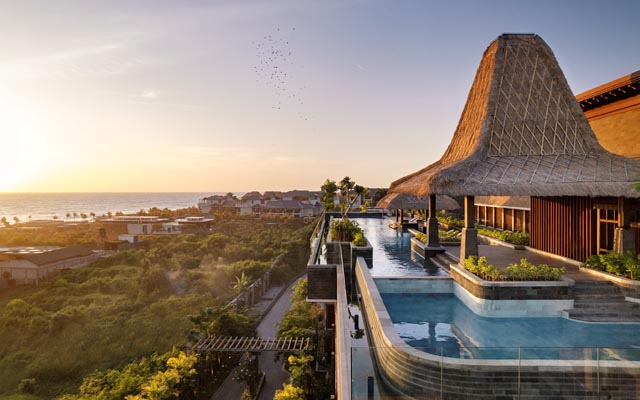
IHG Hotels & Resorts (IHG) now has 1,012 open hotels in Asia-Pacific, a major milestone for the global hospitality company as it accelerates its growth across the region.
Rajit Sukumaran, senior vice president & managing director, East Asia & Pacific (EAPAC), IHG, said: “To hit 1,000 open hotels in Asia-Pacific – including more than 700 in Greater China – is a fantastic achievement for IHG in one of the most dynamic regions in the world. We’re seizing the great long-term opportunities by investing in our brands, delivering great returns for our owners, and driving growth in our markets.”
The group launched several new properties across many brands in the region last year.
“We’re also investing in our six Luxury & Lifestyle brands, which account for 22 per cent of our global pipeline, around twice the amount five years ago,” shared Sukumaran, adding that in recognising the power of conversions, IHG also intends to “grow our brand portfolio in Asia-Pacific in this space – including Garner, our new midscale conversion brand, which will soon have three properties in Osaka, Japan, and which has a great future across the region”.
Assessing the region’s travel and tourism potential, the group noted that demand for hotel stays is on the rise due to long term and relaxed travel arrangements, including visa-waiver agreements between countries, and the creation of new flight routes and new airlines. Business travel bookings, including for groups and meetings, are also climbing, with Asia-Pacific accounting for the largest share of global business travel spend and poised to reach US$800 billion by 2027, including the return of large conferences and events such as the upcoming World Business Forum in Singapore.
Sukumaran said: “Industry statistics are showing a strong construction pipeline of over 5,700 projects across the region with over 1,200 to open this year alone in the hospitality sector.
“Overall, we’re really looking forward to what we’re going to achieve in Asia-Pacific over the next decade as we expand our presence in the region’s established and emerging markets, and deliver experiences cherished by travellers of today and tomorrow.”

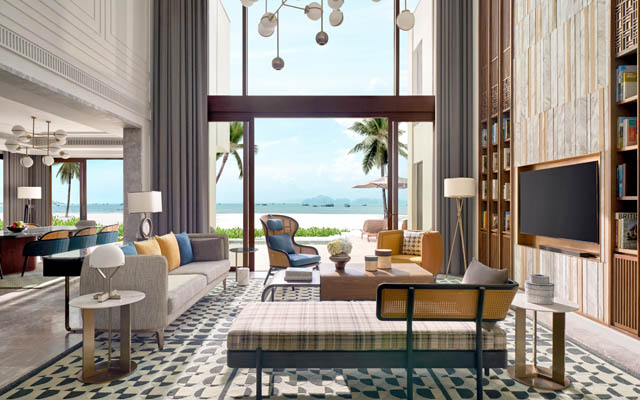






Kata Group, said to be one of Phuket’s oldest hotel chains, has embarked on a trio of mega projects to reflect the company’s pursuit of market relevance and stronger presence. It has opened Beyond Skywalk Nangshi in December 2023, an 800 million baht (US$22.18 million) resort and skywalk destination, implemented a 300 million baht rebrand for Beyond Kata resort titled Colors of Beyond, and launched the Beyond Series which sees its existing portfolio segmented into three distinct categories.
Commenting on Colors of Beyond, Sassitt Thavornvongwongse, assistant vice president of commercial strategy for Kata Group and Beyond Resorts Thailand, said the rebrand is forward-looking to tap the new generation of travellers.
“Colors of Beyond is a refresh of the brand – not to leave (behind) our current customer groups, but to make it a little more attractive for the next generation of travellers who will be our guests for the next 20 to 25 years,” he said.
The 300 million baht investment will elevate Beyond Kata into a premier beachside resort on Kata Beach, catering to families and business events.
As for Beyond Series, Sassitt said there would now be three distinct series: the tranquil Mountain Series, the serene Sea Series, and the vibrant City Series.
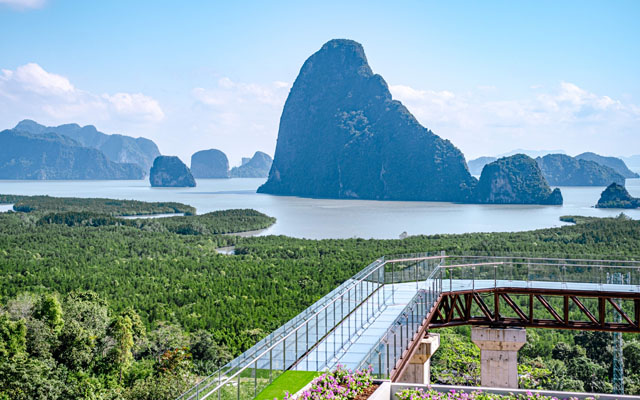
Also new is Beyond Skywalk Nangshi, the group’s ninth property, as part of the Mountain Series. This is a 57-room hotel boasting what is now Thailand’s tallest and longest glass-floor walkway 80m above sea level overlooking Phang Nga Bay. It is situated near Samet Nangshe Viewpoint, about a 45-minutes’ drive from Phuket International Airport.
Sassitt shared that the group plans to renovate many properties in its portfolio, while looking out for new property locations in the Andaman region – Phuket, Phang Ngai, Krabi.
Ideal locations would be “very popular tourist destinations” and prime areas preferably not too far from the beach, he shared.