

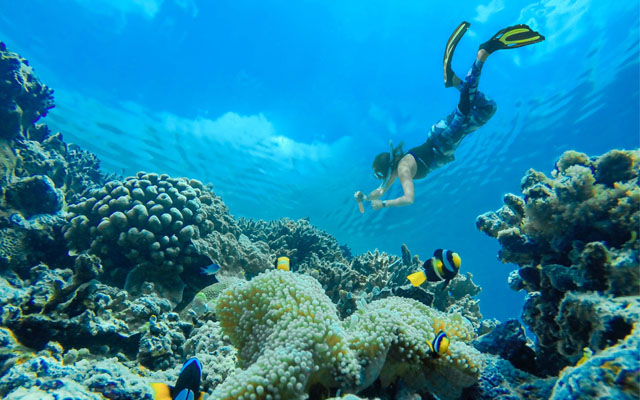
With today dubbed as International Scuba Day, Agoda has revealed its ranking of the most popular dive destinations in Asia, which offers scuba enthusiasts a glimpse into the underwater wonders of Asia.
The ranking was based on accommodation bookings made on Agoda between January and June this year.

Bali in Indonesia came out as the top dive destination. The island is known for its beaches and rich culture, as well as abundance of marine life. One of the most famous diving sites here is the USAT Liberty Shipwreck in Tulamben, which offers divers the chance to explore a sunken World War II cargo ship and is now home to a variety of marine species.
Thailand’s Phuket came in second, which boasts a treasure trove of dive sites waiting to be explored. Scuba enthusiasts also have the option of exploring the nearby Similan Islands, which are known for their crystal-clear waters and plentiful marine life. Divers can expect to see everything from manta rays to whale sharks in this underwater paradise.
The subtropical climate and clear waters of Okinawa, Japan, third on the list, offer some of Japan’s best diving experiences. The region’s unique underwater landscapes and rich biodiversity make it a top choice for divers. The Blue Cave in Cape Maeda is a must-visit site, known for its stunning blue hues and diverse marine life, including sea turtles and colourful reef fish.
Cebu in the Philippines ranks fourth and is a diver’s haven teeming with marine life. The island offers a range of diving sites suitable for all levels of divers. One of the most popular spots is Malapascua Island, where divers can encounter thresher sharks. The underwater landscapes here are also home to coral gardens and a variety of fish species.
Rounding out the top five is Nha Trang, Vietnam, a coastal city in southern Vietnam. Nha Trang is gaining popularity as a diving destination thanks to its warm waters and a colourful marine ecosystem which makes it an inviting spot for underwater exploration. The Hon Mun Marine Protected Area is a top dive site, known for its clear waters and diverse marine life. Divers can explore coral reefs teeming with colourful fish and other marine creatures.
Andrew Smith, senior vice president, supply at Agoda, shared: “Asia offers some of the most spectacular diving experiences in the world. From shipwrecks to vibrant coral reefs, each destination provides unique underwater adventures for divers of all levels.”

















The Philippines’ Department of Tourism (DoT), Department of Health, and the Tourism Infrastructure and Enterprise Zone Authority (TIEZA), have signed a memorandum of understanding (MoU) to establish the country’s first Tourist First Aid Facilities in order to elevate the safety standards in the country’s tourist destinations.
Under the MoU, the agencies will build the inaugural batch of Tourist First Aid Facilities in areas with a high concentration of tourists including La Union; Boracay Island in Aklan; Siargao Island in Surigao del Norte; Panglao Island in Bohol; Palawan; and Puerto Galera.
According to DoT, La Union will be the first to break ground next month, with the expected completion in 1Q2025. TIEZA will be spearheading the design and construction of the facilities which will function as emergency response centres for tourists encountering accidents or injuries during their visit.
These centres will be staffed by well-trained healthcare professionals – physicians and nurses – and will be equipped with essential medical supplies and medications to ensure prompt and effective emergency assistance.
The facilities will also provide preventive care, with a second floor serving as a lifeguard station or viewing deck to oversee tourist safety.
Noting the profile of incidences happening at each destination, tourism secretary Christina Garcia Frasco clarified that such facilities aim to be able to provide the “right type of care”, considering the varying tourism products the destinations are offering to tourists.
Thus, the healthcare professionals will be strategically deployed depending on the needs of the destinations, as well as the medical equipment needed for each area.
To complement these Tourist First Aid Facilities, solar-powered Tourist First Aid Booths will also be installed along beachfront areas, particularly in long stretches of coastlines, to address the immediate medical needs of tourists without the presence of medical personnel. These booths will be equipped with First Aid supplies, automated external defibrillators, a pull-out stretcher, a CCTV camera, and a two-way communication system linking to a command centre for emergency calls.
According to Frasco, the UN Tourism has declared health, safety, security, and hygiene crucial for tourism sustainability and competitiveness.
“If our tourists become ill or injured during a trip to any of our island destinations, we must be able to ensure proper, rapid, and the best care on site,” she noted, citing that investing in tourist convenience and safety is imperative if the country is furthering the momentum of the Philippines’ tourism growth.