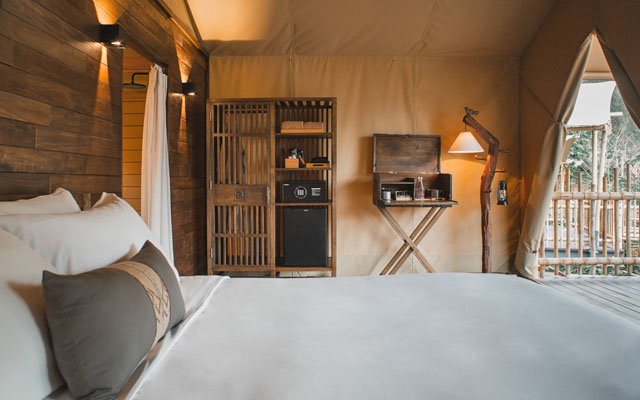
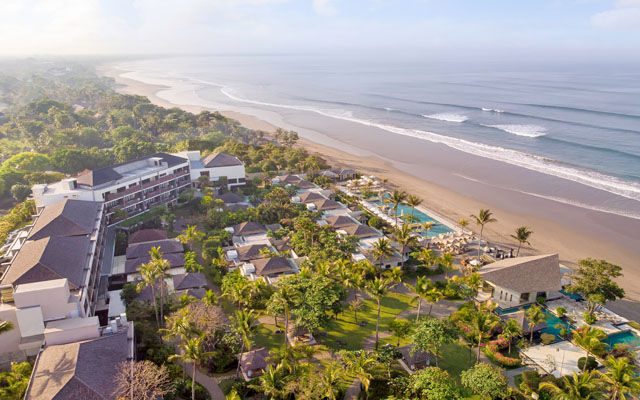
The Seminyak Beach Resort & Spa welcomes travellers from across the globe with its Seaside Escape package.
The package offers the best rate guaranteed, luxurious accommodation, daily breakfast, early check-in, late check-out, and complimentary birthday or honeymoon cake.
Head for a seaside vacation at The Seminyak Beach Resort & Spa
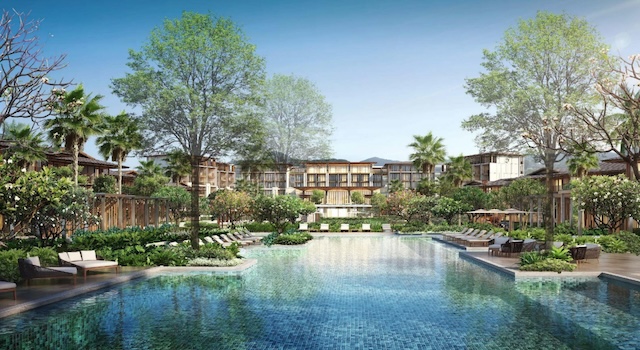
Ideally situated along the shores of Seminyak Beach, the resort provides direct access to one of Bali’s most beautiful and sought-after coastlines. Guests can bask in the tropical sun at the infinity pool overlooking the Indian Ocean, explore the local scene, or enjoy beachfront dining with ocean views. The resort’s strategic location places visitors at the centre of Bali’s premier dining, shopping, and entertainment district.
Guests can participate in various cultural activities, including the Melukat ceremony, a purification ritual that connects deeply to the island’s vibrant traditions.
Data on Chinese outbound travel recovery, shared by Dragon Trail International (DTI) on the eve of the October 1 to 7 Golden Week holiday, shows travellers are making significantly more trips in 2024 compared to a year ago.
According to Sienna Parulis-Cook, DTI’s director of marketing and communications, China’s National Immigration Authority issued 15.82 million passports between January and August 2023, a 25% year-on-year increase.
ForwardKeys’ air ticket data shows that travel departure during Golden Week in 2024 has surpassed last year’s
She added that 2Q2024 data from Trip.com Group and Tongcheng show outbound hotel and flight reservations reaching 100% of pre-lockdown for the former, and record-breaking international flight sales – 160% year-on-year increase for the latter, which also saw a 140% jump in international hotel sales compared to 2023.
Speaking at the joint webinar, Nancy Dai, ForwardKeys China market expert, said its air ticket data showed travel departure during Golden Week at -15% versus 2019 and +32% for 2024 versus 2023.
Dai pointed out that outbound Chinese travel was growing steadily toward pre-lockdown levels with 1Q2024 at -28% vs 2019 and 2Q2024 at -24% vs 2019.
In other updates, Parulis-Cook noted Global Blue reported a 41% year-on-year increase in Chinese tax-free shopping spend in August, with Asia-Pacific achieving 162% compared to pre-lockdown and Europe 52%.
In August, VFS Global stated that visa applications at its China centres rose 88%, reaching 70% of the number in 2019.
Parulis-Cook said marketers should note Chinese travellers have “high interest in cultural activities”, are attracted by discounts and promotions, and “interest in almost every region in the world has grown”.
In terms of desired destination content, favourable policies such as visa waiver or relaxed entry requirements and promotional offers were the most important.
Expanding on the importance of budget and pricing for a specific product like cruising, Parulis-Cook said this was the top consideration, accounting for 52%, followed by the dining experience at 39%, and the cabin and facilities at 37%.
As for regional rankings, Janice Meng, DTI market research analyst, said its poll showed 80% of respondents’ most recent trip in 2024 was to Asia and 65.9% had booked or planned to visit the region.
Meng added that Europe was next with 12.5% having visited the continent on the most recent outbound trip, with 25.3% having a booking or planning to visit.
Based on ForwardKeys’ air ticket data, there is significant growth in direct connects between China and Europe, +12% vs 2019.
European cities with the highest direct seat capacity increases in 2024 vs 2019 show Milan, Madrid, Istanbul and London growing 67%, 61%, 35% and 24% respectively.
Dai also observed the rise of solo and couple travellers, the fall in group travellers, and that the top three cities in Asia during Golden Week are Kuala Lumpur, Hong Kong and Macau.
Outside Asia, she named Istanbul, London and Moscow as the top three.
The Intrepid Foundation, a non-profit arm of Australia-based Intrepid Travel, recently tied up with India-based Access Development Services – a not-for-profit organisation to launch the Holy City Rickshaws project in Varanasi, Uttar Pradesh.
Access Development Services focuses on incubating innovations for sustainable livelihoods of the poor in both farm and the non-farm sectors.
From left: Intrepid Travel’s Rama Mahendru and The Intrepid Foundation’s Biheng Zhang
Varanasi is a popular tourist destination known for its spirituality and rich heritage. Under the ambit of Holy City Rickshaws, a number of day tours are being offered to travellers. These tours cover experiences like food trail, Hindu circuit, shopping tour, Buddhist circuit and early morning and spiritual evening trips.
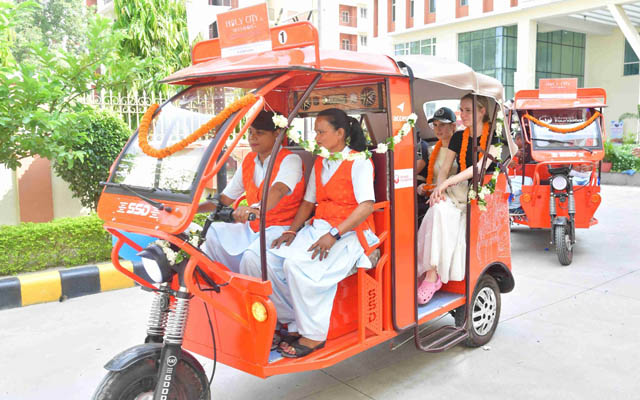
Initially, the tours will be operated with a fleet of 10 custom-designed e-rickshaws, driven by 50 local women from low-income households. These women have received training in both driving and essential soft skills to ensure a safe and engaging experience for tourists. Intrepid Travel will encompass these e-rickshaw tours in its itineraries for tourists visiting the region. The company will also promote these trips through its B2B tour operator network.
Rama Mahendru, country general manager, India, Intrepid Travel shared: “This initiative reflects Intrepid’s ongoing commitment to sustainable tourism and empowering women in the local community. Intrepid Travel is aiming to serve 600,000 passengers globally by 2030 and we are expecting to serve 30,000 inbound tourists by the same year in India. So, there are enormous opportunities for such kinds of projects and adding meaningful experiences into our itineraries.”
The local women have received training in driving the e-rickshaws to ensure a safe experience for tourists
The Intrepid Foundation has made an initial investment of A$55,000 (US$37,400) into kickstarting the Holy City Rickshaw project.
Biheng Zhang, general manager of The Intrepid Foundation, said: “Our funding model critically engages our customers, suppliers and our wider network of partners to continually fundraise for our existing partners. What that means is on trips with our intrepid customers, we will be telling them about Access Development’s incredible work and how it is empowering women and training them. With the additional funds we aim to raise, we hope to support the training of more women and address any future needs Access Development may have.”
The Intrepid Foundation is also planning to install solar panels at the e-rickshaw charging stations to make the project even more sustainable.
Visit Qatar has launched its latest global campaign, Surprise Yourself, in an effort to attract six million visitors annually and establish Qatar as a must-visit tourist destination by 2030.
The campaign invites travellers to discover the destinations diverse attractions and experiences, and targets families, couples, and groups of friends.
Visit Qatar’s latest global campaign aims to attract more visitors to the country; Lusail city in Qatar, pictured
From the lush charm of Banana Island to the vibrant atmosphere of Souq Waqif, and thrill of dune bashing, Qatar presents numerous opportunities for relaxation and adventure in a safe and inclusive environment. Through its theme and brand platform, Moments That Stay With You, the campaign also showcases the emotional connections and lasting memories forged during visits to Qatar.
Featuring a modern rendition of Bobby Hebb’s classic song Sunny, the campaign will be rolled out across 10 international markets using a variety of platforms.
Qatar is set for the upcoming winter season, filled with international sports and cultural festivities. Highlights include the return of Formula One, activities at Sealine Desert, and concerts featuring renowned regional and international artists. Notable returning events such as the Doha Jewellery and Watches Exhibition and the Qatar International Food Festival are also set to captivate audiences, while Qatar prepares for events in 2025 such as the Web Summit and the Arab Cup.
Abdulaziz Ali Al Mawlawi, CEO of Visit Qatar, stated: “With just a six- to eight-hour flight from most major cities around the world, Qatar connects over 177 destinations, including the US, Europe, Africa, and the Middle East. This makes Qatar an ideal choice for visitors seeking a stopover destination or a safe, family-friendly holiday filled with year-round sunshine, adventure, and fun for all.”
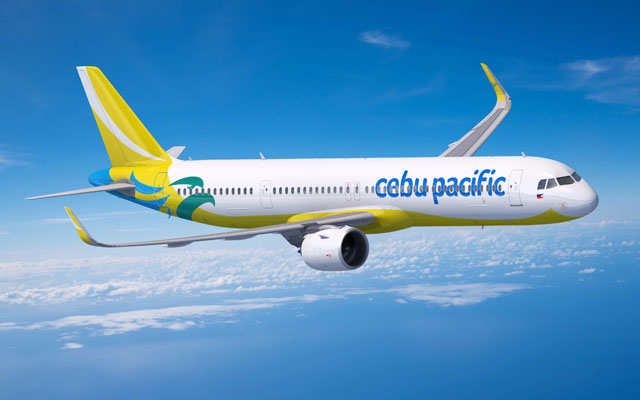
Cebu Pacific has placed a firm order with Airbus for 70 A321neo, finalising an MoU announced by the airline in July.
Cebu Pacific currently operates 61 A320 family aircraft on its extensive regional network, in addition to its nine A330 widebodies on high density routes in the region, as well as to destinations in the Middle East. Following the latest order, the airline’s backlog with Airbus now stands at 94 A320neo Family aircraft and seven A330neo.
Cebu Pacific has finalised its order with Airbus for 70 A321neo
Cebu Pacific CEO Mike Szucs said: “This milestone signals our ongoing dedication to expanding air travel accessibility and affordability, while supporting the Philippine’s broader economic growth and connectivity goals.”
“The A320 Family has supported Cebu Pacific’s domestic and shorthaul international network growth over the last two decades. We’re confident that these additional A321neo aircraft will contribute strongly to the all-Airbus operator’s next phase of expansion as one of Asia-Pacific’s leading low cost carriers,” added Benoît de Saint-Exupéry, executive vice president, sales, commercial aircraft business at Airbus.
Minor Hotels will be rebranding Reethi Beach Resort as NH Collection Maldives Reethi Resort in partnership with a private equity fund managed by Ares Management.
Reethi Beach Resort will remain open until April 25, 2025, after which it will close and undergo an extensive renovation before reopening in 4Q2025. The renovation will include upgrades to the villas, dining outlets, and leisure facilities.
NH Collection Maldives Reethi Resort will open in late 2025 following an extensive renovation
Boasting 129 keys, NH Collection Maldives Reethi Resort is set on an island in Hanifaru Bay within the Baa Atoll, just a 35-minute seaplane flight from Velana International Airport in Male.
The property will offer a mix of on-land and overwater villas, 10 distinctive F&B outlets, spa, swimming pools, fitness centre, tennis, badminton and squash courts, as well as water activities such as diving, snorkelling, fishing, and water sports.
“Renowned for its breath-taking marine life, this iconic destination will offer guests an unparalleled Maldivian experience, with enhanced offerings and sustainability at the forefront. We look forward to unveiling the reimagined NH Collection Maldives Reethi Resort in late 2025,” said Puneet Dhawan, head of Asia at Minor Hotels.
“For over 25 years, Reethi Beach Resort has been a sanctuary of tranquillity in the Baa Atoll, offering guests a truly authentic Maldivian retreat. We believe our collaboration with Minor Hotels will redefine this legacy, elevating the resort’s appeal while preserving the essence of its natural beauty and heritage,” added Kieran Bestall, managing director in Ares Asia at Ares Management.
Peach Aviation has launched its Peach Japan Discovery Flight Pass, a coupon ticket that can be used on all 23 domestic routes in Japan, for travellers residing outside of Japan.
Sales will be limited to a total of 500 tickets per month from now to February 19, 2025, for flights taken between October 27, 2024 and March 19, 2025.
The Peach Japan Discovery Flight Pass can be used on all the airline’s 23 domestic routes in Japan
The pass can also be purchased after arrival in Japan.
There are two types of plans: four segments within seven days plan for 49,800 yen (US$335) and six segments within 30 days plan for 90,000 yen.
Checked baggage and seat selection fees are included with both plans, as well as any fees and taxes required for domestic flight reservations. Flights can be booked and cancelled up to one hour prior to scheduled departure.
Khao Lak Marriott Beach Resort & Spa makes meetings more memorable with its beachfront views in Phang Nga and premier meeting facilities
Enjoying a prime spot along the pristine shores of Khao Lak in Phang Nga, Thailand, the Khao Lak Marriott Beach Resort & Spaoffers a perfect blend of sophisticated elegance with southern Thai design.
With versatile meeting spaces and five-star amenities, the 283-room grand beachfront resort provides a stunning backdrop for all types of events for event organisers looking to combine business with leisure.
This beachfront resort provides a stunning backdrop for all types of events, from corporate conferences to intimate workshops and grand celebrations, making it a premier choice for MICE travellers.
Views, heights and more
The Andaman Ballroom accommodates up to 500 and features high ceilings and the largest LED screen in the area
A highlight of Khao Lak Marriott Beach Resort & Spais its meeting facilities and event spaces, which are thoughtfully designed to accommodate a range of gatherings, from large-scale conferences to more intimate meetings.
At the heart of its offerings is the Andaman Ballroom, a spacious 531m² venue, that holds up to 500 guests, with a 7.1m high ceiling and a 345-inch (8.78m) LED screen, the largest in Khao Lak.
The high ceiling lets natural light into the space and it is equipped with state-of-the-art audiovisual technology and modern amenities, it is ideal for conferences, seminars, exhibitions, and gala dinners.
Five meeting rooms with the latest audiovisual equipment are available for customisable events
For more flexible meeting requirements, there are five Similan Meeting Rooms, with sizes ranging from 50m² to 115m². These versatile rooms can accommodate up to 120 guests and can be used for workshops, training sessions, and smaller conferences.
For a memorable event experience, consider the resort’s Beachfront Venue, which can accommodate up to 520 guests and offers breathtaking views of the Andaman Sea. Another picturesque venue is the Garden Lawn, a tranquil, green space amidst the resort’s lush surroundings, capable of hosting up to 620 guests.
These outdoor venues provide an escape from the indoors and are great for a cocktail reception, dinner, teambuilding activities, meetings or workshops.
Relax in style
After a full day of meetings and activities, event attendees can rest in the resort’s lavishly appointed rooms, suites or villas. Each room features a private balcony, bathroom with a separate bathtub and shower, and a 65-inch (165.1cm) wall-mounted LCD TV.
Standard rooms start from 50m² while the Family Suite, at 100m², comes with direct pool access. For those seeking the ultimate comfort, the Pool Villa (124m²) offers a private pool near the beachfront, walk-in closet and living room — a perfect sanctuary after a long day of meetings.
Some suites have a splendid view of the ocean. For those who want to take in Khao Lak’s beautiful ocean, choose from two room types – the Deluxe Ocean View or 1-Bedroom Suite Ocean View.
while both suites and deluxe rooms come with pool access and their own private balcony exclusively for guests as they enjoy the view in privacy. On top of that, all rooms come with spacious bathrooms that contain a separate bathtub and shower.
Diverse culinary experiences
Be transported to the Mediterranean in both sights and flavours at Lido Beach Club
A successful event cannot be without exceptional food. The Khao Lak Marriott Beach Resort & Spa offers a variety of dining options that cater to diverse palates.
Thai food can be found at Thai Curry Sala with locally-inspired cuisine, Goji Kitchen & Bar, an all-day dining restaurant with Thai and international dishes, as well as Panasia Grill. The latter is a grill-it-yourself concept, and located on the top floor of the resort, offering panoramic views of Khao Lak’s stunning coastline. Meanwhile, Thai Baking Company is a specialty cafe that serves authentic Thai pastries.
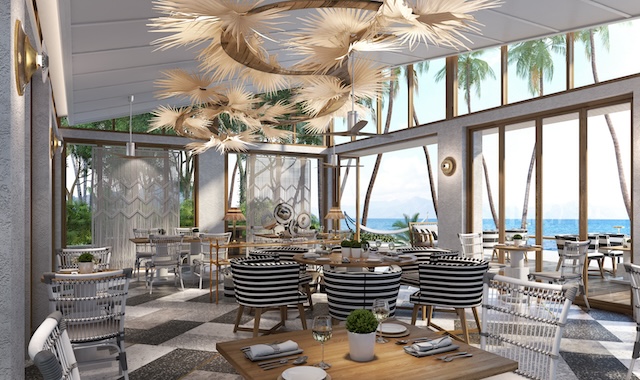
For western flavours, the Lido Beach Club serves Mediterranean and Italian cuisine in a laid-back beachfront setting.
Event attendees can unwind at Greatroom & Bar in the lobby, which can transform from a sunlit deli to cocktail bar at night, and serves food and beverage infused with the spirit of southern Thailand.
Whether planning a conference, a workshop, or a team-building retreat, this resort provides a luxurious setting with diverse options for all types of memorable events.
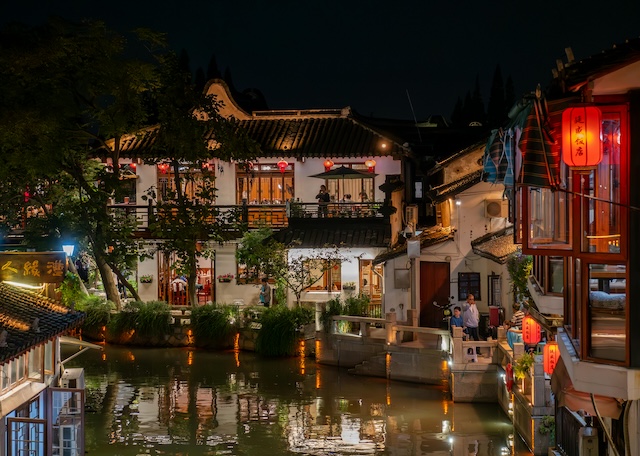
Suzhou’s canal network gives a timeless charm the city, earning it the nickname, Venice of the East
Situated in China’s Jiangsu Province, Suzhou, one of the oldest cities along the Yangtze River, is known for its elegant blend of rich history and modern progress.
The city dubbed the Venice of the East, is home to a network of iconic canals that wind through historic streets, with arched stone bridges that cross these waterways. At the same time, it has a modern side with high tech industries in software and biotechnology that reflects its progress.
With its close proximity to Shanghai, Suzhou is a convenient and attractive destination for domestic and international travellers alike. Here is how to experience what the city offers:
Stay in the city’s heart
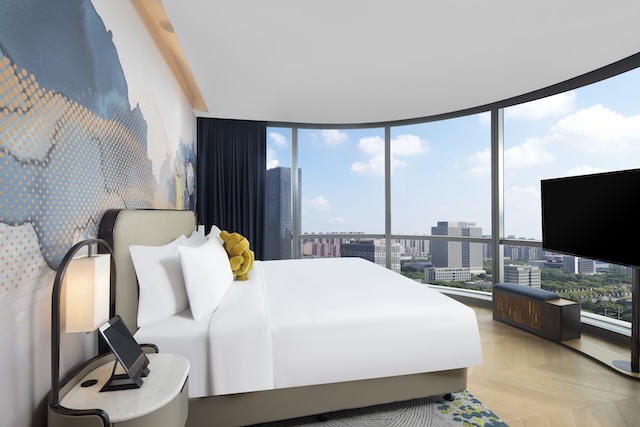
The 294-key M Social Suzhou located in the Hong Leong City Center building in Suzhou Industrial Park offers stunning views of Jinji Lake and the city
When it comes to accommodation, Suzhou has a range of options that balance comfort, style, and convenience.
Lifestyle hotel, M Social Suzhou, offers a contemporary, elegant comfort stay in the heart of Suzhou Industrial Park. The first of the M Social brand by the Millennium Hotels and Resorts group in China, the hotel is conveniently located adjacent to Times Square, Jiu Guang Department Store, Eslite Spectrum, Ferris Wheel Park and other fashion shopping and commercial centres.
Located within the Hong Leong City Center, M Social Suzhou has 294 modern art rooms, including 43 suites. Room sizes range from 40m² to 409m², and more than half overlook the tranquil Jinji Lake and Suzhou Oriental Gate.
The hotel is also well-equipped to host meetings and events, with the 718m² Grand Ballroom that can accommodate up to 450 people, and six function rooms of different sizes.
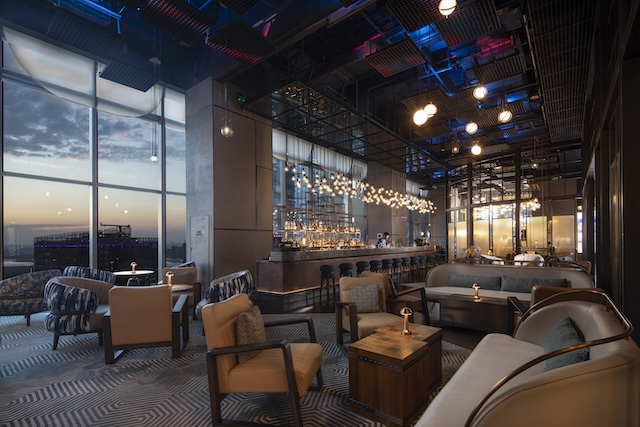
When it comes to dining, Beast & Butterflies on level 25 houses an open style kitchen that serves local Suzhou and international fare, while the stylish bar beside it offers cocktails and music with a view.
Unwind at the Beast and Butterflies Bar on level 25 with a drink and a view
See Suzhou’s ancient wonders
Wander around Suzhou Old Town for a step back in time with its meandering narrow winding streets, traditional wooden folk houses that line the canals, check out shops that sell traditional handicrafts and savour local street food.
Apart from its canals, Suzhou’s nine classical gardens are another standout attraction that hold UNESCO World Heritage status. The largest, the Humble Administrator’s Garden, is reminiscent of an ancient village with traditional buildings, large ponds, intricate pavilions and lush trees and flowers.
The city is also renowned for its silk industry. Learn about this tradition at the Suzhou No 1 Silk Factory. Built in 1926, the factory still produces silk and houses a museum.
Experience local culture
One way to make the most of a new city is to immerse yourself in local culture.
A must-see for culture enthusiasts is the Suzhou Museum, designed by renowned architect I.M. Pei, is a display of contemporary architecture while home to historical art and artefacts. For a more culturally immersive experience, attend a tea ceremony to experience Suzhou’s tea culture, an integral part of its heritage.
M Social Suzhou also offers activities for its guests. Join a traditional craft workshop to try some pottery, paper cutting, and woodblock printing, and create a souvenir to take home.
Guests can also enjoy a boat tour of Jinji Lake, where they can relax on tranquil waters and take in panoramic views of the city’s skyline and scenic landscapes. This serene cruise is perfect for those seeking a peaceful yet immersive experience of Suzhou’s natural beauty.
From classical architecture and historical treasures, Suzhou’s unique mix of ancient charm and modern innovation makes it an inviting destination for those seeking to blend culture with comfort.
As part of its 10.10 campaign, M Social Suzhou is offering 20,000 MyPoints per stay for MyMillennium members who stay at least two consecutive nights at the hotel. To enjoy the offer, book by October 18, for stays until December 31, 2024. Visit M Social Suzhou now.
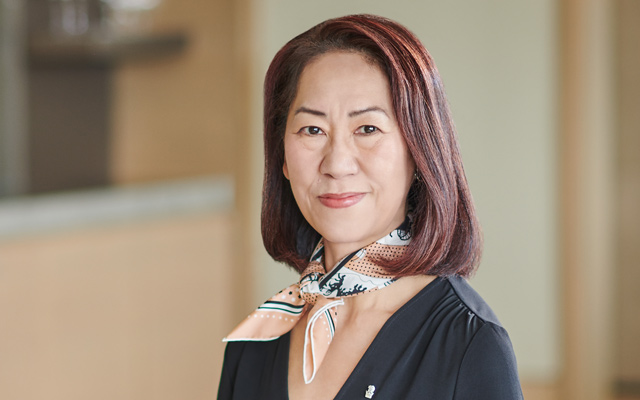
The Ritz-Carlton, Millenia Singapore has appointed Kristy Lee as director of sales and marketing.
With over three decades of experience, Lee joins The Ritz-Carlton, Millenia Singapore from The Ritz-Carlton, Hong Kong, where she led the sales and marketing teams for over 10 years.
Her extensive hospitality background includes her experience in a number of major international hotel groups such as The Langham, Hong Kong, Conrad International, and Shangri-La.












 Her extensive hospitality background includes her experience in a number of major international hotel groups such as The Langham, Hong Kong, Conrad International, and Shangri-La.