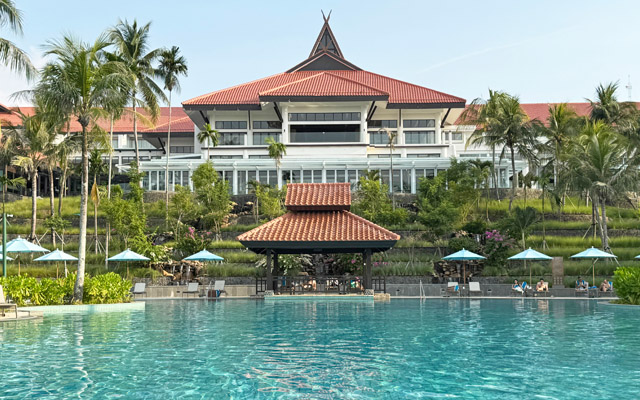
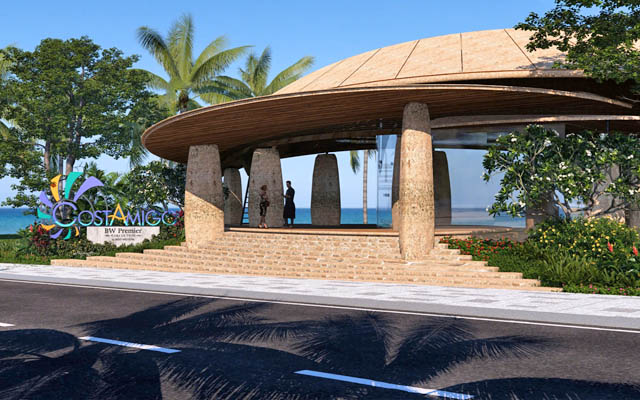
BWH Hotels has expanded its portfolio in Vietnam with the signing of a new BW Premier Collection resort on the beach in Phan Thiet.
The Costamigo Phan Thiet, BW Premier Collection will join BWH Hotels’ expanding portfolio in Vietnam, which currently includes four Best Western Premier branded properties in Phu Quoc, Nha Trang and Ha Long, with more hotels and resorts in the pipeline.
The Costamigo Phan Thiet, BW Premier Collection adds to BWH Hotels’ expanding portfolio in Vietnam
The new beachside resort is located in Vietnam’s Binh Thuan province, and is just a 2.5 hour’s drive from Ho Chi Minh City. It will offer a selection of villas and rooms, all fully equipped with modern amenities, as well as facilities such as a restaurant, beach bar, cabanas, swimming pool, and a stage for beachfront events.
Travellers can also explore the destination’s natural scenery, including lush forests and sand dunes, along with fishing villages, temples, golf courses, and long coastal roads.
“We are delighted to announce the signing of the Costamigo Phan Thiet, BW Premier Collection, which marks the latest phase of our development strategy in Vietnam, one of BWH Hotels’ key Asian markets. With its beachfront location and collection of spacious villas and accommodations, this exceptional resort is set to become a popular option for guests on short breaks or extended vacations,” said Olivier Berrivin, vice president – APAC, BWH Hotels.
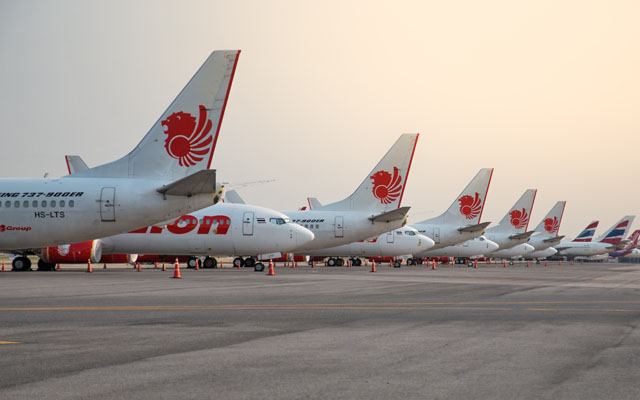
The Association of Asia Pacific Airlines (AAPA) has welcomed Lion Air Indonesia as its latest member with immediate effect.
Based in Jakarta, Indonesia, Lion Air is Indonesia’s largest privately run airline and the largest budget airline in South-east Asia. Founded in 1999, Lion Air operates both international and domestic air services connecting different Indonesian cities to Singapore, Malaysia, Thailand, Australia, China, Japan, South Korea, India, Pakistan, Uzbekistan, Saudi Arabia and more.
Lion Air has joined AAPA as its latest member
“With Lion Air’s strong presence in the budget air travel segment, this important milestone reflects the diversity of the association’s membership and reinforces its role as the voice of international air carriers in the Asia-Pacific region, regardless of business model,” said Subhas Menon, director general of AAPA.
Rudy Lumingkewas, president director of Lion Air, added: “Lion Air is committed to expanding accessibility to various regions in Indonesia, and to playing a key role in supporting the country’s economic and social development. (We look) forward to working with other AAPA members and playing (a) part in the continued success of the Asia-Pacific air transport sector.”
Travelport and All Nippon Airways (ANA) have signed a multi-source content distribution agreement, marking Travelport as the first global distribution system to confirm a New Distribution Capability (NDC) distribution agreement with the airline.
The deal includes both NDC content and servicing, enhancing ANA’s ability to distribute its offerings through modern, flexible channels. The two companies are also collaborating to make ANA’s NDC content available via Travelport+ by mid-year 2025.
Agencies using Travelport+ will be able to access multi-source content from ANA
Travelport and ANA have strengthened their long-standing relationship to ensure that Travelport-connected agencies will continue to have seamless access to ANA’s extensive range of products, including ancillary services.
“This pivotal agreement confirms that agencies using Travelport+ will be able to access relevant, personalised, and enriched multi-source content from ANA, which means travellers are presented with more choice among ANA’s best offers and fares,” said Damian Hickey, global head of air partners at Travelport.
Keiji Omae, executive vice president of customer experience at ANA, added: “As we advance our NDC strategy, I am confident that Travelport can play a crucial role in helping us expand our reach and simplify the booking and servicing process as agents and travellers shop for our best offers.”
Langham Hospitality Group’s (LHG) loyalty platform Brilliant by Langham (Brilliant) has launched its Have a Brilliant Flight points-to-miles conversion programme, allowing Brilliant members to convert their membership points to airline miles for Cathay Pacific, Singapore Airlines, Air China, and China Eastern Airlines.
Since the launch of Brilliant early this year, members have been able to experience personalised journeys across 33 participating hotels under LHG’s brands. Brilliant offers personalised experiences based on members’ preferences, along with member-only room rates and more. Signing up for Brilliant is free, and members earn award points for stays and use of amenities, as well as enhance their benefits by progressing through membership tiers.
Have a Brilliant Flight allows members to convert their points to airline miles for four major airlines
To celebrate the launch of the programme, LHG is introducing a limited-time Bonus Miles offer for members to earn extra miles from now to January 31, 2025. There is also a social media story-sharing campaign from now to December 15 where members can share their most memorable travel experiences on Facebook and Instagram for a chance to receive up to 1,000,000 miles.
Lawrence Ng, senior vice president of sales and marketing at LHG, commented: “This key milestone marks our commitment to enriching member experiences through airline partnerships with four leading airlines that represent the world’s three major airline alliances, Oneworld, SkyTeam, and Star Alliance – together, we’re creating a more rewarding travel experience that truly shines.”
The Westin Jakarta has appointed Thomas Glaser as its new general manager, where he will oversee all executive and operational aspects of the property.
Glaser brings over 20 years of extensive hospitality experience to The Westin Jakarta. Prior to this appointment, he served as general manager at Hilton Bandung for four years.
His diverse background equips him with a comprehensive understanding of the hospitality industry and a passion for delivering memorable guest experiences.
Luxury travellers are getting more sophisticated with their holiday expectations, prompting travel and tourism specialists in Asia-Pacific to curate out-of-the world offerings to win them over.
Jenny Zhou, head of Leisure Travel, Wild China, has delivered a customised food tour that traversed across China for a private group as well as sports programmes that featured a world champion as the trainer.
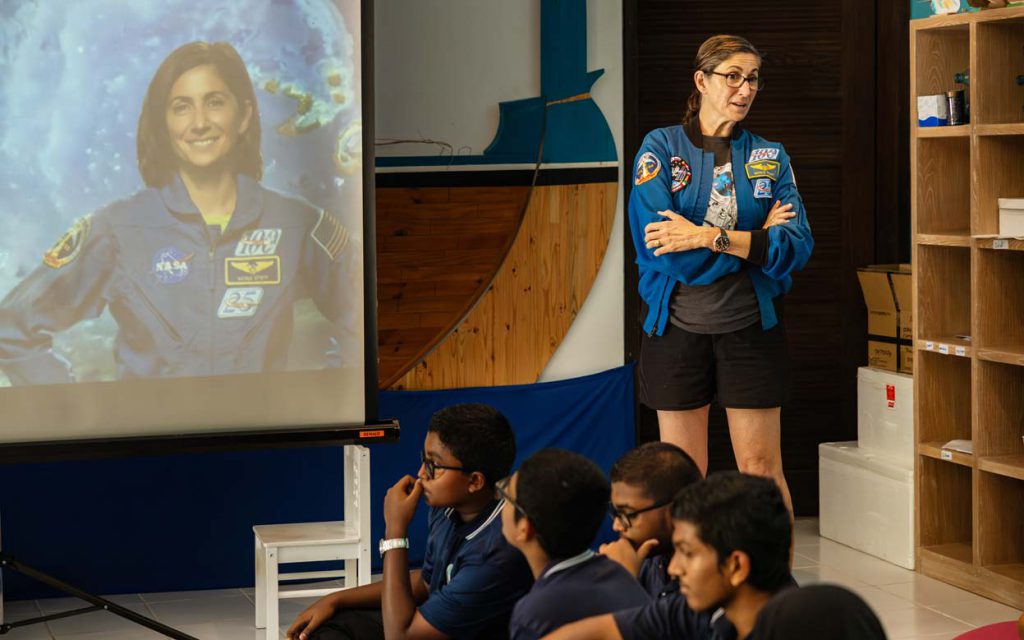
Como Island Astronauts Camps were held at Como Hotels & Resorts properties in the Maldives, Thailand, and Indonesia’s Bali
Speaking on a panel at the recent Further East 2024 luxury travel trade event in Bali, Indonesia, Zhou added that her team has just launched an “extreme snakes trip”. The 12-day expert-led Herpelogical Expedition, a collaboration between the travel company and Serpentine Expeditions, included a quest for the Mangshan Pit Viper.
The Herpelogical Expedition highlights the reverence reptiles and amphibians hold in Chinese folklore and follows the path of some of the China’s most coveted herpetological treasures, covering both those who have adapted to live on the fringes of densely populated urban centres and those who remain in their natural habitats, now protected national forest parks and UNESCO-recognised biosphere reserves.
More special interest tours, such as those focused on archaeology, arts and pottery will be rolled out in 2025.
Travellers’ quest for the unusual also means hoteliers “could no longer just sell rooms”, stated Dorris Goh, vice president Commercial, Como Hotels & Resorts.
Goh added that tourism has come of age and the travel industry now has a more educated audience.
In 2025, Como Hotels & Resorts will launch the Como Journey: Into the Arctic, in collaboration with Natural World Safaris. The 11-day trip onboard the eight-suite MS Polarfront expedition ship will set sail from the Norwegian town of Longyearbyen to explore the Svalbard Archipelago.
This voyage follows on from the successful Como Island Astronauts Camps that were organised with NASA and citizen astronauts over the past three years. These camps were held at Como’s island resorts in the Maldives, Thailand, and Indonesia’s Bali.
Goh said: “Three years ago, we considered how we would want a brand to be remembered by generations; (we needed) something extraordinary, so we decided to engage with the space community and brought in space camps. We wanted to do it specifically for families and children who come to the resort, so that they have something to look forward to.”
The Como Island Astronauts Camps are in support of Space for a Better World, teaching children that any dream is possible. The camps also engage with students from local schools.
Bill Barnett, founder and managing director of C9 Hotel Works, opined that hotel developers have to respond to these travel expectation changes by rethinking hotel design.
Just as how art can move and interact with visitors at an immersive art gallery today, Barnett believes that hotel design should be as innovative.
“Hotel rooms don’t have to be boring with design. Why does a hotel have to be a single structure? Why can’t we put the back-of-house and the employee dining room in a place where guests can come and join in? People want to engage with people in a social space, so must we have barriers between back-of-house and front-of-house?” he mused.
Scoot expands its network to Padang, Phu Quoc and Shantou
Scoot has introduced three new flight services to Phu Quoc in Vietnam, Padang in Indonesia, and Shantou in China.
Flights to Phu Quoc and Padang will commence on December 20, 2024 and January 6, 2025, respectively, and will be operated on the Embraer E190-E2 aircraft. Flights to Shantou will begin on January 16, 2025 on the Airbus A320 family aircraft.
Scoot will start with thrice weekly flights to Phu Quoc, with two more weekly flights to be added from January 25, 2025.
Aside from the new destinations, Scoot will also add two more weekly flights to Jakarta from November 24, while services to Koh Samui will be increased from 14 to 21 times weekly from December 20.
Services to Davao will increase from five times weekly to daily flights from December 22, and flights to Vientiane will increase from four to five times weekly from February 9, 2025.
Operations to Nanchang will be suspended after the last flight on February 14, 2025.
Royal Brunei Airlines expands network into India
Royal Brunei Airlines launches direct flight to Chennai
Royal Brunei Airlines has commenced its new direct flight route between Bandar Seri Begawan and Chennai, India on November 5.
The new service offers three weekly flights on Tuesdays, Thursdays, and Saturdays, and will be operated on the modern Airbus A320neo.
With the strategic codeshare agreement with Air India, passengers flying to and from Chennai can easily connect to other major destinations in Royal Brunei Airlines’ network, including Melbourne, Hong Kong, Jakarta, Singapore, Seoul, Manila, and Taipei.
Garuda Indonesia and Singapore Airlines
Garuda Indonesia, Singapore Airlines deepen commercial partnership
Garuda Indonesia and Singapore Airlines (SIA) will boost flight frequencies between Jakarta, Indonesia, and Singapore in 4Q2024, with SIA to operate eight daily services from November 22, up from six currently, and Garuda Indonesia to expand its daily flights from four to six starting December 1.
The airlines will extend their codeshare arrangement to include these new services. Currently, both airlines codeshare on flights between Singapore and four Indonesian cities (Denpasar, Jakarta, Medan, and Surabaya), as well as routes between Singapore and London (Heathrow) and Mumbai.
In 1Q2025, Garuda Indonesia and SIA will deepen their frequent flyer programme partnership to allow GarudaMiles and KrisFlyer members to earn and redeem miles on codeshare routes. Both airlines will also introduce joint fare products, enabling customers to book flights between Singapore and Denpasar, Jakarta, and Surabaya within a single itinerary.
Dusit Hotels and Resorts' latest offer allows guests to enjoy up to US$200 hotel credit; Dusit Thani Hua Hin, pictured
Dusit Hotels and Resorts, under Dusit International, has unveiled its Make Time for Travel offer, providing guests with up to US$200 hotel credit to enhance their stays with curated dining, wellness, and cultural experiences at selected Dusit properties worldwide when booking on Dusit’s website.
Dusit Hotels and Resorts’ latest offer allows guests to enjoy up to US$200 hotel credit; Dusit Thani Hua Hin, pictured
Available for bookings of two or more nights made from now until December 15, with stay dates extending until February 15, 2025, the offer invites travellers to immerse themselves in Dusit destinations across Abu Dhabi, Dubai, Doha, Egypt, Greece, Guam, Japan, Kenya, Nepal, Oman, Singapore, Thailand, and the Maldives.
For members of Dusit’s loyalty programme, Dusit Gold, the Make Time for Travel offer also includes exclusive privileges such as up to 20 per cent off stays, up to 30 per cent off dining, complimentary room upgrades, late check-out, and Dusit’s signature Instant Delight rewards.
Oceania Cruises has launched the second wave of its 2026 Collection of Voyages, with more than 60 new itineraries ready for booking from today, November 14. The voyages on three of Oceania Cruises’ most intimate ships, Nautica, Regatta, and Sirena, which carry just 670 guests each, will cover ports across the Caribbean, Asia, Africa, Mediterranean, and Northern Europe.
Oceania Cruises’s Regatta
Framed by iconic cities such as Mumbai, Cape Town, Rome, and Singapore, the new sailings offer travellers the perfect opportunity to explore further, with the line’s ultra-premium small ships also visiting places more unexpected. Oceania Cruises’ guests can delight in lesser-known destinations, such as yachting haven Tortola in the British Virgin Islands; the Turkish island of Bozcaada; Maputo, the charismatic capital of Mozambique; and Karlskrona, a Swedish city spread over 30 islands.
Oceania Cruises’ small ships spend between 30 and 50 per cent more time in each port than premium cruise lines, including many overnight stays, to encourage in-depth exploration. Once ashore, guests can choose from hundreds of excursions in each port of call catering to a wealth of interests, including food, wine, history, architecture, and local culture.
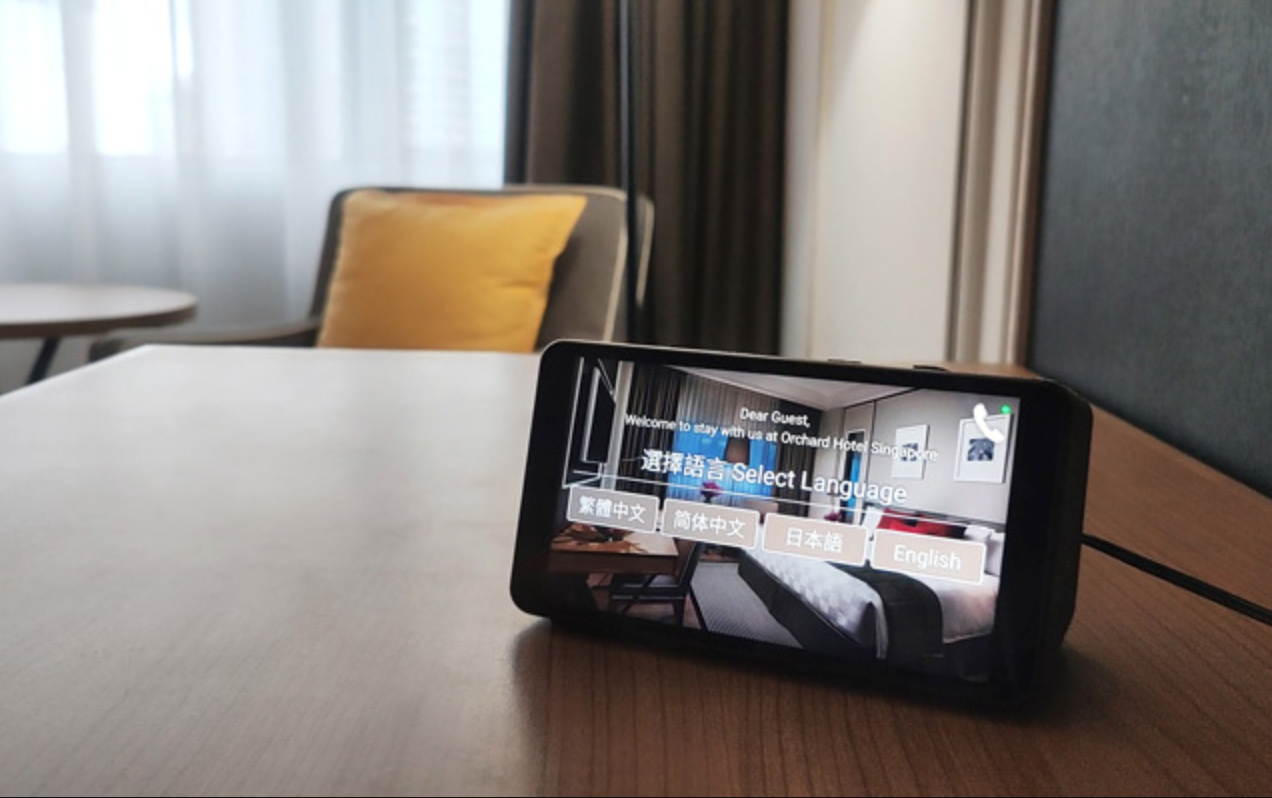
Millennium Hotels and Resorts (MHR) has expanded its collaboration with Aiello, a startup specialising in Natural Language Processing to deploy the AI-powered Aiello Voice Assistant (AVA) across six MHR properties in Singapore and Thailand.
This follows on from MHR’s implementation at Orchard Hotel Singapore in June this year. AVA was first rolled our at MHR’s M Social Hotel Phuket in Thailand.
Aiello’s AI-powered Aiello Voice Assistant is now deployed across six properties of Millennium Hotels and Resorts in Asia
AVA is able to enhance the guest experience through personalised, voice-activated services and establish new benchmarks for operational efficiency and environmental sustainability.
Saurabh Prakash, interim chief operating officer and chief commercial officer at MHR, said: “By embracing Aiello’s AI technology, we’re adopting a data-driven approach that allows us to better understand guest preferences, enabling us to deliver personalised services while unlocking new revenue opportunities.”
Ke-Vin Lim, head of group innovation at City Developments Limited, parent of MHR, added that the hotel group is the first of its kind in Singapore to implement the AVA in guestrooms.
“This initiative reflects our commitment to integrating advanced technology, significantly enhancing property value and positioning us as more competitive and attractive for the future,” he said.
Lim added that the adoption of AI aligns with MHR’s sustainability vision. “By replacing outdated in-room amenities and printed materials, we’re making a long-term, sustainable investment,” he said. MHR’s six properties in Singapore have already achieved the Global Sustainable Tourism Council (GSTC) certification.
According to Aiello CEO and co-founder Vic Shen, the replacement of cabling in over 2,300 guestrooms with AVA would reduce 6,240kg of carbon dioxide emissions, which would have taken 284 trees to absorb.
Shen said the MHR collaboration would demonstrate how AI solutions can transform hotel management.
“Together with MHR, we’re leading the digital transformation of the hospitality industry, creating more intelligent and intuitive hotel environments,” said Shen.




 His diverse background equips him with a comprehensive understanding of the hospitality industry and a passion for delivering memorable guest experiences.