Singapore GP has added Janet Jackson, JJ Lin, Zara Larsson and James Arthur to the entertainment programme for the Formula 1 Singapore Airlines Singapore Grand Prix 2026.
The new additions join a line-up of international and regional performers scheduled to appear across the three-day event, which takes place at the Marina Bay Street Circuit from October 9-11.
The 2026 Singapore Grand Prix will combine Formula 1 racing with live entertainment across 10 stages and themed precincts
At the Padang Stage in Zone 4, Singapore singer-songwriter JJ Lin and K-pop group Cortis will perform on Friday, October 9. Swedish pop artist Zara Larsson will take the stage on Saturday, October 10, while British singer-songwriter James Arthur will perform on Sunday, October 11.
Janet Jackson will headline the Wharf Stage in Zone 1 on Sunday, completing the stage’s line-up. Previously announced acts for Zone 1 include Mark Ronson, DJ Snake, Major Lazer Soundsystem, Goo Goo Dolls, Rev Run and Split Enz.
According to organisers, the event will feature more than 170 hours of entertainment across 10 stages and themed precincts around the circuit. Additional performers include HYO, Spacey Jane, Ocean Alley, Ape Drums, Ezra Collective, Shingo Nakamura and Tinzo + Jojo of Book Club Radio.
Singapore GP said more acts will be announced in the coming weeks.
Tickets remain available, although organisers noted that some grandstand categories are close to capacity and selected ticket types have already sold out.
All ticket holders will have access to performances at the Padang Stage in Zone 4, while entry to the Wharf Stage in Zone 1 requires a valid Zone 1 ticket for the day of the performance.
Aahaasa Collection has introduced Aahaasa Island Concierge, a new travel concept that connects its three properties in Sri Lanka through a single itinerary spanning the island’s coast, tea country and central highlands.
The programme links Aavya Cove Villas on the southern coast, Aadya Tea Bungalows in tea country and Aarunya Nature Resort near Kandy, allowing guests to move between the properties through a coordinated journey focused on landscape, culture, wellness and cuisine.
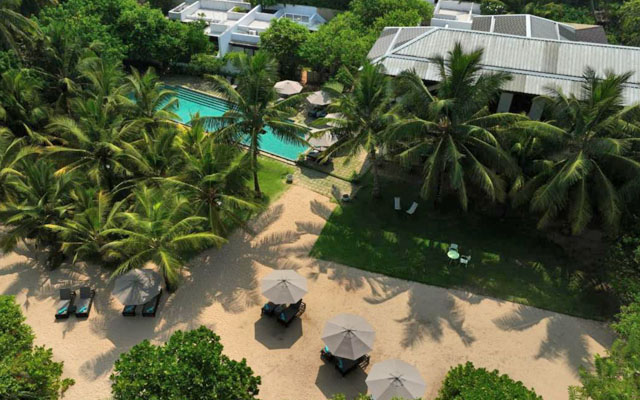
Aahaasa Island Concierge links the collection’s three properties through customised journeys across Sri Lanka; Aavya Cove Villas, pictured
According to the company, the experience is designed for travellers seeking longer, multi-destination stays that combine different regions of Sri Lanka within a single itinerary. Guests are supported by a dedicated concierge team, with arrangements including accommodation, transfers, dining experiences, wellness programmes and cultural activities.
Transport options can include helicopter and seaplane transfers, luxury ground transportation and customised excursions tailored to individual interests.
The collection has introduced a range of itineraries, including a seven-day Signature Journey and a 10-day Three Worlds Journey, both of which can be adapted to guest preferences.
Experiences across the three properties include tea estate visits, wellness programmes, spice garden activities, nature experiences and encounters with local communities. The company said the programme is intended to provide a more connected way of exploring Sri Lanka through a combination of hospitality, culture and nature-based experiences.
The initiative forms part of Aahaasa Collection’s broader expansion plans, which include the future launch of Aamudra, a luxury yachting division that will extend the company’s offerings beyond its land-based properties.
Nath Rankothge, founder of Aahaasa Collection, said: “Today’s luxury traveller seeks more than exceptional destinations; they seek continuity, meaning and a deeper connection to place.
“Aahaasa Island Concierge was created to reveal Sri Lanka as an unfolding journey through diverse landscapes, shaped by nature, culture and emotion, where each destination enriches the next.”
Hong Kong Airlines is giving passengers a closer encounter with Hong Kong’s giant pandas through an expanded Panda Friends experience that now extends from the aircraft exterior into the cabin.
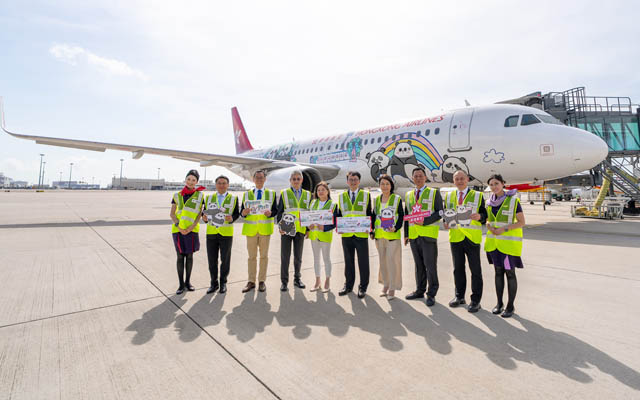
First unveiled in March, the Panda Friends livery aircraft was created in partnership with Ocean Park Hong Kong and features six giant pandas: An An, Ke Ke, Ying Ying and Le Le, together with Hong Kong-born twins Jia Jia and De De. Designed as globe-trotting ambassadors, the pandas are depicted travelling the world with passports and cameras in hand.
The Panda Friends livery aircraft transforms a Hong Kong Airlines jet into a flying showcase of the city’s giant panda ambassadors
The latest phase of the initiative introduces themed cabin interiors and exclusive collectibles, which made their debut on a flight to Chengdu, the home of China’s giant pandas.
The colourful livery has become one of the airline’s most recognisable aircraft, combining tourism promotion with conservation messaging. Through the partnership, Hong Kong Airlines and Ocean Park aim to showcase Hong Kong’s unique panda story to travellers across the region.
The programme also forms part of Hong Kong Airlines’ 20th anniversary celebrations. The carrier said the initiative reflects its commitment to promoting Hong Kong’s culture, tourism and conservation efforts through its network.
By bringing the Panda Friends experience on board, the airline hopes to create a more engaging journey for passengers while highlighting one of Hong Kong’s most popular wildlife attractions.
Luxury travel trade show ILTM Asia Pacific 2026 is opening to good news: affluent consumer segments are seeing significant spending increases, and travel is among the top spend item that is attracting incremental new spend from moneyed cardholders between 2023 and 2025.
Sharing data from Visa’ intelligence at ILTM Asia Pacific 2026 Opening Forum on June 29’s evening, Simon Baptist, principal Asia-Pacific economist, noted that Asia’s new luxury consumers are emerging from technology-led wealth hubs.
Visa’s Simon Baptist details the profile of affluent Asian travellers at the ILTM Asia Pacific 2026 Opening Forum on June 29; photo by Karen Yue
Spending on affluent cards issued across Asian markets show the highest growth rate in the Philippines, Taiwan and Vietnam: 49 per cent, 41 per cent and 36 per cent respectively, as of April 2026.
Baptist said that while Asian wealth was largely generated by finance, real estate and government-connected conglomerates in the past, the new wealth is coming from technology, semiconductors, and AI or data centre development.
Money in Asia came from finance, it came from real estate, it came from, you know, government-connected conglomerates.
The region’s affluent consumers are spending on a host of things, from travel to entertainment, with ultra-luxury/exotic cars, apparel & accessories, and retail being among the top three categories that are generating the strongest incremental affluent card spend.
Affluent consumers also continue to travel a lot more than their non-affluent peers – most are travelling every two to three months.
In terms of travel motivations, time with family and friends top the list, followed by relaxation, and shopping.
However, Baptist noted that the affluent Gen Z and Millennials are more interested in experiences, sports, and culture when compared to the older Gen X and Boomers. The younger generation is also “more interested in travelling somewhere for social media reasons. They want their luxury experience to look good on TikTok or Instagram”.
Different source markets have different priorities when they travel, added Baptist. Visa observes that affluent Thais, Chinese and Indians splurge the most on retail, while Australians are drawn mostly to recreational offerings. Australians and Singaporeans are also keen on hotel spend.
While travel intentions remain strong among the high-net-worth, the war in Iran and fuel challenge has an impact on travel habit.
“Capacity between Europe, the Middle East, and Asia-Pacific has fallen while jet fuel prices have doubled. Jet fuel accounts for about 30 per cent of the operating costs of a typical airline because it’s a variable cost. It feeds through into the ticket prices very quickly. As such, ticket prices rose by 30 per cent – and more in Asia and Europe where there had also been a reduction in (seat) capacity, resulting in people chasing fewer and fewer seats.”
“So, people cancelled trips and did something else instead,” said Baptist, adding that affluent consumers have also chosen to reconsider their destinations in favour of regional travel within Asia.
Visa intelligence observed that wealthy Chinese are travelling out of China for Japan, Australia, Hong Kong, South Korea, but also farther to Europe and North America. Affluent Taiwanese are heading to Japan, Singapore and South Korea, but also Europe; those from Singapore are preferring Malaysia, Japan and Europe, while Australians are making a beeline for Europe.
And with a bigger portion of travel budget going into airfares, affluent travellers are choosing to cut back on hotels and retail.
In conclusion, Baptist maintains confidence in the spending power of affluent Asians, and urged luxury travel and tourism professionals to identify new wealth hubs in the region, understand where the high growth travel corridors are taking form, and pay attention to how airfares and geopolitics are changing travel destinations.
Bangkok Dusit Medical Services (BDMS) is investing 29 billion baht (US$881.6 million) to develop WellEra, a 200,000m² wellness ecosystem in Bangkok that is scheduled to open in 2030.
The healthcare operator is drawing on nearly 55 years of clinical experience to create a development focused on longevity and preventive health beyond the traditional hospital setting.
WellEra will combine wellness, hospitality, retail and residential components in a 200,000m² development scheduled to open in Bangkok in 2030; photo by Anne Somanas
Located at a 5.3ha site at the intersection of Langsuan Road and Lumphini Park, the project aims to combine preventive medical services, wellness facilities, hospitality and residences within a single development.
The investment comes as Thailand’s wellness sector continues to expand. The global wellness economy is projected to reach US$9.8 trillion by 2029, while Thailand’s wellness economy grew from US$38.8 billion in 2023 to more than US$42.7 billion in 2024.
According to the Global Wellness Economy: Country Rankings (Data for 2019-2024), published in February 2026, Thailand ranks 15th globally for wellness tourism. Wellness tourism expenditure rose 36.4 per cent between 2023 and 2024, reaching US$14 billion.
BDMS executives believe Thailand is well positioned to benefit from the sector’s growth.
“The global market is expanding rapidly, but these windows of opportunity do not remain open indefinitely,” said Tanupol Virunhagarun, CEO of BDMS Wellness Group.
“If we do not move quickly to capture this momentum within our generation, we miss a vital chance to solidify our position.”
Wellness is already a significant contributor to the group’s business. In 2025, BDMS reported revenue of 113.3 billion baht, with wellness operations contributing 13.6 billion baht, or 12 per cent of the total.
The group is seeking to build on Thailand’s strengths in healthcare, hospitality and gastronomy while capitalising on growing demand for preventive health and longevity services.
“BDMS currently manages 12.8 million patients and wellness clients annually. The new mega-development aims to capture the time these visitors spend outside the clinic by catering to shifting consumer demands,” said Tanupol.
WellEra will comprise four main components: a BDMS Wellness Clinic focused on preventive diagnostics, an urban wellness retreat with 168 guestrooms across 20 floors, a lifestyle retail zone, and Capella Residences Bangkok at WellEra.
Managed by Capella Hotel Group, the residential component will mark the first Capella-branded residences in Thailand and will offer 262 units across 45 floors.
The master plan was designed by New York-based architectural firm Kohn Pedersen Fox around a human-centric “Smile Building” concept intended to maximise green space and community interaction.
Tanupol said the project represents a long-term opportunity to strengthen Thailand’s wellness tourism sector.
“We have spent decades building our medical and clinical infrastructure. Leveraging that foundation to capture international wellness travellers will serve as a resilient, powerful long-term economic driver for Thailand’s tourism ecosystem,” he said.
The Philippines’ recognition as the world’s top retirement destination for 2026 could translate into greater economic benefits as the country seeks to attract more foreign retirees and their spending, according to Philippine Retirement Authority (PRA) president Roberto “Bob” Zozobrado.
The Philippines topped the latest Retirement Abroad Index by the Expatriate Group, scoring 78 out of 100 to emerge as the world’s highest-ranked retirement destination. The index assessed countries based on healthcare quality, visa accessibility, health insurance requirements, cost of living and the strength of local expatriate communities.
Bob Zozobrado says the Philippines is well placed to attract more foreign retirees following its top global ranking
The group estimated that a retired couple can live comfortably in the Philippines on 750 to 1,000 pounds (US$998 to US$1,330) per month, although living costs are generally higher in Metro Manila than in smaller cities and coastal communities.
Zozobrado said the recognition represents an opportunity to attract a larger share of the global retirement market.
“The retirement industry all over the world is valued at approximately US$70 trillion. If we are designated as number one in the world, then we have every possibility of getting a significant share of that amount,” Zozobrado told TTG Asia.
He said the ranking strengthens the Philippines’ position as a retirement destination for foreign nationals considering a move overseas.
According to Zozobrado, foreign retirees also contribute to a range of sectors, including retail, hospitality and tourism.
“That is very well affected by this positively because these people, they have all the money. The moment they’re settled down in their chosen location here in the Philippines, they travel all over the country,” he said.
The PRA stated that around 62,000 foreign retirees currently hold active Special Resident Retiree’s Visas (SRRVs) in the Philippines.
The authority is targeting at least 4,700 new SRRV applicants in 2026 after registrations slowed in 2025. Zozobrado attributed the slowdown to the government’s crackdown on illegal Philippine Offshore Gaming Operators, many of whose workers were Chinese nationals previously residing in the country.
With the Philippines now ranked as the world’s top retirement destination, the PRA hopes the recognition will attract more foreign retirees and increase their contribution to local economies through spending, travel and long-term investment.
Artotel Group, in collaboration with Perisai Psikologi Indonesia, has launched Mindhavana, a programme that combines hotel stays with professional psychological guidance.
Perisai Psikologi Indonesia provides psychological and personal development services for individuals, public institutions and corporations.
Mindhavana combines hotel stays with guided psychological programmes aimed at supporting reflection and emotional well-being
Speaking at the launch in Jakarta, Catur Prasetyo, chief operating officer of Perisai Psikologi, said the programme was developed in response to growing demand for travel experiences that support reflection and personal well-being.
“In today’s fast-paced and highly demanding world, many are realising that holiday travel is no longer enough to truly recover. There is a deeper need for a space to pause, understand oneself, and rediscover meaning that may have been lost in daily routines,” he said.
Mindhavana is designed to help participants improve emotional balance, deepen self-awareness and engage in structured reflection through guided activities.
Yulisa Susanti, CEO of Perisai Psikologi, said participants would take part in activities led by professional psychologists.
“Participants are invited to immerse themselves in an environment conducive to self-reflection through curated activities led directly by professional psychologists, ensuring every experience carries profound meaning,” she said.
The programme is targeted at individuals aged 50 and above and includes a psychological assessment, accommodation, meals and professional guidance.
Under the theme A Return To Yourself: For The Life Still Ahead, participants can choose three-, five- or seven-day stays at Artotel Casa Hangtuah Jakarta, Artotel Pelangi Park or The Green Peak, Artotel Curated.
Nastalia Nursanti, director of sales and revenue at Artotel Group, said the initiative reflects growing interest in experiences that focus on psychological well-being as well as physical comfort.
“As a hotel chain driven by creativity, lifestyle, and innovation, we see a growing demand for experiences that leave a deeper impact on our guests. For a long time, the concept of wellness has been synonymous with spas, yoga, or physical activities. Through our collaboration with Mindhavana, we want to introduce a new dimension – an experience that helps individuals pause, reflect on their lives, and reconnect with themselves,” she said.
Catur described Mindhavana as an example of what the partners call “psychological tourism”, which combines travel and psychological support within a single programme.
Yulisa said: “The objective is not merely to change locations, but to foster positive transformations in a person’s emotional and mental state, as well as how they interpret life.
“Through Mindhavana, participants are encouraged to shed their daily roles, step away from routine demands, find peace with unfulfilled expectations, and re-examine, understand, and accept themselves more fully,” she said.
The partners hope the programme will encourage travellers to view hotels and destinations as places that support emotional well-being and personal development, in addition to accommodation.
Daimon Brewery has partnered with chef Gaggan Anand and designer Bill Bensley to develop a 15-suite hospitality project at its brewery site in Osaka Prefecture.
The project marks the 200th anniversary of the sake producer and will transform part of its brewery grounds into a destination combining accommodation, dining, wellness and cultural experiences centred on the company’s brewing heritage.
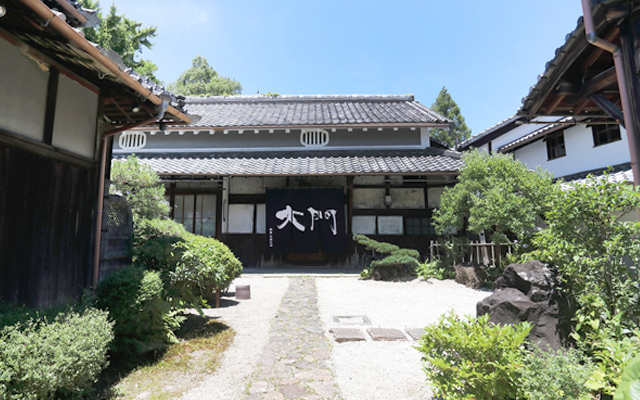
Daimon Brewery’s hospitality project will transform part of its Osaka Prefecture brewery grounds into a destination centred on sake, cuisine and design
Located at the foot of the Ikoma mountain range between Osaka, Kyoto and Nara, the development will include 15 suites, three dining concepts, wellness facilities and programmes linked to the brewery’s history and sake production.
Founded in 1826, Daimon Brewery is a seventh-generation sake producer known for its small-batch brewing methods. The company said the project is intended to build on its international presence and introduce a new hospitality offering linked to its core business.
Anand, whose Bangkok restaurant Gaggan was named first in Asia’s 50 Best Restaurants 2025, will lead the culinary programme, while Bensley will oversee the design of the project.
The development is currently in the design phase. Construction is expected to begin in 2027, with completion targeted between 2028 and 2029.
The partners said the project will combine Daimon Brewery’s 200-year sake-making heritage with contemporary hospitality, cuisine and design. They aim to create a destination rooted in the brewery’s history while attracting international visitors seeking immersive food, beverage and cultural experiences. The development also forms part of Daimon’s broader strategy to expand its presence beyond sake production and into hospitality.
Regent Phu Quoc has unveiled a programme of dining, wellness and cultural experiences running from July to October 2026.
The seasonal line-up includes a series of guest chef collaborations through the Regent Culinary Residency Series. Highlights include chef Tommaso Arrigoni from Italy’s Michelin Green Star restaurant Locanda La Raia in July, an Ornellaia wine dinner in August, and a collaboration with chefs Marcelo and Guillem from Phuket’s hom restaurant in September.
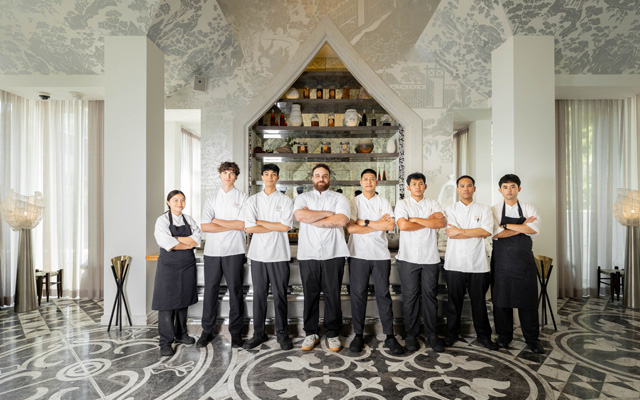
The Regent Culinary Residency Series brings international chefs to Phu Quoc for a series of dining events this season
Across the resort’s dining venues, guests can also enjoy themed experiences ranging from Mediterranean-inspired beachfront dinners and sunset rosé sessions at Ocean Club to Vietnamese regional cuisine showcases at Rice Market.
At The Spa, the resort is introducing wellness programmes including the Quartz Earth Ritual, a 120-minute treatment combining a quartz sand bed experience, mineral-rich mud wrap and massage. Additional offerings include yoga, meditation and wellness therapies.
Guests can also explore Phu Quoc through sailing experiences aboard the resort’s private catamaran, Serenity, with options including coastline cruises, sunset sailings and private charters.
For younger travellers, Regent Kids offers activities and experiences inspired by the culture and heritage of Phu Quoc.
The season will also feature The Memory of Flowers, an exhibition by Vietnamese artist Pham Tuan Ngoc, on display at The Gallery from July to October 2026.
Trisara Phuket has introduced a series of culinary experiences centred on Southern Thai cuisine, local ingredients and seasonal produce.
A highlight is The Symphony of Southern Monsoon, available until September 30, 2026, at Thai Library. The limited-time menu draws on ingredients associated with the green season, including wild mushrooms, young tamarind leaves, mangosteen and young durian, sourced through local producers and farmer partnerships.
Guests can explore Thai and international labels through tasting experiences at Trisara Phuket’s Wine Cellar
The resort has also expanded its weekly dining programme, which includes the Phuket Street Food Feast at Thai Library, Spice Road Night and a Japanese chef’s table at Cielo & Spice, as well as a Sunday Brunch & Paint experience.
Guests can also visit Trisara’s Wine Cellar for guided tastings and masterclasses featuring Thai and international wines.
For travellers seeking a culinary-focused stay, the A Taste of Trisara package combines accommodation with dining experiences across the resort’s restaurants, including Thai Library, Cielo & Spice and beachside venue La Crique. The offer also includes breakfast, selected meals, airport transfers and access to wellness and recreational activities.
Available until October 31, 2026, the package is designed to showcase Phuket through its food culture, local ingredients and dining experiences.