TTG Asia
Asia/Singapore Tuesday, 19th May 2026
Page 2

Hilton grows lifestyle portfolio with Nanjing and Wuxi hotels

0

Hilton has signed two lifestyle hotels in Jiangsu province, with a Curio Collection by Hilton property in Nanjing and a Tapestry Collection by Hilton hotel in Wuxi, strengthening its presence in the Yangtze River Delta.

The additions reflect continued expansion of Hilton’s lifestyle segment in Greater China, with both properties expected to open in 2028. They will join the upcoming Xi Zhe Wuxi, Curio Collection by Hilton, scheduled to open later this year.

Curio Collection by Hilton Nanjing is set to open in 2028 with 232 rooms in the Xianlin area

The Curio Collection by Hilton hotel in Nanjing will be located in the Xianlin area of Qixia District and will feature 232 guestrooms. Marking the brand’s debut in the city, the property is designed to reflect local culture and surroundings, catering to both leisure and business travellers.

In Wuxi, the Tapestry Collection by Hilton hotel will be developed in Huishan New Town, converting an existing U-shaped building into a 150-room property. The hotel will incorporate design elements and storytelling linked to the surrounding neighbourhood, targeting travellers seeking distinctive accommodation.

The signings form part of Hilton’s broader strategy to expand its lifestyle brands across key destinations in China, supported by demand for experience-led stays.

Hilton continues to grow its presence in Asia-Pacific, with its lifestyle and luxury segment approaching a previously stated target of 250 properties in the region.

“By introducing distinctive, experience-driven lifestyle hotels, we aim to meet guests’ personalised needs and to create resilient, long-term value for owners,” said Nong Xia, president, development, Greater China and Mongolia, Hilton.

Onyx secures financing for EQ Phuket luxury resort

0

Onyx Hospitality Group has signed a financial support agreement with LH Bank for the development of EQ Phuket, a luxury resort project in Phuket, Thailand. The agreement supports the project’s progression into its next phase, with construction advancing in line with its planned timeline.

The signing ceremony took place on May 7, 2026, in Bangkok, bringing together representatives from Onyx Hospitality Group, Equatorial Group and LH Bank. The project is being developed as a collaboration between the hotel operator, project developer and financial partner.

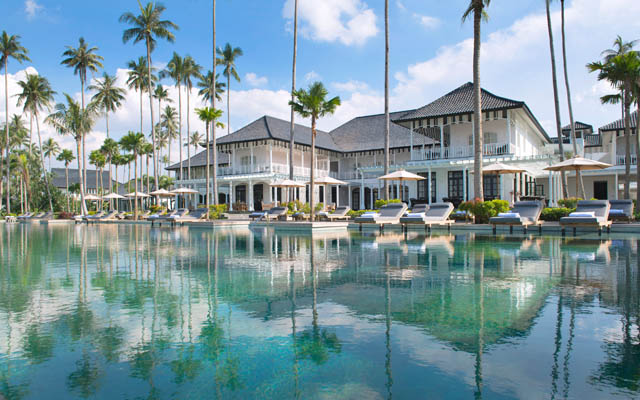
Onyx Hospitality Group and partners advance plans for the EQ Phuket beachfront resort with a new financing agreement

Located on a beachfront site in the northern area of Kata Beach, EQ Phuket will cover approximately 5.1 hectares and feature around 170 keys, including pool villas, suites and guestrooms. Facilities are planned to include dining outlets, swimming pools, a spa, fitness centre, kids club and event spaces, alongside a beach club and lifestyle area.

The project is scheduled to open in 2Q2028 and forms part of Onyx’s strategy to expand its presence in the upper-upscale and luxury resort segment across South-east Asia.

The project follows an earlier joint venture agreement between Onyx Hospitality Group and Equatorial Group signed in November 2024. With a total investment value of approximately 2.8 billion baht (US$76 million), the development reflects continued interest in Phuket’s luxury tourism segment.

“We see strong long-term potential in the Phuket market, and we are confident that this collaboration with strong partners in both development and finance will help drive the project towards successful completion in line with our plans, while creating long-term value for all stakeholders,” said Yuthachai Charanachitta, CEO, Onyx Hospitality Group.

“EQ continues to garner international recognition… We are incredibly excited to be working with Onyx Hospitality Group to introduce our EQ brand to Thailand,” added Donald Lim, CEO, Equatorial Group.

Shih Jiing-Fuh, president and CEO, LH Bank, shared: “LH Bank believes Phuket continues to stand as one of the world’s premier tourist destinations. We are confident that the EQ Phuket project will further enhance the island’s tourism potential and strengthen Thailand’s competitiveness in the global tourism market.”

Romance is in the air at Zentis Osaka

0

Zentis Osaka has introduced a two-night stay package designed for couples, combining accommodation, dining and in-room experiences in a central city setting.

Available to book from May 18, 2026, the Romantic Escape at Zentis Osaka package includes two nights’ accommodation in a Studio, Corner Studio or Suite, along with daily breakfast at Upstairz Restaurant.

The two-night Osaka offer combines dining, sparkling wine and curated in-room touches

The package also features a bottle of Japanese sparkling wine, a selection of canelés, a prix-fixe dinner for two, and preserved flowers. Optional add-ons include wine pairings and personalised pyjamas at an additional cost.

Dining at Upstairz focuses on seasonal ingredients with a European influence, while the hotel also offers access to cultural activities such as Japanese calligraphy through its Craftsmanship series.

Located near Nakanoshima, Zentis Osaka provides access to the city’s cultural and dining districts, while offering a quieter base for short stays.

Rates start from US$520 per stay, based on double occupancy, excluding taxes and service charges. Bookings must be made at least three days in advance.

For more information, visit Zentis Osaka.

Cinnamon Lakeside Colombo names hotel manager

0

Cinnamon Lakeside Colombo has appointed Ashan Peiris as hotel manager, strengthening its leadership team.

He joins from within Cinnamon Hotels & Resorts, where he most recently served as director of brand development. With experience across operations, brand strategy and resort management, he has held roles at Cinnamon Red Colombo, Cinnamon Grand Colombo and Cinnamon Bentota Beach.

1926 Heritage Hotel welcomes new GM

0

1926 Heritage Hotel has named Angelina Lazuardi as general manager, overseeing the property’s overall strategy, operations and performance.

She brings over 17 years of experience, most recently holding leadership roles with Kempinski, Marriott and The Parisian Macao, with a focus on operational and commercial performance.

Tourism professionals see responsible development key to long-term industry resilience

0
  • Businesses need resilient frameworks that can help them recover from shocks in a rapidly changing world
  • Sustainable tourism development requires the involvement of multiple government agencies
  • UN views a truly resilient destination as one where residents experience the benefits of tourism
Destination chiefs share perspectives on balancing growth with resilience on a panel at the PATA Annual Summit 2026 on May 12

Discussions at the PATA Annual Summit 2026 this week on building a resilient future for the tourism industry highlighted a common view: a responsible approach to tourism development gives destinations the agility needed to navigate a volatile environment.

Natasha Montesalvo, principal consultant – destinations, strategy and insights at EarthCheck, told TTG Asia that sustainability and resilience go hand in hand.

“Businesses that are sustainable (in terms of environmental, social and governance considerations) are economically viable for the long term. That’s because they have the systems and structures in place to deliver what is needed to do stay in business.

“Governance reporting means that businesses have the right policies and procedures in place to protect themselves and that they are adhering to the right legislation in whichever jurisdiction they are operating within. When businesses fulfil social responsibilities, they build trust in their community and will be able to attract a skilled workforce. When businesses respect the natural environment, the community and other businesses will rely on them.

“So, by building and integrating ESG principles and broader sustainability goals into their business, they creating these resilient frameworks that can help them recover from some of the shocks that they would face in the future.”

Destination leaders echoed that a structured and responsible approach to tourism development can lead to lasting positive outcomes.

Florian Sengstschmid, CEO of Azerbaijan Tourism Board, said aligning destination development with the UN Sustainable Development Goals helps ensure accountability, rather than focusing on arrival numbers, which he described as “vanity metrics”.

With this approach, the Azerbaijan Tourism Board has shifted from destination marketing to destination management, focusing on stakeholder coordination across communities, businesses, government entities, and global markets.

As her destination experiences “fantastic growth”, Wrenelle Stander, CEO of Wesgro, representing Cape Town and the Western Cape, said public-private collaboration is essential to advance tourism development in a sustainable and resilient manner.

Stander identified three priorities: diversifying source markets to reshape demand, increasing connectivity and expanding carrying capacity, and facilitating the movement of travellers, including through visa-free access.

Insook Lee, executive director of the Korea MICE Bureau at the Korea Tourism Organization, noted that sustainable tourism development requires support beyond the tourism sector, including from national leadership.

This is particularly relevant as South Korea faces an imbalance in post-pandemic tourism performance. The country recorded 18.9 million international arrivals in 2025, but 80 per cent of visitors concentrated their time in Seoul.

“We are worried that this will limit the long-term sustainability of South Korea’s tourism industry,” Lee said.

She noted that the national tourism strategy meeting is now overseen by the president, rather than the prime minister, reflecting tourism’s growing economic importance.

“We have an ambitious goal of attracting 30 million inbound visitors by 2030 or earlier. To achieve this, our government has rolled out a two-pillar strategy: the first is to expand the inbound demand and the second is to revitalise regional tourism across South Korea. This strategy is reinforced by comprehensive reforms to the immigration procedures, regional airports, lodging infrastructure, and development of high-value tourism companies,” Lee added.

Sengstschmid said all government officials “should be made a tourism minister”, believing that policy decisions across sectors affect tourism outcomes.

He urged ministers to consider tourism’s contribution to GDP, job creation, business development, regional inclusion, and education.

Régine Lee, president and CEO of Guam Visitors Bureau, added that governments play a critical role “in communications and PR efforts, in creating policies that will lift our island up and provide the infrastructure for sustainable growth, and in shaping the kind of future that we want for our residents and visitors”.

Conditions for resilience
Shijun Liu, executive director of UN Tourism, outlined a vision for resilient tourism in his keynote at the summit.

“At UN Tourism, we see resilience taking place first in communities, not just cities. Yet, today, 80 per cent of international travellers are concentrated in a small number of destinations. This creates a significant concentration risk, where when a gateway city suffers, the entire tourism economy often suffers along with it,” Liu said.

He described rural tourism as a “structural solution”, provided it is approached thoughtfully.

“The objective is not simply to disperse visitor numbers, but to rethink how destinations function. A truly resilient destination is one where residents experience tourism as improving their lives, protecting their culture, and strengthening their community. Without this, sustainable cannot be achieved,” stated Liu.

He added that resilience requires investment in infrastructure, digital systems, workforce development and destination management, noting that “tourism remains underfunded relative to its contribution to GDP and employment”.

Liu also highlighted opportunities for tourism to align with global shifts towards greener infrastructure and digitalisation.

“Capital is increasingly flowing toward decarbonisation and climate resilience, and tourism can attract it if we make the right case,” he advised.

He further noted the importance of innovation, including AI and data-driven management, in strengthening destination operations.

He explained: “When external platforms define a destination story, they also shape its economic future. Preserving that autonomy is a strategic priority.”

Muslim travel growth driven by inclusive experiences

0

New research from Mastercard and CrescentRating highlights continued growth in Muslim travel, alongside changing expectations around inclusivity, safety and purpose-led experiences.

The reports, Halal Travel Trends 2026 and Muslim Women in Travel 2026, estimate international Muslim arrivals reached 186 million in 2025 and are projected to grow to 245 million by 2030. Muslim women accounted for 90 million arrivals in 2025, representing 48 per cent of the total, up from 45 per cent in 2019.

New reports highlight growth in Muslim travel alongside rising demand for inclusive and purpose-led experiences

The findings point to a shift beyond basic requirements such as halal food and prayer facilities, with travellers placing increasing emphasis on safety, trust and digital access when planning trips.

Asia remains central to this growth. The region attracted nearly 120 million Muslim visitors in 2024, accounting for 65 per cent of global arrivals. Within this, South-east Asia is well positioned, with destinations such as Malaysia, Indonesia, Singapore and Brunei identified as preferred markets, particularly among Muslim women travellers.

The reports highlight the growing influence of Muslim women in shaping travel decisions across segments including family holidays, solo trips and group travel. Safety and comfort were cited as key considerations by 60 per cent of respondents, followed by the availability of Muslim-friendly services.

Digital platforms are also playing a larger role, with 68 per cent of respondents indicating that social media influences their travel choices. AI tools are increasingly used for trip planning, including identifying halal dining options and assessing destination suitability.

A central theme across both reports is the RIDA framework, which outlines four areas for destinations to address: responsible tourism, immersive experiences, digital capability and assurance. The approach is intended to help tourism stakeholders better meet evolving traveller expectations.

“Muslim travel is entering a more sophisticated phase, where confidence, inclusion and purpose are becoming as important as access and convenience,” said Aisha Islam, senior vice president, customer solutions centre, South-east Asia at Mastercard. “Through the RIDA framework, destinations and businesses have a practical way to think about the full traveller journey from trusted digital information and secure payments to meaningful experiences that respect faith, culture, safety and personal values.”

“For destinations, the opportunity is to move from availability to assurance,” said Raudha Zaini, director of operations, CrescentRating. “Muslim travellers are looking for experiences that are meaningful, inclusive and easy to trust. The destinations that clearly communicate their readiness and deliver consistently across the journey will be best positioned to earn long-term loyalty.”

Genting Dream unveils year-long line-up of themed anniversary cruises

0

StarDream Cruises is marking the 10th anniversary of Genting Dream with an expanded line-up of themed sailings, combining culinary, entertainment and wellness experiences into a year-long programme designed to deepen guest engagement.

The anniversary celebrations began with a series of preview sailings, featuring collaborations across lifestyle and entertainment. These included a movie launch for Ah Beng Vs Liang Po Po with onboard cast appearances, pickleball activations and a wellness-focused sailing, leading up to more recent highlights such as the “French Papa” culinary collaboration.

StarDream Cruises’ Michael Goh with his son Gabriel Goh at the “French Papa” sailing on Genting Dream, one of the ship’s 10th anniversary themed sailings; photo by Melissa A Tan

Michael Goh, president of StarDream Cruises, said these early programmes were designed to “set the tone for the anniversary celebrations, focusing on immersive and lifestyle-driven guest experiences”.

The momentum continues through the year with a diverse calendar of themed cruises. Highlights include a July sailing featuring fitness personality Amotti from Netflix’s Physical: 100, with activities such as a Hyrox-inspired challenge and wellness workshops. Later in October, a K-pop themed cruise will feature performances by rising group KIIRAS, alongside broader entertainment programming.

According to Goh, “each sailing is designed to feel fresh and different, but still part of one cohesive celebration of our anniversary at sea”.

The programme reflects a more deliberate approach to themed cruising, with concepts shaped by guest insights, market trends and brand positioning.

“Each theme was carefully selected to resonate with a wide range of guest profiles, while reflecting elements of discovery, celebration and cultural relevance,” Goh noted.

Compared to previous years, the anniversary line-up has been expanded into a connected series rather than standalone events. Goh described it as “more structured and expansive… designed as a connected series of experiences that collectively celebrate the milestone year”.

Guest response so far has been encouraging, with strong engagement across sailings and growing anticipation for upcoming departures. Feedback has highlighted the distinctiveness of each theme and the depth added to the overall cruise experience.

With high-profile collaborations spanning chefs, performers and lifestyle brands, the programme signals a shift towards more integrated, experience-led cruising – positioning themed sailings as a key driver of differentiation in the premium cruise segment.

Hyatt, Dossen Group to expand Select brand in China

0

Hyatt Hotels Corporation has signed a master franchise agreement with Huanyue International Holdings, a subsidiary of Dossen Group, to develop and operate Hyatt Select hotels in China.

The agreement grants Dossen Group exclusive rights to grow the Hyatt Select brand in the market, combining Hyatt’s global brand platform with Dossen’s local network and operational capabilities.

Hyatt Select will expand in China through a franchise partnership with Dossen Group

Hyatt Select is positioned within the group’s Essentials portfolio, offering a streamlined stay experience focused on comfort, convenience and consistency. The brand is designed to cater to travellers seeking reliable, midscale accommodation with modern design and access to the World of Hyatt loyalty programme.

The partnership comes as China’s upper-midscale hotel segment continues to evolve, with demand increasing for internationally recognised brands offering quality and value. The model is also intended to support owners through flexible development options, including new builds and conversions.

The collaboration is expected to support Hyatt’s broader expansion in China, with a focus on scaling the brand across key destinations.

“This collaboration with Dossen Group is a pivotal step forward in our thoughtful growth strategy for China,” said Stephen Ho, president – Greater China and growth, Asia Pacific, Hyatt. “The introduction of the Hyatt Select brand in our Essentials portfolio strengthens our ability to serve a wider range of stay occasions and reinforces our commitment to this priority market.”

Xinhua Cheng, founder, chairman and CEO of Dossen Group added: “Together, we will leverage our complementary strengths to drive high-quality growth of the brand in China.”

Sono Hotels & Resorts Asia to open lifestyle hotel in Bali’s Canggu

0

Sono Hotels & Resorts Asia has signed a hotel management agreement with Nelayan Development for Sono Felice Bali Canggu, a 90-room property scheduled to open in July 2028.

Located on Jalan Nelayan near Batu Bolong Beach, the hotel sits in Canggu, an area known for its surf culture, dining scene and growing appeal among international travellers.

Sono Felice Bali Canggu is set to open in July 2028 as a 90-room lifestyle hotel in one of Bali’s key destinations

The project is designed as a residential-style hospitality concept, catering to both short- and longer-stay guests. The approach reflects increasing demand for flexible accommodation options, particularly among digital nomads and extended-stay travellers.

Sono Felice Bali Canggu will comprise four architecturally distinct buildings inspired by the elements of water, fire, air and earth. Planned features include rooftop dining, ocean views and personalised services.

The signing forms part of Sono’s broader expansion in Indonesia and South-east Asia, with a focus on destinations showing sustained tourism growth and lifestyle appeal.

“Canggu represents one of the most compelling lifestyle markets in the region, and this hotel reflects our focus on aligning product, location, and partner vision to deliver sustainable performance,” said Jihong An, senior vice president – Asia, Sono Hotels & Resorts Asia.

“Canggu continues to evolve as one of Bali’s most desirable destinations. With Sono Hotels & Resorts Asia, we have a partner who understands how to translate this into a distinctive hospitality concept,” added Ahti Khiili, president director, Nelayan Development.