TTG Asia
Asia/Singapore Friday, 2nd January 2026
Page 2686

Chains gang up to launch Roomkey.com, but skepticism is high

0

SIX of the world’s leading hotel chains have ganged up to launch Roomkey.com – a move seen as an arrow at powerful OTAs – but skepticism is high whether the venture will work.

The founding partners – Choice Hotels International, Hilton Worldwide, Hyatt Hotels Corp, InterContinental Hotels Group, Marriott International and Wyndham Hotel Group – have now been joined by Best Western International as commercial partner.

Roomkey.com, which functions as an online hotel search engine – with bookings going directly back to hotels, is expected to have 80,000 rooms in the inventory by mid-2012. It will initially focus on serving US travellers, followed shortly after by expansion to other English-speaking regions, according to a statement.

This is not the first time chains have attempted to regain control of their inventory, and to lower distribution costs – and they are expected to fail yet again.

Both Expedia and Agoda (naturally) do not believe Room Key will work, but even hotel chiefs interviewed think it won’t.

Agoda’s CFO, Bryan Lewis, said: “People underestimate how difficult it is to get traffic to your website. It’s relatively easy to create a website that sells hotels, or takes a GDS fee; the difficult part is to drive customers and make customers aware of it, and that’s what OTAs are good at.

“I think hotel chains combined with competing objectives are unlikely to be successful.”

Mark van Ogtrop, managing director of Golden Tulip South-east Asia, said: “What makes the Agodas and Expedias powerful is they offer a complete range of hotels, while Room Key will only provide the big brands. What we need is more competition in the OTA (sector); there’s just the handful that dominate the market.”

Ricco M DeBlank, CEO – Hotel Division of Sun Hung Kai Properties, which owns the Ritz-Carlton and Four Seasons in Hong Kong, said: “I don’t think it’ll work because Room Key is not a technology company, and hotel companies are too bureaucratic to make changes fast enough and compete with OTAs. I don’t think the remuneration and leadership at Room Key are able to attract the most innovative people in the industry the way technology companies do.”

“From an owner’s perspective, I do want them to succeed,” he added. “And, OTA commissions need to be regulated. We should not have hotels that are in dire need of filling rooms be willing to pay up to 35 per cent commissions to the OTA.”

– A look at Room Key and what’s really behind it, TTG Asia, February 24 issue

Jury still out on AirAsia, Expedia tie-up

0

AIRASIA and Expedia are scheduled to combine their inventories by end of this month, some 11 months after coming together in a 50:50 joint venture (TTG Asia e-Daily, March 29, 2011), but have so far failed to convince the rest of the travel trade community of the viability of their partnership.

Dan Lynn, CEO of AAE Travel, the subsidiary formed as part of the joint venture, said: “So far, the joint venture has brought a lot of synergy. We’ve learnt tonnes by bringing together our experiences. It is a symbiotic relationship that has brought incremental value to both our brands. It has made both companies far nimbler.”

However, tourism players whom TTG Asia e-Daily spoke to begged to differ.

Dennis van Noord, area manager distribution Asia, Booking.com, said: “Expedia probably stands to gain more from the joint venture rather than AirAsia in the long run. Expedia has been able to piggyback on AirAsia’s strong branding in Asia. AirAsia has on the other hand, by tying itself exclusively to Expedia as a third party distributor, actually restricted its inventory to a certain degree.”

Franz Nitz, director partner development, Agoda.com, added: “Both Expedia and AirAsia should focus on what each of them do best. I do not see the logic in the joint venture and I have no idea where it is going.”

Steven Greenway, head of commercial, Scoot, explained that airlines were wary about having any business dealings with AAE Travel since it might put sensitive customer data into AirAsia’s hands.

“This certainly puts Expedia at a disadvantage, as it would be more difficult to convince airlines to have tie-ups with them – which I believe forms a core part of their expansion strategy,” he said.

Mark van Ogtrop, managing director, Golden Tulip South-east Asia, agreed. “There is certainly a conflict of interest between the two, especially since Expedia also sells other airline products,” he said.

Scoot’s Greenway summed up the general sentiment: “The jury is still out, but a lot of equity is involved, and it would be difficult to turn back now.”

MAS edges toward oneworld integration

0

MALAYSIA Airlines (MAS) took one step closer to becoming a full member of the oneworldairline alliance (TTG Asia e-Daily, June 6, 2011) with the inclusion last week of its international flight schedule in Global Explorer, which covers all routes offered by the alliance’s member airlines.

The Malaysia flag carrier’s network of around 60 destinations will be added to the Global Explorer round-the-world product offered by alliance members and other selected airlines, said oneworld and MAS in a joint statement.

Through this inclusion, almost 20 cities within MAS’ network in South-east Asia, and two more countries – Brunei and Myanmar – will be added to Global Explorer’s portfolio, which will extend its reach to more than 900 destinations in nearly 150 countries.

Apple Vacations & Conventions managing director, Koh Yock Heng, said: “This is a good development for MAS as it will lower its operating and marketing costs. It also provides more options for our customers who prefer to fly out from Malaysia on MAS because it is their home carrier.”

Once MAS syncs fully with oneworld by end-2012, it will be able to participate in the full range of oneworld’s fares and offer other services and benefits of the alliance to its customers.

By N. Nithiyananthan

A year of firsts for SATTE

0

SATTE 2012 will be the first time that new owners UBM Asia will be organising the annual B2B travel trade show, after having bought over the event from Cross Section Publications last April (TTG Asia e-Daily, March 31, 2011).

Held annually in New Delhi, the show aims to link international and domestic buyers to opportunities in India’s inbound, outbound and domestic tourism markets, and acts as a networking platform for travel trade and tourism policymakers to discuss initiatives on tourism development.

This year’s show at Pragati Maidan has been extended to three days, February 10-12, up from two during previous editions. It will also be the first time that the Travel Agents Federation of India, Travel Agents Association of India and Association of Domestic Tour Operators in India have officially endorsed the event.

Israel, Argentina, Japan, The Dominican Republic and Macau will be making their debuts at SATTE 2012, which will feature an offshoot event – SATTE Mumbai West – at The Leela Kempinski, Mumbai from February 15-16.

Kerala Travels Interserve (KTI)

0

TTG Asia calls Kerala Travels Interserve (KTI) for a polar excursion

TTG Hello! I am interested in a trip to the poles.

KTI Can I have your name and phone number? I’ll have someone call you back in 10 minutes.

(Promptly, there was a call in 10 minutes and I was addressed by my name.)

KTI Which pole would you like to visit?

TTG What do you suggest?

KTI It depends on when you want to travel. We have Antarctic expeditions in January, February and March, and Arctic expeditions in June, July and August. The length of tours varies from seven to 12 nights.

TTG Tell me more about the Arctic expedition apart from the details shown on your website.

KTI These are seven-night and nine-night tours. Do you have any particular interests?

TTG I’m interested in photography and polar animals.

KTI That’s possible. I’ll send suitable itineraries to your email.

(The e-mail arrived in two hours. Three tours were given along with their costs: US$8,376 for the nine-night tour and US$7,390 for the seven-night tour with accommodation in a quadruple porthole cabin on the Plancius. Vital statistics of the ship were provided, and they were comfortable for such a  journey through the ice. Two of the tours included a free photography workshop by an expert and the other was a polar bear special.

TTG (calls KTI two hours later) What other activities do the tours offer?

KTI One of the tours includes scuba diving, trekking and snorkelling, depending on weather conditions. You’ll have to get your own scuba suit but scuba equipment will be provided. There are also lectures by experts and camping in the Arctic for one night is possible. You’ll have to indicate your preferences when booking.

TTG Which airline will we be flying on?

KTI We have previously booked our guests on Qatar Airways. If you have an airline in mind it will be given preference, depending on departure suitability. You’ll have to leave two days before the tour begins.

The tour includes a free night’s stay in Oslo during transit, all taxes, and visa and insurance fees. A doctor is also available on call throughout the voyage. More specifics can be worked out when you finalise your choice of tour.

Verdict The consultant was prompt and forthcoming with information. Non-persuasiveness given the niche tour was reasonable, but a follow-up call after the e-mail could have scored points with a client.

By Anand and Madhura Katti

Wasted opportunity for Indonesia: delegates

0

gilbert-whelan
Whelan: flight access is crucial

A SNAP poll conducted among 16 buyers and sellers who attended the ASEAN Tourism Forum (ATF) in Manado revealed that this year’s edition was a logistical nightmare for the majority, although they were fairly positive about the business outcomes.

Flight accessibility was cited repeatedly as the biggest gripe, with respondents pointing out that ample seat capacity into the destination should have been a requirement of being a host city.

Gilbert Whelan, president, ATM Travel Marketing, said he took 31.5 hours to get from San Francisco to Manado, and he could only leave two days after the conference ended due to limited and expensive flights.

Christoph Mueller, managing director, Go Vacation Thailand, suggested that host committees should “always stick to main tourist destinations or capitals with sufficient flight accessibility and international hotels”.

Official bus transfers within Manado proved to be another excruciating experience, as buses were often late and overcrowded or were no-shows.

Roman Davydov, director of Ukraine-based Advanced Executive, said frequent changes in venues should have been minimised, especially when “proper and air-conditioned transfers” were unavailable. “People come to the show to work and not to ride in the bus,” he said.

Added UK-based Andrea Loddo, lead regional product manager, Far East, Africa, Indian Ocean and South America, Hayes & Javis/Thomson Tailormade: “I didn’t attend the evening functions due to the difficulty of getting a taxi and the distance from my hotel (to the event venues). On top of it, my hotel was of two-star-plus standards and had dirty and noisy rooms.”

Hotels received their fair share of complaints as well. Two buyers said the quality of accommodation did not correspond to the star-rating advertised, while one seller said hotels used the opportunity to jack up their prices, with delegates paying five times the usual room rates.

“It seems that this region (in Indonesia) isn’t ready for MICE tourism. Hotels, food, transfers and knowledge of an international language needs to be improved first,” said Karl Hellgren, managing director of Belgium-based Business Events Incentives.

Several also felt that Manado could have been offered as a post-tour option instead, making it easier to travel to the city via domestic connections.

On a brighter note, most buyers were pleased with their business meetings.

“It is always good to meet all our resort partners in one place to exchange the latest news and develop new ideas,” said Germany-based Meier’s Weltreisen supervisor, product management team, Asia, Nicole Dieckmann.

Zuzana Simek, destination manager of Bono Travel Centre in Hungary, added that travel trade shows should continue to be held in secondary cities as “buyers can discover a new destination” and the “destination can earn income and learn a lot from organising the event”.

This article was first published in TTG Asia, February 10 issue, on page 4. To read more, please view our digital edition or click here to subscribe

The thrill is on

0

Theme parks in Asia continue to excite, but they must reinvent, says the trade.

parks_toystory

THEME parks in Asia are pulling in the crowds, with those in Singapore and Hong Kong clearly the darlings of fast-growing outbound markets such as India, China, Indonesia and the Philippines.

The region’s newcomer Universal Studios Singapore (USS) welcomed approximately four million visitors in 2011, propelling it into the league of one of the top theme parks in Asia. Hong Kong’s Ocean Park and Disneyland also enjoyed record-high attendances (both around 5.9 million visitors) in their last fiscal year.

“Indian and Chinese tourists are our main clients while Indonesians and Thais constitute a large chunk too,” said Gary Tan, assistant vice president, resort sales, Resorts World Sentosa (RWS), where USS is based. He predicts 15 per cent growth in demand over the next two years, mostly driven by the twin giants of Asia.

According to a report published by PricewaterhouseCoopers titled Global Entertainment and Media Outlook, consumer spending on theme and amusement parks within the Asia-Pacific region is expected to grow to US$8.4 billion by the end of 2012, a rise of 5.7 per cent over 2008 compared to five per cent worldwide.

Panorama Tours Indonesia president director, Royanto Handaya, said the opening of RWS and its ensuing advertising and promotions had helped reposition Singapore as the destination du jour, even though it had previously been viewed as “Indonesia’s backyard”.

Rashmi Mansukhani, managing director of India-based Destination Management Travel Services, too, said demand for theme park holidays among Indians was growing between 12-15 per cent every year. She said: “For most Indian leisure travellers to the ASEAN region, at least a day or two is reserved strictly for the entertainment of the children.”

It is the same trend with Filipino travellers. “So long as they have kids, it is a must to include theme parks (for Hong Kong and Singapore itineraries),” said Gene Hari-Ong Gan, managing director of Philippine’s Everyday Travel and Tours. She estimates 70 per cent of her business has theme-park related packages.

Philippine-based Celebrate Life! TLC operations manager, Simon Ang, added: “Hong Kong Disneyland is for kids, while Universal Studios Singapore has solidified its hold on teenagers. These theme parks are doing well by knowing what their niches are,” noting new attractions like Disneyland’s Toy Story Land and a section opening in 2013, as well as USS’ Transformers ride, justify return visits.

Indeed, Philippine-based Goldlink Travel & Tours operations manager, Allan Sze, observed Filipinos were fond of short weekend trips to Hong Kong and Singapore and were likely to visit Disneyland and USS respectively. “Tour requests and hotel reservations (for travel consultants) have gone up,” he said.

Clients to Hong Kong typically stay one out of four days at Disneyland, arranging for transfers that allow them to arrive when the park opens and leave as it’s about to close, Sze added. “Filipino visitors try to experience everything when they visit.”

His eye is also on soon-to-be-unveiled parks in Malaysia such as Legoland, located in Johor Bahru. Two other children-targeted attractions will open close by: KidZania, an interactive park, and Hello Kitty Town.

parks_ocean-park
Ocean Park Hong Kong’s Thrill Mountain

Keeping it strong
Meanwhile, older theme parks in the region are still doing brisk business. Malaysia-based BMC Travel inbound manager Jessica Koh said Sunway Lagoon and the theme park in Resorts World Genting remained the two bestsellers for the country.

“Genting is popular with the Asian market because of its highland location and casino, while Sunway is popular with families because of the adjoining shopping mall,” she explained.

Malaysia-based Asian Overland Services Tours & Travel (AOS) assistant account manager-Asia, Hoong Keat, added that the two parks were popular with tourists from Indonesia, Thailand and Singapore, in addition to student groups. Koh also pointed out that MICE clients were fond of holding their gala dinners there.

Established parks in the region can also take heart that travellers from mature outbound markets like Singapore and Hong Kong continue to arrive in droves.

An estimated 60 per cent of packages to Japan, Hong Kong, South Korea and Australia sold by Singapore’s Hong Thai Travel comprise theme park visits. Comparatively, one in three packages at Singapore-based SA Tours features a theme park.

According to Stella Chow, Hong Thai’s manager, advertising and marketing division, outbound tour, Singaporeans are still flocking to theme parks, particularly those operated by Disney, Universal Studios and Warner Bros., chiefly because “these parks are household names and are associated with Hollywood movies and characters”.

parks_universalstudios
Universal Studios Singapore’s Hollywood Dreams

Innovate, innovate
Nonetheless, in order for theme parks to thrive, Chow emphasised it was crucial they keep reinventing themselves by “adding new rides, introducing new themes and merchandise, or developing new shows”.

Addressing the World Travel Monitor Forum last November, Mason Florence, executive director of the Mekong Tourism Coordinating Office, said “Asia’s more sophisticated urban life will create demand for more specialised products”, edutainment theme parks being one such.

In addition to rides, theme parks should create more teambuilding activities, fun games and educational programmes, said AOS’ Hoong.

Hong Kong-based W Travel managing director, Wing Wong, added that efforts must be made to engage a more tech-savvy audience.  Other travel experts suggested that 3D, 4D and virtual reality technologies should be harnessed.

Hong Kong’s EGL Tours executive director, Steve Huen, pointed out that since the Internet and mobile phones had become ubiquitous, parks could also “offer interactive games via such communication tools, allowing guests to win gifts or download further information so it lengthens the experience”.

Panorama Tours’ Royanto said park operators must also employ digital channels. He listed targeted promotions through social media, smartphone e-mail blasts and merchant tie-ups as examples.

Royanto added that FITs, loyalty cardholders and wholesalers should be tapped, while corporates could provide new business.

However, several members of the trade felt that theme parks were not giving them enough support.

KM Lam, manager, international sales of Malaysia’s Mayflower Acme Tours, said the profit margins for tickets were slim, “so there is no real incentive to push sales”.

AOS’ Hoong agreed. “As we bulk purchase thousands of tickets, we should receive better rates than the walk-in rate.”

Hong Thai’s Chow said theme parks should continue working closely with the trade to sell packages, even as they pursued online sales. “Singaporeans, and Asians for that matter, still desire face-to-face contact when booking travel and theme park tickets.”

What’s New?

box_universalstudios

Universal Studios Singapore, Transformers: The Ride
Transformers: The Ride opened to much fanfare in December. The first-of-its-kind simulator experience immerses thrill-seekers in a battle between the heroic Autobots and villainous Decepticons using a combination of special 3D effects and advanced motion technology. This year, the theme park also launched its first full-scale parade. Consisting 14 spectacular floats and over 100 performers, Hollywood Dreams marches through five out of the park’s seven zones for 30 minutes. It will run once a day on Saturdays, Sundays and selected holidays.

box_oceanparkhhkOcean Park Hong Kong
Its latest attraction is Thrill Mountain, a carnival-themed zone spanning two hectares and stretching from one end of the park to the other. Opened in December, attractions include six new exhilarating rides, eight game booths, F&B outlets and stores selling specially designed merchandise. Later this year, the park will also introduce a 1960s-inspired Old Hong Kong area, featuring food stalls and souvenir booths reminiscent of the city’s past, as well as a replica of the city’s vintage trams.


box_sunwaySunway Lagoon
Malaysia’s long-standing theme park will add the WhiteWater Abyss waterslide to its attractions by mid-2012. Rafts take up to six riders through a series of open and enclosed sections with gripping twists and turns before plummeting them into the core of the Abyss. The high wall and long funnel allow for huge drops and sustained oscillations, while eliminating the need for thrill-killing water brakes.


box_shanghaidisney

Shanghai Disneyland
Opening in 2015, the mainland’s first Disneyland will offer cheaper admission tickets compared to its sister park in Hong Kong (pictured), according to reports. It will also feature Chinese elements in its design to distinguish it from other theme parks. The first phase of the park will span 390 hectares and is located within the 2,000-hectare Shanghai International Tourism and Resorts Zone in Pudong. It has also been said that a global recruitment campaign would be launched next year and the government would conduct training lessons for applicants to improve their chances at employment.
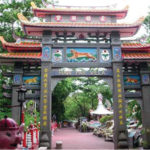
box_hawparHaw Par Villa
Opening in 2015, the mainland’s first Disneyland will offer cheaper admission tickets compared to its sister park in Hong Kong (pictured), according to reports. It will also feature Chinese elements in its design to distinguish it from other theme parks. The first phase of the park will span 390 hectares and is located within the 2,000-hectare Shanghai International Tourism and Resorts Zone in Pudong. It has also been said that a global recruitment campaign would be launched next year and the government would conduct training lessons for applicants to improve their chances at employment.

Additional reporting from Linda Haden, Shekhar Niyogi, Prudence Lui, Marianne Carandang, Mimi Hudoyo and N. Nithiyananthan

This article was first published in TTG Asia, February 10  issue, on page 8. To read more, please view our digital edition or click here to subscribe

Endorsements, show presence key for incentive biz

0

WORD-of-mouth endorsements and participation in trade exhibitions are crucial to securing incentive business, according to the latest Incentive Travel Survey Report released by The Shanghai Municipal Tourism Administration (SMTA).

Based on feedback from 352 MICE-related companies in Asia-Pacific, 56.7 per cent of respondents rely on recommendations to get new customers, while 50 per cent leverage on networking at domestic and foreign incentive travel trade exhibitions to gain new clients.

The report also reveals that the majority of incentive travel lasts three to four days and is tied in with business activities, with 90 per cent of groups having fewer than 100 pax.  The average budget per person per day is US$300, while most clients prefer to book directly with hotels, showing that Internet and direct sales greatly influence the way accommodation is secured.

About 83 per cent of respondents expressed willingness to organise incentive travel in Shanghai in the near future, in light of the city’s cultural and shopping attractions, as well as its high level of security.

SMTA will be attending five overseas MICE exhibitions and conferences this year as part of its marketing strategy. These include AIME in Melbourne, IMEX in Frankfurt, AIBTM in Baltimore, ICCA in San Juan, Puerto Rico, and EIBTM in Barcelona.

It will also be hosting two post-conference fam tours in September during SITE China Conference and The National Association of Career Travel Agent Conference.

Reporting by Patricia Wee

Scoot picks Gold Coast as next destination

0

SCOOT has unveiled Australia’s Gold Coast as its second port of call, having already chosen Sydney as its first stop (TTG Asia e-Daily, December 1, 2011).

“(The route to Sydney will provide) direct access to one of the world’s premier air hubs for Queensland and north New South Wales, and to one of the world’s best holiday destinations for Singaporeans,” the airline’s chief executive Campbell Wilson was quoted by Agence France-Presse as saying.

The medium- and longhaul low-cost carrier will begin flying out of Changi International Airport from middle of this year, starting with a single Boeing 777-200 aircraft, before expanding to four B777-200s within three months and 14 by mid-2016.

Scoot also intends to fly to China, with longer term plans to fly to India, Europe, Africa and the Middle East.

Maldives tourism stable despite political upheaval

0

THE POLITICAL crisis unfolding in the Maldives has not impacted the local tourism industry thus far, according to tourism stakeholders whom TTG Asia e-Daily spoke to.

The country’s president Mohamed Nasheed stepped down yesterday in the face of what his supporters termed a coup d’état by opposition elements. Vice President Mohamed Waheed Hassan Manik, sworn in as his replacement shortly after, has since pledged that tourists would not be at risk from the political disruption.

The Maldives Association of Travel Agents & Tour Operators said in a statement: “The geographical isolation of resorts and inhabited islands leaves tourists away from daily activities of local population centers. We would like to assure that the holidays of tourists in Maldives would not be affected in the current scenario.”

Kai Jellinghaus, destination manager for Germany-based REWE Destination Service AG, said all flights into the Maldives were operating as per normal, and that he had not received any cancellations for bookings.

“The situation (in the capital Male) is stabilising,” he said, adding that the UK has issued a travel advisory, while Germany has asked its nationals to be cautious when visiting Male.

Michelle Flake, contracting & marketing manager of Scaevola Travel, an inbound operator, revealed she had fielded a few calls from clients concerned about the situation, but that “they (had) not cancelled as I explained that this won’t affect the resorts”.

The political crisis is an unwelcome disruption for the Maldives, which was hoping to welcome its inaugural millionth international arrival in a single calendar year this September.

According to Simon Hawkins, managing director of the state-owned Maldives Marketing & PR Corporation, arrivals to the Maldives are expected to grow by 18-20 per cent this year over the 931,333 received in 2011.

China was the top source market in 2011 with 198,655 visitors, a 67-per cent jump over the year before, while Europe – despite a fall in arrivals from the UK and Italy last year – was now showing hints of a recovery.

European markets accounted for 57.7 per cent of inbound traffic in 2011, down from 63.8 per cent the year before. Last year, there were 104,508 visitors from the UK (8.5 per cent drop from 2010), 90,517 from Germany (+ 17.4 per cent), 83,088 from Italy (- 7.3 per cent) and 63,936 from Russia (+ 30.2 per cent). The average length of stay was 7.0 days, down from 7.4 days in 2010.