TTG Asia
Asia/Singapore Wednesday, 14th January 2026
Page 2667

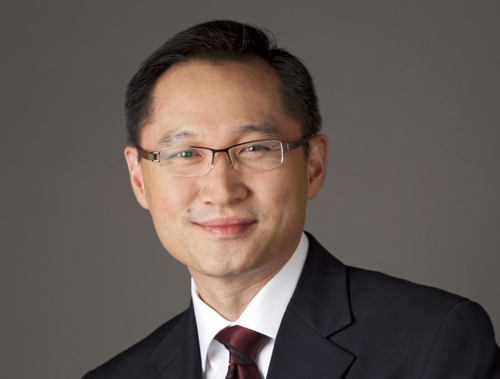
View from the Top: Raphael Saw

0

Far East Organization (FEO), a household name property player in Singapore, now moves like Jagger in building hotels in the city, which is red-hot for investors. Raini Hamdi talks to Raphael Saw about how FEO is rocking the Singapore hotel sector
23mar12_story1
Raphael Saw
COO, Hospitality Business Group Director, Hospitality Operations
Far East Organization, Singapore

People ask me if hotels on city fringes are good investments. What’s your experience with Oasia Hotel in the Novena area since it fully opened last October?
It’s a 428-room hotel in an area that is convenient – just two MRT stops from Orchard – and emerging, with residential developments but also more offices.

It is also emerging  as a medical hub, with The Parkway Group settling in sometime in the second half of this year.

We see that as the hotel gains better awareness, more corporates are coming. And, being two stops from Orchard, the leisure market is coming too. The mix is 50:50 but we want to grow the corporate business; 60:40 is ideal.

What’s the room rate and geographical mix? Is it going as you thought it should?
Over S$200 (US$159). We’re ambitious, so we can do better.

Time is needed for the product to be known in the marketplace. Once more people know about the good design, nice environment and the convenience especially, we should be able to build the rate up to S$250.

The mix is representative of arrivals to Singapore – the regional markets, Europe and the US.

The hotel also launched your new brand, Oasia. What’s behind the name?
‘Oasis’ and ‘Asia’, so Oasia. It’s an upscale brand and the promise is, when you stay in Oasia, you will find your own oasis after a long day, with Asian hospitality being part of that experience.

A destination like Singapore will keep you busy, whether on business or leisure – you need an oasis to go back to. This is why our Club floor, for example, is one of the few in town that has its own dedicated pool and, if you look out, you will see a lot of greenery outside.

As well, a typical characteristic of Oasia is an interesting design by an internationally-renowned designer. (For the first), Super Potato designed the public areas and Club floor.

Ok, but you also have a brand called Quincy and in three years there’s just the one in Orchard, and the Village brand. How do the three brands stack up?
Quincy has touches of a boutique hotel. Its roomcount is smaller (108 rooms), so its service is more personalised. It has more design emphasis and is a bit more edgy in terms of experience.

The rate is higher than Oasia (S$300), partly because it is an all-inclusive product although guests do have a choice to opt for just room, breakfast and Internet.

The Village brand, on the other hand, is about hotels that are in interesting neighbourhoods. We bring neighbourhood touches into the hotel and also get guests to experience the wealth of the neighbourhood, be it culture, food, shopping, or the heritage of Singapore.

(Editor’s Note: There are four Village hotels and four Village serviced residences currently.)

“If we need to break traditions, we are prepared to do so. It probably means we have to work harder…”

So how are you growing these brands?
We have many new projects. We’ve just launched PS/100 (in the CBD, Tanjong Pagar area), a mixed-use development comprising office space and our second Oasia Hotel, a 300-plus room, opening in 2014.

We will also be converting the shophouses at Far East Square (an FEO development), which are currently offices, into a charming, 37-room boutique hotel. We’ve not finalised the name yet, but it will be along the lines of what Far East Square is.

It should open in the first half of 2013. There is always a shortage of hotels in the town area and the hotel offers a different choice in an interesting location which is right in the CBD.

We’re also building a new tower block, 300-plus rooms, in Far East Square itself. It should open in 2014-2015.

Will that be an Oasia?
We’re having internal discussions about it.

Why do you invest on new brands and not fit your development into these brands ?
We will always consider using the (existing) brands but we won’t insist on it, sometimes because the environment and the product we are creating do not fit into the brands.

Would I be right to say FEO is not traditional in its hotel development approach?
(Laughs) Of course we will still follow some of the traditions – there are certain reasons why certain traditions are there.

But, as I said, if we need to break traditions, we are prepared to do so. It probably means we have to work harder in getting the awareness (of the hotel) out, but if you have an interesting offering or product, it can be done.

What is more important, brand or product?
They are both important. You create a brand because you want to offer a consistent experience and ride on scale of distribution, etc, but operation is equally important.

After all, you’ve made a promise; so you have to deliver.

This is an interesting part of our industry, especially if you are growing, and in an environment like Singapore, where labour costs are rising.

There are challenges in recruitment and in space planning – the need to have efficient space to serve guests has become even more important or you’ll end up hiring more people to do the same job.

This is why we work hand in hand with (FEO) project development (which also does residential and retail projects).

How does having the property development background help in hotel development and vice versa?
We’re not afraid, for example, to venture outside the traditional catchment areas, although we are also in the city centre.

We have been developing properties for over 50 years, so we have a  good understanding of where the different locations are, what’s happening there, what are the industries that can support the hotels.

Singapore has a better hotel market now. More visitors are coming and (the government is) growing the population. More businesses are setting up operation in Singapore and they have various accommodation needs.

We have hotels if their need is for short-term, transient accommodation, or corporate leasing where they can rent our serviced apartments for two years.

And if they like Singapore and want to call Singapore home, we hope they look at our (residential) properties for investment. So it is all inter-related.

Why are you not expanding overseas?
We are interested, but we really want to build our capabilities here. We now have close to 2,400 hotel rooms and more than 1,200 serviced residence units, with three more hotels and one serviced residence in the next five years.

We want to take full advantage of Singapore as a growing destination and we want to build on our size, scale and talent.

This article was first published in TTG Asia, March 23 issue, on page 7. To read more, please view our digital edition or click here to subscribe.


Kingfisher edges towards the precipice

0

WITH no sign of equity injection or restructuring of its US$1.3 billion debt in sight, embattled Kingfisher Airlines has decided to shut down all international operations, and may curtail local services as the Indian government considers revoking its air operator’s certificate.

Effective March 25, the airline will cease all flights to Dubai, Colombo, Bangkok and Kathmandu, while London (Heathrow) services will stop from April 10, signaling an end to its international operations. Flights to Hong Kong and Singapore were withdrawn earlier.

With only 18 of its 64 aircraft in operation, the airline is currently operating about 100 of its 175 scheduled flights per day. Its drastic reduction of services since last November has affected the travel plans of thousands.

Seema Ahmed, general manager, Gainwell Travel and Leisure Kolkata said: “We used to fly Kingfisher frequently, but their flight cancellations and uncertainties had a huge, negative impact (on us). We made several advance bookings with deposits paid, so we are very worried about the outcome.”

Industry experts believe that Kingfisher’s problems are the culmination of overexpansion, high aviation fuel costs in India (about 40 per cent higher than elsewhere), and price wars among Indian carriers.

ICCA’s Martin Sirk to headline IT&CM China 2012

0

ADDRESSING the critical role of international meetings in a country’s development, ICCA CEO Martin Sirk will kick off this year’s IT&CM China as keynote speaker.

Scheduled to take place at the Shanghai World Expo Exhibition & Convention Centre from April 17-19, the sixth edition of IT&CM China has adopted the theme ‘Advancing MICE and Business Minds’, and is expected to attract more than 2,000 delegates.

The convention will feature a list of promiment speakers from the MICE industry, including Gerilyn Horan, director, Global Market Development of HelmsBriscoe, US; Lisa Hopkins, managing director, Asia Pacific of BCD Meetings & Incentives, Singapore; and Li Zhuyuan, general manager, CITS International MICE, China.

IT&CM China is organised in collaboration with the Shanghai Municipal Tourism Administration as part of Shanghai Business Events Week.

IHG ups China stakes with Hualuxe

0

INTERCONTINENTAL Hotel Group (IHG) has unveiled Hualuxe, its upscale hotel brand catering to the Chinese traveller.

The new brand, which was first divulged in January by IHG’s chief executive Asia, Middle East & Africa, Jan Smits, was conceptualised in response to an increasingly discerning Chinese clientele as well as growing numbers of Chinese travellers – both domestic and abroad.

Hua means majestic in Chinese, while luxe connotes luxury.

Focusing on four service areas of ‘tradition’, ‘rejuvenation’, ‘status’ and ‘familiar spaces’, Hualuxe hotels will feature Asian-style amenities such as tea houses for meetings, lobbies with gardens, late-night noodle bars, as well as VIP check-in and Club Lounge areas for premium guests.

Keith Barr, CEO, IHG Greater China, said: “We have had great success over the years with the five brands we already have in this market, and we will now leverage our experience, and the strong relationships and reputation we have with customers and owners to establish and grow Hualuxe.”

IHG has already signed over 20 letters of intent that are now being converted into management contracts, with the first Hualuxe expected to open in China in late 2013 or early 2014.

The brand will roll out in over 100 tier 1, 2 and 3 Chinese cities over the next 10 to 15 years, before opening in major global cities to cater to Chinese travellers going abroad.

Earlier this year, Accor revealed a re-engineering of its Grand Mercure brand in China to cater to the domestic travel market.

Business as usual in Bali

0

TOURISM stakeholders in Bali reported that the destination was holding firm in the wake of a renewed terrorist threat, after Indonesian authorities subdued a suspected terrorist cell in Sanur, Denpasar on March 18.

Ansyaad Mbai, head of Indonesia’s National Counter Terrorism Agency, was quoted by various media outlets as saying that the five men shot dead by Indonesian counter-terrorism forces were planning to bomb several targets on the island, including the La Vida Loca bar in Seminyak.

The Australian government’s Department of Foreign Affairs and Trade has since revised its Indonesia travel advisory status to “Reconsider your need to travel”, urging Australian nationals to “reconsider (their) need to travel to Indonesia, including Bali, at this time due to the very high threat of terrorist attack”.

Bali tourism stakeholders whom TTG Asia e-Daily spoke to, however, painted a picture of serenity and nonchalance among major source markets thus far.

“There have been no cancellations nor exodus of tourists following the raids,” said Indonesia Tourism Industry Association Bali chairman, Ida Bagus Ngurah Wijaya.

“We hope there will not be any (cancellations) in the future, as the success of Densus 88 (Indonesian counter-terrorism force) in catching those suspects shows that security works well here.”

Pacto director of operations and product development, Umberto Cadamuro, said: “It is business as usual for us. We have received no requests for clarification, nor any cancellation or decline in bookings.”

“I believe this is partly due to the very limited news (coverage of the incident) by major media (outlets) such as CNN and BBC. It is a very positive move to defeat terrorism by not giving them unnecessary publicity,” he added.

Smailing Tour, which handles a large amount of MICE business to Bali, received earlier this week a number of business inquiries from European and Singaporean incentive groups looking to visit the destination in May and November.

“We have received some queries from (incentive) clients, but more about the weather than the raids,” said Smailing Tour Bali managing director, Justina Puspawati, referring to the inclement weather as a result of Cyclone Lua hitting Bali last week.

“In fact, we are now handling a high profile corporate meeting with 120 participants from various countries here in Bali,” she added.

“No one is showing any concern. On the contrary, some delegates have even asked us about (holiday packages) for June and hotel rates (during high season).”

Philippines extends visa-free handshake to India, China

0

THE PHILIPPINE Department of Tourism (DoT), Department of Foreign Affairs and Bureau of Immigration have jointly agreed to expand the validity of an existing visa-free facility from 21 to 30 days for 161 source markets, with additional provisions for China and India.

“With these visa reforms, we will be at par with the entry policies of our neighbors in the region and, for some markets, more liberal,” said DoT secretary Ramon R Jimenez Jr.

“This will definitely help in achieving our target of 10 million foreign visitors by 2016.”

As part of the deal, China nationals travelling on package tours to the Philippines and handled by DoT-accredited tour operators will receive 30-day visa-free stays, while Indian nationals holding valid US, Canada, Japan, Australia, UK, Singapore and Schengen visas will receive 14-day visa-free stays.

Indian visa on arrival facilities have been available to Philippine nationals since January 2011.

Meanwhile, Philippine Airlines’ New-Delhi-Manila direct services, which were launched last March but suspended in October, resumed this month at a reduced frequency of three-weekly.

Cebu Pacific is looking to mount new flights between Manila and New Delhi this year, which would plug the shortfall in capacity.

According to the latest figures from DoT, the Philippines received 42,844 Indian visitors in 2011, compared to 34,581 the year before. China arrivals rose 29.71 per cent in 2011 over the previous year.

Rhapsody of the Seas undergoes US$54 million makeover

0

ROYAL Caribbean International’s Rhapsody of the Seas has entered Sembawang Shipyard in Singapore to begin a month-long US$54 million refurbishment as part of the cruise line’s Royal Advantage upgrading programme.

Rhapsody of the Seas is the third ship in Royal Caribbean’s fleet to receive these upgrades, which provides its older ships with facilities and amenities found on its newer vessels.

Adam Goldstein, president and CEO, Royal Caribbean International, said: “With our US$300 million investment through 2014, no ship in our fleet will go untouched and our guests will have an unrivaled vacation experience no matter which destination in the world they visit or on what ship they sail on.”

Once the refurbishment is completed, Rhapsody of the Seas will receive a host of new dining and entertainment venues, a Diamond Lounge for Crown and Anchor loyalty guests, a Concierge Lounge for suite guests and top tier loyalty guests, a transformed Viking Crown Lounge, and a Royal Babies and Tots Nursery.

Technological upgrades will include ship-wide WiFi, a digital way-finding system, electronic mustering, an outdoor movie screen, as well as iPads in every stateroom. There will also be a bow-to-stern refresh of all furniture, carpet and upholstery, including renovated staterooms.

When the enhancements are completed on March 28, Rhapsody of the Seas will embark on a 15-night voyage from Singapore to Sydney. From there, she will sail across the Pacific with a combination of cruises from Australia and Hawaii, before beginning her Alaska season in May 2012.

Flydubai ramps up Colombo flights

0

FLYDUBAI, a low-cost carrier that operates out of Dubai International Airport’s Terminal 2, ramped up its Colombo services to daily from March 11.

The airline started four-weekly services to the Sri Lankan capital last June, which it later hiked to five flights a week, and is looking to boost to double daily by end-2012.

According to Flydubai CEO Ghaith Al Ghaith, the frequency hikes were in response to rising traffic from emerging markets such as Russia and the Commonwealth of Independent States, who make use of a Dubai connection to fly to Colombo.

Flydubai currently operates to 13 destinations in former Soviet republics, many of which are secondary airports.

The carrier is planning to launch flights to the new Mattala International Airport in Hambantota, Sri Lanka when it opens in 2013.

Jumeirah to manage Pera Palace Hotel in Istanbul

0

JUMEIRAH Group has signed a management agreement with Demsa Group, a Turkish luxury and fashion conglomerate, to operate the Pera Palace Hotel in Istanbul, Turkey.

Jumeirah will assume management of the hotel from May 1, 2012 and the property will be rebranded as Pera Palace Hotel, Jumeirah.

Located in the Beyoğlu district of Istanbul, Pera Palace Hotel, Jumeirah has 115 rooms including 16 suites, the majority of them with balconies.

The hotel has a 380m2 spa and four function rooms. Its main restaurant, Agatha, serves French, Italian and Turkish specialities. Other F&B outlets include Orient Bar, Kubbeli Saloon and Tea Lounge, Patisserie de Pera and Orient Terrace.

The addition of Pera Palace Hotel, Jumeirah brings Jumeirah’s global portfolio to 19 properties.

In the coming months, Jumeirah expects to open Jumeirah Port Soller Hotel & Spa in Mallorca, Spain; Jumeirah Bilgah Beach Hotel in Baku, Azerbaijan; Jumeirah Messilah Beach Hotel and Spa, Kuwait; and Jumeirah Creekside in Dubai, UAE.

Breiter to head Swiss Tourism’s new South-east Asia office

0

ivan-breiter-breiter-to-head-swiss-tourisms-new-south-east-asia-office
Ivan Breiter

IVAN Breiter, currently Switzerland Tourism market manager-Belgium and Luxembourg, will head the NTO’s new regional office in Singapore as market manager-South-east Asia, effective June 1.

Breiter will market the destination to the travel trade and media particularly in Singapore, Thailand, Indonesia and Malaysia. South-east Asia is Switzerland’s fourth ‘booming’ market after China, India and Russia.

“Breiter possesses the ideal combination of experience and expertise to strengthen Switzerland Tourism’s presence in South-east Asia,” said Simon Bosshart, Switzerland Tourism’s director Asia-Pacific and director-China.

“He started his career at STC in 1998 and subsequently became key account manager Switzerland at Switzerland Tourism. He has a proven track record as manager leisure sales, and later as market manager Canada & Central US.”

“Since 2006, he has successfully been in charge of the Belgium & Luxembourg markets.”

The opening of the new regional office is hastened by declining arrivals from Switzerland’s main markets such as Germany, Holland, Belgium, Italy and the UK as a result of the economic crisis.

In contrast, the South-east Asia market grew 13 per cent to around 170,000 pax last year.