TTG Asia
Asia/Singapore Tuesday, 13th January 2026
Page 2666

WTTC appoints TUI’s Michael Frenzel as chairman

0

RZ_Imageteil_101105_Digitaldruck.indd
Michael Frenzel

MICHAEL Frenzel, chairman of the executive board at TUI AG, will take over as WTTC chairman from April 20, 2012.

Frenzel, who has been a member of the WTTC executive committee since 2000, will serve as chairman for a two-year term.

He replaces Geoffrey Kent, founder, chairman & CEO, Abercrombie & Kent, who was appointed WTTC chairman in 2007, and will continue to hold a role as a member of the executive committee.

Frenzel joined Preussag AG in 1988 and was appointed executive chairman in 1994. Under his leadership, the company was repositioned into Europe’s leading tourism group, TUI AG, which now comprises three main businesses – London-listed TUI Travel, TUI Hotels & Resorts, and TUI Cruises.

Have a peach and scoot off

0

WHEN low-cost carriers (LCCs) burst onto Asia’s aviation landscape about a decade ago, they were initially greeted with scepticism due to restrictive bilateral air service agreements, lack of secondary airports and low Internet and credit card penetration.

However, with creative collaboration (e.g. working with convenience stores and post offices to distribute tickets), liberalised air service agreements and improved infrastructure, budget air travel swiftly took hold in the region, with South-east Asia seeing the fiercest competition.

Kuala Lumpur’s Low Cost Carrier Terminal quickly reached its designated capacity and a huge replacement in Sepang – dubbed KLIA2 – with a handling capacity of 45 million passengers per annum (mppa), is due for completion in April 2013.

In Singapore, budget travellers accounted for 25.8 per cent of Changi Airport’s total passenger throughput in 2011; the existing Budget Terminal will soon make way for the 16-mppa Terminal 4, which is expected to be completed in 2017.

South-east Asia may be the most fertile LCC playing field but North Asia is fast making up for the lost ground. South Korea’s handful of budget carriers has ventured beyond its shores and Japan is the next place to watch with three LCCs – Peach Aviation, Air
Asia Japan and Jetstar Japan – making their debut services in 2012.

But questioning the growth potential of LCCs in high-cost Japan, Standard & Poor’s Asia-Pacific aviation editorial director, Shukor Yusof, said: “Rail travel remains a profitable and viable alternative because it’s point-to-point as compared to air travel, plus there are few secondary airports in Japan.”

The failed attempts of two longhaul LCC pioneers – Oasis Hong Kong Airlines and Viva Macau – have not dampened the enthusiasm or ambition of new players. Asia’s longhaul LCC forerunners, Jetstar Airways and AirAsia X, are now getting imminent competition from Scoot Airways, Cebu Pacific Air and Tokyo-based Skymark Airlines, which is entering the fray with its Airbus A380s and A330s.


23mar12_story2_1

Peach Aviation

Flightcode MM / APJ
Primary base Osaka Kansai Airport
Current fleet 3 A320s (leased)
On order 7 A320s (leased)
Current destinations Osaka, Fukuoka, Sapporo, Nagasaki and Kagoshima
Planned destinations Seoul-Incheon (starting May 8), Hong Kong (starting July 1), Taipei (starting September 30), Okinawa (second half of 2012)
Website www.flypeach.com

A joint venture between All Nippon Airways (ANA), Japan’s Innovation Network Corp and Hong Kong’s Far Eastern Aviation, Peach Aviation is Japan’s first homegrown LCC with a capitalisation of 15 billion yen (US$179 million).

The first of three Japan-based LCCs starting operation in 2012, Peach will be competing with 10 foreign LCCs already present in the Japanese market. Its fleet of A320s will operate on an 180-seat all-economy configuration, with 18 emergency-exit seats offering bigger legroom at a premium.

Standing for “Pan-Asia, Energetic, Affordable, Cute&Cool and Happy”, Peach promises to deliver a Japanese standard of service; cabin crew sports casual uniforms and planes are outfitted in white, pink and fuchsia. Aspiring to “bridge Japan and other Asian economies”, Peach will fly to regional destinations such as Seoul, Hong Kong and Taipei.

For the Osaka-Fukuoka route, Peach’s fares in early March were priced between 3,780 yen and 11,780 yen, considerably lower than tickets offered by Japan Airlines and ANA (between 20,000 yen and 21,900 yen).

A ticket on the Shinkansen high-speed train – whose highly-convenient city-to-city connections pose the greatest competition to Peach on the domestic front – costs about 14,000 yen between both cities.


Scoot Airways

Flightcode Yet to be announced
Primary base Singapore Changi Airport (T2)
Planned fleet 4 B777-200s for the initial phase but up to 14 aircraft by 2016
Confirmed destinations Sydney, Gold Coast (starting mid-2012)
Planned destinations China, North Asia, more Australian cities, India, the Middle East, Africa and Europe. North America is not of immediate priority but has not been discounted
Website www.flyscoot.com

Singapore Airlines (SIA) surprised the industry when it announced the launch of a new 3budget arm, Scoot Airways, in May 2011.

With a startup capital of S$280 million (US$221 million), Scoot will operate services of up to 10 hours from Singapore, beginning with daily flights to Sydney and the Gold Coast in Australia in June. Destinations in China and Japan are likely to be announced soon, while India, the Middle East, Africa and Europe are also on the radar.

Using B777-200s phased out of SIA’s fleet, Scoot planes will have denser configuration, with a business-class cabin offering 38-inch pitch and 22-inch wide seats. The economy-class layout has not been revealed but each row is expected to have 10 seats, an arrangement found even on such full-service carriers as Air France, Emirates and KLM.

Describing the airline as “quirky and memorable”, Scoot’s CEO, Campbell Wilson said that the carrier would not be solely dependent on Singapore’s small market size, and its target segment was different from that of the parent company.

Services such as baggage, meals, preferred seating, extra legroom, priority boarding and carriage of sports equipment have been unbundled but some of these will be packaged with a seat booking. Bookings are expected to open by end-March.

“Scoot is SIA’s answer to declining profits and an attempt to exploit the low-cost, mid-haul markets that are currently underserved,” said Shukor Yusof, Standard & Poor’s Asia-Pacific aviation editorial director. “Scoot is also a move to steal some of the thunder from Jetstar.”

Scoot’s main rivals, Jetstar Airways and Jetstar Asia Airways, will base a combined A300-200s and B787 Dreamliners fleet in Singapore for their growing Asia-Pacific network. Ironically, Scoot’s launch of Sydney as its first destination finally prodded the Malaysian authorities to grant AirAsia X the rights to fly to Sydney – a route the Malaysia-based LCC has unsuccessfully lobbied for in the past several years.


23mar12_story2_2

Cebu Pacific Air

Flightcode 5J / CEB
Primary bases Manila and Cebu
Current fleet 20 A320s, 10 A319s, 8 ATR72s
On order 7 A320s, 30 A321NEOs, 8 A330-300s (to be leased)
Current regional destinations 19 cities including Bangkok, Singapore, Taipei, Ho Chi Minh City, Hong Kong, Macau and Shanghai
Planned long-haul destinations Australia, India, Middle East, parts of Europe and the US
Website www.cebupacificair.com

To replicate its dominant domestic position in the long-haul market, Cebu Pacific Air (CEB) recently signed a lease for four Airbus A330-300s, which will be configured with more than 400 seats in a single-class layout. These planes will commence operation in the third quarter of 2013 on flights to cities with a high concentration of migrant Filipino workers, such as Hawaii, Saudi Arabia and the United Arab Emirates.

CEB’s CEO, Lance Gokongwei, said: “CEB plans to charge fares that are 35 per cent lower than our rivals, which would particularly appeal to the estimated 11 million Filipinos working abroad.”

Europe, where over one million Filipino expats reside, is not a priority on CEB’s expansion plans due to the wide geographical spread of Filipinos, high fuel costs and an EU ban on Filipino airlines. The range of the A330s also meant that any destination beyond Istanbul and Moscow needs to be served with an intermediate stop, a similar situation affecting the US west coast cities such as San Francisco and Los Angeles.

With its extensive local network, CEB is the leading budget carrier in the Philippines, where LCC penetration is one of Asia-Pacific’s highest at 80 per cent. Other local budget carriers include AirPhil Express, Zest Air, AirAsia Philippines and SEAir, most of which also compete in the regional markets.


23mar12_story2_3

Thai Smile Air

Flightcode TG
Primary base Bangkok Suvarnabhumi Airport
Planned fleet 11 Airbus A320s by 2015
Planned domestic destinations Ubon Ratchathani, Udon Thani, Khon Kaen, Chiang Rai and Surat Thani
Planned international destinations Kaohsiung, Shenzhen, Macau, Surabaya, Singapore and Kuala Lumpur
Planned routes Phuket-Singapore, Phuket- Kuala Lumpur, Phuket-Chiang Mai

For a brief period, Thai Airways International (THAI) flirted with Singapore-based Tiger Airways to establish a joint-venture LCC, tentatively named Thai Tiger Airways. (THAI also owns Nok Air, a domestic LCC.) By end-2011, all talks of Thai Tiger fell through, and in its place emerged Thai Smile – renamed from Thai Wings – the new LCC entity of THAI.

Positioned as a hybrid LCC between the no-frills Nok Air and the premium THAI, Thai Smile offers a two-class service with a cost base similar to a budget airline.

With Suvarnabhumi Airport as its base, Thai Smile will fly to popular domestic destinations such as Chiang Rai and Surat Thani, and intends to compete with Thai AirAsia to erode the latter’s stronghold on the domestic LCC market.

The new carrier will commence operation on July 1 with a fleet of new 174-seat Airbus A320s, flying to regional cities such as Kaohsiung, Shenzhen, Macau and Surabaya. Other planned routes include flying from Phuket to Singapore, Kuala Lumpur and Chiang Mai. Thai Smile expects to have a fleet of 11 A320s by 2015.


Mandala Airlines

Flightcode RI
Primary bases Jakarta and Denpasar
Planned fleet 10 Airbus A320s\
Confirmed destinations Yet to be announced
Website Yet to be announced but potentially via www.tigerairways.com

A private LCC that suspended operations in January 2011 after falling on hard times, Mandala Airlines was revitalised when Tiger Airways paid a token one US dollar for a 33 per cent share.

With its Aircraft Operator’s Certificate now re-activated, the restructured airline will resume flights on April 4 on Airbus A320s provided by Tiger Airways, in addition to loans injected by Tiger and other Mandala stakeholders.

Mandala will compete with other Indonesian LCCs such as Lion Air, Citilink and Indonesia AirAsia in the domestic and regional markets. It also has to contend with second-tier carriers such as Sriwijaya Air and Batavia Air.

As of early-March, Mandala has not announced its destinations but they are likely to be located within a five-hour flight time from Jakarta and Denpasar.

This article was first published in TTG Asia, March 23 issue, on page 8. To read more, please view our digital edition or click here to subscribe.


Europe is hot, hot, hot

0

Demand for European destinations among Asian travellers is getting stronger as the euro weakens

23mar12_story3_1
Lake Geneva: A popular destination in Switzerland. Courtesy of Simona Dumitru

Strong Singapore dollar goes far
Longhaul travel out of Singapore is up, spurred by a stronger local currency and thirst for exotic destinations.

Senior vice president of marketing and public relations at CTC Travel, Alicia Seah, said bookings to Europe rose about 40 to 50 per cent in 2011.

“Uncommon destinations such as Turkey, Tibet, Croatia, Slovenia and South Africa have attracted many, especially the middle-aged and affluent experienced travellers,” she added. There was also a clear shift towards exploring destinations in-depth.

Chan Brothers Travel’s manager for marketing and communications, Jang Chang, expects a 30 per cent rise in longhaul bookings this year. Europe – particularly Switzerland, France and Italy – remains popular for Chan Brothers.

Seah added: “European NTOs in Asian markets promote their natural, cultural and historical attractions well, while the US is still only popular for its theme parks.”

Las Vegas and Orlando are the main destinations for CTC Travel. However bookings to the US are up by only five per cent, as most Singaporeans are still deterred by the extended travelling time.

And longhaul destinations are still unable to shake off Singapore travellers’ love affair with Australia, which, despite the rising Australian dollar, saw a 40 per cent growth in the last 12 months.

Chang claimed bookings to Australia rose 80 per cent for Chan Brothers at the recent NATAS (National Association of Travel Agents Singapore) Travel Fair), fuelled by Singaporeans looking for winter respite during the June school break. – Linda Haden 

23mar12_story3_2
A Thai soap opera gives Prague (above) the limelight. Courtesy of Free-Jpeg-images.com

More Thais head for Eastern Europe
Severe flooding in Thailand late last year has hit outbound travel as Thai consumers cope with the cost of property repairs and cut back on spending.

But the good news is, strong currencies in Australia and New Zealand against a weakening Euro have triggered a swing to Europe among Thais who still have the budget to travel beyond nearby destinations.

Many travel consultants, including Chamnong Intarot, managing director of Sawasdee Holidays, said Europe was the most popular destination at the moment. Italy, Switzerland and France remain favourites among Thai travellers who gravitate towards major cities such as Rome and Paris.

Yet, Eastern Europe is the fastest-growing destination. More Thai travellers are heading to Austria and the Czech Republic after Prague was featured in a popular Thai soap opera last year.

Suthipong Pheunphiphop, vice president of Thai Travel Agents Association, said many travelling Thais had already visited Western and Southern Europe and, as the Schengen zone expands eastwards, travellers were looking towards the new frontier.

As demand centres on Europe, travel companies are responding. Traditionally an Australia and New Zealand specialist, Big World Holidays is now offering tours to Europe. Agents are also adapting itineraries to reduce the cost of package tours by shortening the length of stay and budget accommodation.

The trade still sees potential in the longhaul, including the US, but complicated visas procedures are a drawback. – Timothy France

23mar12_story3_3
London: In demand, but ‘expensive’ due to Olympics. Courtesy of James Wilsher

Philippine longhaul numbers ‘steady’
Travel professionals in the Philippines are reporting steady longhaul business, with no major upsets except for pilgrimages to Israel and neighbouring Middle Eastern cities – still the bread-and-butter for some – due to news of armed conflict.

Helen Hao, vice president of Pan Pacific Travel Corp, GSA for Trafalgar, said: “I don’t see a marked increase of tourists to Europe or the US – it’s been the same.”

At Rajah Travel Corp, business has been “good” and “a good mix of different destinations”. President Aileen Clemente credits the stable Philippine peso, which has appreciated gradually over the years. “Last year, the US west coast was big – places like Las Vegas, where hotel prices had dropped tremendously,” Clemente said.

She said that “hot” destinations were not always defined geographically. “What’s ‘hot’ is river cruising in Europe, as opposed to sea cruising, which feels safer at this point,” Clemente said.

But longhaul destinations appear to have new competitors in the form of Nepal and India, which are rising destinations for Philippine travellers.

Mamerth Banatin, president of Adam’s Travel Corp, said: “Kashmir is opening up. Ten years ago it was a war zone; now it’s up-and-coming,” said Banatin.

The established pilgrimage tour company has developed six-day Delhi-Agra-Jaipur packages using Thai Airways flights. The tours offer extensions to Kashmir or the “mini-Tibet” area of Ladakh, or a stopover in Bangkok on the way back to Manila. – Marianne Carandang

23mar12_story3_5b

Switzerland hikes effort
Switzerland Tourism will open a South-east Asia office in Singapore in June.

The Swiss NTO has named Ivan Breiter, its market manager-Belgium and Luxembourg, as market manager-South-east Asia based in Singapore effective June 1. Breiter will market the destination to the travel trade and media in Singapore, Thailand, Indonesia and Malaysia.

South-east Asia is Switzerland’s fourth “booming” market after China, India and Russia.

The move to step up presence in the region is hastened by declining arrivals from main markets such as Germany, Holland, Belgium, Italy and the UK due to the economic crisis. In contrast, South-east Asia grew 13 per cent to around 170,000 pax last year, said Switzerland Tourism executive vice president-markets & meetings, Urs Eberhard.

“The decline (in the European markets) is quite prominent, up to 10 per cent. Because of their large numbers, it is substantial, although markets like France are not declining as much, say, three per cent, and those like Spain, Poland and the Nordic countries are still registering positive growth,” he said.

Eberhard was in Singapore, Bangkok, Jakarta and Kuala Lumpur with around 12 representatives from the various Swiss cantons to conduct a workshop for some 100 travel consultants.

Singapore is the largest South-east Asian market, accounting for some 35 per cent of total arrivals from the region, followed by Thailand (30 per cent). But growth is fastest from Indonesia, up 46 per cent last year.

Currently, Switzerland Tourism has a representative in Singapore and Malaysia in the form of an embassy staff who dedicates about 30 per cent of his time to tourism representation. This will be the first time a full-time dedicated director is appointed to increase Switzerland’s share of the South-east Asian market, with a target of 12 per cent annual growth.

The director will continue to be supported by the embassy representatives in Singapore and Malaysia. In Thailand and Indonesia, there would also eventually be similar support by an embassy staff, said Eberhard.

The Singapore regional office will be located within the Swiss embassy.

Eberhard said Switzerland Tourism believed in working with the travel trade and would be supporting travel consultants in conducting consumer promotions, joint advertising and raising awareness by organising fam trips to Switzerland, among other initiatives.

Lucerne Tourism overseas market manager, Mark Meier, said: “We have been pushing for Switzerland Tourism to have a dedicated person to promote Switzerland in South-east Asia. The figures are growing. We saw 20 per cent growth from Malaysia, for example.” – Raini Hamdi

China consultants hail US visa easing policy, but those in Taiwan remain skeptical
Travel consultants in China are embracing President Barack Obama’s call to expedite visa processing to increase travel and tourism to the US.

China International Travel Service (CITS) account manager, Candice Wang, said extended visa interview hours would allow more people to go after working hours.

Currently, visa applications are also hampered by high competition for them, especially during summer travel.

Travel consultants are hopeful that more visas will be issued following the call and expect leisure travel to the US, more than business travel, to boom. Yao Qian, whose firm manages international travel for students at Beijing Language and Culture University, also believes more students will travel to the US for fun, not just to study. Currently, they have to rely on student visas to enter.

In Taiwan, the possibility of a visa waiver to the US by September alone is unlikely to turnaround flagging leisure travel demand to the States, according to consultants.

Currently, individual travellers must obtain their own visa at the US embassy, a process that is time-consuming and costly. Travel companies cannot apply for group visas for travel to the US.

But consultants said the US was mainly for business travel, not leisure, as it was not as attractive as other popular shorthaul destinations.

Antonio Liao, Phoenix Tours president, expects a short-term bump at best. “There might be a 30 to 40 per cent increase in the first year after it goes into effect. The same thing happened when Canada and the UK launched visa waiver programmes,” he said.

Star Travel Corp CEO, Vincent Lin, agrees, saying other barriers remain, especially high air fares. “Airlines have to reduce their fares by 30 to 40 per cent to see a big increase in tourism to the US,” he said.

But Liao does not see this happening in the near future. He said: “China Airlines lost US$22.5 million on the Taipei to New York route last year, and it just cut its London route. They want to recoup that loss.”  – Glenn Smith in Taipei and Manuela Zoninsein in Beijing

This article was first published in TTG Asia, March 23 issue, on page 10. To read more, please view our digital edition or click here to subscribe.

View from the Top: Raphael Saw

0

Far East Organization (FEO), a household name property player in Singapore, now moves like Jagger in building hotels in the city, which is red-hot for investors. Raini Hamdi talks to Raphael Saw about how FEO is rocking the Singapore hotel sector

23mar12_story1
Raphael Saw
COO, Hospitality Business Group Director, Hospitality Operations
Far East Organization, Singapore

People ask me if hotels on city fringes are good investments. What’s your experience with Oasia Hotel in the Novena area since it fully opened last October?
It’s a 428-room hotel in an area that is convenient – just two MRT stops from Orchard – and emerging, with residential developments but also more offices.

It is also emerging  as a medical hub, with The Parkway Group settling in sometime in the second half of this year.

We see that as the hotel gains better awareness, more corporates are coming. And, being two stops from Orchard, the leisure market is coming too. The mix is 50:50 but we want to grow the corporate business; 60:40 is ideal.

What’s the room rate and geographical mix? Is it going as you thought it should?
Over S$200 (US$159). We’re ambitious, so we can do better.

Time is needed for the product to be known in the marketplace. Once more people know about the good design, nice environment and the convenience especially, we should be able to build the rate up to S$250.

The mix is representative of arrivals to Singapore – the regional markets, Europe and the US.

The hotel also launched your new brand, Oasia. What’s behind the name?
‘Oasis’ and ‘Asia’, so Oasia. It’s an upscale brand and the promise is, when you stay in Oasia, you will find your own oasis after a long day, with Asian hospitality being part of that experience.

A destination like Singapore will keep you busy, whether on business or leisure – you need an oasis to go back to. This is why our Club floor, for example, is one of the few in town that has its own dedicated pool and, if you look out, you will see a lot of greenery outside.

As well, a typical characteristic of Oasia is an interesting design by an internationally-renowned designer. (For the first), Super Potato designed the public areas and Club floor.

Ok, but you also have a brand called Quincy and in three years there’s just the one in Orchard, and the Village brand. How do the three brands stack up?
Quincy has touches of a boutique hotel. Its roomcount is smaller (108 rooms), so its service is more personalised. It has more design emphasis and is a bit more edgy in terms of experience.

The rate is higher than Oasia (S$300), partly because it is an all-inclusive product although guests do have a choice to opt for just room, breakfast and Internet.

The Village brand, on the other hand, is about hotels that are in interesting neighbourhoods. We bring neighbourhood touches into the hotel and also get guests to experience the wealth of the neighbourhood, be it culture, food, shopping, or the heritage of Singapore.

(Editor’s Note: There are four Village hotels and four Village serviced residences currently.)

“If we need to break traditions, we are prepared to do so. It probably means we have to work harder…”

So how are you growing these brands?
We have many new projects. We’ve just launched PS/100 (in the CBD, Tanjong Pagar area), a mixed-use development comprising office space and our second Oasia Hotel, a 300-plus room, opening in 2014.

We will also be converting the shophouses at Far East Square (an FEO development), which are currently offices, into a charming, 37-room boutique hotel. We’ve not finalised the name yet, but it will be along the lines of what Far East Square is.

It should open in the first half of 2013. There is always a shortage of hotels in the town area and the hotel offers a different choice in an interesting location which is right in the CBD.

We’re also building a new tower block, 300-plus rooms, in Far East Square itself. It should open in 2014-2015.

Will that be an Oasia?
We’re having internal discussions about it.

Why do you invest on new brands and not fit your development into these brands ?
We will always consider using the (existing) brands but we won’t insist on it, sometimes because the environment and the product we are creating do not fit into the brands.

Would I be right to say FEO is not traditional in its hotel development approach?
(Laughs) Of course we will still follow some of the traditions – there are certain reasons why certain traditions are there.

But, as I said, if we need to break traditions, we are prepared to do so. It probably means we have to work harder in getting the awareness (of the hotel) out, but if you have an interesting offering or product, it can be done.

What is more important, brand or product?
They are both important. You create a brand because you want to offer a consistent experience and ride on scale of distribution, etc, but operation is equally important.

After all, you’ve made a promise; so you have to deliver.

This is an interesting part of our industry, especially if you are growing, and in an environment like Singapore, where labour costs are rising.

There are challenges in recruitment and in space planning – the need to have efficient space to serve guests has become even more important or you’ll end up hiring more people to do the same job.

This is why we work hand in hand with (FEO) project development (which also does residential and retail projects).

How does having the property development background help in hotel development and vice versa?
We’re not afraid, for example, to venture outside the traditional catchment areas, although we are also in the city centre.

We have been developing properties for over 50 years, so we have a  good understanding of where the different locations are, what’s happening there, what are the industries that can support the hotels.

Singapore has a better hotel market now. More visitors are coming and (the government is) growing the population. More businesses are setting up operation in Singapore and they have various accommodation needs.

We have hotels if their need is for short-term, transient accommodation, or corporate leasing where they can rent our serviced apartments for two years.

And if they like Singapore and want to call Singapore home, we hope they look at our (residential) properties for investment. So it is all inter-related.

Why are you not expanding overseas?
We are interested, but we really want to build our capabilities here. We now have close to 2,400 hotel rooms and more than 1,200 serviced residence units, with three more hotels and one serviced residence in the next five years.

We want to take full advantage of Singapore as a growing destination and we want to build on our size, scale and talent.

This article was first published in TTG Asia, March 23 issue, on page 7. To read more, please view our digital edition or click here to subscribe.


Kingfisher edges towards the precipice

0

WITH no sign of equity injection or restructuring of its US$1.3 billion debt in sight, embattled Kingfisher Airlines has decided to shut down all international operations, and may curtail local services as the Indian government considers revoking its air operator’s certificate.

Effective March 25, the airline will cease all flights to Dubai, Colombo, Bangkok and Kathmandu, while London (Heathrow) services will stop from April 10, signaling an end to its international operations. Flights to Hong Kong and Singapore were withdrawn earlier.

With only 18 of its 64 aircraft in operation, the airline is currently operating about 100 of its 175 scheduled flights per day. Its drastic reduction of services since last November has affected the travel plans of thousands.

Seema Ahmed, general manager, Gainwell Travel and Leisure Kolkata said: “We used to fly Kingfisher frequently, but their flight cancellations and uncertainties had a huge, negative impact (on us). We made several advance bookings with deposits paid, so we are very worried about the outcome.”

Industry experts believe that Kingfisher’s problems are the culmination of overexpansion, high aviation fuel costs in India (about 40 per cent higher than elsewhere), and price wars among Indian carriers.

ICCA’s Martin Sirk to headline IT&CM China 2012

0

ADDRESSING the critical role of international meetings in a country’s development, ICCA CEO Martin Sirk will kick off this year’s IT&CM China as keynote speaker.

Scheduled to take place at the Shanghai World Expo Exhibition & Convention Centre from April 17-19, the sixth edition of IT&CM China has adopted the theme ‘Advancing MICE and Business Minds’, and is expected to attract more than 2,000 delegates.

The convention will feature a list of promiment speakers from the MICE industry, including Gerilyn Horan, director, Global Market Development of HelmsBriscoe, US; Lisa Hopkins, managing director, Asia Pacific of BCD Meetings & Incentives, Singapore; and Li Zhuyuan, general manager, CITS International MICE, China.

IT&CM China is organised in collaboration with the Shanghai Municipal Tourism Administration as part of Shanghai Business Events Week.

IHG ups China stakes with Hualuxe

0

INTERCONTINENTAL Hotel Group (IHG) has unveiled Hualuxe, its upscale hotel brand catering to the Chinese traveller.

The new brand, which was first divulged in January by IHG’s chief executive Asia, Middle East & Africa, Jan Smits, was conceptualised in response to an increasingly discerning Chinese clientele as well as growing numbers of Chinese travellers – both domestic and abroad.

Hua means majestic in Chinese, while luxe connotes luxury.

Focusing on four service areas of ‘tradition’, ‘rejuvenation’, ‘status’ and ‘familiar spaces’, Hualuxe hotels will feature Asian-style amenities such as tea houses for meetings, lobbies with gardens, late-night noodle bars, as well as VIP check-in and Club Lounge areas for premium guests.

Keith Barr, CEO, IHG Greater China, said: “We have had great success over the years with the five brands we already have in this market, and we will now leverage our experience, and the strong relationships and reputation we have with customers and owners to establish and grow Hualuxe.”

IHG has already signed over 20 letters of intent that are now being converted into management contracts, with the first Hualuxe expected to open in China in late 2013 or early 2014.

The brand will roll out in over 100 tier 1, 2 and 3 Chinese cities over the next 10 to 15 years, before opening in major global cities to cater to Chinese travellers going abroad.

Earlier this year, Accor revealed a re-engineering of its Grand Mercure brand in China to cater to the domestic travel market.

Business as usual in Bali

0

TOURISM stakeholders in Bali reported that the destination was holding firm in the wake of a renewed terrorist threat, after Indonesian authorities subdued a suspected terrorist cell in Sanur, Denpasar on March 18.

Ansyaad Mbai, head of Indonesia’s National Counter Terrorism Agency, was quoted by various media outlets as saying that the five men shot dead by Indonesian counter-terrorism forces were planning to bomb several targets on the island, including the La Vida Loca bar in Seminyak.

The Australian government’s Department of Foreign Affairs and Trade has since revised its Indonesia travel advisory status to “Reconsider your need to travel”, urging Australian nationals to “reconsider (their) need to travel to Indonesia, including Bali, at this time due to the very high threat of terrorist attack”.

Bali tourism stakeholders whom TTG Asia e-Daily spoke to, however, painted a picture of serenity and nonchalance among major source markets thus far.

“There have been no cancellations nor exodus of tourists following the raids,” said Indonesia Tourism Industry Association Bali chairman, Ida Bagus Ngurah Wijaya.

“We hope there will not be any (cancellations) in the future, as the success of Densus 88 (Indonesian counter-terrorism force) in catching those suspects shows that security works well here.”

Pacto director of operations and product development, Umberto Cadamuro, said: “It is business as usual for us. We have received no requests for clarification, nor any cancellation or decline in bookings.”

“I believe this is partly due to the very limited news (coverage of the incident) by major media (outlets) such as CNN and BBC. It is a very positive move to defeat terrorism by not giving them unnecessary publicity,” he added.

Smailing Tour, which handles a large amount of MICE business to Bali, received earlier this week a number of business inquiries from European and Singaporean incentive groups looking to visit the destination in May and November.

“We have received some queries from (incentive) clients, but more about the weather than the raids,” said Smailing Tour Bali managing director, Justina Puspawati, referring to the inclement weather as a result of Cyclone Lua hitting Bali last week.

“In fact, we are now handling a high profile corporate meeting with 120 participants from various countries here in Bali,” she added.

“No one is showing any concern. On the contrary, some delegates have even asked us about (holiday packages) for June and hotel rates (during high season).”

Philippines extends visa-free handshake to India, China

0

THE PHILIPPINE Department of Tourism (DoT), Department of Foreign Affairs and Bureau of Immigration have jointly agreed to expand the validity of an existing visa-free facility from 21 to 30 days for 161 source markets, with additional provisions for China and India.

“With these visa reforms, we will be at par with the entry policies of our neighbors in the region and, for some markets, more liberal,” said DoT secretary Ramon R Jimenez Jr.

“This will definitely help in achieving our target of 10 million foreign visitors by 2016.”

As part of the deal, China nationals travelling on package tours to the Philippines and handled by DoT-accredited tour operators will receive 30-day visa-free stays, while Indian nationals holding valid US, Canada, Japan, Australia, UK, Singapore and Schengen visas will receive 14-day visa-free stays.

Indian visa on arrival facilities have been available to Philippine nationals since January 2011.

Meanwhile, Philippine Airlines’ New-Delhi-Manila direct services, which were launched last March but suspended in October, resumed this month at a reduced frequency of three-weekly.

Cebu Pacific is looking to mount new flights between Manila and New Delhi this year, which would plug the shortfall in capacity.

According to the latest figures from DoT, the Philippines received 42,844 Indian visitors in 2011, compared to 34,581 the year before. China arrivals rose 29.71 per cent in 2011 over the previous year.

Rhapsody of the Seas undergoes US$54 million makeover

0

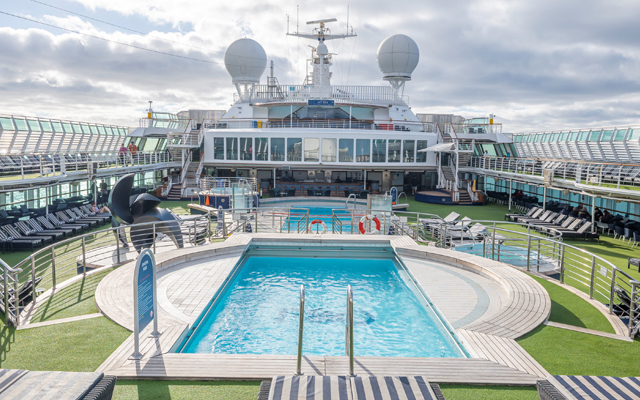
ROYAL Caribbean International’s Rhapsody of the Seas has entered Sembawang Shipyard in Singapore to begin a month-long US$54 million refurbishment as part of the cruise line’s Royal Advantage upgrading programme.

Rhapsody of the Seas is the third ship in Royal Caribbean’s fleet to receive these upgrades, which provides its older ships with facilities and amenities found on its newer vessels.

Adam Goldstein, president and CEO, Royal Caribbean International, said: “With our US$300 million investment through 2014, no ship in our fleet will go untouched and our guests will have an unrivaled vacation experience no matter which destination in the world they visit or on what ship they sail on.”

Once the refurbishment is completed, Rhapsody of the Seas will receive a host of new dining and entertainment venues, a Diamond Lounge for Crown and Anchor loyalty guests, a Concierge Lounge for suite guests and top tier loyalty guests, a transformed Viking Crown Lounge, and a Royal Babies and Tots Nursery.

Technological upgrades will include ship-wide WiFi, a digital way-finding system, electronic mustering, an outdoor movie screen, as well as iPads in every stateroom. There will also be a bow-to-stern refresh of all furniture, carpet and upholstery, including renovated staterooms.

When the enhancements are completed on March 28, Rhapsody of the Seas will embark on a 15-night voyage from Singapore to Sydney. From there, she will sail across the Pacific with a combination of cruises from Australia and Hawaii, before beginning her Alaska season in May 2012.