TTG Asia
Asia/Singapore Tuesday, 13th January 2026
Page 2657

AirAsia extends Fly-Thru services to more destinations

0

AIRASIA is offering more Fly-Thru services, the latest being on Indonesia-China and India-Singapore routes via Malaysia.

Routes covered are from the Indonesian destinations of Jakarta, Bandung, Medan and Surabaya to Chinese cities such as Guangzhou, Shenzhen, Macau and Hong Kong, via Kuala Lumpur’s low-cost carrier terminal. The service also extends to the Chennai-Singapore route.

The enhanced service allows flight bookings to be reflected in one itinerary and booking number, with no transit visa requirements in the Malaysian capital, while also offering baggage check-through to the final destination.

AirAsia has also promised to extend the service to more destinations and connecting points in the coming months.

New agreement paves way for more Chinese tourists to Indonesia

0

THE INDONESIAN government is setting its sights on achieving one million arrivals from China by 2014, as it looks to tap on a recent MoU signed between the two countries.

Speaking during a press conference in Jakarta last weekend, the Minister of Tourism and Creative Economy Mari Elka Pangestu said that the recent MoU between Indonesia and China on tourism cooperation – which was signed during President Susilo Bambang Yudhoyono’s visit to China last month – would help to boost arrivals.

The bilateral agreement involved joint marketing and giving support to Indonesia during promotional activities in China and vice versa, Pangestu explained.

Accessibility is a major factor determining the success of the co-operation, said Pangestu, who cited improving flight connections to more Chinese destinations beyond the major cities as crucial to grow traffic.

“Garuda Indonesia has increased its flights from three times per week to daily (between Jakarta and Shanghai), but there are many other cities in China, like Guangzhou and Xiamen, which are potential markets. We also need flights connecting those cities.”

“Garuda, Lion Air, Batavia Air and other Indonesian carries are doing feasibility studies to open services to China.”

Last year, visitor arrivals from China to Indonesia totalled 504,749, a 19 per cent increase over 2010. In January and February this year, the number of tourists from China reached 136,856, a rise of 54.1 per cent over 88,784 arrivals for the same period in 2010.

Jetstar Japan cleared for take-off

0

JETSTAR Japan is gearing up to launch its first flight on July 3, after it was given the green light by Japanese authorities.

The LCC received its air operator’s certificate from Japan’s Ministry of Land, Infrastructure and Transport last week, signalling that its operations, from ground services to engineering to safety requirements, have fulfilled Japanese regulations.

The airline is on track to start flying five months ahead of schedule, according to Miyuki Suzuki, chief executive, Jetstar Japan. It also bests competitor AirAsia by a month, which is expected to commence operations in August.

Based in Tokyo (Narita), Jetstar Japan will fly to Osaka, Sapporo, Fukuoko and Okinawa on a fleet of three new Airbus A320 planes. Tickets will go on sale soon, while proving flights are expected to be held during May. Jetstar Japan is a joint venture between Qantas, Japan Airlines, Mitsubishi Corp and Century Tokyo Leasing Corp.

In anticipation of low-cost aviation growth in Japan, Narita International Airport Corp has announced plans to build a budget terminal targeting LCCs by March 2015.

Giants join in

0

It isn’t just creative, independent hotel developers who are conjuring up pretty properties. Some mega hotel companies have also joined in, courting business travellers and event planners with their own design-led or boutique brands. Karen Yue speaks to Lindsey Ueberroth, president of Preferred Hotel Group, and George Fleck, director, global brand management of W Hotels & Le Meridien

13apr2012_story4_1
Andara Resort and Villas, a member of Preferred Boutique

Preferred Boutique

Was Preferred Boutique positioned right from the start to appeal to meetings and incentive groups and business travellers?
Preferred Boutique was launched in 2006 as a collection of intimate hotels that celebrates distinctive travel experiences, offers exceptional services and is unique by design. The brand was always envisaged to appeal to board meetings, high-end incentives, exclusive use options and discerning business travellers.

Has corporate demand changed since the brand was launched?
Initially, Preferred Boutique was more leisure driven. With the support of Preferred Hotel Group’s extensive group sales infrastructure, strong corporate/group relationships and preferred status with the major four TMCs, there has been noticeable growth in the small groups of meetings and incentives markets. There has also been a marked increase in business travel among the upper management sector who still has the luxury of choice and budget, and who prefers a more personalised, unique travel experience.

Describe the typical corporate guest at a Preferred Boutique hotel.
The profile is generally CEOs, senior management, VIPs and dignitaries. Preferred Boutique is perfect for high-achiever FIT and premium groups/incentives or clients seeking exclusive use of property. The clientele tends to seek a more interesting product, as they have travelled extensively, and appreciate personalised services that are distinctly different in boutique properties. Quite often, they are high-profile and are seeking out hidden treasures away from the spotlight.

What is Preferred Boutique’s strength over MICE hotels?
Preferred Boutique properties generally have limited function space (compared to larger, MICE-focused hotels) but they offer unique, authentic experiences often reflective of their locale, which when coupled together, is part of the attraction for a particular clientele. Smaller, intimate hotels have the ability to personalise a group’s experience in a way that is often unobtainable at larger properties.

What is Preferred Boutique doing to draw the attention of corporate groups?
Preferred Boutique members have the luxury of marketing extraordinary experiences on an intimate scale, while drawing on the strength of Preferred Hotel Group’s global infrastructure. Preferred’s group sales teams participate in over 150 tradeshows and events each year, with dedicated account managers for top corporate and group accounts, preferred TMC relationships and marketing campaigns focused on this niche.

The company’s new PHG Meetings website (www.phgmeetings.com), an online RFP management system that connects corporate sales managers, global sales offices, property-level sales professionals and meeting planners, has become very popular for PCOs, event houses and our industry partners.

How many properties are there now under Preferred Boutique and how many are suitable for events?
There are 150 luxury boutique resorts. Preferred Boutique (properties) can personalise each (corporate) group’s stay and capture guests’ imagination with unique offerings. For instance, guests can participate in teambuilding exercises while in the jungles of Borneo at Bunga Raya Resort, experience a gala dinner in the Crystal Ballroom of The Alchymist Grand Hotel in Prague, (host) an exotic event at Devi Garh, an 18th century Fort Palace in India, or enjoy the exclusive use of Dunton Hot Springs Resort, a restored 19th century romantic ghost town nestled in the Colorado Rockies.

Companies can host board meetings at The Lyall Hotel and Spa in fashionable South Yarra and take sunset camel rides in Broome from Pinctada Cable Beach Resort and Spa.

An executive retreat can enjoy the peace and tranquillity of Andara Resort and Villas in Phuket Thailand, complete with cooking classes and a private yacht.

The options are as diverse as the members’ locations.

13apr2012_story4_2
W Barcelona

W Hotels

When was W launched and what was Starwood’s objective in creating the brand’s portfolio?
W Hotels was launched in 1998 and immediately became the category buster in modern hospitality. Its original inspiration taken from the energy and vibrancy of New York City, the dynamic 24/7 and the “always on the go” mentality, were key drivers that have continued to transform and position the W brand, more than a decade later, into a global design powerhouse. For Starwood, W has been positioned as an innovation lab, driving cutting-edge design and unique lifestyle programming that often influence its other eight brands.

Did Starwood envision W to appeal to meetings and incentive groups and business travellers right from the start?
W Hotels, from its inception, has been an attractive proposal for both the business and leisure traveller, given the original portfolio’s locations and size of the hotels, including meeting spaces.

The brand was launched when the idea of the “bleisure trip” – blending business and leisure – became popular. W also launched Sensory Set Up, an industry game-changer that brought W’s Living Room concept into its meeting spaces, including scented candles and table games, colourful lighting and unique F&B offerings, all making meetings innovative and memorable.

Has corporate demand for W hotels evolved since the brand was launched?
The exponential growth of the brand and openings of W Hotels in multiple areas of the same city, such as W Los Angeles and W Hollywood (in California), two in Chicago, three in Atlanta, and four in our birthplace New York City, is a direct response to the increasing demand for the brand, as well as strong loyalty and following from the corporate travel segment.

The corporate traveller today is a global jetsetter. The more they travel for business, the more they travel for leisure. The traveller is always looking for what’s new, what’s next, and we aim to evolve the W brand experience continuously so we can stay ahead yearround.

Describe the typical corporate guest at a W hotel.
Top industries that use W hotels are finance and banking, consulting, technology, pharmaceutical and entertainment.

Is W actively marketing its properties to the meetings and incentives segment and business travellers?
W Hotels positions itself and communicates to this audience through both traditional and online media campaigns, Starwood global channels, Starwood Preferred Planner loyalty programmes and social media initiatives. Through the Starwood Strategic Sales organisation, W Hotels is showcased to corporate buyers at key industry events.

How do you see the future of W Hotels among the meetings and incentives segment and business travellers?
W Hotels is on target to (exceed) 60 hotels by 2015. There is significant demand for W Hotels among meetings and incentive groups, as well as the corporate traveller. This applies to Starwood’s upper upscale, design-led and luxury hotels too, especially in growth markets such as China, India, South-east Asia and Latin America.

In key markets where W has had a presence for more than a decade, we are also strategically transforming the portfolio through major renovations in order to continue to attract this audience.

Of all the W properties in operation today, how many are suitable for events?
W Hotels in locations such as Los Angeles and New York City have been popular among planners in the entertainment and fashion industries for motion picture premieres, media events, press junkets, awards after parties, trunk shows and gifting suites.

In the early 2000s, the majority of W Hotels ranged in size on average 200-300 rooms with 465m2-1,394m2 of meeting spaces, but given their success in all segments, a clear demand for larger hotels had resulted in the opening of large-scale meetings destinations with hotels offering over 450 rooms and 2,323m2 of meeting space, large scale Great Rooms (W’s version of the traditional ballroom), state-of-the-art Strategy Rooms (board rooms), and signature event spaces both indoor and outdoor.

Great examples are W Atlanta-Midtown, W Barcelona and W Taipei.

Also, having hotels in major convention cities such as San Francisco, New York, Chicago and Hong Kong has positioned W as a viable option for convention attendees.

As well, W Retreats are designed to accommodate incentive groups for either full island buyouts in the Maldives or Koh Samui to ultra exclusive insider experiences in Bali and Vieques

Court these beauties

0

Court these beauties

13apr2012_story3_1

Pangulasian Island Resort
Date of opening January 2012
Location Bacuit Bay, El Nido, Palawan, the Philippines
Number of rooms 42 deluxe accommodation, eight Canopy Villas 24 Beach Villas and six Pool Villas
Why it is hot El Nido Resorts collaborated with prominent architect Conrad Onglao, known for combining Philippine flair with principles of Western design. The result is an eco-luxury beach resort that draws inspiration from Palawan’s geological and ethnic flavour.
How it can rock your event The resort is perfect for high-level incentive participants. Participants can bask in the sun on Pangulasian’s white sandy beach, indulge in a spa treatment or a traditional Filipino hilot massage, explore more than 20 dive sites around the island or embark on a guided eco tour.
Contact (63 2) 813-0000


Twelve at Hengshan
Date of opening August 2012
Location 12 Hengshan Road, Shanghai, China
Number of rooms 177
Why it is hot A Luxury Collection Hotel of The Starwood Group, it will be marketed as a chic oasis in the heart of a bustling modern metropolis, while being surrounded by restaurants, galleries and well preserved art deco buildings. The hotel is minutes from historical and cultural sites.
How it can rock your event The venue will house two restaurants and a lounge bar, a spa and a total of 1,303m2 of meeting space including the Grand Ballroom, pre-function area, VIP rooms, meeting rooms and boardrooms. A highly personalised level of attention will ensure that every event is a great success, and the professional events team will provide support.
Contact (86 21) 5405-0999

13apr2012_story3_2
Sofitel So Bangkok
Date of opening Soft-opened on February 28, 2012
Location 2 North Sathorn Road, Bangrak, Bangkok, Thailand
Number of rooms 238
Why it is hot It is created collectively by at least five leading design firms in Thailand, and styled by renowned French fashion designer Christian Lacroix. His designs are reflected in the hotel’s Tree of Life emblem, uniforms, a masterpiece in the lobby and decorative items.
How it can rock your event The Box, a 50m2 suspended space with glass walls, is said to be perfect for intimate and exclusive meetings. Other venue choices include a 380m2 pillarless ballroom and four loft-style meeting rooms which are inspired by a production house and equipped with innovative technology and dedicated live cooking stations.
The hotel can also produce a range of coffee breaks themed around the elements of water, earth, wood, metal and fire, and other fancy ideas such as Alice in Wonderland.
Contact H6835@sofitel.com

13apr2012_story3_3
Aloft Bangkok-Sukhumvit 11
Date of opening December 1, 2011
Location 35 Sukhumvit Soi 11, Bangkok, Thailand
Number of rooms 296
Why it is hot It was created for modern, tech-savvy travellers seeking social experiences at an affordable price. As the first Aloft property in Thailand, local architecture firm Hassel was roped in to add customised touches to the space, blending it well with the local culture.
How it can rock your event Make a beeline for Tactic, a 265m2 sleek meeting space that can be split into three separate rooms, each equipped with free wireless Internet access and state-of-the-art technology. Tactic promises to put an end to humdrum meetings, enabling companies to present with pizzazz and optimise idea generation. The space lets in plenty of sunlight and is outfitted with colourful, funky furniture. There is also a candyfloss machine, a popcorn machine and a PlayStation 3 game console to help jazz up breaks between meetings.
Contact bangkok.sukhumvit11@alofthotels.com

13apr2012_story3_4
Andaz Shanghai
Date of opening October 2011
Location 88 Songshan Road, Shanghai, China
Number of rooms 307
Why it is hot The hotel features rooms with vibrant views of Shanghai and impressive LED lighting that allows guests to customise colours to suit their moods. Dining and entertainment options include Andaz Lounge; Éclair, an all-day patisserie; and Hai Pai, a four-level restaurant, bar and private dining venue offering French and Shanghainese cuisine.
How it can rock your event There are 11 event venues, from a Meeting Studio that seats 14-16 guests to a ballroom for up to 300. The unique Andaz Garden Studio houses a Glass Pavilion and an outdoor terrace, making it ideal for a red carpet event.
Contact (86 21) 2310-1234


Naked Stables Private Reserve
Date of opening November 2011
Location Moganshan valley near Hangzhou, Zhejiang Province, China
Number of rooms 121 rooms in Tree-Top Villas and Earth Huts
Why it is hot Its tranquil and beautiful surroundings, unique activities and opportunities for teambuilding, with a focus on being environmentally friendly in design, building and operations. There are two-, three- and four-bedroom villas with hot tubs and grills, and rustic hut studios for one or two guests. Recent client, Aquaspace, a luxury real estate management agency, organised a management meeting, teambuilding and banquet for 56 people. The resort provides a refreshing mixture of beautiful, sustainable architecture with natural scenery and fresh air, away from the stress and strain of daily city life. The tranquillity of the reserve is ideal for management meetings or conferences, and generates excitement and enthusiasm among team members.

How it can rock your event An incentive group of 50-100 pax will have access to a wide range of activities, unique meeting spaces and a convenient, memorable and productive get-away. Upon arrival, participants can go on a guided walking tour of the reserve, followed by a South African six-course dinner. On the second day, take part in activities such as Sword Hunt, Mine Field and Talent Show. A BBQ dinner at the Clubhouse, cocktails and a bonfire with live music will cap the evening. End the programme on the third day with teambuilding activities at the Moganshan area, a dinner and award ceremony with live music and drinks at Kikaboni.
Contact groups@nakedretreats.cn

13apr2012_story3_5

Jumeirah Himalayas Hotel Shanghai
Date of opening March 2011
Location 1108 Mei Hua Road, Pudong, Shanghai, China
Number of rooms 401
Why it is hot World-renowned architect Arata Isozaki, who created the Barcelona Olympic Stadium and Los Angeles MoMA, leads the construction of the Himalayas Center, where the hotel is located. The hotel’s exterior reflects Chinese cultural elements and fengshui principles, while the interior, under the creative direction of KCA International, features a 1,000-character Chinese poem in the calligraphy of ancient Chinese scholar Huai Su and a 260m2 LED screen that depicts the sky at different times of the day through multimedia animation.
How it can rock your event The ceiling of the hotel’s grand ballroom soars 12m high – the highest ballroom ceiling in Shanghai, and is adorned by a splendid crystal chandelier. There is another ballroom and seven multi-function rooms for 20 to 350 guests for event planners to choose from. Those seeking unique spaces can consider the rooftop Infinity Garden. The 5,000m2 garden features a 300m2 event stage and BBQ areas amid lush surroundings.
Contact jhsinfo@jumeirah.com


W Singapore-Sentosa Cove
Date of opening August 1, 2012
Location Sentosa island, Singapore
Number of rooms 240
Why it is hot Starwood’s iconic boutique brand is set to transform the hotel landscape in Singapore, offering guests and visitors alike the opportunity to unwind in a hip and luxurious urban setting, showcased against the milieu of cutting-edge design, fashion, music and art.
How it can rock your event Start off with a refreshing cocktail reception under the stars in one of the hotel’s numerous lawns overlooking Sentosa Cove. Mood music, provided by state-of-the-art sound systems, and soft lighting set the tone for a sophisticated, relaxing evening. Guests can then adjourn to a sumptuous three-course fusion meal on tables laid out by the outdoor heated pool, as they are entertained by a myriad of jazz artists. To end on a high, guests can head to one of the hotel’s four function spaces, to dance the night away to the hypnotic beats of house and trance music.
Contact newhotels.asiapacific@starwoodhotels.com

13apr2012_story3_6
Hotel Indigo Shanghai on the Bund
Date of opening December 2010
Location 585 Zhong Shan Dong Er Road, Huangpu District, Shanghai
Number of rooms 184
Why its hot The hotel evokes the glamour of old Shanghai and its location along the Bund offers amazing views of Shanghai. Design-wise, the lobby is home to eclectic sculptures and artefacts reclaimed from the historic Shiliupu Dock. A swirling feature wall in the hotel mirrors the ebb and flow of the Huangpu River.
How it can rock your event The river-view meeting rooms inspire creative business. Clients will brainstorm on beanbags and refuel at the espresso bar. Fun lunches can be served Chinese style but with a mix of western and Chinese dishes.
Contact (86 21) 3302-9999

13apr2012_story3_7
Hotel Muse, Bangkok
Date of opening September 2011
Location 55/555 Langsuan Road, Ploenchit Road, Lumpini, Pathumwan, Bangkok, Thailand
Number of rooms 174
Why it is hot The hotel’s design was inspired by the golden age of travel during the era of King Rama V of Thailand in the late 19th and early 20th century. Every feature was handpicked to reflect cosmopolitan chic. Venetian mirrors and black marble floors, for instance, are tastefully integrated with 65-channel Internet TVs and iPod docking stations.
How it can rock your event Take your meeting to the Board Room where there is a private terrace. If your delegates prefer some place out of the ordinary, meetings and presentations can be held at The Blind Pig cigar lounge, The Lawn rooftop bar, or one of the private rooms in the hotel’s many restaurants.
Contact (66-2) 630-4000

13apr2012_story3_8
Alila Diwa Goa
Date of opening 2011
Location Majorda Beach, 20 minutes from Goa Dabolim International Airport
Number of rooms 153
Why it is hot The resort is inspired by traditional Goan design – steep, pitched roofs, high ceilings, airy verandas and tranquil courtyards. It inspires relaxation, thanks to its surroundings of verdant rice plantations that flow towards the Arabian Sea.

How it can rock your event The resort is perfect for incentives involving top level personnel, with a group size of 30 or so. There is a ballroom that can accommodate 75 people in a U-shaped set-up or 300 for a cocktail. The allure of a programme at this resort is precisely the lack of one – participants can go for a swim, lounge under the sun, indulge in a spa session, play golf, enjoy fine dining, sip cocktails or just sleep the days away.
Contact diwagoa@alilahotels.com

13apr2012_story3_9
The Langham Xintiandi
Date of opening October 2010
Location 99 Madang Road, Xintiandi, Shanghai, China
Number of rooms 357
Why it is hot The hotel stands out from the other buildings in and around Xintiandi, thanks to the latticework exterior designed by Kohn Pederson Fox Associates. The interior is the masterpiece of renowned design firm Remedios Siembieda.
How it can rock your event The Langham Xintiandi has more than 12 event rooms spread over two levels for groups of 12 to 150 guests. The Grand Ballroom boasts high ceilings and an opulent decor. High-end dining events can be held in Ming Court Chinese Restaurant, which shares the same name as its two-Michelin-star sister in Hong Kong, or the new XTD Bar & Restaurant, an open-air venue.
Contact (86 21) 2330-2288

Age of design

0

Corporate travellers are craving for finer experiences, and the proliferation of design and boutique properties with character is a reflection of the new demand

13apr2012_story2_1
Sofitel So Bangkok

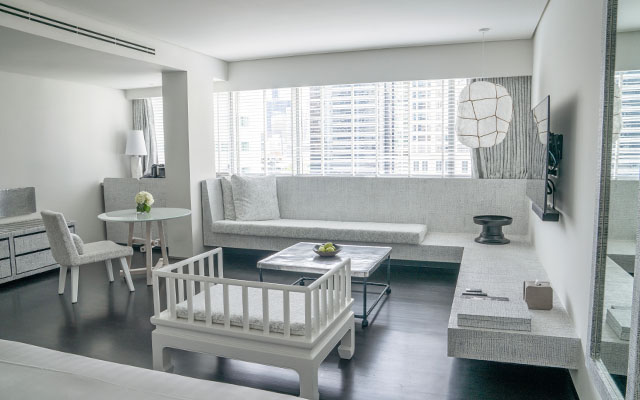
There was a time when luxurious boutique hotels – usually with a small room inventory and full of character – and design hotels were choice accommodation for leisure travellers who thirst for unique experiences.

But the guest profile at boutique and design hotels is fast changing. Corporate clients are increasingly choosing such properties for stays or for hosting exclusive events and incentive programmes, noted Asian event planners.

Business travellers and clients who favour unique hotels may span all ages, but they share some similar traits: they are all well-travelled and desire a distinctive travel experience.

Faye Handley, director of Red Events Singapore, who had used luxury boutique hotels such as Naumi Hotel, Klapsons the Boutique Hotel and Hotel Fort Canning for small- to medium-sized events, said these clients were usually aged 35 years and under, and were “forward-thinking”.

“The younger generation is well-travelled. They…wish to stay at hotels that offer a different experience, so they can combine work with pleasure,” said Seema Ahmed, general manager, Gainwell Travel & Leisure India.

For Robert Lim, senior vice president of Holiday Tours & Travel Malaysia, corporate clients who gravitated towards small, unique hotels were “top achievers who demand lifestyle experiences”.

Unique properties are expected to gain a stronger corporate following as clients mature in their buying behaviour and recognise the need to keep event experiences fresh for participants.

The rapid adoption of these unique hotels by corporate clients has been made possible by hotels chains that have come up with their own boutique and design-led product range. Starwood Hotels and Resorts Worldwide has the fashionable W Hotels and the more affordable spin-off, Aloft. Accor Hotels has the MGallery Collection, which comprises boutique properties with its own individuality, and designer Pullman, which has a larger room inventory. InterContinental Hotels Group has the Hotel Indigo range of stylish boutique properties that reflect the local neighbourhood and culture. These properties boast stylish function venues fitted out with quality audiovisual equipment.

Aonia Singapore MICE director, Darryl Rodrigues, said corporate clients were more inclined to pick design hotels that belong to an established chain when organising events abroad, as those “provide some novelty, without compromising on the quality of service clients have come to expect from upscale and luxury properties”.

But just as much attention is also being paid to independent boutique and design-driven properties.

“It is the recognition that the accommodation experience is as important as the itinerary of the event,” said Rajani Nair Deb, chief marketing officer, KW Conferences India, explaining the growing corporate gravitation towards boutique and design hotels.

“The objective of the meeting is the driver in most cases. It may be a celebration of a milestone or a leadership meeting that prompts the decision to hold the meeting in a design hotel. Brand alignment is also instrumental in clients choosing to hold business meetings in these niche hotels. Clients have briefed us that they (represent) a high-end (brand) and hence the setting for the meeting has to be exclusive,” said Rajani.

Pacific World Hong Kong MICE account director, Ivy Sung, said a client had once requested for the whole boutique hotel to be booked for a product launch.
Violet Wang, senior account manager of Pacific World Shanghai, which uses boutique hotels extensively in the Chinese city, found that small-sized incentives were bigger supporters of boutique and design hotels.

Wang said: “Our clients have always said that they don’t want big hotels that overwhelm their guests, especially for incentive programmes. They prefer to stay in a smaller hotel, which ensures good service, style and location.

“The bigger the hotel, the less attention each guest will receive – this is a common client prejudice. Design is also a big factor. More corporate clients are looking for low profile luxury, where the hotel’s environment is more subtle and tranquil, instead of one with extravagant trappings and a large inventory.”

Wang noted that her clients’ incentive events require more boutique-style elements and occupy fewer than 100 rooms. Most of the time, such events were not pure incentives, and would be a client appreciation event or corporate sales kick-off meeting, she said.

An increasing demand was coming from the luxury fashion industry, automotive and finance industry, she noted, adding that incentive programmes are now mostly for under 100 pax, which fit the boutique model well.

Shanghai CTS MICE Centre general manager, Tom Liu, said corporate clients tended to choose boutique and design hotels to avoid large crowds at five-star conference hotels.

Sushil Wadhwa, chairman and managing director of Platinum World Group India, said the ability to offer novel experiences in a good location was the “trump card” of boutique and design hotels, which cannot compete with dedicated MICE hotels on meeting facilities.

“Many times the historical significance of the property becomes a factor in making a decision,” Sushil said, adding that these out-of-the-ordinary hotels are sometimes used when delegates have had their last event at a large chain hotel.

He said: “We did a meeting in Rome in early February for about 40 people, and instead of using a MICE hotel, we chose Grand Hotel Via Veneto (a boutique hotel that occupies 19th century buildings) in the heart of the city. The client was delighted with the hotel’s central location, large guestrooms and personalised service.”

In Shanghai and Singapore, where there is zealous competition among hotels, event planners said boutique and design hotels were attractive because they were priced more competitively than their five-star branded conterparts.

“As hotel rates for larger or chain hotels in Singapore continue to rocket skywards, some clients, including MNCs, have, upon our recommendation, opted for smaller, boutique properties such as New Majestic Hotel and Naumi Hotel,” said Andy Michaels Lim, general manager of Singapore-headquartered Bonvo Travels.

Lim noted that the number of corporate clients choosing to stay in such hotels rose from 100 to 300 between 2010 and 2011.

13apr2012_story2_2
Hotel Indigo Shanghai on the Bund

Unique hotels make their way into vendor lists

Travel buyers are taking notice of unique hotels offered by major hotel chains and some are slowly gaining acceptance as company preferred vendors.

Shauna Whitehead, project manager, CWT Meetings & Events Asia Pacific, said: “Not many sole properties are included in preferred vendor lists. However, with Andaz Shanghai being part of Hyatt Hotels, and Indigo Hotel Shanghai on the Bund being part of InterContinental Hotels Group, both are a definite consideration for companies’ preferred vendor lists.”

Whitehead believes that there is now a trend for high-end, boutique-inspired properties, merged with local influence and all the essentials that frequent business travellers would expect. Demand for such properties will increase as meetings and events customers expect high-end servicing and amenities, while also appreciating the local influences that hotels such as these have integrated into their design and hospitality.

American Express Business Travel director of advisory services-Japan, Asia-Pacific, Australia, Carl Jones, believes companies generally avoid luxury brands in the current economic environment, and “more locations and awareness of these boutique global chain properties” will allow travellers the chance “to stretch their travel budget from a moderate tier property to upscale”.

“(But) I don’t see travellers downgrading from a full luxury brand to an upscale boutique unless mandated or forced,” he said.

HRG China general manager, Harald Weber-Liel, said: “We have noted a growing number of enquiries from our clients in China about hosting special events in boutique hotels. These enquiries range from business luncheons with clients and incentive meetings for staff.

“We could eventually see a rising popularity among clients from certain industries for hosting events in boutique hotels and resorts. However, demand for corporate stay in boutique hotels in China will probably not change too much (soon) as the economic downturn has seen many companies sticking tightly to their corporate travel budgets.”

While boutique hotels connote a sense of exclusivity for corporate events, and would be a major differentiating factor for clients wishing to deviate from the norm of hosting events in luxury hotels, Weber-Liel said that his company always considers the objective and size of the event because these hotels are generally smaller.

Weber-Liel foresees a significant number of design-driven hotels emerging in China due to the growing number of high-end consumers. These developments would benefit China’s MICE industry as it would grant corporations a larger variety of venues to choose from. – Patricia Wee

Additional reporting from Linda Haden, Patricia Wee, Shekhar Niyogi, Prudence Lui and N. Nithiyananthan

Watching costs of travel

0

Corporate travel in Asia stays buoyant but interest in policy compliance and cheaper options heightens as prices rise

13apr2012_story1_1
Courtesy of Park Hotel Group

Despite an anticipated economic slowdown in Asia this year, airfares and hotel rates are continuing to rise across the region, representing another year of consecutive increase.

Carlson Wagonlit Travel (CWT) predicts a three to four per cent rise for Asia-Pacific airfares this year, while hotel rates in the region are expected to jump by up to 15 per cent.

But contrary to popular belief that a hike in hotel rates and airfares would curtail corporate travel, business travel demand in Asia is expected to remain fairly robust.

Large Asian economies, with the exception of Japan, have so far appeared to be spared the full impact of the economic turmoil erupting across the US and Europe.

Preliminary data from Pegasus revealed that, as of February 28, advanced corporate net reservations for June 2012 in Asia-Pacific rose by 27.9 per cent over 2011, compared to 7.6 per cent in North America, 8.5 per cent in Europe and a decline of 15 per cent in the Middle East and North Africa.

Looking further ahead, the Global Business Travel Association (GBTA) anticipates corporate travel expenditure in Asia-Pacific to grow by up to 11 per cent by 2015, almost three times the predicted rate for the US.

Against a backdrop of more expensive airfares and hotel rates, corporate travel managers are tightening travel polices to keep costs at a manageable level.

Travel management companies (TMCs) that TTG Asia spoke to all agreed that while companies and the travel managers they deal with in Asia have not trimmed their travel budgets this year, they are now intent on sniffing out ground and air savings.

“As airfares and hotel rates go up, corporates tend to examine their travel policies more closely, making tweaks to optimise spending and returns, for instance, by telling their staff to downgrade from business class to economy, or by switching to four-star from five-star hotels.

“This is happening to a degree at the moment (in Asia) as airfares and hotel rates escalate, but it is not evident across all sectors and organisations,” said Greg Treasure, Hogg Robinson Group’s managing director for the Asia-Pacific region.

Mike Orchard, senior director, CWT Solutions Group, Asia-Pacific, said more clients were considering integrating low-cost airlines into their travel programmes to reap the substantial cost savings that could be derived by switching to such carriers, especially on shorthaul routes.

“Companies can expect to save up to 20 per cent on their airline expenditures simply by using low-cost airlines,” he said.

Alternatively, some firms are reducing the frequency in which employees undertake business trips, replacing face-to-face meetings with technology such as video conferencing or by combining multiple destinations into a single trip, according to a spokesperson for FCm Travel Solutions.

Adherence takes centre stage
The renewed interest on cost control has given precedence to travel compliance. A CWT survey found that improving traveller compliance ranked the top priority for Asia-based travel managers in 2012, as they often face an uphill battle in ensuring that travel policies are being adhered to.

GBTA’s regional director for Asia-Pacific Welf Ebeling said: “Asia is still woefully behind the US and Europe when it comes to getting employees to toe the line, and in utilising online tools to keep travel expenses in check, even though they might have a travel programme and policies in place.”

This point was reiterated by Advito (see related article below, left), which said in its 2012 industry forecast that Asia was 15 to 20 years behind the West in its travel management evolution.

Orchard argued that the laissez-faire approach to travel policies among Asian employees was rooted in the perception that booking directly with suppliers was the cheapest option. “However, our research found that average hotel rates offered by TMCs are around 18 per cent lower than those directly quoted by hotels,” he said.

Policy restrictions are also a cause for employees skirting the rules. “Multinational firms that have not adapted their global travel policies to accommodate local cultural differences and idiosyncrasies usually see more incidents of travel policy defiance,” Orchard said.

Best road to compliance
While adherence to travel policies is crucial, travel managers should not be overzealous when clamping down on employees, said Carl Jones, director of advisory services, Japan, Asia-Pacific, Australia, American Express Business Travel.

Instead of wielding the stick, employees should be encouraged to follow policies through constant communication and engagement. “After all, (business) travel is a prime motivator, and if policies become too restrictive, this will demoralise workers, which could in turn affect retention rates,” he said.

Orchard, on the other hand, prefers “gamification” techniques. “Persuade employees to accumulate points in exchange for rewards for good travel behaviour, instead of harking on about rules and regulations.”

“Alternatively, give employees a traveller score card that lists exactly where their behaviours are driving savings – it’s a good solution to keep employees on the straight and narrow.”

13apr2012_story1_2


Setting sail on growing demand

0

Asia’s cruising scene heats up as more international ships arrive, helping to also cultivate outbound markets

13apr2012_cruise

13apr2012_story_hk

Travel consultants in Hong Kong are gearing up to sell more cruises as they anticipate an even bigger market with the opening of the country’s new Kai Tak terminal next year. Last month, Worldwide Cruise Terminals Consortium was finally announced as the terminal’s operator and manager.

Crystal Cruises, regional sales manager, Asia-Pacific, Marnie Whipple, said: “(The new terminal) shows the commitment of Hong Kong to provide superior berthing (facilities) for cruise ships. Increased cruise visits – and simply greater visibility of ships in the harbour – help to build awareness and lead to more queries.”

The refurbished Crystal Serenity recently called at Hong Kong, while Crystal Symphony will visit the city for three days in 2013. “In 2014, both ships will call on Hong Kong on expanded 10-, 12-, 14- and 16-day itineraries, plus longer combination cruise options,” said Whipple.

The number of ships calling at Hong Kong in 2013 is not yet available, but confirmed cruise liners include Queen Mary 2, Seabourn Pride, Celebrity Millennium and Azamara Journey, according to a Tourism Commission spokesman.

To tap the Asian market, UK-based Cunard Lines appointed Cruise Vacations – led by cruise expert Nancy Chung – as its GSA in Hong Kong and Macau in 2010. Earlier this year, Chung set up an office in Seoul “to manage and build rapport for Cunard” due to the significant size of the South Korean market. Last year, she appointed a GSA in Jakarta to oversee the growing Indonesian market.

Memory Holidays, a subsidiary of Lotus Travel Group, also recently launched the GeoTraveller Cruise Center, a brand that aims to lead the cruise vacation industry through product innovation.

Meanwhile, travel trade members said they preferred to keep the existing cruise terminal in operation, even when Kai Tak opens in mid-2013. Kai Tak’s second berth is set to be completed in 2014.

Wharf Holdings, which has been managing the popular Ocean Terminal since 1966, is still negotiating with the government to renew the lease expiring on June 15. Prudence Lui

OLYMPUS DIGITAL CAMERA
Whipple: longer trips in pipeline

13apr2012_story_phil

The Philippines Department of Tourism (DoT) is eyeing a greater slice of the lucrative cruise travel industry as more international liners call at the destination.

The 694-guest Azamara Quest, part of the Royal Caribbean International (RCI) fleet, made its maiden call at Manila on March 28. (Although at press time, the ship had to cut short its 17-day itinerary due to a fire.)

RCI’s 2,074-guest Legend of the Seas will also visit Manila before making its inaugural call in Boracay this October, a rare win for the Philippines which hardly receives ships of this size. And ships like Classic International Cruises’ Princess Danae are visiting new ports like Davao, where it called at this week. The majority of its 371 passengers opted to take a city tour, said DoT regional director Art Boncato.

Despite underdeveloped port facilities compared to Hong Kong and Singapore, the country is keen to pursue the cruise segment as it is “a resilient market”, said Maria Corazon Jorda-Apo, who heads DoT’s North America and Asia-Pacific teams. The NTO is participating in major cruise shows, as well as collaborating with ASEAN counterparts in Singapore, Malaysia and Thailand to invite more ships into South-east Asia.

Cruise tourism has been identified as one of the priorities within the National Tourism Development Plan, with plans underway to move cargo business away from Manila’s South Harbor to pave the way for better cruise liner-ready facilities. The deepwater port of Subic is also being positioned as a cruise destination.

Business is getting noticeably better, said Carla Mariano, groups manager, Blue Horizons Travel & Tours. “Last year, we handled three ships; this year, we’ve already handled seven ships in the first quarter.”

Most ships coming to the Philippines bring about 300-400 pax, and some call at as many as four ports in the country, such as the Spirit of Adventure which visited Palawan, Cebu, Manila and Subic.

Orion II, which sails in July, will also make stops in Puerto Galera in Mindoro and Coron in Palawan, and Fuji Maru is expected to visit in May and November. – Marianne Carandang

OLYMPUS DIGITAL CAMERA
Mariano: jump in cruise sales

Trump targets luxury projects in India

0

AMERICAN property conglomerate, Trump Organization, is going for India’s luxury hotel market with plans to expand into cities including New Delhi, Bangalore and Goa.

The company entered India last year through a joint venture with real estate developer, Rohan Lifescapes, for an upcoming 45-storey luxury residential tower in Mumbai. Trump Organization, whose portfolio consists of properties in the US, Turkey and South Korea, also intends to bring in the Trump Hotel Collection by 2016.

“India, among other emerging markets, is the biggest push for our organisation,” Donald Trump Jr, executive vice president of Trump Organization, is reported to have said at the Hotel Investment Conference South Asia held in Mumbai on April 3-4.

According to reports, the developer is looking at building several residential and hotel projects in India over the next five years, and is close to signing a few deals with Indian developers.

Niche luxury travel consultants hope this will materialise. Rajendra Dhumma, director of Classis Travel and Tours, Mumbai, said: “Indian tourism is in need of more value-add options. We expect the Trump Hotel Collection to add a new dimension to luxury hospitality in India.”

YTL’s new Borneo resort to launch in July

0

YTL Hotels, the hospitality arm of Malaysian conglomerate YTL Corporation, will open the Gaya Island Resort, Borneo on July 1, 2012.

Located just off the coast of Kota Kinabalu on Pulau Gaya, the largest island in Tunku Abdul Rahman Marine Park, the property will comprise 121 standalone hill villas offering views of the ocean and Mount Kinabalu.

Facilities at the resort will include several dining outlets, a pool bar & lounge, a 40-metre infinity swimming pool, and a spa centre featuring six treatment rooms with outdoor decks, a walk-in theatre and a yoga retreat space.

There will be a host of activities for guests to participate in, such as as kayaking, paddle surfing, scuba diving, PADI open water courses, island hopping, guided snorkelling expeditions, guided nature walks and private yacht charters.

The resort is a 30-minute combined car and speedboat ride from Kota Kinabalu International Airport.