TTG Asia
Asia/Singapore Wednesday, 14th January 2026
Page 2650

India for those with cash

0

Insight Vacations introduces first Asian programme, targeting affluent travellers

20apr_tipsheet
Jaipur’s Wind Palace, featured in five out of six itineraries 

Travel experts looking to sell premium tours to India have a new option: Insight Vacations, a premium brand of The Travel Corporation, has rolled out its first travel programme in Asia, featuring India.

Aimed at affluent consumers in Singapore, Indonesia, the Philippines, Thailand, Hong Kong and Malaysia, the inaugural programme features six itineraries. Travellers will have the opportunity to explore the well-known Golden Triangle, and to explore less-trekked regions such as Kerala. Trip extensions to Sri Lanka, Nepal and Bhutan are also available.

There are two Insight Gold tours – incorporating ultra-luxurious stays at Oberoi and Taj hotels and exclusive access to a royal palace – as well as four Premium escorted tours. The Premium itineraries range from eight to 14 days while the Insight Gold itineraries range from 10 to 11 days.

A maximum of 35 people will embark on each tour, which is priced from US$2,365 per person on a twin-sharing basis.

Travel consultants will earn 12 per cent commission on each sale, said Sheryl Lim, regional director, Asia, Insight Vacations. She added that package deals in partnership with Jet Airways would be available by the end of this month.

For B2B marketing, the tour operator will focus on educating its existing travel partners on a group or one-to-one basis, as part of an ongoing exercise.

Lim said: “India is still a relatively new destination for most of the travel consultants we work with. Our goal is to initially work with (those) who currently distribute our European and US products. We intend to target repeat customers first.” The programme was first introduced in January in Australia and the US.

At last week’s launch in Singapore, OP Meena, assistant director of IndiaTourism in Singapore, said the luxury products would “resonate well with consumers in Asia”.

This article was first published in TTG Asia, April 20 issue, on page 8. To read more, please view our digital edition or click here to subscribe.

Asia to be 40 per cent of The Travel Corporation’s revenue in five years

0

US-BASED The Travel Corporation expects Asia to account for 40 per cent of its revenue in five years, from 15 per cent now, as it rolls out a strategic plan to tap the region’s outbound markets.

Brett Tollman, president and chief executive, outlined a brand-centric approach in enlarging the company’s Asian pie. This will see his brands such as Trafalgar and Insight Vacations being launched in non-English speaking markets such as China and Japan, but customised to the needs of these travellers in language, content and length of travel, among others.

In China, for instance, a new hire has been made, based in Shanghai, to lead the branded business and work with agency partners on customised Chinese-speaking departures.

Said Tollman: “What you saw before was our custom group business was done under the brand Trafalgar, but it was obviously not a Trafalgar product or experience and we didn’t want to damage or give the wrong perception of what a Trafalgar experience was if someone out of Japan or China was buying a custom group through agency X. (Thus) we’ve rebranded last fall, so those custom group offices are called Travel Corporation Asia, Travel Corporation China and Travel Corporation Japan.”

The shift is major for the US-based company, which traditionally specialises in English-speaking custom group business – individuals travelling in a group on a holiday – and whose largest market is the US, followed by Australia, Canada, the UK, South Africa, New Zealand, Singapore, Hong Kong, the Philippines, Malaysia, South Korea and Taiwan.

Tollman, in an interview with TTG Asia e-Daily on the sidelines of the WTTC Global Summit, said: “Our investment over the next three to five years will include putting marketing into those markets to build awareness of these brands, working primarily through agency partners who already have the customers, by providing cooperative marketing support so they can educate their customers on these products in addition to the ocean cruising or FIT they might be selling.”

The Travel Corporation is also opening an office in Jakarta. “We’ve been doing custom group business out of Indonesia for some time but there has not been an office there and we’ve seen fantastic growth, so we’re expanding our commitment and investment there,” he said.

Tollman added: “All of our brands, with the exception of Uniworld (boutique river cruise collection) and Red Carnation Hotel Collection, are not luxury brands but are outstanding mid-market brands. Obviously, the mid-market will be growing exponentially in Asia and therefore we want to establish our brands here (in Asia).

“As a family-run private business, we look at long-term commitment and vision as to where we want to be in 10, 20 years time, so we’re not constrained by short-term profitability issues.”

Meanwhile, on the inbound side, Trafalgar is launching a Japan programme, which will operate next year. “We’re very committed to supporting the Japanese in their period of recovery but we also believe there will be growing interest from our traditional European/American markets for Japan, so we’re very excited about launching that this year, with operations starting next year,” he said.

Read View from the Top with Brett Tollman, TTG Asia May 4, 2012

China Travel Service (Hong Kong)

0

TTG Asia tries to book tickets for the London Olympic Games from the authorised reseller in Hong Kong

TTG I would like to visit London and watch the Olympic Games. What do you have?
China Travel Service (Hong Kong) We have a handful of Games tickets left, but our FIT packages offer round-trip airfares and a wider choice of Games tickets. Prices range from HK$28,000 to HK$30,000 (US$3,600-US$3,860) for a round-trip airfare and one event.

TTG How about the Games’ opening or closing ceremony?
CTS Only the VIP category is available but it costs more. Let me check it for you. (Returns a minute later) The price will be about HK$67,000, which includes the admission ticket, food and drink, plus a seat in the VIP box.

TTG That sounds a bit expensive. What do you recommend if I simply want to have a taste of the Games? I’ve got seven days in the UK.
CTS There are standard FIT packages with a choice of Games from July 31 to August 11. Tickets are still available for most of the days and you may pick one according to your schedule. Our partner airlines are Cathay Pacific, Virgin Atlantic and Hong Kong Airlines. (He patiently lists all flight timings.)

TTG I live in Sai Kung. How can I book a package?
CTS You may book at any of our branch offices. Would Causeway Bay or Sheung Wan be better for you? Otherwise, you can make a booking by phone and we can email you an order form. Can I have your email address? (After giving him my email address, the line goes dead, and I call the hotline again to ask for the same travel consultant.)

TTG Is there anything I have to pay attention to after booking the package?
CTS All official Games tickets won’t be ready until July, so we will issue a voucher with your name, and you can redeem the ticket in July. Please note that the ticket won’t carry your name so please don’t lose it. We also advise you to pay attention to the flight date and time as the air ticket cannot be changed.

TTG I may need your help to book a hotel, what would you recommend?
CTS We have a few hotel partners in the UK but we don’t have room allotments, so it would take us about a week to check the availability and room rate. It may be more efficient if you book it by yourself. You may also visit our website.

TTG This would be my first trip to the UK. Do you have a groundhandling service that you can provide while I am there?
CTS Sorry we don’t because CTS doesn’t handle much outbound traffic to longhaul destinations.

TTG Do you have any brochures about the Games? How can I find out about transportation to the venues?
CTS We advise you to visit the official website.

Verdict I didn’t have to wait long to get connected, and the staff was knowledgeable about products on offer. However, 
he was not able to give me any useful travel tips for my stay in the UK. CTS could have leveraged on the Games to offer supporting products such as local tours or groundhandling services. By the way, I am still waiting for the order form.

This article was first published in TTG Asia, April 20 issue, on page 8. To read more, please view our digital edition or click here to subscribe.

Asia humbles Starwood CEO, but no need for Asian-centric brand, he says

0

STARWOOD Hotels & Resorts Worldwide president & CEO, Frits van Paasschen, says the company is building better hotels thanks to growth in Asia, but shies away from the need to create an Asian-centric brand for Asian guests which can even be exported to the West.

US-based hotel chains have been successful in exporting their brands to Asia, but the rapid rise of Asian consumers has seen hotel companies prototyping brands native to Asia or tweaking existing ones to suit the needs of Asian guests.

InterContinental Hotels Group has just unveiled Hualuxe catering to the upscale Chinese traveller, while Accor is re-engineering ts Grand Mercure in China to cater to the domestic travel market.

But van Paasschen told TTG Asia e-Daily: “I don’t think of our brands as being Western brands, but global brands.

“The key to having a global brand is to appeal to basic human needs that cut across cultures, ages, generations and incomes. So a desire to have a sense of wellness and refuge in a hotel, a desire to be extravagant, to feel like you are in a creative atmosphere – those things cut across cultures.”

“The more important thing is not having a Chinese brand, or Japanese, or French. It is having global brands that work anywhere in the world,” he said.

During a panel discussion at the WTTC Global Summit, van Paasschen said “globalisation is not Westernisation” and that a huge fear he had was disappointing Asian customers staying in Starwood hotels in the West that might not meet their expectations.

“Sure, labour costs are lower in Asia, but Asians have this natural hospitality and Asia has raised the bar for us,” he said.

Parag Khanna, director, Hybrid Reality Institute, who keynoted the session on a rapidly-changing world, said that for the first time in history, “globalisation is truly global”, with all regions of the world being equal and important.

Van Paasschen, when queried by TTG Asia e-Daily if Starwood’s last real brand innovation was the W, said: “Oh no, I wouldn’t say that at all. We launched two brands three years ago, Aloft and Element, which I think are every bit as revolutionary in their segments as W. Even for a brand like Sheraton, which is 75 years old, to re-conceive the lobby as a cyber cafe very much current to the 21st century traveller is every bit a reinvention of an older brand as creating a new one.”

Asked if there are too many hotel brands in the market, creating consumer confusion, he said: “I don’t think ours are too many. We have nine brands today. I’m a half full kind of person and I think may be Sheraton is the only one I would say truly has a global scale, so we have plenty to do with the nine we have.”

Asked to comment on the retirement of Miguel Ko, the chain’s chairman and president in Asia-Pacific, van Paasschen said: “The important thing is to look at this is a planned retirement. We’re filling all of the open positions in sequence with internal executives and doing this at a time when our business is doing well. All of those things point to a healthy corporate culture.

“I couldn’t be more sorry to see a friend and an admired colleague leave than Miguel, but I also have no doubt we would not miss a beat in terms of what work we have to do. Miguel has also agreed to stay on as non-executive chairman, which reflects his deep relationship with Starwood.”

Effective July 1, Stephen Ho, currently senior vice president of acquisitions and development for Starwood China, will become president of Asia-Pacific. Qian Jin, currently head of Starwood’s operations for China, will be promoted to president of Greater China, reflecting the country’s importance for Asia-Pacific and the company.

Eight groups jump on new coalition to press case for tourism

0

EIGHT travel and related associations have jumped on a new coalition to press a case for tourism to governments.

As of now, the coalition comprises the WTTC, UNWTO, IATA, PATA, World Economic Forum, American Society of Travel Agents, Cruise Lines International Association, Airports Council International and the US Travel Association.

Their alliance was a result of a call in May last year by the WTTC for the industry to come together with one voice to effectively engage governments to give real support to tourism.

Governments continue to confound the industry with their bureaucratic visa processing and taxation policies, the UK APD and EU-ETS being the most odious taxes right now. These two current hot button issues – visas and taxes – reflect governments’ lack of real understanding of how tourism could support the economy, industry CEOs said.

IATA’s director-government and industry affairs, Jeff Poole, said IATA alone could not convince governments of the foolishness of taxation, which was why it joined the coalition. He scathingly said that “politicians don’t know, don’t want to know and when they do know, they don’t care”.

A tourism minister, South Africa’s Marthinus van Schalkwyk, said the sooner the industry organised itself property, the faster the government sector would engage it, rather than the other way round. He said while the coalition was fine, it was still too ‘loose’. It needed a permanent institutional mechanism that could effectively convey the industry’s unified view on a specific issue.

David Scowsill, WTTC’s president and CEO, said the coalition was about “coalescing around the same issue” and demonstrating a case through research findings and where it actually counted for politicians, for example, connecting jobs to visas.

The coalition’s immediate opportunity is to make a go of the G-20 leaders meeting in Los Cabos, Mexico, this June and present each G-20 country a “profile” of how its visa processing policies impact jobs. Preliminary findings of research for this campaign commissioned by WTTC and UNTO show, for example, that for every 37 extra visas the US issues, it is creating one job.

Scowsill also pointed out that it was thanks to intense lobbying by WTTC member CEOs such as Bill Marriott and Hubert Joly (Choice Hotels International) that “finally resulted in President Obama’s Executive Order to Hilary Clinton in the state department, to speed up visa processing from Brazil, China and other countries”.

Said Scowsill: “Only last week President Obama signed another significant agreement on the same visa issue with the Brazilian President, Dilma Rousseff. Obama finally ‘gets it’. Let’s hope he is still around after November, otherwise we will have to start over again with someone else.”

Philippine travel firms look to China, Taiwan to fill HK gap

0

THE PHILIPPINES is courting China and Taiwan more aggressively as it seeks to recover from the nearly two-year-old travel ban issued by the Hong Kong government.

A resorts operator in the Visayas, who did not want to be named, said it was targeting group and FIT buyers in China and Taiwan to fill the gap left by a diminishing Hong Kong market, which used to comprise 30 per cent of its total business.

The company is emphasising to the Chinese and Taiwanese markets that the Philippines is a safe destination, especially with additional security measures in place, such as the creation of the Philippine National Police Crisis Action Force.

A Manila travel company, which also requested anonymity, said a positive development is the relaxation of visa policies later this year, which will allow senior citizens to stay in the Philippines for six months while giving them certain discount privileges.

Another welcome move is the extension of visa-free stays for tourists from 166 countries, including China and Taiwan, from 21 days to 30 days.

Still, the Philippines’ blacklist status continues to be a challenge for travel experts hoping to sell the destination.

Ken Chang, vice president, Associated Tours Hong Kong, and honorary secretary/treasurer, Hong Kong Association of Travel Agents, said leisure traffic had dropped by 30 to 40 per cent following the incident.

“Insurance companies also refuse to cover any form of travel to the Philippines because of the travel advisory,” he added.

Read more in TTG Asia May 4, 2012

Additional reporting by Brian Higgs

Indonesia outlines plans to grow special tourism sectors

0

THE INDONESIAN Ministry of Tourism and Creative Economy is developing its special interest tourism portfolio, focusing on six sectors: cruise; culinary; golf and sports; spa and wellness; shopping; and diving and marine tourism.

Rizki Handayani, newly appointed marketing director of MICE and Special Interest Tourism, said: “Indonesia has all these products, with each sector having its own association and community, so we need to package and promote (the products) the right way to the right targets.”

Citing golf as an example, Rizki said Indonesia had not been successful in attracting golfers to play in the country despite having many world-class golf courses and a golf association. She plans to work with international golfing associations to promote the destination.

Rizki added that the NTO would also participate in special interest tradeshows and invite Indonesian industry players catering to these markets.

On the domestic front, her marketing division will collaborate with the product development department to create and package products to meet market demand.

SriLankan Airlines to begin direct flights to both Dubai and Kuwait

0

SRILANKAN Airlines will start direct daily flights from Colombo to Kuwait and Dubai from May 1, replacing the current Kuwait-Dubai-Colombo route.

GT Jeyaseelan, chief marketing officer of SriLankan Airlines, told TTG Asia e-Daily that the direct flights were launched to meet increasing demand. Passengers from these two locations are mainly workers from Sri Lanka and India.

The airline also said it was increasing seat capacity to Saudi Arabia by adding a 314-seater Airbus A340 on the Colombo-Jeddah route to cater to a growing number of Muslims visiting Mecca during Ramadan.

The state-owned carrier has been reorganising its operations in recent times, adding more flights to Asian destinations, such as China and India, while reducing flights to Europe.

In early April, the airline announced the suspension of flights to Zurich, Rome and Milan during off-peak periods, citing rising fuel costs, operational costs and lower passenger loads. However, the decision was reversed a few days later, and the airline said it would keep the services going.

No reason was given by the airline, but some reports have said that the Catholic authorities had appealed to the government to continue the flights as many Sri Lankans visit the Vatican.

HRG Nepal launched to tap burgeoning business travel segment

0

NEPAL’S stabilising politics and better tourism infrastructure have fuelled a rising demand for corporate travel to the country, said the chief of the newly minted Hogg Robinson Group (HRG) Nepal.

HRG Nepal, established in April when Nepal-based Zenith Experiences Travel Services was appointed as HRG’s associate partner, is responsible for inbound and outbound corporate travel.

Mihika Dhakhwa, managing director of HRG Nepal, acknowledged that corporate travel was still in its infancy in Nepal, but believed there was a “growing demand for MICE and incentive travel to Nepal due to an improved tourism infrastructure”.

The country had witnessed a growing number of hotels, increased hotel and international airline bookings, and rising international visitor numbers since 2010, he added.

Dhakhwa said Nepal’s extensive adventure and cultural activities made it “an ideal place for incentives and conferences”.

He added: “Nepal’s rich nature has made tourism a backbone of its economy. In fact, Nepal’s leisure tourism industry is so strong that plenty of tourists still flocked to the country during times of turmoil.”

“However, while leisure travellers were willing to brave this risk, many companies hold a duty of care for their travellers and thus had been hesitant to send employees to Nepal for corporate trips due to the political instability.”

Room to grow

0

Demand for serviced apartments in Asia-Pacific is expected to grow this year but more needs to be done to realise the full potential of the market

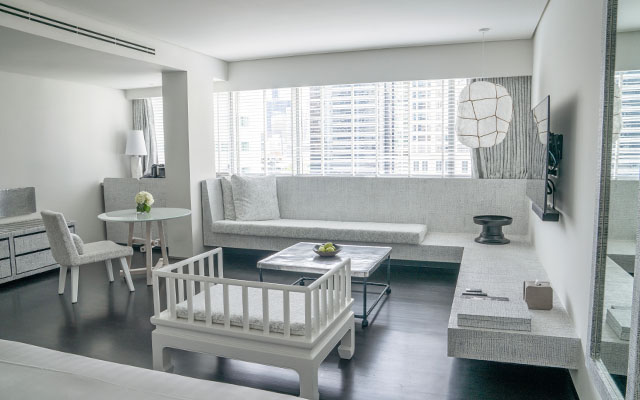
20apr_story4_1From left: Ascott Raffles Place Singapore; Modena Putuo Shanghai; Oakwood Premier Pune 

Serviced apartments in the Asia-Pacific region have been experiencing a reversal of fortunes since the global financial crisis (GFC) in late 2008 pummelled the sector.

Demand continued to rise last year and the uptrend is widely anticipated to spill into this year. Cheaper rates charged by serviced apartments – 15 to 20 per cent lower than before the GFC – are helping to fuel both business and leisure arrivals. Simultaneously, business travel, the core market for branded serviced operators, is growing at a robust pace within Asia as foreign direct investment continues to stream in and companies continue to extend their footprint in the region.

Frasers Hospitality’s group director of sales and marketing, Joanne Ang, forecasts that bookings for the group’s serviced apartments in Asia-Pacific will grow by 15 to 20 per cent by end-2012.

Jia En Teo, co-founder and COO of Roomorama, an online booking engine that specialises in non-hotel accommodation, expects to also “more than triple the number of travellers from Asia using our service in 2012”. Roomorama has 100 primarily unbranded serviced apartments in Asia-Pacific in its system.

“Awareness among Asians about the concept of serviced apartments and their brands is growing,” said Teo, attributing it to the presence of prominent players such as Ascott, Frasers Hospitality, Far East Hospitality and Oakwood Asia-Pacific, which have shaped the industry in the region.

“In Europe and the US, fewer brands occupy the serviced residences sector and, as such, the concept is not as well-known outside the major urban centres,” she said.

Market sources
China, Japan, South Korea, Australia, Singapore and Malaysia are the main source markets for serviced apartments in the Asia-Pacific region, according to industry members interviewed.

Housing staff who have been relocated or have been assigned short-term projects still constitutes the bulk of corporate business for branded serviced residences. However, according to a Global Serviced Apartment Report 2011-12 published by The Apartment Service Worldwide, serviced apartments in the region are being increasingly used by corporate clients for extended stays of over a week but under a month.

Ang said guests at Frasers’ properties in Asia-Pacific stay for three to six months on average and 80 per cent of bookings come from corporate firms, with the exception of properties which can accommodate shorter stays. However, Frasers also sees an increase in stays from guests working on projects, as well as leisure bookings.

The increase in leisure guests at serviced residences can be attributed chiefly to the premise that serviced apartment rates can be as much as 30 per cent lower than rates charged by hotels in a similar category. “More leisure travellers perceive them as good value-for-money alternatives, especially if they are staying for more than three or four days in a destination with a large group of friends or family,” said Roomorama’s Teo.

But while awareness of serviced apartments is rising as a whole, marketing intermediaries and corporate travel managers believe many multinational companies as well as small- and medium-sized enterprises based in North and South-east Asia are still deeply unaware of the advantages in using this accommodation. Many still use hotels to house employees for a month or more.

In fact, few firms in Asia issue clear guidelines on when serviced apartments should be used.

“When it comes to travel policy, I have not come across a clear definition of when (business) travellers should use serviced apartments versus hotels. Most clients who use both hotels and serviced properties tend to make their decisions based on which property offers the lowest logical rate at the time of booking, rather than other criteria,” said Mike Orchard, senior director, CWT Solutions Group, Asia-Pacific, Carlson Wagonlit Travel.

For serviced apartments to become a top-of-the-mind alternative for corporates seeking extended and long-term stay accommodation, Orchard advises operators to focus on certain industry sectors.

“Consulting, project-driven organisations, and firms in the mining and financing industries are prime targets as they tend to have a higher proportion of long stays,” he said.

Serviced apartments should also consider integrating their reservation systems with that of the GDSs to gain more traction with corporate clients, suggested Orchard, while highlighting areas of interest close to the serviced apartments such as facilities, activities and services in nearby areas.

He said: “It’s about getting the message across that serviced apartments offer more than a box standard (hotel) room.”

To nurture demand from the leisure market, serviced apartments have to focus on educating consumers, said Teo. “Highlight the innate advantages that serviced apartments bring within the marketing collateral – for instance their ability to offer travellers a ‘home away from home’, and the opportunity to experience living like a local,” she said.

Building blocks 

More units are opening and operators are stepping up their game to win over more guests to serviced apartments

Serviced apartment operators are intent on widening their presence across Asia-Pacific as the region continues to prosper amid a global economic slowdown.

Optimism among operators remains high, as demand from the corporate sector, the core market for serviced residences, continues to climb (see above), and as more leisure travellers use this accommodation in place of hotels.

Robert Hecker, managing director, Horwath HTL Asia-Pacific, said: “There is still room for growth and lots of opportunities in the Asia-Pacific serviced apartment sector, especially out of Australia.”

“There are lots of intra-regional business activity, and more individuals and businesses now view serviced units as an alternative to hotels. Demand should remain strong, and this will continue to power the growth in supply.”

Singapore-based Ascott, the largest branded serviced apartment operator globally, plans to open more than 40 serviced residences with over 8,300 apartment units in first- and second-tier cities in China, alongside major urban centres such as Jakarta and Kuala Lumpur.

Ultimately, the chain hopes to achieve 40,000 apartment units worldwide by 2015, effectively doubling the size of its current portfolio. Over 70 per cent of these are expected to be based in the Asia-Pacific region.

Tony Soh, Ascott’s chief corporate officer, said: “In China, which we have earmarked for aggressive expansion, besides expatriates and foreign tourists, a rising number of domestic business travellers are staying at our serviced residences.”

“In India, the shortage of international-class accommodation presents opportunities for Ascott to tap unmet demand from both foreign and domestic tourists.”

“Singapore, Vietnam, Indonesia, Malaysia and the Philippines also have significant potential for serviced residences due to increasing foreign direct investment and tourist arrivals.”

Frasers Hospitality, another game changer in the Asia-Pacific serviced residences sector, currently operates 35 properties in Asia-Pacific. This year, the firm intends to open properties in Guangzhou, Shanghai, Wuhan, Beijing, Gurgaon (New Delhi), Melbourne and Perth.

20apr_story4_2From left: Hecker: lots of opportunities; Soh: redesigning experience; 
Leong: deliver on the promise

Plans are also underway to determine the feasibility of opening further properties in Vietnam and Indonesia, as well as in emerging destinations including Cambodia and Myanmar.

“Frasers is taking calculated and strategic steps to ensure that we expand our footprint across Asia and the Pacific in a sustainable manner as we capitalise on current trends, such as the growth in demand for serviced suites, while developing a better understanding of our current and potential customers, and developing new ways to engage them,” said Jastina Balen, director of group branding and communications, Frasers Hospitality.

Oakwood Asia-Pacific, a smaller branded player in the region, has several projects in the pipeline, chiefly in China and India. By the end of the first quarter, the chain is scheduled to open Oakwood Premier Guangzhou, its sixth property in China and also its first luxury brand in the country.

In China, with the opening of Oakwood Premier Guangzhou, Oakwood will offer almost 1,500 serviced apartments in six key cities, namely Beijing, Chengdu, Guangzhou, Hangzhou, Shanghai and Hong Kong.

“China’s economic development has led to an increase in business activities and corporate expansion of many multinational and large-scale domestic companies, generating an increasing demand for serviced apartments especially to accommodate senior executives,” said Caroline Leong, marketing director, Oakwood Asia-Pacific.

In addition, the company hopes to manage nine more properties in India by 2014 in major urban centres including New Delhi and Hyderabad. Currently, the company manages 25 properties in China, India, Thailand, Indonesia, the Philippines and Japan.

One of the main priorities for serviced residence operators expanding in the region is ensuring that service standards remain consistent. A way to achieve this is to step up employee training, something operators said they were focusing on.

“Operations-wise, we endeavour to live up to our promise of offering the Oakwood Gold Standard of service by placing a priority on training our people – motivating and empowering them to fulfil our residents’ and clients’ needs,” said Leong.

Rising affluence and a broader range of travel experiences mean Asians are now more discerning than ever. Serviced operators have acknowledged this attitudinal shift, and are adapting to meet the evolving needs and desires of Asian travellers.

Ascott, for example, will be rolling out a series of consumer-centric initiatives designed to make guests feel more at home. “We want to redesign the experience guests have while staying in Ascott properties through the insights gained from our improved reservation and property management systems,” said Soh.

Frasers is adopting a similar strategy. Balen said: “Based on data gleaned from our customer relationship management system, Frasers is hoping to roll out customer-centric programmes and products that will better meet the needs and desires of our existing and potential clients in the near future.”

This article was first published in TTG Asia, April 20 issue, on page 9. To read more, please view our digital edition or click here to subscribe.