TTG Asia
Asia/Singapore Monday, 19th January 2026
Page 2600

Asia the key for Pentahotels’ expansion strategy

0

PENTAHOTELS is planning to unveil a total of 80 properties worldwide by 2020, with 60 per cent of the openings in Asia and the rest in Europe.

Sonia Cheng, CEO of Hong Kong-based New World Hospitality, which owns the Pentahotels brand, said: “Half of the expansion in Asia will take place in China. We will look into first-, second- and even third-tier cities. In some major cities, we will even target having three or four hotels due to the high growth. Our business model in China is to (focus on) hotel management, so we will work with local developers and owners for upcoming expansions. Still, we plan to own and manage 30 per cent of the new hotels in China.”

Apart from its two existing properties in China, which include the recently rebranded Pentahotel Beijing (TTG Asia e-Daily, January 7, 2011) and Pentahotel Shanghai, the group will launch a 197-room hotel in Guiyang next year and a 390-room hotel in Shenyang in 2014. Future properties will be located in urban centres, convention and exhibition complexes, airports and rail stations, Cheng revealed.

Hong Kong’s first pentahotel will debut in summer 2013 in East Kowloon near Kai Tak Cruise Terminal. Built, owned and managed by the group, this 32-storey hotel is set to be the largest pentahotel property with 720 rooms.

“As a design-led hotel, it’s different from traditional hotels. We don’t have a large lobby but stylish settings to woo the young at heart. We are aiming the FITs and digital nomads, as well as entrepreneurs who work nearby,” said Cheng.

Rates for pentahotel Hong Kong are not yet available but they will be much higher than Shanghai and Beijing where rates average around US$70, Cheng said.

Highlighting the role of travel experts in pentahotels’ development, the group’s vice president of sales and marketing, Dexter Chia, said: “We have developed a lot of travel (consultant) support for pentahotels in Shanghai and Beijing. When pentahotel Kowloon joins sister hotels in Shanghai and Beijing, business will be mutually reinforced through ‘road warriors’ who travel between these cities.

“Hong Kong travel (consultants) may not yet be familiar with the penta concept, so we’ll be arranging trial stays when pentahotel Kowloon opens and encourage bookings through incentives.”

Jetstar’s Darwin-Singapore-Osaka route takes off in November

0

JETSTAR will start thrice-weekly Darwin-Singapore-Osaka flights from November 1, adding a new international link to its domestic network in Japan.

Building upon the existing Darwin-Singapore service, this sector will be flown on Airbus A321 aircraft, while the longhaul Singapore-Osaka leg will be operated on A330 planes with economy- and business-class seats. Osaka is the fourth longhaul destination from the airline’s Singapore hub.

According to Jetstar Group CEO, Jayne Hrdlicka, the new service will capitalise on the group’s growing presence in the Japanese market, following Jetstar Japan’s launch  earlier this month (TTG Asia e-Daily, April 9, 2012).

Hrdlicka said: “This new service means Darwin will be connected to Osaka as well as Tokyo, and by extension, to three other major Japanese cities via Jetstar Japan’s domestic network.

“For Australian and Singaporean tourists, this new connection will make it easier to explore everything Japan has to offer. We expect this new link to encourage more outbound tourism from Japan, particularly combined with a domestic network that makes it more affordable to reach international flights to Darwin and Singapore.”

Jetstar Airways also operates a A330 service from Melbourne to Singapore, which can be connected to the Osaka flight.

Tickets for the new Darwin-Singapore-Osaka route are now available from A$359 (US$370), while a promotional fare of A$259 will be offered for a limited period.

With this new service, the Jetstar Group will operate up to 31 international services per week to Osaka, including Jetstar Airways’ longhaul services from Cairns and the Gold Coast in Australia, and Jetstar Asia’s shorthaul international services from Singapore via Taipei and Manila.

Cebu Pacific to launch flights from Singapore to Iloilo

0

CEBU Pacific is set to begin a thrice-weekly direct service from Singapore to Iloilo on November 9.

Dubbed the “Province of Festivals”, Iloilo, which lies on the south coast of Panay Island in the Philippines, will become the airline’s fifth domestic hub.

“The launch of this new route will be in time for the delivery of three more brand-new Airbus A320 aircraft in the second half of 2012,” said CEB VP for marketing & distribution, Candice Iyog.

In line with the announcement of direct flights from Singapore to Iloilo, CEB will also introduce twice-weekly flights from Hong Kong to Iloilo, four-weekly flights from General Santos to Iloilo, and increase the frequency of the daily service from Manila to Iloilo to seven times a day.

Meanwhile, CEB is holding a seat sale for its Singapore-Iloilo flights until July 19 or until seats last. Valid for travel from November 8, 2012 to January 31, 2013, all-in, one-way tickets from Singapore to Iloilo are selling from as low as S$44.66 (US$35) per pax.

Indonesian destinations diversify for Lebaran 2012

0

INDONESIANS are choosing to travel further and wider for their Lebaran holidays this year, according to the latest data from Wego.co.id.

Even though it’s normal to see an increase in flight-only bookings for the Lebaran holiday period as people return home, this year, accommodation is also being booked and at a far wider range of destinations – 165 in total compared to 69 at this time in 2011.

Hotel searches have almost tripled on wego.co.id for the period immediately following Ramadan, this year from August 17–26.

In 2011, Bali was the clear choice – with two-thirds of domestic hotel searches using Wego for the island.  In 2012, and with much stronger adoption of the dedicated Bahasa Indonesia wego.co.id, the post-Ramadan crowds seem to prefer the cooler climate of Bandung (10 per cent), with Yogyakarta also popular (nine per cent). Lombok, Surabaya and Malang, close to Balekambang beaches, are also achieving a 2-3 per cent interest, followed by Semarang and Medan.

Another development is Indonesians’ choice of hotel category. While travellers range of accommodation choice for Lebaran extends from suites to bungalows, three in every four users are now arranging three-, four- and five-star stays, an increase on last year’s 71 per cent.

Flight searches are proving similarly diverse. Two-thirds of Wego’s traffic intend to use Jakarta’s Soekarno Hatta airport as their departure point. The second most popular port of departure is Balikpapan, which outnumbered more populous Surabaya. Batam follows, then Medan.

Garuda Indonesia is receiving a quarter of bookings on wego.co.id, followed by Lion Air at 20 per cent, AirAsia at 16 per cent and Malaysia Airlines at nine per cent. However, Tiger Airways, Sriwijaya Air and Batavia Air account for one in five tickets during the break.

Reflecting international trends, Singapore accommodation searches are up from a quarter last year to a third of all conducted on the site for the period.  Indonesians are also comparing options for Kuala Lumpur at eight per cent and Genting Highlands at three per cent of the international total.  Malaysia accounts for 16 per cent overall.

Hong Kong has jumped from 11 to 15 per cent of searches, well ahead of mainland China’s four per cent, although many searches target nearby Guangzhou and Shenzhen.

Thailand is maintaining its 11 per cent share. Bangkok, fully recovered from the flooding, accounts for five per cent and Phuket three per cent, with Krabi and Pattaya also popular choices. Macau continues to rise at seven per cent of the total and Japan has recovered to three per cent.

World Ecotourism Conference 2012 to take place in South Korea

0

THE WORLD Ecotourism Conference (WEC) 2012, which will be held in South Korea’s Gyeonggi province/Demilitarized Zone (DMZ) from September 2 – 5, will see a gathering of around 300 local and international delegates.

The theme for the annual conference, Ecotourism for Global Peace, is aimed at bringing together regional countries to promote collaborative and peaceful development of Transboundary Protected Areas.

During the plenary sessions, the success stories of corporate social responsibility programmes and rural ecotourism initiatives in developing countries will be used to demonstrate the value of ecotourism beyond socio-economic empowerment, and as means to maintain social stability in tourism destinations.

Lee Choon Loong, WEC 2012 convenor and CEO & president of DiscoveryMICE Malaysia, the company that is organising the event, said: “Gyeonggi Tourism Organisation and Ecotourism Korea, together with support from the Ministry of Culture, Sports and Tourism and Ministry of Environment, have prepared an event that will introduce delegates to two iconic ecotourism sites in South Korea – the DMZ near the border of North Korea and the Bukhasan National Park in Seoul.”

“There will also be two full-day technical tours, where delegates will get the opportunity to observe the development of the DMZ area as a peace park and ecotourism site. This will be followed by a post-conference spiritual journey at the Bukhansan National Park,” he added.

“Having a conference in South Korea is also in support of South Korea’s presidential directive to develop the DMZ area for eco-tourism, and to coincide the event with International Union for Conservation of Nature World Conservation Congress, which starts on September 6 in Jeju Island.”

WEC 2011 was held in Sihanoukville, Cambodia.

Le Meridien Khao Lak adds premium villas to its accommodation mix

0

LE MERIDIEN Khao Lak Beach & Spa Resort has launched thirteen new Premium Villas situated on a 1.6-ha beachfront plot of land, west of the main hotel.

Embracing the boutique villa concept, the Premium Villas are set in their own private area adjacent to the main hotel. Six of the villas are lined along the beach – offering views of the Andaman Sea and direct beach access, while the other seven face the garden.

The villas range from the 188m2 one-bedroom villa with direct pool access, to a two-bedroom beachfront pool villa measuring 550m2. Each villa is complimented with a garden or patio, a private pool, Jacuzzi and gazebo.

Shared facilities include two swimming pools, a fitness centre, a sauna, and a steam room, while other recreation, spa and dining amenities are accessible at the main hotel.

“We are thrilled to introduce these thirteen premium villas to the luxury travellers. They are ideal for those wanting to indulge in a bit of extra luxury within a private environment,” said Dominik Stamm, general manager of Le Meridien Khao Lak Beach & Spa Resort.

“The expansion of our villa product is part of our strategy to further grow the luxury segment, as we see great potential of this market in this region,” he added.

New integrated Jetstar network may hit travel trade market share

0

QANTAS has applied to the Australian Competition and Consumer Commission (ACCC), seeking approval to integrate Jetstar’s existing and future joint venture airlines and all operational, scheduling, pricing, marketing and purchasing functions in Asia-Pacific. The move could pose a problem for travel consultants, who face increased competition from direct bookings made through Jetstar’s Asia, Japan and Australia websites.

A Jetstar spokesperson said: “We sought this approval to enable the implementation of Jetstar’s Pan-Asia strategy, to (boost cooperation) between Jetstar branded airlines including Jetstar Asia, Jetstar Pacific, Jetstar Japan and in the future, Jetstar Hong Kong.”

“Cooperation between Jetstar branded carriers allows the Jetstar Group to achieve economies of scale, which in turn helps maintain low fares. We know that offering low fares creates new demand for travel and supports existing markets.”

Justine Lally, marketing manager of APT Touring, an Australian outbound tour operator that has preferred agreements with Singapore Airlines, Malaysia Airlines and Emirates, doesn’t believe Qantas’ strategy is going to impact its outbound business.

Barry Mayo, chairman of House of Travel, parent company of the TravelManagers group of home-based agents in Australia, added: “It would be in Qantas’ interests to continue to work with the industry, and there are no indications that this will be anything different.”

“Qantas/Jetstar’s application to the ACCC to authorise joint venture coordination is an attempt to compete on a more level playing field, reduce its dependence on end-to-end carriage, and provide access to a larger customer base and additional revenue.”

Qantas said in a statement: “(Our) investment in the Jetstar Pan-Asia strategy and the substantial public benefits that will result from its implementation are predicated on the ability of Jetstar LCCs to coordinate their operations through a single brand, go-to-market strategy and business model.”

“This will provide Australian consumers with a new and convenient one-stop shop to book itineraries across the Jetstar network, with one website for all Jetstar flights. Australian consumers can quickly and easily understand the choices on offer, and book a complex itinerary involving multiple Jetstar branded airlines in a single transaction.”

Kevin Leong steers Asian cruising as first ACA general manager

0

kevin-leong-steers-asian-cruising-as-first-aca-general-manager
Kevin Leong

VETERAN destination marketer and ASEAN cruise champion Kevin Leong has stepped onboard the Asian Cruise Association (ACA) as general manager, a full-time appointment designed to propel the regional industry ahead faster.

Over the past two years, ACA was overseen by a chairman, Rama Rebbapragada of Royal Caribbean Cruise Lines, and a secretariat service on a retainer.

“They felt they needed a full-time person to move the association forward at a faster pace, now that the MBCC (Marina Bay Cruise Centre in Singapore) has opened and, next year, Hong Kong will open its cruise terminal at the former Kai Tak airport,” Leong said in an email interview with TTG Asia e-Daily.

“Developments in north Asia, especially in China, have been more rapid and they felt that with the potential in South-east Asia, the region should not lag behind,” he added.

Said Rebbapragada: “A lot of good work had been done over the past three years, but with the increased interest in the growth of the industry, there is a lot more that can be accomplished. The general manager will give even more focus and direction – which is needed to continue the good growth in the cruise industry in Asia.”

Leong retired from the Singapore Tourism Board in March after 36 years in various portfolios, including international marketing, MICE and events marketing. Since 2006, however, he has become known in ASEAN circles as the man who champions ASEAN cruising. In 2006, while based at STB’s Sydney office, he chaired the ASEAN Cruise Working Group (ACWG) to co-ordinate the development of the regional cruise industry for the 10 member countries.

“This position with the ACA is a new phase of my life, and having been involved with the cruise industry from the ‘government’ side as chair of ACWG, I’m now looking forward to working with the private sector members of the cruise industry,” said Leong, who is based in Singapore.

Riding the rails

0

Holidaying by train is gathering steam in Asia

12jul12-story2
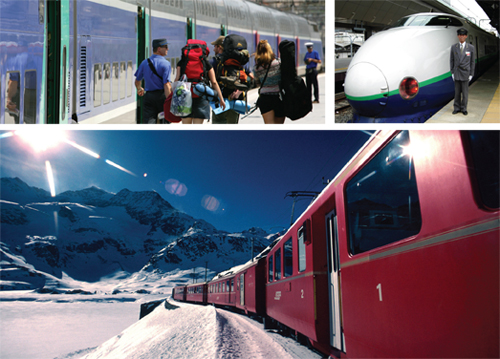
Photos courtesy of Rail Europe

MORE Asians are jumping aboard trains for their travels, thanks to improved rail infrastructure, a wider spread of offerings and a growing preference for such land-based journeys.

Global passenger rail travel reached 2.8 trillion kilometres in 2010, of which 73 per cent of journeys were undertaken in Asia-Pacific, based on figures from International Union of Railways.

According to Amadeus’ The Changing Face of Rail Travel study, high-speed rail will be the most common means of business and leisure travel within Europe, and global passengers will increase by 330 million by 2020.

A focus of GDSs
Train ticketing, which has traditionally chugged behind its air and hotel counterparts, has undergone rapid modernisation in recent times as travel technology providers recognise the need to beef up rail content on their booking platforms.

Just last month, Amadeus announced a tie-up with Italian Trenitalia, allowing travel consultants worldwide access to high-speed rail products Frecce Alta Velocità and Frecciabianca. Those using the Amadeus Selling Platform can compare Trenitalia services with flights on the same route through the FlyByRail Track and Rail Agent Track search systems. Last March, Australia’s Rail Plus inventory was also integrated as a smart tab on the Amadeus Selling Platform.

“Around the globe, it’s an exciting time for the rail industry. However, to capitalise on this opportunity, it’s vital that travel (experts) can compare fares and timetables with those of airlines,” said Thomas Drexley, Amadeus director of rail.

Other GDSs are also not lagging behind. In February, Travelport partnered Italy’s first private high-speed rail operator Nuovo Trasporto Viaggiatori to distribute the latter’s content through its Smartpoint App, while a month later, Sabre inked a deal with ACP Rail International that significantly expanded its portfolio to include rail operators in the UK, US, Scandinavia, Australia, Japan and China.

Specialists preferred
Despite the rising availability of rail inventory on GDSs, travel companies that TTG Asia spoke to revealed that they preferred to make direct bookings with rail operators and ticket distributors.

H.I.S. Travel Singapore, one of few selected agencies authorised to sell the Japan Rail Pass overseas, secures inventory from its Tokyo-based HQ which liaises directly with Japan Rail (JR). This partnership has allowed the “creation of exclusive products that evolve with the JR pass”, explained Wyne Png, business development manger, Singapore.

For Boustead Travel, GSA for Eurail in Malaysia, bookings are made directly on a special Rail Europe platform. India’s TMIC also works closely with Rail Europe and receives about five per cent commission for bookings.

Rail ticket distributors are also eager to firm up relationships with travel companies in Asia. In 2011, Rail Europe partnered Hong Kong-based Sincerity Travel – a leading local agency for train travel in Europe – to launch its flagship Asian store in the Chinese SAR. In the same year, the company also set up a new B2B portal for South-east Asia in response to strong demand from its GSA network in the region.

“China is our new booming market, with sales increasing 60 per cent from 2010 to 2011. The Indian market is also doing very well, growing 40 per cent last year,” said Yu Tian, Rail Europe’s area representative for Greater China and South-east Asia.

Echoing Rail Europe’s investment in the region is Canada-based train holiday specialist Rocky Mountaineer, which is now seeing “substantial growth” out of Asia, according to Robert Halfpenny, director of sales, Asia-Pacific. While the firm’s South-east Asian sales had always been “modest”, the appointment of Singapore-based Scenic Travel in late 2011 as its regional GSA had pushed up sales volume by 67 per cent to date, he said.

“India has been the focus of our resources over the past two years and with our Delhi-based marketing partner Canada Destination Marketing, we are experiencing a 127 per cent growth in forward 2012 sales year-on-year,” added Halfpenny.

“It’s an exciting time for the rail industry. It’s vital that travel experts can compare fares and timetables with those of airlines.” 

Thomas Drexley
Director of rail, Amadeus

Beyond Europe
Asian travel companies are keen to further leverage on the growing interest in locomotive travel among markets here. TMIC, which introduced escorted group tours by rail in Europe last year, saw a 50 per cent year-on-year growth in bookings this year, partly aided by the evolving preferences of the Indian traveller who is “now open to experiment on his own”, said CEO, Srinivas P. Groups are limited to 35 people, making “travelling more enjoyable than on coaches crowded with 49 passengers and one tour manager”, he added.

Economics is also driving bookings for European rail travel. Ann Tan, tour manager of Boustead Travel, which recorded a 50 per cent spike in volume sales of rail packages in 2011, said: “Europe has overtaken Japan and Australia as the top rail destination for Malaysians, partly due to the favourable ringgit-euro exchange rate and the multitude of rail travel options within the continent to suit individual preferences.”

However, travel experts say demand for Asian destinations is also picking up pace.

Last year, Eastern & Oriental Express introduced Chronicles of South-east Asia, a series of luxurious rail voyages lasting between three and six nights through Singapore, Malaysia, Thailand and Laos.

“Journeys aboard the Eastern & Oriental Express are popular with the Asian market,” said Gary Franklin, managing director, Orient-Express Trains & Cruises. “We’ve seen a significant rise in demand and bookings from the Asian market, led by Singapore and Japan.”

TMIC, too, plans to introduce train packages within India.

For H.I.S. Travel Singapore, sales volume from the country has surged by 200 per cent since 2009 to hit a record of 1,500 packages in 2011, according to branch manager Kaku Imamura. The company will launch itineraries incorporating Tohoku, Shikoku, Chubu and Sanyo this year, adding to its current portfolio of nine types of JR passes.

Andy Jones, office manager of China-based Monkey Shrine, which specialises in Trans-Siberian packages, also noted the acceleration of interest among Asians. From just three per cent in 2008, Asians comprised 10 per cent of its clientele in 2011, mainly from Taiwan, Hong Kong, Malaysia and Singapore.

This article was first published in TTG Asia, July 13, 2012, on page 8. To read more, please view our digital edition or click here to subscribe.

View from the top: Jean Gabriel Pérès

0

He’s made Mövenpick Hotels & Resorts far bigger, deeper and wider than it ever was. Jean Gabriel Pérès, president & CEO, talks to Raini Hamdi about brand differentiation and true passion for hoteliering, which he thinks the industry has lost
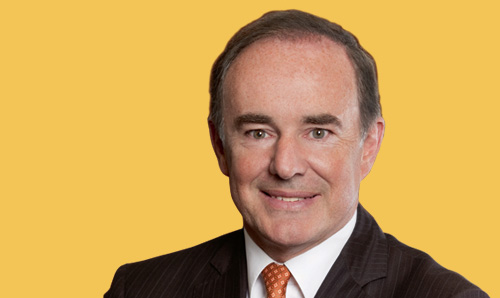
13jul12-story1
Jean Gabriel Pérès
President & CEO
Mövenpick Hotels & Resorts

You’ve helmed Mövenpick Hotels & Resorts for 13 years now. Few CEOs today stay that long with one group.
Yes, the longest-serving ones I can think of are Kurt Ritter (Rezidor Group president and CEO), Reto Wittwer (Kempinski Hotels CEO), Edouard Ettedgui (Mandarin Oriental Hotel Group CEO)…

What are the common links that make you and the others stay?
I think we’re seen as true hoteliers who are passionate about what we’re doing. My company is private (66.7 per cent Mövenpick Holding and 33.3 per cent Kingdom Group), so I’m able to develop a vision which my shareholders validate, and implement a strategy which they see materialising.

In a public-listed company, you are constrained and forced to do things you don’t like – analysts come in and say you must do this and that in the interest of the share price – whereas here I can do what I want and the board supports it. They can see that the company is changing dramatically over the years.

And how…
Yes, 15 years ago, we were in a limited number of countries – basically Switzerland, Germany and Egypt. Now we’re in 25 countries. We had 30 plus hotels. Now 73 plus, and more than 30 under construction so, by end 2015, we shall reach the 100th hotel (in operation) mark (80 per cent managed).

Our positioning has increased. Ten years ago, we were a mix of mid-market, four-star and some five-star hotels. Now all our hotels are upscale and upper upscale. That’s through attrition – around 15 hotels went out of the system as it didn’t make sense to keep them in the portfolio or they were in destinations which were not performing too well. Other hotels were renovated and we’re opening new hotels that make you dream a bit.

What did you see in Mövenpick and, in carving out a vision for it, what did you believe was the right thing to do?
I saw a golden nugget, a company with an amazing potential which was not tapped at all. And the right thing to do was to build on its fundamentals. It already had quite a few fantastic people and the roots of the brand were in F&B, authenticity and quality of service. As you know, Switzerland is the epitome of quality in the world. Three of the five top hotel schools in the world are here and the quality of service – be it in watches or chocolates, etc – is always top.

But I could see that I needed an infusion of talent coming from the five-star hotel business. This is the secret: take an upscale collection of hotels, infuse expertise from the five-star business and you get an absolute winner. Guests do not necessarily feel they are in a palace or a five-star luxury environment, yet they feel the touches of superior quality that you can only find in a five-star hotel.

It’s the same as in the automobile industry – look at Lexus, which is an infusion of luxury in a solid upscale brand, Toyota. Or Audi. When I lived in Hong Kong 15 years ago, I would never drive an Audi. They’ve infused technology and sober luxury such that it’s now one of the three most, if not the most successful automobile brands.

We’re going the same way. This is why Andreas Mattmüller (COO, Middle East and Asia) has been my accomplice for 25 years. We were with Méridien (Le Méridien Hotels & Resorts) together. He has vast knowledge of Asia and passion for food – he loves chocolates by the way. We have a lot of other people from five-star brands like Andreas (who was also with Mandarin Oriental) who have contributed, and are continuing to contribute, to our aim to be the finest player in the upscale hospitality business and we’re getting there.

“I’ve not seen too many brand creations which are amazing or significant by the hoteliers who created them.”

How is the timing right for upscale?
Basically, there are two groups of people today. One is from the emerging countries who start having access to luxury, but you know well that if you give them five-star immediately, you will miss your customer base. Their level of maturity is not yet ready for top luxury.

The other category is from old world Europe, where top bankers, until now, could afford or were allowed to stay at palaces for 500 euros (US$614) a night. Now their headquarters are saying, ‘please come down a bit’,  so they seek affordable luxury and come to us. For the next five to 10 years, we’re at the crossroads of these two market segments, thus our strategy is spot on.

Another fantastic opportunity for us is that lending for new projects has become more difficult today. A lot of owners have realised that with Mövenpick, the development cost is half of what it would be for a luxury hotel but the difference in room rate is not half. So if a luxury charges 100 euros, we would be at 70-75 euros. Thus, owners and developers are also winners (not just customers).

But the upscale segment is always the trickiest to perfect, isn’t it? With luxury, you can throw money; with economy, you can standardise.

Yes, it looks simple, but it’s not that simple. Our aim to be the best upscale hospitality company in the world is to be proven. It will always be a goal; it can never be achieved.

It’s a question of brand differentiation and the need to be meaningful to guests, or risk the brand becoming a commodity. There are too many hotel brands which create too many sub-brands which people do not understand. We decided a long time ago to have just one brand, Mövenpick, so for us, no Royal Mövenpick, Grand Mövenpick or whatever.

My experience with branding – as you know, between Méridien and Mövenpick, I took care of a significant company in charge of luxury fashion distribution in Hong Kong and we had 120 brands such as Christian Lacroix, Christian Dior, Givenchy, etc – is that if you’re not able to fully differentiate your brand from the others, and give it a strong personality and character,  then there is no need to create that brand.

Everyone – be it the guest, the hotel GM, the owner – needs to be able say in a few words what they would miss about your brand if it were to disappear one day. The problem – and the challenge for everyone is – what have come out so far are very artificial. All these brands are created by hoteliers who want to please themselves before pleasing the guests and who are trying to find artificial ways to charge a higher room rate.

Whatever you create must be extremely tangible, whether you decide to go one notch above or one notch under. I’ve not seen too many brand creations which are amazing or significant by the hoteliers who created them.

And so for you, you want Mövenpick to wow in the upscale segment through its Swiss heritage, quality service…?
Yes, Switzerland is loved by many people in the world. It has a positive perception. Switzerland means quality and to me it is one of the most peaceful countries in the world. Swiss quality means a lot more than French quality. I’m French – nothing wrong with French quality – but it’s a fact Swiss quality has more legs, while the French may be synonymous with wine, or the Italians with fashion.

“We have, globally, treated people with a lack of dignity. We’ve been constrained too much by SOP (standard operating procedure).”

Who do you think is doing a good job with upscale?
I don’t know – when you’re totally in love with your brand, you don’t think of the new girl on the block. We’re constantly working to be even better than we are. As you said, with luxury, there is less risk to become commoditised. In upscale, it needs a lot of passion, hard work, human intelligence and heart.

But to answer your question, overall, I think Hyatt (Hotels Corp) has done a good job as a focused, consistent hotel company. In the upscale, it’s difficult to say which names are making me dream a bit, that are sexy. Maybe Alila (Hotels & Resorts, created by Mark Edelson) – it has done pretty good stuff.

Your challenge was to reposition Mövenpick, which you’ve done successfully. What’s the next challenge?
The challenge, whatever you do, is always to find the right talent to carry the torch. The human factor is the alpha and omega of how successful your brand can be. And as we speak, we’re rolling out an internal programme which in my view will generate quite a special outcome in how we reveal the brand to our guests and deliver quality of service.

My GMs are special and, as a CEO, I don’t command them to do their best. I can only inspire them – and they their team – to do their best.

One of the ways is to for us to recognise that in each individual, there is a hidden talent which we need to bring out, so that it benefits the staff, guests and us. It could be something as simple as, say, in Ghana, where my GM recognised the staff had talent for rollerblading that he inspired them to serve around the pool in roller blades. The guests love it, the staff love it – everyone benefits.

We have, globally, treated people with a lack of dignity. We’ve been constrained too much by SOP (standard operating procedure).

For someone with a finance background, you sound more like a CEO from operations.
At heart I’m a hotelier, even though I graduated from business school and did not come from the ranks. I really am passionate about creating enjoyment for the guest through real service. I think it comes from the education my parents gave me and that I was born in a world of classical music. My family members were professional musicians; they were cellists, etc, and that has given me a sensitivity for and vibes about people and places.

That’s where my passion for hotels, hotel design, art, etc, comes from, as well as the recognition of how important it is to genuinely respect people. This includes the acknowledgement that the new generation doesn’t want to be intimidated by hotels or brands that are artificial, doesn’t want to be overwhelmed by super luxury that makes them feel dwarfed.

Do you play any musical instruments?
I used to play the piano. I wish I could open a piano, look at the score and start playing like a dream. It’s the one area that is unfulfilled in my life.

This article was first published in TTG Asia, July 13, 2012, on page 6. To read more, please view our digital edition or click here to subscribe.