TTG Asia
Asia/Singapore Monday, 15th December 2025
Page 2583

Air Kerala debut to patch connectivity to the Gulf

0

A NEW private airline, Air Kerala, is set to commence operations in September, offering a respite from the lack of direct air connections between Kerala and the Middle East.

Registered as a company four years ago, Air Kerala is a joint initiative by the Kerala state government, non-resident Indians residing in the Gulf, and Yusuf Ali, managing director of EMKE Group Abu Dhabi and director of the fledgling airline.

A sizable number of Keralites living and working in the Middle East have been facing problems due to the scaling back of international flight operations by Air India, which flies most of the routes from the Middle East to Kerala. Other international airlines have also raised fares, some by as much as 40 per cent.

K. Vijayan, director, Kerala Travelzone Kozhikode, said: “Having our very own airline will alleviate the concerns of Keralites working in the Gulf, who travel to and fro very frequently and need the assurance of regular flights and reasonably steady fares.”

Joy Peter, director, Intersight Tours & Travels Cochin, said: “Air Kerala can fill the void (left by Air India) and prove to be the leading airline between the Gulf and South India. The likelihood of success is very high.”

Akhil Cherian, manager-marketing, Marg Hotels & Resorts Cochin, said: “A regional airline would generate tourism focus on Kerala and help facilitate better tourism promotion. Perhaps in the future, other tourism destinations in South India will be connected by Air Kerala and a hub will be formed in the south.”

GHM to enter India with Setai and Chedi

0

GENERAL Hotel Management (GHM) has mapped out the introduction of two of its brands in India by 2014.

The 40-room The Setai Mumbai is scheduled to open in downtown Mumbai in December 2013, and rooms will likely be priced at around US$600 per night. In 2014, The Chedi Qutub will open at the UNESCO World Heritage site of Qutub Minar in New Delhi (TTG Asia e-Daily, August 2, 2011), offering 107 rooms.

Kenneth Pereira, director – development (Middle East & India) for GHM, said: “Our expansion plan in India is to go to places where there is scope for luxury hotels; places like Goa, Rajasthan and Bangalore. We are looking for properties in Goa, Jaipur, and Udaipur in Rajasthan. We can even go to remote places, because we believe in creating destinations (through our hotels).”

Clement Koh, vice president – sales & marketing for GHM, said: “India currently contributes between one and three per cent of our global business, but we see great potential and have decided to work with the market in these early days. GHM has primarily been operating luxury resorts, hence the premium leisure segment (in India) will be our main target.”

Subhash Goyal, president, Indian Association of Tour Operators and chairman, Stic Travels New Delhi said: “GHM connotes with luxury and has high brand recall overseas. It will certainly be easy to package it for international inbound luxury clients.”

Finding the right fit

0

TTG Asia asked 20 travel experts which of these hotel marketing representation companies they worked with most closely and why. Top concerns were brand awareness, product variety, ease of booking, commission structure and service standards

27jul12_s3_leading-new2

Destinations used
Asia – Singapore, Thailand, Hong Kong, Japan, Europe – Italy, France, Spain, Switzerland, Middle East – Dubai, Africa – South Africa, Americas – US, South America, Canada, Oceania

Strengths
Strong network of luxury choices. Product variety is great, as it has a versatile range of old architectural hotels. – Eliza Ma, director and general manager, TLX Travel Hong Kong

Provides a lot of support, and informs us about latest hotel news. Site visits also inspire us to try different ideas. – Faye Handley, director, Red Events Singapore

Particularly good with commissions. – Suthipong Pheunphiphop, managing director, Glory Travel Thailand

Weaknesses
Deals mainly with big players and offers less commission to mid-size firms. Has limited staff and there is no strong communication channel between travel consultants and the company. – Ashwani Gupta, managing director, Dove Travel

Quality of services varies between locations. I would like to see more standardised service across different countries. – Suthipong Pheunphiphop, managing director, Glory Travel Thailand

Viewpoint
The brand is well-established in Asia-Pacific and positively received by clients. It meets the rapidly changing customer preferences and requirements in terms of its depth and breadth of properties. However, it has a flat commission structure, and should look at tiered commission scheme to incentivise travel consultants who can prove themselves. – John Chan, senior manager, sales, distribution and global support, PYO Travel Malaysia

27jul12_s3_worldhotels

Destinations used
Asia – Hong Kong, Indonesia, China, Pacific – Australia, New Zealand, Middle East – UAE

Strengths
Wide selection of five-star properties and rates are good. – Chris Ng, managing director, MP Travel & Tours Malaysia

Channels for instant bookings and special deals offered. – Budiman Sumardi, Asia leisure manager, Smailing Tour Indonesia

Attractive commissions, which are given out on a timely basis, as well as exclusive deals and promotions. Helpful in providing VIP services and assisting in MICE deals. – Deepak Narula, managing director, Aman Travels India

Weaknesses
Needs to create stronger brand awareness as people still mistake it for a hotel chain, rather than its primary role as a marketing company. – Deepak Narula, managing director, Aman Travels India

Viewpoint

Our customers prefer known names, and its hotels are easier to sell to customers. Worldhotels has a good range of products and rates offered are competitive, allowing us to make better profits. However, travel consultants are not educated on all available products. We have to discover them ourselves. There should be workshops for frontline staff. – Guldeep Singh Sahni, managing director, Weldon Tours & Travels India

smalllux

Destinations used
Asia – Indonesia, China, Europe, Middle East – UAE

Strengths
Meets the needs of very rich clients who like to be pampered when they are on holiday. – Chris Ng, managing director, MP Travel & Tours Malaysia

One of the few companies that shows interest in MICE business. It also offers detailed and personalised service, as well as special accommodation options. – Rosanna Leung, head of project and business development, MICE World Hong Kong

Weaknesses
Rates are high and commissions are not attractive enough. It should consider extending value-added offers such as welcome drinks and late check-outs. There is also a need for more fam tours and trade fair participation to raise its profile. – Rosanna Leung, head of project and business development, MICE World Hong Kong

Viewpoint
We sell its properties in the largest numbers as it has the pick of the bunch for boutique properties we favour. Having said that, we don’t tend to use marketing and representation companies that much as they offer a particular type of property in each instance, whereas everything we do is bespoke. While they may be fabulous at improving our knowledge, we don’t necessarily book through them. – Lucy Jackson, director, Lightfoot Travel Hong Kong

27jul12_s3_ptrferred

Destinations used
Asia – Singapore, Malaysia, Thailand, Hong Kong, Macau, Japan, Europe – France, Italy, Spain, Portugal

Strengths
Business travel-friendly due to good response time when providing quotations. Also accepts a wider range of credit cards for payment, and is well-prepared for meeting and event bookings. – Carlson Wagonlit Travel Indonesia president director Royanto Handaya

A good variety of hotels and also has special deals occasionally such as a free night’s stay for a two-night booking. – Unnamed Philippine travel consultant

Weaknesses
Value-added services such as airport transfer arrangements could be provided. – Carlson Wagonlit Travel Indonesia president director Royanto Handaya

Viewpoint
It has lots of hotels, and channels for booking are easier and faster. Commissions are also good, and big discounts are offered when you’re booking for a leisure group or incentive. Some of their hotels were recommended to me by tour operators in those destinations. – Alexander Divinagracia, general manager, Globalwings Travel & Tours Philippines

27jul12_s3_relais

Destinations used
Asia – Malaysia, Sri Lanka, Europe – France, Italy

Strengths
Good selection of properties that meets the varying needs of our clients who span the mid- to upper-luxury tiers. Highly active when it comes to offering deals and promotions, as well as provides good reservation support and aftercare. – Javiny Lim, managing director, Quotient TravelPlanner Singapore

Its strength is product variety, which means better client satisfaction. – Chamnong Intarot, managing director, Sawasdee Holidays Thailand

Weaknesses
A major weakness is that many of its properties do not have enough staff to take care of all customers. For example, we have found that some huge hotels have only one receptionist.– Chamnong Intarot, managing director, Sawasdee Holidays Thailand

Viewpoint
It offers a tasteful collection of one-of-a-kind properties that is perfect for sophisticated and discerning clients. In addition, a host of gourmet programmes are available. Its portfolio fits our vision of offering customers unique, bespoke experiences. Lodges, bungalows and accommodation that provides in-room butler services in exotic destinations are popular with our clients. – David Song, digital media & marketing, e-commerce manager, Country Holidays Singapore

This article was first published in TTG Asia, July 27 – August 9, 2012 on page 12. To read more, please view our digital edition or click here to subscribe.

Additional reporting from Prudence Lui, Linda Haden, Mimi Hudoyo, Rosa Ocampo, Divya Kaul and Timothy France

In holding pattern

0

Stuck in the waiting lounge rather than cleared to take off – that’s the prognosis of the business travel market in the coming months

Cloudy economic growth prospects are forming a frost on the corporate travel market.

IATA’s latest air traffic results, for May, already indicated a general downward trend in demand.

A global survey of 541 CFOs by American Express/CFO Research Services released that same month suggested that the pool of travel resources was not likely to increase this year. The majority of respondents (42 per cent) said their companies were likely to spend less on travel. More than a quarter (29 per cent) said their firms were likely to spend the same amount on travel. Only 29 per cent said their organisations were likely to spend more.

Corporate travel will never completely disappear as companies still need to direct their travel resources to the form of travel that is most likely to support revenue growth, as the AMEX/CFO monitor pointed out. Several CFOs interviewed said conference calls were rarely an adequate substitute for in-person meetings when it came to developing business.

The research quoted Jeral D’Souza, vice president and regional controller of Cargill Asia Pacific, Singapore subsidiary of the US-based supplier of food and agricultural products, as saying: “We definitely didn’t see any reduction in the last two quarters of 2011. As people try to retain or grow the business, they have to travel. In Asia, the culture of doing business is not by phone; a lot of it is by meeting face-to-face.”

business-chart

But, rather than stellar growth, all reports indicate a business travel market that is in holding pattern in the coming months.

Whether in Singapore or the US, domestic or international, a slowdown in business travel is imminent. CFOs in Singapore, cautious about the economic outlook as the country’s external-oriented sectors still face challenging times due to persistently uncertain global growth indicators, are holding the line on travel spending, according to the AMEX/CFO monitor.

Over in the US, Michael McCormick, Global Business Travel Association (GBTA) executive director and COO, said: “Earlier this year, we created a number of shock scenarios modelling the potential impact of the European debt crisis on business travel here in the US.

“In our Moderate Shock Scenario we predicted that a prolonged recession in Europe would result in a flattening of business travel spending in the US. Unfortunately, it now seems that this shock scenario is becoming a reality.”

GBTA is now expecting only a 0.4 per cent growth in total international outbound business trips from the US this year to 6.8 million and has scaled back on the volume for next year, when it expects just 3.7 per cent growth to seven million – or a full percentage drop from its earlier projection.

“Business travel to the Far East, particularly China, has been a boon for international outbound travel from the US for the last few years. However, falling economic growth rates in China will likely lead to less trade and hence, fewer trips from the US. The projected slowdown in China and the economic challenges in Europe will lead to lower levels of international growth in the near term,” said GBTA in its latest forecasts released last month.

McCormick’s concern, shared by TMCs interviewed, is that organisations may overreact in the challenging economy, slash their travel budgets and end up weakening their competitive position, particularly when the economy improves.

“That is the exact opposite of what they should be doing,” McCormick said.

“Beginning in December 2007, we saw companies make difficult decisions with their business travel budgets to the tune of 13 per cent from the US$271 billion peak in 2007 – a peak-to-trough decline of US$34.7 billion. Companies cannot afford to overreact just because there may be clouds on the horizon. Benching road warriors will only impact sales exactly when companies need to focus on growth. The return on investment for business travel is too good to pass up.”

TMCs interviewed believe now is the time for firms to put in place the best possible travel management programme and invest in technology to ensure compliance.

Nick Vournakis, senior vice president and general manager for Carlson Wagonlit Travel Canada, said: “Companies must perceive the current turbulence as a key opportunity to negotiate better travel rates as prices are expected to soften.

“Negotiate and secure preferential rates – and then lock them in. Understand purchasing patterns of corporate travellers, use online travel management tools to secure savings and use data to draw insights on where best to negotiate savings with suppliers.”

American Express Business Travel’s director of advisory services-Japan, Asia-Pacific, Australia, Carl Jones, agreed. “Demand-side factors still look good for the (Asian) corporate travel market overall. But it has become more crucial than ever for firms to establish the systems and processes in place to track and manage expenses, including travel, to secure long-term growth in the midst of uncertainty,” he said.

This article was first published in TTG Asia, July 27 – August 9, 2012 on page 9. To read more, please view our digital edition or click here to subscribe.

Additional reporting from Linda Haden

Cruise veteran Rama Rebbapragada passes away

0

RAMA Rebbapragada, founding chairman of the Asia Cruise Association (ACA), passed away on July 25, 2012 following a long battle with illness.

Serving as ACA chairman from January 2010 to June 2012, Rama’s passion in leading the association was apparent in the way he championed working together as an industry with cruise lines on a range of issues, such as building consumer and trade awareness for cruising through travel consultant training, and working with government agencies to develop a cruise-friendly environment in Asia.

Rama was also associate vice president, International Consumer Outreach & Business Development of Royal Caribbean Cruises, and an employee of the company, since 1983. Previously, he was regional vice president, International, responsible for business development in Asia, Latin America, Europe, Middle East and Africa. Based in Singapore from 2007 to 2009, he led Royal Caribbean Cruises’ entry into Asia-Pacific, opening its regional headquarters in Singapore, its first representative offices in Shanghai, Beijing and Guangzhou, and its first office in Sydney.

Kevin Leong, recently appointed general manager of ACA after a long career with the Singapore Tourism Board (TTG Asia e-Daily, July 16, 2012), said: “I first got to know Rama when he was sent to Singapore to start the Royal Caribbean Asia office. His dynamism was infectious and when he started up ACA, I knew that Asia would become the next big cruise region sooner or later. We mourn his passing, but will continue his legacy and turn his dreams into reality.”

Trey Hickey, vice president International Sales & Marketing for Princess Cruises and Cunard Line, said: “Rama touched the lives of so many across the world; he kindly brought me into the industry 15 years ago and has served as my mentor ever since. Rama will continue to be an inspiration to all of us and will be missed.”

Travel professionals gaining clout over corporate travel policy

0

A STUDY by GBTA Foundation and Egencia, the corporate travel arm of Expedia, has found that travel professionals are having a bigger say in business travel policy, aided by online booking tools and a growing focus on cost-saving efforts.

Titled Travel Policy Trends: Control – What Does it Mean and Who Has It, the study surveyed almost 1,500 travel professionals across North America, Europe, Asia and Latin America to determine their definition of travel policy control and how respondents were adapting to new and evolving business travel requirements.

The majority of travel professionals – 60 per cent – indicated that they now have more control over travel policy compared to a few years ago.

Most respondents – 61 per cent – also indicated that driving savings and controlling costs were important definitions of travel policy control. Setting policies and procedures and driving compliance followed with 41 per cent and 35 per cent of the votes, respectively.

In addition, the study found that travel professionals were increasingly using mobile phones and social media to communicate with their travellers and to improve travel experience. Some 65 per cent of respondents said they maintained contact with travellers “to let them know they’re watching out for them”. However, only 18 per cent of respondents had integrated travel policy information into mobile booking tools used by travellers.

As well, 72 per cent of respondents agreed that they now have more travel spend data and improved reporting tools compared to a few years ago, which help to provide more information to find gaps in compliance and bolster their ability to negotiate with suppliers.

Yokohama wins over orthodontic congress in 2020

0

THE YOKOHAMA Convention & Visitors Bureau has successfully bagged the hosting rights for the 9th International Orthodontic Congress, which will be held from October 4-7, 2020.

Organised by the World Federation of Orthodontists, the congress is expected to draw 6,000 participants, with 2,000 from overseas. It will take place at Pacifico Yokohama, a convention complex that overlooks Yokohama Bay.

The International Orthodontic Congress is held once every five years. The last edition was held in Sydney in 2010, and the next will head to London in 2015.

Sarawak aims for longhaul business events

0

SARAWAK Convention Bureau (SCB) and Borneo Convention Centre Kuching are looking to grow their business beyond Asia-Pacific, and have their sights trained on business events from the US and Europe.

To achieve this objective, both organisations will partner the Malaysia Convention & Exhibition Bureau in attending the upcoming IMEX America in Las Vegas this October.

SCB managing director, Mike Cannon, said: “International businesses provide export income, new education and research forums for the people in Sarawak, as well as new trade opportunities for the state. The bureau is also looking to work with the overseas offices of the Malaysia External Trade Development Corporation to attract more international business events.”

Cannon added that regional and local business events would still be the bureau’s “main focus”.

While debt woes in Europe and the US continue to cast long shadows, Cannon feels that markets in these catchment areas are on the mend, adding that “the idea is to target businesses with a long-term vision and those that can afford to travel longhaul.”

Although international direct flights to Sarawak are currently limited to Singapore and Pontianak in Indonesia, Cannon dismissed connectivity as an obstacle to Sarawak’s aim to lure business events from the US and Europe.

Instead, Cannon said he was confident of improved longhaul connections to Sarawak evolving from Routes Asia 2014, a prominent airline industry event which will be held in Kuching.

Europe draws more Malaysian incentives

0

THE WEAK euro has boosted Europe-bound incentive movements from Malaysia by more than 30 per cent over the last two years for Kuoni Destination Management (KDM), with half the volume streaming into Central Europe cities such as Switzerland, France and Italy.

Speaking to TTGmice e-Weekly on the sidelines of a meeting with Malaysian outbound incentive agents in Kuala Lumpur on July 25, KDM general manager MICE South Asia, Reto Kaufmann, said repeat clients preferred Eastern European destinations such as the Czech Republic, Hungary, Poland and Russia.

Also contributing to the growth in Malaysian outbound incentives were KDM’s ability to negotiate for good rates from suppliers and specialisation in meeting Muslim travel requirements in Europe, said Kaufmann.

He added that the US and the UAE, especially Dubai and Abu Dhabi, were “doing well” with Malaysian incentive clients.

Malaysia is now among KDM’s top three outbound incentive markets in South-east Asia. Kaufmann noted that Malaysian organisers were spending 40-50 per cent of their budget on event related series at destinations.

To further stimulate growth, Kaufmann headed to the Malaysian capital to brief outbound incentive agents on how to be proficient in selling travel incentives to their clients, so that qualifiers would choose travel incentives over cash rewards.

Kosmopolito makes Singapore debut with Dorsett Regency

0

KOSMOPOLITO Hotels International is entering the Singapore scene with the Dorsett Regency Singapore, scheduled to open in 4Q2012.

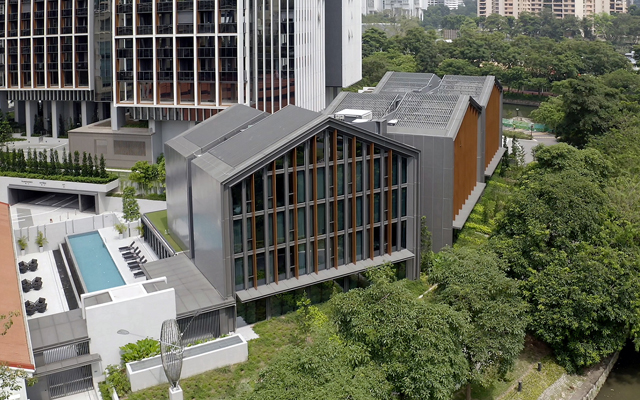
Situated at the junction of New Bridge Road and Cantonment Road, Dorsett Regency Singapore will be a four-star business hotel offering 285 guestrooms.

Facilities at the hotel will include an infinity edge swimming pool, a business centre, as well as meeting and event facilities.

Philip Wong has been appointed as general manager and Frankie Lam as director of sales & marketing of Dorsett Regency Singapore.