TTG Asia
Asia/Singapore Monday, 29th December 2025
Page 2479

Mihin Lanka ups Indian agency commissions to five per cent

0

FROM February 1, Sri Lankan airline Mihin Lanka will offer a five per cent IATA commisson for sales conducted by travel consultants, online travel portals, travel management companies and consolidators in India only.

For further information on sales and marketing, please contact Praful Khosia at praful.khosia@sticgroup.com or (+91) 99103-78441 and Sadaf Ali at salesmgr.del@mihinlanka.com or (+91) 98188-47841

For reservations enquiries, please contact Vinay Khanna at delreservations@srilankan.com or (+91-11) 4152-8646

Hong Kong readies for cruise boom

0

CRUISING interest is gathering steam in Hong Kong, with Kai Tak Cruise Terminal’s first berth set to open in June and the recent announcement by Carnival Corporation for a Hong Kong office to support its Asian expansion.

Tourism veteran Nancy Chung – currently the managing director for Cruise Vacations, the international sales agent for Princess Cruises and Cunard since 2007 – has been appointed the regional director for Princess Cruises to lead the company’s commercial operations, sales and marketing activities in the region.

Eyeing the lucrative inbound cruise traffic, the Hong Kong Tourism Board (HKTB) has created new excursion programmes and will subsidise travel consultants to re-package their local tour offers – details are expected to be revealed soon.

Said HKTB’s newly appointed general manager of MICE & cruise, Kenneth Wong: “In addition to practising tai chi or feng shui at Sky100 Hong Kong Observation Deck, authentic tours like Cook Like a Local takes visitors to wet markets (where they can) shop for ingredients prior to cooking in a studio nearby.”

However, industry players also brought up several critical issues facing Hong Kong’s cruise sector.

Speaking at the inaugural Seatrade Hong Kong Cruise Forum held in Hong Kong last week, Carnival Asia chairman and CEO, Pier Luigi Foschi, said: “Cruise programmes are offered well in advance but Asians book very close to the sail date. Moreover, the freedom to travel, i.e. visas, is vital for the growth of cruise.”

Asia Cruise Association, chairman, Zinan Liu, agreed: “The Chinese Central Government has approved for Chinese tourists to cruise from Hong Kong to Vietnam, and for Taiwan to be combined with South Korea and Japan. However, the recent Sino-Japanese dispute has had great impact on us as we were unable to make the best use of the governmental permit to develop cruises to Taiwan and Japan. We should therefore develop new itineraries around the South China Sea.”

He added that what was needed was the support of local governments to invest in port infrastructure and build terminals before the market was ready.

“Apart from Japan, we need enthusiasts in Indonesia, Vietnam, Malaysia and the Philippines,” said Liu.

Direct flights from Indonesia to India on the way to getting nod

0

THE absence of direct air connectivity between India and Indonesia may soon become history as the Indonesian government is now working to remove the deadlock that has impeded Indian outbound traffic to the archipelago.

Rizali W Indrakesuma, Indonesia’s ambassador to India, said: “Three private carriers have expressed interest to begin flights on India routes, and the Indonesian government will be taking a call on these requests soon…The Indonesian government was not willing to transfer the Garuda rights to any private airlines earlier, but it has realised that it cannot rely only on Garuda.”

Both Lion Air and AirAsia are understood to have approached the Indonesian government for approval of routes to India, while the third carrier was not revealed.

“Besides this, Garuda Indonesia will soon be signing a codeshare agreement with Jet Airways,” added Rizali.

“We expect a significant increase in travel both ways once direct air connectivity is established. All neighbouring destinations like Thailand, Malaysia and Singapore are reaping the benefits of tourism because they have direct air connectivity with India. Our target for 2013 is 200,000 Indian tourists.” Last year, 150,000 Indians visited Indonesia.

Meanwhile, the trade is anticipating the breakthrough in direct links between the two countries.

Expecting a surge in Indian arrivals is Paul Edmundus, managing director of Floressa Bali Tours: “(Direct flights) should have happened a long time back as we could have had large numbers (of Indian tourists) like other ASEAN destinations.”

Sanjay Maniar, director, Travelaid India, said: “Bali is a popular destination, but with direct flights we can look beyond Bali to Jogjakarta, Manado, Solo and Bandung. Packages to Indonesia will be easy (to sell) with direct flights as we have the advantage of visa on arrival.”

MATTA builds interest for Muslim tours in Japan

0

JAPAN National Tourism Organization (JNTO) and Malaysian Association of Tour and Travel Agents (MATTA) will sign a MoU in Yokohama tomorrow to promote cooperation and exchange of tourism ideas between the two countries.

The signing of the MoU is held in conjunction with MATTA’s technical visit to Japan, which is hosted by JNTO from January 29 to February 3. The delegation of 30, including media members, will visit Tokyo, Yokohama and Sendai.

Mohd Khalid Harun, president of MATTA and leader of the Malaysian delegation, will be addressing more than 100 Japanese suppliers on tourism trends in Malaysia and the growing interest of Malaysian travellers to Japan during B2B meetings in Yokohama and Sendai.

“Muslim travel has huge potential, and it is good to know that JNTO is seriously looking into it,” said Khalid, who added that a major focus of the visit is to build up interest on Muslim travel and tours to Japan.

Adachi Motonari, JNTO Singapore executive director, said: “Having this opportunity to collaborate with MATTA through this technical visit to Japan is very timely as 2013 marks the 40th Year of ASEAN-Japan Friendship and Cooperation. With the signing of MoU between JNTO and MATTA, we hope to increase the number of visitors from Malaysia as Japan expects to receive one million tourists from ASEAN countries in 2013.”

Japan has recorded steady growth in Malaysian visitor arrivals, especially with the implementation of the multiple-entry visa for Malaysians in September last year. Visitor arrivals from Malaysia to Japan set a new record high of 130,300 in 2012, a 13.8 per cent jump from 2010 when arrivals totalled 114,519.

Le Méridien’s 2013 expansion centres on Asia

0

LE Méridien Hotels & Resorts is expected to launch nine new hotels over the next 12 months, with the majority located in Asia-Pacific. Two openings are planned for China, and one each for Indonesia, Vietnam, India and Bangladesh.

Brian Povinelli, global brand leader, Le Méridien and Westin Hotels, said: “After significant investment and consolidation, Le Méridien boasts its best portfolio ever, and this will be a milestone year for us as we welcome an unprecedented number of new hotels into our ever-growing family.”

Opening on January 31 is the 118-key Le Méridien Bali Jimbaran, which will feature a large-scale lagoon, several signature bar and restaurant experiences, an ice cream shop, a fitness centre and a glass chapel with views of the island.

In May 2013, the 350-key Le Méridien Zhengzhou will roll out in the capital of China’s Henan province with restaurants serving Chinese, Japanese and European specialties, a designated wine room, a cocktail bar and a coffee hub.

Come June, Ho Chi Minh City will welcome the 350-key Le Méridien Saigon beside the Saigon River. A month later in July, the 300-key Le Méridien Dhaka will debut in the capital city, marking the brand’s entry into Bangladesh.

In October, China will receive another Le Méridien property with the launch of the Le Méridien Jiaonan Resort in Qingdao while Le Méridien Mahabaleshwar Resort & Spa will open in the Indian state of Maharashtra.

Beyond Asia, other Le Méridien properties will be rolled out in Cairo, Chicago and Atlanta.

New DMO aims to plant central Vietnam on tourism map

0

HOTELIERS, resort and golf course owners, and travel operators have come together to establish the Central Coast Vietnam Destination Marketing Organisation (DMO), in a push to promote the region as a competitor to established beach destinations such as Bali, Phuket and Koh Samui.

“Our region represents a single destination with tremendous potential,” said DMO chairman, John Blanco.

“Vietnam has seen healthy growth in tourism arrivals over the past decade, however, most only visit either Hanoi and Ho Chi Minh City, and we believe that now is the time to ensure that this stunning part of the country receives its due share of international attention and media exposure as one of the region’s most beautiful and desirable travel destinations with so much to offer,” he said.

The marketing campaign also coincides with Dragonair’s launch of thrice-weekly Hong Kong-Danang flights on March 28, which will complement the carrier’s existing services to Hanoi and Ho Chi Minh City. Hong Kong has been identified by the DMO as a key target market, with flights less than an hour and a half away.

Last year, Danang received 630,000 of 6.9 million international visitor arrivals to Vietnam. Since 2007, domestic and international arrivals to Danang have grown by 130 per cent, an average year-on-year increase of around 20 per cent, according to statistics from the Danang Tourism Office.

Founding partners in the DMO include The Nam Hai, Crowne Plaza Danang, Hyatt Regency Danang, Fusion Maia Danang, Furama Resort Danang, Grand Mercure Danang, The Ocean Villas, Angsana Lang Co, La Residence Hue, as well as Montgomerie Links and Danang Golf Club.

Amadeus traces big four travel trends: the Me, Red Tape, Leapfrog, Barbell Effects

0

AMADEUS today released the findings of a commissioned study of travel within the Asia-Pacific (APAC) region, highlighting four major travel trends for the period until 2030.

They are the fragmentation of travel market into niches; tearing down of travel restrictions; quicker adoption of technology and infrastructure developments in APAC; and growth on both ends of the spectrum in high-end and budget travel.

Shaping the future of travel in Asia Pacific: The big four travel effects surveyed 1,531 business and leisure travellers across Australia, China, India, Indonesia, Japan, South Korea and Singapore, as well as conducted 13 in-depth interviews with industry leaders in the region.

The increasingly fragmented travel market will require the industry to provide more customised itineraries and put in place suitable infrastructure, said David Brett, president, Amadeus Asia-Pacific.

Citing the example of the silver market, which is predicted to grow from nine million in 2011 to 30 million travellers by 2030, he pointed out that airports and hotels had to be equipped with buggies or wheelchairs. Also mentioned were female travellers, who would be drawn by women-only floors and peer-recommended products, as well as cost-conscious small business travellers, who are self-employed or work for SMEs.

Meanwhile, the liberalisation of trade and visa policies in APAC, such as the ASEAN open skies agreement in 2015, is likely to unleash new streams of travellers from emerging countries such as India, China and Indonesia.

Brett said intra-Asian travel would benefit the most from it, especially destinations within a three- to four-hour journey from point of origin. “This is what we’ve seen in the European Union and also between Japan and South Korea. Right now propensity to travel is strong, but restricted.” Travel suppliers would do well to cater to the diversity of these tourists, in terms of dietary options and language programmes, he added.

The rapid development of mobile technology and infrastructure within APAC will also compel travel providers to alter the way they serve travellers. The high uptake of mobile technology means travel consultants must embrace this new means of communication and find out what their customers want. Airlines and travel consultants must simultaneously respond to the development of high-speed rail infrastructure in the region by evolving their business models.

In addition, growth will take place at both ends of the travel market. While Asia’s rising middle class will stimulate rapid growth for economy hotels and budget airlines, the super rich in emerging economies will push up demand for luxury travel.

Denis J Thouvard appointed GM of Dusit Thani Laguna Phuket

0

hm290114_denisthouvard_dusitthanilagunaphuket
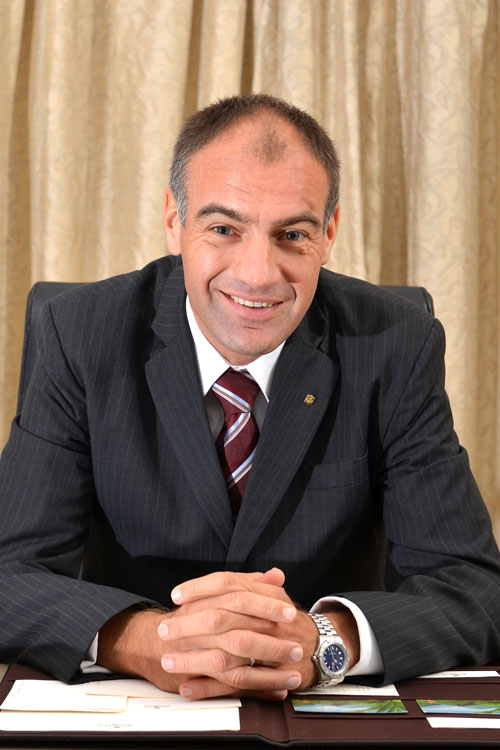
Denis J Thouvard

DENIS J Thouvard has taken on the role of general manager at Dusit Thani Laguna Phuket.

Most recently area general manager at the Centara Grand Beach Resort in Karon Beach, Phuket, Thouvard brings to his new role over 20 years of experience in five-star hotels and resorts throughout Thailand, Hong Kong, France and the UK.

He has spent eight years with Starwood Hotels & Resorts and six years at two Luxury Collection properties in Thailand and French Polynesia.

Indian travel trade decries ban on airline transaction fee

0

BASED on a Supreme Court order issued on January 23, India’s Directorate General of Civil Aviation (DGCA) has banned all airlines from charging passengers any transaction fees, a move that has been lambasted by airline ticketing companies in the country.

SpiceJet and IndiGo have since removed their transaction fees following the order. Transaction fees were introduced when airlines stopped paying commission to IATA-affiliated ticketing companies.

Subhash Goyal, president, Indian Association of Tour Operators, said: “We will discuss the issue with various travel (consultant) associations. I think we will have to go to court. If there are no airline commissions and no transaction fees, how will we survive?”

Rajendra Churiwala, director – eastern region, IATA Agents Association of India, agreed: “We have to charge a transaction fee since airline commissions to (airline ticketing companies) have been abolished. We cannot be expected to run a business without any profit.”

Added Rakesh Lamba, director of New Delhi-based Prakriti Holidays: “With no margins on flight ticketing and constantly reducing profits in the offline travel space, the smaller companies will fold up and go bankrupt. The DGCA must accept that there are many more small- and medium-sized travel companies than large-sized ones. It is a question of survival for us now.”

The airlines have approached the Delhi High Court to appeal against the DGCA order but have been directed to air their grievances with the Ministry of Civil Aviation instead.

Control of air and ground expenses a priority for travel managers

0

DRIVING air and ground savings continues to be the most important consideration for travel buyers in 2013, according to Carlson Wagonlit Travel’s (CWT) Travel Management Priorities report based on an international survey of nearly 800 travel managers. Their other top concerns were improving traveller compliance and optimising hotel spend.

Similar to survey results in 2012, travel managers prefer to focus on areas representing the greatest savings opportunities rather than those associated with the traveller experience.

“The challenging economic climate means that there is continued pressure on buyers to both reduce costs and manage travel in a more cost-effective way,” said Christophe Renard, CWT vice president marketing, communications and business intelligence.

“As air and ground travel represents the majority of spend within a travel programme, it is not surprising that it is the number one priority for most travel buyers, even though it is an area that is already well advanced in terms of optimisation.”

However, cost-saving measures vary from region to region, with travel managers in Asia-Pacific intending to concentrate on communicating and providing training on the travel policy and empowering travel counsellors to enforce rules; tightening air and ground travel policy while finding the right balance between negotiated and restricted fares, and exploring the use of LCCs; mandating preferred booking channels and consolidating hotel spend on fewer properties to leverage larger volumes in negotiations; and increasing the scope of online booking tools.

The report also highlighted the changes and challenges that travel buyers are likely to see in the year ahead. CWT also predicted that global inflation will hit travel prices modestly with increases of less than five per cent, while travel managers will also need to monitor programmes and suppliers closely, paying particular attention to areas such as rising ancillary fees and fuel surcharges.

Meanwhile, changes in technology will affect the travel process with consumer-influenced technology increasingly finding its way into corporate travel through services such as travel review sites and mobile apps specifically designed for business travellers.

Risk management will also play a key role as companies send travellers to increasingly high risk areas, and duty of care during business travel becomes an integral part of a company’s legal responsibility to its employees.