TTG Asia
Asia/Singapore Thursday, 30th April 2026
Page 2435

NusaTrip.com

0

nusatrip-hotel-page-screen-shot_cmykWHO Part of Gema Lintas Buana (GLB Group), NusaTrip.com was established as an offline corporate travel agency two years ago before launching its OTA operations in March 2013.

NusaTrip.com CEO and founder, Hans Ebenhahn, said: “The GLB Group offers a lot of leverage that helps to keep our operation (costs) low, open many doors and connect us with other strategic partners.

We have a few million US dollars approved for our OTA business, but being part of a group allows us the flexibility to request for extra funding when an opportunity arises,” he added.

WHAT NusaTrip.com claims to be the first OTA in Indonesia to provide instant online bookings for all international airlines and most domestic airlines, as well as offering the largest inventory of some 100,000 hotels worldwide via local payment modes like ATM and online banking.

Said Ebenhahn: “Without NusaTrip, it would be very complicated and time-consuming to find the best price for, say, a Jogjakarta-Milan flight online.

“We also offer Indonesia domestic flights, making it easier for travellers to find (routes and prices of local airlines).”

He added: “We allow people to construct their flight selection – I have not seen any other OTAs anywhere doing it. We show all possible outbound and inbound flights and allow people to select any of them, while recalculating the total cost of the trip. You can check all possible combinations from one page, (so) there is no need to wait for new pages to load or go back and forth between pages.”

WHY Ebenhahn said: “In Indonesia, a vast archipelago, where online payment is slowly becoming a reality, we believe it is key to offer 24/7 ATM payment to our users (with the instant issuance of e-tickets or vouchers). Very few e-commerce players offer this service.

“We support ATM payment with 77 banks in Indonesia, including banks that have ATMs in medium and small villages all around Indonesia.

TARGET NusaTrip.com’s core target is Indonesians travelling within Indonesia or overseas, according to Ebenhahn. Its online solution is tailored for FITs but also accept corporate and group bookings offline by leveraging on its OTA’s back-end system.

“We mostly focus on targeted digital marketing for the moment. Most of our spent is performance-focused, but we will also do branding campaigns,” said Ebenhahn. “We also have many partnerships in the works as well as some social media campaigns that we are still working on.

He added: “We launched just (recently), we are in a very high growth phase, so any numbers we have today will double or triple within a few years or two. It is too early to publish any numbers.

“Our current focus is to increase our brand awareness and get more travellers to experience what a full online travel agency can bring them.”

David Donald appointed GM of Parkroyal on Beach Road

0

PARKROYAL Hotels & Resorts has picked David Donald as general manager of Parkroyal on Beach Road in Singapore.

Donald brings to his first role in Asia more than 20 years of hospitality experience spanning Australia and New Zealand in international hotel groups such as Starwood Hotels & Resorts and InterContinental Hotels Group.

He was previously general manager of the 196-room Parkroyal hotel in Parramatta in the Greater Sydney area, Australia.

Holiday Inn Express marches into Australia with 15 hotels

0

INTERCONTINENTAL Hotel Group (IHG) will enter into a series of franchise agreements with international investment company, Pro Invest Group, for the development of 15 Holiday Inn Express hotels across Australia.

Pro Invest Group has established a US$150 million fund to build and operate the hotels, which together offer approximately 2,100 rooms in cities such as Sydney, Melbourne, Perth and Brisbane.

The first hotel, the 190-room Holiday Inn Express North Ryde in Sydney, has been confirmed and is slated to open in the autumn of 2014.

Ronald Barrott, principal of Pro Invest, said: “My previous experience in the UK tells me this partnership with IHG will be a long and successful one, and that there is plenty of opportunity to grow this initial portfolio of 15 Holiday Inn Express hotels to become many more in the years to come.”

IHG Asia, Middle East and Africa CEO, Jan Smits, commented: “The announcement of this investment fund comes at a great time for IHG in Australia. Our current hotel brands here, InterContinental, Crowne Plaza and Holiday Inn, are already well-known and regarded by our hotel owners, and Holiday Inn Express is a welcome addition.”

He added: “We announced our first signing under this brand earlier this year and that hotel will open in Perth, Western Australia, in 2015.”

Separately, IHG is teaming up with Singapore-based Royal Hotels to transform the renowned Double Bay Hotel into the InterContinental Sydney Double Bay.

Royal Hotels will undertake a multimillion-dollar refurbishment of the hotel, after which the property will reopen as the InterContinental Sydney Double Bay in January next year.

Facilities at the new hotel will include a ballroom for up to 300 pax, meeting space, an all-day dining restaurant, Club InterContinental, café, lounge and bar, rooftop pool and bar. A ground-floor arcade could be developed into a health club or day spa as well as retail space.

Gujarat offers up properties for management

0

THE Tourism Corporation of Gujarat (TCGL), the state tourism organisation of Gujarat, will next week invite bids to run its accommodation so as to scale up service standards.

The tourism body owns 17 properties across the state under the Toran brand name, ranging from budget to three-star accommodation.

Sanjay Kaul, managing director, TCGL, said: “We are looking at inviting private sector investment in infrastructure in a very big way. The tourism corporation is inviting bids from private players to manage our 17 properties in order to improve the quality of service. Private parties have the expertise to run hotels.”

The state tourism department has also identified spare land that it plans to lease out to private entities for the development of hotels on a long-term basis.

Furthermore, TCGL had approached the government of India to fund a major convention centre in Baroda to be constructed in a public-private partnership, revealed Kaul.

Gujarat’s tourism budget was increased to Rs3.8 billion (US$64.5 million) for 2013-2014, up from Rs2.4 billion for 2012-2013.

Last year, the state welcomed 600,000 foreign tourists. Main source markets were France, Italy, Spain, Germany, the UK and the US.

Kaul said: “The major draws for international tourists are the Kutch region and Gir National park.

“For the year 2013-2014, we expect 12 per cent growth in tourist arrivals. But, even though we are looking to attract more international tourists, the domestic market remains our backbone.”

Cathay Pacific adds Maldives to flight network

0

CATHAY Pacific Airways has announced that it will commence four-times-weekly flights to the Maldives on October 27, subject to government approval.

The route will be operated with an Airbus A330-300 aircraft and run on Wednesdays, Thursdays, Saturdays and Sundays.

Flights depart Hong Kong at 17.15 and arrive at Malé’s Ibrahim Nasir International Airport at 21.25, local time. Return flights leave the Maldives at 23.35 to land in Hong Kong at 08.55 the following day.

Cathay Pacific’s chief executive, John Slosar, said: “The Maldives is the perfect getaway for holidaymakers from Hong Kong and around the world.”

ANA boosts Yangon flights to daily service

0

ALL Nippon Airways (ANA) will increase the frequency and capacity of its Tokyo (Narita)-Yangon route beginning September 30, from thrice weekly to daily.

Nyo Nyo Khaing, manager at the Yangon-based ANA office, said that seat capacity on the route would be increased through the deployment of a new 202-seater Boeing 767-300ER aircraft.

“Currently, the schedule is three flights a week on Mondays, Wednesdays and Saturdays, using B737-700ER aircraft that can accommodate just 34 seats, comprising 24 business-class seats and 10 economy-class seats,” she said.

“We hope that the new aircraft with more economy seats will attract more passengers between the two countries.”

Flights departing Tokyo’s Narita International Airport leave at 10.30 and arrive in Yangon at 15.10. On the return leg, Tokyo-bound flights take off at 21.45 and touch down in the Japanese capital at 06.50 the next day. Ticket sales for the new daily service have started.

ANA aims to capitalise on the projected increase in demand for both direct and indirect flights between Japan and the rest of Asia, and between North America and Asia.

The airline was among the first to launch direct services between Japan and Myanmar. Its maiden Tokyo-Yangon flight took off in October last year (TTG Asia e-Daily, October 12, 2012).

ANA will also increase seat capacity for flights out of Narita to Chengdu from October 1.

Bangna Convention Centre reopens under Oakwood’s management

0

BANGNA Convention Centre in Bangkok will open its doors for business once again on July 31 after a 40 million baht (US$1.3 million) renovation breathed second life into the facility.

Located in Bangna, gateway to Bangkok and home to major industrial zones in Thailand, the convention centre features the 1,000-pax pillarless Ratchaphruek Ballroom as its main event venue.

The facility is equipped with one of the largest banquet kitchens in Thailand, state-of-the-art audio-visual systems, telephone lines, Internet broadband connectivity and on-site banquet and IT specialists to render immediate assistance.

Additional support also comes in the form of Food Camp, a brand new dining concept with assorted options for more casual dining.

Bangna Convention Centre is the first full-fledged convention centre to be managed by international hospitality group, Oakwood.

Peter Lucas, vice president of operations, Oakwood, said: “I am confident that the centre will fast become the venue in Bangkok where successful meetings and events occur.”

Fairmont Singapore & Swissotel The Stamford appoint executive assistant manager

0

fairmont-singapore-swissotel-the-stamford-appoint-executive-assistant-manager
Ng Sok Hia

FAIRMONT Singapore & Swissôtel The Stamford have announced Ng Sok Hia’s promotion to executive assistant manager, sales & marketing for the hotel complex.

She will lead the sister properties’ integrated sales and marketing efforts and drive revenue management.

Ng was director of sales and marketing before her recent promotion.

Liangdu Jin Jiang Hotspring International Hotel debuts in 2014

0

JIN Jiang International Hotel Management has sealed a management contract with Liangdu Hotel Management for the Liangdu Jin Jiang Hotspring International Hotel, which is slated to start operations in May 2014.

The hotel is situated in Liupanshui City, a rapidly developing industrial city and one of the most important resource development zones, in Western Guizhou Province.

Liupanshui City is also a major rail hub and the hotel is located 25 minutes from the railway station, as well as a 10-minute drive from the city centre.

Bernold O Schroeder, CEO, Jin Jiang International Hotel Management, said: “We look forward to the opening of the Liangdu Jin Jiang Hotspring International Hotel, which will be the first Jin Jiang hotel to open in Liupanshui, thus building our brand presence, in addition to joining our growing portfolio of hotels in South-western China.

“This thriving industrial city attracts many businesses and the opening of this new luxury hotel gives us the opportunity to showcase our extensive MICE capabilities and reputable hospitality service standards, in particular, for the city’s growing number of business travellers.”

Liangdu Jin Jiang Hotspring International Hotel will feature 301 guestrooms and suites, a range of meeting and conference rooms, a 501m2 multi-functional hall, a Chinese and Western restaurant offering gourmet food with 24 private dining rooms.

Other facilities include a fitness centre, swimming pool and spa, located within the adjoining podium building.

Working the magic

0

After two decades in the business of operating Disney theme parks, Randy Garfield concedes that nothing beats the satisfaction derived from putting smiles on the faces of families across different generations. Prudence Lui talks to him about creating “the happiest place on earth”

randy-garfield-and-mickey

How has business been for Walt Disney Parks and Resorts in Asia-Pacific? What’s the industry outlook?
We published Hong Kong Disneyland (HKDL) business results recently and it’s pretty encouraging. Asia, especially China, has a very robust and growing economy. We are starting to see Chinese travelling to the US, primarily to the western part. We know that it’s quite small right now, but it has tremendous potential over time.

Regarding the regional outlook, I don’t have a crystal ball. We are very encouraged as HKDL gets significant business from China and a variety of markets that are still strong. Tokyo Disney Resort celebrates its 30th anniversary (this year), which has been very successful and continues to be very popular.

Right now, our products, theme parks and resorts include Tokyo Disney Resort and HKDL. We also have the construction of Shanghai Disney Resort, which is still a few years from its scheduled opening.

How do you choose where to open a theme park? Where else in Asia are you planning a Disney resort?
That’s business development side because site selection is complicated due to a variety of infrastructure issues and government support and funding. My role is really to focus on the demand from the source markets and how successful we can be to encourage visitation. This is only one element of the many factors that everybody looks at when ultimately making a decision of where to go. We haven’t made any announcement on building additional theme parks beyond Shanghai.

How does Disney Parks keep the Disney concept alive randy-garfieldand relevant to children of this era, who have access to lots of entertainment and grow up with the Internet?
We create a magical experience that people will cherish for a lifetime.

Our product is really in our legacy of storytelling so even for exciting rides, there are stories behind the journey. The thematic attention to detail, storytelling and entertainment are key elements of our products. While we always introduce new products, a lot of them are timeless. It’s just like the long-time Great Wall of China, which people still visit.

Disneyland presents a portfolio of timeless products that people want to  experience again and again at different stages of their lives and show it to other family members. And at the same time, we periodically create new products, whether it’s a parade, shows, entertainment or rides to ensure a pretty good portfolio mix of new and timeless.

Internet changes the way we market ourselves. You have to be (present on) multiple channels, (combining) traditional as well as technological. Just think of the way you consume news, from radio to newspapers to online. However, we want to be really in every place people would go to plan and book travel. Moreover, we also recognise that we can continue to keep guests engaged after they’ve left our products by becoming involved with different elements of Walt Disney companies such as films and TV.

Asia has a different culture from the US, so what did you learn when developing sales strategies for HKDL and the upcoming Shanghai project? What works and what doesn’t?
The similarities are in how our sales people work with stakeholders like retailers, wholesalers, airlines and tour operators to find out how they communicate with their existing client bases: what are the tools they use and what’s most effective in terms of messaging? More than just tools, (the strategies) may be segmented by life stage. To appeal to a student group, my messaging is going to be aimed at the teachers and parents about the educational value of engineering creativity; if I talk to someone who’ve got young children, it may be a little different from someone multi-generational, say, grandma and grandpa. But the leisure message is really about spending timeless moments that you cherish for life. This is where everyone can have a great time.

I wouldn’t say that any one thing works because it depends on emphasis. The most important thing is sending the most relevant message to the consumer, followed by delivering the right product at the right time through the right media.

HKDL eventually turned into a profitable operation after seven years. Is that in line with targets?
We started recording a profit last year. We are encouraged by the progress HKDL has made. Certainly, we’re continuing to invest and expand product portfolio as a result of financial success.

How successful is HKDL in attracting business traffic as the brand is perceived as a family destintion? Are there any new initiatives or products to build this segment?
MICE is a prospective business for us. We are in a locale which is conducive for meetings because it’s a little bit more relaxing, picturesque, outside the hustle and bustle of the city. We also utilise Disney Institute for professional development training, and that’s a key portion of our portfolio offered for groups visiting HKDL for meetings, product roll-outs or exhibitions. HKDL is doing well in terms of its share of MICE business. As Chinese MICE business grows, we will continue to maintain a good share.

For initiatives, there are none we are ready to talk about as we are very strategic about these.

Brand USA will launch a representative office in Hong Kong soon. As one of the board of directors for the campaign, how would you leverage on your position to grow more Asian traffic to the US?
I sit on the board on Brand USA and is responsible for generating tourism for the US. We are seeing increasing number of Chinese travellers to the US, primarily to the West Coast. But we know that will expand as time goes by. Aliana Ho (vice president of Asia Pacific regional sales and travel operations, The Walt Disney Company (Asia Pacific)) just met with Brand USA so they are evaluating different markets, and I know that China is high on the list. China continues to grow and it’s certainly strong enough to be a relevant factor in a successful Disneyland. We are starting to see more tourism from China to North America. For the last few years, we have large groups coming to Disneyland for Chinese New Year.

Tell us more about HKDL’s trade engagement activities like the Sales Excellence Award. How is it different from other regions? 
The rationale behind the Sales Excellence Award is recognising and thanking trade partners for their support. We want to show our partners how much we appreciate, respect and value them all these years. This event is a formal opportunity (of recognition and celebration), where they get to spend time not only with a broad cross section of our sales executives but also with their colleagues.

The concept takes place across different regions and while we may label it differently, it has similar objectives. In fact, it’s not limited to travel (experts) but also applicable for the meeting and convention, and student/youth travel segments.

The message that you see on TV is primarily for the leisure market but we are pretty active in the MICE and student markets; we have tremendous kindergarten programmes and that is unique to HKDL.

What do you think are the future trends for theme park operation in Asia?

I don’t have a crystal ball but I still believe that people will be looking to spend quality time with their friends, families and loved ones. The Disney experience will more than exceed that expectation and help people create memories that they will cherish forever, but we will always remain relevant and a world-class leader creating entertaining and exciting travel experiences.

Do you think theme park business in Asia-Pacific has become more competitive? Why?

I’ll relate this to North America, where there are about 320 million people. In the US, Disney operates six theme parks and there are also strong competitors like SeaWorld, Universal Parks & Resorts and a variety of smaller entities. In China, we’ll operate two theme parks, drawing on a population of 1.3 billion people. So we think there are plenty of opportunities, and competition is healthy in raising awareness. It gives us more opportunities for differentiation.

When catering for the Chinese market, the challenge is certainly that the Disney brand is not as widely known in China because in the US, the brand has been around since 1923. Disneyland has been in business since 1955 and Walt Disney World since 1971, so there is far more awareness of the Disney brand in North America than traditionally has been in China because of the theme parks, movies, TV and consumer products. China is a strong growing market but a lot of western products are still in the early stages of awareness.
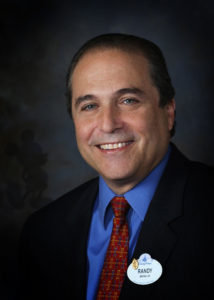
randy-garfield

How’s the progress of Shanghai Disney Resort?
We are still in the early stages of construction, which is moving on schedule. We are also building our marketing sales team as well as the operations team. The staff strength is growing bigger and bigger closer to the opening. We hired Wang Yan as vice president, sales and distribution marketing of Shanghai Disney Resort. She’s got a long history working in the travel industry, and she’s pulling together her sales team as we speak.

Strategy-wise, we are in the discovery phase, formulating our marketing and sales strategies, doing consumer insight research and planning our work before we work our plan. The trade will continue to play a significant role in the success of Shanghai Disney Resort, just as it has been for HKDL and every other theme park product that we have.

Philosophically, the strategy is to identify and work with partners whom we believe have a strong, established track record and generating regional demand, and similarly for the MICE side with different players.

How fast do you expect Shanghai Disneyland to make profit?
I can’t speculate on financial issues but I am confident that Shanghai Disneyland will be successful, and this success will not be at the expense of Hong Kong. They’ll both be successful in their own way for just the reason I mentioned before – the size of the Chinese market. Two theme parks in a country the size of China is really not an issue when you have six of them in the US.

What keeps you working in the group in the last two decades? What’s your proudest moment or project?

Great people and great products. I am very blessed by being able to work with exceptional talented  members not only in marketing and sales but in imagineering, entertainment and operations. They all inspired me. When I think about all the different jobs that I could be in or helping my career, all I need to do is walk out that door and take a look at the families out there. See the happiness we created, that makes me feel pretty good. There are a lot of meaningful jobs in the world – teachers, doctors, lawyers – but I am in the job creating happiness.

What do you like to do in your leisure time?
I like to read books and fish. I travel off the beaten path to small, out-of-the-way places like Montana and Vermont. I like to go to more rural parts of America when I travel because I like to see small-town living. I travel so much for work, so when I am on vacation, I try to spend a lot of time at home.


randy-garfield-on-main-street-tight-shot