TTG Asia
Asia/Singapore Thursday, 2nd April 2026
Page 23

Expanding horizons

0

With India emerging as one of its fastest-growing markets, Destination New South Wales (NSW) is ramping up its travel trade and consumer engagement efforts to showcase the state’s diverse tourism offerings. Backed by the Minns Labor Government, the tourism board is working closely with airlines, travel partners and media to strengthen the appeal of both Sydney and regional NSW among Indian travellers.

As part of this push, the government hosted the Focus on India & Southeast Asia travel trade event in December 2025. The event brought around 60 leading travel buyers from various countries including India to experience world-class tourism offerings across Sydney and regional NSW.

Sydney, pictured, anchors New South Wales’s tourism push into the Indian market

Steve Kamper, New South Wales minister for jobs and tourism, added that Destination NSW has a robust strategy that draws on the power of partnerships.

“Destination NSW currently has campaigns in the market with Skyscanner, Tripadvisor, MakeMyTrip and Qantas Airways. These campaigns promote nature and wildlife, food and wine, which we know are all key drivers for visitors to NSW.

“These campaigns also promote self-drive trips that allow for freedom, flexibility, overnight regional stays and expenditure in smaller towns.”

Additionally, Destination NSW works with airline and trade partners on integrated marketing activities aimed at driving airline ticket and holiday package sales into Sydney, and promoting visitation to regional NSW through its Sydney-plus strategy.

Ron Mueck: Encounter, an exhibition now on at the Art Gallery of New South Wales

To further strengthen India’s connection with NSW, the tourism board hosted an Indian media fam trip, Cricket Meets Culture in Sydney & New South Wales, from October 23 to 30, 2025. The itinerary blended culture, nature, luxury and cricket – key themes that resonate strongly with the Indian outbound travel market.

While Sydney landmarks, such as the UNESCO-listed Sydney Opera House, continue to be popular, Destination NSW hopes to draw attention to cultural experiences like the Art Gallery of New South Wales, one of Australia’s leading art museums with a vast collection featuring Australian, Aboriginal, Torres Strait Islander, Asian and European art in the Indian market. The gallery in the recent past expanded with the addition of the striking Sydney Modern building, offering visitors a new cultural dimension to explore.

Complementing its urban vibrancy, Sydney offers immersive nature experiences from themed walks at the Royal Botanic Garden – home to rare global plant collections – and the iconic Bronte to Bondi coastal route. Along the route, travellers can admire the Sculpture by the Sea exhibition, which features more than 100 outdoor artworks across a dramatic two-kilometre clifftop. Sculpture by the Sea is regarded as the most extensive free outdoor art exhibition in the world.

Enjoy one of the world’s most renowned outdoor art exhibitions at Sculpture by the Sea; Bondi 2025 pictured

Beyond Sydney, the Southern Highlands and South Coast beckons. The Southern Highlands offers lush landscapes, boutique wineries and charming villages. A must-visit is Dirty Janes Antique Emporium, a treasure trove for collectors. Stalls sell everything, from vintage cameras to bespoke furniture.

Further south, NSW’s South Coast draws travellers with its outdoor adventures, wildlife and spectacular whale watching. Visitors will discover the charming country town of Berry, celebrated for its local markets and heritage architecture. The iconic Berry Donut Van is not to be missed.

From Berry, travellers could head north-wards to Sydney, and stop by Kiama – home to the world’s largest blowhole.

Travellers who live to eat will appreciate NSW’s rich gastronomic landscape. Cirq Bar & Lounge, perched on the 26th floor of Crown Sydney, provides sweeping harbour views.

Café Sydney, located in the historic Customs House, pairs its award-winning wine list with breathtaking vistas of Sydney Harbour.

In the evening, travellers can head to Maybe Sammy, one of Sydney’s most popular cocktail bars, which found a mention in the World’s Top 50 Bars for 2025.

If there is a craving for familiar food, Don’t Tell Aunty, known for its contemporary twist on Indian flavours, may just scratch the itch.

According to the International Visitor Survey, Tourism Research Australia, 43 per cent of all visitors from India spent time in NSW during their Australia trip for the year ending June 2025.

Visiting Friends and Relatives (VFR) remained the dominant purpose, contributing 45 per cent of arrivals.

Other key segments included holidays, business, education and employment. Notably, 90 per cent of Indian travellers to NSW did not join group tours, reflecting a strong preference for independent travel.

Tokyo Deaflympics 2025 leaves lasting boost for accessible tourism

0

Tokyo’s hosting of the 2025 Deaflympics has delivered a significant boost to Japan’s accessible tourism capabilities, with organisers and travel trade representatives pointing to lasting improvements in infrastructure, training and visitor experience.

Held November 15-26, 2025, the international multi-sport event for deaf and hard-of-hearing athletes welcomed 3,000 competitors from 75 countries, alongside thousands of officials, coaches and spectators.

From left: Deaf Journey’s Lily Yu and Japan Sign Travel’s Miyu Nakamura advocate for improvements to travel accessibility across Japan

In preparation for the Games, the Tokyo Metropolitan Government intensified efforts to make the capital a more accessible destination. Governor Yuriko Koike had described the event as “an opportunity to promote barrier-free access to public facilities”.

By the opening ceremony, light-based warning devices had been installed at six metropolitan government facilities, including Komazawa Olympic Park, and in more than 660 toilets, changing rooms and other spaces across Tokyo. Another 40 locations, including sports facilities and libraries, were fitted with systems that convert speech into text and display it on screens.

Subsidies were also provided for training in international sign language, which serves as a lingua franca, to facilitate communication with inbound visitors.

These initiatives were designed to enhance the visitor experience during and after the event, amid a rising number of deaf and hard-of-hearing inbound travellers to Japan.

“We have seen steady growth in demand for our tours in recent years, particularly from the US, Canada, Australia, France, Germany, the Netherlands, Taiwan and South Korea,” said Miyu Nakamura, founder of Japan Sign Travel, which provides tours to the deaf and hard-of-hearing community. “Many deaf travellers are seeking sign-language-accessible, culturally immersive experiences rather than typical sightseeing tours.”

Today’s deaf travellers to Tokyo are benefiting from barrier-free and inclusive initiatives implemented under the Tokyo 2020 Accessibility Guidelines, created in conjunction with the Olympic and Paralympic Games held in 2021.

“Tokyo is gradually becoming more accessible, with major hotels, museums and transportation hubs introducing visual alert systems, such as vibration alarms, and staff receiving basic sign language training,” said Nakamura.

Lily Yu of Deaf Journey agreed that in major cities such as Tokyo, train stations tend to feature clear signage and digital screens, which “reduce reliance on audio announcements and help deaf travellers navigate independently”.

However, transportation announcements on some trains and buses still “rely heavily on sound”, which can “cause confusion, missed stops or delays” for deaf travellers, Yu said, adding that “expanding real-time visual alerts, flashing notifications and multilingual captions would significantly improve navigation and reduce stress”.

More also needs to be done in regional areas to create a welcoming environment for deaf visitors.

“Regional cities and smaller attractions often rely on volunteer interpreters or written communication,” said Nakamura, adding that Japan Sign Travel aims to address these gaps by training local guides, producing sign-language video signage and collaborating with deaf-owned businesses nationwide.

During the Deaflympics, the company provided tours that combined sports spectating with local sightseeing near event venues, including in Fukushima, host of the soccer event, and Shizuoka, host of the cycling event. Its aim was to maximise the “significant increase” in bookings related to the Deaflympics.

Travel representatives across Japan had anticipated a rise in deaf visitors around the Games period, with Nakamura noting that many travellers planned to extend their stay to experience Japan’s cultural offerings.

New Zealand-based company Deaf Adventures offered a Heart of Japan 10-day tour beginning after the closing ceremony, visiting Tokyo, Hakone, Kyoto, Nagoya and Kanazawa. An optional seven-day extension included Hiroshima, Fukuoka, Oita, Kumamoto and Kagoshima.

With increased awareness and support, the Deaflympics are expected to help usher in lasting accessibility improvements in Japan for both deaf residents and travellers, according to the travel trade.

“Hosting the Deaflympics is a landmark opportunity for Japan to improve accessibility on a national scale,” said Yu.

“We believe the Deaflympics will serve as a turning point to make Japan a truly deaf-friendly travel destination nationwide,” added Nakamura.

Savouring Singapore

0

Singapore’s dining scene has long been a headline act, but travellers today are no longer satisfied with simply eating well. Increasingly, they want to understand what food means to the city.

The appetite has shifted from photographing chicken rice to learning who still stews stock at dawn, and from slurping laksa to hearing how a family continues to hand-make rempah.

Lau Pa Sat serves as a landmark venue for experiencing Singapore’s hawker culture in a historic setting

As visitors become more culture-led and experience-driven, the city’s culinary landscape is evolving alongside them, revealing flavours intertwined with history, identity and craftsmanship.

Tour operators, independent restaurants and hotels are tapping into this shift, creating tasting experiences that also function as cultural immersion. The rise of food-focused cultural tours has become one of Singapore’s stronger draws for inbound travellers seeking context behind the cuisine.

Operators such as Indie Singapore have built their reputation on going beyond the standard hawker crawl, weaving together wet-market rituals, neighbourhood histories and the personalities that keep the city’s food traditions alive.

According to Thiam Wei Toh, founder of Indie Singapore, a company specialising in immersive tours, food is used to tell a story.

“Normally, we curate the dishes based on certain narratives we have, or certain culture practices we want to spotlight. For example, on some tours, we meet the stallholders, hear the family stories behind recipes, and show how food is woven into rituals, work rhythms and neighbourhood identity,” said Thiam.

He added: “You can very well visit (some of) the food places based on online recommendations; you will be able to get the food from the menu on your own. However, we think this contextual storytelling will allow the guests to leave with names, faces and little anecdotes they can’t get from a menu alone.”

Another example is The Intan, a Peranakan home-museum where owner Alvin Yapp hosts small tea sessions and full meals set among heirlooms and family antiques.

“Food has always been central to Peranakan life,” said Yapp. “It’s how families connect, how traditions are passed down, and how guests are welcomed.”

As inbound travel continues to recover, he has noticed renewed interest in food-related tour experiences that extend beyond eating to include storytelling, history and hands-on interaction. He also views food as one of the most accessible entry points into Singapore’s multicultural identity.

“When guests taste ayam buah keluak or assemble their own popiah, they’re not just eating; they’re tasting a story of migration, adaptation, and harmony,” he explained.

“Each ingredient reflects a cultural dialogue. Malay spices, Chinese techniques, European influences are all blended into something uniquely Singaporean.”

Heritage brands such as Violet Oon and Jumbo continue to attract international visitors curious about classic flavours and festive dishes they have encountered on television or social media. Their appeal lies in familiarity and consistency, with guests knowing they will encounter recognisable Singaporean tastes.

At the other end of the spectrum, Michelin-recognised hawkers have become cultural reference points in their own right. Even without formal accolades, hawker culture remains central to the city’s culinary identity, turning modest stalls into direct connections to everyday food heritage.

High tea at Conrad Singapore Orchard showcases local ingredients and storytelling

Hotels are also being reshaped by shifting expectations around dining, with travellers increasingly seeking experiences that feel culturally grounded rather than generic.

Mett Singapore has responded by aligning its dining philosophy with this preference. Culinary and F&B director Daniele Sperindio shared: “The best memories are those made around the table. We want to be part of their weekly rhythm, not just a once-in-a-lifetime experience.”

In Singapore, that idea takes on a local rhythm. “We champion a Mediterranean soul blended with the island’s vibrant multicultural rhythm, an exciting and sincere, human approach to modern dining,” he said.

Beyond its restaurants, the hotel’s lifestyle programming incorporates wellness, fitness and park-based community events, strengthening its connection to the surrounding Fort Canning neighbourhood.

Conrad Singapore Orchard offers a different but complementary approach. General manager Thomas Hoeborn described dining as “one of the clearest ways travellers make sense of Singapore”, and sees the hotel’s role as helping guests understand the city “through food that reflects its culture, craft and neighbourhood character, and not just through variety”.

According to Hoeborn, international guests respond most strongly to “connection and credibility”.

While multigenerational travellers gravitate towards shared meals across the hotel’s dining venues, destination diners are drawn to its Michelin-starred and award-winning restaurants.

Across the hotel portfolio, local ingredients and storytelling remain central, from Summer Palace’s Cantonese techniques to Tea Lounge’s ethnobotanical-inspired afternoon tea. Together, these reflect a broader shift in how Singapore’s culinary culture is being interpreted for curious and hungry visitors.

TTG Asia breaks for Lunar New Year

0

TTG Asia will be taking a break from February 16-18, 2026, for the Lunar New Year holidays.

The online news bulletin will resume on Thursday, February 19, 2026.

From all of us at TTG Asia Media, we wish all of our readers a happy and prosperous Year of the Horse!

Millennials and Gen Z will drive travel spending in 2026: Klook

0

Klook has released its Klook Travel Pulse 2026 report, highlighting the travel behaviours of Asia-Pacific travellers.

Despite global economic uncertainty, the report found that 88% of global travellers plan to increase or maintain their travel budgets in 2026. Travellers from Asia-Pacific are 50% more likely to increase travel spending compared to those in the west, signifying the region as a growth engine for travel.

Asia-Pacific travellers are leading 2026 travel growth, with stronger intent to increase travel than western markets

The report surveyed 11,000 of Klook’s customer base comprising mainly millennials and Gen Zs, from Hong Kong, Taiwan, China, Japan, South Korea, Singapore, Malaysia, Vietnam, Thailand, the Philippines, Indonesia, Australia, New Zealand, India, Germany, France, Spain, Italy, the UK and US.

“Travel has remained resilient despite the rising cost of living. What we are witnessing is a fundamental shift in how travellers evaluate value,” said Marcus Yong, vice president, global marketing, Klook.

“Instead of cutting back, they are spending smarter, prioritising richer experiences, flexible itineraries, and deeper discovery. They seek experiential value that goes far beyond simply ticking destinations off a checklist.”

Indeed, travellers are prioritising experience-led itineraries, willing to spend more on activities and instead, cutting back on shopping spend.

Trip planning patterns have also shifted, with two-thirds intending to visit multiple destinations per trip, shifting away from single-stop itineraries.

Gen Z travellers are leading this shift, favouring faster-paced, densely packed itineraries as they move towards lesser-known locales, away from mainstream cities.

Across markets, travellers are driven by local authentic experiences (42%), the opportunity to discover hidden gems (39%), and affordability (37%) for choosing lesser-known spots.

Japan continues to be a popular destination among travellers but demand is moving towards secondary cities such as Yokohama, Hiroshima and Nagoya.

88% of travellers plan to maintain or increase budgets in 2026, prioritising experiences over shopping

The same is true for other regions with Cairns and Hobart gaining traction in Australia, Tromsø and Baix Llobregat in Europe, and Sharjah and Hurghada in the Middle East.

When it came to how they are discovering and choosing destinations, travellers are increasingly influenced by social media and AI.

80% of global travellers say social media is the main channel that influences the destinations or experiences they book.

91% use AI as a travel planning tool, mainly for research, translation, organising itineraries and managing budgets.

Lufthansa Group marks 65 years of Hong Kong presence with promise of product innovation

0

As Lufthansa Group hits its 65th year of Hong Kong-Frankfurt service, its leadership reaffirms commitment to both Hong Kong and China’s Greater Bay Area (GBA) for the years ahead.

Senior vice president for sales, distribution & marketing, Frank Naeve, said Lufthansa Group has long recognised the economic potential and importance of GBA, and continues to work with partners to add value to the travel ecosystem in the region.

Lufthansa Group reaffirms its commitment to Hong Kong and the GBA amid expanded services and product enhancements

Lufthansa Group presently operates two daily flights between Hong Kong and Frankfurt by Lufthansa as well as Hong Kong and Zurich by Swiss International Air Lines. These services serve corporate and the leisure traffic.

Naeve noted that GBA traffic via Hong Kong comprises 70 per cent leisure, but opportunities to grow the business travel share exist.

Additionally, the group is working to court more traffic to European destinations via its network by focusing on product innovation, such as the recent upstream check-in service in GBA. Since September 2024, passengers on Lufthansa and Swiss Air are able to complete immigration, check-in, and baggage tagging at eight ports across GBA, before heading to the SkyPier of Hong Kong International Airport.

“We are creating lounges and digital solutions. We will bring the Boeing 787-9 Dreamliner to Hong Kong this summer. Lufthansa Allegris, our new, premium longhaul travel experience, features brand-new seats and upgraded catering. We are investing heavily on the overall end-to-end experience, such as free high-speed Internet connection across 850 aircraft in the second half of this year,” he added.

Pierre-Yves Buysschaert, Lufthansa Group’s general manager Hong Kong Macao and South China, emphasised continued partnership with travel agents – a valuable medium that generates 40 per cent of bookings from the GBA region.

“We will continue to engage agents through frequent visits to inform their frontlines about our products, networks and latest enhancements. Of the nine GBA cities, Shenzhen remains a key source market. We are also going into second- and third-tier cities like Zhuhai and Dongguan, (where travellers are) using Hong Kong as a gateway. We would like to increase our footprint in these areas,” shared Buysschaert.

This year, Lufthansa Group will celebrate the 100th anniversary of its first Lufthansa flight to China and a century of air links between China and Germany.

ILTM appoints One Rep Global as official India partner

0

RX Global has named One Rep Global as its official partner in India to lead and manage the Indian Buyer Program across its portfolio of travel events.

Under the agreement, One Rep Global will act as the primary point of contact for Indian buyers participating in RX Global’s luxury, MICE and specialist travel shows. The mandate covers flagship events including ILTM Cannes and ILTM Asia Pacific, as well as IBTM Barcelona and the International Golf Travel Market.

Mediratta: India is no longer a market to watch – it is a market commanding global attention

The partnership reflects RX Global’s continued focus on India as a key outbound market for luxury, experiential and meetings travel. India has seen sustained growth in outbound travel demand, with increasing participation from beyond the traditional metro cities.

One Rep Global will work with RX Global to identify and engage senior decision-makers from across India, supporting buyer recruitment, targeted matchmaking and market development. The initiative is designed to strengthen Indian representation across RX Global’s global event platforms while enhancing exhibitor engagement.

RX Global said India remains one of its fastest-growing source markets, with strong momentum across leisure, luxury and MICE segments. The collaboration aims to improve buyer quality and ensure consistent participation from qualified Indian travel professionals.

For One Rep Global, the appointment reinforces its role in connecting Indian travel leaders with international event platforms and expanding access to global trade networks.

Hemant Mediratta, CEO, One Rep Global, said: “India is no longer a market to watch – it is a market commanding global attention. With spending power, cultural confidence, and scale that rivals any source market worldwide, our mission is to connect RX Global’s world-class exhibitors with this nationwide opportunity.”

Rosi Viljoen, head of visitor strategy at RX Global, added: “We are pleased to partner with One Rep Global, whose deep market expertise, credibility, and strong industry relationships make them the ideal partner to lead our Indian Buyer Program.”

BWH Hotels delivers portfolio growth across Asia in 2025

0

Strong business foundations and regional partnerships have fuelled growth for BWH Hotels in Asia last year, with rapid expansion in Thailand and a second premium product launch in Central Vietnam being among its many success stories.

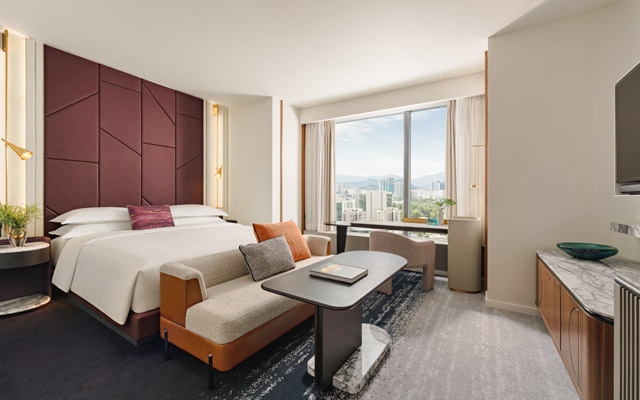
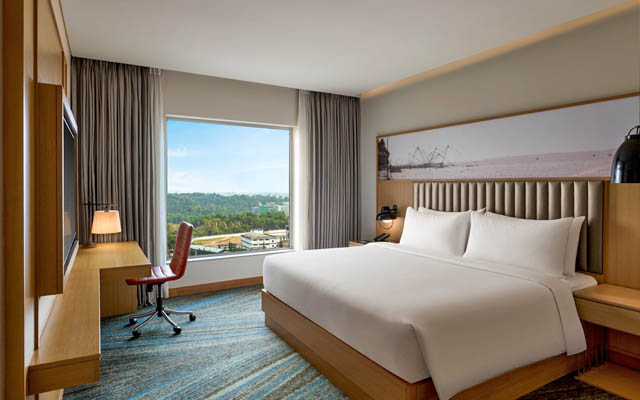
Last November, BWH Hotels opened Best Western Premier Imperial Dalat, a new-built upscale project in Vietnam’s Central Highlands. The 91-key hotel is designed for both leisure and business travellers, featuring event facilities as well as connecting room options for families. Facilities include a year-round heated pool, fitness centre, spa, and a kids’ club. Dining choices are varied, ranging from an all-day dining venue serving Vietnamese and Western cuisine to a cigar lounge.

Best Western Premier Imperial Dalat in Vietnam is among several fresh openings led by BWH Hotels in Asia in 2025

Olivier Berrivin, vice president – APAC, BWH Hotels, said: “As Vietnam is one of the key markets for BWH Hotels, we are excited to introduce guests to this exceptional new property in Dalat. With its fresh air, breathtaking scenery, lush floral landscapes and a wide range of attractions ­– from historic palaces and pagodas to golf courses and organic farms – this is the perfect place to unwind, create memorable experiences, or make a lasting impression.”

The group also scored new luxury projects in Vietnam’s Phu Quoc and Ho Chi Minh City through WorldHotels.

The group marked continued rapid growth in Thailand with the addition of three hotels: SureStay by Best Western Iconic Ari-Jatujak in Bangkok as well as SureStay Plus by Best Western T Pattaya and Siamese Hotel Pattaya, BW Signature Collection, both in the country’s Eastern Seaboard.

Over in the Philippines, BWH Hotels relaunched Best Western Plus Hotel Subic, a seafront property located 2.5 hours away by car from Manila.

In Indonesia, BWH Hotels opened Best Western Setiabudhi Bandung.

BWH Hotels’ reach continued through Pakistan with six new hotels, making the company one of the leading international hotel groups in the South Asian country. Its reach in Pakistan now spans eight properties in Rawalpindi, Gujranwala, Quetta, Faisalabad, Hunza, and Multan.

Nick Lim to lead Railbookers Group as Asia VP

0

Railbookers Group has appointed Nick Lim as vice president – Asia, strengthening its leadership presence in the region.

Lim brings more than 25 years of travel industry experience and most recently served as CEO, Asia at The Travel Corporation, where he spent over two decades.

He has also held the role of general manager, Asia at Norwegian Cruise Line, and has extensive experience building and expanding travel brands across the Asian market.

Travel takes the lead

0

Could you please share with us the early outlook for the Asia-Pacific region’s biggest consumer and economic payment trends for the year ahead?
Our latest indicators, including the Spending Momentum Index (SMI) Report for 4Q2025, show a region moving in different gears: some markets are easing after very strong rebounds, while others are stabilising as cost pressures moderate. What’s most notable is that spending patterns are being shaped less by a single regional trend and more by local factors, from household purchasing power to price sensitivity and category‑level shifts.

Across our network, we’re seeing three forces shape spending: travel, trade, and the growing influence of AI. Travel remained the standout category in 2025, expanding at roughly 2.5 times the pace of overall spend and e‑commerce penetration continued to rise, especially in goods and travel. Taken together, the region is moving forward with fast paced digital adoption and sustained demand anchored by travel.

What are the top three new insights into 2025 spending behaviour across the region, especially cross-border payment flows and their evolving role in consumer behaviour?
When we look across our data, a few shifts in spending behaviour stand out. We’re seeing consumers gravitate back towards goods as they look for better value. In several categories, wholesale prices have been easing, particularly in areas like automotive and retail goods, which is making products feel more affordable relative to some service categories.

Second, travel is still a major driver of spending. It was one of the fastest‑growing categories last year, and inbound flows stayed solid. That strength naturally carries through into cross‑border shopping and online purchases linked to travel.

The momentum is fairly broad across the region. Both outbound and inbound spending rose in many markets, and our SMI Report reinforces this picture – travel-loving markets such as Hong Kong saw stronger momentum in 4Q2025, while Japan benefited from improving domestic demand.

Overall, the region is becoming more connected in how people combine travel, e‑commerce, and cross‑border purchases.

What are your thoughts on the spending confidence of Asian markets in 2026, taking into account VUCA (volatility, uncertainty, complexity, and ambiguity) conditions?
We expect spending confidence to remain uneven across Asia in 2026. Many households are adjusting to higher living costs, while others are benefiting from stronger labour markets and stabilising economic conditions. The affluent show higher levels of spending confidence as many of them are feeling wealthy because of rising asset prices; for the newly urbanising middle classes there is more uncertainty about the pace of jobs growth because of ongoing trade adjustments and AI, and so they are holding back a little.

Across emerging Asia, we see spending growth normalising after a strong surge in 2024 and early 2025 in many markets. Indonesia and Thailand eased more sharply, while India and Vietnam moderated more gradually. This looks less like a slowdown and more like a return to a sustainable pace as post‑pandemic effects fade.

How are tourists currently paying when visiting South-east Asia? What is changing, and why is this information important for destinations and merchants to know?
Tourists visiting South-east Asia are increasingly choosing digital payment methods. Cross‑border card transactions are growing faster than domestic spend, reflecting travellers’ comfort with using cards and digital wallets across their entire journey. This aligns with the broader strength in travel, one of the fastest‑growing categories in the region, expanding roughly 2.5 times faster than overall consumption in 2025.

Our economic signals point to the same pattern. Tourism‑linked categories supported consumer momentum across the region, and cultural tourism is drawing strong inbound growth, with many South-east Asian markets recording high increases in payment volumes. With digital usage rising and online travel platforms gaining share, visitors now expect seamless cross‑border acceptance wherever they go.

What do the affluent spending patterns tracked by Visa reveal about evolving priorities?
From our analysis, affluent consumers continue to be strong contributors in the region, contributing nearly three‑quarters of all new spending in 2025. They grew their spend roughly three times more than other cardholder groups on travel, entertainment and retail goods. This segment is driving much of the region’s travel recovery, especially in markets with large affluent bases like Australia, Japan, Hong Kong, Singapore and Taiwan.

At the same time, discretionary spending varies across markets, with Australia recently softening due to inflation and tight monetary policy, while New Zealand has seen broader gains as borrowing costs eased. For destinations, this means adopting a balanced approach, offering good‑value experiences for cost‑conscious travellers while also curating more premium, experiential options for affluent visitors who increasingly prioritise authenticity over excess.

If advising a South-east Asian NTO today, what is the single most important spending signal from your 2026 outlook to anchor marketing strategy over the next 18 months?
The clearest signal is the continued strength of travel‑related demand. Travel has been the fastest‑growing major consumer category – around 2.5 times the pace of total spends in 2025 – and we saw tourism‑linked categories play an important role in lifting spending momentum.

As travellers become more digital‑first, supported by rising e‑commerce penetration and greater use of online travel platforms, ensuring seamless digital payment experiences will remain essential.