TTG Asia
Asia/Singapore Thursday, 15th January 2026
Page 2283

Family matters at The Travel Corporation

0

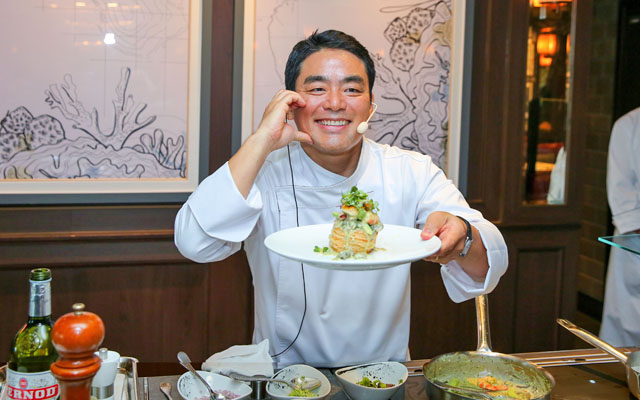
He built a travel empire from a hotel business, but the biggest achievement of Stanley Tollman, founder/chairman of The Travel Corporation, may well be in keeping the family in business together. As Asian families start to hand over to sons and daughters, Raini Hamdi asks Tollman (second from left below) how he does it

17jantollman

How did you manage to get your children and nephews to be in the business?
I had always hoped the business would grow and develop into something that Brett (son, now president/CEO of The Travel Corporation) could take over. At the time, we were running a hotel and restaurant business. From a little boy, he’s shown an aptitude for the hotel business. So we sent him to Cornell (University).

In the mid of my career, in the late 60s, I bought Trafalgar Tours and, through different life times and places, the business grew organically: retail travel, wholesale travel, bus companies, river cruising, all the various aspects.

We bought Contiki 20-odd years ago, needed a captain for it and offered Michael (nephew, now executive chairman, Cullinan Holding, which owns Thompson Gateway Africa) the job. He had just graduated. Then Gavin (nephew, now president, Trafalgar) came in when his father retired and we offered him Trafalgar. My wife (Beatrice Tollman) developed a hotel company, Red Carnation Hotels. It just happened. As I grew older, I didn’t even contemplate succession. You think you live forever.

What are the advantages and disadvantages of having family members holding all the top jobs?
I suppose the advantage is total commitment. It’s not a job; it’s a lifestyle, a passion. One has an attitude that it’s your life and soul, it’s everything you breathe, it’s everything you do. Nothing is too much trouble – if you walk into a restaurant and see a dirty cup, you pick it.

The next generation, generally, if they come from a successful base, they become more ‘ivory tower’. But the service business is hands-on.

Brett, Gavin and Mike also grew up seeing my wife and I washing plates, waiting on tables, cooking. They all showed the attitude that no job is too big for them or too small.

I think our business is in better hands. They’ve taken it to different levels. They’ve had more education than we had, they’ve applied it better in a now technocrat world – social media, IT, all these things.

What are the disadvantages?
You have to tread softly, not hurt feelings. In normal business, you say what you want to say.

When things go wrong – sibling rivalry and all that – they can go on awfully and destroy business. We’re fortunate our business is big enough that everyone has lots of space. Our two daughters are also in the business, one’s doing design, the other sales & marketing, but they all work together and do their own thing.

When I talk to all of them, I would give the example of a box of matches. Put matches together and try and break them. They won’t. But if you separate them, each is easily broken. The biggest thing is when the founder passes on, families have to learn that the most important thing is sticking together and not allowing feelings to destroy the business.

The children’s attitude of nothing is too small or too big for them – how much of that is nature, how much of it is nurture?
All of them had a kind of an upbringing that nothing was given to them. I don’t think any of them were over-spoilt. They grew up watching us work. So all of them grew up with strong work ethics.

I don’t think you can teach them. What you can do is to be a strong ‘steering committee’, show them the pitfalls, set the rules, create well-rounded people that have a sense of responsibility. Part of our business is dedication to foundation (conservation, charity) and our family motto is the pursuit of excellence.

How hard is it to let go? How much are you still involved in business?
I haven’t let go. Everyone said to me they’re surprised. It’s gratifying that everyone comes to me all the time for ideas. I still am involved in any purchase. Because we are in so many countries and we’re always building or acquiring new companies, there is just so much to do. So I’m fully employed, but no longer in the day to day.

But it is not hard at all, because I’ve been teaching Brett, Michael and Gavin over 20-25 years and in that long process, I’ve made them all do more and more.

How do you get together as a family?
We all get together three to four times a year, because Brett lives in the US, we live in three to four places, Gavin is in Geneva, Michael in Cape Town. And the joke always is, let’s try and have a meal and talk about other things than business. But the business is so intertwined with our lives!

But we also make business fun. If I look back on 60 years in business, besides the normal things – application, dedication, devotion to your business – the most important ingredient is enjoying what you do. I remember the first restaurant my wife and I opened when we were married. I was in the front, she in the kitchen, and the wonderful thing about the service industry is this pure enjoyment in making things happen. I’ve always said, our business is pure theatre. If you create the stage for what you doing, you will create a great play.

Some said the industry, which has grown so much, is not a lot of fun.

Yes, good point. Everything is all mechanised now, everything is a system, that it destroys an awful lot of entrepreneurial spirit and individuality.

Look at the airline business, since deregulation, there’s no airline service. Getting on a plane used to be an adventure.

That’s why we stick to niche businesses, not regimented ones, where we can still be creative. Customers are a lot more demanding, but it’s a lot easier to deal with smart people because they understand effort you are making.

There was a period when inclusive tours were disappearing. Everyone came up with the idea you buy an airline ticket, hire a car, find a room and off you go. Now they are coming back all over to inclusive, because the world became insecure after 9/11. Inclusive is security and it’s gone to a much higher level now; it’s not about eating rubbish for seven nights but taking people to different restaurants and trying to bring the adventure back to travel. That requires us to be innovative and creative. That’s where the fun is.

Our outlook on Asian tourism – Singapore, Malaysia, Indonesia

0

Travel companies in the region share their projections

17jansingapore

17jansingapor_cmykInbound
The political uncertainties looming over the upcoming elections in India and Thailand are casting a shadow on inbound business.

Luxury Tours & Travel Singapore’s director, Michael Lee, foresees a slowdown for inbound traffic in Singapore for 1Q2014. He said: “(Arrivals) from these two countries (India and Thailand) will likely slow down as they may be less likely to travel but it will pick up later in the year.”

For Samson Tan, CEO of GTMC Travel, factors like the European economic crisis and political unrest in Thailand have already adversely impacted inbound travel to Singapore in 2013. In 2014, he intends to grow his number of bookings by 50 per cent, focusing on the online business.

“We want to concentrate on our website and increase our spending on search engine marketing,” Tan said. “The benefits of going online is we are available 24/7 with instant confirmation and we can reach out to more markets.”

Meanwhile, the launch of more midscale hotels this year will spell an opportunity for Luxury Tours to market Singapore as a less pricey destination. He said: “It is not new that Singapore is an expensive place so hopefully the cheaper accommodation costs can fight this.”

Outbound
Singaporeans’ penchant for overseas travel will continue to stay strong this year, buoying the business outlook for outbound firms.

“We have also quite successfully increased traveller yield year-on-year by about four to seven per cent,” said Chan Brothers Travel’s group managing director, Anthony Chan, who forecasts 10 per cent year-on-year growth for the company this year.

“We constantly seek to move consumers up the value chain and reap higher-yield travellers through continual product innovation and service differentiation,” he added.

As Singapore is a mature travel market, Chan admitted that a key challenge is keeping pace with customer demands. He said: “Our focus for 2014 will be on business process reengineering, which will see a fundamental rethink of workflow and processes to dramatically improve customer service and operating efficiency.” –  Paige Lee Pei Qi

17janmalaysia

17janpenang-cheong_fatt_tze_mansiontourism-malaysia5Inbound
The Malaysian travel trade is adopting a cautious outlook this year as business costs surge in the country.

Yap Sook Ling, managing director of Asian Overland Services Tours & Travel (AOS), said: “Business volume and yield are anticipated to be the same as 2013 or even less. Our profit margins are squeezed due to rising petrol, toll and electricity rates, and increasing staff salaries to make up for inflation.”

On the other hand, Luxury Tours Malaysia’s senior manager, Arokia Das, projects an increase of 35-40 per cent in business volume and 18 per cent in yield, driven by traditional markets such as India and the Philippines while Eastern Europe is a growing market.

Both Arokia and Yap see Visit Malaysia Year 2014 as a good platform to generate greater awareness of Malaysia and boost business from non-traditional markets like South Africa and CIS countries.

Luxury Tours – a strong player in the Indian inbound market – also foresees the Malaysian government’s impending move to introduce visa on arrival facility for Indian nationals visiting Malaysia through a third country (namely Singapore and Thailand) will help to create interest among Indian tourists.

Rising air connectivity between Malaysia and India brings further opportunities too, especially as Malindo Air’s new daily Kuala Lumpur-New Delhi services and upcoming daily Kuala Lumpur-Mumbai services (commencing February 15) will raise seat capacity and provide a low-cost alternative to Malaysia Airlines, said Arokia.

However, the lack of direct flights still limits access to secondary destinations such as Langkawi, Penang, Kuching and Johor Bahru, he pointed out.

This year, Luxury Tours will launch a booking engine with dynamic packaging on its website to enable direct bookings for both B2B and B2C clients, explained Arokia.

AOS will also roll out improved packaged tours as part of its new initiatives this year. Yap said: “We will create more unique overland packages so overseas (consultants) cannot compare our offerings with that of other tour operators and will be willing to pay a premium for our unique tour packages.”

Outbound
Higher living costs are curbing Malaysians’ spending, said Panorama Tours Malaysia managing director, Richard Vuilleumier.

He explained: “Prices have risen as the government has cut back on subsidies for sugar, petrol, electricity and toll, which in turn have an effect on outbound. As costs rise, Malaysians have less spending power and so may cut down on their holidays abroad. Natural calamities and unstable political situations abroad will also affect travel.

“The challenge will be to entice Malaysians to spend on travel, especially longhaul, as the ringgit has dipped against the US and European currencies,” he added.

Panorama Tours Malaysia is working towards branding itself as an ecotourism adventure specialist, with plans to introduce niche packages in four-wheel drive, cycling, biking and rock climbing tours.

The company is also keen to sell ground packages to coincide with airline promotions during low periods to entice Malaysians to travel overseas. “Another opportunity for us is to become a cruise specialist as consumer awareness about sea cruises are growing and (travellers) are willing to pay for all-inclusive cruises.” –  S Puvaneswary

17janindonesia

17janindonesia-tirta-empul-bali-sxc_cmykInbound
The Indonesian inbound trade is stepping up efforts to woo more visitors from ASEAN.

“The launch of direct flights from Singapore to Makassar, Jogjakarta, Semarang, Surabaya and Bandung, plus the improved domestic flight network have opened up new product opportunities. For example, passengers can arrive in Jogjakarta, do overland to Surabaya and Bromo, then fly from Surabaya to Makassar to do the Toraja tour and fly out to Singapore,” said Adjie Wahjono, operations manager, Aneka Kartika Tours & Travel Services. The Surabaya-based operator expects revenue to increase by eight per cent this year.

“Singapore and Malaysia continue to grow, but (business from) the Philippines, Vietnam and Thailand are also up,” said Adjie, who projects a revenue increase between seven and 10 per cent for the South-east Asian market this year. “Last year, the European versus South-east Asian market composition was 70:30; this year we are looking at 60:40.”

Likewise, Panorama Destination will also step up focus on regional markets like Malaysia, Vietnam and India, said COO, Achmad Sufyani, as European markets have yet to return to pre-crisis levels.

Said Achmad: “In 2013, the volume from Europe was down by 25-30 per cent from 2012, but our revenue was up fairly thanks to currency exchange. This year, we expect to maintain our performance in the Netherlands, and will put more efforts in Eastern Europe such as in Romania and Serbia, and the Scandinavian countries.”

Sharing similar observations, Adjie remarked: “We have seen (European) group series booked for summer, but FIT bookings for April onward are still slow. This year, we are looking at increasing revenue by introducing upmarket packages.”

However, the upcoming World Cup in Brazil, which falls during the summer peak season, may prove a more attractive destination than Indonesia for European travellers, opined Achmad.

Outbound
“Tremendous growth” is expected for the Indonesian outbound market, according to projections by Al Mulenga, director of G2 Travel.

“In 2014, we will grow our core business organically and take on more employees. This year, G2 will open offices in Beijing and Tel Aviv,” said Al. “We see huge potential for business into the Middle East. Our partnerships in Dubai and Amman will lead to growth into Dubai, Jordan and the Holy Land.”

He added: “Overall, we are looking to grow our revenue by 100 per cent compared with 2013, when our total sales grew by 150 per cent.”

However, the rupiah depreciation may erode Indonesians’ spending power, causing travellers to opt for domestic or shorthaul travel and shorter holidays instead. “The industry will have to come up with innovative products that are affordable in 2014,” he commented. –  Mimi Hudoyo

Japan’s smaller cities clamour for incentives

0

JAPAN is wooing Singaporean incentives and encouraging the trade to take their customers into lesser-known cities now that arrival figures have bounced back.

Susan Maria Ong, deputy director of Japan National Tourism Organization (JNTO) Singapore office, said that Singapore outbound traffic to Japan saw a 30 per cent year-on-year rise in 2013, thus pointing to “full confidence restored” in Japan.

JNTO predicts arrivals growth will continue to climb. “Apart from the fact that it is cheaper to travel to Japan now with the depreciation of the yen, Singaporeans are also aware that it is a safe country and are willing to return,” she said.

Ong was speaking to TTG Asia e-Daily at the Japan Endless Discovery Incentive Seminar 2014, the first time the seminar has been held in Singapore since 2010.

This year’s seminar also features lesser-known destinations like Kitakyushu, Nanto, Tokushima Prefecture.

Tory Yamaishi, marketing manager from Matsumoto Tourism & Convention Association, said only about 700 Singaporeans visit this city in Nagano Prefecture every year and this number has been stagnant. He said: “We want to look at attracting repeat visitors especially because they will want to see something new in Japan.”

Hailing the Matsumotojo – one of Japan’s renowned historic castles – as a must-see attraction, Yamaishi said travellers will also be awed by the scenic mountainous view there.

Yoshitaka Nagatomo, senior deputy director of the Kumamoto tourism division, said: “It is not easy to fight with Japan’s big cities so we have to be even more impressive in our marketing.”

Hence, Nagatomo said Kumamoto would work closely with travel consultants by participating in more tradeshows this year.

Megatop Travel Consultants’ travel manager, Yvon Neo, said Hokkaido still ranks as top preferred choice for her travellers but agreed that fresher destinations increasingly held appeal for repeat travellers.

“For first-time visitors, of course they will go for the popular cities but for the seasoned travellers we can consider recommending less popular ones like Matsumoto,” she said.

According to Japan Travel Agency statistics, Japan has already surpassed the pre-earthquake high of 8.6 million arrivals for full-year 2010 with 8.7 million arrivals between January and October 2013 (TTG Asia e-Daily, November 28, 2013).

ASEAN group travel to Europe thriving

0

Roma - Colosseo
The Colosseum in Rome, Italy — Credit: ENIT

ITALY, France, Switzerland, Spain and Germany were the top five long-haul destinations for South-east Asian group travellers last year, with Kuoni Group Travel Experts recording a rise of nine per cent in room nights booked.

Last year, Germany dethroned the Netherlands for a place in the top five and room nights booked in Switzerland skyrocketed 44 per cent. Meanwhile, other major European destinations such as Norway, the Czech Republic, Austria and the UK posted double-digit jumps in group travel in 2013.

The European tour operator said the 10 members of the Association of South East Asian Nations (ASEAN) – Brunei , Cambodia, Indonesia, Laos, Malaysia, Myanmar, Philippines, Singapore, Thailand and Vietnam – are becoming increasingly important source markets for international travel.

David Painter, chief executive of Kuoni Group Travel Experts, said: “Group travel gives ASEAN travellers the reassurance and security of native language tour guides, pre-planned meals and rooming in hotels that are best able to meet their needs, alongside itineraries that ensure they enjoy the attractions and experiences they want.”

HSBC bank has reported that the 10 countries of South-east Asia collectively account for 600 million people with a combined GDP of US$2.1 trillion.

Said Painter: “Upgraded infrastructure coupled with political and legislative commitment will help drive trade links, both within the ASEAN region but also with the rest of the world in coming years. This will in turn drive the growth of potentially millions of middle-class consumers with a greater desire and ability to travel.”

Destination Asia fortifies online presence with new events portal

0

THAILAND-BASED Destination Asia yesterday launched Destination Asia Events, a new website created as a “one-stop resource tool” for events planners.

Available at www.destination-asia-events.com, the portal is meant to “solidify and expand Destination Asia’s presence as event organisers in Asia”, said James Reed, CEO of Destination Asia.

He explained: “We have organised thousands of events over the past 10 plus years (and so) we decided to create a platform for clients to access all the extensive creative work we have done so far.”

While declining to disclose the exact amount channelled into developing the new platform, Reed believes that the “considerable investment” spent will pay off in improving the client experience and streamlining work efficiency.

“The process of an incentive brief is highly detailed and time-consuming to put together. The content on our new events website basically condenses all of this and gives our clients immediate access to high visual graphics and information that they would otherwise have to question to us through multiple correspondence,” he added.

The Destination Asia Events website features 360-degree views of key venues, downloadable content, fact sheets, essential technical support information and high-resolution images for presentations. Clients are required to sign in with a password, and a qualifying process is required for new sign-ups.

Only content for China, Vietnam and Indonesia is currently available on the website, with Japan, Singapore and Hong Kong to come in the next three months, followed by the group’s remaining destinations within the year.

Destination Asia’s group business development director, Victoria Sertic, revealed further technological initiatives in the pipeline. She said: “We recognise that all segments of our business require technology, so the online booking engine eDA (TTG Asia e-Daily, April 1, 2013) is like a talking engine for leisure customers and the Destination Asia Events website is an electronics tool for MICE customers.

“We will launch a third platform, a Cruise Asia website, by the end of this month,” she disclosed.

Malaysia’s Residence Hotels & Resorts transforms into RHR Hospitality

0

MALAYSIAN hospitality group Residence Hotels & Resorts has rebranded itself as RHR Hospitality and introduced new signature hotel brands to its portfolio.

The three recently unveiled brands are: The Kahaani, The Qamar and RHR Hotel.

Bringing its existing properties in line with its new identity, RHR Hospitality has begun rebranding selected hotels.

Residence Resort Paka in Terengganu and Residence Desa Lagoon Resort in Port Dickson will carry The Qamar brand, while Residence Hotel At Universiti Tenaga Nasional (UNITEN) will be renamed RHR Hotel @ UNITEN.

RHR Hospitality’s portfolio comprises 11 hotels including three in Indonesia.

Silver lining for Bangkok hotels amid shutdown

0

THE political turmoil in Bangkok has sent room occupancies in the city on a nosedive, but some hospitality players have actually seen additional business.

Chris Bailey, senior vice president for sales & marketing at Centara Hotels & Resorts, has seen many MICE events postponed and leisure bookings cancelled but noted: “Centara Grand at Central Plaza Ladprao actually sees much better figures (perhaps due to) its location slightly outside the city and also corporate clients whose business is as usual.”

Debrah Pascoe, Onyx Hospitality Group’s senior vice president sales and marketing, commented that while occupancy is lower than usual for this time of the year, the hotel is not lowering rates.

“Optimistically, our properties in resort locations are so far unaffected and a number of them are picking up last-minute bookings from guests diverting their travel from Bangkok, especially those within driving distance from the capital, namely Pattaya, Hua Hin and Koh Chang,” she added.

Same-day booking app HotelQuickly appears to be an unexpected winner amid the crisis, recording a surge in bookings for Bangkok properties.

Said COO Christian Mischler: “New member sign-ups in Thailand have more than tripled over the past few days…However, the longer the protests go, we expect to see a bigger increase of bookings, as many might treat themselves a nice shower and a comfortable bed as a change after having spent a number of nights in a tent or sleeping on the floor at a rally site.”

He noted that most of the new members speak Thai and are located in Bangkok when they register on the app.

Meanwhile, hotels located near the demonstration sites have rolled out discounts targeting local residents. Centara Hotels & Resorts has launched a Bangkok Shutdown package across its five Bangkok properties for this week, while Grande Centre Point Hotel Terminal 21 has a Thai Resident Special.

“This (Bangkok Shutdown) promotion is not generating a huge volume increase, as most rally-goers still prefer to go home. However, we’re seeing more rally-goers coming for meals and spa treatments for breaks or relaxation, particularly at Centara Grand,” revealed Bailey.

Likewise, Dusit Thani Bangkok is receiving more lunch business from local offices, including “marginal business from rally-goers”, noted general manager, James Wilson, although month-to-date occupancy has dipped 40 per cent from last year.

“We do have one large international group in house at present and some small overseas groups arriving throughout the week, as well as FIT bookings. Our corporate accounts are still booking, although in reduced numbers,” he said.

Banyan Tree plans to expand in midscale

0

BANYAN Tree Holdings, known for its luxury hotels around the region, is looking to branch out into the mid-scale segment in India.

Speaking at Hotel Investment Forum India, executive chairman Ho Kwon Ping said: “We are planning to foray into new segments beyond ultra-luxury because when we started in that segment, nobody was there. But now we are looking to operate other segments like four-star hotels and service apartments.”

While he declined to divulge further details, Ho told TTG Asia e-Daily that the first of such a property is expected to open in the second half of 2014.

He added that India holds great potential for the mid-market segment and the country would see such openings from Banyan Tree Holdings.

“We entered India as a high-end luxury resort company. But we feel that the demographic of India just doesn’t need luxury hotels,” he said.

The company’s first project in India, Banyan Tree Kerala (TTG Asia e-Daily, July 8, 2013),  has repeatedly delayed its opening due to environmental and licensing issues.

AirAsia X bumps up flight frequency to South Korea

0

AIRASIA X will increase the number of flights between Kuala Lumpur and Seoul (Incheon) from seven weekly to double daily by the end of the year.

From July 2, flights on this route will be increased from seven to 11 times weekly, while double daily services will commence on December 2.

Azran Osman-Rani, CEO of AirAsia X, said: “Overall, the airline has carried over half a million passengers to and from its Korean routes since it began operations in South Korea in 2010. South Korea contributes over eight per cent of the airline’s total revenue, with an average of 83 per cent passenger load in 2013.”

He continued: “Our flights from Kuala Lumpur to Seoul have performed extremely well and the extra flight services will help meet increasing demand, provide guests with a greater choice of travel times and enable us to offer improved flight connections across our network and that of the AirAsia Group.”

Seats on the additional flights are already available for purchase and the airline is dangling special fares to mark the occasion.

One-way, all-in ticket prices start from RM269 (US$82) for economy class and RM699 for premium. The offer runs from January 20 to February 2 for travel between May 5 and September 30.

Besides Seoul, AirAsia X also flies to Busan four times a week out of Kuala Lumpur.

Shangri-La rolls out Tokyo on Two Wheels package

0

SHANGRI-LA Hotel, Tokyo is offering guests the chance to travel Tokyo in a different way with its Tokyo Great Cycling Tour, available until June 30.

Under the package, guests cycle around Japan’s capital with an English-speaking guide on a six-hour tour through off-the-beaten-path areas. Tours begin at 09.00 and end at 15.00 and three different courses are available.

Tokyo On Two Wheels is available one time for stays of at least one night and comes with daily breakfast at Piacere or Lobby Lounge, transportation to the meeting point (Shinkawa), late check-out until 18.00 for guests joining the tour on their check-out day, a commemorative t-shirt, free wired or wireless in-room Internet access, and entry to the hotel’s Health Club and pool.

Prices range from 68,000 yen (US$649), subject to taxes and a service charge. The offer is subject to availability and three days’ advance reservation is required.

Visit www.shangri-la.com for more details.