TTG Asia
Asia/Singapore Thursday, 1st January 2026
Page 2211

Smooth succession

0

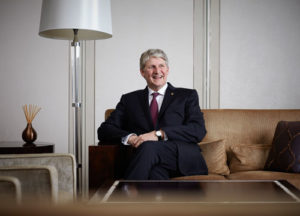
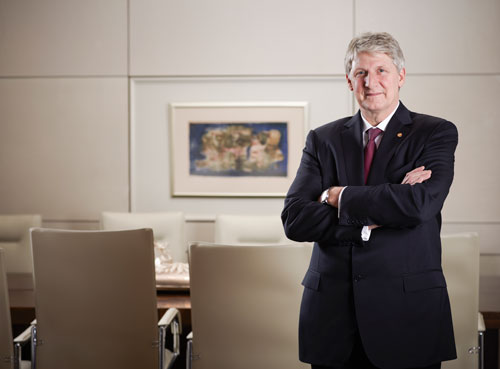
Laurent Kuenzle fills the big shoes of Luzi Matzig as the new CEO of Asian Trails Group. But apart from the new title, nothing has changed at the regional DMC – or will change

9-maylaurent-kuenzle_72

How did you feel when you stepped into the office as the CEO  on January 1?

I felt no difference. I’ve been with the company and grew with the people for 25 years. Luzi employed me to work with Diethelm Cambodia in 1995. We co-founded Asian Trails in 1999 (with Roger Haumueller, MD, Asian Trails Thailand).

So we think as entrepreneurs would. We don’t always agree, but we discuss it with one another, make a decision and find the best way forward for the company.

If I were coming from the outside, I might feel a difference. But we’ve worked together for years and the succession had been in the planning for a while. Many of our people had thought that it would be natural for me to take over one day, and now that has happened.

Are you driving the company or is Luzi still driving it?

Luzi is now chairman of Asian Trails. As CEO, I drive and run the company, with goals set by the chairman and the board. Obviously as chairman, he is still my boss. But I run the day to day. As chair, he is not always in the company and he plays an advisor role, which is important for me. As much as I like to listen to young people who bring in new ideas and inspirations, I also like to listen to people with a wealth of experience.

So what’s changed?

Not a lot. Before, I was running our offices outside Thailand – Vietnam, Cambodia, Laos, Myanmar, China, Malaysia and Indonesia – as group MD reporting to Luzi. Now, Thailand is under my wings as well, along with corporate responsibilities such as finance, which Luzi used to do.

It’s interesting to have the whole company under my wings.

But as CEO, surely you want to make your own mark? At 45, surely you have your own ideas? 

What I want is continued success of what we have achieved so far. I don’t want to revolutionise the company but I do want us to adapt to changes that are happening everywhere, whether it is our source markets that are changing, or tour operators and travel agencies.

So I have to anticipate change and lead the organisation towards a future goal. Today everything is moving faster. More than ever, I have to ask myself, am I still doing the right things? Am I asking myself the right questions for the organisation?

So your dream is only continuity – how boring!

(Laughs) You look disappointed! You thought I was going to tell you how I would revolutionise the company, that I would be changing everything, close this, open that. No.

We are a top quality, well-managed DMC with offices throughout South-east Asia and China. We’ve gone with the times and with new source markets, some more successfully than others. We’ve always had a pioneering spirit and a spirit of risk-taking in business. So there is no need to reinvent.

I also do not have plans to expand. I don’t believe we need to open an office in, for example, Singapore, because that’s commodity travel. What does it take to give two airport transfers and a half-day city tour in Singapore?

It would be different if it were MICE or events (i.e. more value add) but we don’t want to open in Singapore just for the MICE business. Same for Hong Kong, which I can handle out of my office in Beijing with suppliers in Hong Kong.

Have you seen the best days of the business, considering how competitive everyone says it is?

If we were a travel agency I will tell you, probably. But we’re not. We are a real DMC which provides a service at a destination and sells it either as FIT, package or tailormade tours. There is no money to be made if we’re simply handling point-to-point or repeat business.

What would you do if you were a travel agency?

It depends on the source market. In source markets such as Switzerland or France, where the client goes into the agency armed with information he’s got from the Internet, the travel agency should know his client like the back of his hand, take apart the information he has – often too much information – and be able to recommend what is perfect for him.

The agency has to build up the trust factor and the value of the relationship with the client. If you’re a travel agency that does that, you may be smaller than before with fewer clients, but you have a distinct client base.

And as a DMC, I have to anticipate how the tour operators and the travel agencies are changing so I am able to give them the new services they need.

What about the tour operating business? Are the best days over?

I don’t think so. Again, it depends on the source market. If you are a tour operator in a fast-moving source market, such as India or Brazil, and you don’t adapt to the trends of that source market – how it books, what service it demands, what niches have appeared, such as weddings and honeymoons in India – then I doubt if you would be able to survive in the long term.

How do you compete with the likes of Exotissimo, Diethelm, etc?

Exotissimo is strong in France, while we are strong in Brazil, Germany or Switzerland. Destination Asia is stronger in the UK.

Aside from different source markets, you try to compete based on product differentiation, although admittedly that is becoming difficult. There are new possibilities, such as border openings between Myanmar and Thailand, and when one DMC picks up on it, another follows suit, so where do you stand?

You compete on getting the trust of the client. A tour operator who trusts me will know that if I say, ‘This product is the right one for your source market’, it is indeed the right one. If he does not have that trust, he’ll be asking a lot of questions.

You went on a one-year sabbatical before assuming the CEO role. How did that help? 

It’s one of the best things I’ve done in my life, on both the personal and business level.

I took the time to meet so many friends and family members, and it’s marvellous that they also took the time for me. I travelled to so many countries and made so many observations. I enjoyed starting conversations with people again. When you’re in business, the last thing you want to do when you get into a plane is to socialise with other people. But when you have time on your hands, you start to be more proactive and have conversations with people about everything under the sun, including travel – what they think about travel today, what are their dreams in travel, and so on.


10 NEED TO KNOWS ABOUT LAURENT KUENZLE

• Who is in your family? My partner Noom and my dog Flory

• What do you do for fun? Travel

• Your ideal vacation? My boat

• How do you book your own leisure trips? With or through friends

• What are you reading right now? The hundred-year-old man who climbed out the window and disappeared by Jonas Jonasson

• How do you stay healthy? Gym

• Favourite food? Thai

• A bad habit you cannot kick? Chocolate

• Your pet peeve, something that never fails to annoy you? People who are always right

• Most people don’t know that you can… cook

A complicated relationship

0

What happens when OTAs turn into jealous lovers, seeking to control whom hotels work with and the rates that surface online?

may9-jealous-lover

OTAs have grown to become a significant distribution channel for many Asian hotels, but it’s a precarious relationship that can require a lot of tiptoeing around.

An allegation circulating is that some OTAs use their market dominance to prohibit hotels from working with competitors.

A Bangkok-based distribution director, who requested for anonymity, said: “Among the OTAs, it’s pretty much Agoda who’s more upset about hotels working with alternative booking channels whereas the others are not too concerned.

“The main challenge with Agoda is also maintaining rate parity. This has been going on for many years; it’s not unusual for Agoda to call, email or Skype us to seek an explanation. We try to solve rate parity on a regular basis.”

Rate parity agreements, which require hotels to guarantee that room rates on their own websites are not below that offered by OTAs, remain a divisive issue.

Chetan Patel, vice president, strategic marketing & e-commerce, Onyx Hospitality Group, said: “At times it is quite difficult to manage (OTAs’) expectations on rate parity as some wholesale rates inevitably end up on online channels where they are not supposed to. OTA partners therefore expect us to resolve such issues immediately, but identifying the intermediaries is not always that easy.”

The same director who did not want to be named explained: “Sometimes due to factors out of our control like time differences or currency fluctuations, there will be a bit of rate difference, say, five to 10 baht, between our own website and OTAs.”

On the other hand, hotels have unwittingly ended up in OTAs’ all-inclusive promotions, which, as the result of bundling various travel components, could make rooms appear cheaper than was supplied, ruffling the feathers of other intermediaries, added the director.

“(If OTAs) purchase the rooms at wholesale price and then make a mark-up, the prices will be lower than our website – this has happened before and we stopped working with such partners,” said Kiatiphong Phatarakulbaramee, director of sales at Rembrandt Hotel & Towers Bangkok, which also does not offer inventory on bed banks.

“We try to be friends with everyone. We will marry people who want to be married with us – it must be a win-win relationship for everyone,” he remarked, while at the same time reminding all hotels to be “careful” of OTAs. “You have to keep monitoring what’s being posted on these sites, whether they are promoting your hotels according to agreements, for instance.”

When asked to comment, an Agoda.com spokesperson insisted there is no problem with the relationship between OTAs and hotels. He stated: “We work very hard to make sure the rate (customers) pay is the best rate we can get from the hotel. Our hotel partners understand this and value the material production they get.

OTAs clearly use hoteliers’ lack of understanding and usage of digital media to their advantage…However, if you have the leverage of scale, brand and your own marketing prowess, it is easier to deal with them.
Chetan Patel
Vice president, strategic marketing & e-commerce, Onyx Hospitality Group

“They also work very hard, and they support us with great deals and access to hard-to-find rooms, which helps us keep our large customer base happy. We are extremely thankful for the unique support we get from hotels in our region.”

The broad sentiment is that the onus is on hotels to manage their relationships with OTAs or take active steps to prevent any bullying.

Enrico Wibawa, director of e-commerce, Compass Hospitality, said: “Getting online or being listed online is becoming more expensive. If a hotel has enough budget, it is less likely to be less dependent on OTAs; but for smaller properties, OTAs offers a conducive partnership for global marketing.”

Onyx’s Patel opined that hotels are largely to blame for their dependency on OTAs. “OTAs clearly used hoteliers’ lack of understanding and usage of digital media to their advantage. Hotels tend to see OTAs as a channel that does not charge fees upfront and therefore ignore the distribution costs that add up in the long run,” he said.

“Furthermore, many hotels do not focus on building their presence online, often disregarding digital marketing completely as a complicated and expensive endeavour. In our experience, the cost of digital marketing is far lower than the distribution costs paid out to third parties. If hotels do not want to pay for these then dependency on OTAs is the result.”

Recognising this, Rembrandt Hotel & Towers Bangkok recently changed its hotel booking engine to SiteMinder to allow for more efficient rate updates across distribution channels, shared Kiatiphong.

Said Patel: “We acknowledge the role (of OTAs) and therefore spread our business among several channels while maintaining good relationships. That is not to say that we do not have our challenges with them. However, if you have the leverage of scale, brand and your own marketing prowess, it is easier to deal with them.”

Grand Mercure Singapore Roxy appoints new GM

0

GRAND Mercure Singapore Roxy now has a new general manager in Klaus Gottschalk.

In his new position, Gottschalk is responsible for the hotel’s overall operations, overseeing and managing the day-to-day operations and providing leadership and guidance to the team.

The German national has over 35 years of experience in the hospitality industry, having started his career in Germany and taking on a host of senior management positions in Europe, the Middle East, Australia, New Zealand, Indonesia, China and Malaysia.

He joined Accor in 1994, and was in charge of the pre-opening and opening of Pullman Kuala Lumpur Bangsar before this appointment.

PATA posts profit for the first time in 3 years

0

IN the lead-up to its AGM next Friday in Zhuhai, PATA has announced to its executive board members that it posted a profit of around US$33,000 for 2013, a small sum but a “significant” achievement in light of the US$1 million loss it made in the previous three years.

The profit reflects that the association has been able to retain a vast majority of its members and recruit new ones, generate income from events, sell research and work on consultancy projects that help cover staff salaries and overheads, according to CEO Martin Craigs in a phone interview from Bangkok where PATA is based.

Describing the achievement as “significant”, Craigs said: “PATA has had a lot red ink in the last three years and nothing else (we do) will be taken seriously unless we address the fundamental point of stopping our reserves being drawn down on.”

PATA currently is down to cash reserves of over US$1 million, a figure Craigs said it must continue to shore up.

More than just reversing PATA’s financial standing, Craigs said “more importantly, we have changed the mindset on PATA, its external business-building rationale capabilities and its internal self-belief”.

He said: “If posting a profit is the only thing I achieved over the last 2.5 years, I would consider it close to an abject failure – for what is the point of breaking even if you have not built the resources and platform for the future?

“We’ve been addressing those issues (of relevancy). It’s why the whole PATA Next-Gen philosophy has taken root…now we have to be ever more energetic and eager to find innovative ways to add value.”

According to Craigs, PATA has been recruiting 17 new members per month in the past year, compared to a membership drain previously.

While PATA Travel Mart continues to comprise a serious percentage of its income stream, other events such as the PATA City Hub Forums, 11 of which have been organised to-date, and the PATAcademy, are also now starting to contribute to the coffers.

“We are still a work in progress but we now have a number of platforms to build on – mPower research, human capital development, etc. We want to do well what we are currently doing, not create more things for the sake of creating,” said Craigs.

“We’re led by research, aligned advocacy, innovative events, human capital development and sustainability. These are our pillars and we will continue to strengthen them.”

Aqueen launches third budget property in Singapore’s Jalan Besar

0

AQUEEN Hotels & Resorts has debuted its third property, the 75-room Aqueen Jalan Besar Hotel.

Located close to Little India, the budget hotel is situated between Jalan Besar and Kitchener Road, providing convenient access to Singapore’s central business district.

Rooms are divided into Superior, Deluxe and Premier categories. Superior and Deluxe rooms come with a choice of twin or queen beds, while Premier room guests can enjoy king-size beds and bath tubs in the bathroom.

Each room features amenities such as a plug-and-play media hub portal for interconnectivity between electronic devices, and free high-speed Internet access. Handicap-friendly rooms are also available.

Breakfast is complimentary for all staying guests.

Aqueen Hotels & Resorts has two other existing hotels, in Balestier Road and Lavender Street, and will open a fourth in Paya Lebar later this year.

Carlson Rezidor reinvents the Park Inn by Radisson concept in India

0

CARLSON Rezidor Hotel Group is reinventing its Park Inn by Radisson brand in India having opened the first next-generation property last month.

The 98-key Park Inn by Radisson Gurgaon Bilaspur will be joined by eight more next-generation Park Inn by Radisson hotels, with one in New Delhi expected to be completed first.

New standards set for Park Inn by Radisson hotels include a vibrant colour scheme, in-room amenities such as sofa beds so that family travellers will not have to ask for an extra bed, a mobile table allowing guests to have breakfast in bed, and RBG (Restaurant, Bar & Grill) restaurant offering an all-day menu of local and international cuisines.

Raj Rana, CEO, South Asia, Carlson Rezidor Hotel Group, said: “From now onwards all the Park Inn by Radisson properties will have a very well-defined set of standards, be it colour scheme or the technology and the service that goes in each hotel. So, all the properties under the aegis of the brand are going to be consistent in terms of look and feel.

“Earlier, since some of the properties of the brand were converted projects, some of the design elements associated with the Park Inn brand were not there in some properties,” he explained.

Last year Carlson Rezidor partnered Bestech Hospitalities to build 49 Park Inn by Radisson hotels in North and Central India (TTG Asia e-Daily, January 16, 2014). The hotel chain is now scouting for a partnership on the same lines for South and East India.

Carlson Rezidor operates 209 Park Inn by Radisson properties globally.

Tourism Australia appeals to tastebuds with dining-focused campaign

0

TOURISM Australia wants to whet the world’s appetite for travel to Australia with its latest campaign focusing on the country’s gastronomic offerings and culinary experiences, and is calling on the industry to help.

Called Restaurant Australia, the multimillion dollar blitz comes under the NTO’s international There’s nothing like Australia campaign and will be rolled out in 12 key international markets in the coming months. Restaurant Australia was officially launched last week.

Tourism Australia’s managing director, John O’Sullivan, explained: “Restaurant Australia is all about bringing together the incredible stories of our people, place and produce to demonstrate to the world that every day, unique and exceptional food and wine experiences are being served – up in remarkable locations, and then sharing these stories through the creation of rich and compelling content.”

“When we originally launched There’s nothing like Australia, we did it by asking Australians to talk about their ‘nothing like’ experiences. This time our rally cry is to industry, with Tourism Australia providing the platforms to help show the world Restaurant Australia.”

Businesses, operators and those involved in Australia’s food, wine, tourism and hospitality industries can submit their F&B-related stories to www.australia.com/restaurantaustralia to be listed on the site. The NTO will use its social media platforms to amplify content gathered there.

Tourism Australia will also run an international media fam programme for Restaurant Australia in November this year. “The Restaurant Australia familiarisation will bring together up to 80 media and key influencers, who will travel to different parts of the country to cover the food and wine experiences on offer in every state and territory during a week­-long visit and capture their experiences through their media and online networks internationally,” said O’Sullivan.

“Their visit will conclude with all participants coming together for a special Invite the World to Dinner gala event, which will see produce from around Australia prepared and served on-site at MONA in Tasmania on November 14,” he added.

Other consumer-facing promotions include new advertising creative including broadcast and print ads; strong focus on using digital channels, social media and advocacy; and consumer promotions in a dozen key international markets.

Tourism Australia chief marketing officer, Nick Baker, revealed: “The concept of Restaurant Australia has been built based on consumer research which identified food and wine as a key factor in holiday decision-making and the most important emotive trigger, ahead of world-class beauty, for influencing people’s destination choice.

“For people who’ve never visited Australia, awareness of our food and wine offering is low. However, once they visit, people realise the variety and quality of our food and wine experiences is world‐class and Australia moves to the top of the rankings as a one of the world’s best culinary destinations.”

SIA invests in cabin upgrades for 19 planes, posts 13.1% operating profit

0

SINGAPORE Airlines (SIA) today announced it would invest US$325 million to upgrade the cabins of 19 of its B777-300ERs by September 2016, even as it noted in its financial report yesterday that the aviation market will remain challenging, with intense competition in many areas and economic uncertainty in key markets.

First class passengers can expect seats with a fixed-back shell design and curved side panels for added privacy, an ergonomically sculpted cushion and adjustable headrest, customised in-seat lighting, and seats 35 inches in width with an increased bed length of 82 inches.

In business class, seats will feature a greater recline at 132 degrees, an improved ergonomic seat cushion, two new seating positions and more stowage space.

Economy class seats will come with more personal space, leg room, new backrest cushions with side bolsters for better support and an ergonomically sculpted headrest cushion.

SIA’s latest KrisWorld in-flight entertainment system will also be upgraded with the latest hardware offerings and an intuitive graphical user interface.

SIA reported an operating profit of S$259.3 million (US$207.8 million) for the financial year ending March 31, 2014, up 13.1 per cent over the year before.

The group’s parent airline, SIA, recorded an improved operating performance of S$69 million, a 36.9 per cent rise to S$256 million. However, SilkAir reported an operating profit that was S$62 million lower as passenger carriage growth fell behind capacity increases.

SIA carried 18.6 million passengers, 2.3 per cent more than the last year, although passenger load factor fell by 0.4 percentage points to 78.9 per cent due to higher passenger capacity. SilkAir saw a four percentage point drop in passenger load factor to 69.6 per cent.

According to the release by SIA: “Passenger bookings in the current quarter are expected to match the planned increase in capacity. However, yields are expected to remain under pressure due to promotional activities undertaken to support loads and other airlines offering aggressive fares while increasing capacity.”

Fuel prices are expected to remain high.

PATA Singapore gathers industry veterans to groom next generation

0

THE PATA Singapore Chapter launched the Travel Industry Pioneers (TIPSTER) initiative last night night to harness the collective knowledge and experience of active and retired industry veterans to attract and groom a new generation.

Robin Yap, PATA Singapore Chapter deputy chairman and chairman of activities, told TTG Asia e-Daily about 60 members and supporters signed up for the PATA Singapore Chapter’s Walk with Travel Industry Pioneers, supported by The Travel Corporation (TCC).

The Singapore chapter plans to launch the Young Industry Professionals (YIPPIES) group next month, using TCC’s database to target those who have travelled on Contiki and are working in the industry.

Yap said: “The aim is to bring the two groups together in a forum to discuss how the industry can attract and groom a new generation, and we hope to reach out to at least 100 YIPPIES.”

“While the young have new ideas and the entrepreneurial spirit, it’s important for them to have a good foundation to produce products that the market wants and they can sell.

“Learning from the TIPSTERs about operations, challenges and opportunities, we hope will give YIPPIES a better insight,” he added.

Philippines cautions Indian travellers against fake visas

0

THE Philippines has cautioned Indian travellers about acquiring fake visas from unofficial sources after a recent spate of visitors being apprehended, deported and barred from future travel to the country for holding such visas.

Benito B Valeriano, ambassador of the Philippines to India, said: “We request travellers from India to deal only with authorised members of the Outbound Tour Operators Association of India (OTOAI), Travel Agents Federation of India (TAFI) or Travel Agents Association of India while applying for visa through a travel consultant.”

The three trade associations in India have been urged to inform visa applicants to apply only to Philippine consular offices in New Delhi, Mumbai, Chennai and Kolkata through designated association members.

Vineet Gopal, secretary, OTOAI, said: “Members of our association always inform their clients about the pitfalls of fake visas. This is a menace and we will cooperate with the Philippine embassy in India to stop such crimes. Often, travellers get sucked into a damaging vortex by unscrupulous brokers.”

Anil Punjabi, chairman – east, TAFI, affirmed: “Thankfully, the problem has been detected in the initial stages and can be addressed. It is not only Indian tourists but nationals of other countries too who have encountered this problem.”