TTG Asia
Asia/Singapore Saturday, 11th April 2026
Page 2109

A storied city goes luxe

0

Better known as a historical destination, Xi’an has woken up to the potential of luxury travel thanks to a fresh crop of posh hotels in the city

19-feb-china

The growing presence of international luxury hotels has added a glamorous tone to Xi’an in China’s Shaanxi Province, which for decades has been drawing history buffs since the 1974 discovery of the terracotta army that forms part of the mausoleum of China’s first emperor.

Li Shuyan, MICE and general manager of Xi’an-based China Travel Service Head Office Northwest, has seen the changing face of Xi’an in the last 15 years. “Back then, foreign tourists who came to see the terracotta army stayed in the city centre where most hotels were. They had to wake up very early to make the long journey to Lintong where the terracotta pits are. Their main concerns were a clean bed and food that would not give them diarrhoea,” he recalled.

“But ever since international hotel chains like Shangri-La, AccorHotels and Starwood entered the market with their five-star products, the demographic of travellers has changed. Xi’an not only received more foreign tourists, it also welcomed wealthier ones.”

Today, numerous prominent hotels dot the city’s map, some in the commercial centre and others close to key tourist landmarks.

Agreeing that Xi’an is “increasingly on the radar of the luxury traveller”, Hajar Ali, founder of luxury travel company Urbane Nomads, said: “There is a correlation between the opening of luxury hotels and a destination becoming popular with the well-heeled. Xi’an has its history going for it but with the opening of new luxury hotels, it has become an easier choice for high-end travellers.”

Hajar observed that longhaul travellers tended to go for longer stays and relax at luxury hotels and resorts in Xi’an at the end of a lengthy trip to “pace the itinerary”, while shorthaul visitors from Hong Kong and Singapore favoured Xi’an as a stopover en route to Tibet.

Tourism players noted that the city’s luxury market is dominated by corporate travellers and special interest leisure groups.

Steven Wang, director of sales and marketing at The Westin Xian revealed that 85 per cent of the hotel’s guests are corporate and the rest leisure.

“Business travellers and meeting delegates have bigger budgets,” said Wang, adding that individual travellers and small-size groups on tailored programmes that focus on history, food or nature made up the majority of his leisure clientele.

Li opined that Xi’an’s booming industries, fuelled by Chinese president Xi Jinping’s commitment to developing cities on the Silk Road trading belt for international commerce, is luring wealthy businessmen to the destination. These travellers would extend their trips for pleasure, requesting for special activities such as a session with a local archaeology professor who can explain the history behind historical finds.

Diethelm Travel (China) is hence rolling out “extraordinary programmes” to differentiate itself from the market, said the company’s general manager, Julia Shi, general manager of Diethelm Travel (China).

The DMC can take visitors into areas that are off-limits to regular tourists, such as the reconstruction site within the Mausoleum of the First Qin Emperor, where archaeologists fix broken terracotta statues, as well as special vaults in the Shaanxi History Museum and Xi’an Museum. They also can offer unique activities such an archaeological digging experience at The Yangling Mausoleum of the Han Dynasty or a visit to Fei Yuan Private Musuem, which carries a large collection of porcelain and rubbings of stone tablets done by famous Chinese calligraphers.

However, Jean Philippe Jacopin, general manager of Shangri-La Hotel, Xian cautioned against over-reliance on Xi’an’s heritage to lure travellers. He said: “These tourists usually stay for only a few days and they rarely return. Xi’an needs to cooperate with other (attractions) to improve product diversity which will then entice travellers to book longer stays (and return).”

Jacopin suggested that more eco tours, spa experiences and golf games should be promoted to enhance travellers’ experience, and urged trade players to join forces in destination marketing.

The good news is that fresh products are emerging in and around Xi’an. One of Singapore’s leading outbound agencies, Dynasty Travel, has observed stronger interest in Xi’an over the last five years due to new attractions such as the Tang Dynasty Music and Dance Show at the Shaanxi Song and Dance Theatre, and natural wonders like Hukou Waterfall and Mount Hua.

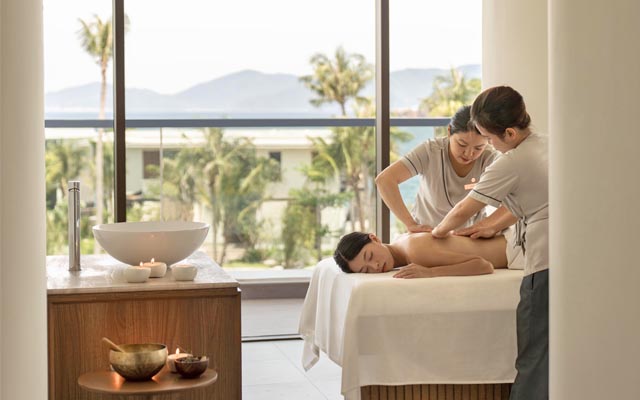
The sleepy district of Lintong, about 50 minutes by car from Xi’an, is also stirring with recent tourism developments including the year-old Angsana Xi’an Lintong and its adjoining Angsana Hot Spring Xi’an Lintong, art museums, a park and an outlet mall for big fashion labels.

Jerry Mong, Angsana Xi’an Lintong’s general manager, believes that his property is key to advancing Xi’an’s luxury appeal.

He said: “We are changing travellers’ mindsets by reminding them that Lintong used to be a favourite retreat of Tang Emperor Xuanzong and his consort Yang Gui Fei. They used to luxuriate in Lintong’s hot springs, and we are offering travellers the chance to do the same at our hotel.”

Angsana Xi’an Lintong has been attracting ladies of leisure from other Chinese cities and Taiwan, who would come as a group of friends for spa retreats.

Meanwhile, tourism players have agreed that air access improvement is top priority for Xi’an.

“Xi’an has fewer direct international flights compared with first-tier cities, which makes it less convenient for international travellers to visit,” said Wang.

While Dynasty Travel has seen a two-fold increase in bookings to Xi’an from 2014 to 2015, thanks to new flights by Tigerair (Singapore-Xi’an, launched in May 2014) and Xiamen Air (Singapore-Hangzhou-Xi’an, launched in March 2015), its spokesperson Alicia Seah noted that they were for package tours.

“New LCC links have little impact on luxury demand. High-end travellers prefer flying by full-service carriers even if it requires a transit in another city,” she said.

This article was first published in TTG Asia, February 8, 2016 issue, on page 15. To read more, please view our digital edition or click here to subscribe.

Van Paasschen resigns as Starwood’s CEO

0

STARWOOD Hotels & Resorts Worldwide president and CEO Frits van Paasschen has resigned following a “mutual agreement” with the board of directors.

Adam Aron, a Starwood director since 2006, has been appointed as interim CEO until a permanent replacement is found.

Meanwhile, van Paasschen will continue with Starwood as a consultant to assist in the transition.

Aron has been a senior operating partner at Apollo Management and CEO of World Leisure Partners since 2006. He had also served as CEO of the Philadelphia 76ers, chairman and CEO of Vail Resorts, and president and CEO of Norwegian Cruise Line. Earlier in his career, Aron was senior vice president of marketing for United Airlines and for Hyatt Hotels Corporation.

Melbourne’s hotels are Asia-Pacific’s most expensive

0

AUSTRALIAN cities are leading the Asia-Pacific in room rates, with Melbourne and Sydney taking tops in a ranking of hotel rates around the region.

According to the HRS Annual Hotel Price Radar 2014 released last Sunday, Melbourne was the most expensive city to travel to. Hotel rates averaged at S$289.20 (US$213.33) per night, a 31.4 per cent spike year-on-year.

The sharp increase in rates can be attributed to the city’s flourishing MICE sector and the Australian government’s initiative to position Melbourne as the events capital of the world.

Sydney followed in second place at S$256.20, while Singapore and Hong Kong remained strong at the third and fourth positions at S$235.80 and S$223.20 respectively.

Hong Kong remained one of the top-listers despite civil unrest last year, owing to its already established position as a financial and business hub in Asia-Pacific.

Unsurprisingly, Bangkok took last place at 13th spot at S$91.20 per night, a 10.7 per cent fall in rates as compared to 2013, due to political strife.

Notable also was that Seoul experienced the largest fall in room rate at 17.1 per cent.

Asian Development Bank backs tourism infrastructure upgrade in Laos

0

LAOS will embark on a series of infrastructure upgrades in four provinces along the Greater Mekong Subregion corridors, backed by the Asian Development Bank (ADB) in its third tourism project in the country.

ADB has loaned US$40 million to the Lao government, which will contribute US$3.6 million on its own to the project.

Construction works in the four provinces of Champasak, Khammouane, Luang Prabang and Oudomxay will include road improvements and other tourism infrastructure upgrades, and will take place between 2015 and 2019.

Under the project, US$13.8 million has been earmarked to improve access to and site management of Chom-Ong Cave in Oudomxay; US$3 million will go towards upgrading the Mekong River Ferry Terminal in the Chomphet Heritage District of Luang Prabang and creating an information centre there; US$7.3 million for upgrading the 10km access road to Pak-Ou Village and its popular caves in Luang Prabang; Xang Cave in Khammouane province will receive an access road and bridge and more tourist facilities at a total cost of US$2.5 million.

The strengthening of tourism infrastructure is likely to boost the destination management organisation (DMO) thrust of the project, which aims to help establish provincial and national level DMOs to execute coordinated marketing and promotional strategies for activities and events.

Such DMOs will draw participation from government ministries as well as business associations and development agencies.

Laos’ vice minister of information, culture and tourism, Chaleune Warinthrasak, said the establishment of DMOs would “foster closer cooperation among the public and private sectors and international development partners to develop Laos as a well-known tourist destination”.

Philippines plunges deeper into regional dive market with new expo

0

THE Philippines is the newest venue for the China-Hong Kong dive show franchise, DRT Show, strengthening the country’s hold on the China and East Asian shorthaul dive market.

DRT Show Philippines 2015, also called the Philippines Dive Expo, will take place from September 11-13 at SMX Manila, with a B2B component to attract international tour operators and dive training agencies, said Rowena Sorioso, senior tourism operations officer, dive market development group, Department of Tourism (DoT).

Eighty per cent of the 500,000 divers certified in the past three years come from China, Sorioso pointed out, adding that the Philippines also aims to strengthen its presence in the “rich shorthaul markets” of South Korea, Hong Kong and Japan.

Because of its relative affordability, the Philippines is an attractive diving destination for medium and advanced level divers seeking additional certification, say dive experts. The Chinese have also invested in dive facilities in Bohol.

The DoT has long sought to leverage diving as a key niche and in 4Q2014, organising a fam trip for Russian operators to visit Cebu and Bohol to woo Russian luxury divers.

Meanwhile, the Philippines Commission of Sports Scuba Diving, an attached agency of the DoT, has been refining accreditation procedures for local dive operators and installing additional hyperbaric chambers across key locations last year to enhance safety standards.

Malaysia starts visa fee waiver for Chinese tourists

0

CHINESE tourists no longer need to pay for visas to enter Malaysia with the proposed visa fee waiver having come into effect as of February 15.

The waiver, implemented at all overseas Malaysian embassies that issue visas to Chinese nationals, will run until the end of 2015.

Confirmation of the visa fee waiver was first announced last month, and both the Malaysian Inbound Tourism Association (MITA) and the Malaysian Association of Tour and Travel Agents (MATTA) have welcomed the latest announcement by the Ministry of Home Affairs.

MITA deputy president 2, Adam Kamal, said the government should look at making the visa fee waiver permanent as it will assist travel consultants and companies with travel planning, which is done many months in advance.

“This should not be a stopgap measure to boost Chinese arrivals,” he said. The number of tourists from China took a beating after the disappearance of Malaysia Airlines MH370, which was bound for Beijing and had mostly Chinese nationals on board. The political crises in Thailand compounded the situation, since the Chinese usually do a multi-destination Malaysia-Singapore-Thailand itinerary.

Lauding the visa fee waiver “an important step in the right direction”, MATTA vice president for inbound, Tan Kok Liang, said in a press statement: “Although it is too late to cash in on the huge exodus of Chinese tourists during the Lunar New Year holidays, nevertheless the announcement was a timely ang pow (red packet or bonus) by the Malaysian government and is bound to generate a groundswell of goodwill in China.

“However, the crux of the issue is most China nationals do not plan their travel well in advance and are easily hindered by visa requirements. Moreover, they are also spoilt for choice as regional destinations are more flexible on visas.”

Looking forward, Tan hence urged the Malaysian government to grant visas on arrival as well as visa exemption for tourists arriving into the country by chartered flights as the operators would have ensured their clients’ departure.

Panorama focuses on hotel, MICE and e-commerce areas for growth

0

LOFTY is the target set by Panorama Group CEO, Budi Tirtawisata, who aims to grow the company’s asset value to Rp3 trillion (US$240 million) by 2020.

The sum is triple Panorama’s valuation in 2012, when it was worth Rp1 trillion.

Budi was addressing his 160-strong management team at the Panorama Management Conference in Bukittinggi, West Sumatra last weekend.

Of Panorama’s five pillars of business – inbound, travel and leisure, media, transport and hospitality – Budi said there was still unexplored potential in the hospitality and media fields. Media here comprises MICE, publications, e-commerce and Panorama’s live entertainment businesses.

“On the e-commerce side, we started a few years ago and now we have six online platforms,” he said. “We will continue to expand our distribution channels, online and off(line),” he added.

New initiatives and joint ventures are expected to be announced in the next few months.

Panorama’s goals may not be as ambitious as they seem, considering that socioeconomic factors are in Indonesia’s favour, including the country’s new pro-growth government and tumbling oil prices.

“The government is targeting 20 million arrivals to Indonesia, and do not forget, there were 250 million domestic travellers (last year) and this is expected to double by 2020. This is a huge target, and Panorama can play a part in achieving this target,” said Budi.

But he cautioned his team that the prevailing eurozone crisis, spread of terrorism worldwide and the implementation of the ASEAN Economic Community, which will present both a challenge and opportunity, meant it is no time to rest on past glories.

“(In this environment), being efficient and effective is no longer enough. We need to be creative, innovative and proactive,” said Budi.

Travelport, BeMyGuest ignite new partnership linking traditional, new-gen suppliers

0

IN A SIGN that the traditional establishments of the travel industry are flexible enough to accommodate the young tech-savvy upstarts of today’s market, Travelport has signed a distribution partnership with BeMyGuest.

The agreement is BeMyGuest’s first distribution partnership ever, reflecting tours and activities aggregator’s consistent stance of being open to working with the old guards of industry.

Its content has been integrated as a local content provider into Travelport Rooms and More, giving Travelport’s travel agencies access to BeMyGuest’s 6,700 tours and activities.

“There’s no doubt that tours and activities are the future of travel, and BeMyGuest has established a specialised selection of experiences which are growing in popularity and are in great demand with travellers. We pride ourselves on our breadth of content offering, and this partnership is a true example of how we provide travellers more choice by not only working with big players, but also supporting start-ups in the travel industry too,” commented Niklas Andréen, Travelport’s GVP hospitality, car and digital media solutions.

Said Blanca Menchaca, chief marketing officer of BeMyGuest, in a statement: “This is the first of many new global partnerships in BeMyGuest’s strategy to secure the best possible means to directly connect the travel industry with exciting local experiences.”

Specialists speaking at the PATA Adventure Travel and Responsible Tourism Conference and Mart 2015 earlier this month had encouraged disruptive B2C digital platforms such as Airbnb and Withlocals and travel agencies to collaborate.

Longhaul travel demand in full bloom for Lunar New Year holidays

0

CHINESE travellers are fully intent on making the best of the long Lunar New Year holidays, and Europe is set to reap the benefits of this, dominating the top five most popular destinations for group tours.

The Ministry of Transport China reported that the Chinese will make an overwhelming 2.8 billion trips during this period, up 3.4 per cent over 2014.

At the same time, 60 per cent of these travellers plan to take trips abroad, according to the China Tourism Academy.

The European continent is favoured especially by group tours from China, based on business reports from Kuoni. France is this year’s most popular destination, followed closely by Italy, while Switzerland, Germany and Spain round up the top five.

Independent travellers however, are sticking closer to home. GTA said that Thailand is the destination of choice for Chinese tourists, the result of pent-up demand from the political crises plaguing the country last year.

Hong Kong and Singapore are next on the list, followed by Australia, and Italy in fifth place.

Park Regis Singapore readies to unveil US$2.3m new look

0

FOLLOWING a S$3 million (US$2.3 million) refurbishment, the Park Regis Singapore hotel is gearing up to welcome guests with its spruced-up facilities by end next month.

The 202-key hotel, managed by the StayWell Hospitality Group, will sport new features that include a new restaurant, meeting room, lobby and reception.

Explaining the decision to relocate the hotel lobby from the ground floor to the third floor, Jason Dowd, general manager of the Park Regis Singapore, said: “When you look at a property, especially hotels, the prime real estate is normally taken by a non-revenue producing facility which is normally a lobby and reception.

“Yet 90 per cent of the time they (lobby and reception) take up the ground floors which hold the highest real estate returns (which is important) especially for F&B facilities,” he said.

As such, Dowd said the hotel has now created a more exclusive area on level three for the reception, which resembles an executive lounge, while its all-day dining restaurant has now expanded to occupy the entire ground level.

To court MICE traffic, the hotel now sports a new 92m2 pillarless function space, which can fit 50 delegates in boardroom style, with floor-to-ceiling windows and views of the hotel’s waterfall.

According to Dowd, the hotel guests largely come from South Korea, Australia and Germany, with 60 per cent made up by business travellers.

Understanding that connectivity is of utmost importance to guests, Dowd added that the hotel now offers free complimentary Wi-Fi access with upgraded bandwidth throughout the property.