TTG Asia
Asia/Singapore Tuesday, 13th January 2026
Page 207

Alipay+ facilitates cross-border mobile payments in Cambodia

0

Ant International, in partnership with the National Bank of Cambodia, has launched cross-border QR code payments between its cross-border mobile payment and digitalisation solutions, Alipay+, and the bank’s Bakong payment system.

With this initiative, Alipay+ partner users of 12 international payment apps – Alipay (China), AlipayHK (Hong Kong SAR), Touch ‘n Go eWallet and MyPB by Public Bank (Malaysia), GCash (the Philippines), Kakao Pay, Toss Pay (South Korea), OCBC and Changi Pay (Singapore), Hipay (Mongolia), MPay (Macao SAR) and Tinaba (Italy) – will be able to seamlessly make payments to more than one million merchants in Cambodia by scanning KHQR codes, with more to be progressively added.

The collaboration enables travellers around the world to make transactions in Cambodia using their home payment apps

This will facilitate the payment for goods and services to businesses in Cambodia with accounts denominated in Cambodian riels.

KHQR, launched by National Bank of Cambodia in July 2022 and operated by Bakong, was created for retail payment in Cambodia and cross-border payment within South-east Asian countries. It only requires a single QR for receiving payment through any mobile banking apps of Bakong members including Bakong App, making QR payment simple for both customers and merchants in Cambodia.

Chea Serey, governor of the National Bank of Cambodia, said: “I firmly believe that the partnership between Alipay+ and Bakong’s KHQR network would elevate financial cooperation by leveraging technology to benefit the customers, and is one of the most impactful developments in supporting the country’s digitalisation journey and helping merchants capture new opportunities in the evolving landscape.”

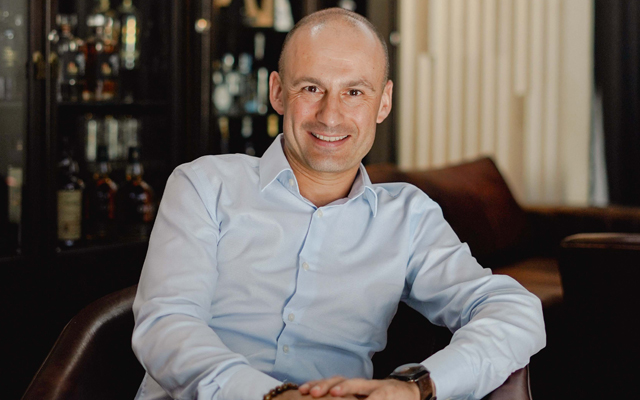
Edward Yue, general manager for Southeast Asia, Australia and New Zealand, Ant International, commented: “(The parnership) will not only enhance the travel experience for global consumers, but will also enable more local businesses to benefit from the strong tourism recovery.

“We will continue to work closely with regulators, merchants and other industry partners to create a new future of cross-border payments and travel.”

Four Seasons Hotel Singapore announces two key promotions

0

Lufthansa Group welcomes new senior director sales – Southeast Asia and the Pacific

0

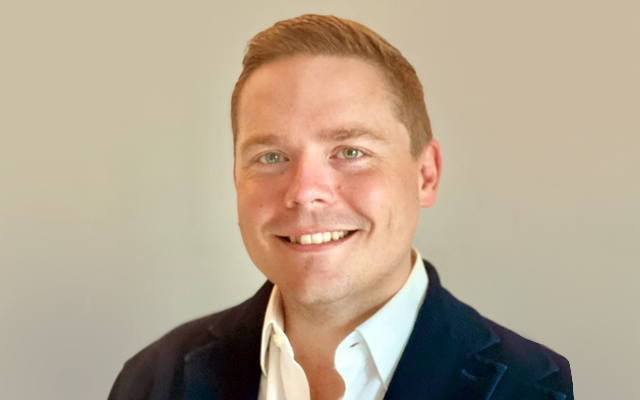
Brendan Shashoua has been appointed as Lufthansa Group’s senior director sales – Southeast Asia and the Pacific. He will be based in Singapore.

Having begun his Lufthansa Group career in revenue management at SWISS in 2011, he will now lead the group’s sales force across South-east Asia and the Pacific region in his new role.

Orchestrating an expansion

0

Virtuoso is building up its Asian presence. What are the resources put into this effort?
We opened an office in 2019 in Shanghai that was supposed to be for all of Asia. However, this year, we decided that it was important for us to separate Greater China from the rest of Asia. Our team in Shanghai would focus on Greater China while another would focus on North Asia (for South Korea and Japan) and South-east Asia. We found that Singapore was the perfect place for us to start this new team.

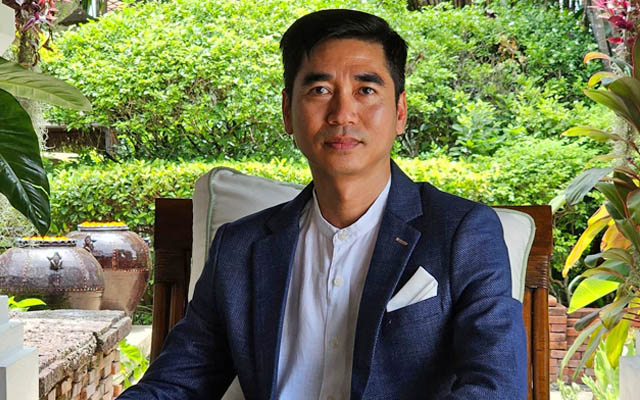
Raymond Ang leads as general manager for the North Asia and South-east Asia office, and is joined by Angeline Tang as account manager, member relations, and Eunice Lee as marketing manager.

Our approach here is exactly what we do everywhere else. We start with a team and we build the momentum. This office in Singapore is supported by the team that builds our global infrastructure – branding, technology, and curation of all of our partnerships.

Virtuoso has 20,000 travel advisor members across 58 countries now. How large is the Asian membership, and does the size of your travel advisor network matter?
We have 68 members in Asia, and 19 specifically in North Asia and South-east Asia. The new team will grow this network, but there is no magic number. What matters for us most is the quality of travel advisors in our network. We don’t just add members; the Virtuoso membership is by invitation only.

We regulate our membership from the perspective of the size of the market and growth potential – and I see tremendous growth potential in this region.

We’ve always felt that the number one competitor for Virtuoso is not really other travel agencies, but clients who book travel themselves. So, we really focus on making sure that we develop a number of travel advisors that can meet the market demand.

How does a travel advisor earn the invitation to join the Virtuoso membership?
It is primarily referrals followed by a track record of having successfully built enough business to show they have the skills to grow. We also require our members to engage and have the mentality of wanting to help others because we believe that there’s more to be gained by sharing than by keeping to yourself.

This has been part of Virtuoso’s ethos for a long time. In fact, the thing that makes the Virtuoso network so powerful is the core benefit of sharing information and best practices on a global scale.

Virtuoso is really most useful to travel advisors who have already have built some sort of a track record around dealing with the luxury experiential client. We tend not to be a good solution for those who have never done it.

I’ve always used this analogy: the Stradivarius violin does not make much of a difference if you’re just learning to play. But if you are at the top of your art, then the quality of that instrument really makes a difference.

How do you define ‘enough business’?
We look at total luxury production divided by the number of travel advisors in the firm. We are aware of the different types of business models – some members are boutique and do only luxury travel while some are larger entities with a division or department specialising in luxury travel.

Have you come across travel advisors who are very close to qualifying for the membership invitation? Does Virtuoso help to close that gap?
We don’t have a formal way of doing that, but we always engage people and give them some ideas of things that they might be able to do or areas of the business that they could grow into.

For example, expedition cruising is so hot right now. So, we could recommend a potential member to look at selling expedition cruises to lift production.

In fact, we did this with a travel advisor in China. They picked just two expedition companies (to sell) and made US$1.2 million within a year. And so, they were immediately qualified.

A recent McKinsey report stated that the demand for luxury travel is expected to grow faster that any other industry segment, fuelled by both a spike in the high net-worth individual population and the number of aspiring luxury travellers. Is this triggering a spike in new-gen travel advisors coming into the industry?
This is absolutely happening. There is one important thing a travel advisor today should know: you would have lost the game the moment you told people that you booked travel for a living.

There are many ways to book travel and more are being invented every day. People need to understand that a real travel advisor adds value in three different areas – before the trip, during the trip, and after the trip.

We’ve done this consumer research that told us the one thing that differentiates a transactional travel agent from a trusted travel advisor: it is what happens after a trip. A trusted travel advisor will try to learn and engage with the client after the trip to ask what could be done better.

What value can Virtuoso bring to travel advisors wanting to excel in the luxury travel game?
People new to the game don’t realise that when they are serving this high-end segment of travellers, who are so very well travelled, well educated, and technologically savvy, they cannot possibly be more knowledgeable than their customers. In fact, there is no way anyone can know everything about everywhere.

This is where Virtuoso shows value to travel advisors. We have a global network of we call Virtuoso on-sites, which are in-country destination experts. The number of Virtuoso on-sites varies by destination. In Italy, which is our number one destination, we have dozens of Virtuoso on-sites. Some of our travel advisor members have placed their clients in three-way calls with our Virtuoso on-site representatives when conversations on destination planning get a little too complex. These destination experts are not simply pulling something off the Internet; they are vetted and qualified people who know the destination and will be servicing your clients on the ground.

This gives customers a lot of confidence and allows the travel advisor to serve with speed.

At the same time, to be a Virtuoso preferred partner (hotels, cruise lines, tour operators, specialty providers, and tourism board), you must have a dedicated Virtuoso contact. No Virtuoso travel advisor will ever have to send an email to a hotel or tour company with an address that is enquiry@partner.com. The Virtuoso partner must provide the name of a person who is pre-committed to being available for Virtuoso work.

The other thing that we do for travel advisors is the huge investment of time and effort in networking opportunities. The quality of the relationship travel advisors have with our Virtuoso partners can change the quality of the experience for the client. We started our main show, the Virtuoso Travel Week, at the Bellagio in Las Vegas in the late-80s, running appointments for 5,000 people from nearly from 100 countries. Today, we are doing hundreds of thousands of appointments every year.

Is the Virtuoso Preferred Partner programme as tightly curated as you do with your travel advisor network?
We curate everything. We never accept brands across the board. Just because Hotel XYZ in this destination is a Virtuoso Preferred Partner does not mean others around the world carrying the XYZ brand will be too.

We are now updating our Virtuoso on-site programme to become even more granular by creating specialty operators for just one region. In Italy, for example, there would be someone in the Dolomites and another in Sicily.

Meanwhile, we are creating a whole new programme just for villas and homes. We have partners with amazing standalone villas as well as hotel partners with villas. A good example in this region is the Capella Bangkok, which has absolutely beautiful villas that are right on the Chao Phraya River.

As we continue to watch travel trends, we are working to spot regional products that are really good for a particular outbound market but not quite for others.

The next Virtuoso Symposium is confirmed on Crystal Serenity, sailing from Barcelona to Marseille from May 13 to 17 in 2025. Are you planning the 2026 edition now?
We are getting bids. In making our destination choice, we have to balance the desire for new places with available public-private collaboration. We tend to like places where our partners are supported by the local government, which results in win-win for all. We also want the symposium to be an opportunity to see a destination differently.

Let’s look forward. What trends in luxury travel will be advantageous to Virtuoso members and partners?
I’d like to start with what I call creative tension in luxury clients wanting to return to places they know and love and to try out somewhere different. The secret to addressing that creative tension lies in creating pairings of the two. A lot of our travel advisor members are having to get creative, so that their clients can get the best of two destinations.

Another trend is the rise of high-end travellers getting out of the peak season and out of primary destinations and into smaller secondary and tertiary cities.

Thirdly, we are excited about the rise in multi-generational travel. This is growing tremendously in Asia outbound. A subset of that is skip-gen travel, where grandparents take their grandchildren on holiday.

Other encouraging trends include expedition cruises hotting up, as mentioned before; newer destinations coming into the marketplace; and silver bullet wellness. Saudi Arabia is building a lot of incredible things now. While it is still early days, Saudi Arabia is ideal for early adopters. As for silver bullet wellness, it is travel for the purpose of health rejuvenation.

I am glad you spoke about multi-generational travel and skip-gen travel. The global population is aging; one in six people will be 65 years and up in 2025. However, with the quality of life and healthcare, 65 is considered a young age, and people now have extended opportunities to travel in one lifetime because they are still active and well.
One hundred per cent, Karen. We now have six generations of travellers – very healthy and active older people right through to Generation Alpha, and everything in between.

Are there enough travel advisors who are in tune with this silver market?
Part of Virtuoso’s success is due to the development of our travel advisors matching the development of our customer base.

I will cite you an example. We have a travel advisor member in Dallas who just turned 90. Her energy is ridiculous. She went with her granddaughter to a Taylor Swift concert in Paris, and danced, sang and screamed the entire three hours. Somebody behind her filmed her and posted it on Instagram, saying, who is this incredible grandmother? She went viral and has five million views now. For her 90th birthday, she went to Taylor Swift’s concert in London and found herself on the news channels where she spoke about travel and being youthful.

We are starting to get data on the travel potential of this segment of clients. In the next 15 years, the wealthiest cohort of US travellers will be single women  over the age of 60.

As we grow in Asia, we want to be able to help our members identify ways to be successful in their business, and to develop new travel advisors that match these different types of consumer opportunities.

Right, so a travel advisor new to Virtuoso may not always be someone young.
Absolutely! We have a lot of travel advisors who are career-switchers as well as those who have reached 55 or 60 years-old and wanting to get out of their corporate job and try something else. There is a real entrepreneurial opportunity in travel and tourism.

However, we are also working to develop the next generation of travel advisors, which will in turn help us to attract the next generation of luxury travellers. We have an interesting observation from this effort. When people found out what a modern travel advisor actually does, which is more than just booking travel, they started to get interested in planned travel.

We live in a world where answers are cheap. You can search anything online and through AI. To get the right information from AI, we need prompt engineering, which involves asking the right question.

Now, what is the one thing that stresses travellers today? It is the questions that were not asked. What’s going to get me because I did not ask beforehand?

I see successful travel advisors as those who can do a good job simplifying things. Just because something is simple doesn’t mean it’s easy.

There’s a variation of a great Mark Twain quote that I use all the time: if I had more time and more energy, I would have written you a shorter letter.

Vouch gains adoption among prominent local hotel chains in Asia

0

Singapore-based AI-powered hotel management solution specialist, Vouch is seeing an expanded presence among local hotel chains across Asia, with more relying on its solutions to enhance guest experiences, boost revenue, and streamline operations.

Today, Vouch works closely with properties within Lexis Hotel Group and Compass Hospitality in Malaysia and Thailand, as well as Banyan Tree Club & Spa Seoul under Banyan Group in South Korea.

Vouch’s solutions are aligned with the evolving needs of the regional hospitality market

The company attributes its success to its ability to understand and respond to the needs of the regional hospitality market.

It recognises that one major challenge local hotel chains face is driving revenue through ancillary services, such as upselling dining options, spa treatments, and activity bookings. These services are often underutilised due to limited guest engagement. As such, Vouch’s platform is designed to capture guest attention with personalised, relevant offers. The intuitive, user-friendly interface encourages guests to spend more time engaging with the platform, thereby increasing exposure to additional services.

With Vouch’s latest AI-powered upselling analytics, hotels gain valuable insights into their guests’ decision-making processes, allowing them to optimise their promotional bundles and enhance the presentation of their offerings, including improved descriptions and naming conventions.

In a recent deployment, Vouch’s solutions boosted ancillary revenue by more than 29 per cent, reinforcing effectiveness in increasing guest spending.

To address another challenge – operational inefficiencies, Vouch’s Task Manager provides a unified backend system to improve coordination across departments. The AI-enhanced system facilitates real-time communication, photo and voice note attachments, and auto-translation to enhance collaboration among staff of different nationalities.

Vouch recognises that change management is critical, as resistance from staff is a leading cause of tech adoption failures in the hospitality industry. To address this, it has designed its solutions and adapted its deployment process to minimise disruption and friction, ensuring a smooth transition.

The company most recently secured a fresh funding round of US$2.5 million, which will be used to expand its AI development.

Hyatt deepens partnership with China Resources Land for a bigger footprint across China

0

Hyatt and China Resources Land have signed a strategic collaboration agreement that will see the establishment of Yuen Kai Holdings to develop and manage hotels under The Unbound Collection by Hyatt and JdV by Hyatt brands across several cities in China. This is part of Hyatt’s asset-light expansion of its brands in its second largest market.

Richard Li will lead Yuen Kai Holdings as chief executive officer. Under initial plans, the firm will develop and manage hotels including six existing Mumian hotels in Beijing, Shenzhen, Chengdu, Hangzhou, and Rizhao as well as two new Mumian hotels in Shaoxing and Shanghai.

Hyatt and China Resources Land are taking their partnership further with two new engagements

Additionally, Hyatt and China Resources Land have entered a strategic agreement for the development of more Hyatt-branded hotels, and have signed agreements for key projects such as Park Hyatt Xi’an and Andaz Dongguan.

This joint venture is an extension of an existing relationship between Hyatt and China Resources Land. They first worked together in 2009 on the opening of Grand Hyatt Shenzhen. China Resources Land continues to own Hyatt-managed properties across China, including Grand Hyatt Shenzhen, Grand Hyatt Dalian, Grand Hyatt Shenyang, Park Hyatt Hangzhou, Grand Hyatt Hefei, Andaz Xiamen, and Andaz Shenzhen Bay.

By combining China Resources Land’s expertise in investment, construction, and local commercial real estate management with Hyatt’s global proficiency in luxury hotel management and extensive experience in premium hospitality, the new joint venture intends to increase Hyatt’s portfolio in Greater China by bringing new experiences to domestic and foreign travellers.

The formation of Yuen Kai Holdings and the signing of the strategic collaboration agreement signify deeper collaboration between both parties in terms of strategy and resources, which is intended to foster mutual growth, continuous innovation, and create enduring value in the Chinese market.

Stephen Ho, president of growth and operations, Asia Pacific, Hyatt, said: “We are interested in building long-term, fruitful relationships with our owners that showcase a desire to grow together. This collaboration will help us continue our commitment to expand in China through asset-light growth and lean into caring for the high-end traveler as a differentiator to our competition.”

Hyatt’s portfolio in Greater China spans more than 50 years, with more than 165 open properties across 60 markets as of June 30, 2024.

Travel desires spike this holiday season: Sojern study

0

Sojern’s latest travel data ahead of the holiday season and beyond – pulled as of October 1 – shows that travellers are eager to hit the road or skies, but economic concerns and inflation are widening the wealth gap and influencing how travel decisions are made.

Compared to 2023, more consumers are opting for road trips over air travel, if they are travelling at all. Sojern data shows upscale and luxury hotel prices have risen by 1.7% and 1.4%, while economy lodging remains steady, reflecting growing demand for higher-end accommodation.

Demand for Asia is up among travellers from the US and Europe this holiday season; El Nido, Palawan, the Philippines pictured

“Unlike the pandemic where travellers chose less crowded destinations, those who are travelling are going back to more popular and expensive cities – and they’re willing to pay a premium,” said Noreen Henry, chief revenue officer at Sojern.

“We saw this with Taylor Swift’s Eras Tour where booking interest traffic to European cities spiked 65% and hotel room prices were up 154%. This holiday season, we’re seeing the same trends. From events to festive outings, travellers want immersive adventures, and the travel brands that deliver personalised, magical experiences will win.”

US travel spikes for Thanksgiving and Christmas
With an estimated 4.7  million people flying over the Thanksgiving holiday, Sojern data shows that domestic flight bookings are up 4% in 2024 compared to the same time period in 2023, with Orlando taking the top spot as the Thanksgiving flight destination of choice.

Meanwhile, domestic travel during Christmas is down 15%, while travel to Europe is up 2% and Asia up 9%. Top destinations internationally are Mexico, the UK, Canada and Dominican Republic.

European cities delight international travellers while Europeans flock to Asia
Europe’s festive flair and array of Christmas markets have long attracted travellers from around the world – and this year is no exception. However, while travellers from around the world are packing their bags and jetting off to major European cities, Europeans have other plans. Currently, domestic flight bookings are down 26% and bookings within Europe are down 5%. Fflight bookings to Asia (14%), Latin America (3%), and non-conflict countries within the Middle East and Africa (3%) are all up, indicating that Europeans either prefer to drive for their holiday experiences or embark on long-distance adventures.

London, with its charming pubs and festive holiday displays, stands as Europe’s top destination this season, capturing 79.1% of flight bookings and 89.7% of hotel reservations.

With bustling Christmas markets, Germany and Austria have long been popular destinations. International travel to Germany is up 7% while travel to Vienna is scooping up 80% of Austria’s holiday flight bookings.

Paris is still riding high off the 2024 Summer Olympics as one of the most in-demand destinations in Europe. Overall, domestic travel within France is down 41%, but international travel is only down 1%. Much like other European destinations, domestic travel within Italy and Spain is down, but international travel is up 13% and 11%, respectively, with visitors choosing major cities, such as Rome, Milan, Florence, Venice, Madrid, and Barcelona.

Abu Dhabi and Saudi Arabia gain favour ahead of major events and travel peak
Formula One events attract significant crowds. The UAE is gearing up for the Abu Dhabi Grand Prix (December 6 to 8), with flight bookings from the past 30 days showing a 9% overall increase for December. Regional bookings are up 13%, and international travel is up 4% compared to 2023. Meanwhile, Saudi Arabia is experiencing rising demand as it enters peak travel season, with international flight bookings up 15% and regional travel surging by 38%.

Travellers skirt traditional ski destinations in favour of Japan
Preferences for holiday skiing are changing. American and Canadian ski destination hotel bookings are down between 9% and 18%, and European ski tourism is seeing similar patterns. Japan is emerging as a top ski destination, with hotel bookings up 417% compared to last year.

Chinese New Year bookings are down
Chinese New Year in 2025 runs from January 28 to February 3, and is driving travel across Asia-Pacific. Singapore is typically a huge draw, but current hotel bookings are down 11.55% overall compared to the same period in 2024, with domestic bookings down 26%.

Singapore is China’s top destination for the holiday, capturing 14.8% of non-intra-regional Asia-Pacific travel. While some Chinese travellers are flying for the holiday, flight bookings are down 18.82%. Hotel bookings are up 10.41% compared to 2023, indicating a higher demand for domestic travel, but likely by rail or car.

2025 and beyond
Sojern observes that today’s travellers are more experience-driven than ever, investing heavily in attending concerts, events, and major sports like the FIFA World Cup. In 2022, Qatar hosted the FIFA World Cup, spiking international lodging searches by 541% worldwide. Next up, Canada, Mexico, and the US will host the 2026 FIFA World Cup, drawing travellers from around the world to cheer for their teams.

As travellers increasingly seek out experiences, they are willing to spend more, driving up both costs and expectations. In response, the travel industry is embracing innovative solutions, such as Generative AI, to better understand guests and deliver personalised experiences at scale. This year marks just the beginning, as the adoption of these cutting-edge tools is set to grow well into 2025 and beyond.

Yamanashi Prefecture draws up plans to improve Mount Fuji’s tourism infrastructure

0

Proposed tourism developments, which include a light railway, high-end hotel and convention facilities, at Mount Fuji will soon make Japan’s most famous peak an even more accessible and welcoming destination.

Ambitious plans are underway to construct a light railway to around half-way up Mount Fuji. Blueprints show a terminus at the Fifth Station on the south flank of the mountain. The Fifth Station is at 2,305 metres above sea level and can presently be accessed by road, serving as the most popular starting point for hikers planning to ascend to the 3,776-metre peak.

The lack of accommodation facilities at Mount Fuji’s Fifth Station has discouraged visitors from exploring the area in depth

The Yamanashi prefectural government also announced the construction of a 40-room, high-end hotel close to the Fifth Station, and an international conference centre and other accommodation and infrastructure options close to the mountain. There are plans to collaborate with other local tourist facilities, such as the Fuji-Q Highland amusement park.

The government expects to charge 10,000 yen (US$67) for a round-trip ticket on the railway and anticipates that the line could generate around 1.56 trillion yen in the four decades after completion.

“We are considering the development of the base of the mountain and the Fifth Station in harmony with the surrounding natural environment,” said Katsuhiro Iwama, promotion director in the Yamanashi government’s Fuji-san Conservation and Tourism Ecosystem Promotion Division.

“Particularly at the Fifth Station, there is a lack of accommodation facilities for visitors to fully enjoy their stay,” he said. “Although there are activities such as watching the sun rise and taking walks without climbing to the summit, many visitors leave without realising this due to their short stay. We believe that building a hotel can be a tool to enhance the appeal of the Fifth Station.”

The prefecture also hopes that a regular train service will help to limit numbers of visitors to the UNESCO-listed mountain, which has experienced significant problems with overtourism since Japan reopened to tourists after the pandemic.

AirAsia sets sights on serving North America, Europe, and Africa by 2030

0

AirAsia has ambitious plans of growing its network into Africa and Europe, and making its foray into North America in the coming years, shared Capital A CEO, Tony Fernandes. This will ultimately solidify Kuala Lumpur as the world’s leading low-cost carrier megahub.

The airline was recently recognised by OAG’s 2024 Megahubs Index as the leading contributor to Kuala Lumpur International Airport’s status as the top global low-cost carrier megahub.

Fernandes: AirAsia plans to cover the world by 2030

By 2025, AirAsia plans to increase its operational fleet from 63 to 73 aircraft, supporting growth in daily flights from 230 to 258, and boosting its network by adding eight new destinations, thus expanding its current network from 98 to 106 destinations.

Fernandes shared that AirAsia also plans to strengthen its presence in existing markets while exploring opportunities to open new secondary airports across key regions in Asia by next year.

The focus for 2026 and 2027 will be on expanding into strategic markets in the Pacific, East Asia and Africa. In 2028, AirAsia aims to expand its network in the Middle East and to Europe and North America by 2030.

“By 2030, we should be covering the world,” said Fernandes at a press conference.

Its newest service expansion on the cards will be four weekly direct flights from Kuala Lumpur to Nairobi on November 15, marking its entry into Africa. Fernandez shared plans to connect Tanzania with Kuala Lumpur in the near future.

At an extraordinary general meeting on October 14, 99.97 per cent of Capital A shareholders voted in favour of the proposed disposal of its aviation business to AirAsia X, thus paving the way for Capital A’s restructuring and exit from PN17 status.

PN17 stands for Practice Note 17/2005 and is issued by Bursa Malaysia relating to companies that are in financial distress. Companies that fall within the definition of PN17 will need to submit their proposal to the Approving Authority to restructure and revive the company in order to maintain the listing status.

Capital A shareholders approved a proposed plan to overhaul the airline business, which includes consolidating the group’s short- and long-haul operations under a new company, AirAsia Group.

Fernandes told reporters that the restructuring makes “so much sense as we combine the strengths of both airlines to create one global airline”.

Approval from shareholders enables Capital A to sharpen its focus on its four strategic pillars – Capital A Aviation Services, MOVE Digital, Teleport, and the Brand AA company (also known as AirAsia brand co.) – while unlocking synergies between short- and long-haul operations for greater growth and shareholder returns.

The final approval being sought from AirAsia X shareholders on October 16 will further cement these plans, positioning both companies for stronger growth as they work toward a combined airline group by the end of the year.

New hotels: DoubleTree by Hilton Vientiane, Avani Ratchada Bangkok and more

0
DoubleTree by Hilton Vientiane’s twin guest room with balcony

DoubleTree by Hilton Vientiane, Laos
The 188-key DoubleTree by Hilton Vientiane is about a 15-minute drive from Wattay International Airport and a half-hour drive from the high-speed Vientiane Railway Station.

The hotel features three dining outlets, rooftop pool, fitness centre, and over 550m2 of event spaces.

The hotel is ideal for accessing various attractions such as That Dam, an iconic stupa in the heart of the city centre, the Presidential Palace, and Sisaket Temple. It is also near the financial district.

Avani Ratchada Bangkok’s presidential suite

Avani Ratchada Bangkok, Thailand
Avani Ratchada Bangkok features 402 rooms, and a 169m2 presidential suite which includes a dining room that seats eight guests, a cocktail bar, and a private sauna.

Within the hotel are restaurants, lounge, grab-and-go outlet, pool bar, swimming pool, gym, spa, and 11 versatile event venues.

Just steps away is the vibrant Ratchada district, known for its night markets, including the Jodd Fair Market and Huai Kwang Market, as well as Thailand Cultural Centre, Muangthai Rachadalai Theatre, Fortune IT Lifestyle Mall, and Central Rama 9.

Avani Ratchada Bangkok offers seamless connectivity with the city via Phra Ram 9 MRT Station and proximity to the Airport Rail Link and BTS Skytrain.

Novotel Nara

Novotel Nara, Japan
Situated along the Saho River, known for its cherry blossom trees, Novotel Nara is just an eight-minute walk from Shin-Omiya Station and a five-minute cab ride from Nara Station.

There are 264 guestrooms, including executive suites, all-day dining restaurant that features organic and locally sourced dishes, a social lounge, rooftop terrace, fitness centre, two banquet spaces, and a wellness lounge with a children’s area.

The hotel is also close to the city’s UNESCO World Heritage sites.

Dorsett Changi City Singapore

Dorsett Changi City Singapore, Singapore
Dorsett Changi City Singapore takes over the former Capri by Fraser, Changi City, located in Changi Business Park. The hotel is adjacent to the Expo MRT Interchange station and guests can look forward to seamless connectivity to both Changi Airport and the city.

Dorsett Changi City Singapore offers 313 rooms ranging from 32m2 to 70m2. Each room features a kitchenette, an integrated living area, and an en-suite bathroom. Amenities include an outdoor swimming pool, gym, restaurant and laundrette facilities.